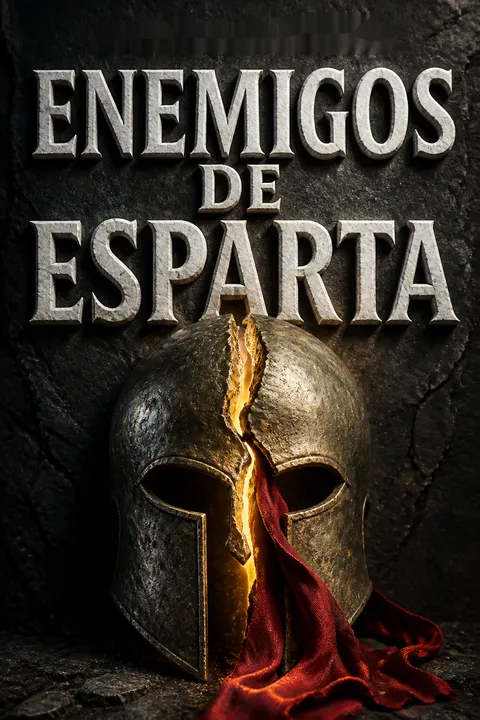

Resumen de la trama
Blood and Amulets
In the aftermath of a brutal Thracian battle, Prómaco, a young mercenary of mixed Greek and Thracian blood, surveys the carnage. His valor earns him the attention of Ifícrates, the famed Athenian general, who offers him a path to greater command. Yet Prómaco's heart is torn between the lure of glory and the pull of love—his devotion to Veleka, a noble Thracian priestess. Their union is forbidden, and as they cling to each other in secret, Prómaco gifts her a bloodstained amulet, a token of fate. But the world around them is shifting: Sparta's shadow looms, and the price of survival is rising. The amulet, meant to protect, becomes a symbol of the sacrifices demanded by war and love.
Lovers and Exiles
Prómaco and Veleka, desperate to escape the constraints of their birth and the machinations of power, flee Thrace. Their journey leads them to the besieged city of Olinto, where Prómaco seeks service with the Spartans, hoping to carve out a future. But the world of mercenaries is treacherous. Betrayed by those he hoped to trust, Prómaco is beaten and left for dead, while Veleka is stolen away by Spartan slaves. The lovers are torn apart, each cast into exile—one into the uncertain embrace of the Greek world, the other into the darkness of slavery. Their separation becomes the crucible in which Prómaco's hatred for Sparta is forged, and his quest for vengeance and reunion begins.
The Shadow of Sparta
As Sparta's iron grip tightens across Greece, Prómaco drifts to Athens, a city simmering with resentment and loss. There, he finds kinship among exiled Thebans—Pelópidas, the passionate leader; Epaminondas, the philosopher-strategist; and Agarista, Pelópidas's enigmatic sister. United by a shared hatred of Spartan tyranny, they plot the liberation of their homeland. Prómaco's personal vendetta merges with a greater cause: the restoration of Theban freedom. The city's undercurrents of intrigue, love, and ambition swirl around him, and the lines between personal and political become blurred. The shadow of Sparta, once a symbol of awe, now becomes a rallying point for rebellion.
Oaths and Oracles
Haunted by loss and driven by a vow to rescue Veleka, Prómaco swears before the gods to pursue her, no matter the cost. Yet the oracles and priestesses he encounters offer only cryptic guidance: love will be found in a foreign land, with a foreign man. As Theban exiles prepare to reclaim their city, Prómaco's path is shaped by prophecy and the wisdom of philosophers like Plato. The tension between fate and free will, between the demands of love and the duties of war, becomes the central struggle of his life. Each oath binds him tighter to a destiny he cannot fully understand, and every oracle deepens the mystery of what—and whom—he truly seeks.
The Price of Freedom
The Theban exiles, led by Pelópidas and Epaminondas, return to their city under the cover of night. In a daring coup, they slaughter the Spartan-backed oligarchs and ignite a popular uprising. The city is liberated, but at a terrible cost: vengeance begets more violence, and the cycle of betrayal and retribution spins on. Prómaco, now a trusted ally, is swept up in the fervor of revolution. Yet freedom is fragile, and the new democracy is threatened from within by ambition, envy, and the ever-present specter of Spartan retaliation. The struggle for Thebes becomes a crucible for all involved, testing their ideals, loyalties, and capacity for forgiveness.
The Philosopher's Lesson
In Athens, Prómaco is drawn into the intellectual orbit of Plato, whose Academy becomes a sanctuary for exiles and dreamers. Through philosophical debate, Prómaco confronts the nature of love, courage, and justice. Plato's teachings challenge him to distinguish between the love of the body and the love of the soul, between the pursuit of personal happiness and the greater good. The lessons learned here ripple outward, influencing the formation of the Sacred Band of Thebes—a corps of lovers whose devotion to each other becomes the foundation of military invincibility. The philosopher's lesson is clear: true strength is born not only of arms, but of the bonds that unite hearts and minds.
Between Eros and War
As Thebes rebuilds, the tension between private longing and public obligation intensifies. Prómaco's forbidden love for Agarista, Pelópidas's sister, grows in the shadows of political upheaval. Their passion is both a solace and a source of torment, for Agarista is bound by duty to her family and city. Meanwhile, the Sacred Band, forged in the fires of love and war, becomes the spearhead of Theban resistance. The city's fate—and Prómaco's own—hangs in the balance as Eros and Ares, love and war, vie for supremacy in the hearts of men and women alike.
The Lion's Awakening
With the Sacred Band at its core, Thebes asserts itself as a new power in Greece. Under the leadership of Pelópidas and Epaminondas, the city challenges Spartan hegemony, rallying allies and inspiring hope among the oppressed. The Lion—the symbol of Theban courage—awakens, and the city's armies march to reclaim their destiny. Prómaco, now a seasoned commander, leads his peltasts in daring raids and pivotal battles. The struggle is not only against external foes, but also against the doubts and divisions that threaten to unravel the fragile unity of the revolution.
The Sacred Band Rises
The Sacred Band, a unit of 300 lovers, proves its mettle on the battlefield, shattering the myth of Spartan invincibility. At Tegyra and Leuctra, Theban tactics and the unbreakable bonds of the Sacred Band turn the tide of history. The world watches in awe as the unthinkable happens: Sparta is defeated in open battle, its aura of supremacy forever tarnished. Yet victory brings new challenges. The cost in blood is high, and the survivors must grapple with the loss of friends and lovers. Thebes stands triumphant, but the seeds of future conflict are sown in the very soil of its success.
The Turning of Fate
Theban ascendancy is met with envy and fear by former allies and rivals alike. Athens, once a partner in resistance, now views Thebes with suspicion. Persia, ever the master of intrigue, seeks to manipulate the balance of power. Prómaco is dispatched on perilous missions—across the Aegean, to the Persian court, and into the heart of enemy territory. Each journey tests his resolve and forces him to confront the limits of loyalty, ambition, and love. The turning of fate is relentless: every triumph is shadowed by loss, and every alliance is fraught with betrayal.
The Enemy Within
As Thebes contends with external threats, a more insidious danger grows within. Menéclidas, once a comrade, becomes a symbol of the corrosive power of envy and resentment. His machinations threaten to undo all that has been won, pitting citizen against citizen and undermining the fragile democracy. Prómaco, torn between justice and vengeance, is forced to confront the darkness in his own soul. The enemy within proves as formidable as any Spartan phalanx, and the struggle for Thebes becomes a battle for the very soul of Greece.
The Fall of Tyrants
The struggle against tyranny is waged on many fronts. In the north, the cruel tyrant Alejandro of Feres holds Pelópidas captive, forcing Thebes into a desperate rescue mission. Prómaco's skills as a warrior and a spy are put to the test as he navigates a world of shifting allegiances and moral ambiguity. The fall of tyrants is never clean: justice demands sacrifice, and vengeance leaves scars that may never heal. The liberation of Pelópidas comes at a high price, and the lessons learned in blood will shape the destiny of Thebes and all Greece.
The Persian Game
The struggle for Greek freedom moves to the opulent court of the Persian king. Pelópidas and Prómaco, representing Thebes, must outmaneuver the cunning envoys of Athens and Sparta, as well as the ambitions of Persian satraps. In the gardens of Susa, alliances are forged not only through words, but through the pleasures of the flesh. The boundaries between loyalty and self-interest blur, and the fate of nations hangs on the outcome of private intrigues. The Persian game is one of masks and mirrors, where victory belongs to those who can see beyond appearances.
The Last Betrayal
As the great powers of Greece and Persia maneuver for supremacy, the seeds of betrayal sown by Menéclidas and others bear bitter fruit. Thebes is beset by conspiracies from within and without, and the dream of unity threatens to unravel. Prómaco, haunted by the ghosts of his past, is drawn into a final confrontation with his nemesis. The last betrayal is both personal and political, a reckoning that will determine not only the fate of Thebes, but the meaning of all that has been fought for.
The End of Hegemony
The final battles are fought on the plains of Mantinea, where the armies of Greece converge for a reckoning that will end the age of Spartan dominance. Epaminondas, the architect of Theban glory, falls in battle, and with him dies the dream of a united, just Greece. The victors are left to ponder the meaning of their triumph, as old rivalries and new ambitions threaten to plunge the world into chaos once more. The end of hegemony is not peace, but a new uncertainty—a world where the only constant is change.
The Inaccessible Heart
Prómaco, at last free to seek Veleka, journeys to the heart of Laconia. There, he finds her living a quiet life, content and beyond his reach. The years of longing and struggle have changed them both, and the love that once burned so fiercely is now a memory—beautiful, but unattainable. The inaccessible heart is not a failure, but a lesson: true love is not possession, but the willingness to let go. Prómaco returns to Beotia, his quest complete, his soul at peace.
The Second Summer
In the aftermath of war and heartbreak, Prómaco and Agarista find each other once more. The seasons have turned, and the wounds of the past have begun to heal. Their love, tempered by suffering and sacrifice, is no longer the fevered passion of youth, but a deeper, more enduring bond. Together, they embrace the promise of a second summer—a chance to build a life not on dreams or regrets, but on the hard-won wisdom of experience.
The Meaning of Victory
Years later, in the gardens of Mieza, Aristotle recounts the story of Prómaco and his companions to a young Alexander the Great. The tale becomes a meditation on the nature of virtue, the power of stories, and the meaning of victory. The deeds of heroes, whether real or imagined, shape the souls of those who come after. The legacy of Thebes, Sparta, and all who fought for freedom endures not in monuments or tombs, but in the hearts and minds of those who remember—and strive to be worthy of—their example.
Analysis
A modern meditation on love, power, and the cost of freedomEnemigos de Esparta is more than a historical epic—it is a profound exploration of the human condition, set against the backdrop of one of antiquity's most turbulent eras. Through the intertwined fates of Prómaco, Veleka, Agarista, and their companions, Sebastián Roa interrogates the nature of love, the allure and danger of power, and the price paid for both personal and collective freedom. The novel's structure—moving from the intimacy of lovers' whispers to the thunder of armies—mirrors the way individual choices ripple outward to shape history. Its use of philosophical reflection, meta-narrative, and recurring symbols invites readers to question the stories we tell about ourselves and our past. Ultimately, the book suggests that true victory lies not in conquest or possession, but in the courage to let go, to forgive, and to begin anew. The lessons of Thebes and Sparta, of love lost and found, echo through time, reminding us that the greatest battles are fought—and won—within.
Resumen de reseñas
Enemigos de Esparta receives mostly positive reviews, praised for its engaging storytelling, historical accuracy, and well-developed characters. Readers appreciate the author's attention to detail, the seamless blend of fiction and history, and the exploration of themes like love, politics, and war. Some find it captivating from start to finish, while a few criticize it as overly long. The novel is commended for its portrayal of ancient Greek society, battles, and philosophical elements. Many readers recommend it for fans of historical fiction and Greek culture.
También leyeron



Characters
Prómaco
Prómaco is the novel's central figure—a man of mixed Greek and Thracian heritage, marked by the violence of his times and the longing for a love always just out of reach. His journey is both external and internal: from mercenary to revolutionary, from lover to leader, from vengeance to wisdom. Prómaco's relationships—with Veleka, Agarista, and his Theban comrades—reveal a soul torn between desire and duty, haunted by loss yet capable of profound loyalty. His psychological arc is one of maturation: he learns that true love is not possession, that freedom is paid for in blood, and that the greatest victories are those won within.
Veleka
Veleka, the noble Thracian priestess, is both a real woman and a symbol—of love, of fate, of the irretrievable past. Her relationship with Prómaco is the catalyst for his journey, and her loss shapes the course of his life. Veleka's fate—abducted, enslaved, and ultimately finding peace in a new life—mirrors the novel's themes of transformation and acceptance. She is the inaccessible heart, the lesson that love sometimes means letting go, and her presence lingers as a bittersweet echo in Prómaco's soul.
Agarista
Agarista, sister to Pelópidas, is a figure of mystery and strength. Torn between duty and desire, she becomes both lover and priestess, exile and anchor. Her relationship with Prómaco is fraught with longing, guilt, and the hope of redemption. Agarista's choices—her refusal to be defined by others, her embrace of solitude, and finally her acceptance of love—reflect the novel's exploration of autonomy and the search for meaning. She is both the prize and the partner, the one who teaches Prómaco that happiness is found not in the past, but in the courage to begin again.
Pelópidas
Pelópidas is the passionate heart of the Theban resistance—a man driven by glory, loyalty, and love. His leadership inspires those around him, but his personal life is marked by loss and longing, especially for his beloved Górgidas. Pelópidas's arc is one of ascent and sacrifice: he leads Thebes to freedom, but pays with his life and happiness. His death is both a personal tragedy and a turning point for the city, forcing others to step into the void he leaves behind.
Epaminondas
Epaminondas is the mind behind Theban greatness—a thinker as much as a warrior, whose innovations in tactics and politics reshape the Greek world. His humility, wisdom, and commitment to justice set him apart from other leaders. Epaminondas's psychological depth lies in his ability to balance idealism with pragmatism, and his willingness to sacrifice personal ambition for the greater good. His death at Mantinea marks the end of an era, but his legacy endures in the institutions and ideas he leaves behind.
Menéclidas
Menéclidas is the novel's most corrosive presence—a man consumed by envy, resentment, and the desire for recognition. Once a comrade, he becomes the enemy within, undermining Theban unity and betraying his city for personal gain. Menéclidas's psychological portrait is one of self-destruction: his inability to accept his own limitations leads him to sabotage all that is good around him. His fate is a cautionary tale about the dangers of unchecked ambition and the fragility of democracy.
Antícrates
Antícrates, the formidable Spartan warrior, is both adversary and counterpart to Prómaco. He embodies the old virtues of Sparta—discipline, courage, and a code of honor—but also the city's decline into rigidity and irrelevance. His interactions with Prómaco are marked by mutual respect and rivalry, and his actions at Mantinea and in the final reckoning reveal the complexities of enemy and ally. Antícrates's arc is a meditation on the meaning of honor in a changing world.
Górgidas
Górgidas, Pelópidas's beloved and the founder of the Sacred Band, represents the power of love to inspire greatness. His relationship with Pelópidas is both a source of strength and vulnerability, and his death is a wound that never fully heals. Górgidas's legacy lives on in the Sacred Band, whose victories are a testament to the bonds of affection and loyalty that transcend death.
The Sacred Band
The Sacred Band of Thebes is more than a military unit—it is a living symbol of the novel's central themes. Comprised of 300 pairs of lovers, the Band's invincibility is rooted in the depth of their commitment to each other. Their presence on the battlefield transforms the nature of war, proving that love can be a force as powerful as hate. The Band's fate, from triumph to tragedy, is a microcosm of the hopes and heartbreaks of an entire generation.
Filipo of Macedonia
Filipo, the young Macedonian prince and future king, is both witness and student to the events that reshape Greece. His time in Thebes, learning from its leaders and warriors, plants the seeds for the future rise of Macedonia. Filipo's psychological arc is one of observation and assimilation: he absorbs the lessons of Theban innovation, the dangers of internal strife, and the possibilities of unity. His presence in the epilogue is a reminder that history is a continuum, and that every ending is also a beginning.
Plot Devices
Duality of Love and War
The novel's structure is built on the interplay between love and war, desire and duty. The personal quests of Prómaco and his companions are mirrored in the larger struggles of cities and nations. The Sacred Band, composed of lovers, literalizes the idea that devotion can be weaponized, while the repeated motif of inaccessible love (Veleka, Agarista) underscores the costs of both passion and ambition. The narrative uses parallel arcs—romantic and martial—to explore the ways in which private longing shapes public action, and vice versa.
Cycles of Betrayal and Redemption
Betrayal—by lovers, friends, and cities—is a recurring plot device, driving both character development and political intrigue. The novel employs foreshadowing through oracles and dreams, hinting at the inevitability of loss and the possibility of redemption. The fall of tyrants, the rise and decline of powers, and the personal reckonings of the protagonists are all framed as part of a larger cycle. The use of historical events as both backdrop and catalyst allows the narrative to comment on the universality of these patterns.
Philosophical Reflection and Meta-Narrative
The inclusion of philosophical debates (notably with Plato and, in the epilogue, Aristotle) serves as both plot device and thematic commentary. These interludes invite readers to question the nature of virtue, the reliability of history, and the purpose of storytelling itself. The meta-narrative—culminating in Aristotle's lesson to Alexander—frames the entire novel as a meditation on the power of myth, the construction of memory, and the search for meaning in a world of uncertainty.
The Amulet and the Oracles
The bloodstained amulet, gifted and lost, recurs as a symbol of fate's inscrutability and the limits of human agency. Oracles and prophecies, often ambiguous, drive characters to action but also force them to confront the possibility that destiny is not always what it seems. These devices reinforce the novel's central question: is happiness found in the pursuit of what is lost, or in the acceptance of what is?
Descargar PDF
Descargar EPUB
.epub digital book format is ideal for reading ebooks on phones, tablets, and e-readers.








































