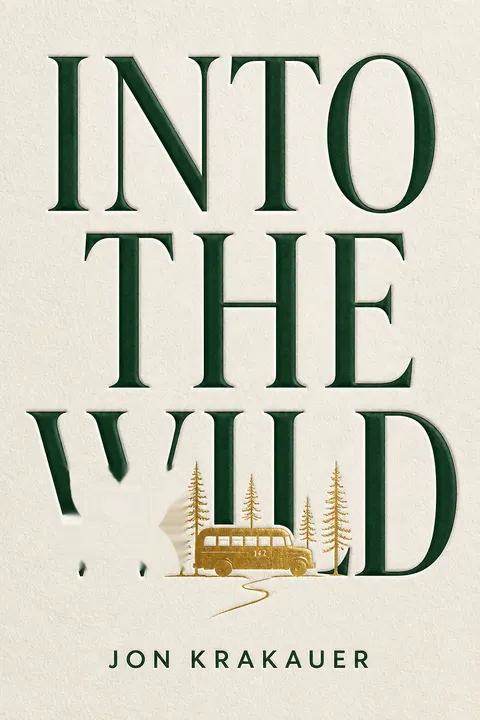

Plot Summary
The Last Postcard Home
In April 1992, Chris McCandless, a young man from a privileged background, sends a final postcard to his friend Wayne Westerberg, announcing his intention to disappear into the Alaskan wilderness. He signs off as "Alex," the name he's adopted for his new life. This act is both a farewell and a declaration of independence, signaling his break from society and family. The postcard is tinged with both excitement and foreshadowing, as Chris acknowledges the possibility of a fatal outcome. His words are filled with gratitude and a sense of destiny, as if he's stepping into a mythic adventure. This moment marks the threshold between his old life and the unknown, setting the stage for a journey that will test the limits of his ideals, endurance, and humanity.
Into Alaska's Wild Heart
Chris, now "Alex," hitchhikes to the edge of Denali National Park, where he's dropped off by Jim Gallien, a concerned Alaskan who senses the boy's lack of preparation. Chris's gear is minimal, his food supply meager, and his confidence unwavering. He walks into the wild, seeking to live off the land and escape the trappings of modern life. The landscape is both beautiful and harsh, indifferent to human longing. Chris finds an abandoned bus, which becomes his shelter and symbol of his quest. The wilderness, vast and silent, becomes a crucible for his ideals and illusions. As he settles in, the reality of survival sets in, and the line between adventure and danger begins to blur.
Reinventing the Self
After graduating from Emory University, Chris donates his savings to charity, abandons his car, burns his remaining cash, and adopts the name Alexander Supertramp. He rejects his family's expectations and the materialism of his upbringing, seeking authenticity through radical simplicity. His journey is as much internal as external—a search for meaning, purity, and self-reliance. Chris's transformation is fueled by the writings of Tolstoy, Thoreau, and Jack London, whose ideals of asceticism and communion with nature he tries to embody. This reinvention is both an act of rebellion and a spiritual pilgrimage, as he attempts to strip away all that is false and discover his true self in the wild.
Burning Bridges, Burning Cash
Chris's odyssey takes him across the American West, where he abandons his beloved Datsun after a flash flood and burns the last of his money. He embraces the uncertainty of the road, living as a drifter and forager. His actions are both symbolic and practical—a rejection of societal rules and a test of his ability to survive on his own terms. Chris's encounters with other wanderers, like Jan Burres and Bob, reveal his charm and idealism, but also his stubbornness and need for solitude. Each act of burning bridges is a step further from his past, but also a step closer to the edge of survival.
Desert Trials and River Dreams
Chris's journey leads him through deserts, rivers, and canyons, where he faces physical and existential challenges. He paddles a canoe down the Colorado River into Mexico, nearly drowning in the process. The desert becomes a place of revelation and suffering, sharpening his longing for transcendence. Chris's resourcefulness is tested as he navigates bureaucratic obstacles, hunger, and the dangers of the wild. His journal entries reveal both exhilaration and vulnerability, as he oscillates between triumph and despair. The landscape strips him bare, forcing him to confront the limits of his ideals and the realities of his own mortality.
Kindred Spirits on the Road
Along his travels, Chris forms deep but fleeting connections with people like Wayne Westerberg, Jan Burres, and Ronald Franz. These relationships offer him moments of warmth, mentorship, and surrogate family, yet he always keeps a distance, wary of emotional entanglement. Chris's charisma and sincerity leave lasting impressions on those he meets, inspiring affection and concern. Yet, his need for independence and fear of intimacy drive him to move on before bonds can deepen. These encounters highlight the tension between his longing for connection and his commitment to solitude, a conflict that shapes his journey and ultimate fate.
The Search for Connection
Despite his outward rejection of society, Chris is drawn to human connection. He befriends outcasts and misfits, shares meals and stories, and even inspires a teenage girl's affection. Yet, he consistently resists deeper attachment, fearing the loss of freedom and the pain of disappointment. His letters and conversations reveal a yearning for understanding and acceptance, but also a belief that true joy comes from new experiences and self-reliance. Chris's struggle to balance intimacy and independence reflects a deeper psychological conflict, rooted in his family history and personal ideals.
The Call of Carthage
In Carthage, South Dakota, Chris finds a temporary home and purpose working for Wayne Westerberg. The small town offers him a sense of belonging and the satisfaction of honest labor. He forms close friendships and becomes part of a surrogate family, experiencing the warmth and stability he often shuns. Yet, even here, Chris remains restless, driven by a need to test himself and pursue his Alaskan dream. Carthage becomes both a refuge and a launching pad, a place where he gathers strength and resources before setting out once more into the unknown.
Family Shadows and Secrets
Chris's relationship with his family is fraught with tension, secrecy, and unresolved anger. Discovering his father's past infidelities and feeling betrayed by parental hypocrisy, Chris becomes increasingly distant and judgmental. He holds his parents to impossible standards, unable to forgive their flaws or accept their love. His silence and disappearance are both punishment and escape, a way to assert control and seek authenticity. The pain of these family wounds haunts his journey, fueling his need for solitude and his quest for truth. Yet, the longing for reconciliation and understanding lingers beneath the surface.
The Allure of Solitude
Chris's journey is driven by a desire for solitude and self-discovery. He is drawn to the wild as a place of purity, free from the corruption and compromises of society. Inspired by literary heroes and spiritual seekers, he seeks to strip life down to its essentials and test his limits. Yet, solitude brings both clarity and suffering. As the months pass, the initial exhilaration gives way to hunger, weakness, and the ache of loneliness. Chris's journals reveal moments of joy and revelation, but also growing desperation and regret. The wild becomes both sanctuary and prison, a mirror for his deepest fears and hopes.
The Final Frontier
Arriving in Alaska, Chris is filled with anticipation and a sense of destiny. He enters the wilderness with minimal supplies, determined to live off the land and prove his self-sufficiency. The abandoned bus becomes his home, a symbol of both freedom and isolation. At first, he thrives, hunting small game and foraging for plants. But as the weeks pass, the challenges mount: food grows scarce, the river becomes impassable, and his body weakens. Alaska, the land of his dreams, reveals itself as both beautiful and indifferent, testing his ideals and resilience to the breaking point.
Hunger and Revelation
As summer deepens, Chris's situation grows dire. He makes a critical mistake, eating seeds that may be toxic or moldy, leading to rapid physical decline. Starvation sets in, and his journal entries become terse and desperate. In his final days, Chris reflects on happiness, love, and the meaning of life, scribbling notes in the margins of his books. He seems to reach a moment of clarity, recognizing that "happiness is only real when shared." Yet, it is too late—his strength fails, and he is unable to escape the wild. His death is both a tragedy and a culmination of his quest, a moment of peace and surrender.
Trapped by Nature's Hand
Chris's attempt to leave the wilderness is thwarted by the swollen Teklanika River, which has become impassable. Unaware of a nearby cable crossing and rescue cabins, he is forced to return to the bus, cut off from help. His isolation becomes absolute, and his fate is sealed by a combination of bad luck, inexperience, and the unforgiving realities of nature. In his final note, he expresses gratitude for his life and bids farewell to the world. The discovery of his body by hunters brings his story to an end, leaving behind questions, grief, and a legacy of inspiration and controversy.
The Meaning of the Wild
Chris's story sparks intense debate and reflection. Some see him as a reckless fool, others as a courageous idealist. His journey is compared to those of other wanderers and seekers, from Everett Ruess to John Muir. The wild becomes a symbol of both possibility and peril, a place where dreams are tested and illusions shattered. Chris's life and death force us to confront our own values, fears, and desires—the tension between freedom and responsibility, solitude and connection, idealism and reality. His story becomes a mirror for the American imagination, reflecting both its noblest aspirations and its darkest doubts.
Echoes of Other Wanderers
Chris's odyssey is placed in the context of other adventurers who sought meaning in the wild—some who survived, others who perished. The book draws parallels with figures like Everett Ruess, John Waterman, and Carl McCunn, exploring the psychological and cultural forces that drive individuals to test themselves against nature. These stories reveal both the allure and the dangers of the wilderness, the fine line between courage and folly. Chris's journey is both unique and universal, part of a long tradition of restless souls seeking transcendence, redemption, or escape in the vastness of the land.
The End and the Aftermath
The aftermath of Chris's death is marked by grief, confusion, and soul-searching for his family and those he touched. His parents and sister struggle to make sense of his choices and their own roles in his fate. The bus becomes a shrine, visited by those seeking connection or closure. The story resonates with readers and sparks debate about risk, responsibility, and the meaning of a life well lived. Chris's legacy is both cautionary and inspiring, a testament to the power of dreams and the cost of pursuing them to the end.
Lessons from the Wilderness
Chris McCandless's journey into the wild is ultimately a meditation on the human condition—our longing for meaning, our fear of vulnerability, our hunger for connection and transcendence. His story challenges us to examine our own lives: the compromises we make, the risks we avoid, the dreams we defer. It asks us to consider the balance between independence and interdependence, the value of solitude and the necessity of love. In the end, Chris's life and death remind us that the wild is both a place and a state of mind—a realm of possibility, danger, and revelation, where we confront the truth of who we are.
Analysis
A modern parable of idealism, risk, and the search for meaningInto the Wild endures as a powerful meditation on the human longing for authenticity, freedom, and transcendence. Chris McCandless's journey is both a cautionary tale and an inspiration—a testament to the beauty and peril of following one's convictions to the edge. The book challenges readers to reflect on the costs and rewards of radical independence, the necessity of connection, and the limits of self-reliance. It exposes the tensions between youthful idealism and the hard realities of nature, between the desire for solitude and the inescapable need for love. Krakauer's empathetic narrative resists easy answers, inviting us to see Chris not as a hero or a fool, but as a complex, flawed, and deeply human seeker. In a world increasingly disconnected from the wild and from each other, Chris's story asks us to consider what it means to live deliberately, to embrace risk, and to find meaning in both the journey and its inevitable end.
Review Summary
Into the Wild is a polarizing book about Christopher McCandless, who died alone in Alaska after abandoning society. Many readers find his story fascinating, praising Krakauer's empathetic portrayal and compelling writing. Others criticize McCandless as foolish and selfish. The book explores themes of adventure, idealism, and the allure of nature. Some reviewers appreciate Krakauer's objectivity, while others feel he glorifies McCandless. Despite differing opinions, most agree the book is thought-provoking and well-written, sparking discussions about society, freedom, and the pursuit of meaning in life.
People Also Read








Characters
Christopher Johnson McCandless (Alexander Supertramp)
Chris is the heart of the story—a brilliant, stubborn, and deeply principled young man driven by a longing for authenticity and transcendence. Raised in affluence, he becomes disillusioned with materialism and family secrets, leading him to reject his past and reinvent himself as "Alexander Supertramp." Chris is both charismatic and solitary, capable of forming deep connections yet always keeping others at arm's length. His psychological makeup is marked by a fierce independence, a hunger for meaning, and a tendency toward absolutism. Throughout his journey, he oscillates between joy and suffering, connection and isolation, ultimately seeking redemption in the wild. His tragic end is both a result of his ideals and his inability to reconcile them with the realities of life and human frailty.
Walt McCandless
Walt is Chris's father, a successful aerospace engineer whose ambition and drive shape the family's fortunes and tensions. He is both loving and authoritarian, providing for his children but also imposing high expectations and emotional distance. Walt's past infidelities and the resulting family secrets become a source of deep pain and resentment for Chris, fueling his quest for truth and authenticity. The father-son relationship is marked by misunderstanding, pride, and unspoken longing for reconciliation. Walt's grief after Chris's death is profound, leading him to reflect on his own flaws and the limits of parental influence.
Billie McCandless
Billie is Chris's mother, a hardworking and emotionally intense woman who shares her husband's drive but also bears the brunt of family turmoil. She is deeply attached to Chris, both proud of his independence and tormented by his silence and disappearance. Billie's love is fierce and unconditional, but she struggles to understand her son's choices and the pain that drives him away. After his death, she is haunted by dreams and memories, seeking solace in visiting the place where he died and trying to make sense of his journey.
Carine McCandless
Carine is Chris's younger sister and closest confidante, sharing a deep bond forged in childhood and family strife. She is energetic, ambitious, and more pragmatic than Chris, yet she understands his ideals and pain better than anyone. Carine's grief after his death is enduring and transformative, leading her to reflect on their shared history and her own path. Her perspective provides insight into Chris's character and the family dynamics that shaped him, highlighting the enduring impact of loss and the search for meaning.
Wayne Westerberg
Wayne is a grain elevator operator in Carthage, South Dakota, who becomes one of Chris's closest friends and mentors. He offers Chris work, shelter, and a sense of belonging, recognizing his intelligence and work ethic. Wayne's relationship with Chris is marked by mutual respect and affection, tempered by frustration at Chris's restlessness and refusal to settle down. Wayne represents the possibility of community and connection, serving as both anchor and launching pad for Chris's adventures.
Jan Burres
Jan is a middle-aged rubber tramp who, along with her partner Bob, befriends Chris on the road. She becomes a surrogate mother figure, offering him food, advice, and emotional support. Jan is drawn to Chris's sincerity and vulnerability, seeing echoes of her own estranged son in him. Their relationship is warm but limited by Chris's reluctance to share his past or accept help. Jan's concern for Chris highlights the tension between his need for independence and the human desire for connection.
Ronald Franz
Ron is an elderly, devout Christian who meets Chris in the California desert and forms a deep, paternal bond with him. Having lost his own family, Ron is profoundly affected by Chris's presence, even offering to adopt him as a grandson. Chris's influence inspires Ron to embrace a more adventurous and open life, but his death leaves Ron devastated and questioning his faith. Ron's story illustrates the power of brief encounters to change lives and the pain of loss that follows.
Jim Gallien
Jim is the last person to see Chris alive, giving him a ride to the edge of the wilderness and expressing concern about his lack of preparation. He represents the practical wisdom and skepticism of those familiar with Alaska's dangers. Jim's attempts to dissuade Chris and his later efforts to identify the body underscore the tension between youthful idealism and hard-earned experience.
Everett Ruess
Everett is a young artist and adventurer from the 1930s whose disappearance in the Utah desert mirrors Chris's journey and fate. Like Chris, he is driven by a longing for beauty, solitude, and transcendence, adopting new names and leaving behind cryptic messages. Everett's story serves as a cautionary tale and a source of inspiration, highlighting the enduring allure and peril of the wild.
Jon Krakauer
Krakauer is the author and narrator, whose own experiences as a young adventurer inform his understanding of Chris's journey. He weaves his personal reflections and research into the narrative, exploring the psychological and cultural forces that drive individuals to seek meaning in the wild. Krakauer's empathy and insight provide depth and nuance, challenging simplistic judgments and inviting readers to grapple with the complexities of Chris's life and death.
Plot Devices
Nonlinear Narrative Structure
The book employs a nonlinear structure, moving back and forth between Chris's final days in Alaska, his earlier travels, and the aftermath of his death. This approach allows the reader to piece together the mystery of his motivations and fate, gradually revealing the psychological and emotional forces at play. The use of flashbacks, letters, and journal entries creates a mosaic of perspectives, deepening our understanding of Chris and those he touched. The structure mirrors the fragmented nature of memory and the search for meaning, inviting readers to engage actively with the story.
Foreshadowing and Irony
From the outset, the narrative is suffused with a sense of impending doom, as Chris's final postcard and the reactions of those he meets foreshadow his fate. The irony of his situation—seeking freedom and self-reliance, only to become trapped and dependent on the land—underscores the gap between ideals and reality. The presence of rescue options just out of reach, such as the cable crossing and nearby cabins, heightens the sense of tragic inevitability. These devices reinforce the themes of hubris, innocence, and the unpredictability of nature.
Intertextuality and Literary Allusion
Chris's journey is shaped by his reading of Tolstoy, Thoreau, Jack London, and others, whose words he highlights, annotates, and seeks to live by. The book weaves these literary references into the narrative, using them to illuminate Chris's mindset and the broader tradition of American wilderness seekers. The interplay between text and life blurs the boundaries between fiction and reality, aspiration and experience, inviting readers to consider the power and limits of literature as a guide to living.
Psychological and Cultural Analysis
Krakauer delves into the psychological roots of Chris's actions, examining his family history, personality traits, and the cultural context of American individualism and wilderness mythology. The narrative draws parallels with other adventurers and misfits, situating Chris's story within a larger pattern of restless souls seeking meaning beyond the boundaries of society. This analytical lens adds depth and complexity, challenging readers to move beyond simplistic judgments and grapple with the ambiguities of human motivation.
FAQ
What's Into the Wild about?
- Chris McCandless's Journey: The book follows Christopher McCandless, a young man who leaves his possessions and family to explore the Alaskan wilderness.
- Themes of Freedom and Nature: It explores themes of freedom, the allure of nature, and self-discovery, as McCandless seeks to escape societal norms.
- Tragic Outcome: McCandless's journey ends tragically with his death from starvation, prompting reflections on idealism and isolation.
Why should I read Into the Wild by Jon Krakauer?
- Inspiring True Story: The narrative inspires readers to reflect on their own lives and the pursuit of meaning beyond societal constraints.
- Thought-Provoking Themes: It delves into themes like the relationship between man and nature, identity, and family dynamics.
- Engaging Writing: Krakauer's detailed and emotionally impactful writing vividly portrays McCandless's experiences and the landscapes he traversed.
What are the key takeaways of Into the Wild?
- Self-Discovery: The book emphasizes the importance of pursuing one's passions and personal truth, even through unconventional paths.
- Isolation's Consequences: It serves as a cautionary tale about the dangers of extreme isolation and romanticizing wilderness survival.
- Family Dynamics: The narrative highlights the complexities of family relationships and the impact of personal choices on familial bonds.
What are the best quotes from Into the Wild and what do they mean?
- “I now walk into the wild.”: Reflects McCandless's decision to embrace adventure and freedom from societal expectations.
- “The joy of life comes from our encounters with new experiences.”: Emphasizes the importance of seeking new experiences for joy and fulfillment.
- “Happiness is only real when shared.”: Suggests true happiness is found in connection with others, reflecting on McCandless's isolation.
What motivated Chris McCandless in Into the Wild?
- Desire for Authenticity: McCandless sought to live authentically, rejecting materialism and societal norms.
- Search for Meaning: He believed immersing himself in nature would provide clarity and understanding of himself and the world.
- Rebellion Against Society: Disconnected from his affluent upbringing, he pursued a more profound existence by abandoning possessions and family ties.
How did McCandless prepare for his journey in Into the Wild?
- Minimal Gear: He traveled with minimal supplies, including a rifle and a small amount of rice, which proved insufficient.
- Self-Taught Skills: Relied on self-taught survival skills from books, but lacked understanding of the Alaskan wilderness's harsh realities.
- Idealistic Mindset: His overconfidence in thriving in the wild contributed to his tragic fate.
What were the circumstances of McCandless's death in Into the Wild?
- Abandoned Bus: McCandless's body was found in an abandoned bus on the Stampede Trail in Alaska.
- Cause of Death: He died from starvation, with insufficient food and supplies to sustain himself.
- Final Days: His journal entries revealed a decline in health and increasing desperation, highlighting the risks of wilderness exploration.
How did McCandless's family react to his journey in Into the Wild?
- Concern and Confusion: Initially, his family was concerned and confused by his disappearance and lack of communication.
- Painful Discovery: After his death, they grappled with the pain of losing him and the complexities of their relationship.
- Reflection on Relationships: The family's reflections highlight the impact of McCandless's choices on their lives and familial bonds.
What parallels can be drawn between McCandless and other historical figures in Into the Wild?
- Everett Ruess: Like McCandless, Ruess was a young wanderer who sought beauty and adventure, sharing a romantic idealism and tragic end.
- John Waterman: Waterman exhibited similar ambition and recklessness, serving as a cautionary tale about isolation and extreme challenges.
- Cultural Archetypes: McCandless embodies the American wanderer archetype, drawing comparisons to figures like Thoreau and Muir.
How does Into the Wild address the theme of nature?
- Nature as a Teacher: Portrays nature as a powerful teacher offering beauty and danger, from which McCandless sought insights.
- Romantic Idealism: Explores the allure of nature for those seeking escape, reflecting McCandless's yearning for connection with the natural world.
- Harsh Realities: Confronts nature's unforgiving realities, emphasizing the risks of romanticizing wilderness survival.
What challenges did McCandless face in the wild?
- Survival Skills: Struggled with essential skills like hunting and foraging, contributing to his starvation.
- Isolation and Loneliness: His choice to isolate himself led to profound loneliness, a recurring theme in the book.
- Physical Hardships: Faced harsh weather, difficult terrain, and the physical toll of living off the land without adequate preparation.
What lessons can be learned from Into the Wild?
- Importance of Preparation: Highlights the necessity of preparation and knowledge when venturing into the wilderness.
- Understanding Human Nature: Encourages reflection on personal motivations and the complexities of human desires and relationships.
- Value of Connection: Emphasizes the importance of human connection and the dangers of extreme isolation, suggesting happiness often comes from shared experiences.
About the Author


Download PDF
Download EPUB
.epub digital book format is ideal for reading ebooks on phones, tablets, and e-readers.








































