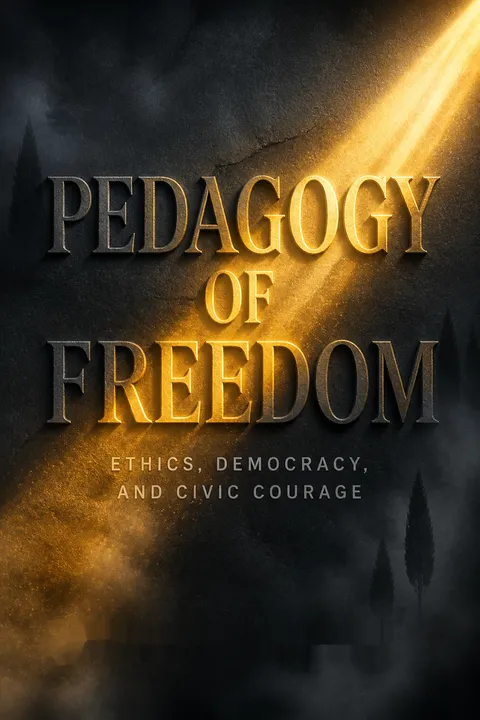

Key Takeaways
1. Teaching is a process of learning and creating knowledge, not just transferring it.
There is, in fact, no teaching without learning.
Mutual process. The fundamental principle of progressive education is that teaching and learning are inseparable, reciprocal acts. The teacher learns as they teach, and the learner teaches as they learn. This dynamic relationship means neither is a passive object; both are active subjects in the construction of knowledge.
Beyond transmission. Teaching is not merely depositing information into students' minds, like filling a bank account. It's about creating the conditions and possibilities for students to produce, construct, and reconstruct knowledge themselves. This requires the teacher to be open, questioning, and aware of their own ongoing learning process.
Historical discovery. The capacity to teach arose historically from the capacity to learn. This implies that learning logically precedes teaching and is embedded within it. Effective teaching emerges from the teacher's own experience of learning, fostering creative curiosity and methodological rigor in both teacher and student.
2. Education is inherently ethical and requires a universal human ethic.
I am speaking of a universal human ethic, an ethic that is not afraid to condemn the kind of ideological discourse I have just cited.
Ethical foundation. Education is a profoundly human act, and as such, it is intrinsically ethical. This isn't about a narrow, market-driven ethics focused on profit, but a universal human ethic that condemns exploitation, discrimination (racial, sexual, class), and the fabrication of lies.
Beyond neutrality. Teachers cannot claim to be neutral observers. Every act of teaching, every curriculum choice, every interaction carries ethical weight and reveals a point of view. Choosing to ignore injustice or deny the possibility of change is itself an ethical stance, one that aligns with oppressive systems.
Transgression is possible. While ethical grounding is inevitable for human beings aware of their unfinishedness and capacity for choice, transgression is also possible. Choosing to act unethically (e.g., discriminating, lying, being cruel) is a denial of our essential humanity, not a virtue.
3. Curiosity is the engine of learning and must evolve from ingenuous to critical.
For Freire, then, “the foundation stone of the whole [educational] process is human curiosity. This is what makes me question, know, act, ask again, recognize.”
Innate drive. Curiosity is a fundamental human trait, present in all vital experience, from a child's wonder to a scientist's inquiry. It is the restless questioning that drives us to seek clarity, reveal the hidden, and add something of our own making to the world.
From common sense to epistemology. Curiosity begins as ingenuous, common-sense knowing derived from pure experience. Through critical reflection and methodological rigor, this same curiosity can develop into epistemological curiosity, capable of a deeper, more scientific grasp of the object of knowledge.
Stimulating critical inquiry. A key task of progressive education is to promote critical, bold, and adventurous curiosity. This involves:
- Respecting students' ingenuous knowledge as a starting point.
- Introducing methodological exactitude.
- Encouraging questioning, comparison, doubt, and vigilance.
- Defending curiosity against stifling authoritarianism or excessive rationality.
4. Respect for students' knowledge and identity is fundamental to progressive practice.
It’s impossible to talk of respect for students for the dignity that is in the process of coming to be, for the identities that are in the process of construction, without taking into consideration the conditions in which they are living and the importance of the knowledge derived from life experience, which they bring with them to school.
Dignity and autonomy. Respect for the autonomy, dignity, and identity of every learner is an ethical imperative, not a favor. This respect is crucial because students are unfinished beings in the process of becoming, constructing their selves and their understanding of the world.
Valuing lived experience. Teachers must not underestimate or ridicule the knowledge students bring from their life experiences, especially those from marginalized communities. This "common sense" knowledge is the starting point for developing more critical, scientific understanding.
Coherence in practice. Respect is demonstrated through coherent actions, not just words. This means:
- Avoiding discrimination, inhibition, or arrogant irony.
- Being respectfully present in students' educational experiences.
- Recognizing the socio-cultural and economic conditions shaping students' lives.
- Engaging students in dialogue about their reality and its underlying causes.
5. Hope is an ontological dimension of human unfinishedness, essential for action.
Hope is a natural, possible, and necessary impetus in the context of our unfinishedness.
Beyond fatalism. Hope is not mere sentimentality but a fundamental aspect of the human condition, rooted in our awareness of being unfinished. This awareness implies a permanent search and the possibility of intervention to improve the world, countering cynical fatalism and resignation.
Fuel for struggle. Hope is indispensable for historical action. Without it, we are reduced to pure determinism, where the future is fixed and unchangeable. Hope fuels our nonconformity, our indignation in the face of injustice, and our struggle for a more humanized society.
Combating hopelessness. While hopelessness is a distortion of the human condition, it is often generated by objective conditions of misery and oppression. Educators have a responsibility to diminish these objective reasons for hopelessness and affirm the inherent human capacity for hope and transformation.
6. Education is a political act of intervention in the world, never neutral.
Education never was, is not, and never can be neutral or indifferent in regard to the reproduction of the dominant ideology or the interrogation of it.
Directive vocation. Education, as a specifically human act, has a "directive" quality; it is oriented towards dreams, ideals, and objectives. This inherent orientation makes it political, whether it aims to reproduce the existing social order or to transform it.
Unmasking ideology. Education is not simply an instrument of the dominant ideology, nor is it automatically an instrument for unmasking it. It exists in a dialectical tension between these possibilities. Progressive educators must actively work to unmask oppressive ideologies, such as the fatalism of neoliberalism.
Choosing a side. Teachers cannot be neutral. Their presence and practice inevitably align with either the forces of reproduction or the forces of transformation. Choosing a progressive stance means actively defending human interests against the ethics of the marketplace and struggling against discrimination and injustice.
7. Authority and freedom exist in a necessary, tense harmony, requiring mutual respect.
Resulting from the harmony between authority and freedom, discipline necessarily implies respect of the one for the other.
Avoiding extremes. True discipline arises from the dynamic tension between authority and freedom, not from their absence or the dominance of one over the other. Authoritarianism (authority without freedom) and license (freedom without authority) are both undisciplined forms of behavior that deny human potential.
Democratic authority. Legitimate, democratic authority in teaching is characterized by self-confidence, professional competence, and generosity. It respects students' freedom and autonomy while guiding them towards self-construction and responsibility.
Learning to decide. Freedom matures through confrontation and decision-making. A pedagogy of autonomy stimulates decision-making and responsibility, allowing learners to ethically integrate limits and build their own authority, rather than simply submitting to external rules.
8. Knowing how to listen is crucial for genuine dialogue and understanding.
To listen, in the context of our discussion here, is a permanent attitude on the part of the subject who is listening, of being open to the word of the other, to the gesture of the other, to the differences of the other.
Beyond hearing. Listening is an active, ethical posture that goes beyond mere physical hearing. It requires openness to the other person's perspective, experiences, and differences, even when disagreeing.
Foundation of dialogue. Genuine communication and understanding are grounded in dialogue, which requires both speaking and listening. The democratic teacher learns to speak with students by first learning to listen to them, their doubts, fears, and unique worldviews.
Cultivating humility. Effective listening demands humility, tolerance, and a refusal to see oneself as superior. Prejudice against others based on class, race, gender, or culture prevents true listening and dialogue, reinforcing oppressive dynamics.
9. Ideology shapes perception and must be critically unmasked.
The power of ideology makes me think of those dewy mornings when the mist distorts the outline of the cypress trees and they become shadows of something we know is there but cannot really define.
Distorting reality. Ideology has an insidious power to distort perception, making us accept a biased view of reality as natural or inevitable. It can cloak truth, confuse curiosity, and lead to passive acceptance of unjust conditions.
Fatalism as ideology. Neoliberal fatalism, which presents mass unemployment or economic globalization as unavoidable destiny, is a prime example of ideology at work. It masks the historical, political, and ethical choices that create these conditions, serving the interests of dominant powers.
Critical resistance. Resisting the manipulative power of ideology requires permanent critical vigilance, methodical mistrust of absolute certainties, and openness to different perspectives. It involves unmasking the hidden interests behind dominant narratives and affirming the possibility of change.
10. Teacher coherence and competence are vital for ethical practice and dignity.
What I’m saying is that professional incompetence destroys the legitimate authority of the teacher.
Integrity in action. A teacher's coherence—the alignment between what they say, write, and do—is as crucial as their knowledge of content. Inconsistency undermines credibility and damages the ethical foundation of teaching.
Beyond content. Teaching involves more than transmitting subject matter; it includes the teacher's ethical posture, commitment to thoroughness, investment in excellence, and respect for students. These qualities are integral to the art and practice of teaching.
Struggle for dignity. Teachers have a duty to struggle for their own dignity and rights, including fair salaries and working conditions. This struggle is not external to teaching but an integral part of ethical practice, demonstrating commitment and political organization.
Review Summary
Pedagogy of Freedom is widely praised as an inspiring and thought-provoking work on critical pedagogy. Readers appreciate Freire's emphasis on respecting students' autonomy, fostering critical thinking, and challenging oppressive systems. Many find it relevant beyond education, applicable to various fields. Some criticize the writing as repetitive or difficult to understand. Overall, it is considered an essential read for educators committed to transformative teaching practices and social justice.
People Also Read


FAQ
What is "Pedagogy of Freedom" by Paulo Freire about?
- Exploration of Critical Pedagogy: The book examines the ethical, political, and philosophical foundations of teaching, emphasizing education as a practice of freedom rather than mere technical training.
- Teacher and Student Autonomy: Freire argues for the autonomy of both teachers and students, advocating for a dialogical, participatory approach to education.
- Critique of Neoliberalism: The text critiques the rise of neoliberal, market-driven education models that prioritize technical skills over critical consciousness and ethical formation.
- Emphasis on Ethics and Democracy: Freire insists that teaching is inherently ethical and political, requiring educators to take a stand against oppression and for social justice.
Why should I read "Pedagogy of Freedom" by Paulo Freire?
- Foundational Work in Critical Pedagogy: The book is a cornerstone for understanding critical pedagogy and the role of education in social transformation.
- Relevance to Contemporary Education: Freire’s critique of technocratic, market-oriented education remains highly relevant in today’s globalized, neoliberal context.
- Guidance for Educators: It offers practical and philosophical guidance for teachers seeking to foster critical thinking, autonomy, and ethical responsibility in their students.
- Inspiration for Civic Courage: The book encourages educators and learners to act with civic courage, challenging injustice and promoting democratic values.
What are the key takeaways from "Pedagogy of Freedom" by Paulo Freire?
- Teaching Is Not Transferring Knowledge: Education should create possibilities for the production and construction of knowledge, not just the transfer of information.
- Ethics Are Central to Education: All educational practice is inherently ethical and should be grounded in a universal human ethic, not just market values.
- Critical Reflection and Dialogue: Teachers and students must engage in ongoing critical reflection and dialogue, recognizing their unfinishedness and capacity for change.
- Education as Political and Ideological: There is no neutral education; teaching always involves taking a stand on social, political, and ethical issues.
How does Paulo Freire define "critical pedagogy" in "Pedagogy of Freedom"?
- Dialogical and Participatory: Critical pedagogy is based on dialogue between teachers and students, where both are co-learners and co-creators of knowledge.
- Focus on Critical Consciousness: It aims to develop "conscientization," or critical awareness of social, political, and economic realities.
- Opposition to "Banking Education": Freire rejects the "banking" model, where students are passive recipients, advocating instead for active, problem-posing education.
- Emphasis on Social Transformation: Critical pedagogy is not just about individual enlightenment but about collective action to transform unjust social structures.
What does "unfinishedness" mean in "Pedagogy of Freedom" by Paulo Freire?
- Human Beings as Incomplete: Freire sees humans as inherently unfinished, always in the process of becoming and learning.
- Foundation for Education: This awareness of unfinishedness is what makes education possible and necessary, as it drives curiosity and the search for knowledge.
- Openness to Change: Recognizing unfinishedness means being open to new ideas, self-criticism, and transformation.
- Ethical and Political Implications: Unfinishedness underpins the ethical responsibility to intervene in the world and strive for justice.
How does "Pedagogy of Freedom" by Paulo Freire address the relationship between teaching and learning?
- Mutual Process: Teaching and learning are reciprocal; teachers learn as they teach, and students teach as they learn.
- Creation of Knowledge: The role of the teacher is to create conditions for knowledge production, not simply to transmit facts.
- Respect for Student Knowledge: Teachers must value and build upon the lived experiences and knowledge that students bring to the classroom.
- Critical Reflection: Both teaching and learning require ongoing critical reflection on practice to foster growth and transformation.
What is the role of ethics in education according to "Pedagogy of Freedom" by Paulo Freire?
- Universal Human Ethic: Freire advocates for an ethic that transcends market values, rooted in human dignity, solidarity, and justice.
- Ethical Responsibility of Teachers: Educators must act ethically in their relationships with students, colleagues, and society, modeling integrity and respect.
- Rejection of Neutrality: Claiming neutrality in education is itself an ethical stance, often serving to perpetuate injustice.
- Ethics and Social Change: Ethical education is inseparable from the struggle against discrimination, oppression, and dehumanization.
How does Paulo Freire critique neoliberalism and technocratic education in "Pedagogy of Freedom"?
- Critique of Market-Driven Models: Freire denounces the reduction of education to technical training aimed at serving market needs.
- Dehumanization of Learners: Neoliberalism treats students as objects to be trained, not as subjects capable of critical thought and agency.
- Fatalism and Adaptation: Neoliberal ideology promotes fatalism, urging adaptation to "inevitable" social realities rather than challenging them.
- Defense of Utopia and Hope: Freire insists on the right to dream and struggle for a better world, rejecting the cynicism of neoliberal pragmatism.
What practical advice does "Pedagogy of Freedom" by Paulo Freire offer to teachers?
- Foster Critical Curiosity: Encourage students to question, explore, and critically engage with the world around them.
- Practice Humility and Openness: Teachers should be humble, open to learning from students, and willing to admit their own limitations.
- Integrate Ethics and Content: Teaching should always connect subject matter with ethical reflection and social responsibility.
- Struggle for Dignity and Rights: Teachers must advocate for their own dignity and rights, as well as those of their students, within and beyond the classroom.
What are the key concepts introduced in "Pedagogy of Freedom" by Paulo Freire?
- Conscientization: The process of developing critical consciousness about social and political realities.
- Banking Model vs. Problem-Posing Education: Contrasting passive receipt of knowledge with active, dialogical learning.
- Unfinishedness: The idea that humans are always in the process of becoming, which grounds the need for education.
- Ethics of Solidarity: The imperative to act in solidarity with the oppressed and to challenge injustice through education.
How does "Pedagogy of Freedom" by Paulo Freire address the tension between authority and freedom in education?
- Democratic Authority: Freire advocates for a form of authority grounded in competence, respect, and dialogue, not authoritarianism.
- Freedom with Responsibility: True freedom in education involves responsibility, decision-making, and ethical limits, not license or chaos.
- Mutual Respect: Authority and freedom must coexist in a relationship of mutual respect, fostering discipline and autonomy.
- Role Modeling: Teachers should model the balance of authority and freedom, helping students develop their own autonomy and critical judgment.
What are the best quotes from "Pedagogy of Freedom" by Paulo Freire and what do they mean?
- "To teach is not to transfer knowledge but to create the possibilities for the production or construction of knowledge."
- Freire emphasizes the active, creative role of both teacher and student in the learning process.
- "There is no teaching without learning."
- Teaching and learning are inseparable, reciprocal acts that transform both teacher and student.
- "Education never was, is not, and never can be neutral or indifferent in regard to the reproduction of the dominant ideology or the interrogation of it."
- Freire insists that education is always political and ideological, requiring educators to take a stand.
- "Hope is an indispensable seasoning in our human, historical experience. Without it, instead of history we would have pure determinism."
- Freire highlights the importance of hope and agency in shaping history and resisting fatalism.
- "Respect for the autonomy and dignity of every person is an ethical imperative and not a favor that we may or may not concede to each other."
- Freire grounds his pedagogy in a universal ethic of respect and human dignity.
Download PDF
Download EPUB
.epub digital book format is ideal for reading ebooks on phones, tablets, and e-readers.








































