
Key Takeaways
1. The Brain as a Filter, Not a Generator of Consciousness
The brain—in particular its left-side linguistic/logical part, that which generates our sense of rationality and the feeling of being a sharply defined ego or self—is a barrier to our higher knowledge and experience.
Challenging Materialism. The book challenges the prevailing materialistic view that the brain generates consciousness, proposing instead that the brain acts as a filter or reducing valve, limiting our access to a larger, nonphysical consciousness. This perspective suggests that our everyday awareness is a fraction of a more expansive reality. This is a radical departure from conventional neuroscience, which posits that consciousness is solely a product of brain activity.
Analogy of the Sun. The author uses the analogy of the sun's light blocking the stars from view to illustrate how the brain's filtering function obscures our awareness of the larger cosmic background. Just as we can't see the stars during the day, our brain's focus on physical reality prevents us from perceiving the spiritual realm. This filtering is not a flaw, but a necessary function for navigating the physical world.
Implications for Understanding. By reframing the brain as a filter, the author opens up new possibilities for understanding consciousness and its relationship to the universe. This perspective suggests that our true selves are not limited to our physical bodies but are connected to a larger, nonphysical reality. This shift in perspective has profound implications for how we view life, death, and our place in the cosmos.
2. Unconditional Love as the Foundation of Reality
Love is, without a doubt, the basis of everything.
Core Message. The most profound discovery from the author's near-death experience (NDE) was the realization that unconditional love is the fundamental basis of all existence. This love is not merely an emotion but the very fabric of the spiritual realm, permeating every aspect of reality. This love is not conditional or dependent on our actions but is freely given and eternally present.
Experiencing Unconditional Love. The author experienced this unconditional love directly during his NDE, feeling cherished and accepted without reservation. This experience transformed his understanding of God, not as an impersonal force, but as a warm, compassionate, and personal being who understands and loves each of us deeply. This love is the driving force behind creation and the ultimate destination of all beings.
Practical Implications. This understanding of unconditional love has profound implications for how we live our lives. By embodying love and compassion in our actions, we align ourselves with the fundamental nature of reality and move closer to our true spiritual selves. This love transcends earthly limitations and connects us to a larger, eternal reality.
3. The Illusion of Separation and the Power of Connection
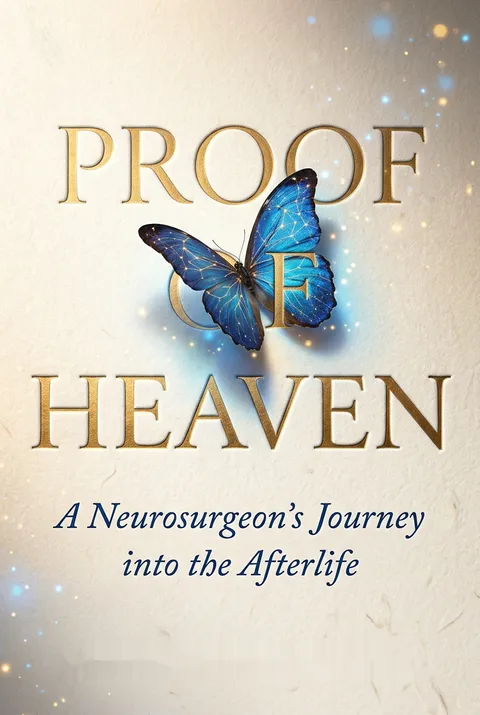
Everything was distinct, yet everything was also a part of everything else, like the rich and intermingled designs on a Persian carpet . . . or a butterfly’s wing.
Interconnectedness. The author's NDE revealed the illusion of separation that characterizes our earthly existence. In the spiritual realm, everything is interconnected, like the intricate patterns of a Persian carpet or the delicate veins of a butterfly's wing. This interconnectedness transcends physical boundaries and connects all beings in a unified whole.
Breaking Down Barriers. This understanding challenges our conventional view of the universe as a collection of separate objects and individuals. Instead, it suggests that we are all part of a larger, interconnected web of consciousness. This realization has profound implications for how we relate to others and the world around us.
Embracing Oneness. By recognizing our interconnectedness, we can cultivate greater empathy, compassion, and understanding. This awareness can lead to a more harmonious and sustainable way of living, where we prioritize the well-being of all beings and the planet as a whole. This is the key to unlocking our full potential and creating a more just and equitable world.
4. The Purpose of Free Will and the Role of Evil
Evil was necessary because without it free will was impossible, and without free will there could be no growth—no forward movement, no chance for us to become what God longed for us to be.
Free Will's Necessity. The author learned that free will is essential for spiritual growth and development, even though it allows for the existence of evil. Without the freedom to choose, we cannot learn, grow, or become the beings God intends us to be. This perspective offers a new way of understanding the presence of suffering and injustice in the world.
Evil's Limited Scope. While evil may seem powerful and pervasive on Earth, it is ultimately a tiny fraction of the larger picture. In the grand scheme of the universe, love is overwhelmingly dominant, and evil serves only as a catalyst for growth and transformation. This understanding provides hope and reassurance in the face of adversity.
Choosing Love. The existence of evil underscores the importance of making conscious choices aligned with love and compassion. By choosing love over fear, we contribute to the triumph of good and create a more harmonious world. This is the essence of our spiritual journey and the key to fulfilling our divine potential.
5. The Multi-Dimensional Nature of Reality
I saw that there are countless higher dimensions, but that the only way to know these dimensions is to enter and experience them directly.
Beyond Physicality. The author's NDE revealed that reality extends far beyond the physical dimensions we perceive with our senses. There are countless higher dimensions that exist beyond our current understanding, each with its own unique properties and possibilities. These dimensions are not merely theoretical constructs but are real places that can be accessed through direct experience.
Experiential Knowledge. The author emphasizes that these higher dimensions cannot be understood through intellectual analysis alone. The only way to truly know them is to enter and experience them directly, through practices such as meditation, prayer, or altered states of consciousness. This perspective challenges the limitations of purely materialistic science.
Implications for Exploration. This understanding opens up new avenues for exploring the nature of reality and our place within it. By embracing the multi-dimensional nature of existence, we can expand our consciousness and unlock new levels of understanding and potential. This is the key to unlocking the mysteries of the universe and our own spiritual evolution.
6. The Importance of Remembering Our Divine Origins
You are loved and cherished, dearly, forever.
Forgotten Truth. The author's NDE revealed a fundamental truth that we have all forgotten: that we are loved and cherished unconditionally by a divine source. This love is not dependent on our actions or worthiness but is freely given and eternally present. Remembering this truth is essential for healing and transformation.
Overcoming Amnesia. The author suggests that our earthly existence is a form of amnesia, where we have forgotten our true identity and our connection to the divine. This amnesia creates a sense of separation and fear, leading to suffering and conflict. Overcoming this amnesia is the key to unlocking our full potential and experiencing true joy.
Reclaiming Our Birthright. By remembering our divine origins, we can reclaim our birthright of love, joy, and peace. This remembrance can be facilitated through practices such as meditation, prayer, and connection with nature. This is the path to healing our wounds and living a life of purpose and fulfillment.
7. The Healing Power of Knowledge and Connection
Knowing where I came from, my biological origins, allowed me to see, and to accept, things in myself that I’d never dreamed I’d have been able to.
Personal History. The author's journey to reconnect with his biological family highlighted the profound impact of knowing one's origins. This knowledge allowed him to understand and accept aspects of himself that had previously been hidden or denied. This experience underscores the importance of connection and belonging for healing and wholeness.
Breaking Cycles. By understanding his past, the author was able to break free from negative patterns and embrace a more authentic and fulfilling life. This transformation demonstrates the power of knowledge and connection to heal wounds and create positive change. This is the key to unlocking our full potential and living a life of purpose and meaning.
Universal Application. The author's experience has universal implications for all of us. By seeking to understand our own histories and connect with our roots, we can gain valuable insights into ourselves and our place in the world. This journey of self-discovery can lead to greater self-acceptance, compassion, and connection with others.
8. The Ultra-Reality of Spiritual Experience
The place I went was real. Real in a way that makes the life we’re living here and now completely dreamlike by comparison.
Beyond the Physical. The author emphasizes that the spiritual realm he experienced during his NDE was not a mere hallucination or dream but an ultra-real dimension that transcends our physical world. This realm is characterized by a clarity, vibrancy, and intensity that surpasses anything we can experience on Earth. This perspective challenges our conventional understanding of reality.
Shifting Perspective. This ultra-reality shifts our perspective on the nature of existence, suggesting that our physical world is a limited and incomplete representation of a much larger and more profound reality. This understanding can help us to prioritize spiritual growth and connection over material pursuits. This is the key to unlocking our full potential and living a life of purpose and meaning.
Embracing the Unknown. By embracing the ultra-reality of spiritual experience, we can open ourselves to new possibilities and expand our understanding of the universe. This journey of exploration can lead to greater wisdom, compassion, and connection with the divine. This is the path to true fulfillment and lasting happiness.
9. The Interconnectedness of Science and Spirituality
Science—the science to which I’ve devoted so much of my life—doesn’t contradict what I learned up there.
Bridging the Divide. The author argues that science and spirituality are not mutually exclusive but are interconnected aspects of a larger reality. His NDE provided him with scientific insights that complement and expand our understanding of the universe. This perspective challenges the prevailing materialistic worldview that dominates much of modern science.
Consciousness as Key. The author emphasizes the importance of consciousness in understanding the universe. He suggests that consciousness is not merely a byproduct of physical processes but is a fundamental aspect of reality that shapes our perception and experience. This perspective opens up new avenues for scientific inquiry.
Holistic Approach. By integrating science and spirituality, we can develop a more holistic and comprehensive understanding of the universe and our place within it. This approach can lead to new discoveries and innovations that benefit both humanity and the planet. This is the key to creating a more sustainable and harmonious future.
10. The Journey Back: Integrating the Experience
I’m living proof.
Living Proof. The author's recovery and transformation serve as living proof of the power of spiritual experience and the interconnectedness of science and spirituality. His story offers hope and inspiration to others who are seeking meaning, healing, and connection. This is the key to unlocking our full potential and living a life of purpose and meaning.
Sharing the Message. The author sees it as his duty to share his story and the lessons he learned during his NDE. By speaking out, he hopes to inspire others to explore their own spiritual potential and to embrace a more holistic and compassionate worldview. This is the key to creating a more just and equitable world.
Embracing the Journey. The author's journey is not just about his personal transformation but about the potential for all of us to awaken to our true nature and our connection to the divine. By embracing the journey of self-discovery and spiritual growth, we can create a more meaningful and fulfilling life for ourselves and for generations to come.
Review Summary
Proof of Heaven received mixed reviews. Many readers found it compelling and comforting, particularly those seeking evidence of an afterlife. They appreciated Alexander's scientific background and his detailed explanation of his near-death experience. However, some critics felt the book lacked scientific rigor and relied too heavily on personal anecdotes. Skeptics argued that Alexander's experience could be explained by natural phenomena. Despite the criticisms, many readers found the book thought-provoking and inspiring, praising its message of love and interconnectedness.
People Also Read




FAQ
1. What is "Proof of Heaven" by Eben Alexander about?
- Personal Near-Death Experience: The book recounts Dr. Eben Alexander’s extraordinary near-death experience (NDE) during a seven-day coma caused by a rare case of E. coli bacterial meningitis.
- Journey Beyond the Brain: Alexander, a neurosurgeon, describes his consciousness traveling to realms beyond the physical world, including encounters with spiritual beings and a loving, divine presence.
- Challenge to Materialism: The narrative challenges the materialist view that consciousness is solely a product of the brain, suggesting instead that consciousness exists independently and survives bodily death.
- Integration of Science and Spirituality: The book blends Alexander’s medical expertise with his spiritual revelations, aiming to bridge the gap between science and faith regarding the afterlife.
2. Why should I read "Proof of Heaven" by Eben Alexander?
- Unique Perspective: The author is a Harvard-trained neurosurgeon who was previously skeptical of NDEs, making his transformation and testimony especially compelling.
- Detailed Medical Context: The book provides a thorough medical account of Alexander’s illness, coma, and recovery, offering credibility and context for his experience.
- Exploration of Consciousness: Readers interested in the nature of consciousness, the mind-brain relationship, and the possibility of life after death will find the book thought-provoking.
- Hope and Comfort: The story offers reassurance and hope to those grappling with mortality, grief, or spiritual uncertainty, emphasizing unconditional love and the continuity of existence.
3. What are the key takeaways from "Proof of Heaven" by Eben Alexander?
- Consciousness Survives Death: Alexander’s experience suggests that consciousness is not produced by the brain and continues after physical death.
- Unconditional Love at the Core: The central message received during his NDE is that we are all loved and cherished unconditionally, and there is nothing to fear.
- Science and Spirituality Can Coexist: The book argues that scientific inquiry and spiritual understanding are not mutually exclusive and can inform each other.
- Personal Transformation: Alexander’s journey led to a profound shift in his worldview, from skepticism to a deep conviction in the reality of the spiritual realm.
4. How does Eben Alexander describe his near-death experience (NDE) in "Proof of Heaven"?
- Stages of the Experience: Alexander describes moving through several realms: a dark, primordial underworld (“Earthworm’s-Eye View”), a vibrant “Gateway” filled with beauty and love, and a “Core” of infinite, divine presence.
- Encounters with Beings: He meets a beautiful, loving female guide (later revealed to be his deceased biological sister) and experiences communication with a divine entity he calls “Om.”
- Nonverbal Communication: Information and understanding are conveyed instantly and wordlessly, bypassing language and logic.
- Ultra-Real Sensations: The experience is described as more real than ordinary life, with heightened clarity, vividness, and a sense of timelessness.
5. What scientific and medical context does Eben Alexander provide in "Proof of Heaven"?
- Medical Impossibility: Alexander’s neocortex—the part of the brain responsible for thought and consciousness—was severely compromised, making conventional explanations for his vivid experiences unlikely.
- Review of Hypotheses: He systematically examines and rejects neuroscientific explanations such as hallucinations, REM intrusion, drug effects, and brainstem activity, based on his medical records and knowledge.
- Unique Case: His case is described as “N of 1,” meaning it is virtually unprecedented in medical literature for someone to survive and recover fully from such a severe illness and coma.
- Expert Testimony: The book includes statements from his treating physicians, confirming the severity and improbability of his recovery.
6. What are the main spiritual and philosophical messages in "Proof of Heaven" by Eben Alexander?
- You Are Loved: The core message Alexander receives is that every person is deeply loved and cherished by the divine, forever.
- Nothing to Fear: He is told there is nothing to fear and nothing one can do wrong in the ultimate sense.
- Purpose of Life: Earthly life is seen as an opportunity for growth, learning, and the exercise of free will, with challenges serving a higher purpose.
- Interconnectedness: All beings and universes are interconnected, with love as the fundamental fabric of reality.
7. How does "Proof of Heaven" by Eben Alexander address the relationship between science and spirituality?
- Critique of Materialism: Alexander critiques the materialist paradigm that consciousness arises solely from brain activity, arguing that his experience demonstrates otherwise.
- Call for Open Inquiry: He encourages scientists to seriously investigate NDEs and other spiritual phenomena rather than dismissing them out of hand.
- Integration of Disciplines: The book advocates for a new paradigm where science and spirituality inform and enrich each other, especially in understanding consciousness.
- References to Quantum Physics: Alexander references concepts from quantum mechanics and consciousness studies to support the plausibility of non-material realities.
8. What specific concepts and realms does Eben Alexander describe in "Proof of Heaven"?
- Earthworm’s-Eye View: A dark, primitive realm representing a state of existence without memory, identity, or language—possibly analogous to the early stages of death or deep unconsciousness.
- The Gateway: A beautiful, hyper-real landscape filled with vibrant life, music, and a sense of overwhelming love and joy, guided by a female companion.
- The Core: An infinite, dark-yet-light realm where Alexander encounters the divine source (“Om”) and receives direct, wordless knowledge about the universe.
- The Spinning Melody: A musical, spinning light that serves as a portal between realms, symbolizing the power of love and connection.
9. How did Eben Alexander’s NDE in "Proof of Heaven" affect his personal life and worldview?
- Transformation from Skeptic to Believer: Alexander moves from being a secular, materialist neurosurgeon to someone convinced of the reality of the spiritual realm.
- Healing of Emotional Wounds: His experience helps him resolve feelings of abandonment related to his adoption and brings a sense of wholeness and belonging.
- Renewed Relationships: He reconnects with his biological family and finds new meaning in his relationships with loved ones.
- Sense of Mission: Alexander feels called to share his story to help others overcome fear of death and to encourage a more open-minded approach to consciousness and spirituality.
10. What advice or methods does Eben Alexander offer for spiritual growth in "Proof of Heaven"?
- Meditation and Prayer: Alexander recommends meditation (specifically mentioning Hemi-Sync audio technology) and prayer as ways to access deeper states of consciousness and spiritual insight.
- Openness to Experience: He encourages readers to remain open to the possibility of spiritual realities and to seek direct personal experience rather than relying solely on secondhand accounts.
- Cultivating Love and Compassion: Manifesting love and compassion in daily life is presented as the most effective way to align with the spiritual realm.
- Integration of Knowledge: He suggests that true understanding comes from integrating both scientific and spiritual perspectives.
11. What are some of the best quotes from "Proof of Heaven" by Eben Alexander and what do they mean?
- “You are loved and cherished, dearly, forever. You have nothing to fear. There is nothing you can do wrong.” – This is the central message Alexander receives during his NDE, encapsulating the book’s core spiritual insight.
- “Love is, without a doubt, the basis of everything.” – Emphasizes that love is not just an emotion but the fundamental reality underlying all existence.
- “Science—the science to which I’ve devoted so much of my life—doesn’t contradict what I learned up there.” – Suggests that true science is open to new evidence and can coexist with spiritual truths.
- “The brain is a reducing valve, not a producer, of consciousness.” – Challenges the conventional neuroscientific view and proposes that the brain filters a much larger, nonphysical consciousness.
12. How does "Proof of Heaven" by Eben Alexander address skepticism and criticism regarding near-death experiences?
- Systematic Rebuttal: Alexander addresses and refutes common neuroscientific explanations for NDEs, using his own medical data and expertise.
- Personal Transformation as Evidence: He presents his own radical shift from skeptic to believer as a testament to the authenticity of his experience.
- Encouragement of Open-Mindedness: The book urges readers, especially scientists and doctors, to examine the evidence for NDEs with genuine curiosity rather than dismissive skepticism.
- Acknowledgment of Doubt: Alexander openly discusses his own lingering doubts and the process of reconciling his experience with his scientific background, making his account relatable and credible.
About the Author
Other books by Eben Alexander

Download PDF
Download EPUB
.epub digital book format is ideal for reading ebooks on phones, tablets, and e-readers.








































