
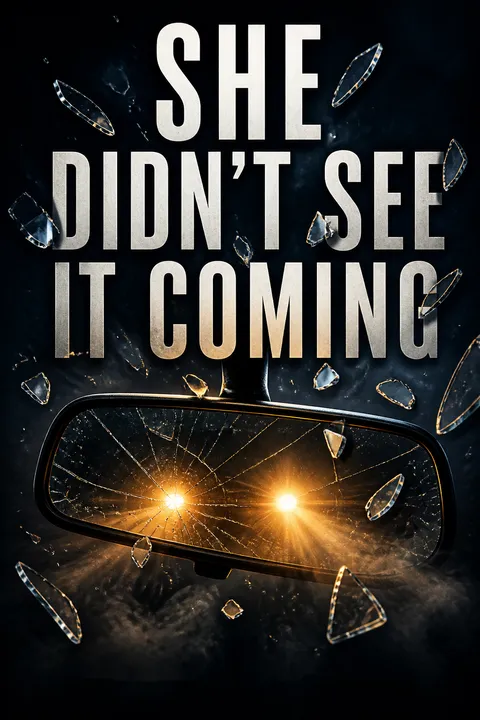

Plot Summary
Prologue
Six weeks before the story proper, Bryden Frost,2 frazzled and late to collect her three-year-old daughter Clara15 from day care, rear-ends a sleek black Tesla at an Albany intersection. The driver is a tall, magnetic man in an expensive coat7 who responds not with rage but with unsettling calm. They exchange insurance details and agree she will pay cash for the repair.
Charmed and faintly flustered, Bryden2 drives the rest of the way carefully, relieved the encounter cost her nothing worse than money. The dent in his bumper seems a small, forgettable thing. She files it away and turns her mind to her daughter, never suspecting that this ordinary fender bender has just stitched a stranger permanently into the fabric of her life.
Lapena weaponizes the mundane. A trivial traffic accident, the kind that happens daily, becomes the seed of catastrophe, illustrating the thriller's governing idea that danger hides inside the ordinary. The prologue also performs sleight of hand: by lingering on the handsome stranger's charisma and Bryden's blush, it plants him as the obvious romantic and criminal suspect. Bryden's maternal anxiety, her tenderness toward Clara, establishes the emotional stakes that the rest of the book will exploit. The scene's calm surface mirrors the novel's thesis that beneath civilized exteriors lurk impulses we rarely glimpse. We are being taught, early, to mistrust appearances and to follow the wrong thread.
The Mother Who Vanished
On an ordinary Tuesday, Sam Frost3 is pulled from a client meeting by a call from Dandylion Day Care: his wife Bryden2 never came for Clara.15 Sam3 cannot reach her by phone or text. He collects their daughter,15 drives home, and finds the condo eerously intact: Bryden's2 purse on the side table, her phone and open laptop on the dining table, her car parked in the garage.
Nothing is missing, nothing disturbed, yet his wife has simply evaporated. He alerts neighbor Angela,13 calls Bryden's sister Lizzie5 and best friend Paige,4 then dials the police. A devoted accountant2 who would never abandon Clara15 has dissolved out of a secured building in the middle of a working day, leaving behind every object she would have carried.
The disappearance detonates precisely because Bryden is established as reliable. Lapena exploits the horror of absence within familiarity: the untouched apartment is more frightening than ransacked chaos because it refuses explanation. Sam's careful performance of normalcy for Clara, his forced cheer, foreshadows a man practiced at masking. The scene foregrounds the novel's recurring motif of objects left behind, phone and purse as evidence that departure was not voluntary. The reader, like the responders, instinctively reads the husband's distress as either grief or guilt, and the narrative deliberately withholds which. The vanishing of a competent, loving mother taps the culture's deepest unease about safety inside one's own home.
Inside a Building of Suspects
Detective Jayne Salter,1 summoned from her one-year anniversary dinner, treats the apartment as a possible crime scene. With partner Tom Kilgour8 she organizes a full search: garages, storage lockers, stairwells, the roof.
The luxury building is a forensic dead zone, cameras cover only the front and back doors, and the new garage system has been broken for weeks. Footage confirms Bryden2 never left through either lobby exit. Canvassing the eighth floor, Jayne1 lands on neighbor Angela's13 hint about a troubled tenant down the hall.
Henry Kemp,12 in unit 811, was arrested two years earlier for abducting and raping a woman in a van but never charged. His wife Tracy10 reacts with brittle, defensive panic. Jayne1 now has a building full of locked doors she cannot legally open.
The condo becomes a closed-circuit puzzle, its absent surveillance an architectural metaphor for the blind spots in how well anyone knows their neighbors. Lapena introduces the procedural engine: warrants, alibis, probable cause, the bureaucratic friction that lets killers breathe. Henry Kemp functions as the first and most lurid red herring, exploiting reader appetite for the obvious predator. Tracy's terror, rooted in two years of social ruin and her own private doubt about her husband, opens a quieter meditation on the impossibility of truly knowing an intimate partner. The motif of suspicion as contagion begins here, infecting a community where everyone is now a potential monster behind a familiar face.
The Suitcase in the Basement
After Bryden's2 sister Lizzie5 pushes hard for it, a K-9 unit returns with a tracking and cadaver dog named Brutus. The dog follows Bryden's2 scent only along her habitual routes, then grows agitated and leads handlers into the basement storage area, past the Frosts' own locker stuffed with baby equipment, to an open locker belonging to a vacated unit.
Behind cardboard boxes sits a large burgundy hard-sided suitcase. When forensics finally lift the lid, Bryden's2 body lies curled inside in only bra and underwear. The missing-person case becomes a homicide. Most damning, the suitcase appears to be Sam's,3 taken from the closet he shared with Bryden,2 and the storage area requires keys that residents like Sam3 possess.
The discovery converts dread into grief and recalibrates every relationship. The image of a mother folded into luggage among her own family's stored baby things is grotesquely ironic: the gear meant for new life surrounds the container of death. Lizzie's insistence on the dog, and her later craving for credit, plants a strange unease about her motives. Lapena uses the suitcase as the novel's central physical clue and moral symbol, the act of treating a person as disposable cargo. The clean, bloodless scene signals premeditation and control, steering suspicion toward someone methodical. The reader feels the floor shift: this was not misadventure but deliberate, intimate violence.
The Husband Has No Story
Hauled to the station, Sam3 identifies his wife's2 body, then faces Jayne's1 questions. The suitcase is his. He holds keys to the storage room. And his account of that afternoon collapses under scrutiny: he claims he stepped out around noon, bought lunch from a food truck, and sat alone in Washington Park until two, with no one to confirm it.
He insists the marriage was perfect and that anyone in the building could have knocked, killed Bryden,2 and used his luggage. Jayne1 notes his trembling hands, his slips into past tense, the long unaccounted gap. With Henry Kemp's12 alibi confirmed and the predator-neighbor theory dead, the grieving husband3 hardens into the prime suspect, and Sam3 lawyers up in mounting panic.
The narrative now leans into the statistical cliché that the husband did it, daring the reader to accept the easy answer. Sam's defensiveness reads as either innocence cornered or guilt improvising. Lapena studies the psychology of suspicion: every gesture of grief doubles as possible performance, and the absence of an alibi becomes its own indictment in a system that abhors empty spaces. The perfect-marriage claim, repeated too firmly, invites disbelief. The detective's method, letting silence pressurize the room, exposes how interrogation manufactures meaning from nervousness. Sam's terror of prison, of losing Clara, humanizes him even as the evidence stacks, keeping his guilt genuinely ambiguous.
The Lover With the Tesla
Pressed a second time, Paige Mason,4 Bryden's2 closest friend since college and Clara's15 godmother, breaks. She admits Bryden2 confided three weeks earlier that she was having an affair, calling the man irresistible.
The detail that lands like a thunderclap: Bryden2 met him by crashing into his car at a traffic light. That is Derek Gardner,7 the Tesla driver, the recipient of the $2,700 cash repair. Jayne1 and Kilgour8 descend on Gardner's7 glass-and-money mansion in Loudonville.
The cybersecurity executive coolly insists he met Bryden2 only twice and denies everything, lawyering up immediately. His wife Alice,6 glamorous and unnervingly composed, watches her husband flush. Suddenly the case has a love triangle, a fresh motive for Sam,3 and a polished new suspect who is impossible to rattle.
The affair revelation reframes Bryden from blameless victim to complicated woman, complicating the family's idealized portrait and the reader's sympathies. Lapena threads the theme that intimacy conceals secrets: a best friend knew what a husband and sister did not. Paige's reluctance, her worry about her name in the papers, hints at protective self-interest beneath devotion. Derek's frictionless composure marks him as a different species of suspect, the kind whose control itself becomes suspicious. The prologue's planted stranger pays off exactly as designed, satisfying the reader's pattern-matching. Yet the very tidiness of the love-triangle motive should provoke distrust, a lesson the novel will later enforce about the seductive danger of obvious answers.
Everyone Was Lying About Love
The Frost marriage unravels in layers. Bryden's2 physician reveals a month-old cracked rib, an injury more consistent with a kick than a fall, and confirms suspected domestic abuse Bryden2 denied. Privately, Sam3 acknowledges he sometimes lashed out under stress, as he once did at his enabling mother.
Worse for him, police learn he secretly phoned Bryden's2 employer to verify her supposed business trips, proving he suspected her. Meanwhile, Paige4 tells Sam3 in the park that Bryden2 had been unfaithful, and the reader learns Paige4 and Sam3 had their own affair, sleeping together in the marital bed whenever Bryden2 traveled.
Sam,3 terrified the police will discover everything, realizes the perfect-couple facade is collapsing into a portrait of a violent, cheating, suspicious husband.
Lapena strips the veneer from a marriage to reveal its rot, dramatizing how respectability armors abuse. Sam's confession to himself, that he wanted Bryden to resist so he could stop, is a chilling study in abuser psychology and displaced responsibility. The double affair, husband with the wife's best friend, multiplies betrayal into a hall of mirrors where no relationship is what it claimed. The motif of the iceberg, mostly hidden beneath the surface, governs the chapter. Each new secret strengthens the case against Sam while paradoxically suggesting a man too entangled in deceit to be a clean killer. The reader's moral footing erodes; sympathy and suspicion become indistinguishable.
The Coldest Couple in Albany
Investigators digging into Derek Gardner7 unearth that his wife Alice6 inherited over three million dollars when her mother died in an unsolved hit-and-run four years ago, money that launched his company.
Jayne1 hauls Alice6 in, accuses Derek7 of killing both Bryden2 and the mother-in-law, and goads Alice6 about covering for a murderer. Alice6 never flinches. Behind closed doors, the reader learns the truth the police cannot prove: Alice6 herself ran her mother down with the woman's own truck, then handed Derek7 the inheritance like a trophy.
The Gardners are a matched pair of remorseless liars, both Mensa-level, bound by vows written in blood. Derek7 conceals an illegal data-manipulation business; Alice6 conceals even darker history. They trust no one, least of all each other.
Lapena's most audacious move is letting the reader behind the curtain of two genuine sociopaths while the detective gropes in the dark. The dramatic irony is excruciating: we know Alice is a killer, but of the wrong victim. The Gardners embody the novel's bleakest idea, that some people operate entirely outside the social contract, performing humanity flawlessly. Their marriage, transactional and predatory, parodies romantic partnership: love replaced by mutual usefulness and shared guilt. Michael's later psychological framing, that beneath our clothes the animal persists, finds its purest expression here. The subplot also functions as elaborate misdirection, lavishing guilt on a couple who, regarding Bryden, are innocent.
The Sister's Secret Audience
Bryden's2 sister Lizzie,5 a lonely nurse who has long felt eclipsed by her prettier, more accomplished sibling,2 harbors a hidden compulsion. She belongs to a true crime Facebook group and, posting as Emma Porter,5 has been narrating Bryden's2 disappearance to strangers since the first night, savoring the attention.
As the case grows, Lizzie5 barricades her bedroom door with a chair, hides from her grieving parents, and leaks confidential details, the plastic bag, the missing clothes, claiming a friend in the police.
Her mother Donna,9 watching her surviving daughter sink into feverish secrecy, fears drugs or a breakdown. Lizzie's5 eerie online musings about how easily someone could surprise Bryden2 from behind read so vividly that they will soon draw the detective's1 attention to Lizzie5 herself.
Lizzie is Lapena's portrait of digital-age parasitism, the way tragedy becomes content and belonging is purchased through proximity to horror. Her sibling resentment curdles into a guilty liberation: with perfect Bryden gone, Lizzie finally occupies the center. The anonymity of the group lets her perform an identity her real life denied her, exposing the loneliness driving online obsession. Her chair against the door literalizes a woman walling herself inside a fantasy of significance. Lapena satirizes armchair detectives while implicating the reader, who consumes this very murder for entertainment. Lizzie's uncanny accuracy about the crime makes her briefly suspect, demonstrating how compulsive proximity to violence can resemble guilt itself.
Alice Hunts the Detective
Convinced her husband may be a killer yet desperate to halt the investigation into her own past, Alice6 goes on the offensive. She corners Lizzie5 on a park bench, claims she is convinced Sam3 did it, and instructs her to warn him he will not get away with it, then chillingly whispers that she is Team Sam.3
When a newspaper exposes the hit-and-run, Alice6 seethes, knowing she also once killed an older lover at sixteen and lied it into self-defense. Disguising herself, she picks the lock of Jayne's1 apartment and prowls through the detective's1 medicine cabinet, underwear drawer, and bedside books, learning her enemy. Jayne1 returns to a faint wrongness, objects subtly shifted, and realizes with prickling instinct that someone dangerous has been inside her home.
The predator stops being investigated and becomes the investigator, inverting the procedural and raising the menace. Alice's break-in is psychological warfare, an assertion of dominance and a study in the sociopath's need for control through knowledge. Lapena externalizes Jayne's intuition through the bodily language of fear, hair rising, the hindbrain sensing threat, validating instinct as a survival tool against people who flawlessly fake normalcy. Alice's buried teenage killing deepens her as a lifelong manipulator who discovered young that she could make anyone believe anything. The chapter sharpens the novel's terror: the most dangerous person in the story is the one the law will never touch, circling its protector unseen.
A Song in the Elevator
The investigation has stalled around two unprovable men when a young woman, Francine Logan,14 comes forward. On the day of the murder she rode the elevator down with someone wheeling a large suitcase but never looked up from her phone, offering no description.
Then she returns with two memories: a half-peeled red and yellow sticker on the suitcase, a detail matching Sam's3 luggage that was never made public, and a ringtone that interrupted the stranger, the opening of Bitter Sweet Symphony by The Verve.
The sticker confirms Francine14 truly shared the elevator with Bryden's2 killer. The song stops Jayne1 cold. She has heard that exact ringtone recently, and the realization redirects the entire case away from husbands and lovers toward someone hiding in plain sight.
Lapena rewards patience with the genre's purest pleasure: the overlooked detail that cracks everything. Francine, the distracted phone-gazer, embodies modern inattention, yet her fragmentary memory proves more decisive than any forensic sweep. The ringtone is a brilliantly ordinary clue, intimacy betrayed by a pop song. The corroborating sticker authenticates her account and retroactively makes the witness reliable, a structural sleight that lets the solution feel earned rather than convenient. The chapter pivots the novel's misdirection toward collapse, demonstrating that the truth was audible all along, drowned out by louder, flashier suspects. Jayne's instinct, earlier attuned to Alice, here finally locks onto the correct, quieter danger.
The Best Friend Breaks
The ringtone belongs to Paige.4 Confronted with proof she rode the elevator with the suitcase, Bryden's2 grieving best friend4 shatters. She confesses to moving the body but insists Sam3 is the murderer: she claims he summoned her by burner phone after smothering Bryden2 in a rage, then begged her to carry the corpse downstairs and dispose of the clothes because she would not be recognized.
She admits she dumped the garments in a Larch Street dumpster. Then she drops a second bombshell, that she invented the entire Derek Gardner7 affair on the spot to deflect suspicion from herself and Sam.3
Sam3 is arrested for murder. The case appears solved by a lovers' conspiracy, with Paige4 positioning herself as a frightened accomplice manipulated by a violent man.3
Paige's confession is a masterclass in self-serving narrative, blending genuine fact with strategic lie. Her admission that the Derek affair was fabricated retroactively detonates the entire love-triangle plot, exposing how a single improvised lie consumed days of investigation and nearly destroyed an innocent couple. Lapena indicts the ease with which a sympathetic woman's story is believed. Paige casts herself as victim of male coercion, a role she calculates will minimize her guilt, revealing a manipulator beneath the devoted-friend mask. The chapter delivers catharsis and false closure simultaneously: the reader senses the frame is too neat. The accomplice's eagerness to convict Sam betrays motives darker than fear.
She Wanted Her Whole Life
Cornered, Sam3 finally tells the truth he was hiding to protect his career: during the missing hours he was not in the park but at his dealer's apartment feeding a secret oxycodone addiction, with witnesses. His alibi is airtight. Paige's4 frame collapses, and she will be charged alone.
The flashback reveals what really happened: Paige4 buzzed herself in, asked Bryden2 for coffee, then yanked a plastic bag over her friend's face from behind and held it until she died. Obsessed with Sam,3 she murdered Bryden2 to seize her life, husband, child, and home, never loving Bryden2 at all. She moved the body so Clara15 would not find her mother.2 Sam,3 who never loved Paige4 and merely used her, had unknowingly destroyed her fantasy.
The true solution fulfills the title: Bryden never saw it coming because the threat wore the face of friendship. Lapena's final reversal indicts the romantic delusion that drove Paige, a woman who believed she could inherit a life by erasing its owner. The bag-from-behind murder, cold and faceless, echoes the psychologist's earlier reading of an efficient killer solving a problem rather than confronting a rival. Sam's grubby addiction, the secret that nearly convicted him, ironically saves him, a bleak joke about how the truths we hide hurt us. The chapter's deepest cruelty is that Paige's crime bought her nothing; Sam never wanted her, and the coveted life was always an illusion.
Epilogue
In the aftermath, Paige4 is charged with Bryden's2 murder while Sam,3 cleared but exposed as an abuser, cheater, and addict, keeps Clara.15 Bryden's parents, Donna9 and Jim, brace to bury a daughter and somehow raise their granddaughter, while sister Lizzie's5 online compulsion is laid bare to her horrified family.
The Gardners escape entirely: their hit-and-run, Alice's6 teenage killing, and Derek's7 cybercrimes stay buried, and Jayne,1 satisfied with the right answer to the wrong question, lets them go. The novel's last chill comes quietly. Alice6 attends a university lecture by Michael,11 Jayne's psychologist boyfriend, asks pointed questions about how a psychopath experiences love, and angles to meet him for coffee.
Lapena refuses tidy justice. The named killer is caught, but the more monstrous predators stroll free, dramatizing the gap between legal proof and moral truth. Alice's pursuit of Michael is a perfectly poised threat, suggesting evil simply selects a new target, that the story closes only one wound while leaving the body politic infected. Sam's survival as a flawed, unpunished man complicates the catharsis: clearing him of murder does not absolve him of cruelty. The ending honors the title's irony, that the truly dangerous remain unseen, and leaves the reader with the unsettling lesson that instinct, not the justice system, may be our only reliable defense against the people performing normalcy beside us.
Analysis
Lapena builds a domestic thriller out of a single, devastating premise: the people closest to us are the least knowable. Every relationship in the novel doubles as a mask. The perfect marriage conceals abuse and addiction; the devoted best friend4 harbors murderous obsession; the loving sister5 feeds her grief to strangers for validation; the glamorous power couple are matched sociopaths. The recurring iceberg image, hanging on the detective's wall,1 becomes the book's governing metaphor, the lethal mass always submerged beneath civil surfaces. The title operates on multiple registers: Bryden2 never saw the betrayal coming because it wore the face of friendship, and the reader, steered through a gauntlet of red herrings, does not see the solution coming either. The structural triumph is misdirection as theme rather than mere mechanism. By lavishing guilt on a predatory neighbor,12 an adulterous husband,3 and a literally murderous couple, Lapena enacts the novel's argument that the obvious answer, the one the system and our biases crave, is a trap. The most chilling stroke is moral rather than procedural: the named killer is caught, but the truly monstrous Gardners walk free, their crimes beyond the reach of proof. Justice, Lapena suggests, addresses only what can be evidenced, leaving evil to simply select a new target, as Alice's6 closing pursuit of the psychologist11 implies. Through Michael's11 clinical lens, the book frames humanity as a thin civilizing layer over animal impulse, and through Jayne's1 intuition it proposes that instinct, the prickle at the neck, may be our only reliable defense against people who perform normalcy flawlessly. The result is a bleak, propulsive meditation on appearance, betrayal, and the unsettling limits of both love and law.
Review Summary
She Didn't See It Coming is a gripping domestic thriller that keeps readers guessing until the end. Bryden Frost vanishes mysteriously, leading to a complex investigation with multiple suspects. Lapena's short chapters and clever plot twists make for an addictive read. Many reviewers praised the fast-paced narrative and red herrings, though some found the ending rushed. The book features Detective Jayne Salter, a compelling character who may signal a potential series. Overall, readers found it an entertaining summer thriller, despite some criticism of predictability and unresolved subplots.
Characters
Jayne Salter
Lead homicide detectiveA seasoned Albany detective who keeps an iceberg print on her wall to remind herself that the dangerous truth lies submerged. Methodical, empathetic, and quietly haunted, she balances a demanding career against a tender relationship with Michael11, her psychologist boyfriend, weighing whether love and motherhood can coexist with a job that drains her faith in people. She refuses the comfort of obvious answers, interrogating suspects by letting silence do the work. Her sharpest instrument is intuition, a prickling at the back of her neck when she senses something inhuman behind a composed face. Compassionate toward grieving families yet clear-eyed about the lies they tell, she embodies the novel's argument that survival depends on trusting the body's ancient alarm.
Bryden Frost
The vanished motherA thirty-five-year-old accountant and devoted mother whose disappearance launches the investigation. Adored as the perfect daughter, reliable wife, and tender parent to sensitive little Clara15, she is the family's golden center. Yet beneath the polished surface of her marriage and her tidy condo lie pressures and silences she shared with almost no one. Warm, accommodating, and conflict-averse, she absorbed difficulty rather than confront it, a trait that shaped her relationships in ways the investigation slowly excavates. Her photogenic smile on a police whiteboard becomes the still point around which every suspect, secret, and lie eventually orbits.
Sam Frost
The grieving husbandBryden's2 husband, a portfolio manager whose easy charm and well-cut suits project the image of a successful family man. As suspicion closes in, the polished exterior cracks to reveal a man crushed by stress, prone to hidden cruelties, and skilled at performing normalcy for his daughter's sake. Driven by fear of exposure and an almost childlike need to be managed, he hides shames that make him look guilty even when cornered. Self-aware enough to loathe himself yet too weak to change, he is a study in the respectable man who believes private monstrousness can stay private. His terror of losing Clara15 is the one feeling that reads as wholly genuine.
Paige Mason
Devoted best friendBryden's2 closest friend since their NYU roommate days and Clara's15 beloved godmother. Beautiful, single, and quietly aware of her own allure, she folds herself into the Frost household, the favored babysitter and near-family fixture. Beneath her loyalty runs a deep loneliness and a hunger to be chosen, a longing for the safe, enviable life her best friend possesses. Competitive with Lizzie5 over Clara's15 affection and prone to romantic idealization, she believes she deserves better than the men who keep failing to commit. Sympathetic and warm on the surface, she narrates her own role in events with a self-protective instinct that reveals a will far steelier than anyone suspects.
Lizzie Houser
The overshadowed sisterBryden's2 younger sister, a competent nurse who has spent her life feeling lesser, the daughter without the scholarship, the husband, the child, the easy beauty. Calm in crises and useful in emergencies, she steps naturally into caretaking when tragedy strikes. But she nurses a private compulsion: an addiction to online true crime communities where, behind a false name, she finally feels important and seen. Lonely, resentful, and quietly thrilled to occupy the center of attention for once, she barricades herself away to feed strangers the drama of her own sister's2 death. Her sibling rivalry, equal parts love and envy, makes her one of the novel's most psychologically raw figures.
Alice Gardner
The composed wifeWife of cybersecurity executive Derek7, a glamorous, Princeton-educated chemist who moves through the world like a pampered, clawed cat. Possessive, controlling, and utterly unflappable, she cultivates an unreadable exterior honed since childhood, having learned young that she could make people believe anything. She loves Derek7 as fiercely as she is able, obsessed with keeping him and terrified of losing the only person who matches her. Beneath the silk robes and red stilettos lies something Jayne1 glimpses only in unguarded flashes: an emptiness, a darkness behind the eyes. She is the novel's coldest intelligence, a woman who treats other lives as obstacles to be efficiently removed.
Derek Gardner
The charming Tesla ownerThe handsome, magnetic cybersecurity entrepreneur whose car Bryden2 rear-ended. Smooth, vain, and accustomed to control, he prefers living under the radar despite a taste for fine things bankrolled by his wife's wealth. He hides an illicit side business and a history of straying, and he both loves and distrusts Alice6, recognizing they are alike: self-interested, cold-blooded, expert liars who function better as a team than apart. When suspicion lands on him, his frictionless composure becomes its own kind of guilt.
Tom Kilgour
Detective partnerJayne's1 younger investigative partner, tall and broad-shouldered with a quiet strength that masks a sharp, capable mind. Steady and collaborative, he tests theories with her, takes the unglamorous legwork without complaint, and serves as a grounded sounding board. He shares Jayne's1 wariness of easy conclusions and her growing unease about the people circling the Frost family.
Donna Houser
Grieving motherBryden2 and Lizzie's5 mother, who flies up from Florida with husband Jim when her daughter vanishes. Wracked by guilt for having moved away, she swings between desperate hope and dark suspicion of her son-in-law. As she watches her surviving daughter unravel, her terror doubles: she fears losing Clara15 to a possible murderer and losing Lizzie5 to some private collapse she cannot understand.
Tracy Kemp
Suspect's anxious wifeWife of Henry Kemp12, the neighbor once accused of abduction and rape. For two years she has lived in a state of outrage, denial, and corrosive doubt, defending a husband she believes ninety percent innocent. The new investigation reignites her dread and pushes her toward a private reckoning with whether she has been standing by a monster, a quiet parallel to the novel's larger theme of unknowable intimates.
Michael Fraser
Detective's psychologist partnerJayne's1 patient, unselfish boyfriend, a university psychology lecturer who wants marriage and children. He keeps her tethered to her humanity and offers the novel's clinical framing of predators, instinct, and the thin veneer of civilization over animal impulse.
Henry Kemp
The accused neighborA car-dealership owner in unit 811, arrested years earlier for a van abduction and rape but never charged. Defensive and bitter, he serves as the investigation's first lurid red herring, his unsavory past inviting suspicion even after his alibi holds.
Angela Romano
Friendly neighborThe Frosts' eighth-floor neighbor and fellow young mother, whose daughter Savanah is Clara's15 playmate. She shelters Clara15 during the crisis and points police toward the troubled tenant down the hall.
Francine Logan
The elevator witnessA young, distracted woman visiting a friend in the building who shared an elevator with the killer and the suitcase. Initially useless, her belated memories of a sticker and a ringtone prove decisive to cracking the case.
Clara Frost
The orphaned toddlerBryden2 and Sam's3 sensitive three-year-old daughter, the emotional fulcrum whose need for her mother haunts every adult. Her bewildered grief raises the central stakes and shapes the killer's chilling choice to hide the body.
Plot Devices
The Burgundy Suitcase
Central clue and moral symbolBryden's2 body is discovered folded into a hard-sided suitcase taken from the Frosts' own closet, hidden in a basement storage locker. Because it belongs to Sam3 and the storage area requires keys, it instantly anchors suspicion on the husband3. Its half-peeled red and yellow sticker later becomes the detail that authenticates the elevator witness14. The suitcase operates as both engine of misdirection and thematic emblem, the reduction of a human being to disposable cargo, an act the psychologist11 reads as either rage or cold problem-solving. Its journey from closet to locker maps the killer's logistics and motive, and its eventual link to a song heard in the elevator unravels the entire frame.
The Fender Bender
Planted false suspectThe prologue's trivial car accident, in which Bryden2 hits Derek Gardner's7 Tesla, seeds the entire love-triangle misdirection. A cash withdrawal and exchanged contact information let an invented affair attach plausibly to Gardner7, funneling the investigation toward a glamorous, controlled couple. Lapena uses this ordinary collision to demonstrate how a single mundane event can be retrofitted into motive, and how the obvious romantic suspect7 can consume days of effort while the real danger waits elsewhere. The device pays off twice: first as the apparent key to the murder, then as the exposed lie that detonates the case's tidiest theory.
The Online True Crime Group
Identity, misdirection, exposureA Facebook sleuthing community becomes a parallel investigation where anonymous members theorize, accuse, and leak. Lizzie5, posting as Emma Porter5, narrates her own sister's2 murder for the attention it brings, while Alice6 lurks under a fake name to monitor and manipulate the discourse. The group satirizes digital-age voyeurism and lets characters perform identities their real lives deny them. It functions as a clue trail Jayne1 eventually mines, briefly casting Lizzie5 as a suspect, and dramatizes the novel's theme that tragedy is consumed as entertainment by strangers, including the reader.
The Ringtone and Sticker
The case-breaking detailA distracted elevator witness14 eventually recalls two things: a worn red and yellow sticker on the suitcase, which only the killer's luggage bore, and a ringtone, the opening of Bitter Sweet Symphony, that interrupted the person wheeling it. The sticker authenticates her account; the song identifies the killer when Jayne1 recognizes it. The device delivers the genre's purest reversal, intimacy betrayed by an ordinary pop tune, and rewards close attention over forensic spectacle, proving the truth was audible from the start beneath louder suspects.
The Hidden Alibi
Ironic exonerationSam's3 unaccounted two hours make him the prime suspect, and his refusal to explain them nearly convicts him. The truth, that he was secretly feeding an oxycodone addiction at his dealer's apartment with witnesses, becomes the airtight alibi that shatters the frame against him. Lapena uses the device to argue, bleakly, that the shameful secrets people hide to protect themselves are sometimes the very things that could save them. Its late deployment collapses a false confession and redirects guilt to its rightful, unexpected owner.
FAQ
Synopsis & Basic Details
What is She Didn't See It Coming about?
- A Perfect Life Unravels: Shari Lapena's She Didn't See It Coming plunges into the seemingly idyllic life of Bryden Frost, a devoted mother and accountant, who vanishes from her Albany condo without a trace. Her disappearance shatters her family's facade, revealing a hidden world of secrets, betrayals, and dark desires beneath the surface of suburban normalcy.
- A Web of Suspects: As Detective Jayne Salter investigates, suspicion falls on Bryden's husband, Sam, whose alibi is shaky and whose marriage was far from perfect. The investigation expands to include a charismatic stranger from a minor car accident, Derek Gardner, and his enigmatic wife, Alice, as well as Bryden's own family and friends, each harboring their own truths and lies.
- The Hunt for Truth: The narrative follows the relentless police investigation, the family's agonizing wait, and the unsettling rise of online amateur sleuths, all converging on a shocking discovery that transforms the missing person case into a chilling homicide, forcing everyone to confront the uncomfortable realities of those they thought they knew best.
Why should I read She Didn't See It Coming?
- Masterful Psychological Suspense: Lapena excels at crafting a taut, fast-paced narrative that keeps readers guessing until the very end. The novel is a prime example of domestic noir, exposing the sinister undercurrents of seemingly ordinary lives and relationships.
- Complex, Flawed Characters: Beyond the central mystery, the book offers a deep dive into the motivations and psychological complexities of its characters. Readers will find themselves constantly re-evaluating their perceptions of guilt and innocence, drawn into the intricate web of human flaws and desires.
- Timely Exploration of Modern Themes: The novel cleverly integrates contemporary elements like social media's role in true crime investigations, exploring how online communities can both aid and distort the search for truth, adding a relevant layer to its classic whodunit structure.
What is the background of She Didn't See It Coming?
- Contemporary Albany Setting: The story is set in modern-day Albany, New York, a mid-sized city that provides a relatable, almost claustrophobic backdrop for the domestic drama. The condo building, with its flawed security, becomes a microcosm of the characters' hidden lives.
- Focus on Domestic Life: The narrative is deeply rooted in the everyday routines of a young family—daycare pickups, work-from-home days, marital dynamics—which are then violently disrupted. This grounds the thriller in a sense of realism, making the eventual horrors more impactful.
- Exploration of Digital Age Impact: The novel prominently features a "True Crimes in Albany NY" Facebook group, reflecting the real-world phenomenon of online amateur sleuthing. This element highlights the cultural shift towards public engagement in crime investigations and the ethical dilemmas it presents.
What are the most memorable quotes in She Didn't See It Coming?
- "She didn't see it coming.": This recurring phrase, particularly in the title, encapsulates Bryden's ultimate vulnerability and the shocking nature of her demise, highlighting the theme of hidden dangers in plain sight. It underscores the sudden, unexpected betrayal that defines the core of the mystery.
- "The dangerous part is hidden beneath the surface, and that what we see is just a small part of the picture.": Spoken by Detective Jayne Salter, this quote, often reflected by her "iceberg" print, serves as a thematic cornerstone for the entire novel, perfectly summarizing the pervasive theme of appearance versus reality and the hidden depths of human nature.
- "Whoever killed this woman, Bryden, they stepped outside the bounds of civilized society for a moment. And that's a tragedy. For her, for her family, even for the perpetrator.": Michael Fraser's philosophical reflection on the nature of crime and its impact, particularly the idea of the "animal" beneath the "clothes," offers a profound commentary on the human capacity for darkness and the societal implications of such acts.
What writing style, narrative choices, and literary techniques does Shari Lapena use?
- Propulsive, Direct Prose: Lapena employs a lean, unadorned writing style that prioritizes plot momentum and suspense. Her sentences are often short and direct, creating a sense of urgency and mirroring the characters' escalating anxiety.
- Shifting Third-Person Perspective: The narrative frequently shifts between the perspectives of various characters—Sam, Lizzie, Paige, Jayne, Derek, Alice, and even Bryden in the prologue and final chapter. This technique creates multiple unreliable narrators, deepening the mystery and forcing the reader to constantly question whose version of events is true.
- Strategic Use of Dramatic Irony: Lapena masterfully uses dramatic irony, often revealing information to the reader that certain characters are unaware of, or showing characters making assumptions that the reader knows are false. This builds tension and engages the reader in the unraveling of the truth, as seen when Paige's internal thoughts contradict her outward statements.
Hidden Details & Subtle Connections
What are some minor details that add significant meaning?
- Bryden's "Orchid Child": Bryden's internal description of Clara as her "little orchid child" in the prologue (p. 1) subtly foreshadows Clara's sensitive nature and vulnerability, emphasizing the profound impact of her mother's disappearance and murder on her fragile psyche. This detail highlights the emotional stakes for the child, making the killer's motive to spare Clara from seeing the body more poignant.
- Jayne's Bedside Books: The novels on Detective Salter's nightstand, Wolf Hall by Hilary Mantel and A Gentleman in Moscow by Amor Towles (p. 200), are subtle character details. They suggest a preference for historical fiction and literary depth, contrasting with the raw, often ugly reality of her daily work, hinting at her need for intellectual escape and a more ordered world.
- The "Can Adrienne Fit in a Suitcase?" Video: Lizzie's mention of this YouTube video (p. 190) is a chilling detail that reveals the morbid curiosity and dark humor prevalent in online true crime communities. It subtly suggests how the killer might have conceived of disposing of Bryden's body, linking a real-world internet phenomenon to the fictional crime's execution.
What are some subtle foreshadowing and callbacks?
- Sam's "Forced Optimism": Early in the novel, Sam's voice is described as having "forced optimism" (p. 4) when he tells Clara, "Let's go find Mommy, shall we?" This subtle detail foreshadows his later deceptions and the deep-seated anxieties he hides, hinting that his outward composure is a carefully constructed facade.
- Lizzie's "Human Tuning Fork": Lizzie's internal thought, "Lizzie feels as if a current is surging through her, like electricity, as if she is a human tuning fork, humming, humming" (p. 6), early in the investigation, subtly foreshadows her intense, almost pathological, engagement with the case. It hints at her underlying need for excitement and her eventual immersion in the online true crime world.
- Alice's "Viper" Analogy: Derek's internal thought of Alice as a "viper, ready to strike" (p. 180) is a powerful callback to her earlier coldness and strategic thinking. This animalistic metaphor reinforces her dangerous, calculating nature, foreshadowing her capacity for violence and her willingness to protect her interests at any cost.
What are some unexpected character connections?
- Alice Gardner and Lizzie Houser's Park Encounter: The seemingly random meeting between Alice Gardner and Lizzie Houser in the park (p. 174) is a pivotal, unexpected connection. Alice, the wife of a red herring suspect, deliberately seeks out Bryden's sister to deliver a cryptic message ("Tell him he's not going to get away with it"), revealing her own suspicions about Sam and her manipulative nature, while also exposing Lizzie's presence at the condo.
- Paige's Shared Guilt with Sam: The revelation that Paige not only had an affair with Sam but also helped him dispose of Bryden's body (p. 210) creates a shocking, unexpected connection of shared culpability. This deepens the betrayal, transforming their illicit romance into a bond forged in murder and deceit, highlighting the lengths to which people will go to protect their secrets and desires.
- Tracy Kemp's Connection to Kayly Medoff: Tracy's decision to seek out Kayly Medoff (p. 195), the woman who accused her husband, Henry, of abduction and rape, creates an unexpected and poignant connection between two women traumatized by the same man. This interaction, driven by Tracy's desperate need for truth, highlights the lasting impact of past crimes and the solidarity that can form between victims.
Who are the most significant supporting characters?
- Angela Romano: Bryden's neighbor and friend, Angela serves as a crucial emotional anchor and practical support system for Sam and Clara. Her willingness to take Clara in (p. 4) and her role as a confidante for Bryden (p. 9) highlight the importance of community bonds, even as they are tested by the unfolding tragedy.
- Donna and Jim Houser: Bryden and Lizzie's parents, Donna and Jim, represent the profound grief and confusion of a generation grappling with unimaginable loss. Their shifting suspicions about Sam (p. 140) and their eventual decision to seek custody of Clara underscore the enduring strength of familial love and the difficult choices forced upon them by the crime.
- Michael Fraser: Detective Jayne Salter's boyfriend, Michael, serves as her moral compass and emotional support. His insights as a psychologist (p. 184) often provide a deeper understanding of human behavior, helping Jayne navigate the psychological complexities of the case and offering a counterpoint to the darkness she encounters daily.
Psychological, Emotional, & Relational Analysis
What are some unspoken motivations of the characters?
- Paige's Envy and Desire for Bryden's Life: Paige's deepest unspoken motivation is her profound envy of Bryden's seemingly perfect life—her husband, her child, her domestic stability. This envy fuels her affair with Sam and ultimately drives her to murder Bryden, not just for Sam, but to literally "have Bryden's life" (p. 214), a life she believes she deserves more.
- Sam's Need for Control and Escape: Sam's unspoken motivation stems from a deep-seated need for control, manifested in his abusive behavior towards Bryden, and a desire for escape from the pressures of his high-stakes job and family life. His drug use and affair with Paige are coping mechanisms, revealing a man overwhelmed and seeking release, rather than genuine connection.
- Lizzie's Craving for Validation and Belonging: Lizzie's online obsession and her role as "Emma Porter" are driven by an unspoken craving for validation and a sense of belonging. Feeling "lesser-than" (p. 199) compared to Bryden, the true crime group offers her a platform to feel "important, so noticed" (p. 190), even if anonymously, highlighting her deep-seated insecurities and desire for recognition.
What psychological complexities do the characters exhibit?
- Sam's Cycle of Abuse and Denial: Sam exhibits the complex psychology of an abuser, characterized by intermittent violence, denial ("I never laid a hand on her," p. 165), and a distorted self-perception. His panic attacks (p. 110) reveal the internal turmoil beneath his controlled exterior, showing a man trapped by his own impulses and the shame of his actions.
- Alice Gardner's Cold Sociopathy: Alice displays traits of sociopathy, including a chilling lack of empathy, manipulative behavior, and a calculated approach to violence (her mother's murder, p. 181). Her ability to maintain an "unruffled exterior" (p. 169) and her "cold-blooded" (p. 181) nature highlight a profound psychological detachment from conventional morality.
- Lizzie's Obsessive Compulsion and Denial: Lizzie's psychological complexity lies in her obsessive compulsion with the true crime case, which serves as a coping mechanism for her grief and underlying insecurities. Her denial of her own jealousy towards Bryden and her need to control the narrative online reveal a fragile mental state, blurring the lines between genuine concern and morbid fascination.
What are the major emotional turning points?
- The Discovery of Bryden's Body: The moment the cadaver dog finds Bryden's body in the suitcase (p. 109) is the most significant emotional turning point, transforming the family's desperate hope into profound grief and shock. This discovery shifts the narrative from a missing person case to a homicide investigation, irrevocably altering the emotional landscape for all characters.
- Paige's Confession of the Affair: Paige's reluctant admission to Detective Salter about Bryden's affair with Derek Gardner (p. 150) is a crucial emotional turning point. It shatters the illusion of Bryden's perfect marriage, introducing a new layer of motive and suspicion, and deeply impacting Sam when he learns of his wife's infidelity.
- Sam's Confession of Drug Use and Abuse: Sam's confession of his drug problem and his physical abuse of Bryden (p. 208) marks a significant emotional turning point for his character. This raw admission, made under duress, strips away his carefully constructed facade, revealing the dark truths of his private life and providing a deeper understanding of the marital dynamics.
How do relationship dynamics evolve?
- Sam and Bryden: From Idealized to Abusive: The Frosts' marriage is initially presented as "perfect" (p. 16), but the investigation gradually reveals a dynamic of hidden abuse and infidelity. Bryden's secret affair and Sam's violent outbursts and drug use expose a relationship built on a foundation of lies and control, ultimately leading to its tragic end.
- Lizzie and Bryden: From Sibling Rivalry to Obsessive Grief: Lizzie's relationship with Bryden is characterized by underlying jealousy and a sense of being "lesser-than" (p. 199). After Bryden's death, Lizzie's grief morphs into an obsessive online engagement with the murder, transforming their complex sibling bond into a morbid fascination that further isolates Lizzie from her family.
- Derek and Alice: A Partnership in Crime: The relationship between Derek and Alice Gardner evolves from a seemingly conventional marriage into a chilling partnership built on shared secrets and mutual manipulation. Their "outlier" (p. 159) nature and their complicity in Alice's mother's murder reveal a bond based on intellect, ambition, and a disregard for societal norms, rather than genuine affection.
Interpretation & Debate
Which parts of the story remain ambiguous or open-ended?
- The Extent of Sam's Remorse: While Sam confesses to drug use and physical abuse, the true depth of his remorse for his actions and their contribution to Bryden's suffering remains somewhat ambiguous. His primary concern often appears to be self-preservation and avoiding prison, leaving the reader to question the sincerity of his regret beyond the immediate consequences.
- Lizzie's Self-Awareness of Her Obsession: The novel leaves open the extent to which Lizzie truly understands the pathological nature of her online obsession and her need for validation. While her parents express concern and she occasionally feels "sick" (p. 190) about her posts, her continued engagement suggests a deep-seated compulsion that she may not fully acknowledge or be able to control.
- The Future of Clara's Understanding: The story concludes with Clara being taken in by her grandparents, but the long-term psychological impact of her mother's murder and her father's arrest remains open-ended. The question of how and when she will learn the "ugly truth" (p. 216) about her parents' lives and the crime is left for the reader to ponder, highlighting the enduring trauma of such events.
What are some debatable, controversial scenes or moments in She Didn't See It Coming?
- Paige's Decision to Frame Sam: Paige's choice to lie and implicate Sam in Bryden's murder, even after confessing her own role in disposing of the body (p. 210), is highly controversial. This moment sparks debate about the nature of betrayal, self-preservation, and the lengths to which a desperate person will go, especially when feeling used and unloved.
- Alice's Murder of Her Mother: The revelation that Alice deliberately ran over her mother for inheritance money (p. 181) is a shocking and morally controversial scene. It challenges reader perceptions of "evil" and "normalcy," forcing a confrontation with the idea that cold-blooded murder can be committed by seemingly ordinary, even glamorous, individuals for financial gain.
- Sam's Physical Abuse of Bryden: The disclosure of Sam's domestic violence against Bryden, including a "cracked rib" (p. 164), is a controversial element that complicates reader sympathy. It raises questions about accountability, the hidden nature of abuse in seemingly perfect marriages, and whether Bryden's affair was a consequence of his actions.
She Didn't See It Coming Ending Explained: How It Ends & What It Means
- The Killer Revealed: Paige Mason: The ending of She Didn't See It Coming reveals that Paige Mason, Bryden's best friend and Sam's lover, is the true murderer. Driven by jealousy and a desire to "have Bryden's life" (p. 214), Paige suffocated Bryden with a plastic bag. She then manipulated Sam into believing he was the killer, and later confessed to disposing of the body while pinning the murder on him, only to be caught by Detective Salter's astute investigation and a crucial eyewitness detail (the ringtone).
- Unraveling of Facades and Betrayals: The ending signifies the complete unraveling of the carefully constructed facades maintained by multiple characters. Sam is exposed as an abuser and adulterer, though innocent of murder. Paige's true, manipulative nature and her deep-seated envy are laid bare. The Gardners, while not directly involved in Bryden's murder, are revealed to be cold, calculating individuals with their own dark secrets, including Alice's past murder of her mother.
- The Cost of Secrets and the Pursuit of Truth: The novel concludes by emphasizing the devastating cost of secrets and lies, and the relentless, often uncomfortable, pursuit of truth. While justice is served with Paige's arrest, the emotional aftermath for Bryden's family, particularly Clara and Lizzie, is profound and lasting. Detective Salter's final reflections highlight the enduring presence of human darkness and the resilience required to confront it, leaving the reader with a sense that even with closure, some wounds never fully heal.
About the Author
Other books by Shari Lapena


Download PDF
Download EPUB
.epub digital book format is ideal for reading ebooks on phones, tablets, and e-readers.








































