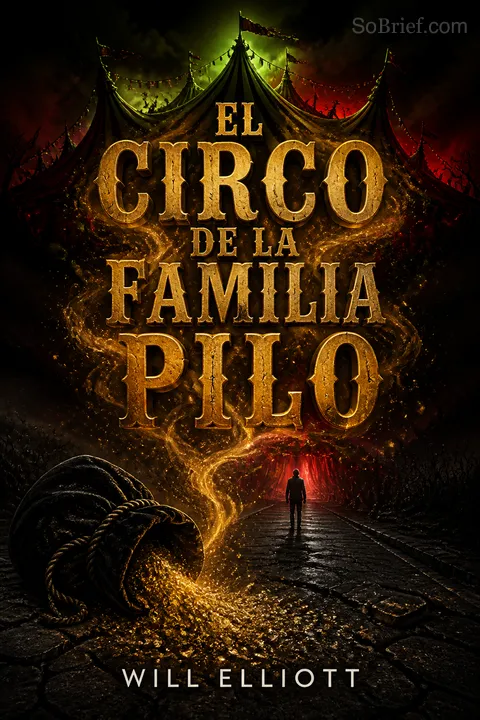
Plot Summary
Midnight Clown Encounter
Jamie, a young man drifting through late-night Brisbane, nearly runs over a clown standing bewildered in the road. This bizarre encounter is the first crack in his ordinary world, unsettling him with a sense of wrongness he can't shake. The next night, he sees more clowns—each stranger than the last—acting out cryptic dramas in the shadows. Jamie's curiosity and unease grow as he witnesses their odd rituals and finds a mysterious velvet bag discarded by the clowns. The bag, heavy with strange powder, becomes a talisman of dread and fascination. Jamie's mundane existence is about to be upended, as the clowns' world begins to bleed into his own, promising chaos and transformation.
Velvet Bag of Fate
Back at his dilapidated share-house, Jamie's attempts at normalcy are undermined by the velvet bag's presence. His roommates are oblivious to the growing strangeness, but Jamie feels watched and haunted. He experiments with the powder, suspecting it's a drug, and uses it to prank a roommate. That night, his dreams are invaded by the clowns—Gonko, Goshy, and Doopy—who stalk him with predatory intent. The dream feels more real than waking, and Jamie wakes unsettled, his sense of safety eroding. The velvet bag is a key, and Jamie has already turned it in the lock of a world he cannot yet see.
Clown Stalking Begins
Jamie's life is shattered when the clowns break into his home, leaving destruction and cryptic threats. His possessions are ruined, his fish are dead, and his roommate Steve is traumatized, smeared in clown makeup. The clowns leave Jamie a note: he has two days to pass an "audition" for the Pilo Family Circus, or else. The threat is surreal but deadly serious. Jamie's sense of self is battered as he realizes the clowns are not just figments of his imagination—they are real, and they want him. The velvet bag is gone, and Jamie is left with fear, confusion, and a ticking clock.
Audition Ultimatum
Both Jamie and Steve are given impossible tasks: make the clowns laugh, or suffer dire consequences. The pressure mounts as Steve's deadline approaches first. Jamie, desperate and out of options, watches as Steve's attempt to pass the audition ends in apparent tragedy—blood and horror in the house. Jamie's own deadline looms, and the clowns' psychological warfare intensifies. The boundaries between nightmare and reality blur, and Jamie is forced to confront the darkest parts of himself. The clowns are not just tormentors—they are mirrors, reflecting Jamie's own capacity for violence and madness.
Steve's Deadline
Steve's inability to satisfy the clowns leads to a gruesome scene, convincing Jamie that the clowns are capable of anything. The house is a war zone, and Jamie's isolation deepens. The clowns' notes become more menacing, and Jamie's grip on reality slips. He is haunted by the possibility that he is losing his mind, that the violence and chaos are his own doing. The clowns' world is closing in, and Jamie is running out of time and hope. The velvet bag's power lingers, a reminder that he has already crossed a threshold he cannot return from.
Jamie's Descent
In a desperate bid to survive, Jamie stages a public spectacle—streaking through the city, causing panic, and drawing the attention of police and media. The act is both humiliating and liberating, a break from his old self. The clowns, watching through supernatural means, are pleased. Jamie passes the audition, but the victory is hollow. He is abducted, drugged, and transported to the Pilo Family Circus—a place between worlds, where the rules of reality no longer apply. Jamie's journey into the circus is a journey into his own fractured psyche.
The Circus Unveiled
Jamie finds himself in a grotesque, magical carnival populated by clowns, freaks, acrobats, and gypsies. The circus is a liminal space, a borderland between hell and earth, ruled by the monstrous Kurt Pilo. Jamie is introduced to the other clowns—Gonko, Goshy, Doopy, Rufshod, and Winston—and learns the rules of survival. The circus is a place of violence, rivalry, and dark magic, fueled by the mysterious powder. Jamie's sense of self is further eroded as he is forced to perform, to become part of the circus's machinery of horror and entertainment.
Painted Faces, Split Selves
The application of clown face paint triggers a split in Jamie's personality. As JJ, he is cruel, impulsive, and powerful—everything Jamie is not. The transformation is both intoxicating and terrifying. JJ revels in his new status, bullying carnies and provoking the acrobats, but his actions have consequences. The rivalry between clowns and acrobats escalates, and Jamie's ability to control JJ weakens. The circus's magic is revealed to be a system of soul extraction, with the powder as its currency. Jamie is trapped in a cycle of violence and self-destruction, unable to escape the clown within.
Powder, Pain, and Power
Winston explains the nature of the powder: it is wish dust, distilled from the souls of circus visitors ("tricks"). It grants any wish—within limits—but at a terrible price. The circus is a soul farm, feeding ancient, predatory beings. Jamie's dependence on the powder grows, as it is the only relief from the pain of transformation and the only tool for survival. The powder is both a blessing and a curse, binding Jamie ever tighter to the circus's machinery. The clowns' existence is revealed as a cycle of addiction, violence, and servitude.
Rivalries and Rebellion
The circus is riven by rivalries—clowns versus acrobats, freaks versus management, everyone versus the Pilos. Jamie is drawn into a secret rebellion led by Winston, Fishboy, and others who seek "freedom." Sabotage and subterfuge escalate as the rebels try to destabilize the circus from within. Jamie's dual identity makes him both asset and liability, as JJ's unpredictability threatens to expose the resistance. The rebels' goal is to provoke Kurt Pilo into a crisis, hoping to bring down the circus's supernatural order. The stakes are life, death, and the fate of countless souls.
Sabotage and Secrets
The rebels' sabotage triggers a chain reaction: tents collapse, acts are ruined, and violence spreads. The fortune-teller's crystal ball—an instrument of surveillance and control—is stolen and hidden, blinding the Pilos. Jamie's role as double agent becomes more dangerous, as both sides suspect him. The powder is used to erase memories and hide secrets, but trust is in short supply. The circus teeters on the brink of collapse, as old grievances and new betrayals come to a head. The boundaries between self and other, sanity and madness, are obliterated.
Kurt Unmasked
The explosion of the funhouse and the escalating rebellion push Kurt Pilo over the edge. He transforms into a monstrous, reptilian being, embodying the ancient evil at the heart of the circus. Kurt unleashes a massacre, slaughtering performers and rebels alike. The clowns, acrobats, freaks, and carnies are decimated. Jamie, JJ, and Winston scramble to survive as the circus descends into hellish chaos. The rebellion's hope for freedom is nearly extinguished, as the true power behind the circus is revealed to be beyond human comprehension or resistance.
The Final Showdown
In the aftermath of Kurt's rampage, the survivors—Jamie, Winston, and a handful of others—make a last desperate bid for freedom. Winston sacrifices his accumulated powder in a final wish for escape, burning himself out in the process. Jamie, stripped of JJ and the circus's magic, flees through the hidden exit with the help of a pass-out card. The circus is left in ruins, its masters banished or destroyed, but the cost is incalculable. The survivors are forever changed, haunted by trauma and the knowledge of what they have seen and done.
Aftermath and Escape
Jamie emerges from the circus into the mundane world, disoriented and amnesiac. The authorities find him wandering in a clown suit, unable to explain his absence or the blood on his clothes. The media and internet swirl with rumors of a massacre at a mysterious circus, but the truth is too strange to be believed. Jamie's memories are fragmented, his sense of self shattered. The velvet bag of powder remains as a relic of his ordeal, a reminder that the circus is never truly gone. Nightmares and whispers haunt him, promising that the show will return.
Curtain Call
In the epilogue, the Pilo Family Circus becomes an urban legend, a source of fear and fascination. Survivors struggle to rebuild their lives, but the scars remain. The circus's magic lingers in the world, waiting for the next opportunity to feed. Jamie is left with the knowledge that the boundary between reality and nightmare is thin, and that the clown within is never truly vanquished. The story ends with the promise that the show will go on, somewhere, somewhen, for those who dare to look behind the curtain.
Analysis
A modern fable of self-destruction and complicityThe Pilo Family Circus is a dark, surreal exploration of the monstrous within and without. At its core, the novel is a meditation on the masks we wear, the violence we are capable of, and the systems that feed on our weaknesses. Jamie's journey from passive victim to active participant—and back again—mirrors the reader's own complicity in systems of entertainment, violence, and addiction. The circus is both a literal soul farm and a metaphor for the ways in which society extracts value from individuals, grinding them down for the pleasure and profit of unseen masters. The novel's use of horror, black comedy, and psychological thriller tropes serves to unsettle and provoke, forcing readers to confront uncomfortable truths about agency, identity, and the cost of survival. In the end, the circus's collapse is both a victory and a warning: the monsters we serve are never truly vanquished, and the show always goes on.
Review Summary
The Pilo Family Circus receives mixed reviews, with many praising its originality, dark humor, and bizarre world-building. Readers appreciate the unique characters, especially the psychotic clowns, and the struggle between Jamie and his alter-ego JJ. Some find it disturbing and violent, while others enjoy its creepy atmosphere. Critics note the author's vivid imagination but mixed execution. The book's connection to Elliott's personal experiences with schizophrenia intrigues many. Overall, it's described as a wild, entertaining ride that may not be for everyone.
People Also Read
Characters
Jamie
Jamie is an ordinary young man whose life is upended by the intrusion of the Pilo Family Circus. Initially passive and self-effacing, Jamie is forced into a crucible of terror and transformation. His journey is one of psychological disintegration and reluctant adaptation, as he is split into two selves: the timid Jamie and the monstrous clown JJ. Jamie's arc is a descent into the heart of darkness, both external and internal. He is both victim and perpetrator, struggling to retain his humanity in a world that demands cruelty and complicity. His relationships—with Steve, Winston, and the other clowns—are marked by mistrust, dependence, and fleeting moments of solidarity. Ultimately, Jamie's survival comes at the cost of innocence and certainty, leaving him permanently altered and forever haunted.
JJ
JJ is the persona that emerges when Jamie dons the clown face paint—a manifestation of his repressed aggression, cruelty, and desire for power. JJ is everything Jamie is not: bold, vicious, and unrestrained. He revels in the circus's violence, bullying, and chaos, quickly rising in the clown hierarchy. JJ's actions are both liberating and destructive, granting Jamie the strength to survive but also implicating him in atrocities. The relationship between Jamie and JJ is one of mutual dependence and antagonism, a psychological tug-of-war that mirrors the circus's own duality of entertainment and horror. JJ's eventual demise is both a loss and a relief for Jamie, but the shadow of the clown remains.
Gonko
Gonko is the de facto leader of the clown division, a figure of authority, cunning, and brutality. He is both mentor and tormentor to Jamie/JJ, enforcing the circus's rules with violence and dark humor. Gonko's loyalty is to the circus and to survival; he is pragmatic, adaptable, and unflinching in the face of horror. His relationship with the other clowns is paternal but conditional—respect is earned through strength and cunning. Gonko's psychological complexity lies in his acceptance of the circus's evil as the natural order, and his willingness to do whatever it takes to maintain his position. He is both a product and an enforcer of the circus's corrupt system.
Winston
Winston is the oldest clown, a survivor of countless circus cycles. He serves as Jamie's guide and confidant, offering wisdom, caution, and a glimmer of hope. Winston is marked by regret and exhaustion, having seen too much and lost too many. He is the architect of the secret resistance, risking everything to pursue the elusive goal of "freedom." Winston's psychological burden is immense—he is haunted by the knowledge that rebellion may be futile, but he cannot accept complicity. His relationship with Jamie is paternal, protective, and ultimately sacrificial. Winston's final act—wishing himself and Jamie out of the circus—cements his role as the story's moral center.
Goshy
Goshy is a clown of limited intellect and overwhelming emotion, locked in a perpetual state of bewilderment and distress. His actions are unpredictable, oscillating between innocence and violence. Goshy's relationship with his brother Doopy is symbiotic—Doopy cares for him, interprets his needs, and tries to shield him from harm. Goshy's love for a potted fern is both comic and heartbreaking, symbolizing his longing for connection in a world of cruelty. Psychologically, Goshy represents the circus's capacity to warp and infantilize its victims, reducing them to caricatures of humanity.
Doopy
Doopy is Goshy's brother and constant companion, defined by his anxiety, loyalty, and lack of agency. He is the clown most desperate for approval, both from Gonko and from the circus at large. Doopy's role is that of mediator and peacemaker, but his efforts are often futile in the face of the circus's chaos. His psychological fragility is evident in his repetitive speech and compulsive need to please. Doopy's fate is tied to Goshy's, and his death is both a mercy and a tragedy.
Rufshod
Rufshod is the clown most enamored of violence and chaos, delighting in pranks that often cross the line into cruelty. He is impulsive, reckless, and masochistic, seeking both to inflict and receive pain. Rufshod's relationship with the other clowns is antagonistic but loyal—he is both a liability and an asset in the circus's constant power struggles. Psychologically, Rufshod embodies the circus's ethos of slapstick brutality, finding meaning only in the next act of mayhem.
Kurt Pilo
Kurt Pilo is the owner and ruler of the circus, a being of immense power and ancient evil. Outwardly charming and civilized, Kurt's true nature is revealed as the story progresses—a reptilian predator, feeding on souls and chaos. His relationship with his brother George is one of mutual hatred and rivalry, each seeking to destroy the other. Kurt's psychological makeup is that of a narcissistic tyrant, incapable of empathy or remorse. He is both the architect and the prisoner of the circus's hellish order, ultimately undone by the very forces he sought to control.
Shalice
Shalice is the circus's fortune-teller, wielding the power of prophecy and mind control. She is both a tool and a rival to the Pilos, using her abilities to steer events and maintain her own position. Shalice's relationship with Jamie is ambivalent—she is both a guide and a threat, offering glimpses of truth while serving her own interests. Psychologically, Shalice is defined by her detachment and pragmatism, willing to sacrifice others for the greater good (or her own survival). Her loss of the crystal ball is a turning point, blinding her and accelerating the circus's collapse.
Fishboy
Fishboy is the most articulate and compassionate of the freaks, serving as the spokesperson for the resistance. Transformed into a grotesque hybrid by the matter manipulator, Fishboy retains his dignity and moral clarity. He is a unifying force among the rebels, advocating for solidarity and action. Fishboy's psychological resilience is remarkable—he endures suffering without surrendering to despair or cruelty. His death is a symbol of the rebellion's cost and the circus's capacity for destruction.
Plot Devices
Duality and Split Identity
The central device of the novel is Jamie's transformation into JJ, a literal and psychological split that externalizes his internal conflict. The face paint is both a magical trigger and a metaphor for the masks we wear, the selves we suppress or unleash. This duality drives the plot, as Jamie and JJ alternate control, each making choices that affect the other's fate. The device allows for exploration of themes of agency, complicity, and the nature of evil, as well as providing a mechanism for suspense and surprise.
The Velvet Bag and Wish Powder
The powder distilled from the souls of circus visitors is both a plot device and a symbol. It grants wishes, relieves pain, and enables survival, but at the cost of addiction, moral compromise, and the perpetuation of the circus's evil. The powder's rules—wishes must be "approved," and cannot harm the circus—create narrative constraints and opportunities for clever subversion. The powder is also a tool for memory manipulation, allowing characters to hide secrets and evade consequences, but never for long.
The Circus as Liminal Space
The Pilo Family Circus exists in a space between hell and earth, accessible only through magical gates. This setting allows for a suspension of normal rules—time, morality, and causality are fluid. The circus is both a physical place and a psychological landscape, reflecting the fears, desires, and traumas of its inhabitants. The liminality of the circus enables the blending of horror, fantasy, and dark comedy, and serves as a crucible for transformation and revelation.
Foreshadowing and Prophecy
Shalice's prophecies and the crystal ball are devices for foreshadowing and dramatic irony. The characters are often manipulated by visions of the future, both true and false, creating a sense of inevitability and doom. The device also allows for commentary on free will versus determinism, as characters struggle to escape or fulfill their fates. The loss and recovery of the crystal ball is a turning point, shifting the balance of power and accelerating the circus's collapse.
Rebellion and Sabotage
The formation of a secret resistance within the circus provides a narrative engine for the second half of the novel. Sabotage, espionage, and betrayal drive the plot towards its climax, as the rebels seek to destabilize the circus and provoke Kurt Pilo into self-destruction. The device allows for shifting alliances, moral ambiguity, and escalating stakes, culminating in the final showdown and the possibility of escape.
Download PDF
Download EPUB
.epub digital book format is ideal for reading ebooks on phones, tablets, and e-readers.








































