
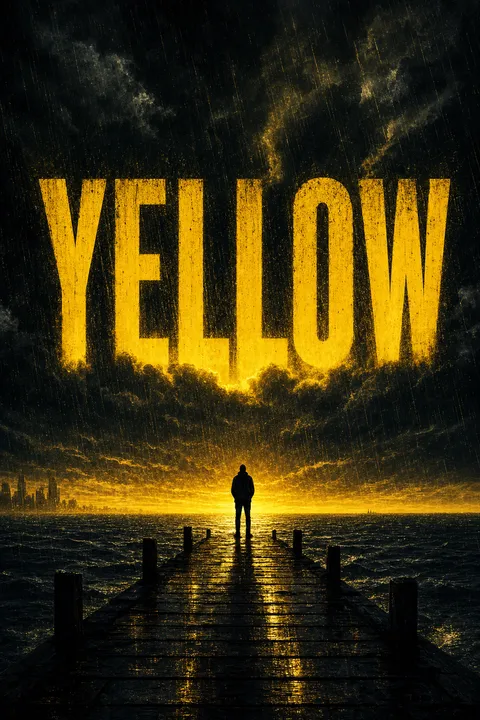


Plot Summary
Two Packs of Shorts
Angel Rodriguez,3 a gold-toothed enforcer, leans over the counter of the Stop N' Go with a curved blade because meek owner Oliver Fitch1 cannot recall his cigarette brand. Sweating and terrified, Oliver1 guesses Newport just in time, and Angel3 leaves promising to return. His wife Lydia2 watches the humiliation and unloads her contempt, blaming Oliver1 for buying a failing store in a rotting city where she has never once felt safe.
A corrupt cop, Officer Thomas,6 steals freely from the shelves, while only Ramon,7 a kindly regular, treats Oliver1 warmly and refuses his change. Oliver1 absorbs every insult in silence, a man defined by the confidence he was born without. His cowardice is the story's opening wound.
The book establishes powerlessness as both economic and existential. Oliver is not merely timid; he has internalized his own worthlessness so thoroughly that survival means erasure. Beauregard stacks predators (gangster, cop, embittered spouse) to show a social ecosystem where the gentle are food. Lydia's cruelty is itself a symptom of trapped terror, her scorn a displaced scream. The failing convenience store, a place people stop only to take, becomes a microcosm of extractive urban decay. The recurring rain functions as pathetic fallacy and pressure, a city drowning slowly. We are watching the last calm before a psyche cracks under accumulated, unavenged indignity.
They Climb the Fire Escape
Days later Angel3 returns with Levi Ballard,4 a hulking convict he sprung from prison, and the pair climb the fire escape into the apartment above the store. They wake Oliver1 with a pistol-whip and hold a blade to his throat while Levi4 rapes Lydia.2 When Oliver's1 buried rage finally cracks his silence, Levi4 forces him to perform oral sex at gunpoint, then slashes his face open.
The intruders christen him yellow, a coward who let another man take both his wife and himself. Oliver1 blacks out convinced that Lydia,2 broken and bleeding, was smiling at his degradation. The assault is the engine of everything that follows, the moment his lifelong passivity curdles into something monstrous and waiting to be born.
The invasion weaponizes emasculation as the deepest violence, targeting not just bodies but identity. The slur yellow becomes the novel's psychic keystone, a diagnosis Oliver will spend the rest of the book trying to disprove through blood. His hallucinated perception of Lydia's smile is crucial: trauma fractures his reading of reality, seeding the delusion that will define him. Beauregard refuses the reader any comfort, insisting that degradation, not death, is the crueler wound. The scene also inverts horror conventions, locating terror inside the home, the last supposed sanctuary. What germinates here is a hatred so total it will eventually consume its host.
What They Made Her Do
Oliver1 wakes stitched together like a ruined mask. Detective Treadwell,9 the rare officer who seems to genuinely care, gently corroborates the assault while Officer Thomas6 and a crony snicker from the doorway. Then comes the detail that guts him: after the rape, the attackers forced Lydia2 to sodomize Oliver1 with the knife and pour bleach inside him.
Treadwell9 relays that Lydia2 begged forgiveness, that a loaded gun stayed in her mouth the entire time. Oliver1 refuses to name Angel,3 distrusting a police force so plainly rotten it cannot be an ally. What crystallizes in that bed is not grief but a dark, patient appetite, retribution swelling in the hollow space where his fear used to live.
This section dramatizes the corrosive politics of testimony. Speaking the violation aloud, forced by a detective, re-traumatizes Oliver more than the act itself, because language makes it permanent and public. His silence about Angel signals a collapsed faith in institutions: to report is to expose oneself to the same predators wearing badges. Treadwell functions as the story's fragile moral counterweight, proof that decency survives, barely. Psychologically, Oliver is crossing from victim to something else; grief requires a future to mourn toward, and he has none. Hatred, by contrast, offers purpose. The wound becomes a mission, and cowardice begins its inversion into terrible resolve.
The Woman on the Fan
Released and unable to face his wife, Oliver1 returns home to find Lydia2 hanging from the ceiling fan by an orange extension cord, days dead and swarming with maggots. Rather than mourn, he argues with her body, and to his fracturing mind she answers, mocking him as yellow, taunting that she chose the noose over him and never paid the mortgage before dying.
This grotesque dialogue becomes his constant companion. Half widower, half madman, Oliver1 resolves that he will not die until he has repaid every person who bled him dry. He keeps her decomposing body as an audience, refusing to let her slip away from the reckoning he now intends to deliver to the whole city.
Beauregard renders grief as psychosis with unsettling precision. The talking corpse is a projection: Lydia becomes the externalized voice of Oliver's self-loathing and, later, his validation, a puppet through which he negotiates his own worth. Refusing to bury her is refusing closure, transforming mourning into a hostage situation where the dead must witness his transformation. The orange cord, an anti-umbilical severing life rather than giving it, marks the death of his old self too. Here the revenge narrative turns gothic and interior. Oliver is no longer avenging a marriage but performing manhood for a spectator who can never again call him coward.
Evolve or Dissolve
At the credit union, branch manager Evelyn Watts,10 overheard boasting about her foreclosure quota, coldly informs Oliver1 the store is lost and has a guard throw him into the rain. Officer Thomas6 waits outside, backhands him, and presses a flier into his chest that fraudulently brands Ramon7 a registered sex offender, revenge for Ramon7 once calling the cop out.
Oliver1 finally grasps the full web: gangsters, dirty police, and predatory bankers all feeding on the powerless from different angles. Something inside him completes its shift. He stops crying. Thomas's6 mocking counsel, that a man must evolve before he dissolves into a forgotten memory, becomes the blueprint for a clerk1 deciding to become the very monster his tormentors always saw.
The foreclosure widens the novel's indictment beyond street crime to institutional violence, arguing that a smiling banker with a quota is kin to a killer with a knife. Evelyn's refusal to make eye contact is the bureaucratic version of dehumanization, murder by paperwork. Framing Ramon reveals corruption as generative, manufacturing the criminals it claims to fight. For Oliver, this is the ideological click: he reframes his coming atrocities as balance, not madness. The rain, relentless and cleansing yet filthy, mirrors his moral inversion. Thomas unknowingly authors his own doom by handing Oliver a philosophy. Radicalization completes when a victim decides the system deserves his darkness.
Blood In, Blood Out
Searching for his framed friend,7 Oliver1 climbs to Ramon's apartment and instead meets Alejandro,8 Ramon's estranged brother and a reluctant soldier in a crime empire. Alejandro8 names the power behind the city's rot: Damien Sanchez,5 a self-styled devil who moves drugs in bulk, owns the police, and sacrifices anyone who tries to leave him.
When Oliver1 requests weapons and flatly confesses he means to kill everyone who destroyed his life, Alejandro8 balks, until Oliver1 vows to slaughter the cop6 who framed Ramon.7 Moved, Alejandro8 supplies an arsenal including an Uzi and a live grenade. Oliver1 walks away armed, having glimpsed a vision of his tormentors urinating on him at his beloved beach, and smiling for the first time in weeks.
This is the arming-of-the-hero beat filtered through despair rather than heroism. Alejandro embodies the trapped foot soldier, moral enough to hesitate yet enmeshed in a system that punishes exit with death. The transaction is transactional grief: two men bonded by loss agreeing that violence is the only available justice. Oliver's hallucinatory beach vision fuses his lost paradise with his abusers, revealing that vengeance and nostalgia have become the same drive. Damien's introduction as a literal devil-figure raises the stakes from realism toward myth, promising a final confrontation with evil incarnate. Notably, Oliver is not seeking survival; he is provisioning a suicide mission dressed as a war.
Sledgehammer and Blowtorch
As threatened, Levi4 returns to the apartment with a new accomplice, expecting the sleeping woman they abused. Instead they find Lydia's2 rotting corpse pinned with car air fresheners beneath a mocking sign, and Oliver1 waiting with the Uzi.
He kills the accomplice instantly and shatters Levi's4 legs, then spends hours dismantling him with sledgehammer, poultry shears, and blowtorch, using smelling salts to keep him conscious.
In his cruelest flourish, Oliver1 drugs and rigs the dying man to violate Lydia's2 corpse one final time, springing a razor trap hidden inside her, before emptying the Uzi through his neck. He forces the man who named him4 yellow to pronounce the word correctly. The timid clerk is gone; a methodical torturer wears his skin.
The first extended kill establishes Oliver's signature: not rage but ritual, punishment engineered as reciprocal poetry. He mirrors Levi's crimes back with escalating irony, insisting the man taste his own degradation before dying. The smelling salts, keeping the victim awake, reveal a new sadistic patience utterly alien to the earlier Oliver, suggesting the transformation is not liberation but corruption. Lydia's booby-trapped body blurs love, revenge, and desecration into one grotesque tableau. Beauregard forces uncomfortable complicity: the reader wants Levi punished yet recoils at the method. This is splatterpunk as moral experiment, asking whether justice pursued without limit simply produces a new, more inventive monster.
Dead Man in the Casket
Trailing Officer Thomas,6 Oliver1 uncovers the cop's side business with undertaker Donald Hoffman:16 Thomas6 murders poor minorities, steers their grieving families to Hoffman's16 discount funerals, and loots the corpses he created. Oliver1 plays dead in a casket, powdered and dressed for his own funeral, and when Thomas6 reaches in to steal his late father's watch, Oliver1 drops the grenade down the cop's pants.
The blast tears off Thomas's6 legs. Before finishing him, Oliver1 extracts a dying confession that the corruption climbs to Captain Mooney.12 He blows Thomas's6 head off while forcing him to stare at Ramon's7 flier, then decapitates Hoffman16 with a machete as the greedy undertaker clutches his cash even while spilling his own guts.
Oliver weaponizes the very passivity that once defined him: playing a corpse, he literalizes how the powerful saw him, a dead-eyed nobody, then detonates that assumption. The funeral-home conspiracy extends the theme that death itself has been monetized, grief converted to profit at both ends of the bullet. Extracting Mooney's name transforms revenge into investigation, giving the rampage narrative momentum toward a head. The dying confession, a plea for afterlife mercy, ironically grants Thomas the fear he denied his victims. Hoffman gripping money as his entrails spill is Beauregard's blunt emblem of greed outliving humanity. The undertaker who profited from cutting people open dies cut open.
The Poker and the Prick
Oliver1 drives to Evelyn Watts's10 isolated country home, the rural paradise she financed by foreclosing on people like him. Feigning a broken-down car, he forces his way in with a tire iron, binds her over her expensive coffee table, and delivers a sermon on the consequences she thought she had escaped.
Her much younger lover, Mark, arrives mid-torture; Oliver1 bluffs as a cable repairman, absorbs a savage beating, then shotguns Mark's head and manhood apart. He returns to Evelyn10 with a red-hot fireplace poker, mutilating her before cutting her throat. The bureaucrat who never once met his eyes dies watching the very monster her paperwork helped create finish his slow, deliberate work.
Evelyn's death argues that administrative cruelty deserves the same reckoning as physical violence, a provocative equivalence at the book's moral core. Her wealth, built on manufactured failure, makes her isolation ironic: distance from the slum cannot outrun the consequence it produced. The bumbling interruption of Mark injects grim farce, and Oliver's collateral killing tests whether his crusade has any limits (an internal angel-and-devil debate suggests it barely does). His fixation on her refusal to make eye contact reframes the whole rampage as a demand to be seen, to matter, to no longer be invisible. Recognition, denied in life, is extracted at the point of death.
The Thirteenth Floor
The true power finally surfaces. Damien Sanchez,5 a satanist crime lord with horns implanted beneath his skin, rules a hidden thirteenth floor of a slum tower where captives have their eyes replaced with mirror glass. His enforcer Jennacide,11 all filed teeth and split tongue, tends the horrors.
To identify the man butchering his soldiers,1 Damien5 performs a blood ritual, sacrificing the unborn child of a captive he calls Orchid17 and scrying Oliver's1 face in the boiling broth. He dispatches Angel3 to bring Oliver1 back alive, and to guarantee obedience he crucifies Angel's3 teenage brother, Bootsy,18 on a black cross. The empire that spawned every one of Oliver's1 tormentors is unveiled as the final, darkest antagonist awaiting him.
Beauregard escalates from gritty realism into occult grand guignol, recasting systemic evil as a literal demonic hierarchy. Damien's theatrical Satanism is less belief than branding, a performance of terror that manufactures compliance, which the text notes is exactly what makes him dangerous. The mirror-eyed slaves are a haunting image of enforced emotional erasure, forbidden even to feel. Crucifying Bootsy binds Angel through familial love, weaponizing the one human tie the enforcer has left. Structurally this beat reframes Oliver's personal vendetta as a confrontation with the source, elevating a domestic revenge tale into a descent-into-hell mythos. Orchid's whispered plea to be killed underscores that here, death is mercy.
Guess the Brand
Coming downstairs for candles for a romantic evening with his dead wife,2 Oliver1 walks straight into Angel's3 ambush and absorbs a brutal pistol-whipping, until a jar of pickle brine smashed into the enforcer's3 face reverses everything. He binds the naked, gagged Angel3 to a chair in the very store where the thug once terrorized him, then forces a sadistic memory game: name each cigarette brand or be burned.
Oliver1 sears Angel's3 arm, tongue, and genitals, then beats him to death with a sock loaded with batteries. Before dying, Angel3 surrenders Damien's5 location, the Glenwood Projects. Energized rather than sickened, Oliver1 climbs back upstairs to consummate his delusion with Lydia's2 corpse by candlelight.
The cigarette game closes a perfect loop: the humiliation that opened the book, forgetting a brand, becomes the instrument of Angel's destruction, revenge as ironic recursion. Oliver has fully authored his own mythology now, staging punishment as ritual theater in his personal arena. Angel's late, uncharacteristic thoughts of his brother reveal a flicker of humanity that the narrative grants no mercy, complicating easy villainy. The subsequent necrophilic scene is the book's most disturbing psychological statement: Oliver's tenderness and depravity have fused completely, love surviving only as delusion. Beauregard refuses catharsis, showing that even righteous vengeance, indulged past reason, terminates in madness rather than peace or healing.
The Cage and the Boat
Following Captain Mooney,12 Oliver1 hides for days in an abandoned waterfront mill and uncovers the department's foulest secret: Mooney12 and Lieutenant Briscoe13 run a ring of trafficked Cambodian women forced into lethal cage fights for the cops' pleasure. Oliver1 storms in, cages the two lawmen, and makes them battle each other to the death; Briscoe13 butchers Mooney,12 then Oliver1 frees the captive women, who skewer Briscoe13 with spears until he resembles honeycomb.
Led by a woman named Maly,15 the survivors point him toward the man who abducted them, a long-fingered killer aboard a docked ship called the Big Hands. Oliver1 guns the trafficker down after a jammed Uzi nearly kills him, then sends the women sailing away to freedom.
This sequence supplies the book's only clean moral note, Oliver as genuine liberator, complicating his monstrosity with actual heroism. Forcing the abusers to fight inverts their own game, granting the victims authorship of the punishment; the women becoming sadists is presented as the price of survival, not triumph. The Big Hands is folk-horror made flesh, a boogeyman rumor rendered literal, suggesting trafficking's evil is mythic in scale. Choosing to send the women into open water rather than to authorities is a damning verdict on the entire institution: freedom lies only in escaping the system entirely. For a moment Oliver receives the recognition and gratitude he always craved.
Consume This
Officer Price,14 another dirty cop, tases Oliver1 and delivers him to Damien's5 satanic temple expecting a reward. Damien5 butchers Price14 instead, intending to boil and consume Oliver1 during a Black Mass. But Jennacide's11 faulty heating coil sends the massive iron cauldron crashing onto her own skull, and Oliver1 slips his handcuffs using keys pulled from her burning body.
He fights off Damien's5 two horned goats with medieval weapons, endures a savage flaying from Damien's5 whip of human spines, then, playing dead a final time, draws Price's14 revolver and empties it into the crime lord's implanted horns. The self-proclaimed devil of the slums dies as just another pathetic man, and Oliver,1 his belly torn open, gathers his bloody keys.
The climax literalizes the book's central inversion: the coward becomes the reaper, and the devil is exposed as ordinary once his mythology is punctured. Jennacide's death by her own malfunctioning altar is grimly theological, the machinery of evil devouring its acolyte, a mockery of her casual prayers to God for help. Oliver's playing-dead gambit recurs as signature, the invisible man's power being that predators underestimate the already-defeated. Damien's terror was always performance, so his unmasked mortality is the point: evil is human, and therefore killable. Yet Oliver's gutted body signals the cost. Victory and self-destruction arrive in the same breath, vengeance completed at the price of the self.
Back to the Beach
Before the temple, Oliver1 had phoned Detective Treadwell,9 urging him to raid the mill. Now Treadwell9 stands over Mooney's12 operation and refuses a rookie's plea to burn the evidence and protect the department, choosing instead to call in federal authorities to break the whole rotten chain. Oliver,1 meanwhile, leaves the blood-soaked cash on Alejandro's8 doorstep with a note asking him to help free Ramon.7
Then he loads Lydia's2 corpse into the car and drives toward the ocean. Bleeding out, his intestines slipping loose, he crashes near the shore, drags her body onto the sand, and dies embracing her, finally returned to the one place they were ever happy together. His war is finished; his ruined love endures.
The dual resolution splits hope from ruin. Treadwell's choice to summon the feds is the book's slim redemptive thesis: rot can be exposed if one person refuses complicity, that decency is a decision, not a temperament. Oliver's final act, the note freeing Ramon and the money given away, restores a flicker of the generous man he once was, closing his arc between altruism and atrocity. The beach fulfills the recurring symbol of lost paradise; death becomes homecoming. That he dies cradling a corpse is both tender and horrifying, the perfect encapsulation of a love that survived only inside madness. Peace arrives, but only through annihilation.
Epilogue
The rain that had drowned the city for months finally breaks, and sunlight spills over the empty beach where Oliver1 and Lydia2 lie entwined. For weeks the tide leaves them undisturbed while crabs and insects strip their bones clean.
The misery of the Stop N' Go, the bloodsuckers, the endless atrocities, all seem to dissolve in the light, leaving only the memory of two people who once loved each other before the city hardened them. When a final storm rolls in one evening, the swelling ocean pushes the tide far past its usual mark and pulls their bleached skeletons off the sand, carrying them out together into the dark water.
The coda grants a serenity the entire book withheld, the sun arriving only once every tormentor is dead and the lovers themselves are gone. Nature reclaiming the bodies suggests a peace unavailable to the living in Beauregard's poisoned city; only in decomposition do Oliver and Lydia escape their cycle of humiliation. The beach, invoked throughout as lost Eden, finally delivers its promised calm, but as a grave. The returning storm that carries them out reads as gentle mercy rather than menace, the world finally washing the stain away. It is a strangely lyrical ending to a brutal book, insisting that even the damned deserve one clean, quiet horizon.
Analysis
Yellow is a splatterpunk revenge fable that uses extreme gore as moral argument rather than mere shock. Beauregard, openly channeling the Death Wish vigilante tradition, builds a rain-drowned city where every institution (police, banks, gangs, even funeral homes) operates as an extractive predator on the powerless. Into this ecosystem he drops Oliver Fitch,1 a man so thoroughly defeated that his cowardice is a kind of death-in-life. The book's central question is disturbing and genuine: what happens when you strip a human being of everything, including his fear? The answer is not heroism but transformation into a monster who mirrors his tormentors' cruelty back with grotesque, ironic precision. Each kill is engineered as reciprocal poetry, punishment shaped to the crime, which forces readers into uncomfortable complicity, cheering justice while recoiling at method. The recurring slur yellow functions as the psychological engine; Oliver's1 rampage is essentially a violent argument against a word, a desperate bid for the recognition and dignity he was denied. Beauregard complicates simple catharsis at every turn. Oliver's1 tender delusion with Lydia's2 corpse reveals that vengeance indulged past reason terminates in madness, not peace. His genuine rescue of the trafficked women shows he retains humanity even as he loses himself. The dual ending splits the difference: Detective Treadwell's9 choice to summon federal help offers a slim, real thesis that decency is a decision, that rot can be exposed if one person refuses complicity, while Oliver's1 death embracing a corpse on their lost beach insists that some wounds admit only annihilation as mercy. Beneath the relentless brutality lies a bleak sociology of neglect, a study of how systems manufacture the monsters they claim to fight, and a strangely lyrical belief that even the damned deserve one clean horizon.
Review Summary
Yellow is a brutal, gory revenge story that polarizes readers. Many praise its intense violence, engaging plot, and satisfying conclusion, comparing it to extreme versions of Death Wish. Fans of splatterpunk and hardcore horror particularly enjoy the graphic depictions of violence and revenge. Some readers find it too disturbing or over-the-top, citing excessive sexual violence and unrealistic scenarios. The book follows Oliver, a convenience store owner pushed to his breaking point, who embarks on a violent rampage against those who wronged him.
People Also Read

Characters
Oliver Fitch
Meek clerk turned avengerA balding, overweight convenience store owner in his mid-forties, Oliver is a man engineered for surrender, born without the confidence to defend himself or the wife he loves2. He absorbs extortion, abuse, and his spouse's2 daily scorn by dissociating into fantasies of the beach and a happier past. Psychologically he is a case study in learned helplessness curdling into something darker: when every source of dignity is stripped away, so too is his fear, leaving only appetite. His transformation from doormat to methodical torturer is the book's spine, driven by a desperate need to prove he is not what everyone called him. Tender and monstrous in equal measure, he channels grief into ritualized violence while carrying on conversations with a woman who can no longer answer2.
Lydia
Embittered, haunting wifeOliver's1 wife and co-owner of the store, Lydia has been hollowed out by years of dashed hopes and constant danger. Once romantic and adventurous, sharing beach weekends with the husband she adored1, she has become caustic, blaming Oliver1 for the failing life they share and lashing him with contempt born of trapped terror. Her cruelty masks a deeper shame at having no protector. She functions as both Oliver's1 tormentor and, in his fracturing mind, his fiercest cheerleader, a voice that goads and validates his descent. She embodies how sustained fear can poison intimacy, turning a partner into a mirror of one's own perceived failures.
Angel Rodriguez
Gold-toothed street enforcerA scarred, tattooed enforcer with a golden fang and a curved dragon-handled blade, Angel is a small-time stick-up kid elevated into a crime empire's muscle. Volatile and cruel, he intimidates for sport, yet beneath the swagger lies a man shaped by prison trauma and a loyalty forged in survival. His bond with Levi4, who protected him behind bars, and his buried love for his younger brother18 reveal fragments of humanity under the menace. He treats Oliver1 as a plaything, never imagining the clerk could become a threat.
Levi Ballard
Brutal ex-convict mentorA hulking convict recently released after fifteen years, Levi is a near-unkillable fighter who once saved Angel3 from prison predators and groomed him into a criminal. Physically overwhelming and sexually predatory, he views cruelty as pleasure and pursues gratification without restraint. He coins the taunt yellow that defines Oliver's1 psyche, and his casual dominance makes him the embodiment of the strength Oliver1 lacks.
Damien Sanchez
Satanist crime overlordThe devil of the slums, Damien is a drug kingpin who has surgically remade himself into a demon, with implanted horns and a branded upside-down cross. He commands police, owns properties, and runs a hidden floor of ritual atrocities, sacrificing enemies and captives to fuel his self-mythology. Whether he truly believes his own divinity matters less than the fact that his followers do, which is what makes him lethal. He is the apex predator of a rotten ecosystem, evil elevated into performance and brand.
Officer Logan Thomas
Trigger-happy dirty copA corrupt beat cop who steals from weaklings, executes the vulnerable, and profits from a funeral-home kickback scheme, Thomas is a sociopath hiding behind a badge. He robs Oliver's1 store openly and delights in others' suffering. His mocking advice to evolve or dissolve becomes, ironically, the philosophy that arms his own destroyer1. He represents institutional violence at its most casual and self-satisfied.
Ramon Cruz
Oliver's only true friendA warm, chubby family man and loyal customer, Ramon shops at the Stop N' Go out of solidarity and dreams of retiring to beaches with his wife once his kids grow up. Fearless where Oliver1 is timid, he openly confronts the corrupt police and vows to expose them. His decency and courage make him a target, and his fate becomes a central motivation for Oliver's1 crusade.
Alejandro Cruz
Reluctant gang soldierRamon's7 estranged younger brother, more slender and hardened, Alejandro is a trapped foot soldier in Damien's5 empire, kept at arm's length from the family because of his criminal life. He retains a conscience and never wanted to hurt anyone, but blood in, blood out leaves him no exit. Moved by loss, he becomes Oliver's1 arms supplier and quiet ally.
Detective Max Treadwell
The rare honest copA hard-boiled investigator who has seen every horror, Treadwell distinguishes himself by genuinely caring about Oliver's1 case and treating the ruined man with awkward compassion. Surrounded by corrupt colleagues, he embodies the story's fragile hope that decency can still choose to act. His willingness to look at what others bury makes him the moral counterweight to the department's rot.
Evelyn Watts
Cold foreclosure bankerA credit union branch manager who profits from meeting foreclosure quotas, Evelyn refuses even to make eye contact with the desperate clients she ruins. Vain, condescending, and self-justifying, she considers the poor marked for failure anyway. She retreats to a rural home financed by others' collapse, believing distance can buy immunity. She personifies bureaucratic cruelty, murder committed with a pen rather than a knife.
Jennacide
Damien's demonic enforcerA caramel-skinned woman remade into a nightmare with clouded eyes, filed razor teeth, and a split tongue, Jennacide is Damien's5 devoted lieutenant and the warden of his thirteenth-floor horrors. Sadistic and eager to please her master, she carries out ritual atrocities with ghoulish delight. She reflects how total submission to a charismatic monster can erase the last traces of a person's own humanity.
Captain Mooney
Corrupt police captainThe obese, venal head of the department, Mooney sits atop the chain of police corruption and indulges in the darkest of appetites at a secret waterfront operation. His name surfaces as Oliver1 climbs the ladder of vengeance, revealing that the rot goes all the way to the top of the badge.
Lieutenant Briscoe
Mooney's sadistic partnerMooney's12 right-hand man, Briscoe helps run the trafficking and cage-fight ring, torturing captives for sport. Loyal only to his own survival, he proves how quickly camaraderie among predators dissolves under pressure.
Officer Winston Price
Opportunistic dirty copA crony of Officer Thomas6 seen lurking at the store and hospital, Price is another badge-wearing predator who kidnaps for profit. His greed and confidence lead him to expect a reward from far more dangerous men.
Maly
Freed trafficking survivorA trafficked Cambodian woman who speaks some English and becomes spokesperson for the captives, Maly translates their terror and their verdict. Dignified even in trauma, she guides Oliver1 toward the final captor and leads the survivors toward freedom.
Donald Hoffman
Greedy conspiring undertakerA gaunt funeral-home owner who partners with corrupt police, Hoffman profits from steering grieving families toward discount funerals for the very people the cops kill. His bottomless greed defines him even to his final breath.
Orchid
Damien's ritual captiveA once-beautiful woman reduced to a blood-pickled breeding vessel on Damien's5 ritual floor, Orchid is repeatedly impregnated so her offspring can fuel his scrying rituals. Broken but not fully extinguished, she can only beg for death.
Bootsy
Angel's endangered brotherAngel's3 teenage younger brother, an innocent kid seized by Damien5 and used as leverage. His suffering becomes the cruel motivation forcing Angel3 to hunt Oliver1, weaponizing family love into obedience.
Plot Devices
The Word Yellow
Central shame-and-vengeance motifThe slur yellow, spat at Oliver1 during his defilement, becomes the book's psychological keystone. It names the cowardice he was born into and haunts every subsequent choice. The color recurs obsessively: the sagging sun, crime-scene tape, pickle brine, urine, all reminders of the accusation he must disprove. Oliver's1 entire arc is an argument with this single word, and his violence is essentially a sustained attempt to prove he is no longer yellow. He even forces a victim4 to pronounce it correctly, seizing authorship over the label that once destroyed him. The motif transforms a racist insult into a private mythology, the axis around which a timid man reinvents himself as an instrument of terror.
Lydia's Talking Corpse
Externalized madness and griefAfter Oliver1 discovers his wife's body2, he keeps it and converses with it, and in his fracturing mind she answers. The corpse serves as a mobile psychological mirror, first mocking him with the same scorn she used in life, later softening into loving encouragement as his rampage succeeds. Through this device Beauregard dramatizes dissociative grief and delusion without exposition, letting the reader inhabit Oliver's1 warped reality. The decaying body becomes his audience, his conscience, and his motive, the spectator he must impress and the love he refuses to relinquish. Its presence steadily tracks his descent, growing more grotesque even as his affection for it grows more tender, fusing devotion and depravity into a single unbearable image.
The Beach
Lost paradise and homecomingThe beach is the recurring symbol of the couple's happier past, the sunlit refuge Oliver1 and Lydia2 visited before the city hardened them. It surfaces in his fantasies during moments of stress, is invoked in the phrase about tormentors pissing on his beaches, and reappears in a nightmarish hallucination that fuses paradise with abuse. The beach represents everything the predators stole: peace, love, dignity, a future. Throughout his war, returning to it becomes Oliver's1 private promise. As the endpoint toward which the whole story flows, it transforms from memory into destination, the one clean horizon in a rain-drowned world, and ultimately the place where his journey and his ruined love reach their final rest.
Playing Dead
Tactical inversion of weaknessOliver1 repeatedly weaponizes the very invisibility and helplessness that once made him prey. He climbs into a casket dressed for his own funeral to ambush a thieving cop6, and later feigns unconsciousness to seize a hidden weapon at the climactic confrontation. The device embodies the book's core reversal: predators underestimate the already-defeated, and Oliver1 exploits their contempt as his deadliest tool. Where earlier he froze like a statue when threatened, he now transforms passivity into a trap. The corpse-clerk who seemed beaten becomes the one thing no one guards against. Each time, the assumption that he is finished, dead, or harmless is precisely what allows him to strike, turning the label of nobody into a fatal advantage.
Damien's Scrying Broth
Occult plot accelerantDamien5 locates the man slaughtering his soldiers1 not through investigation but through a blood ritual, sacrificing an unborn child into a boiling cauldron and reading Oliver's1 face in the changing liquid. This device pivots the narrative from grounded urban revenge into supernatural horror, raising the antagonist beyond mere crime boss into something mythic. It mechanically connects Oliver's1 private rampage to the empire's response, triggering Angel's3 hunt and the crucifixion of Bootsy18 as leverage. Whether the magic is real or theatrical delusion is left ambiguous, which is the point: belief, not truth, generates power. The ritual functions as both a genre escalation and a thematic statement that this city's evil has metastasized into something that feeds on the innocent to sustain itself.
FAQ
Synopsis & Basic Details
What is Yellow about?
- Timid Man's Descent: Yellow follows Oliver Fitch, a meek convenience store owner in a decaying, rain-soaked city, whose life is dominated by fear and humiliation from local thugs and corrupt officials.
- Brutal Violation Catalyst: After a horrific home invasion where he and his wife, Lydia, are brutally assaulted and degraded, Oliver's long-suppressed rage ignites, shattering his timid facade.
- Vengeful Transformation Begins: Fueled by the desire for retribution and the loss of his former life, Oliver embarks on a violent quest to systematically eliminate the individuals and systems responsible for his suffering and the city's pervasive corruption and power.
Why should I read Yellow?
- Visceral Exploration of Vengeance: The novel offers an unflinching, intense look at how extreme trauma can transform a person, exploring the psychological shift from victim to perpetrator in graphic detail.
- Critique of Systemic Decay: Beyond personal revenge, the story functions as a dark commentary on urban corruption, power dynamics, and the failure of institutions (police, banks) to protect the vulnerable.
- Shocking and Thought-Provoking: Aron Beauregard's signature extreme horror style pushes boundaries, forcing readers to confront disturbing realities while contemplating themes of justice, morality, and the nature of evil.
What is the background of Yellow?
- Urban Decay Setting: The story is set against the backdrop of a perpetually rainy, crime-ridden city, where poverty, violence, and corruption and power are rampant, creating an oppressive atmosphere that mirrors the characters' despair.
- Author's Revenge Genre Homage: In the author's note, Beauregard explicitly states the book is a revenge story paying homage to films like the Death Wish franchise, exploring the trope of repeated trauma as a catalyst for vigilante action.
- Focus on Societal Parasites: The narrative targets various forms of societal "leeches," from street criminals and corrupt police to predatory bankers and human traffickers, presenting them as interconnected elements of a decaying system.
What are the most memorable quotes in Yellow?
- "Where I'm from, we got a name for faggots like you. You're yella.": Levi's taunt during the home invasion directly names the central theme of cowardice that Oliver must overcome, becoming a driving force for his transformation and the book's title.
- "You gotta evolve before you dissolve...": Officer Thomas's cynical advice to Oliver encapsulates the brutal philosophy of survival in the city, suggesting adaptation to corruption is necessary to avoid being consumed by it, a twisted prophecy Oliver ultimately fulfills in his own way.
- "I'm the man that's here to put an end to your side hustle... I decided to come and see you before you saw me.": Oliver's declaration to Donald Hoffman signifies his complete shift from passive victim to active predator, reversing the power dynamic and taking control of his fate and the fates of his tormentors.
What writing style, narrative choices, and literary techniques does Aron Beauregard use?
- First-Person Limited (Mostly Oliver): The narrative primarily follows Oliver's perspective, immersing the reader in his fear, humiliation, and eventual rage, though it occasionally shifts to other characters (like Damien or Jennacide) to broaden the scope of the city's depravity.
- Graphic and Visceral Prose: Beauregard employs explicit, detailed descriptions of violence, gore, and degradation, utilizing sensory language to create a deeply unsettling and impactful reading experience characteristic of extreme horror.
- Symbolism and Motif: Recurring symbols like the color yellow, rain, the Stop N' Go store, and the beach are used to represent themes of cowardice, despair, entrapment, and the elusive hope of escape or peace, adding layers to the brutal narrative.
Hidden Details & Subtle Connections
What are some minor details that add significant meaning?
- Officer Thomas's Watch: Officer Thomas pointing to his "gaudy wristwatch" while threatening Oliver ("I decide when your time's up") subtly links his control over others' lives to the concept of time, a power Oliver later seizes when he uses the same watch to pull the grenade pin, literally ending Thomas's time.
- Lydia's Missing Teeth: The detail that Lydia swallows her teeth during the initial assault is a physical manifestation of her silencing and degradation, a hidden detail that underscores the depth of her trauma and foreshadows her later inability to speak or escape her fate.
- The Funeral Home's Magazines: Donald Hoffman offering Officer Thomas "magazines on the table in there with pictures of pretty people" in a funeral parlor highlights the perverse nature of their business, where death and exploitation are intertwined with superficial distractions, revealing the depth of their moral decay.
What are some subtle foreshadowing and callbacks?
- Angel's Knife Handle: Angel's dragon-handled knife, initially used to threaten Oliver in the store, is later used to slash his face during the home invasion, a direct callback that confirms his identity and solidifies the connection between the initial intimidation and the later brutal assault.
- The Beach Motif: Ramon's dream of "beaches, bachata, and Bacardi" and Oliver's internal lament that Angel and Officer Thomas are "pissing on his beaches" establishes the beach as a symbol of escape and peace early on, foreshadowing its eventual, albeit twisted, role in the novel's conclusion as a place of final rest.
- Officer Price's Hospital Smirk: Officer Price's presence and amusement outside Oliver's hospital room, noted as being "just as big of an asshole as Thomas," subtly foreshadows his later involvement in the conspiracy and his role in capturing Oliver, confirming Oliver's initial distrust of the police force beyond Thomas.
What are some unexpected character connections?
- Ramon and Alejandro's Criminal Ties: The revelation that Ramon's brother, Alejandro, is deeply entangled in Damien Sanchez's organization is an unexpected connection that links Oliver's only source of genuine support to the very criminal underworld he seeks to destroy, providing him with the means (weapons) to begin his revenge.
- Officer Thomas and Donald Hoffman's Partnership: The seemingly unrelated characters of a corrupt cop and a funeral home owner are revealed to be partners in a gruesome scheme, with Thomas providing bodies (victims of his violence) for Hoffman to profit from, exposing a hidden layer of systemic corruption and power beyond just the police force.
- Evelyn Watts and the Systemic Exploitation: The bank manager, Evelyn, initially appears as just another obstacle (foreclosure), but her casual boasting about foreclosures and her partnership with "Mr. Jacobs" reveals her as part of the broader network of exploitation, connecting financial ruin to the physical and psychological violence Oliver endures.
Who are the most significant supporting characters?
- Ramon Cruz: Ramon is significant as Oliver's only genuine friend and a symbol of decency in a corrupt world. His courage against Officer Thomas and his brother Alejandro's later assistance are pivotal in Oliver's journey, highlighting the impact of even small acts of kindness and resistance.
- Alejandro Cruz: Ramon's brother, Alejandro, is crucial as the reluctant ally who provides Oliver with the weapons needed to enact his revenge. His connection to Damien Sanchez's world offers Oliver vital information and resources, enabling his transformation from victim to active avenger.
- Detective Treadwell: Treadwell represents the possibility of integrity within the corrupt police force. His initial genuine concern for Oliver and Oliver's later decision to contact him, despite his distrust of the police, sets the stage for the potential exposure of the systemic corruption and power, offering a glimmer of hope for broader change.
Psychological, Emotional, & Relational Analysis
What are some unspoken motivations of the characters?
- Oliver's Need for Control: Beyond simple revenge, Oliver's actions are driven by an unspoken need to reclaim control after years of powerlessness and humiliation. Each kill is not just punishment but an assertion of agency, reversing the dynamic where others dictated his fear and suffering.
- Lydia's Desire for Escape: Lydia's constant berating of Oliver and her eventual suicide, while framed by her fear and disappointment in him, also stem from an unspoken, desperate desire to escape the suffocating reality of their lives and the store, which she blames for their misery.
- Damien Sanchez's Quest for Power/Control: Damien's elaborate rituals, sacrifices, and belief in being "The Devil" suggest a motivation beyond simple criminal enterprise; he seeks absolute power and control, not just over the city's underworld but over life, death, and even souls, viewing his actions as a form of dark worship and destiny.
What psychological complexities do the characters exhibit?
- Oliver's Dissociation and Adaptation: Oliver exhibits psychological complexities through his initial dissociation ("slow-burning dreamy detachment") as a coping mechanism for pain, which later evolves into a chilling adaptation to violence and sadism, finding a perverse sense of purpose and even joy in his brutal acts ("It all just felt so natural to me").
- Lydia's Shame and Resentment: Lydia's reaction to the assault is complex, mixing terror with "inferior and pathetic—shame" regarding Oliver's perceived cowardice. Her later "sick beam of dark satisfaction" while Oliver is being assaulted suggests a twisted resentment and perhaps a desire for him to share her degradation.
- The Villains' Sadistic Rationalizations: Characters like Officer Thomas, Donald Hoffman, and Damien Sanchez display psychological complexity by rationalizing their horrific actions (murder, exploitation, human trafficking) through twisted logic (Thomas's "keeping the streets clean," Hoffman's "more business," Damien's "destiny"), revealing deep-seated sadism masked by self-serving justifications.
What are the major emotional turning points?
- The Home Invasion: The brutal assault on Oliver and Lydia is the definitive emotional turning point for Oliver, shattering his passive acceptance of fear and igniting the deep-seated rage that fuels his transformation through vengeance and subsequent violent actions.
- Finding Lydia's Body: Discovering Lydia's suicide is a complex emotional turning point. While initially dreading confrontation, her death removes the immediate source of his humiliation and resentment, paradoxically freeing him to fully embrace his violent path without her judgment, while also solidifying his motive for revenge ("You ruined my life!").
- The Beach Reunion (Hallucination): Oliver's final moments with the hallucinated/manifested Lydia at the beach represent an emotional turning point where he finds a twisted form of peace and validation. Her "undying love" and pride in his violence provide the emotional closure and acceptance he craved, allowing him to die feeling like a hero in her eyes.
How do relationship dynamics evolve?
- Oliver and Lydia's Deterioration and Twisted Reunion: Their relationship devolves from strained cohabitation fueled by resentment and disappointment ("You ruined my life!") to a bizarre, post-mortem "romance rekindled" where Lydia's spectral presence validates Oliver's violence, culminating in a final, grotesque act of "love and redemption" on the beach.
- Oliver and the Police (Thomas/Mooney/Briscoe/Price): Oliver's dynamic with the police shifts from being a victim of their corruption and power and intimidation (Thomas stealing, Mooney/Briscoe's operation) to becoming their judge and executioner, reversing the power dynamic entirely and exposing their depravity.
- Oliver and the Criminals (Angel/Levi/Damien/The Big Hands): Oliver's relationship with the criminal element transforms from being their helpless prey ("You're yella") to becoming a force more terrifying and brutal than they are, systematically dismantling their power structures and proving he is no longer "yellow."
Interpretation & Debate
Which parts of the story remain ambiguous or open-ended?
- The Nature of Lydia's Post-Death Presence: The story leaves ambiguous whether Lydia's appearances and dialogue after her suicide are genuine supernatural occurrences, Oliver's psychological break and hallucinations, or a symbolic manifestation of his internal state and desires, allowing for multiple interpretations of his sanity and the story's reality.
- The Extent of Systemic Corruption and Power: While the narrative exposes corruption within the police and banking systems, the full scope of Damien Sanchez's influence and whether there are even higher powers involved (beyond Captain Mooney) remains somewhat open-ended, suggesting the rot might extend even further.
- Detective Treadwell's Future Impact: Although Treadwell decides to call the feds, the story doesn't show the outcome of this action. It's left ambiguous whether his efforts will truly dismantle the pervasive corruption and power or if the system is too deeply entrenched to be effectively reformed, leaving the city's future uncertain.
What are some debatable, controversial scenes or moments in Yellow?
- The Home Invasion Assaults: The graphic and detailed depictions of the sexual assaults on both Lydia and Oliver are highly controversial due to their extreme nature and the explicit focus on degradation and forced acts.
- Lydia's Reaction During Oliver's Assault: Lydia's perceived "sick beam of dark satisfaction" and Oliver's interpretation that she was "enjoying watching this sick fuck do this to me" is a deeply disturbing and debatable moment, questioning the nature of her trauma response and the depth of their marital breakdown.
- Oliver's Post-Mortem Interactions with Lydia: The scenes where Oliver interacts with Lydia's decomposing corpse, including sexual acts and conversations, are extremely controversial due to the necrophilic elements and the unsettling portrayal of love and connection in the face of extreme decay and psychological breakdown.
Yellow Ending Explained: How It Ends & What It Means
- Oliver's Violent Climax and Death: The Yellow ending explained sees Oliver successfully eliminate Damien Sanchez, the architect of the city's corruption and power, in a brutal final confrontation. Mortally wounded from the fight, Oliver uses his remaining strength to drive himself and Lydia's corpse to the beach, the symbol of their lost peace, where he dies.
- Twisted Redemption and Peace: The meaning of the ending is complex. Oliver achieves his violent revenge, dismantling the core figures of corruption. His death on the beach with Lydia's body, framed by his hallucinated sense of her pride and renewed love, suggests a twisted form of redemption and finding peace not in escaping the darkness, but in embracing it and completing his mission, validated by his distorted perception of their bond.
- Cycle Broken, But At What Cost?: While Oliver breaks the cycle of being a victim and exposes the corruption and power (via Treadwell), his transformation through vengeance turns him into a monster himself. The ending implies that true escape or return to innocence is impossible; the only way out of the pervasive evil was through becoming something equally, if not more, terrifying, highlighting the destructive nature of vengeance and trauma.
About the Author
Other books by Aron Beauregard


Download PDF
Download EPUB
.epub digital book format is ideal for reading ebooks on phones, tablets, and e-readers.








































