


Plot Summary
The Brother's Stolen Coin
Arwen Valondale1 spends her days healing the wounded of Amber, a kingdom losing a brutal war against Onyx, while nursing her ailing mother9 and shielding her bold little sister Leigh.8 A year of silence has convinced her that her brother Ryder7 is dead, until he crashes through the door, bloodied, having deserted his battalion and stolen a sack of Onyx coin.
With vengeful soldiers on his trail, Ryder7 insists the family sail that very night for the safer Garnet Kingdom. Arwen1 agrees, terrified of leaving the only home she knows. As they walk toward the docks, Leigh8 discovers their mother's9 medicine vials are empty. Arwen1 sprints back alone to refill them, a small errand that detonates her entire life.
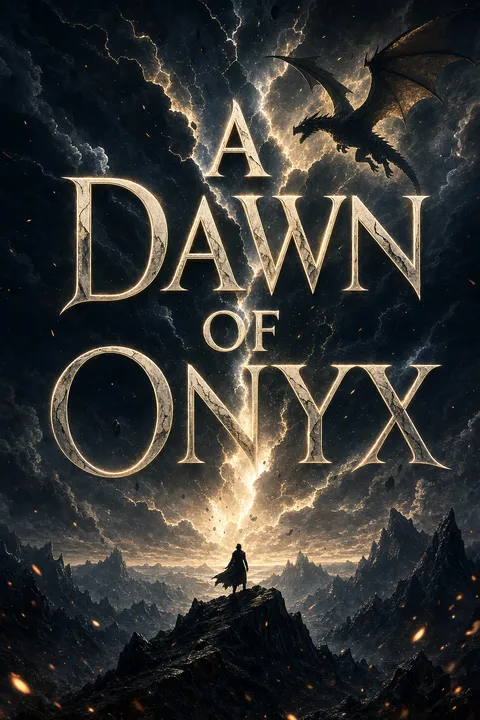
The opening frames Arwen through duty and dread, a caretaker whose self-worth is bound to others' needs. Golden establishes a world where men leave and women hold the wreckage together. The empty vials are a masterstroke of causality: Arwen's compulsive responsibility, the very trait she prizes, becomes the mechanism of her capture. Her fear of change reads as cowardice to her, but the narrative quietly codes it as trauma response. The bruised sunset over a decaying town signals a kingdom and a girl both eroding. By making a mundane act of love the inciting catastrophe, the book argues that ordinary devotion can be as fateful as any grand choice.
A Daughter Surrenders
The cottage is no longer empty. Eleven Onyx soldiers wait inside, led by the cruel Lieutenant Bert,11 hunting the coin thief. Cornered and a hopeless liar, Arwen1 saves her own neck by healing a dying soldier she comes to know as Barney,12 using the strange light that pours from her hands, a gift she has hidden her whole life.
When Bert11 plans to drag her along to find Ryder,7 she bargains: leave her family untouched and she will serve as a healer willingly. He agrees. Bound and half-dressed, she is flown north on the back of a pitch-black dragon to Shadowhold, an Onyx stronghold ringed by haunted woods. Her sacrifice purchases her family's escape but strands her, alone, in the kingdom she was raised to fear.
Arwen's surrender is both heroic and quietly self-erasing. She assumes her life is the spendable one, a belief later named as the residue of her stepfather's abuse. The scene weaponizes her gift: healing, her source of meaning, becomes her only currency in a transaction with cruelty. Bert embodies an everyday tyranny she recognizes instantly because she grew up beside one. The dragon flight literalizes her crossing from the knowable into myth made real. Notably, she negotiates rather than fights, foreshadowing a heroine whose first weapons are empathy and pragmatism. The chapter dismantles her assumption that monsters live only in stories, replacing childhood abstractions with concrete, armored men.
The Prisoner in the Next Cell
Locked in a dank cell, Arwen1 spirals into suffocating panic until a low, mocking voice needles her from the neighboring cage. The man is arrogant, infuriating, and impossibly handsome,2 with silver eyes and a wolfish grin. His goading distracts her enough to steady her breathing, and when she shivers he slides his fur cloak through the bars.
He calls her bird and seems strangely drawn to her, yet refuses to explain why he sits chained in his own kingdom's dungeon. She hears him arguing in hushed tones with someone deeper in the cells before sleep takes her. By morning his cell stands empty, leaving her unsure whether he escaped or was executed. The encounter plants a hook she cannot shake.
The enemies-to-lovers engine ignites here through banter as a coping mechanism: his cruelty paradoxically rescues her from her own mind, modeling how regulation can come from confrontation rather than comfort. The fur cloak, a small mercy wrapped in arrogance, establishes the central tension of his character, tenderness disguised as indifference. Golden plays with the gothic trope of the imprisoned brooder while Arwen, well-read, names the cliche aloud, a metafictional wink. The unexplained midnight argument seeds mystery without payoff yet, training the reader to track his secrets. His fixation on the nickname bird hints at a recognition he himself cannot articulate, the first thread of the prophecy quietly tugged.
Healing a Wounded Stranger
Barney12 guards Arwen1 as she works the castle apothecary, where she befriends chatty Owen and his brilliant, red-haired daughter Mari,3 and clashes with the gruff herbalist Dagan.4 Lingering by a closed door, she overhears the Onyx king2 pressing his commander5 about a seer's prophecy and a search with less than a year remaining.
Then her dungeon stranger2 reappears, gravely wounded, and she stitches and secretly heals him. She begs him to take her when he flees; he refuses, citing unfinished business, then leaps from the second-story window and disappears before hitting the ground.
Moments later a furious green-eyed soldier5 storms in hunting him. Baffled by the man's impossible escapes, Arwen1 begins plotting her own using a butcher's son and his weekly midnight cart to the capital.
This section builds Arwen's chosen family in captivity, suggesting belonging can take root even in enemy soil. Mari and Dagan become mirrors: one a loquacious overachiever masking loneliness, the other a silent stoic guarding grief. The eavesdropped prophecy is classic dramatic irony seeding, planted long before its weight lands. The stranger's gravity-defying exit quietly screams non-human, a clue Arwen rationalizes away because her worldview cannot yet accommodate it. Her decision to heal him despite the risk reveals a moral compulsion stronger than self-preservation, the same instinct that surrendered her freedom. The plotting of escape restores her agency, framing knowledge and observation as the survival tools of the powerless.
The Lieutenant Unmasks a King
At midnight Arwen1 slips her rusted lock and creeps toward the cart, only to collide with a drunken Bert,11 who drags her toward his tent. Her dungeon stranger2 materializes, radiating lethal fury, and Bert11 instantly drops her and bows, calling him his king. The arrogant prisoner is Kane Ravenwood,2 the very monarch she was taught to dread.
He shatters Bert's11 face, orders him to the dungeons, and turns to a humiliated Arwen.1 Kane2 offers a bargain: remain and heal for him as her brother's7 debt, and he will find and protect her family. When she balks, he threatens the torture annex. Cornered yet again, she agrees, but wrings concessions from him: free movement through the castle, a letter delivered home, and her brother's7 safety.
The reveal recontextualizes every prior interaction, transforming flirtation into manipulation and rescue into power play. Yet Golden complicates the betrayal: Kane's intervention against Bert is genuine, his rage at sexual violence unfeigned. Arwen's shame, that she confided her deepest truths to a deceiver, is the wound that will define their dynamic. The negotiation scene is crucial character work: even terrified, she bargains for autonomy, refusing to be merely owned. The threat of torture exposes the performed cruelty Kane wields as governance. Their first real power exchange establishes a relationship built on coerced proximity, where trust must be earned against a foundation of lies, the central romantic and ethical problem of the book.
Steel and a Mother's Cure
Dagan4 unexpectedly begins drilling Arwen1 with a sword each dawn, insisting she learn to defend herself. In the library, Mari3 helps her identify her mother's9 mysterious wasting illness as Plait's Disorder, curable by a concoction requiring burrowroot, a plant that blooms only during a lunar eclipse two months away yet leaves a shimmering residue year-round.
Meanwhile Arwen's1 loathing for Kane2 erupts in his throne room, where she slaps him after he flings her confided insecurities back in her face, and his young commander, Griffin,5 pins her arms.
The twin projects give her purpose: grow strong, find where the burrowroot grows, and force Kane2 to help save her mother.9 Hope, fragile and stubborn, begins crowding out the despair that had swallowed her.
Empowerment here is literal and physical. Dagan reframes Arwen's chronic fear as untapped power, an idea that doubles as the book's thesis on courage: bravery is not fearlessness but action in spite of it. The medical quest gives the plot a ticking clock and gives Arwen something to fight for beyond escape, shifting her from passive captive to driven agent. The slap is a rupture of decorum that thrills precisely because Arwen, the appeaser, finally strikes back. Kane's cruelty in the throne room is defensive, a man punishing closeness he craves. The library and the training field become twin classrooms where Arwen rebuilds a self that abuse and war had shrunk.
The Race to the Pond
Arwen1 charms her way onto Kane's2 hunting expedition, secretly scouting the woods for burrowroot. At a clearing scarred by a grisly mauling, she spots the telltale shimmer beneath an oak and memorizes the spot. Sending his men ahead, Kane2 leads her to a hidden turquoise pond, where they wager a truth and race; she wins, plunging in first.
The playfulness sours when she begs him to free her, and he refuses without explanation. On the ride home, pressed together on horseback, their loathing frays into undeniable attraction. With her won question she asks why he lets the world believe him a monster, and his answer chills her: he treats mercy, trust, and love as weaknesses no king can afford.
The pond is the romance's pastoral turning point, a green sanctuary where armor literally comes off. Their footrace stages attraction as competition, a courtship of equals rather than rescuer and rescued. Yet Golden refuses easy sweetness: Arwen's plea for freedom punctures the idyll, reminding both that affection grows inside captivity. Kane's philosophy, that emotion endangers a ruler, is the psychological scar tissue of someone who has lost people to his own feelings. His secrecy is revealed as both strategy and self-protection. The chapter dramatizes the seductive danger of intimacy with a powerful man who insists vulnerability is fatal, foreshadowing how thoroughly that belief will be tested.
Theft in the Spire Study
Mari3 confesses she is a witch struggling to master her spells and persuades Arwen1 to help steal Briar's amulet from Kane's2 private tower study while he hunts in the woods. Inside the jewel-box spire they are ambushed by Acorn, his pet strix, a toothed owl creature Mari3 barely manages to suspend midair.
Through the wall they overhear Kane2 and Griffin5 discussing potential allies and a woman named Amelia.13 They escape with the amulet just as guards burst in.
Afterward Mari3 reveals her wound: motherless and bullied as a child, she equates her worth with brilliance and never failing. Recognizing her own loneliness in the confession, Arwen1 comforts her. The theft cements their friendship while multiplying the questions Arwen1 cannot yet answer about Kane.2
The heist subplot deepens the novel's interest in female interiority beneath competence. Mari's panic about failure exposes how high-achieving women weaponize intellect against grief, a portrait drawn with real tenderness. The strix and the secret spire reinforce Kane as a man of hidden chambers, both literal and emotional. Crucially, the overheard mention of Amelia plants jealousy as a destabilizer in the slow-burn romance, while the amulet itself functions as a misdirection about the source of Mari's power. Arwen comforting Mari inverts her usual role: here she gives the reassurance she rarely receives. Friendship, the book insists, is its own counterweight to a world of kings, war, and manipulation.
The War Forum and the Captive
Kane2 invites Arwen1 to a war council, where, dressed in Onyx black, she proposes blocking the Midnight Pass to strip Amber of its shortcut, an idea the room adopts. For one heady moment she belongs. Then soldiers haul in three captured Amber raiders caught breaking into the vault, and one is Halden, her childhood sweetheart,6 long presumed dead.
Desperate, Halden6 claims Arwen1 as his betrothed, and a jealous, enraged Kane2 orders him executed. Griffin5 argues coldly that the men must now die, since they have learned the king2 cares for his healer.1 Arwen's1 frantic pleading buys Halden6 a stay in the dungeons. Her two worlds, the home she lost and the captor she is falling for,2 smash together with brutal force.
Arwen's strategic insight at the forum marks her full transformation from frightened captive to valued voice, her healer's logic of blockers translated into warcraft. The chapter's irony is sharp: the instant she feels she belongs to Onyx, her Amber past walks in chained. Halden's claim of marriage is self-serving manipulation dressed as love, exposing how the boy she idealized has curdled. Kane's jealousy reveals the very weakness he denounced, while Griffin's chilling calculus shows love itself becoming a tactical liability. Arwen is caught between loyalties she can no longer cleanly hold, and the scene forces her to confront that her feelings have shifted away from the fair-haired boy she once expected to marry.
The Wine Cellar Revelation
Arwen1 smuggles supplies to Halden6 and helps plan his escape during a banquet honoring Peridot's King Eryx14 and his daughter Amelia.13 When Halden's6 warlock detonates the dungeon, the blast traps Arwen1 and Kane2 in the wine cellar. Soothing her panic, Kane2 finally unveils the real war: the immortal Fae King Lazarus,10 having ruined his own realm with greed, struck a deal with Amber's King Gareth to burn an entire mortal kingdom for fresh land.
Halden,6 Kane2 reveals, is no innocent but an assassin sent to slaughter Fae. The history reframes everything: Onyx's brutality is a desperate defense of the continent. Arwen's1 hatred fractures, and in the dark cellar the two of them nearly kiss before Griffin5 wrenches the door open.
The cellar is a confessional, confinement forcing intimacy and revelation. Golden detonates the reader's assumptions alongside the dungeon: the war Arwen judged as imperial greed becomes a defensive stand against extinction. The Fae lore reframes Kane from villain to reluctant shield, and reframes Arwen's homeland as the dupe of a genocidal bargain. Halden's exposure as an assassin retroactively poisons her nostalgia, completing his fall from first love to threat. The near-kiss, interrupted, sustains the slow burn while marking the emotional pivot: knowledge dissolves hatred. The scene argues that moral clarity is a luxury of the uninformed, and that understanding, however painful, is the precondition for both love and effective resistance.
Blood Beneath the Eclipse
With Kane2 away pursuing the escaped Halden,6 Arwen1 braves the Shadow Woods alone on eclipse night, armed with Dagan's4 heavy sword, to harvest the blooming burrowroot. Two chimeras guard the oak; she lures them into the pond, then, wracked with remorse, dives back to resuscitate the drowning beasts, draining her power.
She gathers the flowers just as a speaking wolfbeast, a shapeshifted Fae mercenary, attacks. The grateful chimera dies defending her. Channeling Dagan's4 training and raw fury, Arwen1 drives the sword through the creature's heart, but its venom shreds her chest.
Kane2 arrives to find her bleeding out and uses a strange, twisting dark power to silence her agony. Her courage finally proves the strength others kept insisting lived inside her.
This is Arwen's crucible, where every thread, the cure quest, the sword lessons, the lighte, the woods' danger, converges. Her choice to save the chimeras she nearly killed dramatizes a healer's ethic that refuses even justified cruelty, and it costs her dearly, nearly fatally. The wolfbeast's ability to speak collapses the comforting line between animal and enemy, deepening the horror. Defeating it transforms Dagan's abstract lesson that fear is power into lived truth. The mysterious dark mist Kane wields plants the final mystery of his nature. The eclipse, a moment of light briefly devoured, mirrors Arwen's near-death, and her survival reframes her self-image from fragile to formidable.
The King Is Fae
Arwen1 wakes feverish in Kane's2 bed, tended for days. Walking the gothic gardens, he confesses the secret behind the black mist that eased her pain: he is Fae, in truth the second son of Lazarus10 himself, who led the failed rebellion that cost everyone he loved their lives. Over two centuries old, he hides his nature behind the monster persona he deliberately crafted.
The wolf, he explains, was one of his father's10 mercenaries hunting him, and the woods have never been safe. Worse, Amber has seized Garnet, where her family fled, and Lazarus10 may strike any day. Kane2 insists she flee with Griffin5 and Mari3 to allied Peridot. As they part, he names her bravery aloud and kisses her, and she lets herself want him completely.
The reveal completes Kane's reframing from tyrant to tragic rebel, his cruelty a costume stitched over guilt. That he turned against his own father lends him moral weight while explaining his fatalism about love as weakness, he has watched affection get people killed. Arwen absorbing his immortality, his lineage, and his self-loathing tests the limits of acceptance. The garden, full of strange dark blooms, becomes the setting where ugliness is reframed as beauty, mirroring how she now sees him. The first true kiss arrives only after radical honesty, suggesting the novel's romantic ethic: desire untethered from truth is hollow. Yet the looming war ensures their union is born already shadowed by separation.
Reunion and Ruin at Siren's Cove
At Peridot's seaside palace, ruled by Eryx14 and his sharp-tongued daughter Amelia,13 Arwen1 is overwhelmed when Kane2 delivers her mother,9 Ryder,7 and Leigh,8 rescued from Garnet by dragon. The burrowroot cure works, and her mother9 walks again. At dinner Kane2 charms her wary family. That night he comes to say goodbye, and their long-denied desire finally ignites in her bed, only to be ripped apart by cannon fire.
Garnet and Amber forces, armed with fire-breathing salamanders and Fae lighte, set the fortress ablaze. Arwen1 realizes with horror that her own warning to Halden6 about the Eryx14 alliance helped doom these people. She and Kane2 plunge into the burning castle to find Leigh,8 who has vanished from her room.
The reunion delivers the emotional payoff of every sacrifice, her mother healed, her family whole, framed as a hard-won paradise. Golden grants this happiness precisely so its destruction lands harder. The interrupted consummation enacts a cruel narrative rhythm: pleasure perpetually deferred by catastrophe. Arwen's dawning guilt, that intelligence she leaked aided the attack, weaponizes her own competence against her, deepening the theme that knowledge cuts both ways. The salamanders and lighte escalate the war from human to apocalyptic scale. Amelia's earlier warning that Kane was not wholly truthful now hums with menace. The cove, all pink sand and turquoise calm, becomes a stage for the war's arrival at the continent's very edge.
Fire, Stables, and a Traitor
They find Leigh8 hiding in the stables, but Halden6 appears, no longer the boy Arwen1 loved. When his battalion seizes Kane,2 Arwen1 headbutts Halden6 bloody and fights free, and Kane2 slaughters the soldiers with terrifying ease before knocking Halden6 senseless. Racing toward the caves and the ships, Kane2 unleashes decaying black shadows that reduce whole ranks of men and salamanders to ash, a display so monstrous that Arwen1 and Leigh8 recoil even as it saves their lives.
On the beach, a golden shield of light begins deflecting every blow aimed at Arwen.1 Mari,3 secretly a true witch, cloaks a captured Amber ship for their escape. The price of survival climbs as Kane's2 annihilating power and Arwen's1 own emerging magic blaze into the open.
The stables confrontation finalizes Halden's arc from sweetheart to enemy, and Arwen's headbutt is the symbolic death of her old, deferential self. Kane's ash-making shadow magic introduces moral horror into the romance: the man she loves is capable of mass extermination, and her recoil complicates simple devotion. The instinctive golden shield previews her latent identity without explaining it, generating suspense. Mari's casual deployment of genuine power retroactively reframes the amulet subplot. The chapter stages the brutal arithmetic of war, where saviors become slaughterers and survival demands witnessing atrocity. Golden refuses to let power be clean, insisting that even righteous violence carries a cost paid in the eyes of those it protects.
The Prophecy and the Price
On the sand, Lazarus10 arrives and reveals what Kane2 hid: Arwen is the last full-blooded Fae, prophesied to slay Lazarus with the Blade of the Sun, a feat that will also cost her own life. Kane2 meant to use her as a weapon but fell in love and chose to spare her. Lazarus10 moves to stab her; Kane2 shifts into a black dragon and battles his wyvern father10 across the dawn sky.
Then an arrow kills Arwen's mother9 aboard the ship, and her grief detonates into devastating power that obliterates the enemy fleet. Sailing for the Citrine Kingdom, Arwen1 confronts Kane,2 refuses him romantically for his lies, yet vows to find the blade and end Lazarus,10 even knowing the prophecy dooms her too.
The climax fuses revelation, loss, and transformation. The prophecy recasts the entire novel as a story Kane curated through omission, his ultimate betrayal being not deception but the theft of Arwen's choice about her own death. Lazarus enters as pure patriarchal monstrosity, a father who burns worlds and weaponizes prophecy. Her mother's death, by a stray arrow against which her healing fails, is the cruelest irony: the healer cannot heal the one who matters most, echoing her lifelong helplessness. Grief becomes apocalyptic power, the book's argument that fear-turned-fury is potency made literal. Her final vow, to fight despite a death sentence and despite a shattered heart, completes her arc: courage chosen with full knowledge of the cost.
Analysis
A Dawn of Onyx weds the enemies-to-lovers fantasy romance to a sustained meditation on fear, agency, and the ethics of withheld truth. Its heroine begins as a study in learned smallness: an abused, frightened caretaker who measures herself against a golden brother7 and finds herself wanting. Golden's structural cleverness is to make Arwen's1 defining virtue, her compulsive responsibility, the very thing that destroys her old life, then to rebuild her through trials that reframe fear as power. Dagan's4 lesson, that the racing heart and dry mouth of terror are indistinguishable from the fuel of courage, becomes the book's spine, paid off literally in combat and figuratively in her final, knowing vow. The romance interrogates trust under coercion. Kane's2 deceptions, beginning with his disguise and culminating in a buried prophecy, pose the question of whether love built on omission can be love at all. The novel refuses to absolve him: his choice to steal Arwen's1 agency over her own death is framed as betrayal even when motivated by devotion. Crucially, Arwen's1 arc resolves not in forgiveness but in self-possession, rejecting him romantically while claiming her purpose independently. The worldbuilding rewards a reader's appetite for reversal. The fearsome Onyx war is revealed as defensive; the beloved homeland is the dupe of a genocidal bargain; the childhood sweetheart is an assassin;6 the monster is a grieving rebel. These inversions argue that moral certainty is a luxury of the uninformed, and that maturity means tolerating complexity. The book also quietly celebrates female friendship and intellect through Mari,3 whose self-worth crisis mirrors Arwen's.1 Beneath the dragons, lighte, and slow-burn tension runs a coming-of-age insistence: a life shrunk by fear can expand, and bravery is simply action taken without any guarantee of survival.
Review Summary
A Dawn of Onyx garnered mixed reviews, with many praising its engaging plot, world-building, and chemistry between the main characters. Readers enjoyed the enemies-to-lovers trope and the balance of fantasy and romance elements. Some criticized the pacing, character development, and perceived similarities to other popular fantasy series. The book's slow-burn romance and sexual tension were highlights for many. While some found the protagonist frustrating at times, others appreciated her growth. Overall, it was well-received as a debut novel, with readers eager for the sequel.
People Also Read

Characters
Arwen Valondale
Fearful healer with secretsA twenty-year-old healer from the war-worn town of Abbington whose hands emit a strange, draining light no witch could teach. Shaped by a stepfather's abuse15 and a chronically ill mother9, Arwen has built her identity around caretaking, self-erasure, and relentless optimism that borders on denial. She believes she is weak, cowardly, and forgettable beside her charismatic brother7, yet repeatedly acts with quiet heroism. Driven by fierce love for her family and a moral compulsion to heal even enemies, she is also haunted by panic attacks and a longing for the wider world she never dared explore. Across the story she trades comfortable smallness for hard-won courage, learning that the fear she despises in herself may be the truest source of her strength.
Kane Ravenwood
The dreaded Onyx kingThe notorious king of Onyx, reputed across the continent as a sadistic, war-mongering tyrant. Arwen1 first meets him as an arrogant, magnetic prisoner with silver eyes and a wolfish grin who calls her bird. Beneath the cultivated monster persona lies a man of startling tenderness, dry humor, and crushing guilt, who believes mercy and love are weaknesses a ruler cannot afford. He guards enormous secrets about his nature and purpose, and carries grief for those he has lost. Possessed of formidable, frightening power, he is haunted by a conviction that he brings ruin to everyone he cares for. His slow, reluctant honesty with Arwen1, and his choices when her safety conflicts with his lifelong mission, form the moral core of the book.
Mari
Brilliant bookish best friendThe red-haired daughter of the keep's woodcutter Owen, Mari is a relentless reader, quick wit, and self-taught scholar who races through life as fast as she talks. Raised motherless and bullied, she ties her entire sense of worth to being brilliant and never failing, a pressure that occasionally drives reckless choices. Fascinated by Fae lore and quietly powerful in ways she is still discovering, she becomes Arwen's1 first true friend, confidante, and partner in dangerous schemes, offering warmth, loyalty, and comic relief.
Dagan
Gruff swordmaster herbalistThe taciturn, scowling old man who runs Shadowhold's apothecary and reluctantly takes Arwen1 as a student. Behind his curmudgeonly silence lies a master swordsman and a man hollowed by terrible loss. He teaches Arwen1 not only to fight but to reframe her fear as power, becoming an unexpected father figure. His past in the Onyx army and his careful interest in her unusual abilities suggest he knows far more than he lets on.
Griffin
King's loyal stern commanderThe young, green-eyed commander of the Onyx army, fiercely devoted to protecting Kane2. Cold and suspicious toward Arwen1 at first, viewing her as a dangerous distraction to his king2, he proves principled, pragmatic, and capable of dry humor. His tense, almost fraternal bond with Kane2 and his prickly sparring with Mari3 reveal a man whose harsh exterior guards deep loyalty and his own buried griefs.
Halden
Childhood sweetheart turned strangerThe fair-haired boy Arwen1 adored since childhood, her brother's7 best friend, sent to war and presumed dead. Once tender and familiar, the Halden who resurfaces is harder, more manipulative, and entangled in missions far darker than Arwen1 imagined. He embodies the seductive pull of the past and the painful discovery that people, and the love we project onto them, can curdle into something unrecognizable.
Ryder
Charismatic reckless older brotherArwen's1 beloved brother, bold, charming, and adored by everyone, whose impulsive theft of Onyx coin upends the family. Brave to the point of recklessness, he is the sun Arwen1 feels she orbits. Protective and loyal, he carries his own guilt over the catastrophe his daring set in motion.
Leigh
Fearless clever little sisterArwen's1 younger sister, golden-haired, sharp-tongued, and fearless to the point of recklessness. Obsessed with animals and brimming with imaginative theories about winged creatures and distant kingdoms, she is too smart for her age and resists being protected. Her boldness both delights and terrifies Arwen1.
Arwen's mother
Ailing, radiant matriarchA frail, chronically ill woman of forty who raised three children with more warmth than most receive in a lifetime. Famous for her flower-loving roses-and-thorns dinners, she radiates gentle wisdom and unconditional love. Her mysterious wasting illness, immune to Arwen's1 gift, is the wound that drives much of Arwen's1 quest.
Lazarus
Ancient, vengeful Fae tyrantAn immortal, full-blooded Fae monarch of staggering age and cruelty who ruined his own realm through greed and now schemes to seize the mortal continent through alliances and slaughter. Coldly handsome, mind-invading, and pitiless, he is the looming existential threat whose ambitions cast a shadow over every kingdom in the story.
Bert
Vicious Onyx lieutenantThe brutal, lecherous Onyx lieutenant who captures Arwen1 and brings her to Shadowhold. Power-drunk and sadistic, he recognizes the value of her gift and treats her as a prize. He embodies the everyday tyranny of cruel men, a type Arwen1 knows intimately from her own childhood.
Barney
Kind, guarding soldierThe broad Onyx soldier Arwen1 saves from a fatal wound on her first night of capture. Gentle and apologetic despite his role, he becomes her reluctant guard and a rare source of kindness within the keep.
Princess Amelia
Sharp Peridot princessThe strikingly beautiful, severe daughter of King Eryx14 of Peridot and one of Kane's2 old allies. Coolly intelligent and politically shrewd, she cares fiercely for her people. She both unsettles Arwen1 as a romantic rival and offers her pointed, ambiguous warnings about trusting the Onyx king2.
King Eryx
Pragmatic Peridot rulerThe aging, self-interested king of the tropical Peridot Provinces and Kane's2 tentative ally against the coming war. Quick to barter his daughter13 and quicker to save his own skin, he embodies the cold calculations of survival-minded rulers.
Powell
Abusive late stepfatherArwen's1 deceased stepfather, who beat her in secret throughout childhood, scarring her body and corroding her self-worth. Though dead before the story begins, his cruelty echoes through Arwen's1 fear, shame, and conviction that she is worthless.
Plot Devices
Arwen's healing light
Gift that defines and endangersUnlike witch magic, Arwen's1 power seeps from her hands as a pulsing light that mends flesh, fuses bone, and purges venom, but drains her energy and can fizzle if overused. It cannot heal her own mother9, a maddening exception. Throughout the book it functions as both her salvation and her vulnerability: it saves her life during capture, makes her valuable enough to keep, and marks her as something far stranger than a common healer. Dagan4 teaches her to draw power from the atmosphere rather than her own reserves, expanding its scope. The mystery of why it behaves so unlike witchcraft becomes a thread that quietly points toward the truth of her nature.
The burrowroot cure
Quest with a ticking clockAfter Mari3 identifies the mother's9 illness as Plait's Disorder, the cure requires burrowroot, a plant that blooms only during a brief lunar eclipse yet leaves a shimmering residue year-round where it grows. This creates a two-month countdown and a concrete goal that transforms Arwen1 from passive captive into driven agent. It motivates her forest scouting during Kane's2 hunting trip, her sword training, and ultimately a perilous solo expedition into the Shadow Woods on eclipse night. The quest braids Arwen's1 love for her family into the larger plot and forces her to brave dangers that test and reveal her courage and her power.
The disguised king
Identity twist driving the romanceKane2 first appears as a chained, arrogant prisoner, allowing Arwen1 to know the man before she meets the monarch she was raised to fear. The deception lets genuine rapport form unguarded, then detonates when his crown is revealed, poisoning the foundation of trust. This dramatic irony powers the enemies-to-lovers engine: every tender memory is retroactively complicated, and Arwen's1 central struggle becomes whether a relationship can survive a beginning built on lies. The device also seeds the larger pattern of Kane2 withholding truths for what he claims is her protection, a habit that escalates toward the story's most devastating revelation.
The seer's prophecy and Blade of the Sun
Hidden fate that recontextualizes allForeshadowed early through an overheard argument about a seer and dwindling time, the prophecy ultimately reveals Arwen1 as the last full-blooded Fae, the only one who can kill the Fae King10 with the legendary Blade of the Sun, at the cost of her own life. It reframes her entire journey: why she was captured, why she was kept, why her powers defy explanation, and why Kane2 guarded his secrets. The blade, stolen from Kane's2 vault years before and never recovered, becomes the engine of the unresolved conflict. The prophecy fuses the romance and the war into a single tragic equation of love against destiny.
Briar's amulet
Misdirection about real powerA relic rumored to hold the sorcery of a legendary witch, Briar's amulet drives the heist subplot when Mari3, convinced it will unlock her struggling spells, recruits Arwen1 to steal it from Kane's2 tower study. The theft escalates the friendship, exposes the pet strix, and lets the women overhear politically charged conversation. Its true significance lies in a later reframing: the amulet is merely beautiful jewelry, and the magic Mari3 performs is entirely her own. The device explores themes of self-doubt and inherited worth, suggesting that the power people attribute to talismans often lives within themselves all along.
FAQ
Synopsis & Basic Details
What is A Dawn of Onyx about?
- Healer's Secret, Kingdom's War: Arwen Valondale, a young healer in the war-torn Kingdom of Amber, uses a hidden, elemental magic to tend the wounded while caring for her ailing mother and sister, all under the shadow of the brutal Onyx Kingdom and its feared King Kane Ravenwood.
- Flight, Capture, and Destiny: When her brother returns with news of Amber's impending defeat and pursued by Onyx soldiers, Arwen's family attempts to flee, but her sacrifice leads to her capture and imprisonment in the Onyx stronghold, Shadowhold.
- Unveiling Truths and Prophecy: Within enemy lines, Arwen discovers the war's true stakes, the hidden identity of King Kane, and her own connection to an ancient prophecy involving the last full-blooded Fae and the tyrannical Fae King Lazarus, setting her on a path from captive to potential world-saver.
Why should I read A Dawn of Onyx?
- Deep Emotional Resonance: The novel delves into themes of trauma, fear, and resilience through Arwen's journey, offering a raw and empathetic portrayal of a protagonist grappling with a difficult past and an overwhelming future.
- Intriguing Character Dynamics: The complex relationships, particularly the evolving dynamic between Arwen and King Kane, move beyond simple tropes to explore trust, betrayal, and the blurred lines between enemy and ally amidst high stakes.
- Rich Worldbuilding & Magic System: Beyond the political conflict, the story introduces a world steeped in hidden magic, ancient prophecies, and mythical creatures like dragons and Fae, promising a blend of intimate character focus and epic fantasy scope.
What is the background of A Dawn of Onyx?
- Continent of Nine Kingdoms: The story is set on the continent of Evendell, comprised of nine kingdoms, each associated with a Holy Gemstone at the continent's core. Amber, known for harvest, is currently under siege by Onyx, the wealthiest and most powerful kingdom.
- War of Unknown Origin: The conflict between Amber and Onyx is initially presented as a senseless act of aggression by King Kane Ravenwood, leaving Amber isolated as other kingdoms remain neutral or untouched.
- Hidden Fae History: Beneath the surface of the mortal conflict lies an ancient history involving the Fae Realm, a rebellion led by Lazarus's sons, and the escape of Fae refugees to Evendell, particularly Onyx, revealing the war's true, hidden origins tied to Fae politics and survival.
What are the most memorable quotes in A Dawn of Onyx?
- "What you call fear is indeed power, and you can wield it for good.": Dagan's words to Arwen encapsulate a central theme of the book, reframing her lifelong struggle with panic and terror as a source of strength and potential, marking a pivotal moment in her self-perception.
- "I did not want to live in a world without you in it.": Kane's raw confession to Arwen after her near-death experience reveals the depth of his feelings and vulnerability beneath his kingly persona, highlighting the personal stakes intertwined with the epic conflict.
- "You are enough.": Kane's final words of encouragement to Arwen before she leaves for Peridot affirm her inherent worth and strength, independent of others, serving as a powerful culmination of her journey toward self-acceptance and courage.
What writing style, narrative choices, and literary techniques does Kate Golden use?
- First-Person, Intimate Voice: The story is told from Arwen's first-person perspective, providing immediate access to her thoughts, fears, and emotional turmoil, creating a strong sense of empathy and psychological depth.
- Gradual Revelation & Foreshadowing: Golden employs a technique of slowly unveiling truths, from Arwen's magic's nature to Kane's identity and the war's origins, using subtle hints and foreshadowing (e.g., environmental descriptions, character reactions) to build suspense and surprise.
- Contrast and Juxtaposition: The narrative frequently juxtaposes beauty with brutality (Shadowhold's architecture vs. dungeon horrors, peaceful gardens vs. war-torn landscapes), and characters' public personas with their private vulnerabilities, highlighting the complexities of the world and its inhabitants.
Hidden Details & Subtle Connections
What are some minor details that add significant meaning?
- Rusted Cell Lock Foreshadowing: Arwen's initial observation that her dungeon cell lock is "old and rusted" and takes "an extra pull" to open subtly foreshadows her later successful escape attempt by manipulating the faulty mechanism, highlighting how seemingly insignificant environmental details can become crucial plot points.
- Environmental Symbolism: The description of Amber as perpetually "brown and blustery" with trees that "wilted brown leaves year-round" contrasts sharply with Onyx's "lush greenery," "damp moss," and later Peridot's vibrant "emerald green" and "tropical flowers," subtly reflecting the emotional states and perceived dangers/opportunities of each location through Arwen's eyes.
- Mari's Offhand Knowledge: Mari's casual mentions of creatures like chimeras, ogres, and goblins, and later specific details about salamanders and snow wraiths, initially seem like local folklore but gain significant weight when these creatures appear as real threats, underscoring the hidden, magical reality of Evendell that Arwen (and the reader) is initially unaware of.
What are some subtle foreshadowing and callbacks?
- Arwen's Magic Not Being Witchcraft: Early descriptions emphasize Arwen's healing power is different from common witchcraft, lacking spells or static and draining her energy, subtly hinting at its true nature as Fae lighte long before she or the reader understand its origin or connection to the prophecy.
- Kane's Injury Mirroring Wolfbeast Attack: Kane's initial wound, described as a "massive chunk of flesh... torn out right between his ribs," is later revealed to be from a Fae mercenary in wolf form, subtly foreshadowing the type of creature that will attack Arwen and the specific vulnerability of Fae in their shifted forms.
- Mother's Knowledge of Arwen's Nature: Arwen's mother's dying words, "I have always known what you are, and loved you just the same," serve as a powerful callback to Arwen's lifelong mystery about her powers and her mother's inability to be healed by them, revealing a hidden layer of understanding and acceptance that Arwen was unaware of.
What are some unexpected character connections?
- Dagan's Fae Lineage and Past: Dagan, the gruff apothecary, is unexpectedly revealed to be a Fae and former kingsguard to Kane in the Fae Realm, whose family was killed by Lazarus, establishing a deep personal motive for his dedication to training Arwen and his quiet animosity towards the Fae King.
- Griffin's Fae Nature and Loyalty: Kane's stoic commander, Griffin, is also revealed to be a Fae shapeshifter (a griffin), whose unwavering loyalty stems from his shared history and loss with Kane during the rebellion against Lazarus, highlighting the deep bonds formed in the Fae Realm.
- Halden's Role as Assassin: Arwen's childhood friend and perceived first love, Halden, is shockingly revealed to be an assassin for King Gareth, sent specifically to hunt Fae and potentially find the Blade of the Sun, completely subverting Arwen's nostalgic view of him and exposing the manipulative nature of Gareth's war efforts.
Who are the most significant supporting characters?
- Mari, the Witch Scholar: Mari is crucial not only as Arwen's first true friend and emotional support in Shadowhold but also as a source of vital knowledge through her relentless research, uncovering information about Plait's Disorder, Fae lore, and witchcraft that directly impacts Arwen's journey and plans.
- Dagan, the Mentor: Dagan provides essential practical skills (sword fighting) and theoretical understanding (harnessing lighte from the atmosphere) that are critical for Arwen's survival and her ability to fulfill the prophecy, acting as a surrogate father figure who sees and nurtures her potential.
- Griffin, the Protector: Griffin serves as Kane's loyal enforcer and Arwen's reluctant guardian, consistently prioritizing their safety even when it conflicts with his duty or personal feelings, embodying the complex loyalties and sacrifices demanded by their hidden war.
Psychological, Emotional, & Relational Analysis
What are some unspoken motivations of the characters?
- Kane's Need for Redemption: Beyond defeating his father, Kane's deep-seated motivation is atonement for the failure of the first rebellion and the loss of those he loved, particularly his family and friends in the Fae Realm, driving his ruthless pursuit of Lazarus and his protectiveness of Arwen.
- Halden's Survival Instincts: Halden's actions, from joining the army to his manipulative attempt to use Arwen's connection to Kane, are driven by a desperate need for self-preservation in the brutal reality of war, revealing a pragmatism and capacity for deception that contrasts with Arwen's idealized memory of him.
- Arwen's Desire for Self-Worth: Arwen's journey is subtly motivated by a deep-seated need to prove her worth, stemming from her stepfather's abuse and feeling overshadowed by her siblings, which fuels her drive to protect others and eventually accept her destiny, seeing it as a chance to be truly significant.
What psychological complexities do the characters exhibit?
- Arwen's Trauma Response: Arwen exhibits clear psychological complexities related to her past abuse, including a deep-seated fear of confinement ("I just can't be locked in"), a tendency towards self-blame ("I did this"), and a struggle to accept her own strength and worthiness ("I can't think of anything" for her greatest strength), which she gradually confronts and integrates.
- Kane's Duality and Self-Loathing: Kane grapples with the psychological burden of his monstrous reputation and the violence he has committed, viewing himself as inherently damaging ("I bring pain wherever I go"), which creates a complex internal conflict between his perceived darkness and his capacity for love and protection.
- Griffin's Emotional Restraint: Griffin's stoic demeanor and emotional restraint are a psychological defense mechanism, likely developed through years of warfare and loss, contrasting with the glimpses of warmth and vulnerability he shows towards those he trusts, particularly Mari and Kane.
What are the major emotional turning points?
- Ryder's Return and Capture: Ryder's unexpected return from war is a moment of profound relief and joy for Arwen, immediately followed by the terror of capture and the gut-wrenching decision to sacrifice herself for her family's escape, marking the abrupt end of her old life and the beginning of her captivity.
- Discovery of Kane's Identity: The revelation that her enigmatic cellmate is King Kane is a major emotional shock, transforming her fear and curiosity into a complex mix of anger, betrayal, and reluctant fascination, fundamentally altering her perception of her captor and the war itself.
- Mother's Death and Power Surge: Her mother's death is the most devastating emotional turning point, unleashing a torrent of grief, rage, and previously untapped Fae power, forcing Arwen to confront the ultimate cost of the war and her destiny, irrevocably changing her and her abilities.
How do relationship dynamics evolve?
- Arwen and Halden: Idealization vs. Reality: Arwen's relationship with Halden transforms from nostalgic childhood affection and idealized first love into disillusionment and betrayal upon discovering his true nature as an assassin and his willingness to use her for his own survival.
- Arwen and Kane: Enemies to Complex Connection: The dynamic between Arwen and Kane evolves from captive and captor, marked by fear and defiance, through reluctant alliance and shared vulnerability, into a deep, complicated bond of trust, attraction, and mutual protection, despite the lies and the weight of their destinies.
- Arwen and Found Family: Arwen builds new, supportive relationships in Shadowhold with Mari, Dagan, and Barney, forming a "found family" that provides emotional support, practical skills, and a sense of belonging that helps her navigate the dangers and isolation of her captivity.
Interpretation & Debate
Which parts of the story remain ambiguous or open-ended?
- The Blade of the Sun's Location: The prophecy states the blade is "inside her heart," but scholars believe this is not literal. Its true location remains unknown by the end of the book, leaving its discovery and the means of wielding it open for future installments.
- Arwen's True Parentage: While the prophecy confirms Arwen is the "last full-blooded Fae," the exact circumstances of her birth and the identity of her Fae father (beyond being from "another kingdom") are not fully explained, leaving a mystery about her origins and how she came to be born in Amber.
- Fate of Halden and Captured Soldiers: Although Halden and the other Amber/Garnet soldiers escape the dungeon, their ultimate fate after fleeing into the chaos of the attack on Siren's Cove remains unknown, leaving their survival and potential future roles in the conflict ambiguous.
What are some debatable, controversial scenes or moments in A Dawn of Onyx?
- Kane's Manipulation of Arwen: Kane's decision to keep his Fae identity and Arwen's connection to the prophecy secret, while simultaneously drawing her into his life and relying on her, is highly debatable. Readers may question the morality of his actions, arguing he prioritized his mission and vengeance over Arwen's right to know her own destiny and make informed choices.
- Arwen's Decision to Help Halden: Arwen's choice to help Halden escape, despite her growing distrust of him and Kane's warnings, can be seen as controversial. It directly leads to the attack on Siren's Cove and her mother's death, raising questions about the consequences of prioritizing personal loyalty over potential wider harm.
- The Nature of Kane's "Dark" Lighte: Kane's use of his "dark laced" lighte to incapacitate soldiers and ease Arwen's pain is presented as a necessary, albeit disturbing, power. The scene where he smothers the Amber soldiers in shadows is particularly brutal, prompting debate about whether his methods, even against enemies, align with his stated goal of saving the world or if they reflect an inherited cruelty.
A Dawn of Onyx Ending Explained: How It Ends & What It Means
- Catastrophic Battle and Personal Loss: The book culminates in Lazarus's devastating attack on Siren's Cove, where Arwen's mother is killed by a stray arrow. This tragic loss triggers a massive, uncontrolled surge of Arwen's Fae power (lighte), revealing her as the prophesied "last full-blooded Fae" and decimating the attacking Amber and Garnet forces.
- Revelation of Destiny and Betrayal: In the aftermath, Lazarus confronts Arwen and Kane, reciting the full prophecy which confirms Arwen's identity as the "Blade of the Sun" destined to kill him, but also foretells her own death in the process. This reveals the full extent of Kane's deception – he knew her fate and kept it secret to protect her, but in doing so, used her as a potential weapon against his father.
- Choosing Agency and the Path Forward: Despite the crushing grief and betrayal, Arwen rejects the idea of being a victim of prophecy or Kane's protection. She chooses to embrace her power and destiny, vowing to find the Blade of the Sun and fight Lazarus to save Evendell, even if it means her own sacrifice. The ending signifies Arwen's transformation from a fearful, protected individual to a self-determined warrior, setting the stage for the next book where she actively pursues her fate and confronts the man she loves who lied to her.
The Sacred Stones Trilogy Series
About the Author


Download PDF
Download EPUB
.epub digital book format is ideal for reading ebooks on phones, tablets, and e-readers.








































