
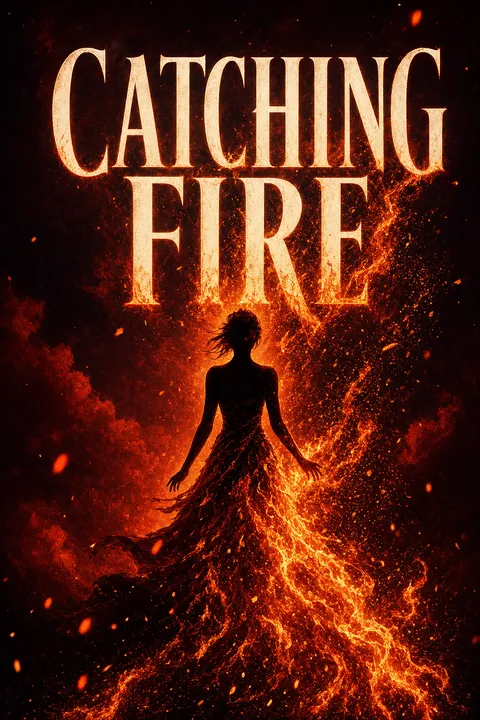


Plot Summary
Snow in the Study
Home in the Victor's Village, dreading the Victory Tour, Katniss1 finds President Snow5 waiting in her family's study, the air thick with roses and blood. He explains what she never understood: her stunt with the poison berries, which forced the Capitol to crown two victors, has ignited defiance across the districts. Uprisings loom.
He knows she kissed Gale4 in the woods, knows her love for Peeta2 is partly performance. His terms are simple and merciless. On the tour she must convince the whole nation, and him personally, that she acted from mad love rather than rebellion. If she fails, Gale,4 her mother, Prim,13 and Peeta2 will pay. She leaves the room certain her freedom is already gone.
Collins opens by weaponizing intimacy: the villain invades the domestic sanctuary, collapsing the boundary between private feeling and political act. Katniss learns that survival did not end with the arena but merely changed venues. The berries, an improvised suicide gesture, have been retroactively assigned meaning by others, illustrating how symbols escape their makers. Snow's genteel menace, his insistence on honesty as leverage, establishes the season's central anxiety: authenticity itself becomes a performance demanded under duress. The scene reframes romance as coerced propaganda, planting the tragic irony that Katniss must fake devotion precisely when real emotion would be safer, and that even her heart is now state property.
The Salute in Eleven
The tour begins in District 11, home of Rue, the young ally Katniss1 failed to save. Abandoning her scripted thanks, Katniss1 speaks from the heart about Rue and Thresh, and Peeta2 pledges a share of their winnings to both grieving families every year. Moved, the crowd whistles Rue's four-note tune and raises the three-fingered District 12 farewell.
The gesture is unmistakably defiant. As Katniss1 and Peeta2 retreat, Peacekeepers drag the old man who first whistled to the steps and shoot him dead. Instead of calming the districts as Snow5 ordered, Katniss1 has done the opposite. Haymitch3 hauls the pair to a dusty dome to warn them plainly: the whole country is now a powder keg, and their every word carries lethal weight.
This sequence dramatizes the impossibility of neutral speech under tyranny. Katniss intends mourning, not mutiny, yet sincerity reads as sedition because the regime cannot distinguish grief from resistance, nor can it afford to. The murdered whistler embodies the cost of contagious feeling: solidarity is punishable by death. Peeta's spontaneous gift, meanwhile, models a redistributive generosity that quietly indicts Capitol extraction. Collins stages the paradox that Katniss is least controllable when most human. The episode also completes Peeta and Katniss's fragile reconciliation as genuine partners, replacing the performed romance with a working alliance forged in shared horror rather than script.
The Proposal That Failed
Across the districts Katniss1 senses rising fury; in the Capitol she and Peeta2 redouble the love act. On live television Peeta2 kneels and proposes marriage, and the Capitol dissolves into ecstasy. Snow5 himself embraces Katniss1 and suggests a lavish wedding. But when she silently asks with her eyes whether she has done enough, he gives an almost invisible shake of his head.
It was never going to be enough. Later, at the mayor's house in District 12, Katniss1 glimpses a forbidden broadcast: District 8 in full revolt, masked crowds hurling bricks while Peacekeepers gun people down. The romance charade has utterly failed to smother the fire. Haymitch3 confirms her fate is now to marry Peeta2 forever, a life sentence dressed as fairy tale.
The proposal marks the theatrical peak of Katniss's coerced femininity and its futility. Snow's microscopic headshake is a masterstroke of dread: catastrophe delivered without spectacle, a verdict passed in a muscle twitch. The scene exposes the limits of performance against structural rage; personal charm cannot bandage systemic wounds. The District 8 footage shatters Katniss's illusion of containment, revealing that her private suffering is embedded in a mass movement she neither controls nor comprehends. Collins underscores a recurring theme: the individual as unwilling emblem. Katniss keeps trying to save specific people through obedience, while the world insists on reading her as a collective banner.
Blood on the Whipping Post
Returning home, Katniss1 proposes fleeing into the wilderness with her loved ones. Gale4 refuses; energized by the District 8 news, he insists the districts must fight, not run, and storms off. Meanwhile a ruthless new Head Peacekeeper, Thread,15 has replaced the lax old one. He catches Gale4 with a wild turkey and lashes him nearly to death in the square.
Katniss1 throws herself between whip and friend, taking a blow across the face, and Haymitch3 and Peeta2 intervene to stop the execution. Nursing Gale's4 shredded back, Katniss1 abandons her escape fantasy. Watching her district starve under Thread's15 crackdown, the burning of the black market, the gallows in the square, she resolves instead to stay and resist the Capitol however she can.
Gale's whipping is the crucible that converts Katniss from escapist to reluctant insurgent. Collins contrasts two philosophies of survival: flight, which preserves the beloved few, and fight, which risks everything for the many. Gale voices the latter, and his flayed body becomes an argument no speech could win. Katniss's instinctive leap between lash and friend reveals her defining trait, self-sacrifice channeled through the body rather than ideology. The tightening police state renders her old refuge, the woods, into a trap, mirroring how the regime forecloses every exit. Her decision to remain and cause trouble is less courage than the exhaustion of alternatives.
Two Runaways and a Rumor
Slipping into the forbidden woods, Katniss1 encounters Bonnie and Twill, two women fleeing the crushed District 8 uprising in stolen Peacekeeper uniforms.
They carry a cracker stamped with a mockingjay, a rebel token, and a startling belief: District 13, supposedly obliterated seventy-five years ago, secretly survives underground, its people protected because they once made nuclear weapons. As proof they point to identical recycled footage the Capitol always airs, the same mockingjay flitting across the ruins in every broadcast.
Katniss1 feeds them and shows them how to hunt, half-dismissing their hope as delusion. Yet the idea lodges in her. Returning, she finds the fence newly electrified and must climb a tree to get home, injuring her heel and narrowly evading Thread's15 suspicious Peacekeepers.
This encounter seeds the book's largest structural revelation while testing Katniss's cynicism against desperate hope. The recycled footage motif is a sharp meditation on media control: the regime's power rests on curated repetition, and its very laziness betrays the truth it hides. Bonnie and Twill, ordinary and doomed-seeming, function as prophets Katniss cannot yet believe. The mockingjay cracker quietly confirms that her token has metastasized into a coordinated emblem beyond her knowledge. Collins builds dramatic irony: the reader watches Katniss dismiss a truth that will soon reshape everything, dramatizing how the powerless cling to rumor as the only currency of resistance available to them.
Reaped From the Victors
On the seventy-fifth anniversary, the Quarter Quell demands a special cruelty: this year's tributes will be reaped from each district's existing pool of victors. District 12 has exactly one living female victor.
Katniss1 realizes instantly she is going back into the Games, and either Peeta2 or Haymitch3 will go with her. She flees, collapses, drinks herself sick with Haymitch,3 and extracts his promise to help keep Peeta2 alive this time. Peeta,2 meanwhile, pours out Haymitch's3 liquor and forces both of them into brutal training, studying tapes of past victors and building strength.
Together they watch Haymitch's3 own Quell victory, learning how he weaponized a force field at a cliff's edge, a lesson that binds the trio and hints at the arena's exploitable seams.
The Quell twist is Collins's most elegant act of narrative cruelty: it recycles the protagonist through her own trauma while stripping away the one reward victory promised, permanent safety. Snow's move is transparently political, a decapitation strike disguised as tradition, and Katniss knows it. Her drunken bargain and Peeta's sober counterattack crystallize their inverse coping styles, escape versus discipline. Watching Haymitch's tape reframes their mentor as a survivor who once outwitted the Gamemakers' own architecture, planting the thematic seed that the arena is not omnipotent but engineered, and thus vulnerable. Family, chosen and fractured, becomes the unit of resistance against a state that fabricates orphans.
A Circle of Doomed Champions
Reaching the Capitol, Katniss1 confronts a field of seasoned killers who all know one another. Haymitch3 pushes her to make allies. She meets bronze-haired, seductive Finnick Odair;6 the ax-wielding, foul-mouthed Johanna Mason;7 the brilliant inventors Beetee8 and Wiress;9 and the ancient, kind Mags.10
Many victors, furious at being forced back, turn their interviews into coordinated protest, weeping and pleading with the Capitol to stop the Quell. Underlying rage against Snow5 is unmistakable.
Katniss1 discovers a chink in a training force field and, in her private session, hangs a dummy labeled with the dead Head Gamemaker's name, terrifying the officials. She and Peeta2 both score a defiant twelve, marking themselves as prime targets while the doomed victors quietly begin choosing sides.
The victor ensemble transforms the Games from individual ordeal into collective theater of dissent. Collins humanizes the killers Katniss must fear, complicating the moral calculus: allies she likes are people she may have to kill. Finnick's flamboyant sensuality masks trauma; Johanna's aggression masks grief; the inventors offer intellect as weapon. Their staged interview mutiny shows resistance migrating from the districts into the Capitol's own spectacle apparatus. Katniss's Seneca Crane effigy is pure provocation, an assertion of authorship over her own death sentence. The shared score of twelve makes solidarity indistinguishable from martyrdom, and the chapter quietly establishes the network of loyalties that will later prove to be something other than it appears.
The Dress That Became Wings
For the pre-Games interview Snow5 forces Katniss1 into her wedding gown as a public mockery. But when she twirls at Cinna's11 cue, the dress erupts into flame and reforms as a black-and-white mockingjay costume, transforming Snow's5 humiliation into open rebellion broadcast nationwide. Cinna's11 act is breathtaking and suicidal.
Peeta2 follows by revealing to the stunned crowd that he and Katniss1 are secretly married, then drops the ultimate bomb: Katniss1 is pregnant. The Capitol audience erupts in anguish, some demanding the Games be canceled. As the anthem plays, all twenty-four tributes join hands in unbroken defiance before the feed cuts. It is the first public unity among districts since the Dark Days, a spark Snow5 cannot easily extinguish.
Costume becomes manifesto. Cinna converts the state's instrument of shaming into the rebellion's living logo, literalizing the mockingjay's meaning, a creature the Capitol never intended and cannot control. Peeta's pregnancy lie is rhetorical warfare, exploiting the audience's sentimental investment to indict the barbarism they consume as entertainment. Collins shows that in a media regime, the most effective weapons are images and narratives, not fists. The linked hands offer a tableau of solidarity so potent the censors fail to cut it in time. The chapter's genius lies in fusing spectacle and subversion so completely that the Capitol's own broadcast machinery becomes the vehicle of its undoing.
Cinna's Blood, Rising Water
Moments before launch, as Katniss1 stands trapped in her glass tube, Peacekeepers burst in and beat Cinna11 savagely, dragging his limp body away while she screams and pounds helplessly on the glass. Snow's5 message is engraved in violence: this is the cost of the mockingjay dress.
Shattered, she rises into the new arena and finds no forest but a vast saltwater sea, a golden Cornucopia on a central island with narrow spokes of sand radiating out like a wheel, dense jungle rimming the water. Only tributes who can swim have a chance at the weapons. Katniss1 dives, seizes a bow, and against her instincts allies with Finnick,6 who wears Haymitch's3 gold bangle as a signal of trust, then rescues a stranded Peeta.2
Cinna's brutalization is the regime's rebuttal to the interview triumph, a reminder that symbolic victory extracts bodily payment from the vulnerable. Collins denies Katniss even the dignity of resistance in the tube, staging total impotence to sharpen her rage. The aquatic clock arena is a triumph of hostile design, a beautiful trap that immediately advantages the coastal Careers and disorients the girl on fire, whose element is negated. The bangle handshake introduces trust-by-token, an economy of coded signals threading the whole book. Katniss's reluctant alliance with Finnick, and instinctive salvage of Peeta, reaffirm her guiding vow to keep him alive at her own expense.
The Fog and the Monkeys
Fleeing the Cornucopia with Finnick,6 Mags,10 and Peeta,2 Katniss1 discovers a force field ringing the jungle; Peeta2 strikes it and his heart stops, until Finnick6 revives him with breath and pressure. Later a wall of corrosive fog boils out of the trees, blistering skin and paralyzing nerves. Unable to carry both Peeta2 and Mags,10 Finnick6 chooses Peeta,2 and the old woman10 kisses him and walks deliberately into the poison to die.
The survivors purge the toxin in saltwater. Then orange monkey mutts swarm, and an addled morphling from District 6 hurls herself between the fangs and Peeta,2 dying in his arms as he soothes her with talk of colors. Katniss1 begins to notice that others keep sacrificing themselves specifically to save Peeta.2
These jungle horrors function as an escalating audit of sacrifice, each death purchasing Peeta's survival. Mags's serene self-erasure and the morphling's suicidal shielding baffle Katniss precisely because she still believes only she is charged with protecting him. Collins plants the mystery: why do near-strangers prize this baker's life above their own? Peeta's tender deathbed improvisation for the morphling showcases the verbal gift that will explain everything. The clockwork cruelty of the arena, weaponized weather on a timer, dramatizes a universe engineered to inflict maximum suffering as content. Finnick's resurrection of Peeta inverts Katniss's suspicion of him, deepening the theme that trust must be extended before it can be verified.
Tick Tock, the Clock
At the four o'clock hour, jabberjay mutts mimic the tortured voices of Prim,13 Gale,4 and Finnick's6 love Annie, trapping Katniss1 and Finnick6 behind an invisible wall until they collapse in anguish; Peeta2 later reasons the voices are fabrications.
The clever inventor Wiress,9 murmuring tick tock endlessly, finally reveals the arena's secret: it is a giant clock, each wedge unleashing a scheduled horror every hour. Armed with this map, the alliance gains an edge. But the Careers ambush them at the Cornucopia.
Gloss slits Wiress's9 throat before Katniss1 kills him; Johanna7 axes Cashmere. The island then spins violently, flinging bodies into the sea. The group escapes battered, having lost Wiress9 but confirmed the arena's mechanics and gained the reel of Beetee's8 mysterious wire.
The jabberjays externalize psychological torture, attacking not the body but the bonds that define the characters, weaponizing love itself. That the voices may be synthetic hardly matters; the terror is real, exposing how oppression colonizes the imagination. Wiress, dismissed as broken, becomes the oracle whose fragmented refrain decodes the whole environment, a quiet rebuke to the ableism of stronger tributes. Her murder mid-revelation is Collins at her cruelest, killing the mind just as it grants power. The spinning island literalizes disorientation as a Gamemaker tactic to strip the rebels of their hard-won knowledge. Yet the clock, once understood, converts the arena from mystery into machine, and machines can be broken.
Beetee's Wire, Johanna's Knife
Beetee8 proposes routing lightning through his special wire from the tall tree down to the wet beach, electrocuting the Careers at midnight. The allies string the coil through the jungle. Katniss1 and Johanna7 are sent to lay wire toward the water, but partway down the wire is severed from above.
Suddenly Johanna7 smashes Katniss1 with the metal spool, pins her, and gouges her arm, then hisses at her to stay down as Brutus and Enobaria crash past, convinced Katniss1 is dying.
Johanna7 has actually cut out Katniss's1 tracker to draw the Careers away, though Katniss1 reads it as pure treachery. Bleeding, disoriented, terrified for Peeta,2 she staggers uphill toward the lightning tree, no longer trusting anyone, clutching Beetee's8 knife and wire as midnight nears.
The wire scheme reframes the Games as an engineering problem, elevating Beetee's intellect to lethal art and echoing Haymitch's force-field gambit. Johanna's assault is Collins's finest misdirection: an act of protection disguised as murder, exploiting Katniss's, and the reader's, primed suspicion of the abrasive victor. The scene interrogates the epistemology of trust under extremity, where every ally could be an assassin and appearances are engineered to deceive both tributes and audience. Katniss's head wound literalizes her collapsing comprehension; she loses the plot precisely when the plot turns on her. The chapter primes the climactic realization that her true enemy was never the tribute beside her.
The Arrow at the Sky
Half-conscious beside the wounded Beetee,8 Katniss1 recalls Haymitch's3 cryptic warning to remember who the real enemy is. Understanding at last, she wraps his wire around an arrow and fires it into the force field's flaw just as lightning surges down the tree.
The blast destroys the dome and knocks her out. She wakes aboard a District 13 hovercraft to a staggering revelation from Haymitch3 and Plutarch:14 the whole Quell was a rebel rescue operation. Half the victors conspired to keep Katniss,1 the living symbol of revolution called the mockingjay, alive.
District 13 truly exists. But Peeta,2 Johanna,7 and Enobaria were captured by the Capitol. Then Gale4 appears, burned but alive, having saved her mother and Prim,13 to tell her District 12 no longer exists.
The climax fuses political epiphany with physical rupture: Katniss literally breaks the machine that contains her, an act indistinguishable from breaking the Capitol's illusion of total control. Haymitch's riddle reorients her aggression from fellow victims toward the system itself, the book's central ethical pivot. The rescue reveal recasts the entire narrative as a plot in which Katniss was, once again, an unwitting piece, echoing Snow's opening manipulation and completing the theme of instrumentalized selfhood. Her fury at being used, at Peeta's capture, is the price of becoming an emblem. Gale's final sentence annihilates home, the thing she fought to preserve, delivering revolution's true cost with brutal economy.
Analysis
Catching Fire is a study in how symbols escape their makers and how private survival curdles into public revolt. Katniss1 begins wanting only to protect a handful of people through obedience, but Collins repeatedly demonstrates that under a media regime, intention is irrelevant: meaning is assigned by audiences and enemies. The berries, the pin, the salute, the burning dress, each act is read as insurrection regardless of what Katniss1 feels, dramatizing the alienation of becoming an emblem. The novel's cruelest insight is that Katniss1 is least controllable when most human, and that her sincerity reads as sedition precisely because authoritarianism cannot distinguish grief from resistance. The recurring motif of coerced performance, faking love under a death threat, exposes how tyranny commandeers even intimacy and the body. The Games themselves function as reality television weaponized, and Collins turns the Capitol's own spectacle machinery into the vehicle of its undoing, most brilliantly when Cinna's11 costume converts state humiliation into broadcast rebellion. The clock arena literalizes a universe engineered for maximum suffering as content, while its solvability plants the redemptive idea that engineered systems contain exploitable flaws. Thematically, the book weighs two ethics of survival: flight, which saves the beloved few, versus fight, which risks all for the many. Gale's4 flayed back argues one side; Peeta's2 verbal gift and sacrificial goodness argue for a leadership of persuasion over force. The climax fuses these threads: Katniss's1 arrow into the force field is simultaneously physical rupture and political awakening, shattering the illusion of total control. Yet Collins refuses triumph. The revelation that Katniss1 was again an unwitting piece in others' plans, plus Peeta's2 capture and District 12's annihilation, delivers revolution's true price. Liberation, the ending insists, destroys the very home it claims to defend.
Review Summary
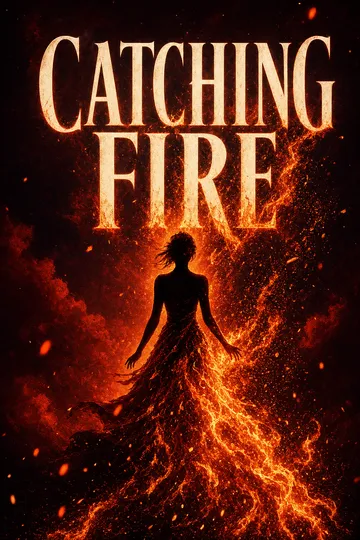
Catching Fire received mostly positive reviews, with readers praising the intense action, complex characters, and expansion of the dystopian world. Many found it an improvement over the first book, particularly in its exploration of rebellion and political themes. The love triangle between Katniss, Peeta, and Gale remained a point of contention. Some criticized the pacing of the first half and repetitive elements from the original. Overall, fans eagerly anticipated the final installment in the trilogy after the dramatic cliffhanger ending.
People Also Read






Characters
Katniss Everdeen
Reluctant rebel symbolThe teenage victor from District 12 whose berry stunt made her an accidental icon of defiance. Fiercely protective, emotionally guarded, and more comfortable with a bow than with feelings, Katniss navigates the book torn between two impulses: fleeing to save the handful of people she loves, or standing to fight for the many. She distrusts her own heart, cannot cleanly name what she feels for Gale4 or Peeta2, and reads herself as selfish and cowardly even while repeatedly sacrificing her body for others. Trauma from her first Games has left her sleepless and haunted. Her instinct is loyalty over ideology, the concrete over the abstract. Throughout, she resists being made into a banner even as everyone around her insists she already is one.
Peeta Mellark
Devoted baker, master speakerThe gentle, artistic boy who won the last Games alongside Katniss1 and loves her genuinely. Where Katniss1 fights with weapons, Peeta fights with words, disarming crowds and moving nations with a single well-chosen sentence. Steady, self-possessed, and quietly stubborn, he channels his nightmares into painting and insists on radical honesty, refusing to let Katniss1 shut him out. His generosity is instinctive: he gives away winnings, shields allies, and offers his own life without self-pity. Beneath his affable charm lies a strategist who understands spectacle better than anyone. His unrequited devotion is both his strength and his vulnerability, and his willingness to die so Katniss1 can live becomes the moral center others rally around.
Haymitch Abernathy
Drunken, cunning mentorDistrict 12's only prior victor, a sardonic alcoholic who mentors Katniss1 and Peeta2. Beneath the wine fumes and cruelty hides a strategist of formidable intelligence, a man who once outwitted the Gamemakers in his own Quarter Quell. Haymitch operates through indirection, coded gifts, and half-truths, forcing Katniss1 to interpret his intentions. He chose solitude over family, blotting out the horror of the arena with drink, yet has quietly bound himself to keeping his tributes alive. His relationship with Katniss1 is combative, intimate, and freighted with mutual dependence. He knows more than he says and manipulates as much as he protects, a compromised man carrying secrets whose weight only gradually becomes visible.
Gale Hawthorne
Hunting partner, would-be rebelKatniss's1 best friend and fellow hunter from the Seam, publicly passed off as her cousin. Handsome, angry, and born rebellious, Gale burns to fight the Capitol rather than flee it. He works the mines to feed his family and loves Katniss1 with a frustrated intensity she cannot fully return. His conviction and courage push her toward resistance even as his temper endangers them both.
President Snow
Serpentine head of stateThe white-haired ruler of Panem whose breath smells of blood and roses. Coldly rational and patient, Snow governs through fear, precise threats, and the theater of the Games. He views Katniss1 as a spark that could ignite revolution and sets out to neutralize her without creating a martyr. His menace lies in restraint: he prefers a whispered warning or a barely perceptible headshake to open violence, weaponizing intimacy and spectacle alike. He understands that perception is power.
Finnick Odair
Charismatic trident championThe stunning bronze-haired victor from District 4, famous throughout the Capitol for beauty and sensual conquests. In the arena he proves a lethal fisher and swimmer, but his flirtatious veneer conceals genuine loyalty, deep trauma, and a fierce love for a fragile girl named Annie back home. Katniss1 initially sees him as a rival to eliminate, then gradually recognizes his courage and grief. His alliance, sealed by Haymitch's3 token, becomes indispensable.
Johanna Mason
Abrasive ax-throwing victorThe sharp-tongued, furious victor from District 7 who once won by faking weakness. Openly hostile and provocative, she strips naked to needle Katniss1 and shows contempt for sentiment, claiming she has no one left to lose. Beneath the venom lies grit, grief, and unexpected daring; she says aloud what others fear to whisper. Her loyalties are genuinely difficult to read.
Beetee
Genius wire inventorThe soft-spoken, bespectacled victor from District 3 who won using an electrical trap. Endlessly analytical, he perceives force fields, engineering, and hidden mechanics invisible to others, and treats survival as a physics problem. Nicknamed Volts, he devises the alliance's most ambitious weapon. Physically frail but mentally formidable, he approaches the Games like a patient teacher lecturing bewildered students.
Wiress
Intuitive fractured oracleThe gentle, brilliant District 3 inventor whose speech trails off mid-thought. Dismissed by others as broken, she perceives patterns before anyone, and her murmured refrain unlocks the arena's deadly design.
Mags
Beloved elderly volunteerThe toothless, eighty-year-old victor from District 4 who volunteers to spare a hysterical young woman. Nearly unintelligible but skilled with fishhooks, she radiates quiet warmth and selflessness, and is dear to Finnick6 as his former mentor and near-family.
Cinna
Visionary loyal stylistKatniss's1 designer and friend, whose understated elegance hides radical daring. Cinna channels his emotions into his work, crafting costumes that speak louder than speeches. Calm, warm, and quietly fearless, he risks everything to turn Katniss1 into a living emblem, insisting he still bets on her. His devotion carries grave danger.
Effie Trinket
Punctual Capitol escortThe wig-changing, schedule-obsessed Capitol escort for District 12. Prim about manners and appearances, she is gradually humanized by genuine attachment to her tributes, proposing they all look like a matched team even as tragedy overtakes them.
Prim
Katniss's cherished sisterKatniss's1 younger sister, a gifted young healer whose survival is the engine of everything Katniss1 does. Once frail, Prim has grown steadier and older beyond her years, tending the sick under a brutal regime. She embodies the innocence the whole rebellion, and her sister's1 every choice, aims to protect.
Plutarch Heavensbee
Ambitious new GamemakerThe genial new Head Gamemaker who designs the Quarter Quell arena. Fond of watches and hidden meanings, he shows Katniss1 a secret mockingjay and drops cryptic hints. His affable manner masks murky intentions, and his true agenda regarding the Games and the Capitol remains ambiguous until late.
Thread
Merciless Head PeacekeeperThe sharp-creased new Head Peacekeeper who replaces the lax Cray. He electrifies the fence, burns the black market, erects gallows and whipping posts, and enforces the law with sadistic zeal, transforming District 12 into an open-air prison.
Plot Devices
The Mockingjay
Accidental emblem of revoltA pin, a bird, a song, and eventually a costume, the mockingjay recurs as the story's central symbol. Born from a Capitol experiment gone wrong, the bird represents something the regime created but could never control, the perfect metaphor for Katniss1 herself. The token she wore in her first Games spreads to fashion in the Capitol and to coded rebel crackers in the districts. Cinna's11 fiery interview transformation crystallizes its meaning, converting an ornament into a banner of insurrection. Katniss1 remains largely unaware of the weight the symbol carries, dramatizing how images outgrow their makers and how oppressed populations invest ordinary objects with revolutionary hope the powerful cannot suppress.
The Quarter Quell
Twist that reweaponizes victoryEvery twenty-five years the Games impose a special cruelty. The seventy-fifth twist decrees tributes be reaped from existing victors, a rule read aloud from an envelope supposedly written decades earlier. This device forces the protagonist1 back into the arena after she was promised lifelong safety, stripping away the sole reward of surviving. It functions as a decapitation strike disguised as tradition, letting the regime eliminate a dangerous symbol while pretending neutrality. Structurally it resets the stakes, gathers a cast of seasoned killers, and drives the entire back half of the book. Its transparent political convenience fuels the victors' shared fury and their coordinated public defiance.
The Clock Arena
Timed lethal environmentThe Quell arena is a saltwater wheel: a central Cornucopia island with sand spokes, surrounded by jungle divided into twelve wedges. Each hour, a different sector unleashes a scheduled horror, lightning, blood rain, poison fog, monkey mutts, jabberjays, a giant wave, and more. Deciphered through a dying inventor's9 fractured refrain, the pattern turns chaos into a solvable map that gives the alliance a fighting edge. The clock embodies the Gamemakers' engineered sadism while also revealing the arena as a machine rather than a mystery. Because machines have flaws, understanding the clock ultimately enables the tributes to exploit the environment's mechanics against their captors.
Coded Tokens and Gifts
Silent trust and messagesCommunication under surveillance runs through objects rather than words. Haymitch's3 gold bangle, transferred to Finnick6, signals that Katniss1 should trust him. Sponsor parachutes arrive timed to convey meaning, medicine when needed, bread whose district of origin and quantity of rolls secretly encode information. A mysterious spile teaches the allies to read Haymitch's3 intentions. This economy of coded signals threads the entire narrative, training both Katniss1 and the reader to interpret gestures as messages. It reflects life under a regime where plain speech is lethal, and it culminates in revelations that recast seemingly random gifts as pieces of a larger, hidden design orchestrated from outside the arena.
The Jabberjays
Psychological torture birdsGenetically engineered mutts that perfectly mimic human voices, the jabberjays flood one wedge of the arena with the tortured screams of loved ones, Prim13, Gale4, Finnick's6 Annie. Whether the recordings are real or fabricated is deliberately ambiguous, and that ambiguity is the weapon. The birds attack not the body but the emotional bonds that define each tribute, colonizing their imaginations with dread they cannot fight, only endure behind an invisible wall. As descendants of the same experiments that produced the mockingjay, they thematically link the regime's cruelty to its uncontrollable creations, and they demonstrate that under this Capitol, love itself becomes the surface an oppressor presses upon.
FAQ
Synopsis & Basic Details
What is Catching Fire about?
- Political unrest simmers: Following her victory in the Hunger Games, Katniss Everdeen finds herself a symbol of rebellion, a role she never sought, as President Snow tightens his grip on Panem.
- A deadly game returns: The Capitol announces the 75th Hunger Games, the Quarter Quell, with a twist that forces Katniss back into the arena, this time against other victors.
- Survival and sacrifice: Katniss must navigate treacherous alliances, deadly traps, and her own complex feelings as she fights to protect those she loves and spark a rebellion.
Why should I read Catching Fire?
- Deeper political intrigue: Catching Fire expands the world of Panem, delving into the political machinations of the Capitol and the growing unrest in the districts.
- Complex character development: The novel explores the psychological toll of the Games on Katniss and other victors, revealing their vulnerabilities and strengths.
- High-stakes action and suspense: The Quarter Quell introduces a new level of danger and unpredictability, keeping readers on the edge of their seats.
What is the background of Catching Fire?
- Post-apocalyptic dystopia: The story is set in Panem, a North American nation formed after a cataclysmic event, where the Capitol rules over twelve impoverished districts.
- Annual Hunger Games: As punishment for a past rebellion, each district must offer two tributes to fight to the death in a televised spectacle, a tool of control and fear.
- Social and political commentary: The novel critiques totalitarianism, social inequality, and the manipulation of media, reflecting real-world issues of power and oppression.
What are the most memorable quotes in Catching Fire?
- "Remember who the real enemy is.": Haymitch's cryptic warning to Katniss highlights the true nature of the Capitol's control and the need to focus on the larger fight.
- "I volunteer! I volunteer as tribute!": Peeta's selfless act of volunteering for Haymitch in the Quarter Quell underscores his unwavering loyalty and love for Katniss.
- "If we burn, you burn with us!": Katniss's defiant words, though unspoken, are embodied in her actions, signaling her commitment to rebellion and her willingness to challenge the Capitol.
What writing style, narrative choices, and literary techniques does Suzanne Collins use?
- First-person perspective: The story is told from Katniss's point of view, allowing readers to experience her thoughts, emotions, and struggles intimately.
- Fast-paced and suspenseful: Collins uses short chapters, cliffhangers, and vivid descriptions to create a sense of urgency and keep readers engaged.
- Symbolism and foreshadowing: Recurring motifs like the mockingjay, fire, and the clock are used to foreshadow events and deepen the novel's themes.
Hidden Details & Subtle Connections
What are some minor details that add significant meaning?
- The mockingjay pin's evolution: Initially a symbol of luck, the mockingjay pin becomes a symbol of rebellion, reflecting Katniss's unintended role as a catalyst for change.
- The significance of bread: Peeta's bread, a symbol of hope and sustenance, contrasts with the Capitol's lavish feasts, highlighting the stark inequalities in Panem.
- The recurring scent of roses and blood: President Snow's signature scent foreshadows his cruelty and the violence he inflicts, creating a sense of unease and dread.
What are some subtle foreshadowing and callbacks?
- President Snow's visit: His early visit to Katniss's home foreshadows the Capitol's increased scrutiny and the escalating conflict to come.
- The lake in the woods: Katniss's memories of swimming with her father foreshadow her later connection with the water in the arena and her ability to survive.
- The mention of District 13: The repeated references to the destroyed District 13 foreshadow the existence of a hidden rebel force and a potential safe haven.
What are some unexpected character connections?
- Maysilee Donner and Katniss's mother: The revelation that Maysilee Donner, a tribute in Haymitch's Games, was a friend of Katniss's mother adds a layer of personal tragedy to the Quarter Quell.
- Darius and Katniss: The transformation of Darius, a Peacekeeper from District 12, into an Avox highlights the Capitol's cruelty and the personal cost of rebellion.
- Plutarch Heavensbee and the rebels: The reveal of Plutarch's involvement in the rebellion shows that the resistance has infiltrated the highest levels of the Capitol.
Who are the most significant supporting characters?
- Cinna: Katniss's stylist, Cinna, uses his fashion designs to subtly express rebellion, making him a key ally in her fight against the Capitol.
- Finnick Odair: A complex and charismatic victor, Finnick's loyalty and combat skills make him a valuable ally, but his hidden motives add an element of uncertainty.
- Beetee: A brilliant but eccentric inventor, Beetee's knowledge of technology and strategy is crucial to the rebels' plans, making him a key player in the uprising.
Psychological, Emotional, & Relational Analysis
What are some unspoken motivations of the characters?
- Haymitch's guilt: Haymitch's alcoholism and cynicism mask his deep guilt over his past Games and his desire to protect Katniss and Peeta.
- Gale's frustration: Gale's anger and frustration stem from his powerlessness to protect his family and his jealousy of Katniss's relationship with Peeta.
- President Snow's fear: President Snow's actions are driven by a deep-seated fear of losing control, which motivates his cruelty and manipulation.
What psychological complexities do the characters exhibit?
- Katniss's PTSD: Katniss struggles with post-traumatic stress disorder, experiencing nightmares and flashbacks that highlight the psychological toll of the Games.
- Peeta's selflessness: Peeta's unwavering selflessness and desire to protect Katniss reveal his deep-seated insecurities and his need for validation.
- Finnick's hidden pain: Finnick's charm and charisma mask a deep-seated pain and vulnerability stemming from his past experiences in the Games.
What are the major emotional turning points?
- President Snow's threat: The visit from President Snow and his threat to Gale forces Katniss to confront the true danger she and her loved ones are in.
- The Quarter Quell announcement: The announcement of the Quarter Quell shatters Katniss's hope for a normal life and forces her to accept her role in the rebellion.
- The destruction of District 12: The news of District 12's destruction solidifies Katniss's commitment to the rebellion and her desire for revenge.
How do relationship dynamics evolve?
- Katniss and Peeta's forced romance: Their relationship evolves from a strategic alliance to a genuine connection, blurring the lines between performance and reality.
- Katniss and Gale's strained friendship: The Games and Katniss's relationship with Peeta create a rift between Katniss and Gale, highlighting the complexities of love and loyalty.
- Katniss and Haymitch's reluctant partnership: Their relationship deepens as they work together to protect Peeta, revealing a shared understanding of the Capitol's cruelty.
Interpretation & Debate
Which parts of the story remain ambiguous or open-ended?
- The true nature of District 13: The existence and nature of District 13 remain ambiguous, leaving readers to question the reliability of the information presented.
- The extent of the rebellion: The scope and organization of the rebellion are not fully revealed, leaving readers to speculate about the future of Panem.
- The motivations of Plutarch Heavensbee: Plutarch's true motives and allegiances remain somewhat ambiguous, leaving readers to question his role in the rebellion.
What are some debatable, controversial scenes or moments in Catching Fire?
- Katniss's feelings for Peeta and Gale: The love triangle between Katniss, Peeta, and Gale is a source of debate, with readers questioning the authenticity of Katniss's feelings.
- The morality of the rebellion: The use of violence and manipulation by the rebels raises questions about the morality of their actions and the potential for a better future.
- The role of the victors: The victors' participation in the rebellion raises questions about their agency and the extent to which they are being manipulated by the rebels.
Catching Fire Ending Explained: How It Ends & What It Means
- The arena's destruction: The destruction of the arena symbolizes the crumbling of the Capitol's control and the beginning of a full-scale rebellion.
- Katniss's rescue and Peeta's capture: The rescue of Katniss and the capture of Peeta highlight the personal sacrifices and losses that come with rebellion.
- The destruction of District 12: The destruction of District 12 signifies the Capitol's ruthlessness and the high stakes of the conflict, leaving Katniss with nothing to lose.
The Hunger Games Series

About the Author
Other books by Suzanne Collins


Download PDF
Download EPUB
.epub digital book format is ideal for reading ebooks on phones, tablets, and e-readers.








































