
Key Takeaways
1. The Divine is the ultimate reality, the One, the All, the Good, the source of creation.
Zeul este cel care le dăruieşte pe toate şi nu primeşte nimic; şi, prin urmare, Zeul dă toate lucrurile fără să primească nimic.
God is transcendent. The ultimate reality is the One, the All, the Good, the Father, the Mind. This Supreme Being is beyond human comprehension and definition, existing eternally and independently. It is the source from which all things emanate but receives nothing in return, embodying pure giving.
Source of existence. God's will is the absolute fulfillment, and to will is to create. The Divine is the cause of all things that are and are not yet, the very existence of being. This creative power is not limited by time or space, as God is present everywhere and always.
The Good itself. God is synonymous with the Good. Unlike earthly things which are a mixture of good and evil, the Divine is pure goodness, incapable of malice, envy, or suffering. To know God is to know the Good, which is the highest form of beauty and truth.
2. The Cosmos is a living, sensible God, the image of the Supreme Divine, ordered by divine will.
A doua este Lumea, creată de el după propriul său chip, ţinută şi hrănită de el şi care, asemenea Tatălui său, trăieşte în veci fiindcă este nemuritoare.
The Second God. The visible universe, the Cosmos, is considered a second God, created by the Supreme Divine as a beautiful and perfect image of itself. It is a living being, ensouled and ordered by the divine will, existing eternally in motion.
Ordered by Mind. The Mind of God, the Demiurge, shaped the Cosmos and established its harmonious order, governed by the seven planetary spheres and the fixed stars. This order is not random but follows divine reason and purpose, reflecting the intelligence of its creator.
Instrument of creation. The Cosmos serves as the instrument of God's will, receiving all seeds of creation and bringing forth all things into being through its perpetual motion and the interaction of its elements. It is both the place of life and the creator of life within itself.
3. Humanity is a dual-natured being, a microcosm reflecting the macrocosm, possessing divine potential.
De aceea, omul de pe pământ este zeu muritor şi zeul din cer este om nemuritor.
Divine and mortal. Humanity is a unique creation, made in the image of the Cosmos and, through it, in the image of God. Humans possess a dual nature: a divine, immortal part (Mind, Soul) and a mortal, material part (body, senses). This makes them a great wonder, capable of bridging the gap between the earthly and the divine.
Microcosm. Man is a microcosm, containing within himself the elements and principles of the macrocosm. He is connected to the divine through his Mind and to the material world through his body and senses. This allows him to contemplate both the celestial and the terrestrial realms.
Potential for divinity. While mortal in body, the essential man is immortal and possesses the potential to become divine. By cultivating the divine part and aligning with the Mind of God, humans can transcend their material limitations and ascend to the realm of the immortals, becoming "gods" themselves.
4. Gnosis, the knowledge of God and Self, is the sole path to salvation and immortality.
Acesta este singura cale de izbăvire pentru om - cunoaşterea Zeului.
The ultimate goal. The highest aspiration for humanity is Gnosis, the direct knowledge of God and the true Self. This knowledge is not intellectual understanding alone but a transformative experience that leads to salvation and liberation from the cycle of death and rebirth.
Path to union. Gnosis allows the human Mind to unite with the Divine Mind, recognizing its co-essentiality with God. This union transcends the limitations of the material body and the senses, enabling the soul to return to its divine origin.
Overcoming ignorance. Ignorance is the opposite of Gnosis and the source of suffering. By pursuing knowledge, humans dispel the darkness of ignorance and awaken to their divine nature, realizing their potential for immortality and blessedness.
5. The principle of correspondence ("As Above, So Below") links all levels of existence in a harmonious system.
Ce este dedesubt e la fel cu ce este deasupra; iar ce este deasupra e la fel cu ce este dedesubt, pentru a împlini miracolul unui singur lucru.
Interconnectedness. The universe is a unified system where all levels of existence are interconnected and reflect one another. The celestial realm influences the terrestrial, and the human being, as a microcosm, mirrors the macrocosm.
Harmony of spheres. The movements of the celestial bodies, governed by divine order, create a cosmic harmony that resonates throughout the universe. This harmony influences the natural world and human life, though its effects can be perceived differently depending on one's state of being.
Reflection of the Divine. The principle implies that by understanding the lower realms, one can gain insight into the higher, and vice versa. The visible world is a reflection of the invisible, and the human being is a reflection of the Cosmos and the Divine.
6. Ignorance of the Divine is the root of all evil and suffering, blinding humanity to truth.
Cel mai mare rău, Asclepios, este că fiecare dintre lucrurile pe care le-am pomenit mai înainte, se crede că ar fi cel mai mare bine.
The primary vice. Ignorance of God is identified as the greatest evil, the source from which all other vices and sufferings stem. It blinds the soul to its divine nature and the true reality of the universe, leading it to pursue fleeting material pleasures.
Bondage to the body. When the soul is ignorant, it becomes enslaved to the desires and passions of the material body. It mistakes the transient for the eternal and the false for the true, leading a life of delusion and suffering.
Punishment. Ignorance is its own punishment, trapping the soul in darkness and preventing its ascent to the divine realm. It is a state of spiritual blindness that can only be overcome by seeking Gnosis.
7. Fate, Necessity, and Providence are divine instruments governing the cosmic order and human life.
Toate lucrurile sunt produse de Natură şi de Soartă, şi nu există nici un loc în care să nu se afle Providenţa.
Instruments of Will. Providence, Necessity, and Fate are not independent forces but instruments of the Supreme Divine Will. They govern the order and unfolding of the cosmos and influence the lives of all beings, from the celestial gods to mortal humans.
Cosmic order. Providence represents the divine plan and foresight, Necessity is the immutable law that ensures the plan is carried out, and Fate is the specific destiny determined by the celestial influences at the moment of birth.
Human agency. While human life is subject to Fate, the rational part of the soul, illuminated by the Divine Mind, can transcend its influence. By aligning with divine reason and pursuing Gnosis, humans can escape the bondage of Fate and attain spiritual freedom.
8. Spiritual purification and detachment from material desires are essential for ascent to the Divine.
Ferească Zeul, fiule! Cheamă la tine şi va veni, doreşte, şi se va împlini; leapădă lucrarea simţurilor trupului, iar Divinitatea ta se va naşte; curăţă-te de chinurile animalice, de lucrurile materiei.
Path to Gnosis. Achieving Gnosis requires a process of purification and detachment from the material world and its desires. The soul must free itself from the "garment" of ignorance and the "torments" of the body's passions.
Transcending the senses. The senses are tied to the material realm and can deceive the soul. True understanding comes from the Mind, which can perceive the intelligible reality beyond the physical. Detaching from sensory pursuits allows the Mind to ascend.
Rebirth. This process is described as a "rebirth" or "regeneration," a spiritual transformation where the soul sheds its mortal limitations and awakens to its divine nature. It is a return to the original, pure state of being.
9. The universe and its parts are subject to continuous change, renewal, and cyclical transformation.
Căci fără descompunere nu poate exista naştere.
Perpetual motion. The Cosmos is in perpetual motion, and all things within it are subject to change. This change is not destruction but a continuous process of decomposition and rebirth, ensuring the renewal and perpetuation of life.
Cycles of time. Time, governed by the movements of the celestial bodies, facilitates these cycles of change. The alternation of seasons, the revolutions of the stars, and the processes of growth and decay are all part of the cosmic rhythm.
Apocatastasis. The universe itself undergoes grand cycles of creation, degradation, and eventual restoration (apocatastasis). When evil and disorder become rampant, the Divine intervenes to purify and renew the cosmos, restoring its original beauty and order.
10. The transmission of sacred knowledge requires reverence, silence, and is reserved for the worthy.
Este o impietate să încredinţezi un tratat plin de măreţie divină cunoaşterii unui mare număr de oameni.
Esoteric tradition. The most profound Hermetic teachings are considered sacred mysteries, not to be revealed to the ignorant or the masses. Such knowledge requires reverence, a pure heart, and a prepared mind to be properly received and understood.
Silence and secrecy. The transmission of divine knowledge often occurs in private, through dialogue between master and disciple, and is accompanied by a vow of silence. This protects the teachings from profanation and ensures they are passed down within a lineage of the worthy.
The worthy. Only those who demonstrate piety, seek truth with sincerity, and are willing to undergo purification are deemed worthy of receiving these sacred doctrines. For others, the teachings may appear as foolishness or be misinterpreted.
Review Summary
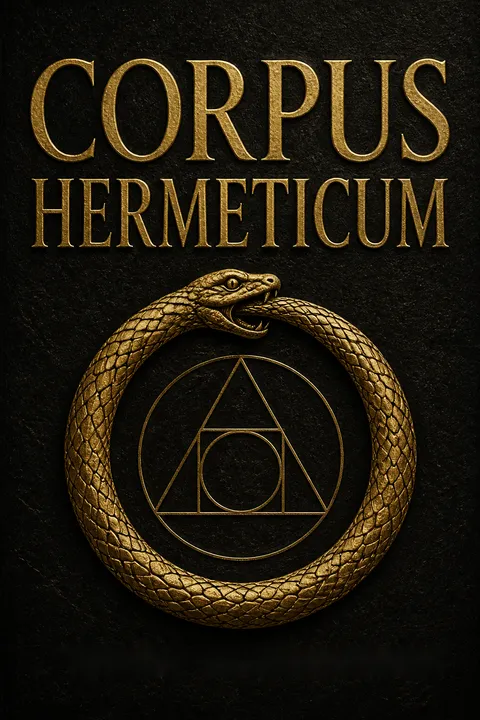
The Corpus Hermeticum receives mixed reviews, with readers finding it profound yet challenging. Many appreciate its philosophical depth and historical significance, drawing parallels to other ancient wisdom traditions. Some struggle with the archaic language and complex concepts, while others find enlightenment in its teachings. Criticisms include its emphasis on human superiority and the division between mind and body. Overall, readers acknowledge its importance in esoteric thought but differ in their ability to engage with and interpret the text.
People Also Read

FAQ
1. What is the Corpus Hermeticum by Hermes Trismegistus about?
- Ancient spiritual wisdom: The Corpus Hermeticum is a collection of foundational texts blending Greek philosophy and Egyptian religious ideas, attributed to Hermes Trismegistus.
- Exploration of divinity and cosmos: It explores the nature of God, the universe, and the human soul, emphasizing the unity and interconnectedness of all things.
- Path to spiritual awakening: The writings focus on self-knowledge, spiritual rebirth, and the soul’s journey toward union with the divine.
2. Why should I read the Corpus Hermeticum by Hermes Trismegistus?
- Timeless esoteric wisdom: The book offers profound insights into spirituality, philosophy, and the nature of reality, influencing Western mysticism and philosophy.
- Personal transformation: It provides guidance on inner transformation, self-knowledge, and transcending material limitations for spiritual enlightenment.
- Historical significance: Understanding Hermeticism enriches knowledge of ancient thought and its impact on later esoteric and philosophical traditions.
3. Who was Hermes Trismegistus according to the Corpus Hermeticum?
- Mythical and syncretic figure: Hermes Trismegistus is a legendary figure combining the Greek god Hermes and the Egyptian god Thoth, revered as the father of alchemy and esoteric wisdom.
- Divine teacher: He is portrayed as a mediator between the divine and human realms, credited with revealing sacred knowledge and universal principles.
- Author of Hermetic texts: Hermes is considered the source of the Hermetic writings, which form the foundation of Hermetic philosophy.
4. What are the key teachings about the nature of God and the universe in the Corpus Hermeticum?
- God as the One and All: God is both the transcendent source and the immanent presence in all things, infinite and beyond all names.
- Emanation and unity: All creation emanates from the divine source, and understanding this unity is essential for spiritual awakening.
- Cosmic hierarchy: The universe is structured in multiple levels, with divine, celestial, and earthly realms interconnected by cosmic order.
5. How does the Corpus Hermeticum describe the human soul and its journey?
- Dual nature of humans: Humans possess a mortal body and an immortal, divine soul temporarily imprisoned in matter.
- Soul’s descent and ascent: The soul descends into the body for purification or as a trial, and through virtue and knowledge, it can ascend back to the divine realm.
- Role of free will: While fate and providence influence life, humans have the free will to choose virtue or vice, shaping their soul’s destiny.
6. What is the Hermetic system of thought presented in the Corpus Hermeticum?
- Unity of all existence: Hermeticism teaches that everything emanates from a single, unknowable divine source, manifesting as consciousness in all forms.
- Law of correspondence: The principle "as above, so below" links the universe, nature, and human beings, reflecting the interconnectedness of all things.
- Path of purification: Spiritual perfection is achieved through self-knowledge, virtue, and awakening the inner divine mind, leading to liberation from material limitations.
7. What is the significance of the Tabula Smaragdina (Emerald Tablet) in the Corpus Hermeticum?
- Cornerstone of alchemy: The Emerald Tablet is a concise Hermetic text attributed to Hermes Trismegistus, foundational for alchemy and esoteric traditions.
- Core Hermetic principle: It expresses "That which is below is like that which is above," summarizing the correspondence between the macrocosm and microcosm.
- Symbol of transformation: The tablet represents both spiritual and material transmutation, emphasizing inner spiritual work as the true alchemical process.
8. How does the Corpus Hermeticum explain the relationship between the macrocosm and microcosm?
- Correspondence principle: The universe (macrocosm) and the human being (microcosm) mirror each other; understanding one leads to understanding the other.
- Interconnectedness of all things: Cosmic forces, planets, and elements correspond to aspects of the human soul and body.
- Spiritual implication: Self-knowledge enables knowledge of the universe and the divine, highlighting the unity of all existence.
9. What role does the concept of "Mind" (Nous) play in the Corpus Hermeticum?
- Divine intellect: Mind (Nous) is the essence of God and the source of all creation, inseparable from divine unity.
- Mediator of knowledge: It is the faculty through which humans can know God and the cosmos, guiding the soul’s ascent.
- Active in humans: Mind restrains passions and leads toward virtue, while in lower beings it acts as nature or instinct.
10. How does the Corpus Hermeticum address fate, providence, and free will?
- Providence as divine will: Providence is the free will of God, governing the universe and giving rise to necessity and fate.
- Necessity and fate: These are cosmic laws that order events and human lives, acting as instruments of providence.
- Human free will: Despite fate’s influence, humans possess rational intellect and the freedom to choose good or evil, affecting their soul’s destiny.
11. What is the meaning of the "Virgin of the World" in the Corpus Hermeticum?
- Symbol of the soul: The "Virgin of the World" represents the soul’s pure, divine essence, temporarily imprisoned in the material world.
- Dual condition: The soul’s descent into matter is likened to spiritual captivity, while its return signifies liberation and reunion with the divine.
- Path of purification: The soul must overcome material passions to regain its original purity and unity with God.
12. What practical spiritual advice does the Corpus Hermeticum by Hermes Trismegistus offer?
- Cultivate virtue and knowledge: The text urges the pursuit of virtue, dispassion, and divine knowledge as the path to spiritual freedom.
- Overcome material attachments: Attachment to bodily desires and possessions binds the soul; focusing on the immortal self is essential for ascent.
- Live a purified life: Adopting a life of purity, harmony with nature, and abstaining from harm are prerequisites for spiritual progress and union with the divine.
About the Author
Other books by Hermes Trismegistus
Download PDF
Download EPUB
.epub digital book format is ideal for reading ebooks on phones, tablets, and e-readers.








































