Key Takeaways
1. Sociopathy is characterized by a fundamental deficit in social emotions rather than a desire to do evil
Most of the time, I felt nothing. So I did “bad” things to make the nothingness go away.
The emotional void. Patric Gagne's childhood was defined by a profound absence of common social emotions like guilt, empathy, remorse, and shame. While she easily experienced primary emotions like happiness and anger, the complex feelings that bind human relationships were entirely out of reach. This emotional deficit left her in a state of perpetual "nothingness" that she struggled to understand or articulate.
Misunderstood motivations. Society often equates a lack of empathy with innate malice, assuming that those who do not feel must actively desire to cause harm. However, Gagne explains that her early acts of deviance—such as stealing a classmate's hair clip or trespassing—were not driven by cruelty. Instead, they were desperate, clumsy attempts to jolt her brain out of its flat, apathetic baseline and feel something.
The core deficits. To understand the sociopathic mind, one must look past the sensationalized villainy depicted in popular media and focus on the actual psychological landscape. The internal world of a sociopath is not a hotbed of evil, but rather a quiet, black-and-white space lacking the colorful hues of social connection.
- Primary emotions (anger, joy) are biological and intact.
- Social emotions (empathy, guilt, shame) are learned and severely muted.
- Deviant behavior serves as an emotional stimulant, not an end in itself.
- Popular media sensationalizes sociopathy, masking the reality of the disorder.
2. The "pressure" to commit bad acts is a subconscious drive to escape the suffocating void of apathy
Had you asked me back then, I would have described this compulsion as a pressure, a sort of tension building in my head.
The rising mercury. For a sociopath, living with prolonged apathy is not a peaceful state; it is a highly uncomfortable, claustrophobic experience. Gagne describes this sensation as an unrelenting physical pressure, like mercury rising in a thermometer or steam building inside a sealed pot. The longer she tried to ignore the void, the more intense and agonizing the internal tension became.
The release valve. To alleviate this unbearable pressure, Gagne's subconscious mind compelled her to perform acts that she knew were morally unacceptable. Doing something "bad" acted as an instantaneous release valve, immediately evaporating the tension and replacing it with a deep, tranquil peace. This cycle of tension and release quickly became an addictive, self-preserving habit.
Compulsion over malice. This psychological mechanism explains why sociopaths repeatedly engage in risky or harmful behaviors despite knowing the consequences. The urge is not a calculated choice to break rules, but a desperate, compulsive reaction to an overwhelming internal stimulus.
- Apathy generates a physical, claustrophobic tension in the brain.
- Morally transgressive acts serve as an immediate psychological release.
- The cycle of pressure and release functions similarly to obsessive-compulsive loops.
- Without safe outlets, the pressure can escalate into dangerous physical violence.
3. Sociopathy and psychopathy are distinct clinical entities separated by biology and the capacity for anxiety
Psychopaths are believed to suffer from brain abnormalities... But sociopaths are believed to be different.
Biological boundaries. Through her academic research at UCLA, Gagne discovered that sociopathy and psychopathy are not interchangeable terms, despite being frequently conflated. Psychopathy is widely believed to stem from structural brain abnormalities, rendering individuals biologically incapable of experiencing anxiety, learning from punishment, or feeling remorse. Their emotional deficits are permanent and unyielding.
The sociopathic difference. Sociopaths, by contrast, possess a more flexible neural configuration that is heavily influenced by environmental factors rather than pure genetics. Because their brains are not entirely locked out of emotional processing, they remain capable of psychological growth, self-awareness, and emotional evolution. Most importantly, unlike psychopaths, sociopaths are highly susceptible to experiencing intense anxiety.
The capacity for change. This distinction is crucial because it offers a pathway to treatment that does not exist for psychopaths. Because the sociopathic brain is capable of learning and adapting, targeted therapeutic interventions can help them bridge the gap to social emotions.
- Psychopathy is rooted in immutable biological and structural brain deficits.
- Sociopathy is a spectrum disorder heavily shaped by environmental development.
- Sociopaths retain the capacity to experience anxiety and internal conflict.
- The potential for emotional learning and behavioral rehabilitation is unique to sociopaths.
4. The diagnostic shift to Antisocial Personality Disorder (ASPD) overlooks disciplined, non-criminal sociopaths
There has to be evidence of conduct disorder. But in order to have evidence of conduct disorder, you have to get caught exhibiting bad conduct.
The diagnostic gap. When the DSM replaced "sociopathy" with "Antisocial Personality Disorder" (ASPD), it shifted the diagnostic focus from personality traits to observable behaviors. To be diagnosed with ASPD, an individual must have a documented history of conduct disorder and repeated run-ins with the law. Gagne argues that this behavioral bias creates a massive blind spot in the mental health system.
The invisible majority. This diagnostic criteria completely overlooks highly disciplined, intelligent sociopaths who possess the self-control to avoid getting caught. Many sociopaths live highly successful, seemingly normal lives as lawyers, executives, or even therapists without ever acquiring a criminal record. Because they do not fit the narrow, crime-centric definition of ASPD, they are left without a valid diagnosis or access to help.
A flawed system. By defining a personality disorder solely by its worst behavioral outcomes, the clinical community fails to recognize the true scope of the sociopathic spectrum. This systemic failure leaves millions of people struggling in silence, hiding their true natures to survive.
- ASPD relies heavily on criminal history and behavioral infractions for diagnosis.
- Disciplined, high-functioning sociopaths easily evade detection and diagnosis.
- The clinical focus on criminality ignores the underlying personality structure.
- A spectrum-based diagnostic tool is needed to capture non-criminal sociopaths.
5. "Stuck stress" is a unique, claustrophobic anxiety triggered by the societal pressure to perform unfelt emotions
It was the sensation before launch, when the over-the-shoulder restraints would drop into place.
The performance trap. Gagne coined the term "stuck stress" to describe the acute, suffocating anxiety that arises when she is forced to react to situations that assume an emotional response. This stress is not a reaction to external danger, but an internal panic triggered by the awareness of her own emotional emptiness. The fear of being "outed" as a monster for not crying or smiling at the right time creates a state of hyper-vigilance.
Anxiety of the void. This constant pressure to mimic normalcy drains the sociopath's energy and fuels their destructive compulsions. It is like being trapped in a malfunctioning roller coaster seat, unable to escape the expectations of those around you. The anxiety of hiding the apathy increases the internal tension, which ultimately forces the sociopath to commit a transgressive act to find relief.
The vicious cycle. Stuck stress and the internal pressure to act out exist in a symbiotic, destructive loop. Breaking this cycle requires separating the anxiety from the experience of apathy, allowing the sociopath to accept their quiet internal world.
- Stuck stress is a claustrophobic anxiety born from the pressure to mimic emotions.
- The fear of social exposure forces sociopaths into a state of constant hyper-vigilance.
- Performing unfelt emotions drains cognitive energy and increases internal tension.
- Breaking this cycle requires separating the anxiety from the experience of apathy.
6. Managing sociopathy requires conscious "behavioral prescriptions" to safely regulate the internal pressure
I scheduled my mischief like I would have a doctor’s prescription. And I never skipped a dose.
Proactive regulation. Rather than waiting for the internal pressure to build to a dangerous, violent peak, Gagne developed a system of "behavioral prescriptions." She realized that she could manage her apathy by scheduling minor, non-violent acts of deviance at regular intervals. By proactively releasing small amounts of tension, she prevented "The Big One"—the risk of snapping and committing a truly harmful act.
The calculated risk. Her routine was highly disciplined and treated with the seriousness of a medical regimen. She would engage in controlled, victimless transgressions, such as sneaking into empty houses or following strangers, to secure the necessary "jolt" of feeling. These acts restored her internal equilibrium, allowing her to function normally as a student and a nanny during the day.
A temporary bridge. While highly effective, Gagne recognized that these behavioral prescriptions were a temporary coping mechanism, not a cure. They allowed her to survive in a world that offered no clinical treatment, but they kept her tethered to a double life of secrecy.
- Proactive, minor transgressions prevent explosive, violent outbursts.
- "Behavioral prescriptions" must be strictly boundaried and non-violent.
- The anticipation of the thrill is often enough to reduce internal tension.
- This method is a survival strategy, not a long-term therapeutic solution.
7. "Fauxciopaths" act out from an abundance of emotion, whereas true sociopaths suffer from an emotional deficit
Borderlines act out due to an abundance of feeling. Sociopaths act out because of a deficit.
The copycat phenomenon. In the entertainment industry, Gagne encountered many individuals who proudly claimed to be sociopaths, using the label to excuse their selfish or erratic behavior. She coined the term "fauxciopaths" to describe these individuals, who romanticized the disorder without understanding its reality. Upon closer inspection, she realized their psychological makeup was the exact opposite of her own.
Deficit versus surplus. Through her therapy with Dr. Carlin, Gagne learned that these individuals often suffered from Borderline Personality Disorder or extreme narcissism. While a true sociopath acts out to escape a cold, suffocating void of apathy, a borderline acts out due to an overwhelming, turbulent surplus of emotion. Their destructive behaviors are driven by a desperate fear of abandonment and a hyper-emotional state.
The danger of conflation. Fauxciopaths contribute to the severe stigma surrounding sociopathy by reinforcing the idea that sociopaths are erratic, dramatic, and attention-seeking. This conflation makes it even harder for true sociopaths, who suffer from quiet, isolating apathy, to be understood and treated.
- Fauxciopaths use the sociopath label to romanticize and excuse bad behavior.
- Borderline personality traits are often mistaken for sociopathy due to behavioral overlap.
- True sociopaths suffer from an emotional deficit; borderlines suffer from an emotional surplus.
- Distinguishing between these motivations is critical for accurate clinical treatment.
8. Radical self-acceptance of one's apathy is the key to neutralizing the compulsion toward destructive behavior
My anxiety isn’t gone because it’s been replaced by love. It’s gone because I feel accepted.
The power of acceptance. For most of her life, Gagne believed that the only way to be safe was to cure her apathy or hide it behind a mask of normalcy. However, her breakthrough came when she realized that the apathy itself was not the enemy; the anxiety about her apathy was what drove her destructive behavior. When she stopped fighting her nature and embraced her apathetic core, the stuck stress evaporated.
Neutralizing the trigger. By practicing radical self-acceptance, Gagne stripped the emotional void of its power to terrify her. When she was no longer anxious about feeling nothing, she no longer felt the desperate compulsion to act out to feel something. The apathy, once a suffocating abyss, became a peaceful, quiet space where she could simply exist without pressure.
A new therapeutic model. This realization formed the foundation of her dissertation and her approach to treating other sociopaths. Instead of trying to force unfelt emotions, therapy should focus on helping sociopaths accept their unique psychological makeup and manage their behaviors.
- The fear and rejection of apathy are the primary triggers for destructive behavior.
- Radical self-acceptance neutralizes the anxiety that fuels the compulsion to act out.
- Embracing an apathetic nature transforms the "abyss" into a peaceful internal space.
- Effective treatment must focus on cognitive restructuring and self-acceptance.
9. Sociopaths are capable of learning social emotions like love and empathy through cognitive reframing and safe partnerships
David, unlike anyone else I’d ever met, actually seemed to see me. Better yet, he liked what he saw.
The capacity for love. Despite the clinical belief that psychopaths and sociopaths are entirely incapable of love, Gagne's relationship with David proved otherwise. Her feelings for him were not a superficial mimicry, but a deep, symbiotic connection that evolved over decades. David served as her external conscience, a safe harbor where she could be completely honest without fear of judgment.
Learning the language. Because sociopaths do not access social emotions automatically, they must learn them much like a second language. Through her relationship with David and her work in therapy, Gagne learned to squint and focus to access feelings like empathy and remorse. While these emotions never became default settings, she developed the cognitive tools to internalize and act on them.
The role of the partner. A safe, non-judgmental partnership is a powerful catalyst for a sociopath's emotional development. By providing unconditional acceptance, a partner can help a sociopath lower their defenses and begin the difficult work of emotional integration.
- Sociopaths are capable of experiencing and developing genuine romantic love.
- Social emotions must be consciously learned and practiced like a second language.
- Unconditional acceptance from a partner is crucial for emotional growth.
- Cognitive reframing allows sociopaths to access and internalize empathy and remorse.
10. Destigmatizing the sociopathic spectrum is essential for providing accessible clinical treatment and hope
I’ve written this book because I know I’m not alone.
The clinical exile. Sociopaths are currently the outcasts of the mental health community, offered no official diagnosis, no specialized therapists, and no treatment plans. Gagne's journey highlights the desperate lack of resources for those who want to get help but have nowhere to go. The prevailing clinical attitude—that sociopaths are untreatable monsters—only ensures that they remain hidden and dangerous.
An advocate's mission. After earning her PhD, Gagne dedicated her life to destigmatizing the sociopathic spectrum and providing a voice for those who suffer in silence. She opened a private practice catering specifically to the "misfits" of the psychological world, helping them find healthy ways to manage their symptoms. Her memoir is a beacon of hope, proving that a sociopath can build a meaningful, prosocial life.
A call for change. To prevent the destructive behaviors that threaten society, we must change the way we view and treat sociopathy. By replacing fear and judgment with clinical research and compassion, we can help millions of people step out of the darkness and into the light.
- The mental health system currently fails to provide treatment or resources for sociopaths.
- Destigmatizing the disorder is the first step toward encouraging sociopaths to seek help.
- Sociopaths can lead highly successful, prosocial, and loving lives with the right support.
- Representation and clinical advocacy are essential for changing the narrative around sociopathy.
Review Summary
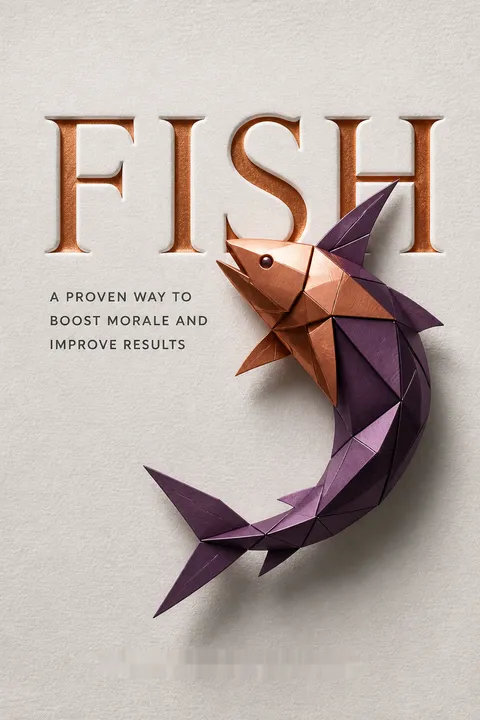
Fish receives mixed reviews, with an average rating of 3.93 out of 5. Supporters praise its simple but effective lessons on improving workplace attitude and culture. Critics argue it's oversimplified, unrealistic, and potentially manipulative. Many find the writing style poor and the story contrived. Some readers appreciate the core message of choosing a positive attitude, while others feel it ignores deeper workplace issues. The book's brevity is seen as both a strength and weakness. Overall, reactions range from enthusiastic endorsement to outright dismissal.
People Also Read





FAQ
What's "Fish: A Proven Way to Boost Morale and Improve Results" about?
- Parable of Workplace Transformation: The book is a fictional story about a manager named Mary Jane Ramirez who transforms a demotivated department into an energetic and effective team.
- Inspiration from Pike Place Fish Market: The story draws inspiration from the real-life Pike Place Fish Market in Seattle, known for its lively atmosphere and excellent customer service.
- Four Key Principles: The narrative introduces four principles—Choose Your Attitude, Play, Make Their Day, and Be Present—that are used to revitalize the workplace.
- Broader Life Lessons: Beyond business, the book offers insights into how these principles can improve personal interactions and overall life satisfaction.
Why should I read "Fish: A Proven Way to Boost Morale and Improve Results"?
- Practical Business Lessons: The book provides actionable strategies for improving workplace morale and productivity, applicable to any organization.
- Engaging Storytelling: It uses a compelling narrative to illustrate its points, making the lessons memorable and easy to understand.
- Universal Application: The principles can be applied not only in professional settings but also in personal life to enhance relationships and personal fulfillment.
- Proven Success: The methods have been successfully implemented in various organizations, as evidenced by the real-life success of the Pike Place Fish Market.
What are the key takeaways of "Fish: A Proven Way to Boost Morale and Improve Results"?
- Choose Your Attitude: You have the power to choose your attitude every day, which can transform your work experience and interactions.
- Play: Incorporating play into work can boost creativity, energy, and job satisfaction, making work more enjoyable.
- Make Their Day: Engaging with others and making their day can create positive experiences and foster a supportive work environment.
- Be Present: Being fully present in interactions enhances communication and strengthens relationships, both at work and in personal life.
How does the "Choose Your Attitude" principle work in "Fish"?
- Personal Accountability: It emphasizes personal responsibility in choosing how you respond to situations, regardless of external circumstances.
- Impact on Environment: By choosing a positive attitude, you can influence the mood and energy of your workplace.
- Daily Practice: It requires conscious effort and practice to consistently choose a positive attitude, especially in challenging situations.
- Foundation for Other Principles: This principle is the core that supports the other three principles, making it essential for overall transformation.
What is the "Play" principle in "Fish" and why is it important?
- Boosts Creativity and Energy: Playfulness at work can lead to increased creativity and energy, making tasks more enjoyable and less monotonous.
- Fosters Team Spirit: It encourages camaraderie and teamwork, as employees engage in fun activities together.
- Reduces Stress: Incorporating play can alleviate stress and create a more relaxed and open work environment.
- Enhances Productivity: When employees enjoy their work, they are more likely to be productive and committed to their tasks.
How can the "Make Their Day" principle be applied in the workplace according to "Fish"?
- Focus on Others: It involves looking for opportunities to make a positive impact on colleagues and customers, enhancing their experience.
- Creates Positive Memories: Engaging with others in meaningful ways can create lasting positive memories and strengthen relationships.
- Encourages Engagement: By making others' days, employees become more engaged and invested in their work and the success of the team.
- Improves Customer Service: This principle can lead to better customer interactions, as employees strive to exceed expectations and create memorable experiences.
What does "Be Present" mean in the context of "Fish"?
- Full Engagement: Being present means giving your full attention to the task or person at hand, without distractions.
- Improves Communication: It enhances communication by ensuring that you are truly listening and responding to others.
- Strengthens Relationships: Being present fosters trust and respect, as people feel valued and understood.
- Mindfulness Practice: It encourages mindfulness, helping individuals to focus on the present moment and reduce stress.
What are some of the best quotes from "Fish" and what do they mean?
- "There is always a choice about the way you do your work, even if there is not a choice about the work itself." This quote emphasizes the power of attitude and perspective in transforming your work experience.
- "We can be serious about our work without being serious about ourselves." It highlights the importance of maintaining a sense of play and humor in the workplace.
- "Find someone who needs a helping hand, a word of support, or a good ear—and make their day." This quote underscores the value of kindness and support in building a positive work environment.
- "Today is a gift. That is why we call it the present." It reminds readers to appreciate the present moment and be fully engaged in it.
How does Mary Jane Ramirez transform her department in "Fish"?
- Adopts Fish Philosophy: She implements the four principles of the Fish Philosophy—Choose Your Attitude, Play, Make Their Day, and Be Present.
- Engages Employees: Mary Jane involves her team in the transformation process, encouraging them to take ownership and contribute ideas.
- Creates a Positive Culture: By fostering a culture of positivity and engagement, she turns a demotivated department into a vibrant and effective team.
- Leads by Example: She models the behaviors she wants to see, demonstrating the power of attitude and presence in leadership.
What role does the Pike Place Fish Market play in "Fish"?
- Source of Inspiration: The market serves as the inspiration for the Fish Philosophy, showcasing how a lively and engaging work environment can lead to success.
- Real-Life Example: It provides a real-world example of how the principles can be applied to create a positive and productive workplace.
- Symbol of Transformation: The market symbolizes the potential for transformation in any organization, regardless of industry or challenges.
- Engagement and Energy: It exemplifies the energy and engagement that can be achieved when employees are empowered to choose their attitude and play.
How can the principles in "Fish" be applied outside of work?
- Improves Personal Relationships: The principles can enhance personal relationships by encouraging positive interactions and presence.
- Increases Life Satisfaction: By choosing a positive attitude and engaging in play, individuals can increase their overall life satisfaction and happiness.
- Encourages Mindfulness: Being present helps individuals focus on the moment, reducing stress and improving mental well-being.
- Fosters Community Engagement: Making others' days can extend to community involvement, creating a ripple effect of positivity and support.
What impact has "Fish: A Proven Way to Boost Morale and Improve Results" had on organizations?
- Widespread Adoption: Many organizations have adopted the Fish Philosophy to improve morale, productivity, and employee engagement.
- Proven Results: Companies that have implemented the principles report increased job satisfaction, lower turnover, and improved customer service.
- Cultural Shift: The book has inspired cultural shifts in workplaces, emphasizing the importance of attitude, play, and presence.
- Enduring Influence: The principles continue to influence leadership and management practices, highlighting the timeless relevance of the book's message.

Download PDF
Download EPUB
.epub digital book format is ideal for reading ebooks on phones, tablets, and e-readers.








































