
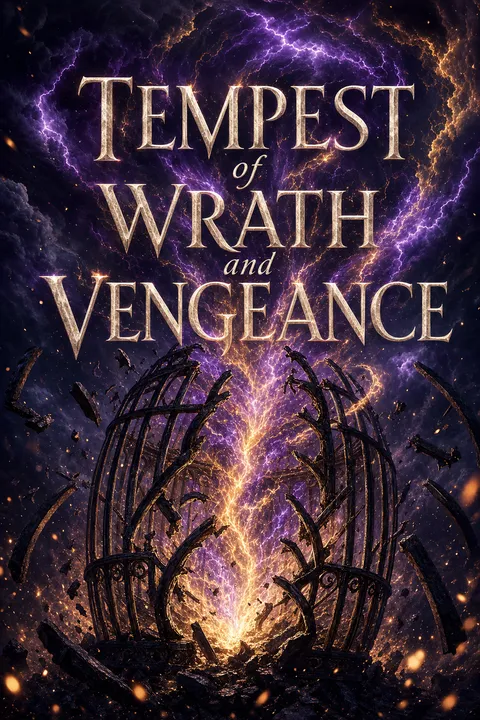

Plot Summary
Prologue
On a scorched clearing turned to mud by rain, Tessa1 stands over a bleeding Theon2 with a gold dagger, taunting him about Luka3 being caged and Tristyn7 bound in light. Theon2 confesses he was wrong to try controlling her, that his feelings remain unchanged even now. She recites the words he once spoke in her dreams: destiny beckons and sacrifice demands.
Surrounded by hundreds of Fae and Legacy dead, mourning Corbin,20 Lange,20 Auryon,9 and Cienna,8 she kisses him one last time. Then she drives the blade into his chest, declaring that only one can be left standing when Chaos comes to reign. It reads as prophecy, memory, and warning braided together.
This flash-forward weaponizes dread: the reader meets the ending before the beginning, so every tender moment afterward carries a countdown. Roehrich frames the central paradox of the trilogy, a bond that is inseparable yet supposedly fatal, through the ritual language of prophecy. Tessa's dagger is both intimacy and execution, collapsing love and annihilation into a single gesture. The recitation of Theon's own dream-words suggests a closed loop of fate, the sense that these two were authored to destroy one another. Yet the ambiguity of whether this is vision or reality plants the book's true question: can chosen love override a decreed catastrophe, or merely delay it?
The Lord Who Cannot Rule
Ransacking his father's15 study for any trace of Axel,4 Theon2 rules a kingdom that refuses to recognize him while Valter15 still technically lives. Tristyn Blackheart7 appears offering help and Travels him to the Underground, where Cienna's8 cavern hides two outsiders from another world: the dragon Razik10 and his fire-Fae partner Eliza.11
They dismiss Devram's history as falsehood and reveal a prophecy Theon2 never learned. Cienna8 delivers the gut-punch: Tessa's1 recurring dreams of Theon2 killing her may be the only way left to stop her, and if nothing changes, that vision becomes fact. Theon2 leaves shaken, realizing his enemies, his allies, and his own bond are all pulling toward the same catastrophe he cannot yet name.
The opening establishes Theon's central wound: a man trained his whole life to seize power discovers that power cannot buy back the people he loves. His isolation, brother missing, Tessa gone, Luka dispatched, strips the strategist of everything but strategy. Roehrich stages the arrival of Razik and Eliza as epistemic rupture: outsiders who see Devram's ideology as propaganda force Theon to question inherited truth. Cienna's warning reframes Tessa's visions from psychological symptom to structural threat, seeding the book's engine. The scene quietly argues that the powerful are as indoctrinated as the oppressed, and that liberation begins with doubting the story you were raised inside.
Blood Calls to Blood
Wandering the Acropolis unguarded, Tessa1 is confronted by a female Keeper who insists her answers lie with someone she refuses to question. Led by a Hunter into the Pantheon's forbidden depths, she finds an ancient mirror ringed with god-symbols. Cutting her palm and pressing it to the Achaz19 sigil, she summons Achaz19 himself, who names her granddaughter and confirms her purpose: correct the balance by erasing the Arius line, herself excepted.
He dangles the ultimate bait, promising to reunite her with the mother she never knew21 if she completes her destiny. Tessa1 leaves the mirror colder and more certain, cataloguing the encounter as currency, hardening into the weapon the gods and lords all want to aim.
Tessa's descent into the Pantheon literalizes her psychology: to find identity she must go underground, into the dark she claims to hate. Achaz embodies the seductive parent-tyrant, offering belonging as payment for atrocity. The promise of her mother exploits the orphan's oldest hunger, weaponizing love-starvation into genocidal compliance. Roehrich complicates victimhood here; Tessa is manipulated, yes, but she also relishes the fear she inspires, choosing wrath as armor. The mirror as vessel of power hints that gods barred from Devram still reach in through blood, undermining the realm's foundational lie that no one is watching. Purpose, the book suggests, can be a cage dressed as destiny.
The Dragon Moves In
Sent by Theon2 with orders to report nothing back, Luka3 arrives at the Achaz palace and negotiates directly with Lord Jove,6 trading Theon's2 onyx ring, answers about his bloodline, and a vow not to kill the lord, all to stay near Tessa.1 She storms his room enraged that he went over her head, then admits she cannot sleep.
He refuses to soothe her guilt or make her choices, offering instead to teach her to crawl, run, or fly, promising only to catch her if she asks. Their daily sparring reveals her power is uncontrollable because she has never had something to fight for, and slowly, reluctantly, she begins sleeping beside him just to find rest.
Luka is defined by restraint, the steady counterweight to Theon's grasping intensity, and his refusal to decide for Tessa is a radical act of respect in a world built on domination. Where others cage her, he insists she own her consequences. The bargain with Rordan shows how currency in Devram is always trust and vulnerability, never mere coin. Tessa's insomnia becomes the tell of a psyche at war with itself, soothed only by proximity to a bond she claims to reject. Their training is courtship disguised as combat: he teaches her that power uncontained is useless, a lesson about autonomy as much as magic.
The Coven Leader's Offer
Held in blackness and starved of blood, Axel4 is discovered not by his father15 but by Bree DelaCrux,16 oldest of the Night Child clan leaders, who orchestrated his transfer to prolong his craving until it broke him. Over dinner she reveals her true ambition: while the kingdoms tear themselves apart over Tessa,1 she will seize the Underground and then the fractured realm.
She offers Axel4 a seat at her side, leveraging his connections and his slow slide toward vampyrism. He refuses to fully commit, buying time, learning that his tormentors Julius and Mansel have betrayed Valter15 for her. Bree16 promises to find the fire Fae5 he craves, a gift that is really a trap.
Axel's imprisonment is a study in addiction as coerced control; his father and then Bree engineer bloodlust to make him pliable, weaponizing appetite against will. Bree articulates the book's political thesis, that the mighty forget the discarded, and the discarded are patient. Her seduction is ideological, framing monstrosity as liberation for the banished. Axel's clinging to a fragment of himself, the refusal to name Katya, dramatizes the last spark of agency inside compulsion. Roehrich uses him to ask whether identity survives transformation, whether love can anchor a person when their very nature is being rewritten from the inside out.
The Prisoner With Sapphire Eyes
Descending to the palace cells, Tessa1 channels her light through the glass to torture the deposed Arius Lord Valter15 until he surrenders that Axel4 is hidden in the Underground's Leisure District. Down the passage sits a shirtless prisoner who looks unmistakably like Luka.3
Through bargains and answer-for-answer trades, she learns he is Xan Mors,12 Luka's3 father, imprisoned decades ago after bringing Tessa1 to Devram to hide her from Achaz.19 He knows her mother,21 who once threatened to burn a realm for her, and reveals the light guardians, Achaz's19 answer to Sargon's dragons, beings who steal a single power by killing. Tessa1 hoards these secrets, telling no one, least of all Luka,3 about his living father.12
This chapter braids cruelty and yearning: Tessa can flay a lord and, minutes later, beg a stranger for scraps of her origin. Xan functions as surrogate father and living archive, offering the belonging Achaz falsely promised. Her decision to conceal his existence from Luka is the seed of catastrophe, a small hoarded secret that will detonate intimacy later. The light-guardian revelation reframes her handlers Dex, Oralia, and Brecken as engineered predators, not friends. Roehrich explores how the trafficked child weaponizes information because knowledge was the one thing withheld from her, turning secrecy into both survival strategy and moral rot.
The Villas Behind the Manor
On a supervised outing to the Sirana Villas, the Fae guardian Brecken18 smuggles Tessa1 past the pleasure-brothels into the hidden villas where Legacy force Fae to conceive, cataloguing offspring as favorable, placed, or disposed. She finds files naming Eviana,14 Katya,5 and Lange20 among the bred and experimented. Enraged, she kills the overseer Darius and mutilates a Legacy named Arlo who touched her.
Days later she returns and unleashes her Hunters, massacring every full-blooded Legacy within the gates and killing Desiray herself, while Brecken18 arranges for the freed Fae to be ferried into the sheltered Anala Kingdom by Tana and Gatlan. She warns them all: harm the innocents and she will destroy their bloodlines.
Here Tessa's fury finds a target that dignifies it, converting her chaos into something adjacent to justice. The breeding villas expose Devram's foundational hypocrisy: the same rulers who forbid Fae-Legacy children secretly manufacture them for power. Roehrich refuses clean heroism, though; Tessa liberates and slaughters in the same breath, and the rescue depends on the very networks that trafficked these Fae. Brecken's double game complicates the light guardians as potential rebels. The section interrogates whether vengeance can be redemptive when the avenger enjoys the killing, and whether liberation stained with indiscriminate death still counts as liberation.
A Wolf on the Brink
Ambushed by mercenary vampyres by the Wynfell River, Tessa1 loses control of her magic and her silver wolf Roan is savaged defending her. Auryon9 and Luka3 drive the attackers off, but Roan is dying. Desperate, Tessa1 begs Luka3 to catch her, and he Travels them to Theon's2 estate, where an animal Healer, later aided by Cienna8 and Gia, fights to save the wolf.
Theon,2 giving Tessa1 a genuine choice for once, tends Roan himself and later walks the recovering wolf across a field, murmuring how proud Tessa1 will be. Learning the wolves are Trackers gifted to her father Temural, Tessa1 finally asks Luka3 to truly train her to fight and to control her power.
The wolf becomes the crack in Tessa's numbness: she can rationalize murdering Legacy but cannot bear harming what loyally loves her. This is the book's turn from armor toward attachment. Theon's restraint, offering choices instead of commands, marks his painful growth from possessor to caretaker. The three-way dynamic clarifies its logic: Luka gives autonomy and catches her only on request, Theon shoulders decisions to spare her, each meeting a different psychic need. Roehrich uses the near-loss to expose that Tessa's terror is not of death but of causing loss, the guilt of one who was taught she ruins everything she touches.
The Bond That Finds Him
Studying with Razik10 and Eliza,11 the group learns Devram's four Source Marks are a desecrated version of a sacred twin flame bond between Fae and Legacy, allowing shared thought and merged power. Believing Axel4 is her twin flame, Katya5 takes the companion Mark despite the danger that an unanswered Mark drains its bearer's soul.
It works: she feels him, and mania-driven Axel,4 escaped from Bree,16 tracks her scent to his room and sinks his fangs into her throat. Theon2 and Tristyn7 tear him off before he drains her. In the aftermath, Gia confirms what Axel4 dreads and Katya5 already knew, that she carries his child, an Arius Legacy conceived before his curse.
The twin flame revelation reframes the entire realm's magic as theft, a sacred gift perverted into slavery, giving political weight to a romance subplot. Katya's willingness to sacrifice a piece of her soul dramatizes love as risk rather than possession, the opposite of Devram's transactional bonds. Axel's attack literalizes his fear that his nature makes him dangerous to what he loves. The pregnancy raises the stakes from personal to existential, since a Fae-Legacy child is a death sentence under law. Roehrich stages the collision of biology, curse, and devotion, asking whether a man becoming a monster can still choose to protect.
Choosing Her in the Dark
Cienna8 confirms Axel4 triggered the vampyre curse; within weeks his shadows will vanish and the twin flame bond will die. Terrified of hurting Katya,5 he flees, then realizes no one will protect her and their son as he will, and returns to carry her to the Underground.
When the bond finally shatters during his transition, both feel it ripped from their souls, and he weeps red tears while she sobs, yet he vows he still chooses her without any bond compelling him. He marries her before a Witch, declares the Underground his kingdom to Bree's16 face, and refuses her coup, provoking her to seize all the blood supply as a first act of war.
Axel's arc completes the book's meditation on chosen versus fated love: stripped of the mystical bond that once drew them, he loves Katya by decision, which the narrative frames as more meaningful than destiny. His transformation from spare heir to self-declared king of the Underground reclaims the identity his father designed as exile. The dying bond, mourned like a death, dramatizes grief for a future stolen by circumstance. Roehrich reframes vampirism not as damnation but as a new inheritance, and marriage across the Fae-Legacy line as open rebellion against the realm's cruelest law. Love here is defiance made structural.
Granddaughter of Three Gods
Using forged papers, Theon2 smuggles Razik,10 Eliza,11 and Katya5 into the Ekayan Island catacombs. They piece together that Tessa1 carries Achaz,19 Zinta, Arius, and Serafina blood, a being who should not exist, born of lines never meant to cross. Her visions, they deduce, are Zinta's foresight fused with Serafina's dream-walking, which is why she pulls Luka3 bodily into them.
A warning surfaces from a woman named Lilura glimpsed in those dreams: a sorceress is altering Tessa's1 visions. When Katya5 panics that stealing a book will get her, the vulnerable Fae, executed while the Legacy walk free, Theon2 chooses to leave the book behind, quietly beginning to value people over advantage.
The lineage reveal supplies the mechanical logic behind Tessa's monstrousness: she is an impossible synthesis, and impossibility distorts everything around her, including prophecy itself. The sorceress warning introduces unreliable revelation, destabilizing the very visions that have justified Tessa's genocidal purpose. Katya's outburst about who actually pays for Legacy risk is the book's sharpest indictment of privilege, and Theon's capitulation marks his moral pivot from strategist to protector. Roehrich threads epistemology through romance: if the dreams driving fate can be forged, then destiny is authorship, and whoever controls the narrative controls the sacrifice. Knowledge here is both liberation and manipulation.
The Gala's Cruel Announcement
At the Sirana Gala, meant to mourn the massacre and fund the villas' rebuilding, Theon2 arrives leashed to his official Match, Felicity, while Rordan6 publicly announces a Match contract binding Tessa1 to the Achaz Legacy Liam Vance, a power play staged before every ruler. Tessa's1 fury nearly breaks her control until Theon2 steadies her down the bond.
He cuts in for a dance, begs her to come home, and she flees to a shadowed alcove where he finds her crying. With Luka3 guarding the doors and Theon's2 shadow-wings shielding them, they come together against the wall, and she finally confesses aloud what she has denied for months: it was always more than a bond.
The gala externalizes Tessa's dehumanization; she is currency traded in a marriage market, her power a dowry the lords covet. Rordan's public announcement is domination theater, and Tessa's forced composure mirrors the very submission she rages against. The alcove scene functions as confession, sex as the only language in which she can admit truth, since words feel like surrender. Theon's steadying presence shows the bond as regulation, not just desire. Roehrich frames physical intimacy as the site where Tessa briefly stops performing villainy and simply exists, a psychological release valve for a woman who equates vulnerability with annihilation.
His Loyalty, Rewritten
After the river ambush that follows, Luka3 Travels Tessa1 to his secret cave, a mountain hollow he spent a fortune making feel like a home. When she accuses him of staying only out of duty to Theon,2 his dragon breaks free and he confesses the truth: he was jealous the day Theon2 Selected her, invented a pet name to remind himself not to want her, and has been hers since he first saw her photograph.
They come together fully for the first time, and afterward, when she asks whether she will still be his even if she fulfills her purpose, he answers that his loyalty now belongs to her. He never blocks the bond, so Theon2 feels every word.
Luka's confession dismantles the Guardian's defining trait, his loyalty to Theon, revealing it was always straining against a deeper pull. The invented pet name is exquisite psychology: naming as self-discipline, a talisman against feeling. His shift of loyalty is seismic because it threatens the brotherhood that structures his identity. Crucially, he leaves the bond open, refusing secrecy even at the cost of wounding Theon, an integrity that contrasts with Tessa's hoarding. Roehrich lets the polyamorous architecture cohere here as need rather than titillation: Tessa requires both the one who commands and the one who waits, and the men must renegotiate love without possession.
Ambush by the Black River
Sent by Rordan6 to prove herself by killing an Arius Legacy, Tessa1 instead visits her friends Lange and Corbin,20 then drifts to the Wynfell River, where Mother Cordelia and a cloaked figure ambush her. The figure unmasks as Cressida,13 Theon's2 mother, secretly Augury and Rordan's6 ally for decades, who confesses she engineered every prior attack.
Tessa1 summons Hunters in panic, but they selectively slaughter Arius Legacy rather than obey her, exactly as Auryon9 warned. Auryon9 appears, fighting fiercely, until a Hunter's blade cuts her down; she presses her bow into Tessa's1 hands, names it her birthright, and dissolves into ash, begging Tessa1 to tell her father she served out of honor.
Cressida's unmasking detonates Theon's origin story, recasting the neglectful mother as a calculating conspirator, and implicating maternal love itself in the machinery of control. The Hunters' disobedience delivers the book's harshest lesson about power: Tessa never controlled them, only borrowed the illusion, and illusions collect their debt. Auryon's death is the sacrifice that finally cracks Tessa's belief in her own invulnerability and purpose, transferring a Huntress legacy she does not yet understand. Roehrich stages fury as inheritance here, Auryon naming it her mother's, suggesting Tessa's rage is genealogical rather than personal, a bequest as much as a wound.
The Secret That Shatters Everything
Recovering in the cave, Tessa1 and Luka3 share tender days until she casually mentions the light guardians and lets slip that Xan, his father,12 told her about them. Luka3 goes lethally still, then furious, dragging the admission from her: she has known Xan12 lived, imprisoned in Faven, since days after she left Theon,2 and said nothing through every night they slept beside each other, every training session, even when Luka3 learned he had a brother.10
For twenty-five years he believed himself the last of his kind and alone. He accuses her of using him, calls her the monster she claimed to be, and coldly Travels her away, telling her she never wanted to be there anyway.
This is the book's most devastating reversal, and it is entirely self-inflicted: Tessa's compulsive secret-hoarding, forged in a childhood where information was survival, destroys the one relationship built on unconditional acceptance. The betrayal lands harder than any physical wound because Luka's deepest ache, his loneliness as the last dragon, was something she could have soothed and instead withheld. Roehrich refuses to let Tessa's trauma excuse her cruelty; the narrative insists that being wounded does not license wounding. His accusation that she chose monstrousness voices the tragedy of a woman who protects herself into isolation, sabotaging love the moment it becomes real.
A Hundred Unread Messages
Returned to Faven and hollow, Tessa1 finally powers on the phone Theon2 gave her and finds over a hundred messages, one nearly every day since she left him: updates on Roan's healing, admissions that he hated her yet would still come for her, insistence he had never once lied.
Before she can reply, Dex17 arrives, clamps suppressing bands on her wrists and forces on Theon's2 onyx ring, which claws at her power, and marches her to the Pantheon cells to await the rulers' judgment. Meanwhile Luka,3 aided by Razik,10 Eliza,11 and Cienna,8 frees his father Xan12 from the Faven dungeon, inadvertently freeing Valter,15 and learns of the dragocen bond as Eviana14 slips away with Lange and Corbin.20
The unread texts recontextualize Theon's entire absence as devotion Tessa refused to read, a heartbreaking emblem of how the traumatized mistrust the very care they crave. His refrain, that he never lied, becomes the counter-argument to her worldview that everyone only takes. Her recapture inverts her arc, the self-proclaimed most powerful being reduced to bands and a leeching ring, punished by the handler who groomed her. Parallel to this, Luka's rescue of Xan finally gives him the family he mourned, while the dragocen concept, a chosen inevitable bond born of Chaos, quietly names what binds all three. Roehrich cross-cuts imprisonment and liberation to underscore that freedom in Devram is always partial.
The Rulers Vote for Death
At an emergency Tribunal, three ruling Ladies vote to execute Tessa1 for the massacre and the chaos engulfing the realm, and only Rordan's6 refusal stays the sentence, buying her one final chance. Theon,2 stalling for time, provokes the cracks between kingdoms into open fracture, exposing Rordan's6 suspicious vendetta and the whole rotten system of bred Sources and forgotten Fae.
Word arrives that Dark Haven, an Arius city, has been massacred by Hunters, hundreds of common Legacy dead simply for carrying Arius blood. The fragile unity of the six kingdoms shatters. Theon2 phones Tristyn,7 demanding a way past the Keeper into the Pantheon's center cell, refusing to leave Tessa1 to the Ladies' judgment.
The Tribunal dramatizes governance as theater over a void; laws attributed to absent gods are revealed as tools of control passed down and warped. Theon's tactic, to widen the fractures rather than heal them, marks his transformation from a man who upheld the system to one willing to burn it. Dark Haven's massacre is the horrifying literalization of Tessa's borrowed purpose, the abstract genocide made concrete in dead children. Roehrich lets the political and personal converge: the realm's collapse and Tessa's peril become the same emergency. The scene argues that a system built on hierarchy and secrecy is structurally incapable of surviving a being who exposes its lies.
The Decree Was a Warning
Theon2 and Tristyn7 break Tessa1 from the god-cell, finding her half-lost to madness, reciting fragments of prophecy. Tristyn7 severs the enchantment, warning she cannot Travel and they must walk out. Passing the Achaz Heir Dagian, who lets them go, they escape the Pantheon.
Theon2 finally speaks the truth he has resisted: the Revelation Decree was never about ruling Devram but saving it, and the Fates will come to correct the balance by claiming Tessa.1 His plan is not to hand her over but to give up Devram itself, sending her away with Luka3 through Razik10 and Eliza11 to hide in another world, letting the Fates destroy the realm believing she is still hidden within it.
Theon's revelation reframes the entire trilogy's stakes: Tessa is not the destroyer of Devram but the sacrifice the realm's imbalance demands, and the prophecy the lords weaponized was a plea they misread. His plan inverts every value Devram taught him, choosing to sacrifice a world for one person, the ultimate rejection of the utilitarian cruelty that raised him. Tessa's madness in the cell, spilling prophecy she cannot parse, shows a mind buckling under cosmic weight. Roehrich stages love as heresy against fate itself, and Theon's willingness to damn everything reframes his possessiveness as devotion so total it becomes self-annihilating generosity.
When Death Lets Her Go
At the black river the foreseen battle erupts: Augury, Hunters, and Night Children swarm Tessa,1 Theon,2 and Tristyn.7 Tessa1 is run through by a vampyre blade and Theon2 takes a Hunter's paralyzing blade in the back, both certain Luka3 will not come. Then two dragons, Luka3 and Razik,10 descend in black fire and scatter the enemy, and Razik10 burns the poison from Theon.2
Regrouping in the Pantheon, Theon2 commands Luka3 to flee with Tessa1 to Scarlett's world, condemning Devram to buy her time. Tessa1 rages that he lied about always finding her; he answers he will find her in the After, kisses her, and walks away as Luka3 carries her, screaming, into exile.
The climax fulfills the prologue's dread while subverting it: the vision of Tessa killing Theon is answered not by murder but by his voluntary abandonment, a sacrifice that spares her hand. Luka's arrival, delayed by his fury, resolves the loyalty crisis, proving the bond survives betrayal. Theon's final choice, letting her go, is the antithesis of his lifelong compulsion to control outcomes, and his promise of the After reframes separation as faith rather than defeat. Roehrich ends on rupture, not resolution: love here is measured by what one surrenders. The chosen-inevitable bond triumphs over decreed fate precisely by refusing to fight it on its own terms.
Epilogue
In a tower prison beyond Devram, Akira,21 Tessa's1 mother, dances along a railing in the rain, taunting her captor. He is Achaz,19 and Akira21 is a Fury, born not of Chaos but created from it by a vengeful Being who took what was not his.
She reveals she can see forward in time, that Achaz19 stole her mate, wild and untamed Temural, and then her daughter,1 all to control forces beyond his mastery. Her daughter,1 she declares, is more than a Fury: she is Chaos itself, both salvation and destruction. Twirling the onyx ring that cages her, Akira21 asks what a god will do when Chaos finally comes to reign.
The epilogue vertiginously widens the lens, revealing that Tessa's story is one thread in a cosmic vendetta between gods and the Chaos they cannot govern. Akira mirrors Tessa uncannily, another wild woman caged and pathologized as uncontrollable, suggesting the daughter inherited not just power but a maternal pattern of imprisonment and defiance. The reveal that Achaz created Akira and then manufactured Tessa recasts the grandfather-benefactor as architect of his own doom, a tyrant undone by his hunwillingness to accept that some forces cannot be owned. Roehrich reframes the entire narrative as the arrogance of control colliding with the ungovernable, promising that the reckoning has only begun.
Analysis
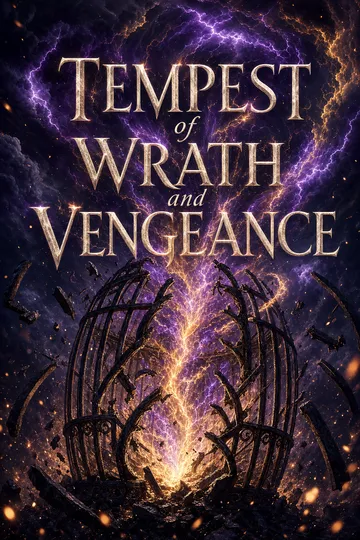
Tempest of Wrath and Vengeance is, beneath its dark-romance surface, a sustained interrogation of control and its costs. Every faction, gods, lords, fathers, coven leaders, believes it can govern the ungovernable, and every one is undone by the same arrogance: Achaz19 manufactured a granddaughter1 to correct a balance he broke; Valter15 and Rordan6 bred and caged Fae to secure power; Theon2 was raised to equate domination with love. Roehrich's central metaphor, Chaos that cannot be commanded, indicts a whole social order founded on hierarchy, secrecy, and the fiction that no one is watching. The novel's most radical move is reframing its heroine1 not as villain or savior but as sacrifice, the being an unjust system demands to preserve its imbalance, which recasts vengeance as the predictable fruit of oppression rather than aberration. Psychologically, the book is a study of trauma's paradox. Tessa1 hoards secrets, mistrusts care, and sabotages love because a childhood of caging taught her that vulnerability precedes annihilation. The narrative refuses to let this excuse her cruelty, insisting through Luka's3 devastation that being wounded does not license wounding. Against Devram's transactional bonds, Roehrich sets chosen love: Axel4 loving Katya5 without the fated bond, Luka3 shifting loyalty by decision, Theon2 surrendering a world rather than possess her. Love here is defined by what one relinquishes, culminating in Theon's2 inversion of his lifelong compulsion, letting her go. The recurring imagery of light craving dark and dark bowing to light dramatizes the book's thesis that wholeness requires balance, not conquest. The takeaway is quietly humane amid the carnage: fate is a culmination of choices, generational cycles can be broken, and no prophecy is inevitable until someone stops choosing otherwise. Chaos, the epilogue insists, does not choose sides; it simply refuses to be owned.
Review Summary
Tempest of Wrath and Vengeance received mixed reviews, with many praising its emotional depth and complex characters. Fans appreciated the character development, especially for Theon and Luka. The book's exploration of morally gray characters and feminine rage resonated with readers. However, some found Tessa's character frustrating and disliked the shift towards a polyamorous relationship. The plot's complexity and world-building were both praised and criticized. Overall, the book left a strong emotional impact on readers, setting high expectations for the series conclusion.
People Also Read
Characters
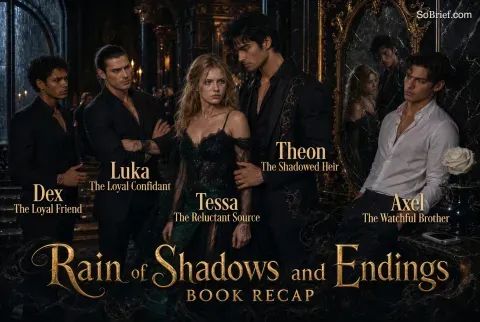
Tessa
Wild and fury incarnateTessalyn Ausra is the impossible synthesis of four godly bloodlines, a former Fae-raised captive turned the most powerful being in Devram. Orphaned, caged, and taught she was too wild and worthless, she armors herself in wrath and secrecy, hoarding information because knowledge was the one thing withheld from her. She craves belonging while sabotaging every hand that offers it, mistaking vulnerability for annihilation. Bonded to both Theon2 and Luka3 in ways she cannot explain, she oscillates between icy control and consuming chaos, between the villain she performs and the woman starving to be loved for simply existing. Her arc is a war between a decreed purpose to destroy and a fragile, terrifying discovery that she might be worth fighting for.
Theon
Death's calculating heirTheon St. Orcas, acting Arius Lord and wielder of darkness and shadow-wings, was forged by a torturous father15 into a strategist who equates control with safety and love with protection. Possessive, brilliant, and emotionally illiterate, he manipulates and dominates because it is the only language he was taught, yet Tessa1 cracks him open. Over the story he transforms from a man who cages what he loves into one who offers choices, keeps promises through a hundred unanswered messages, and finally learns that the deepest devotion may be surrender. His tenderness hides beneath ruthlessness, and his growth is the slow, agonizing unlearning of everything Devram beat into him.
Luka
The last dragon guardianLuka Mors, Theon's2 Guardian and secretly a Sargon dragon, is steady where the brothers are volatile, defined by loyalty and restraint. Believing himself the last of his kind, alone for twenty-five years, he masks longing behind broody detachment and a hoarder's love of rings and empty frames. He refuses to make Tessa's1 choices for her, offering autonomy as devotion and promising to catch her only when asked. His arc pits his ironclad loyalty to Theon2 against a pull toward Tessa1 he tried to smother with a pet name, and his discovery of family, a brother10 and father12, reopens old wounds of belonging and rejection.
Axel
The spare heir transformingAxel St. Orcas, Theon's2 younger brother, is the charming people-person who uses music and nonchalance to survive a childhood of cruelty. Battling a blood craving that tips into full vampyric transformation, he fears his own nature endangers everyone he loves. Fiercely protective, he equates love with keeping others safe, even when that means leaving them. His journey from tortured captive to self-declared king of the Underground is a reclamation of the exile his father15 designed for him.
Katya
Fire Fae with resolveKatya is a fire Fae of quiet intelligence and startling steel, drawn to Axel4 by a bond she suspects is destiny. Studious, self-sacrificing, and stubborn, she insists on agency in a world that treats Fae as property. Carrying enormous private burdens, she challenges both Axel4 and Theon2 to see the Fae as people, and refuses to be discarded or hidden away.
Rordan Jove
The smiling Achaz LordLord Jove rules Devram behind warm smiles and pretty words, the unofficial king who grooms Tessa1 with false freedom while pursuing hidden ends. Patient, manipulative, and beyond crude displays of power, he trades in dependency and bargains, revealing his true coldness only when his control is threatened.
Tristyn Blackheart
Keeper of secretsFounder of Lilura Inquest and secretly a deity, son of Pax and a Taika descendant, Tristyn masks centuries of grief behind lull-leaf and arrogance. A Keeper who can Travel and enchant, he guards the realm's thresholds and doles out cryptic aid, forever wary of tempting fate. He waits, across four centuries, for someone he loves.
Cienna
The riddling WitchCienna is a powerful Witch and Tristyn's7 sister, long confined to the Underground, who speaks in prophecy that only makes sense in hindsight. Healer and seer, she warns of futures without dictating them, balancing compassion against her refusal to bend fate. Her cryptic guidance shadows every major decision.
Auryon
Ash-walking HuntressAuryon moves through smoke and ash with a bow, a Huntress bound to protect Tessa1 on behalf of her father Temural. Lethal, secretive, and blunt, she repeatedly saves Tessa1 while withholding her true motives, insisting the girl learn to wield her own fury before it consumes everyone.
Razik Greybane
Broody dragon brotherRazik is a dragon from another world, knowledge-driven and irritable, who bears a striking resemblance to Luka3 and a fraught claim to being his half-brother. Bonded to Eliza11, he resists forming attachments in a realm he intends to leave, masking depth beneath dismissiveness and a hoarder's instinct for treasure.
Eliza
Fire Court generalEliza is the fiery general of a distant Fire Court, Razik's10 twin flame, sharp-tongued and quick to violence. Fiercely protective of Fae dignity, she bristles at Devram's cruelties and refuses to perform submission, offering Tessa1 and Katya5 both mirror and fierce advocacy.
Xan Mors
The imprisoned fatherXan is Luka's3 father, a dragon imprisoned for decades after smuggling Tessa1 into Devram to hide her from Achaz19. Weary yet warm, he holds answers about Tessa's1 parents and the realm's true history, and carries guilt over the sons he left behind to protect them.
Cressida
Theon's hidden motherCressida presents as the frivolous, status-obsessed wife of the Arius Lord15, but conceals a Nith Legacy's cunning and a decades-long conspiracy. Cold beneath maternal performance, she believes her machinations serve her sons, embodying love perverted into control.
Eviana
The unbreakable SourceEviana, Valter's15 long-suffering Source, survived decades of abuse by feeling nothing and appearing perfectly demure. Beneath the mask lives a patient strategist plotting vengeance and driven by one hidden purpose: protecting a stolen daughter. She hoards weapons and secrets, biding her time with lethal calm.
Valter
The deposed tyrantValter St. Orcas, the imprisoned former Arius Lord, is a cruel, power-hungry father who tortured his own children and led the Augury. Even caged and starving, he schemes for escape and revenge, believing sacrifice and domination are the only laws worth keeping.
Bree DelaCrux
Ancient coven leaderBree is the oldest Night Child clan leader, present since the realm's founding, seductive and patient as centuries. She dreams of uniting the discarded Underground to seize a fracturing Devram, and manipulates Axel4 through his cravings toward an alliance at her side.
Dex
Tessa's false anchorDexter, a light guardian posing as Tessa's1 devoted Fae protector, has secretly worked against her for years, condescending and controlling in the name of preparing her for her purpose.
Brecken
The double-dealing guardianBrecken is a light guardian who hunts hidden Fae for the villas yet secretly aids their rescue, an ambiguous ally whose freedom, he hints, depends on Tessa1 becoming what she was meant to be.
Achaz
God of lightAchaz, ruler of the gods and Tessa's1 grandfather, manipulates her through the promise of her mother21, seeking to correct a balance he himself broke. Arrogant and controlling, he underestimates the Chaos he helped create.
Lange and Corbin
Tessa's loyal friendsLange and Corbin are Fae friends claimed by the Arius Kingdom, a devoted couple who find rare safety under Theon2 and remain loyal to Tessa1, later dragged into Eviana's14 dangerous schemes.
Akira
Fury mother, cagedAkira is Tessa's1 mother, a Fury created from Chaos itself, imprisoned by Achaz19 and separated from her mate Temural. Wild, prophetic, and defiant, she foresees the reckoning her daughter1 will bring.
Plot Devices
Prophetic visions
Fate glimpsed and forgedTessa's1 dreams are not dreams but visions, a fusion of Zinta's foresight and Serafina's dream-walking, which lets her pull Luka3 bodily into them. They repeatedly foreshadow the river battle and Theon's2 death, driving both dread and decision-making. Crucially, the visions are revealed to be alterable by an unnamed sorceress, which destabilizes their authority and undercuts the genocidal purpose they seem to prescribe. Roehrich uses them to braid past, present, and possible futures, and to argue that destiny is authorship: whoever controls the narrative controls the sacrifice. The opening scene is itself a vision, teaching the reader to distrust foregone conclusions and to watch for the choices that bend fate.
The bonds
Love engineered and chosenDevram's four Source Marks are revealed as a desecrated version of the sacred twin flame bond, a gift between Fae and Legacy perverted into slavery. Tessa's1 inexplicable three-way bond with Theon2 and Luka3, and the deeper dragocen or chosen-inevitable bond born of Chaos, let characters share thought, emotion, and power. Bonds let lovers steady each other across distance, feel pain and desire, and combine magic. The book contrasts forced bonds against chosen ones, arguing that love decided freely outweighs love decreed by fate. Bonds also structure the plot's information flow, allowing communication the characters cannot otherwise have, and their blocking or dying becomes an emotional weapon.
Bargains and Marks
Currency of trustIn Devram nothing is free; agreements are sealed as Bargain Marks that brand the skin and punish the breaker. Luka3 bargains rings, secrets, and vows to stay near Tessa1; Tessa1 trades answer-for-answer with Xan12; Theon2 owes the Shifters a debt. Blood oaths and vows carry binding cost. This device externalizes the book's thesis that trust is the true currency and that power lies in what one is willing to sacrifice or withhold. It also drives plot mechanics, from Theon2 being cursed if he enters Tessa's1 space to the truth-agreement that governs negotiations, making every promise a visible wager.
The Hunters
Uncontrollable summoned deathThe Hunters are pale, gold-bladed beings created by Achaz19 to hunt and kill anyone with Arius blood, summoned by Tessa's1 spilled blood. She believes they serve her, but Auryon9 warns repeatedly that they answer only to Achaz19. This illusion of control becomes a devastating payoff when, inside Arius Kingdom, they slaughter Arius Legacy selectively rather than obeying her, culminating in the Dark Haven massacre. The Hunters embody the book's warning that borrowed power collects its debt, and that Tessa1 has mistaken proximity to force for command over it. They are the literal engine of the genocide her purpose demands.
The balance and the Decree
Cosmic law demanding sacrificeDevram operates on a principle of balance that, when tipped too far, forces the Fates to intervene. The Revelation Decree, long read as prophecy that Tessa1 will destroy Devram unless killed, is finally reinterpreted as a warning that the realm must correct its imbalance or be destroyed by the Fates come to claim her. This device reframes the entire conflict: Tessa1 is not the destroyer but the sacrifice the imbalance demands, and the lords who tried to shield themselves from the prophecy brought about the very end they feared. It transforms a personal romance into a cosmic reckoning about control versus chaos.
FAQ
Q&A with the Author
Q: What inspired you to write this story?
A: The inspiration for this story came from a desire to explore themes of power, choice, and the consequences of our actions. I wanted to create a world where magic had a cost, where characters faced impossible decisions, and where the line between good and evil was constantly blurred. Tessa's character, in particular, was born out of a fascination with the idea of a person who embodies both creation and destruction, and how such a person would navigate a world that seeks to control her.
Q: Can you tell us more about the magic system in your world?
A: The magic system in this world is based on the concept of energy manipulation. Every living being has an internal well of magic, but some, like Tessa, have access to much more power than others. The use of magic always comes with a price, whether it's physical exhaustion, emotional toll, or in some cases, a literal blood price.
There are different types of magic users:
- Sources, like Tessa and Eviana, who have vast reserves of power
- Conduits, who can channel and direct magical energy
- Shifters, like Luka and Razik, who can transform into animal forms
- Elementals, who control specific aspects of nature
The magic is also tied to the concept of bond magic, where certain individuals are magically connected, enhancing their powers when together but also creating vulnerabilities.
Q: Who was your favorite character to write and why?
A: While I love all my characters, I found Axel particularly compelling to write. His journey from a somewhat carefree noble to a creature of the night, struggling with his new nature and fighting to protect Katya and their child, was full of emotional depth. Axel's transformation allowed me to explore themes of identity, sacrifice, and what it truly means to be human. His story arc also provided a unique perspective on the larger conflicts in the world, as he navigated both the upper echelons of society and the dangerous underworld.
Q: The relationship between Tessa, Theon, and Luka is complex. Can you elaborate on how you developed this dynamic?
A: The triangle between Tessa, Theon, and Luka is central to the story, and I wanted to create a dynamic that went beyond a simple love triangle. Each relationship brings out different aspects of the characters:
- Tessa and Theon have an intense, almost destructive passion. Their connection is immediate and powerful, but it's also fraught with the weight of prophecy and the expectations placed upon them.
- Tessa and Luka develop a slower, deeper bond based on mutual understanding and shared experiences. Their relationship grows from friendship into something more profound.
- Theon and Luka have a long history of friendship and loyalty, complicated by their duties and the secrets between them.
As the story progresses, these relationships evolve and intertwine, forcing each character to confront their true feelings and make difficult choices. The dynamic allowed me to explore different types of love, the nature of loyalty, and how relationships can both strengthen and challenge us.
Q: The world of Devram is quite complex. How did you approach world-building?
A: World-building for Devram was an intricate process. I started with the basic concept of a world where magic and politics are deeply intertwined, and then built outwards from there. Some key aspects I focused on:
-
History: I created a rich backstory for Devram, including ancient conflicts, the rise of the current power structures, and the origins of key magical elements.
-
Political System: The division into kingdoms, each ruled by a Lord, with the overarching influence of the Legacy, was designed to create a complex web of power dynamics and potential for political intrigue and betrayal.
-
Magic: As mentioned earlier, the magic system was carefully crafted to have clear rules and limitations, with different types of magic users and the concept of bond magic.
-
Culture: I developed distinct cultures for different regions and groups within Devram, including customs, beliefs, and social norms.
-
Geography: The physical layout of Devram, including the placement of kingdoms, natural barriers, and magical locations, was mapped out to influence travel, conflicts, and strategic elements of the plot.
-
Prophecy: The Revelation Decree and other prophetic elements were woven into the world's mythology to drive certain aspects of the plot and character motivations.
Throughout the world-building process, I tried to ensure that every element served the story and themes I wanted to explore, creating a rich backdrop for the characters' journeys.
Q: The theme of sacrifice is prevalent in the story. Can you discuss its importance?
A: The theme of sacrifice is indeed crucial to the story. It's explored in various ways through different characters:
- Theon embodies this theme perhaps most clearly, as he ultimately chooses to sacrifice his world for Tessa's freedom. His arc is all about the weight of duty and the price of love.
- Tessa grapples with the sacrifices she's expected to make as the prophesied savior/destroyer, and the personal sacrifices she makes to protect those she loves.
- Axel sacrifices his humanity to save Katya and their child, embracing a dark fate to protect his new family.
- Even antagonists like Rordan and Cressida make sacrifices in pursuit of their goals, showing that sacrifice isn't always noble.
The prevalence of sacrifice in the story serves to highlight the costs of power, the weight of choice, and the lengths to which people will go for their beliefs or for those they love. It adds depth to the characters' decisions and raises questions about what is truly worth sacrificing for.
Q: How do you balance character development with plot progression?
A: Balancing character development with plot progression is always a challenge, but I believe the two elements should be intertwined. In this story, I tried to ensure that plot events were not just external happenings, but catalysts for character growth and change. Similarly, character decisions and developments drive the plot forward.
For example:
- Tessa's growing understanding of her powers and her struggles with her identity directly influence major plot points and the choices she makes.
- Luka's discovery of his true heritage affects both his personal arc and the larger political landscape of Devram.
- Theon's internal conflict between duty and love shapes his actions as a leader and ultimately leads to the climactic decision that changes everything.
I also use quieter moments between action sequences to delve deeper into characters' thoughts and relationships. These scenes, while seemingly slowing the plot, actually enrich the story by making readers more invested in the characters' fates and providing context for their actions.
Q: The story deals with some dark themes. How do you approach writing difficult or traumatic scenes?
A: Writing difficult or traumatic scenes requires a delicate balance. I believe it's important to address dark themes with honesty and depth, but also with sensitivity. When approaching these scenes, I keep several things in mind:
-
Purpose: Every difficult scene should serve a purpose in the larger narrative or character development. I avoid gratuitous darkness or trauma for shock value.
-
Character Perspective: I try to deeply inhabit the character's mindset, focusing on their emotional experience rather than graphic details.
-
Aftermath and Impact: I pay close attention to the aftermath of traumatic events, exploring how they affect the characters long-term. This is particularly important for characters like Tessa and Eviana, whose traumas shape their arcs.
-
Contrast: I balance darker moments with lighter ones, providing respite for both characters and readers.
-
Sensitivity Reading: For particularly challenging topics, I often employ sensitivity readers to ensure I'm handling the subject matter responsibly.
-
Trigger Warnings: When appropriate, I include trigger warnings to allow readers to make informed choices about engaging with difficult content.
The goal is always to explore these themes in a way that feels authentic and meaningful, contributing to the overall story and character journeys without becoming exploitative.
Q: Can you discuss the role of prophecy in the story, particularly the Revelation Decree?
A: The Revelation Decree plays a crucial role in the story, serving as both a driving force for the plot and a thematic element. It creates a sense of inevitability that the characters must grapple with, raising questions about fate, free will, and self-fulfilling prophecies.
The prophecy serves several purposes:
-
Plot Driver: It sets up the central conflict and creates tension as characters work to either fulfill or prevent the prophecy.
-
Character Motivation: Many characters' actions are influenced by their interpretation of the prophecy, particularly those seeking to control Tessa.
-
Thematic Exploration: The prophecy allows for exploration of themes like destiny vs. choice, the nature of power, and the danger of dogmatic beliefs.
-
World-Building: The existence of the Revelation Decree adds depth to the world's history and magical system.
-
Subversion: As the story progresses, questions arise about the true nature and origin of the prophecy, allowing for some subversion of traditional prophetic tropes.
Ultimately, the Revelation Decree is a tool to examine how beliefs shape reality, and how the expectation of a certain future can influence the present in profound ways.
Q: The political intrigue in the story is complex. How did you keep track of all the different factions and their motivations?
A: Keeping track of the political intrigue and various factions was indeed a challenge. I used several methods to manage this complexity:
-
Character Sheets: I created detailed profiles for each major character, including their allegiances, motivations, and key relationships. This helped me keep their individual goals and conflicts clear.
-
Faction Maps: I developed visual maps showing the different political factions, their relationships to each other, and how they shifted over time.
-
Timeline: I maintained a detailed timeline of events, both past and present, to ensure consistency in the political machinations.
-
Motivation Matrix: I created a matrix showing how each faction's goals aligned or conflicted with others, which helped in plotting out alliances and betrayals.
-
Story Bible: All of this information was compiled into a comprehensive story bible that I could reference and update as needed.
-
Beta Readers: I relied on attentive beta readers to catch any inconsistencies or confusing elements in the political storylines.
The key was to ensure that each political move served the larger story and character arcs, rather than becoming overly convoluted for its own sake. I wanted the political intrigue to feel complex but still followable, adding depth to the world and raising the stakes for our main characters.
Q: How do you approach writing morally grey characters like Rordan or Cressida?
A: Writing morally grey characters like Rordan and Cressida is a delicate balance. The key is to make them complex and understandable, even if not likable. Here's my approach:
-
Clear Motivations: I ensure these characters have clear, relatable motivations. Rordan's desire for control and Cressida's ambition are things many can understand, even if they don't agree with their methods.
-
Backstory: I develop rich backstories that explain (but don't excuse) their actions. Understanding where they came from helps readers see them as fully realized characters.
-
Moments of Humanity: I include moments that show their vulnerability or capacity for good, making them more than just villains.
-
Consistent Logic: Their actions, however morally questionable, follow a consistent internal logic. This makes them feel real and not just arbitrarily evil.
-
Contrasting Perspectives: I show how these characters view themselves versus how others see them, highlighting the complexity of morality.
-
Consequences: I ensure their actions have real consequences, both for themselves and others, avoiding glamorizing their morally grey choices.
The goal is to create characters who challenge readers' perceptions and make them question their own moral standings. Characters like Rordan and Cressida add depth to the story by embodying the theme that villainy often comes in shades of grey, not pure black and white.
Q: The magic system, particularly bond magic, plays a big role in relationships. Can you elaborate on this aspect?
A: The concept of bond magic is central to both the magical system and the exploration of relationships in the story. It serves several purposes:
-
Magical Enhancement: Bonded pairs can amplify each other's powers, creating interesting dynamics in magical confrontations.
-
Emotional Connection: The bond creates a deep emotional and sometimes mental link between partners, allowing for unique forms of intimacy and understanding.
-
Vulnerability: While the bond can be a source of strength, it also creates vulnerabilities. Harm to one partner can affect the other, and the bond can be exploited by enemies.
-
Fate vs. Choice: The existence of predestined magical bonds raises questions about fate and free will in relationships.
-
Metaphor for Relationships: The bond serves as a magical metaphor for real-world relationships, exploring themes of trust, interdependence, and the merging of identities in partnerships.
-
Plot Device: The bonds between characters like Tessa and Theon, or Razik and Eliza, drive significant plot points and character decisions.
-
Cultural Impact: The existence of bond magic has shaped the culture and politics of Devram, influencing everything from arranged marriages to political alliances.
By intertwining the magical and emotional aspects of relationships, bond magic allows for a deeper exploration of connection, dependency, and the power dynamics inherent in close relationships.
Q: The ending of the book is quite dramatic. Without spoiling too much, can you talk about how you approached writing the climax and resolution?
A: Crafting the climax and resolution was one of the most challenging and exciting parts of writing the book. My approach was to ensure that the ending was both dramatically satisfying and true to the themes and character arcs developed throughout the story. Here are some key considerations:
-
Convergence: I wanted all the major plotlines and character arcs to converge in a way that felt natural yet surprising.
-
High Stakes: The climax needed to have genuinely high stakes, with real consequences for the characters and the world.
-
Character Payoff: Each major character's arc needed to reach a satisfying conclusion or turning point, especially Tessa, Theon, and Luka.
-
Thematic Resonance: The final conflicts and resolutions needed to reflect and resolve the core themes of the book - power, choice, sacrifice, and the nature of destiny.
-
Emotional Impact: Beyond just resolving the plot, I aimed for an ending that would resonate emotionally with readers.
-
Open Questions: While providing resolution, I also wanted to leave some questions open, both for potential sequels and to give readers something to ponder after finishing the book.
-
Subversion: I tried to subvert some expectations, particularly regarding the Revelation Decree, to keep readers guessing until the end.
The goal was to create an ending that felt both inevitable and surprising, wrapping up the immediate story while setting the stage for future developments. It was a balancing act between providing satisfaction and maintaining a sense of a larger, continuing world.
Legacy Series
About the Author

Download PDF
Download EPUB
.epub digital book format is ideal for reading ebooks on phones, tablets, and e-readers.








































