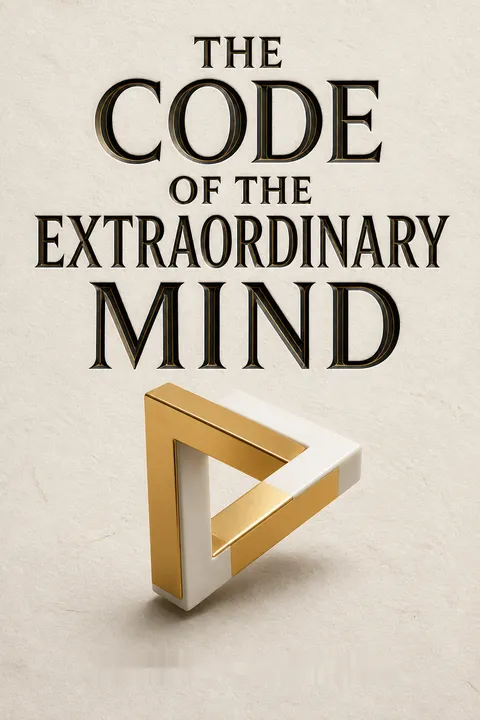
Key Takeaways
1. Transcend the culturescape to live an unrestricted life
Extraordinary minds are good at seeing the culturescape and are able to selectively choose the rules and conditions to follow versus those to question or ignore.
The invisible cage. We swim in a sea of human beliefs, ideas, and practices called the culturescape. Like fish unaware of water, we blindly accept relative truths—such as career paths, marriage norms, and religious dogmas—as absolute facts. This mass of human thoughts completely saturates and influences our lives, setting up rules on how to love, eat, marry, and work.
Absolute versus relative. Absolute truths are physical realities (like fire being hot), whereas relative truths are merely agreements made up by people no smarter than us. To transcend this mental landscape, we must actively question the "shoulds" that dictate our lives. Once we realize that the rules of the culturescape are not absolute, we can step out of the box and live beyond limits.
Embrace the unsafe. Safety is overrated, and playing it safe often leads to stagnation. Stepping out of the culturescape allows us to experience life as a beautiful, non-linear joyride filled with growth. The common thread between every extraordinary individual is their willingness to break away from the culturescape and take the path less traveled.
- The culturescape is opinion-based and agreement-based, not fact-based.
- Relative truths are true only for a particular culture or tribe.
- True growth happens through discomfort and insight, not apathy.
2. Identify and reject outdated bullshit rules (Brules)
A Brule is a bulls**t rule that we adopt to simplify our understanding of the world.
The contagion of rules. We inherit behaviors, beliefs, and religions not through rational choice, but through social contagion and childhood conditioning. These outdated rules, or "Brules," are passed down through generations and limit our potential. We use them to categorize things, processes, and people, often without realizing they have expired.
Common societal Brules. Many of our most sacred institutions are built on expired rules that no longer serve modern human evolution. We must challenge dogmas surrounding formal education, cultural loyalty, religious exclusivity, and the glorification of hard work. For example, the belief that a college degree guarantees success or that we must work ourselves to exhaustion is a modern Brule.
The Brule test. To free ourselves, we must run our beliefs through a rigorous evaluation process. If a rule violates the Golden Rule or fails to serve our happiness, it must be discarded. By questioning and dissecting these Brules, we take our first step into the realm of the extraordinary.
- Brules are handed down by family, culture, and educational systems.
- Blindly following rules is efficient for survival but terrible for extraordinary living.
- The Brule Test asks: Is it based on trust? Does it serve my happiness?
3. Master consciousness engineering to upgrade your mind's operating system
Extraordinary minds understand that their growth depends on two things: their models of reality and their systems for living.
The mental operating system. Consciousness engineering is a framework that treats the human mind like a computer. It allows us to consciously choose what to accept or reject from the culturescape, accelerating our personal growth. This process helps us understand how our beliefs and practices shape our daily experiences.
Hardware and software. This system consists of two parts: models of reality (our hardware/beliefs) and systems for living (our software/habits). By viewing these components as swappable, we can upgrade our minds just like we upgrade our technology. When an old belief or habit no longer serves us, we have the right to swap it out.
Holistic self-optimization. To avoid winning in one area of life while losing in another, we must apply this engineering process across all facets of our existence. We must evaluate our balance across twelve distinct life categories. This ensures that our physical, emotional, and spiritual growth move forward in perfect harmony.
- Models of reality are our deeply ingrained beliefs about the world.
- Systems for living are our daily habits, from eating to working.
- The Twelve Areas of Balance ensure holistic, well-rounded growth.
4. Rewrite your models of reality by replacing disempowering beliefs
Our beliefs are like unquestioned commands, telling us how things are, what’s possible and impossible and what we can and cannot do.
The meaning-making machine. Our brains are constantly interpreting events and creating subjective meanings, which we then mistake for absolute truths. These meanings often solidify into disempowering beliefs during our highly impressionable childhood years. We carry these hidden models of reality with us, completely unaware of how they limit our potential.
The placebo effect. Science proves that our beliefs physically alter our reality, from how hotel maids lose weight based on their mindset to how patients heal from sham surgeries. When we swap out limiting beliefs for empowering ones, our physical and emotional worlds transform rapidly. The world reflects our beliefs, so taking on the beliefs of extraordinary minds changes our physical reality.
Rewriting the script. We can consciously reprogram our minds by questioning whether our beliefs are absolute or relative truths. By practicing daily self-gratitude and self-love, we heal our inner child and install superior models of reality. This process frees us from the need for external validation and allows us to step into our power.
- Childhood conditioning before age nine shapes our adult models of reality.
- The Pygmalion Effect shows that expectations directly influence outcomes.
- Ask yourself: "Does this event really mean what I think it means?"
5. Constantly upgrade and measure your daily systems for living
Extraordinary minds consistently spend time discovering, upgrading, and measuring new systems for living applied to life, work, heart, and soul.
The software update. Systems for living are the daily habits and processes we use to navigate the world. Unfortunately, our formal education system rarely teaches us optimal systems for eating, sleeping, loving, or learning. As a result, most of us run suboptimal or even damaging systems that hold us back.
The optimization process. Upgrading our systems requires a continuous cycle of discovery, refreshing, and measurement. We must actively seek out new methodologies through books, courses, and mentors, and test them in our daily lives. Keeping our systems fresh is a system in itself, requiring us to step back from "doing" to evaluate our progress.
Non-negotiable set points. To prevent backsliding into old habits, we must establish strict, measurable baselines called set points. When we fall below a set point, we must trigger an immediate correction procedure to regain momentum. This turning up of the heat, even gradually, ensures constant improvement over time.
- Discovery involves stepping back from "doing" to research better methods.
- The refresh rate is how frequently we update our daily habits.
- Set points turn the feeling of failure into an easily achievable challenge.
6. Bend reality by balancing happiness in the now with a vision for the future
Have big goals—but don’t tie your happiness to your goals. You must be happy before you attain them.
The ultimate state. Bending reality is an optimal state of human existence where everything seems to click and luck becomes controllable. It occurs when you are deeply happy in the present moment while being pulled forward by a bold vision. In this state, you feel as if the universe has your back and opportunities gravitate toward you.
The four states. Most people are trapped in either "stress and anxiety" (having vision but no present happiness) or the "current reality trap" (having present happiness but no vision). Bending reality combines the best of both worlds, turning work into an exciting game. It allows you to enjoy the journey as much as the destination.
The illusion of if/then. We must reject the flawed model that says we will be happy when we achieve our goals. Happiness is not a destination; it is the rocket fuel that accelerates us toward our vision. When we choose to be happy now, we perform better, attract others, and solve problems with greater ease.
- Bending reality makes you feel as if the universe has your back.
- Present-moment happiness is a prerequisite for high performance.
- Bold visions pull you forward without the need for forced motivation.
7. Practice Blissipline through gratitude, forgiveness, and giving
It turns out that our brains are literally hardwired to perform at their best not when they are negative or even neutral, but when they are positive.
The discipline of bliss. Blissipline is the conscious discipline of maintaining daily happiness through specific transcendent practices. These practices are not esoteric; they are highly practical systems that physically and mentally optimize our bodies. By practicing Blissipline, we raise our happiness set point regardless of external circumstances.
The three pillars. Blissipline relies on three scientifically proven systems: gratitude, forgiveness, and giving. Gratitude fills our energy reserves, forgiveness clears out cognitive blockages, and giving connects us deeply to others. Forgiveness, in particular, has been shown to be the single biggest factor in boosting alpha brain waves.
The reverse gap. To cultivate true gratitude, we must measure our progress backward from where we started, rather than forward against an unreachable ideal. This simple shift in perspective instantly floods our system with joy and peace. It prevents us from falling into the trap of postponing our happiness.
- Gratitude increases energy, improves sleep, and reduces anxiety.
- Forgiveness is the single biggest factor in boosting alpha brain waves.
- Giving to others provides a profound sense of meaning and life satisfaction.
8. Distinguish between means goals and true end goals
A good goal should scare you a little and excite you a lot.
The career trap. Modern goal setting often tricks us into chasing "means goals"—such as specific degrees, job titles, or income levels—which are merely stepping-stones. We mistake these societal expectations for the ultimate destination, leading to midlife dissatisfaction. We must learn to recognize when we are chasing a Brule masquerading as a goal.
The soul's desire. "End goals" are the actual experiences, growth, and contributions that our souls crave. They are ends in themselves, bringing us pure joy and excitement without needing any external validation or reward. End goals have happiness baked into their pursuit, making the journey itself deeply fulfilling.
The three questions. To bypass the means goals trap, we must ask ourselves the Three Most Important Questions. This exercise helps us map out our ideal experiences, our path of growth, and our ultimate contribution to the world. The resulting list becomes a "blueprint for the soul" that guides our subconscious mind.
- Means goals usually contain a "so" (e.g., get a job so I can buy a car).
- End goals are about feelings, love, adventure, and self-expression.
- The Three Most Important Questions create a "blueprint for the soul."
9. Become unfuckwithable by realizing you are always enough
Unfuckwithable: When you’re truly at peace and in touch with yourself. Nothing anyone says or does bothers you and no negativity can touch you.
The shield of self-love. To be truly extraordinary, we must become immune to both the criticism and praise of the outside world. This state of being "unfuckwithable" is achieved when we realize that our self-worth is entirely self-generated. When we are at peace with ourselves, no external negativity can touch us.
Self-fueled goals. We must set end goals that we have absolute control over, such as "always being surrounded by love" or "always learning." Because these goals do not depend on other people, we eliminate the fear of loss. This non-attachment to external outcomes frees us to dream and act boldly.
Plugging the hole. Most of our interpersonal conflicts stem from a deeply buried childhood belief that we are not enough. By practicing mirror work, self-gratitude, and present-centeredness, we fill this internal void and stop demanding validation from others. Realizing we are enough gives us the courage to take massive risks.
- Being unfuckwithable means you are at peace with yourself and the world.
- Self-fueled goals protect you from the pain of external circumstances.
- Realizing "I am enough" gives you the courage to take bold risks.
10. Embrace your quest to make a positive dent in the universe
The most extraordinary people in the world do not have careers. What they have is a calling.
The ultimate evolution. At the highest level of awareness, life no longer happens to us or from us, but through us. We transition from merely surviving in the culturescape to actively reshaping it through our personal quest. Extraordinary minds are driven by a calling to push the human race forward.
Kensho and Satori. The universe guides us toward our calling through two mechanisms: kensho (growth through pain and trials) and satori (growth through sudden, life-changing insights). Even our greatest failures are often beautiful destructions designed to align us with our mission. These moments force us to shed old ways of living.
The Godicle theory. When we align our lives with a humanity-plus mission, we tap into a profound sense of universal support. We realize that we are connected to all of life, and we boldly step forward as the chosen ones for our unique quests. This alignment turns our work into a deeply meaningful, lifelong adventure.
- A calling is your unique contribution to the evolution of the human race.
- Humanity-plus companies push the human species forward.
- The universe supports those who are awake and ready to create.
Review Summary
The Code of the Extraordinary Mind received mixed reviews. Some readers found it inspiring and life-changing, praising its practical advice and fresh perspective on personal growth. Others criticized it as repetitive, self-promotional, and lacking originality. Many appreciated the concepts of questioning societal rules and developing a growth mindset, but some felt the author relied too heavily on personal anecdotes and celebrity name-dropping. The book's emphasis on meditation and mindfulness was generally well-received, though some found the constant references to the author's website and courses off-putting.
People Also Read






FAQ
What's The Code of the Extraordinary Mind about?
- Personal Disruption Focus: The book challenges readers to rethink their lives and beliefs, encouraging them to question societal norms and "Brules" (bullshit rules) that limit growth.
- Framework for Change: It introduces "Consciousness Engineering," a framework to help individuals consciously choose their beliefs and systems for living, facilitating personal transformation.
- Ten Laws for Extraordinary Life: The book outlines ten unconventional laws that guide readers toward redefining their lives and achieving success on their own terms.
Why should I read The Code of the Extraordinary Mind?
- Transformative Insights: Offers insights from interviews with leading thinkers, providing a wealth of knowledge that readers can apply to their own lives.
- Practical Tools: Includes exercises like the "Brule Test" and "Consciousness Engineering" to help readers identify and change limiting beliefs.
- Unique Perspective: Vishen Lakhiani shares his personal journey from ordinary life to extraordinary success, making the content relatable and inspiring.
What are the key takeaways of The Code of the Extraordinary Mind?
- Questioning the Culturescape: Emphasizes the importance of questioning collective beliefs and practices to gain personal freedom and create one's own rules.
- Empowerment through Consciousness Engineering: Highlights the power of reshaping beliefs and systems for living to transform one's life.
- Ten Laws for Extraordinary Living: Provides a roadmap for achieving extraordinary lives, guiding readers through self-discovery and growth.
What are the best quotes from The Code of the Extraordinary Mind and what do they mean?
- “Everything around you...”: Encourages questioning societal norms and taking ownership of one's beliefs to create a personal reality.
- “You must not lose faith...”: Stresses maintaining a positive outlook on humanity and focusing on contributing positively to the world.
- “If you can’t win...”: Advocates for adaptability and resilience, encouraging readers to take control of their circumstances.
What are "Brules" in The Code of the Extraordinary Mind?
- Definition of Brules: "Brules" are outdated societal rules that limit personal growth and happiness.
- Identifying Brules: Encourages readers to question and break free from these limiting beliefs by reflecting on societal norms.
- Impact on Life: Shedding Brules allows individuals to create a more authentic and fulfilling life, as illustrated by the author's personal anecdotes.
How does The Code of the Extraordinary Mind define "Consciousness Engineering"?
- Framework for Growth: A framework for personal growth involving consciously choosing beliefs and systems for living.
- Two Components: Consists of models of reality (beliefs) and systems for living (habits), which can be upgraded to enhance life quality.
- Practical Application: Provides exercises and tools like the "Brule Test" to help implement Consciousness Engineering in daily life.
What are the ten laws outlined in The Code of the Extraordinary Mind?
- Overview of the Laws: Serve as guiding principles for achieving an extraordinary life, including transcending the culturescape and questioning Brules.
- Sequential Learning: Each law builds on the previous one, creating a cohesive framework for personal transformation.
- Real-Life Examples: Stories and insights from the author and others illustrate effective application of these laws.
How can I apply the concepts from The Code of the Extraordinary Mind in my daily life?
- Daily Practices: Incorporate meditation, gratitude exercises, and reflection on personal beliefs to reinforce positive models of reality.
- Setting Goals: Set clear, meaningful goals that align with values and aspirations, distinguishing between end goals and means goals.
- Continuous Learning: Engage with new ideas and self-improvement activities to stay on track with personal growth.
What is the significance of "Bending Reality" in The Code of the Extraordinary Mind?
- Ultimate State of Existence: Refers to shaping experiences and outcomes through mindset and belief, feeling in control of life.
- Connection to Happiness: Aligns inner and outer worlds, achieving happiness and fulfillment while pursuing a compelling future vision.
- Practical Techniques: Techniques like visualization and affirmations help cultivate a positive mindset and attract desired outcomes.
How does The Code of the Extraordinary Mind address the relationship between happiness and productivity?
- Happiness as a Driver: Posits that happiness drives productivity and success, leading to more engagement and creativity.
- Systems for Happiness: Encourages creating systems that prioritize happiness, such as positive relationships and meaningful work.
- Long-Term Benefits: Focusing on happiness leads to sustainable success and well-being, illustrated by personal examples.
What is the "Six-Phase" meditation mentioned in The Code of the Extraordinary Mind?
- Structured Practice: Combines compassion, gratitude, forgiveness, future dreaming, envisioning a perfect day, and receiving blessings.
- Duration: Takes about fifteen to twenty minutes, designed to enhance happiness and clarity.
- Benefits: Leads to improved emotional well-being, increased focus on goals, and a greater sense of connection.
How does The Code of the Extraordinary Mind suggest dealing with setbacks?
- Kensho Moments: Introduces kensho, growth through pain and challenges, viewing setbacks as learning opportunities.
- Satori Insights: Discusses satori, moments of sudden insight leading to significant personal growth and change.
- Trusting the Process: Encourages trusting that setbacks can lead to new paths and opportunities, contributing to personal evolution.
About the Author

Download PDF
Download EPUB
.epub digital book format is ideal for reading ebooks on phones, tablets, and e-readers.








































