
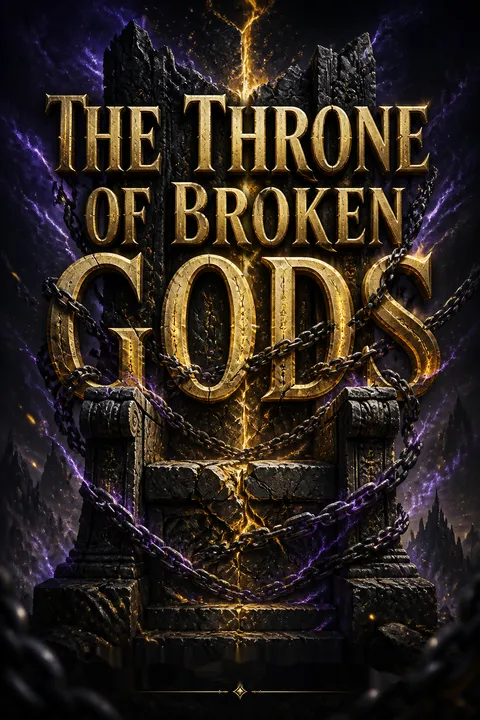

Plot Summary
The King Who Counts Minutes
Samkiel,2 the immortal World Ender newly restored to power, performs televised interviews to reassure terrified mortals, concealing that his world has collapsed. Twenty thousand minutes earlier, Dianna1 fled after her sister Gabby4 was murdered, her scream shattering Silver City.
He sheds the gentle Liam2 persona he once wore and accepts his fearsome name again. His celestial ally Logan7 presents alarming data: the broadcast of Gabby4's death spiked far beyond their sealed realm, suggesting someone distant watched.
Then Dianna1 walks into his conference room, but she is wrong, hollow, mocking, dismissive. She insists there is no us, that she has people to slaughter. The warm woman who once pinky-promised never to abandon him has buried herself behind ice.
The opening weaponizes grief as armor. Samkiel's public performance of stability mirrors the private collapse beneath every leader's mask, while Dianna's coldness reads as dissociation rather than transformation. Nicole establishes the central tension immediately: love read as weakness, intimacy as exposure. The motif of counting minutes frames Samkiel as a being defined by absence, his immortality recast as endless waiting. The electromagnetic spike plants a cosmic dread that dwarfs the personal heartbreak, signaling that private loss and universal catastrophe are entangled. The reader is invited to grieve a relationship before fully understanding it, a deliberate in-medias-res ache.
Dianna's Cold Warning
When Samkiel2 insists the creature before him is still his Dianna,1 she answers with violence. Reeking of mortal blood from gorging herself, she pins him to the desk with terrifying new strength and warns him to turn a blind eye as he supposedly did a thousand years ago. The instant his new council advisor Gregory opens the door, Dianna1 hurls a pen through the celestial's skull, scattering his light.
She announces her plan plainly: butcher every vampire, witch, and creature who handed her sister4 to Kaden.3 Then she dissolves into dark mist, leaving Samkiel2 terrified, not of her power but of how completely Kaden3's cruelty has hollowed her into an instrument of revenge.
The casual murder of Gregory functions as a thesis statement: Dianna is demonstrating, not threatening. By performing monstrousness, she tries to make herself unlovable, a self-protective preemption of abandonment. Her invocation of Samkiel's thousand-year-old inaction reveals she fights by studying intimacy, turning the lover's confessions into ammunition. The scene dramatizes grief's conversion into rage because rage feels like agency while sorrow feels like helplessness. Samkiel's terror is relational, not physical, locating the book's true stakes in psychology rather than spectacle. Vengeance here is less justice than a structure to organize unbearable pain.
The Sister's Ashes
Dianna1 descends on Camilla,6 her former lover, slaughtering the witch's coven yet sparing Camilla,6 who confesses she preserved Gabby4's corpse to deny Kaden3 a weapon. Dianna1 burns the body in the death rite their parents taught, then scatters the ashes at a beach Gabby4 once begged to revisit.
Through her grief surfaces her origin: as a starving girl named Mer-Ka1 in the desert of Eoria, she followed the beautiful stranger Drake14 to Kaden,3 who fed her his blood to save her dying sister,4 transforming her into an Ig'Morruthen. Now Dianna1 binds the surviving Camilla6 into service, demanding she forge weapons and locate Kaden3's allies, formally beginning her campaign to dismantle his empire.
The cremation ritual is the book's first act of love disguised as closure, a gesture Dianna cannot yet perform for herself. Sparing Camilla, despite betrayal, hints at the mercy she insists she has lost. The Eoria flashback reframes her monstrousness as sacrifice: every drop of darkness was the price of saving Gabby, making her violence inseparable from devotion. Nicole structures origin as bargain, power as debt. The mythic logic that the body is only a shell foreshadows resurrection themes while deepening Dianna's existential question, whether she too is now merely a hollow vessel left behind by a departed soul.
Mansion Reduced to Embers
Samkiel2 captures the vampires who delivered Gabby4 to Kaden,3 including the prince Drake14 and his brother Ethan, intending a trial. Ethan warns that Samkiel2 and Dianna1 together could shatter worlds, the very reason Kaden3 engineered the sister's death. Then Dianna1 arrives, incinerating Ethan's wife and torching the estate.
She feeds on Drake,14 reliving how he lured Gabby4 to slaughter, and fatally impales him. Dying, Drake14 insists Samkiel,2 not Gabby,4 is now Dianna1's last tether to mortality, and begs him never to surrender. Samkiel2 and Logan7 briefly snare her in a containment rune, but she erupts into a wyvern, escaping into the night and leaving Samkiel2 mourning the woman she is becoming.
Drake's death scene inverts villainy into tragic penance, complicating the revenge narrative by granting the betrayer remorse and prophetic insight. His claim that Samkiel is now her tether transfers the burden of Dianna's salvation onto the lover, raising the stakes of their bond to cosmic survival. Ethan's warning seeds the central conspiracy: their union is feared precisely because it is powerful. The mansion's incineration externalizes Dianna's scorched-earth interior, fire as both grief and erasure. Nicole repeatedly stages destruction as communication, Dianna burning the world to spell out her unspeakable pain to the one man still reading her.
The Hunt for Iron
Months pass in carnage. Dianna1 methodically executes Kaden3's lackeys, the arms dealer Webster Malone and a card table of low criminals she infiltrates in disguise, learning Kaden3 is hoarding enormous quantities of iron and preparing for something called the equinox. She spares one dying crime lord, Edgar, after a photo of his late wife reveals their shared grief.
Meanwhile Samkiel2 locks Onuna under a nightly curfew and combs burned crime scenes for her trail. He discovers footage of Dianna1 seducing then slaughtering a man, a deliberate message that her old self is dead. The jealousy guts him, yet a recovered ledger points him toward a shipping dock called Donvirr Edge.
This section transforms grief into procedural momentum, the serial-killer rhythm of vengeance giving Dianna purpose where feeling would drown her. Sparing Edgar exposes the crack in her armor: she still recognizes love in others even while denying her own. The seduction footage functions as cruelty engineered for an audience of one, intimacy weaponized to wound Samkiel and convince herself she is irredeemable. The iron and equinox clues escalate dread, embedding personal revenge inside an apocalyptic countdown. Samkiel's possessive jealousy, which he interrogates rather than indulges, marks the difference between his love and Kaden's ownership.
Storm Over the Sea
Samkiel2 boards the cargo ship and captures Santiago,17 a handless witch loyal to Kaden,3 who divulges shattering possibilities: the death-god Azrael15 may still live, Kaden3 is a King of Yejedin, and the iron is only one ingredient of some weapon. Dianna1 descends as winged death to hunt Santiago.17
She and Samkiel2 fight and flirt across the vessel; she impales him and collects his blood in a vial for Camilla6's spellwork. Santiago17 slips away in the chaos. Kaden3's failsafe detonates the ship, sinking it and the cargo so he cannot be tracked. Dianna1 drags an unconscious Samkiel2 from the water to shore, then disappears, betraying that beneath all her cruelty she still cannot let him drown.
The shipboard duel choreographs the lovers' paradox: their fighting is foreplay, their wounds intimate confessions. Dianna harvesting Samkiel's blood literalizes how she carries pieces of him even while rejecting him, the vial a smuggled relic of attachment. Santiago's intelligence dump widens the mythology, hinting that the dead are not dead and authority is built on lies. Kaden's scorched-earth contingency mirrors Dianna's own tactics, underscoring their shared maker. The rescue is the chapter's emotional truth, action contradicting rhetoric, the body insisting on a love the mind refuses, a recurring engine of dramatic irony throughout.
The Hand Returns
A month of silence breaks when three cobalt lights slam into Silver City: Samkiel2's elite guardians, The Hand, have returned uninvited. Dianna,1 it emerges, infiltrated the ruins of Rashearim disguised as a bird, sparred with the warriors Cameron8 and Xavier,9 eviscerated Cameron,8 and escaped through a vortex powered by Samkiel2's stolen blood.
Worse, she abducted Roccurem,5 the imprisoned fate who perceives countless realities. When Samkiel2 heals Cameron8 and forbids anyone from harming Dianna,1 his friends recoil. The advisor Vincent10 demands she be put down like a rabid beast. Samkiel2 detonates, confessing that this so-called enemy creature resurrected something dead in him when his own family could not, and he refuses to abandon her.
The reunion fractures the loyal family unit, exposing fault lines between duty and Samkiel's heart. His furious confession reframes the entire saga: Dianna did not corrupt a king, she revived a man hollowed by a thousand years of solitary obligation. Vincent's bloodlust foreshadows brewing dissent, while Samkiel's defense articulates the book's moral provocation, that the labels monster and savior are perspective, not essence. Stealing the fate signals Dianna's escalating reach into cosmic machinery. The chapter interrogates whether love that demands you defend the indefensible is devotion or madness, a question the narrative refuses to answer cleanly.
Freeing the Fate
Inside Roccurem5's pocket dimension, Dianna1 burns away the illusory cage that has bound the fate for millennia, freeing him only to chain him to her service until he leads her to Kaden.3 She renames him Reggie5 and forces him into a mortal disguise.
Roccurem5 speaks in unsettling riddles: she is evolving into something the stars will fear, her sister4 was fated to die in every reality, and her looming choices will either set a path or unleash devastation. He repeats an ominous refrain, that she is running out of time and that something far worse than Kaden3 approaches. Numb and revenge-bent, Dianna1 dismisses the prophecies and continues torturing werewolves and informants for any thread to Kaden.3
Dianna freeing then re-binding Roccurem dramatizes her relationship with agency itself, she liberates only to control, mistrustful of any unowned thing. The fate becomes an externalized conscience she refuses to hear, his prophecies the book's structural scaffolding hiding in plain sight. Roccurem's insistence that Gabby died in every timeline attacks Dianna's guilt at its root, though she cannot yet absorb it. Nicole uses determinism versus choice as a thematic spine: are these characters authoring their fates or performing scripts written by older powers? The recurring time refrain transforms vengeance into a race the protagonist does not realize she is losing.
Kaden's Poisoned Mirror
Kaden3 manifests through an obsidian mirror, inflicting a wound sharper than any blade. He reveals Samkiel2 was once betrothed to the guardian Imogen,12 then shows Dianna1 a planted reflection of Samkiel2 laughing easily at Imogen12's side. The image convinces her she is replaceable, that the god king2 deserves a luminous queen rather than a monster.
Kaden3 also exposes his true need: Dianna1 is the key to unsealing the realms, and he dangles the promise of resurrecting Gabby4 if she helps him. She refuses outright, recognizing the manipulation and declaring she would never damn her sister4 to this life a second time. Yet his venom lands, hardening her into preferring death-by- Kaden3 over the fragile hope of being loved.
Kaden's mastery lies in surgical insecurity, he does not attack with armies but with self-doubt, the most efficient weapon against a woman taught she is unworthy. The mirror motif recurs as surveillance and psychological warfare, reflection literalizing how Dianna sees only her own perceived defects. His resurrection offer is a test of whether her love for Gabby is possessive or selfless; her refusal reveals genuine moral growth even amid rage. The chapter exposes Kaden's pathology: he conflates love with control so totally that destroying her happiness reads to him as devotion, the dark twin of Samkiel's protective restraint.
Into the Prison World
Logan,7 secretly hunting his captured mate Neverra,11 tracks a portal beneath Onuna into Yejedin and crosses paths with Dianna,1 who intends a one-way trip to die killing Kaden.3 They infiltrate the dimension together and uncover a vast factory forging weapons for an army. Logan7 finds and revives the starved Neverra.11
Dianna1 confronts the King Tobias,16 deliberately lets his beast form swallow her whole, then carves him apart from within. When Kaden3 returns leading a horde of winged Irvikuva, Dianna1 faces an impossible choice between vengeance and the lives of Logan7 and Neverra.11 She chooses them, tearing open a portal that hurls her straight to Samkiel,2 who catches her as her overspent powers finally give out.
Dianna's willingness to die illustrates how vengeance had become a disguised death wish, a way to follow Gabby. Killing Tobias from inside his own jaws is grotesque heroism, intimacy as annihilation. The pivotal choice, saving Logan and Neverra over killing Kaden, marks her first selfless act since her sister's death, honoring Gabby's values rather than avenging her. The portal delivering her to Samkiel suggests an unconscious gravitation toward home she will not name. Power burnout becomes literal and symbolic: she has spent everything, and only by emptying herself can the long work of healing begin.
Caught and Caged
Samkiel2 carries the unconscious Dianna1 to a palace he has rebuilt from his homeworld's ruins, designed wholly for her comfort. She sleeps a week while Roccurem5 explains her abilities have burned out, perhaps suppressed by her own grief and guilt. Waking hostile and powerless, Dianna1 demands release, but Samkiel2 refuses to surrender her to the council clamoring for her execution.
Rather than force, he chips at her defenses with stubborn patience: grueling mountain runs that secretly test her dormant power, ice skating, and an encounter with the last surviving stag of Rashearim, his late mother's sacred symbol. Slowly, against every instinct, Dianna1 stops drowning in the unbearable silence of being alone with her thoughts.
The gilded prison externalizes the lovers' dynamic, captivity offered as care, control reframed as protection, the same conflation Kaden weaponizes but inverted by tenderness. Samkiel's refusal to use force, choosing presence over coercion, becomes the cure for trauma inflicted by domination. The burned-out power is psychologically precise: Dianna unconsciously extinguishes herself because her abilities are bound to a self she despises. The stag, a relic of his dead mother, links their parallel griefs and signals that healing means tolerating what reminds you of loss. Nicole frames recovery not as a cure but as relearning how to inhabit stillness.
Learning to Live Again
When Cameron8 and Xavier9 smuggle Dianna1 to an Onuna club, Drake14's grieving mate Seraphine ambushes her; powerless, Dianna1 nearly lets herself be killed until Samkiel2 arrives and incinerates the vampire. Determined to heal her rather than let her bury herself, Samkiel2 takes Dianna1 to the ocean where she scattered Gabby4's ashes, refusing to let her despise a cherished place the way his father erased every trace of his dead wife.
Neverra11 then delivers a letter Gabby4 wrote before dying, urging her sister1 to let go, to live, to love, and never let fear rule her. Reading it breaks the final wall; Dianna1 collapses sobbing for hours, grief at last flowing through her instead of festering into rage.
This is the emotional fulcrum of Dianna's arc, the conversion of armored rage back into permeable sorrow. Samkiel's invocation of his father's erasure articulates the book's thesis on mourning: forgetting is not healing but a second death of the beloved. Seraphine's attack tests whether Dianna still courts oblivion, and Samkiel's rescue reasserts that someone refuses to let her vanish. Gabby's letter, arriving posthumously, functions as permission, the dead authorizing the living to be happy, dismantling survivor guilt's logic that joy is betrayal. The cathartic weeping marks the difference between suppression and integration, the precondition for genuine love.
The Prison Their Father Built
Investigating Yejedin's true nature, Samkiel2 and The Hand find rows of cells engraved with runes built to hold primordial beings, and realize the dimension is a prison. Samkiel2 interrogates Porphyrion, an imprisoned giant who has tallied thousands of years on his walls, and learns a staggering truth: his own father Unir constructed this place, and Kaden3 was once one of Unir's three generals, the one who breeds monsters from his blood.
Kaden3 forged the Kings of Yejedin themselves. The revelation reframes the entire war: Kaden3's hatred is ancient and personal, his power rivals Samkiel2's because it springs from the same divine source, and the conflict Samkiel2 thought he understood is rooted in his father's buried secrets.
The prison-dimension reveal recasts the dead father from revered legend into architect of cosmic injustice, forcing Samkiel to inherit guilt he never chose. Porphyrion, a being who has measured eternity in scratched tallies, embodies the consequences of imprisonment as torture, complicating the heroes who now use the same cells. Learning Kaden is a creation of Unir collapses the moral distance between enemy and father, suggesting evil is often a discarded part of the self. Nicole builds dread through epistemology: every answer reveals deeper lies, and Samkiel's authority erodes as the foundation of his lineage proves rotten with concealment.
Falling Beneath the Stars
The slow thaw ignites. In the abandoned house she once shared with Gabby,4 Dianna1 bares her wounds and her body, and Samkiel,2 refusing a meaningless fling, insists she understand that taking her means there will be no other, ever. They become lovers beneath a ceiling he opens to the galaxy, their union so charged it splinters furniture and darkens cities.
Days dissolve as they cannot stay apart. Dianna1 gifts him a pendant pressed with photographs from their festival day; he gives her flowers and a whole castle. With Neverra11's help she also unearths stolen records proving she was adopted, her family not her blood, a truth Samkiel2 insists changes nothing about who belongs to her.
Consummation here is covenant, not conquest, Samkiel's demand for exclusivity reframing possessiveness as chosen commitment rather than ownership. The cosmic side effects literalize that their bond is structurally significant, not merely romantic. The pendant and flowers establish a vocabulary of reciprocal care, each giving in their native dialect, Dianna through artifacts, Samkiel through provision. The adoption revelation strikes at identity's foundation, asking whether kinship is biology or chosen devotion; Samkiel's answer, that family is built not inherited, rhymes with the book's larger argument and quietly heals a wound Kaden will soon try to reopen. Love is staged as the antidote to engineered isolation.
The Higher One's Truth
Seeking the truth behind his father's lies, Samkiel2 mind-walks to a powerful deity, the Higher One, who unravels everything. Kaden3 is not merely a general but Unir's son, Samkiel2's own brother. Unir created three children before Samkiel,2 spontaneous gods of blood whose existence ignited the Gods War, then locked them away.
Most devastating, Dianna1 is Samkiel2's amata, his fated soulmate, the very mate the fates falsely declared dead so Unir would bind his immortality to something he believed gone forever. Her fire never burned him because they are two halves of one soul. The Higher One gloats that fate serves another master and that his time has expired, exposing the meeting itself as a trap to hold him immobile.
The revelation retroactively re-reads every prior interaction: the lovers' magnetic pull, her harmless flames, their inability to part, all were soul-tie physics, not chance. This reframes destiny and choice productively, they did not fall into love against fate, they fulfilled a fate that powerful beings murdered to prevent. Unir binding immortality to a supposedly dead mate exposes hubris and the cruelty of treating a person as a loophole. The Higher One as honeypot literalizes how seeking truth can be the very vulnerability enemies exploit, a tragic structure where knowledge arrives precisely too late to act on, sharpening the impending catastrophe's inevitability.
The Family Turned to Weapons
While Samkiel2 is occupied, Kaden3 and the traitor Vincent10 execute their long game. Using dream eaters that force victims to drown in their worst nightmares, Kaden3 empties The Hand of their souls, reducing Logan,7 Neverra,11 Imogen,12 and Xavier9 to hollow, obedient puppets.
He weaponizes love itself: Cameron8 surrenders willingly after Kaden3 captures and enslaves Xavier,9 the man Cameron8 has loved in silence for centuries. Vincent,10 corroded by fear and resentment, has secretly fed Kaden3 intelligence through Onuna's surveillance for ages.
Even the long-presumed-dead celestial Azrael15 walks as a mind-controlled servant. One by one the protectors meant to stand at Samkiel2's side are stripped away, leaving the god king utterly alone for the killing blow.
Kaden's strategy completes his thesis from the mirror scene: love is the perfect leash. Each conversion is tailored to a specific attachment, dramatizing how devotion becomes the precise mechanism of betrayal. Cameron's willing surrender is the section's tragic heart, illustrating that the same selflessness that makes love noble makes it exploitable, exactly Dianna's vulnerability through Gabby. Vincent's treachery, rooted in unhealed abuse and jealousy, complicates villainy with sympathetic origins, suggesting evil often grows from untended wounds within the family. The hollowing-out motif inverts the healing arc, soul-emptying as the anti-thesis of the integration Dianna achieved, making the coming loss feel structurally complete.
Blood Drains for the Spear
Kaden3 seizes Dianna1 at the palace and chains her in a cavern, draining her blood to complete a god-killing iron spear. He delivers the cruelest truths: the mind-controlled Azrael15 is her real father, who hid her on Onuna as an infant because she is Samkiel2's amata, prophesied to open the sealed realms with her blood when the World Ender2 dies.
Kaden3 confesses he loves her in his warped way and has won permission to keep her once the ritual is done. Drained near death, Dianna1 dreams of Gabby,4 who at last absolves her of the guilt that froze her powers, hearing the secret she buried, that she once hesitated, wishing it all over. Gabby4 commands her to rise and save Samkiel.2
The revelation that Dianna was bred as the instrument of her beloved's destruction is the book's cruelest irony, fate engineering her entire existence around a betrayal she would die to prevent. Kaden's possessive love reaches its grotesque apex: he will keep her even after using her to kill the one she loves. The Gabby dream is the psychological climax, externalizing self-forgiveness as the absent sister's gift. Confessing her hesitation, the wish for it to end, names survivor guilt's most shameful core, and Gabby's absolution reframes that flicker as proof of humanity, not monstrosity. Healing the soul restores the power, integrating Dianna's earlier burnout into thematic coherence.
The God King Falls
Samkiel2 wakes from his mind-walk chained in his own council hall by The Order, the traitorous council led by Elianna. With his hollowed guardians standing as guards, Kaden3 drives the blood-forged spear through him, ripping his life force into the sky and cracking every sealed realm open. His brother Isaiah severs Samkiel2's hand to claim the Ring of Oblivion.
From the tear in the universe strides Nismera,13 the ancient war goddess who once nearly beheaded him, now liberated to seize all twelve realms. Dying, Samkiel2 spends his final power banishing Onuna's mortals to safety so they cannot feed her wrath. Nismera13 lifts her spear to finish what she began a thousand years ago.
The betrayal completes the book's argument that the gravest threats come from within the circle of trust, the council, the family, the father's legacy. Samkiel's death is staged as both prophecy fulfilled and protective sacrifice, his last act safeguarding strangers, the apotheosis of his servant-king identity. Nismera's emergence vaults the conflict from familial to civilizational, revealing Kaden himself was a subordinate pawn, a hierarchy of villainy that recontextualizes the entire pursuit. The opening's electromagnetic spike pays off: someone vast was always watching. The realms cracking open externalizes total collapse, the death of the guardian unleashing the chaos his existence alone had restrained.
The Mark That Defies Death
Forced to kill her mind-controlled father15 to break free, Dianna1 storms the council hall, beheads a general, and taunts Nismera13 while Roccurem5 sacrifices himself, shielding her long enough to seize Samkiel2's broken, dying body and escape through a portal. Unable to heal him, she learns from the failing fate that the soul-tie mark completes in three stages: blood, body, and the spoken truth of love.
Dianna1 confesses everything she has buried, sealing the Mark of Dhihsin and resurrecting Samkiel2 at a cost she does not fully comprehend. At the floating city of Jade, healers tend his sleeping body. Dianna1 vows to reclaim her stolen family and burn Nismera13's empire to ash, fearing she has paid with far more than a mark.
The resurrection inverts the entire prophecy: the woman built to kill the World Ender instead becomes the only force that can return him from death, agency triumphing over destiny. Love, the vulnerability villains exploited throughout, is revealed as the supreme power, completing the soul-tie that fate murdered children to prevent. Roccurem's sacrifice redeems the fickle oracle and confirms that even predetermined beings can choose. Dianna's vow recasts her vengeance, once aimless grief, now purposeful protection of a chosen family. The ominous final note, an unknown cost, refuses neat resolution, sustaining dread and reframing salvation itself as a debt the universe will eventually collect.
Analysis
Nicole's epic stages a sustained argument about whether love is weakness or the only true power, dramatized through two beings taught by ancient authorities that attachment invites ruin. Dianna1 and Samkiel2 are mirror-wounded: both crowned by forces beyond their control, both isolated, both convinced their capacity to love is a liability that gets others killed. The novel's villains, Kaden3 chief among them, operationalize a chilling thesis, that love is the perfect leash, and prove it repeatedly by capturing the beloved to control the lover. Against this, the narrative insists that the same vulnerability is also salvation, culminating in a resolution where the woman engineered as a weapon of destruction becomes the singular force capable of restoration. The book interrogates grief with unusual psychological precision. Dianna1's rampage is legible as complicated mourning, her suppression of power as the soul refusing a self it cannot forgive, her vengeance as a disguised wish to follow her sister into death. Samkiel2's healing method, patience over force, presence over coercion, functions as a corrective to the domination that traumatized her, distinguishing care from control even as the gilded-prison imagery acknowledges how easily protection curdles into possession. Inherited guilt forms the novel's deepest vein: a father's buried secrets birth the war, locking away creations he could not love openly, his concealment poisoning generations. The recurring fate-versus-choice tension resolves toward agency, predetermined beings repeatedly choosing against their scripts, suggesting that destiny is real but not sovereign. If the book has a thesis it is that integration, not erasure, heals loss, that mourning is itself a form of love, and that being thoroughly known, including the monstrous parts, is the precondition for being truly loved. The final unpaid cost refuses catharsis, reframing salvation as debt and ensuring the apocalypse, like grief, is survived rather than solved.
Review Summary
The Throne of Broken Gods received mostly positive reviews, with readers praising the character development, world-building, and emotional depth. Many found Dianna's journey from grief to healing compelling, though some felt her vengeful arc was drawn out. Samkiel's unwavering devotion was widely appreciated. The book's length and pacing were points of contention, with some finding it too long and repetitive. Despite these criticisms, most readers eagerly anticipate the next installment, captivated by the complex plot and intense relationships.
People Also Read

Characters
Dianna
Grief-forged fire monsterBorn Mer-Ka in a desert village, transformed into an Ig'Morruthen by drinking Kaden3's blood to save her dying sister4, Dianna is the novel's furious heart. She loves with terrifying totality and protects with lethal force, having spent a thousand years as someone's weapon and shield. Her sister's murder4 unmoors her, converting devotion into scorched-earth vengeance. Psychologically she is a study in attachment trauma: every bond she values has been used against her, so she pre-emptively makes herself monstrous to avoid the agony of being left. Beneath the fangs and flame lives a woman who craves normalcy, flowers, and belonging yet believes herself unworthy of them, mistaking her ferocious capacity to love for proof that she is irredeemable.
Samkiel
The lonely World EnderAn immortal god king crowned at birth, feared across realms as the destroyer who sealed the worlds and lost his homeworld in war. Samkiel spent a thousand years self-exiled in grief and obligation, hollowed by a crown he never chose and a father who taught him attachment was weakness. He briefly tried being ordinary as Liam. Endlessly patient, brutally honest, and quietly self-loathing, he carries the weight of millions while believing he has failed everyone. His defining trait is refusal to abandon, expressed through provision, presence, and protection rather than words he struggles to say. With Dianna1 he rediscovers feeling, peace, and a self separate from his titles, which terrifies him because loving her is the one thing his power cannot make safe.
Kaden
The maker who possessesThe ancient, beautiful, sadistic being who transformed Dianna1 and ruled her for a thousand years. Kaden conflates love with absolute control so completely that destroying his beloved's happiness reads to him as devotion. Cunning and patient, he manipulates through surveillance, mirrors, and surgical psychological cruelty rather than brute force. He claims to love Dianna1 while having broken her repeatedly, the dark inversion of healthy attachment. His ambitions reach far beyond her, tangled in cosmic schemes involving iron, sealed realms, and ancient masters, but his obsession with keeping her is the irrational thread that complicates every calculated plan.
Gabby
The beloved lost sisterDianna1's younger sister, called Ain in childhood, whose murder ignites the entire novel. Warm, funny, romantic, and relentlessly hopeful, Gabby was Dianna1's moral compass and the single person who never gave up on her, dragging her back from the brink during her darkest descent. She represents the normalcy and tenderness Dianna1 sacrificed everything to protect, and her memory functions as both wound and guiding light throughout the story.
Roccurem
The riddling captive fateAn ancient fate who perceives countless realities, imprisoned for millennia until Dianna1 frees and binds him, renaming him Reggie. He speaks in maddening prophecy, watching events with detached sorrow while occasionally nudging destiny. Bound by laws governing what a fate may reveal, he becomes an unlikely conscience and guide, embodying the novel's tension between predetermination and choice.
Camilla
Redemption-seeking witchA powerful witch and Dianna1's former lover, complicit in the betrayal that led to Gabby4's death. Spared because she preserved the body and proves useful, Camilla lives in terror of Dianna1 while quietly seeking atonement. Her formidable magic forges crucial weapons, and her guilt-ridden desire to undo her wrongs makes her a wary, conflicted ally.
Logan
Devoted second-in-commandSamkiel2's closest friend and the steadiest of The Hand, bound to his soulmate Neverra11 by the Mark of Dhihsin. Logan is loyal, level-headed, and willing to defy direct orders for love. His desperate search for his captured mate parallels Dianna1's grief, and his unwavering belief in Samkiel2 and growing respect for Dianna1 make him the emotional anchor of the guardian family.
Cameron
Mischievous celestial hunterA guardian of The Hand blessed with a hunter's heightened senses, all charm, jokes, and flirtation masking deep guilt over a long-ago mission. He loves his oldest friend Xavier9 in silence, terrified that confessing risks losing him. His humor is armor over insecurity, and his fierce protectiveness reveals the tender, frightened man beneath the swagger.
Xavier
Calm warrior of The HandA composed, kind guardian descended from a witch goddess, Xavier carries old trauma from a mission that killed his sister. Steady where Cameron8 is reckless, he offers Dianna1 unexpected compassion and quiet wisdom about grief and choosing the people who feel like sunshine. His unspoken bond with Cameron8 simmers throughout.
Vincent
The resentful advisorA member of The Hand and Samkiel2's pragmatic advisor, scarred by abuse under a former goddess. Vincent alone openly distrusts Dianna1, seeing in her power the ghost of his tormentor. His fear-driven defiance and brittle resentment set him apart from the loyal family, making him the most volatile and unpredictable of the guardians.
Neverra
Logan's captured mateA fierce, kind guardian and Logan7's soulmate, captured early and held in torment. Once freed she becomes a warm, loyal friend to Dianna1, helping her grieve and uncover hidden truths. Her bond with Logan7 exemplifies the Mark of Dhihsin and the healthy love the novel sets against Kaden3's possession.
Imogen
Empath and former betrothedA beautiful, capable guardian who was once arranged to wed Samkiel2 out of duty, never love. Gifted with empathy that lets her sense shifting emotions, Imogen becomes Samkiel2's advisor and, gradually, Dianna1's friend. She defuses jealousy by honesty, embodying the difference between obligation and the soul-deep bond Samkiel2 craves.
Nismera
Ancient goddess of warA legendary, merciless deity of war and destruction whose name haunts Samkiel2's nightmares, having once nearly killed him. Old, powerful, and consumed by ambition for crown and throne, she looms over the narrative as a dread beyond Kaden3, the true scale of the threat the cracking realms threaten to unleash.
Drake
The friend who betrayedA charming vampire prince who long acted as Dianna1's confidant and rescued her and Gabby4 from the desert, only to deliver Gabby4 to Kaden3 under coercion. Torn between family loyalty and genuine affection for Dianna1, Drake embodies the agony of impossible bargains and the guilt of betraying someone he truly loved.
Azrael
The death-god fatherA legendary celestial of death long believed perished, master of forbidden weaponcraft. His existence and connection to Dianna1 become pivotal revelations late in the story, his fate bound to the deepest secrets of her origin.
Tobias
King of the deadA cruel King of Yejedin able to raise and command corpses and shift into a monstrous serpent. Known on Rashearim by another name, he serves Kaden3's machinery of war and torments Dianna1 with hateful truths.
Santiago
Kaden's witch lackeyA slippery, treacherous witch loyal to Kaden3, captured aboard the iron ship. He divulges fragments of Kaden3's plan under duress, revealing tantalizing clues about the weapon, the realms, and forces thought long dead.
Plot Devices
The Locked House in Her Mind
Externalized trauma architectureThroughout the novel a recurring refrain marks Dianna1's psychology, a lock on a door in a house rattling whenever emotion threatens to surface. This metaphorical house, with chained doors caging her grief and her beast, visualizes her dissociation and suppression. Each time Samkiel2 reaches her, a lock loosens; each time she lashes out, one snaps shut. The device dramatizes repression as a literal structure she patrols as both jailer and prisoner. Late in the story the house becomes an actual dreamscape where she confronts what she has buried, transforming a quiet motif into the stage for her psychological climax. It gives readers a tactile map of an interior journey that might otherwise remain abstract.
Blooddreams
Memory through consumptionAs an Ig'Morruthen, Dianna1 relives the memories of those she feeds upon, witnessing their secrets, betrayals, and final moments. The device drives her investigation, letting her see exactly how victims wronged her sister4 and extract intelligence about Kaden3's network. It also wounds her, forcing her to experience betrayals firsthand, and raises the haunting fear that overfeeding may be erasing her own precious memories of Gabby4. Narratively it functions as both detective tool and emotional torture, blending exposition with anguish. The blooddreams collapse the distance between hunter and prey, making vengeance intimate and ensuring that every kill costs Dianna1 a piece of herself even as it advances her quest.
The Iron God-Killing Spear
Weapon to slay an immortalAcross the novel Kaden3 hoards enormous quantities of iron, a conductor of heat and electricity matching the World Ender2's elemental nature, gathering it in secret factories within a hidden dimension. The mystery of its purpose drives much of the investigation, with clues surfacing through captured lackeys and overheard plans. The iron is revealed to be only one ingredient of a ritual weapon designed to do the impossible, end an immortal god and unseal the realms his life force holds closed. Its final completion requires a deeply personal sacrifice that ties the weapon to the story's most devastating revelations, making the object itself a vessel for betrayal, prophecy, and apocalypse.
The Mark of Dhihsin
Soul-tie that binds fatesAn ancient bonding mark that appears only between true soulmates, sealing two beings together in body, power, and spirit. Lore explains it forms through three stages and grants shared strength, fierce protectiveness, and a connection death itself struggles to sever. Introduced through Logan7 and Neverra11's loving partnership, it functions as the healthy counterpoint to Kaden3's possessive obsession and as a quiet thematic promise. Its significance to the central romance unfolds gradually, transforming from background mythology into the mechanism on which the entire resolution depends. The mark crystallizes the novel's argument that love, freely chosen and fully spoken, is the most powerful force in a universe ruled by manipulation and fear.
Pinky Promises
Recurring vow of devotionA small childhood gesture Dianna1 shared with Gabby4, the linking of little fingers to seal an unbreakable promise, recurs as the novel's tenderest symbol. Dianna1 once offered it to Samkiel2 as proof that he would never be abandoned, the vow that opens the book as a wound when she breaks it. The gesture threads through flashbacks of the sisters comforting each other through storms and resurfaces in pivotal moments between Dianna1 and Samkiel2. Childlike and disarming amid cosmic violence, it measures the distance between who Dianna1 was and who grief made her, and its return signals reconciliation, trust rebuilt one small finger at a time.
FAQ
Synopsis & Basic Details
What is The Throne of Broken Gods about?
- A World Shattered by Betrayal: The Throne of Broken Gods plunges into a realm reeling from cosmic devastation, where ancient gods and monstrous forces clash. It follows Samkiel, the immortal World Ender, burdened by past failures and a shattered heart, and Dianna, an Ig'Morruthen consumed by grief and vengeance after her sister Gabby's death.
- Love Forged in Chaos: The narrative explores their complex, volatile relationship as Samkiel desperately tries to save Dianna from her destructive path, while she hunts those responsible for her pain. Their intertwined journeys reveal hidden truths about their origins, the nature of their powers, and the deep-seated betrayals that threaten to unravel all realms.
- A Battle for Redemption: Beyond personal vendettas, the story escalates into a war against Kaden, Samkiel's manipulative brother and a general of the ancient Order, and the re-emerged goddess Nismera. It delves into themes of destiny versus free will, the cost of power, and the transformative, redemptive power of love and found family in the face of overwhelming darkness.
Why should I read The Throne of Broken Gods?
- Emotionally Charged Character Arcs: Readers seeking deep psychological exploration will find Dianna's journey through grief and vengeance, and Samkiel's struggle with his identity and capacity for love, incredibly compelling. The narrative doesn't shy away from the raw, messy aspects of healing and self-acceptance.
- Intricate World-Building & Lore: The book offers a rich tapestry of ancient gods, hidden realms, and complex prophecies, expanding on the mythology introduced in previous books. It subverts typical fantasy tropes by exploring the moral ambiguities of "good" and "evil" deities.
- Dynamic, High-Stakes Romance: The central relationship between Dianna and Samkiel is a fiery, passionate, and often brutal dance between two powerful beings. Their push-and-pull dynamic, filled with witty banter and profound emotional connection, makes for an addictive read, exploring how love can heal even the deepest wounds.
What is the background of The Throne of Broken Gods?
- Cosmic History & Ancient Conflicts: The world is shaped by a long history of inter-realm wars and the rise and fall of powerful gods, particularly the reign of Unir, Samkiel's father, who sealed the realms. This background establishes a universe where power dynamics are constantly shifting and ancient grudges run deep, influencing current events.
- Technological & Cultural Blend: Onuna, the primary mortal realm, showcases a blend of advanced technology (televised news, surveillance, modern cities) and ancient magical practices. This juxtaposition highlights the ongoing tension between mortal progress and the timeless, often destructive, forces of the Otherworld.
- The Legacy of the Old Gods: The narrative is steeped in the consequences of past divine actions, particularly Unir's choices regarding his children and the sealing of the realms. This creates a pervasive sense of inherited burden and destiny, where characters grapple with the sins and secrets of their powerful ancestors.
What are the most memorable quotes in The Throne of Broken Gods?
- "You are pure, blinding energy. You make my entire being tingle. Do you feel it too? Do you feel me?": This quote from Dianna (Chapter 5) during her confrontation with Samkiel encapsulates their undeniable, raw connection, highlighting the intense physical and emotional pull that transcends their animosity and foreshadows their soul-bond.
- "If you love something, set it free. If it comes back—": Roccurem's fragmented wisdom (Chapter 36) to Samkiel, a classic literary allusion, subtly hints at the nature of true love and free will within the story's deterministic prophecies, emphasizing the choice Dianna must make.
- "You are better than any destiny.": Samkiel's profound declaration to Dianna (Chapter 81) directly challenges the pervasive theme of fate and prophecy, asserting the power of individual choice and love over predetermined paths, offering a powerful message of hope and self-worth.
What writing style, narrative choices, and literary techniques does Amber V. Nicole use?
- Dual Protagonists and Interwoven Narratives: The narrative primarily alternates between Samkiel and Dianna's first-person perspectives, offering deep immersion into their individual psychological states and emotional turmoil. This choice allows readers to experience their internal conflicts, motivations, and evolving feelings directly, enhancing character empathy.
- Sensory-Rich & Visceral Language: Nicole employs vivid, often raw, sensory descriptions, particularly in depicting violence, emotional pain, and intimate moments. Phrases like "scorching hot metal bit at my skin" (Chapter 1) or "blood thrummed in my ears" (Chapter 2) create a visceral reading experience, grounding the fantastical elements in tangible sensations.
- Recurring Motifs & Symbolism: The author frequently uses recurring motifs such as "locked doors in a house" (representing suppressed trauma), the Mark of Dhihsin (soul-bond, destiny), and elemental imagery (fire, storms, light, darkness) to symbolize character states, thematic conflicts, and the cosmic forces at play, enriching the symbolism in The Throne of Broken Gods.
Hidden Details & Subtle Connections
What are some minor details that add significant meaning?
- Samkiel's Counting of Minutes: In Chapter 1, Samkiel meticulously counts "twenty thousand, one hundred and sixty minutes" since Dianna left. This seemingly obsessive detail immediately establishes the depth of his attachment and the profound impact of her absence, revealing his hidden vulnerability and foreshadowing his later admission of how deeply he cares for her.
- Dianna's Pinky Promise: Dianna's "pinky promise" (Chapter 1, 2, 63) is a recurring, seemingly childish gesture that becomes a powerful symbol of her commitment and, later, her betrayal. When she uses it dismissively after Gabby's death, it highlights her emotional detachment, and when Samkiel later uses it to secure her promise to return (Chapter 63), it signifies her re-engagement with trust and connection.
- The Photo Booth Strip: The small strip of photos from the festival (Chapter 5, 35) that Samkiel keeps and Dianna later burns, then has re-made into a pendant (Chapter 78), is a subtle but potent symbol of their evolving relationship. It represents shared joy, Dianna's attempt to erase their connection in grief, and ultimately, her acceptance of their bond and the preciousness of their shared memories.
What are some subtle foreshadowing and callbacks?
- Roccurem's "Running Out of Time" Motif: Roccurem repeatedly tells Dianna and Samkiel they are "running out of time" (e.g., Chapter 8, 16, 25, 53, 85). Initially vague, this phrase subtly foreshadows the impending Equinox and the larger cosmic events tied to Samkiel's death and the realms' opening, building a sense of urgency and inevitability.
- The House of Chains and Locked Doors Metaphor: The recurring image of "a lock on a door in a house rattled/quieted" (e.g., Chapter 6, 8, 12, 35, 52, 56, 61, 66, 71) is a powerful callback to Dianna's internal "House of Chains." Each instance subtly indicates her emotional state, whether she is suppressing pain, allowing vulnerability, or confronting a buried truth, providing insight into her psychological journey.
- The Nature of Ig'Morruthen Power: Early descriptions of Dianna's power, particularly its destructive potential and connection to Kaden, subtly foreshadow the revelation of her true lineage and her role as Samkiel's "ruination" (Chapter 83). Her ability to "eat worlds" (Chapter 47) is a direct callback to the ancient Ig'Morruthen history revealed by Reggie (Chapter 24).
What are some unexpected character connections?
- Azrael as Dianna's Father: The revelation that Azrael, the celestial weapon-maker thought long dead, is Dianna's biological father (Chapter 85) is a major twist. This connection recontextualizes Dianna's unique powers and her ability to find the Book of Azrael, adding a layer of tragic irony to her adopted family's fate and her own destiny.
- Kaden as Samkiel's Brother: The shocking truth that Kaden is Samkiel's half-brother, a son of Unir (Chapter 83), completely redefines their conflict. This familial bond explains Kaden's deep-seated jealousy and obsession with Dianna, transforming him from a generic villain into a complex, tragic figure driven by a desperate need for paternal recognition and power.
- The Council's True Allegiance: The gradual reveal that the Council of Hadrameil, Samkiel's supposed allies, are actually part of "The Order" and serve a "true king" (Chapter 87) is an unexpected betrayal. This connection highlights the pervasive corruption within the established power structures and underscores Samkiel's profound isolation and the depth of the conspiracy against him.
Who are the most significant supporting characters?
- Roccurem (Reggie): Initially appearing as a cryptic, neutral fate, Roccurem evolves into a crucial, albeit reluctant, guide for Dianna and Samkiel. His interventions, though often veiled in riddles, are pivotal in revealing prophecies, facilitating their bond, and ultimately saving them from Nismera (Chapter 91), showcasing his complex role beyond mere observation.
- Neverra: More than just Logan's mate, Neverra becomes a vital emotional anchor for Dianna, particularly after Gabby's death. Her willingness to risk her life for Dianna (Chapter 46, 75) and her compassionate understanding of Dianna's grief (Chapter 51) are instrumental in breaking through Dianna's emotional walls, highlighting the theme of found family and unconditional support.
- Cameron & Xavier: Beyond their roles as Samkiel's loyal Hand, Cameron and Xavier provide crucial comic relief and emotional depth. Their banter and unspoken bond (Chapter 55, 59) offer a counterpoint to the story's darkness, while Xavier's personal trauma and Cameron's protective instincts reveal the human cost of their divine duties, making them relatable figures in a world of gods.
Psychological, Emotional, & Relational Analysis
What are some unspoken motivations of the characters?
- Dianna's Self-Punishment: Beyond vengeance, Dianna's extreme recklessness and willingness to be hurt (e.g., letting Seraphine beat her, Chapter 57) are unspoken manifestations of her survivor's guilt. She subconsciously believes she deserves punishment for Gabby's death, seeing herself as a "monster" and seeking to validate that self-perception.
- Samkiel's Fear of Abandonment: Samkiel's intense possessiveness and fear of Dianna leaving him (Chapter 31, 50, 62) stem from his deep-seated trauma of losing his family and world (Rashearim) and being abandoned by his father. His actions, though sometimes controlling, are driven by an unspoken terror of being alone again, making his Samkiel motivations complex.
- Kaden's Need for Validation: Kaden's relentless pursuit of power and his desire to "break" Dianna are rooted in his unspoken need for validation from his father, Unir. As Samkiel's unacknowledged brother, Kaden seeks to prove his worth and claim what he believes is rightfully his, making his villainy a tragic consequence of familial neglect.
What psychological complexities do the characters exhibit?
- Dianna's Emotional Suppression: Dianna exhibits profound emotional suppression, particularly after Gabby's death. She "locks away" her grief and pain behind metaphorical doors (Chapter 6, 8, 12, 35, 52, 56, 61, 66, 71), choosing anger and vengeance as coping mechanisms. This Dianna psychological analysis highlights the destructive nature of unaddressed trauma and the difficulty of allowing oneself to feel again.
- Samkiel's Burden of Perfection: Samkiel struggles with the immense psychological burden of being the "World Ender" and a perfect king. He feels he must always be strong, emotionless, and infallible, leading to self-imposed isolation and a fear of vulnerability. His internal conflict between duty and personal desire is a key aspect of his Samkiel character analysis.
- The Hand's Trauma Response: Members of The Hand, particularly Logan and Xavier, display complex trauma responses. Logan's compulsive checking of his Mark of Dhihsin (Chapter 34) and Xavier's deep-seated fear from the sovverg cave (Chapter 36) illustrate how past battles and losses continue to haunt them, affecting their present actions and relationships.
What are the major emotional turning points?
- Gabby's Letter to Dianna: Reading Gabby's posthumous letter (Chapter 51) is a pivotal emotional turning point for Dianna. It forces her to confront her survivor's guilt and the truth that Gabby loved her unconditionally, regardless of her perceived failures. This moment shatters Dianna's self-imposed emotional armor, allowing her to finally grieve and begin healing.
- Samkiel's Confession of Fear: Samkiel's raw confession to Dianna that he fears losing her more than anything (Chapter 59) is a major emotional breakthrough for him. It marks a shift from his stoic, duty-bound persona to one of profound vulnerability, revealing the depth of his love and his willingness to expose his deepest insecurity to her.
- Dianna's Choice in Yejedin: Dianna's decision to save Logan and Neverra over pursuing immediate vengeance against Kaden (Chapter 46) is a critical emotional turning point. It signifies her conscious choice to prioritize love and found family over her consuming rage, demonstrating her capacity for selflessness and growth beyond her initial destructive path.
How do relationship dynamics evolve?
- Dianna & Samkiel: From Animosity to Soul-Bound Love: Their relationship undergoes the most significant evolution, starting with mutual distrust and antagonism ("We could barely stand the sight of one another," Chapter 37). Through shared trauma, reluctant alliance, and intense emotional confrontations, they gradually develop a deep, passionate love, culminating in their soul-bond and mutual acceptance of each other's "broken" parts. This relationship analysis is central to the novel.
- The Hand: From Duty-Bound Soldiers to Chosen Family: Initially bound by duty to Samkiel, The Hand's internal dynamics evolve into a genuine, supportive family unit. Their shared experiences, personal sacrifices (Logan's search for Neverra, Xavier's trauma), and mutual care for each other (Cameron and Xavier's banter, Imogen's empathy) redefine their bonds beyond military hierarchy, highlighting the theme of found family.
- Dianna & The Hand: From Hostility to Acceptance: Dianna's relationship with The Hand transforms from initial hostility (she attacks them, they guard her) to a tentative, then genuine, acceptance. Their unwavering support, particularly Neverra's and Xavier's, helps Dianna break down her walls, showing her that she is worthy of love and belonging, even after her destructive actions.
Interpretation & Debate
Which parts of the story remain ambiguous or open-ended?
- The "One True King" and Cosmic Hierarchy: While Kaden and Nismera serve a "true king" (Chapter 83), the identity and ultimate goals of this supreme entity remain largely ambiguous. This leaves open questions about the true scope of the cosmic conflict and whether Samkiel and Dianna's victory is merely a prelude to a larger, unseen war.
- The Long-Term Effects of Open Realms: The consequences of Samkiel's death opening all realms (Chapter 87) are vast and largely unexplored by the end. While Nismera's immediate threat is clear, the full implications of countless dimensions and beings now interacting freely are left open, suggesting a future of unpredictable challenges and opportunities.
- The Future of The Hand's Freedom: Samkiel offers The Hand freedom from their duties (Chapter 69), but it's unclear how many will truly embrace a "normal" life or if their ingrained warrior identities will allow it. The ending leaves their individual paths open, hinting at the difficulty of shedding centuries of purpose and finding new meaning.
What are some debatable, controversial scenes or moments in The Throne of Broken Gods?
- Samkiel's "Poisoning" of Dianna: Samkiel's use of Camilla's sleeping spell, activated by a kiss (Chapter 31), is highly debatable. While he claims it's "not poison" and for her safety, it's a non-consensual act that strips Dianna of her agency and powers, raising questions about the morality of his "saving" methods and whether his love justifies such manipulation.
- Dianna's Unapologetic Vengeance: Dianna's relentless and often brutal pursuit of vengeance, including the torture and dismemberment of her enemies (e.g., Drake, Chapter 6), is controversial. Her lack of remorse ("I don't feel remorse for what I did," Chapter 63) challenges traditional heroic narratives and forces readers to confront the dark side of grief and the blurred lines between justice and pure retribution.
- The Fates' Manipulation: Roccurem's admission that the fates "lied" and "tricked" Unir and others (Chapter 85) to orchestrate events for a "greater purpose" is a controversial aspect of the story's prophecy and fate themes. It raises questions about free will, the morality of divine intervention, and whether the characters are truly making choices or merely fulfilling a predetermined script.
The Throne of Broken Gods Ending Explained: How It Ends & What It Means
Gods & Monsters Series Series
About the Author
Other books by Amber V. Nicole
Download PDF
Download EPUB
.epub digital book format is ideal for reading ebooks on phones, tablets, and e-readers.








































