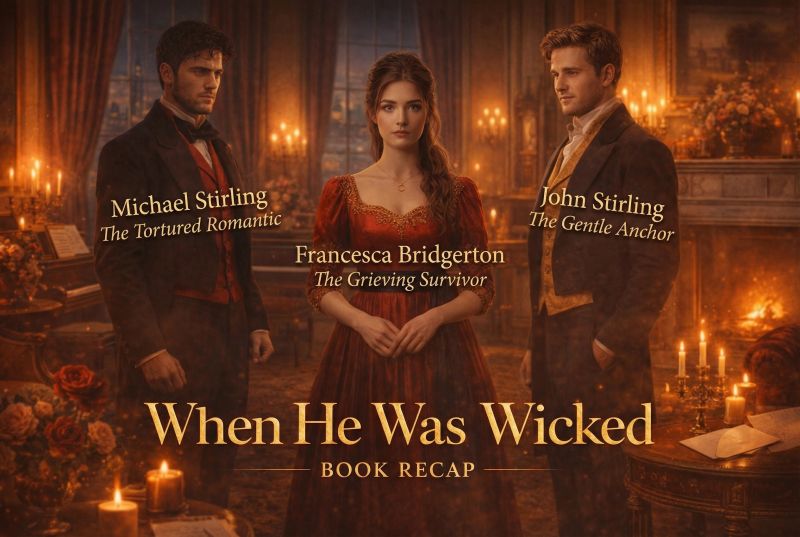
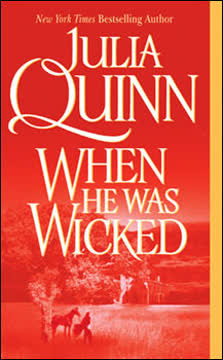

Plot Summary
Love at the Wrong Wedding
The moment Francesca Bridgerton2 walked into the supper celebrating her engagement to his cousin John,3 Michael Stirling1 — charmer, decorated soldier, serial seducer — fell in love so completely he could barely remain standing. It was 1818.
He was John's3 closest companion, raised together as brothers after Michael's1 father died. John3 was the Earl of Kilmartin; Michael1 was merely the spare. For two years, Michael1 hid his devotion beneath a rakish grin, bedding women whose names he forgot and closing his eyes to imagine Francesca.2
He teased her, made her laugh, listened to her play pianoforte — and never let her see the wanting. She tried to match him with her sister Eloise.9 He deflected. She called him the Merry Rake. He let her. Because the alternative was the truth, and the truth would destroy everything.
A Headache That Ends Everything
One March evening in 1820, John3 mentioned a terrible headache — nothing more. He planned to nap before a parliamentary meeting. Francesca2 went walking with Michael,1 their easy banter carrying them through the London streets. When they returned, John's3 valet couldn't rouse him.
Francesca2 went upstairs to try. Her scream brought Michael1 sprinting. He knew before he crossed the threshold — John3 wasn't in that room anymore. What lay on the bed was just a body. Francesca2 collapsed against him, fists hammering his chest, begging him to wake John3 up.
They sank together to the carpet while servants gathered in the doorway. John3 had been twenty-eight, healthy, vital. A ruptured aneurysm — though no one would ever know the cause. He'd simply gone to sleep and left them behind.
Heir Lost, Title Gained
Within days, Francesca2 revealed she was pregnant — putting the succession in abeyance. An officious lord from the Committee for Privileges demanded to know if she was carrying and insisted on witnessing the birth to prevent baby-switching.
Michael1 pinned the man against a wall and threw him out. But weeks later, a patch of blood on a chair cushion told the rest of the story. Francesca2 miscarried. Michael1 was now definitively the Earl of Kilmartin. Men at his clubs called him the luckiest man in Britain.
He wanted to vomit. He had inherited John's3 title, John's3 fortune, John's3 houses — everything but the one thing he actually wanted. And the guilt of wanting Francesca,2 now that John3 was cold in his grave, was dissolving him from the inside.
I Won't Be Him
Francesca2 came to Michael's1 apartments, furious at his withdrawal during her grief. She told him the baby would have needed him as its father — that he was the only person who'd known John3 as she had. Something in Michael1 shattered. He grabbed her shoulders and shook her, nearly shouting that he wasn't John3 and couldn't replace him. She asked him to let go, her voice thin with fear.
He released her instantly, horrified by his own hands. She suggested they not see each other for a while. Back alone, Michael1 understood with painful clarity: as long as Francesca2 remained ignorant of his feelings, she would keep saying things that gutted him. He poured himself whisky, set it down barely touched, and asked his valet14 what he thought of India.
Midnight in the Cold Library
Four years changed them both. Francesca2 had run the Kilmartin estates with quiet competence, found a measure of peace in widowhood, and decided she wanted a baby — which meant a new husband. She traveled to London early, forgetting to send notice.
The house was freezing, the coal stores low. She padded downstairs seeking warmth and found a fire already blazing — and a man standing before it. Michael1 had returned from India the same night, equally unannounced.
He was deeply tanned, his black hair threaded with silver, his easy grace replaced by something taut and strained. They circled each other by the fire like wary animals rediscovering a shared den. She touched his arm in old habit. He sucked in his breath. Four years had healed nothing.
The Serpentine Awakening
Walking together in Hyde Park the next day, Francesca2 told Michael1 she planned to find a husband. He hid his shock behind banter. She pointed out nursemaids and prams, confessing her ache for children.
Then she turned to him — and found him closer than expected, his charcoal-flecked eyes inches from hers. Her gaze dropped to his mouth. She noticed the uneven color of his lower lip, the sensual curve she'd somehow never examined. Something electric jolted through her body.
She leapt to her feet, invented a dressmaker's appointment, and fled. That evening, sitting in her mother Violet's4 carriage bound for Bond Street to buy bright blue dresses, she struggled to name what had happened. She had looked at her best friend and, for the first time, seen a man.
Fever, Then Fanfare
Michael1 collapsed with malarial fever that same evening. Francesca2 rushed to Kilmartin House and found him drenched in sweat, radiating heat, barely able to speak. He confessed he'd contracted malaria in India — recurring fevers every few months, treatable with quinine but incurable.
She stayed through the night in a wooden chair at his bedside. She kept his illness secret from everyone except the mothers — his mother Helen7 and John's mother Janet6 — who arrived from Scotland days later.
Once recovered, Michael1 emerged at Violet's4 birthday ball dressed in black evening kit, instantly besieged by every marriage-minded woman in London. Francesca,2 wearing blue for the first time in years, spent the entire evening fending off questions about him — and trying not to count the women he charmed.
Just Marry Her
Francesca's2 return to society brought suitors in droves — flowers from dukes and viscounts filled the drawing rooms — while Michael1 watched with barely concealed fury. After he nearly strangled a fellow club member for making vulgar remarks about Francesca,2 her brother Colin5 cornered him over whisky.
With deceptive casualness, Colin5 suggested Michael1 simply marry her. Michael1 sputtered that he couldn't — she'd been John's3 wife. Colin5 pointed out there was nothing illegal or unusual about it. The real barriers, Colin5 observed with unnerving precision, were the ones Michael1 manufactured for himself.
Michael1 fled the conversation, but the idea embedded itself like a splinter. For the first time in six years, he allowed himself to imagine life with Francesca.2 The guilt that had kept him in check began, almost imperceptibly, to loosen.
The Kiss That Breaks Everything
At a ball, a baronet named Sir Geoffrey13 lured Francesca2 into the garden and forced a kiss on her. Michael1 materialized from the darkness, ripped him away, planted a boot on his chest, and threatened to crush his ribs. Francesca2 had never witnessed this ferocity — controlled, volcanic, barely leashed.
Hours later at Kilmartin House, she confronted Michael1 in the hallway, demanding to know why he was angry with her. She followed him into his bedroom. They argued about John,3 about remarriage, about everything unspoken between them.
She turned her back. When she whirled around to deliver a retort, he was right there, inches away. His lips found hers — soft, devastating, years in the making. His hand found her breast. She gasped, pulled free, and ran. First to her mother's, then all the way to Scotland.
Practical Proposal, Impractical Surrender
Michael1 followed her to Scotland, ostensibly bearing news of Colin's5 engagement to Penelope Featherington.5 In the rose drawing room at Kilmartin, he laid out his case for marriage like a solicitor: she'd keep her title, her home, his respect and trust.
He'd give her children. Francesca2 was stunned — called it insane. He'd been her friend, John's3 cousin. Marriage was unthinkable. Then Michael1 leaned close and asked whether she didn't want another kiss. What followed was neither practical nor sensible.
He kissed her neck, bared her breast, whispered promises of what he intended to do. She lost all capacity for refusal. He carried her to the carpet. Afterward, lying tangled together, Michael1 knew this had transcended every fantasy. But Francesca's2 face held terror, not tenderness.
The Gardener's Cottage
Francesca2 fled into the rain the next morning, wracked with guilt that her passion for Michael1 exceeded anything she'd felt with John.3 Michael1 found her under a tree, soaked and miserable. His horse went lame, forcing them into an abandoned gardener's cottage.
Inside, stripped of wet clothing and wrapped in blankets, they sparred — he demanding she accept his proposal, she insisting she'd only marry if pregnant. The impasse crackled between them. Then they made love again, and this time Francesca2 seized control.
She ordered him to lie still, stripped for him with agonizing slowness, and rode him until they both shattered. It was her revenge for the power he'd wielded over her body — and a declaration she wasn't ready to name. She told him she'd consider marriage. He agreed to wait.
The Secret Pours Out
Three weeks of passion without commitment finally broke Michael.1 Francesca's2 period arrived — no baby — and she kept dodging his proposals while sharing his bed. When she whispered that she wasn't supposed to feel this desire for another man, something inside him ruptured.
He told her the truth: he had loved her since the day they met. Loved her while she was married to John.3 Loved her through four years of Indian exile. The words tore from him like shrapnel — bitter, furious, years overdue.
He ordered her to leave if she couldn't be fully his. He wasn't strong enough to say goodbye himself. Francesca2 ran into the night rain and sat in a gazebo for hours. Then she returned to his door, soaked and shivering. She would marry him. She didn't know why. She just knew she must.
Married Before Noon
A letter from Violet4 brought startling news: Colin5 had already married Penelope, and Francesca's2 sister Eloise9 was also getting married — all without telling her. Michael1 seized the moment. They were in Scotland; they didn't need banns.
He kissed her, slid his hand beneath her skirts, brought her trembling to the edge of pleasure — and stopped. If she wanted to finish, he told her, she'd have to do it as his Countess of Kilmartin. Furious and aching, she agreed. They married that day.
On their wedding night, something felt different — slower, more tender, weighted with belonging. Michael1 whispered that he loved her. Francesca2 told him she was glad she'd married him, that it was the right thing. She did not say she loved him. He buried his disappointment beneath gratitude for everything else.
Peonies for Permission
Two weeks into marriage, Michael1 fell ill again. Francesca2 was terrified — if malaria was returning this quickly, it could be fatal. But the next morning his fever still burned. She understood in a flash: malarial fevers always disappeared by dawn. This wasn't malaria.
He wasn't dying. Relief cracked something open inside her. She gathered peonies — John's3 favorite flower — and walked to the churchyard. Kneeling at her first husband's3 headstone, she finally spoke the words aloud: she loved Michael.1 She believed John3 would have wanted exactly this.
Behind her, Michael1 appeared, leaning against a tree, having followed her there. She asked if he'd heard. He nodded. She said it again — and again — tears streaming. He held her. Before they left, he turned back to John's3 grave and silently mouthed two words of thanks.
Epilogue
Weeks later, Janet Stirling6 — John's3 mother — wrote to Michael.1 She confessed the news had shocked her but that understanding came swiftly. She described the bond between Michael1 and Francesca2 as a meeting of minds and souls that existed on a higher plane, and declared they had clearly been born for each other. She offered her blessing and, with characteristic grace, her thanks — for letting her son love Francesca2 first.
Analysis
Quinn's novel dismantles the romantic convention that love arrives once, perfectly, and never needs to be chosen again. Francesca's2 first marriage to John3 was effortless — a puzzle piece finding its mate. Her relationship with Michael1 is the opposite: a slow, agonizing negotiation between desire and guilt, fought across years of silence and thousands of miles of distance. The novel argues that the deepest love isn't the one that arrives unbidden but the one we must actively, painfully choose.
Michael's1 psychological architecture rests on a paradox: he is most honest when performing dishonesty. The Merry Rake persona isn't merely a mask — it's an identity constructed to survive proximity to the unattainable. Quinn examines how long-term emotional suppression doesn't simply hide feelings but distorts the suppressor's entire relationship with authenticity. Michael1 becomes so skilled at concealment that he loses the capacity for revelation, and his confession arrives not as catharsis but as detonation — an involuntary rupture of a container too long overfilled.
The novel's treatment of grief is notably unsentimental. Francesca's2 mourning follows no tidy arc; it manifests as anger at Michael1 for withdrawing, guilt for feeling desire, and the terrifying recognition that passion for a new man doesn't diminish love for the dead one. Quinn refuses the false binary between loyalty and moving forward, insisting that the human heart contains room for both.
Perhaps most subversively, the book centers consent and female sexual agency within a Regency framework. Michael1 asks permission at every escalation. Francesca's2 erotic awakening — taking command in the cottage, ordering Michael1 to submit — is thematically essential: she must actively claim desire rather than be swept away by it. Only by owning her passion can she eventually own her love. The story's resolution arrives not in a bedroom but at a gravestone, where Francesca2 speaks truth aloud to the one man who cannot hear it — and the one who can.
Review Summary
When He Was Wicked receives mixed reviews, with many praising Michael's character and the intense emotions portrayed. Some readers find Francesca frustrating due to her indecisiveness. The book is noted for its mature themes, dealing with grief and guilt. While some consider it the best in the Bridgerton series, others find it lacking the typical humor and family dynamics. The steamy scenes and Michael's devotion to Francesca are frequently highlighted as strengths. Overall, the book is seen as a departure from Quinn's usual style, offering a more serious and emotionally complex story.
People Also Read




Characters
Michael Stirling
The rake who loves in silenceMichael Stirling is John's3 cousin and near-brother, raised alongside him since childhood. A former soldier and notorious charmer known as the Merry Rake, he uses wit, sensuality, and social ease to mask a profound emotional wound he cannot share with anyone. Beneath the rakish exterior lies a man of fierce loyalty, deep conscience, and punishing self-discipline—someone who would endure years of silent suffering rather than betray the people he loves. His psychological landscape is defined by a tension between desire and duty, between what he wants and what he believes he deserves. Michael's journey is one of permission—learning to distinguish genuine moral failure from the guilt he manufactures to keep himself imprisoned.
Francesca Bridgerton Stirling
The composed widow who feels too muchFrancesca is the sixth of eight Bridgerton siblings and the quietest—sharp where her family is boisterous, ironic where they are sunny. She married young for the rarest of reasons: genuine soul-deep compatibility. As a widow, she channels her intelligence into managing a vast estate, building an identity beyond grief. What drives her is a hunger for motherhood that forces her back into the marriage market, and a determination to control her own destiny. Yet Francesca's deepest conflict is internal: the gap between the composed woman she presents and the passionate one she discovers she might be. She fears emotional chaos, distrusts desire she cannot categorize, and would rather flee to Scotland than face a feeling she hasn't analyzed.
John Stirling
The beloved who haunts bothMichael's1 cousin and Francesca's2 first husband—the person both loved most in the world. Thoughtful, devoted, and quietly dutiful, John Stirling, Earl of Kilmartin, possesses the kind of steady goodness that inspires loyalty without demanding it. He takes his parliamentary seat seriously, loves Francesca2 with transparent warmth, and treats Michael1 as a true brother despite the inequity of their positions. John's character serves as the moral compass of the story: his generosity of spirit was so complete that it shapes every decision the people he leaves behind must make. He represents both the best of what was and the impossible standard against which all that follows will be measured.
Violet Bridgerton
The perceptive Bridgerton matriarchViolet Bridgerton, Francesca's2 mother, is a warm and perceptive widow who raised eight children alone after her husband's sudden death from a bee sting. She balances wanting to mother her adult daughter with respecting Francesca's2 fierce independence. Beneath her social grace lies genuine wisdom about grief, remarriage, and the courage required to seek happiness after devastating loss. She suspects the connection between Francesca2 and Michael1 before either of them names it.
Colin Bridgerton
The perceptive brother-provocateurColin Bridgerton, Francesca's2 brother, operates behind a mask of charming nonchalance that rivals Michael's1 own. A world traveler and perpetual bachelor, he possesses an unsettling perceptiveness that cuts through pretense. He sees what others miss—particularly the truth about Michael's1 feelings—and wields his observations with surgical precision disguised as idle conversation over whisky. His own engagement to Penelope Featherington provides the catalyst Michael1 needs to act.
Janet Stirling
John's gracious, grieving motherJanet Stirling, the dowager Countess of Kilmartin and John's3 mother, lost her only child when John3 died. Warm, witty, and surprisingly resilient, she channels her grief into caring for those her son left behind. She treats Francesca2 as a daughter and Michael1 as a beloved nephew, and her capacity for generosity extends to accepting that those she loves must find happiness in unexpected forms.
Helen Stirling
Michael's devoted motherHelen Stirling, Michael's1 mother, maintained faithful correspondence throughout his Indian exile and serves as a persistent but loving voice urging him toward responsibility. She alternates between gentle scolding and fierce maternal pride, determined to see her son settled and happy.
Hyacinth Bridgerton
The irrepressible youngest sisterHyacinth, Francesca's2 youngest sister, is razor-tongued, irrepressible, and constitutionally incapable of minding her own business—providing comic relief while driving everyone around her to affectionate madness.
Eloise Bridgerton
The observant unmarried sisterEloise, Francesca's2 elder sister by one year and still unmarried at twenty-seven, is sharp-eyed and opinionated, unafraid to needle her siblings with uncomfortable truths they would rather not hear.
Kate Bridgerton
The blunt sister-in-lawKate, married to Francesca's2 eldest brother Anthony, is direct to the point of bluntness and takes an organizing role in spreading word of Francesca's2 availability on the marriage market.
Sophie Bridgerton
The gentle, perceptive sister-in-lawSophie, married to Francesca's2 brother Benedict, is gentle and socially astute, often the voice of propriety who notices details—like the significance of Francesca's2 blue dress—that others overlook.
Lady Danbury
The cane-thumping society terrorLady Danbury is a formidable elderly countess whose sharp tongue and cane-thumping presence terrorize London ballrooms, though her bark conceals genuine affection for those she respects.
Sir Geoffrey Fowler
The aggressive suitor unmaskedSir Geoffrey Fowler is a baronet who courts Francesca2 with polished manners that mask an aggressive nature, his gentlemanly surface concealing a man willing to take what isn't offered.
Reivers
Michael's long-suffering valetReivers is Michael's1 loyal valet who accompanied him to India and back, serving as comic foil and reluctant witness to his master's emotional turmoil.
Plot Devices
Michael's Malaria
Creates vulnerability and intimacyMichael1 contracted malaria in India, and the disease recurs in cycles of devastating fever. In London, Francesca2 secretly nurses him through attacks, breaking down the emotional distance between them and giving her a purpose she desperately needs. The mothers7 help conceal his illness from society, since a diseased earl is a poor marriage prospect. The malaria also creates genuine stakes: the fevers are severe enough to kill, and both Michael1 and Francesca2 quietly fear the disease may worsen. Near the story's end, a new fever terrifies Francesca2 into thinking the attacks are accelerating fatally. When she realizes the pattern doesn't match malaria—because the fever persists into morning, unlike malarial cycles—her relief becomes the emotional catalyst that forces her to confront feelings she's been suppressing.
The Merry Rake Persona
Masks Michael's true heartMichael1 cultivated his reputation as London's most charming seducer long before he fell for Francesca2—but after falling, the persona became essential camouflage. If the world saw him as a frivolous philanderer, no one would suspect he was quietly devastated by love for his cousin's wife2. He bedded women, closed his eyes, and imagined Francesca2. He flirted publicly, teased her with hints of his exploits, and let her call him the Merry Rake—all while withering inside. The mask becomes suffocating upon his return from India, when society's fascination with the newly minted earl reduces him to a commodity. His reputation simultaneously protects his secret and prevents Francesca2 from seeing the real man underneath—until circumstances strip the performance away.
John's Memory
The guilt binding both loversJohn Stirling3 haunts the narrative not as a ghost but as an impossible standard. For Michael1, John3 represents the life he inherited under morally unbearable circumstances—the title, the wealth, the houses—everything but the one thing he actually wanted. Every time Michael1 steps into John's3 shoes, wears his boots, occupies his study, or touches his widow, guilt tightens around his chest. For Francesca2, John3 represents a perfect marriage she fears she can never replicate—and the discovery that her physical passion for Michael1 exceeds what she felt with John3 becomes its own source of shame. The resolution of John's3 memory—from barrier to something closer to benediction—becomes the emotional key that unlocks both characters' ability to move forward.
The Kilmartin Earldom
Forces proximity and obligationThe earldom passes to Michael1 only because John3 dies without a male heir. This inheritance binds Michael1 and Francesca2 structurally: they share a London house, a Scottish estate, a family network, and overlapping social obligations. Francesca2 ran the earldom for four years during Michael's1 Indian exile, giving her purpose that saved her from grief. Upon his return, they must navigate shared domestic space, overlapping responsibilities, and the expectations of their mothers—all creating forced proximity that makes avoidance impossible. The title also raises the stakes: if Michael1 weds Francesca2, he completes the circle of inheriting everything John3 had, the very outcome that torments his conscience most.
Francesca's Desire for a Baby
Drives her back into the worldFrancesca's2 longing for a child is what pulls her out of comfortable widowhood and back into the marriage market. It provides the practical engine for the plot: she needs a husband to have a baby, which means she must remarry, which means she must move past John3. The desire creates painful irony—she conceived once with John3 after two years of trying, then miscarried, leaving her fertility in doubt. Her anxiety shadows every intimate encounter with Michael1: she initially insists she'll only marry if pregnant, turning conception into both her condition for commitment and her excuse to avoid examining deeper feelings. The baby quest forces her to confront whether a marriage of convenience could ever satisfy her restless heart.
FAQ
Synopsis & Basic Details
What is When He Was Wicked about?
- Forbidden Love's Genesis: The story begins with Michael Stirling falling instantly and profoundly in love with Francesca Bridgerton, only to discover she is marrying his beloved cousin, John, the Earl of Kilmartin, forcing him to conceal his intense feelings.
- Widowhood and Escape: After John's sudden death and Francesca's subsequent miscarriage, Michael, now the Earl, flees to India for four years, unable to reconcile his grief and guilt with his enduring, forbidden love for Francesca, who remains a grieving widow managing the Kilmartin estate.
- Return and Rekindling: Michael returns to London, still battling malaria and his feelings, only to find Francesca ready to remarry for children. Their forced proximity and shared history ignite a complex dance of attraction, societal pressure, and emotional turmoil, leading them to confront their deep-seated connection.
Why should I read When He Was Wicked?
- Deep Emotional Resonance: This novel offers a raw and poignant exploration of grief, guilt, and the transformative power of love, delving into the psychological complexities of characters grappling with profound loss and unexpected desire.
- Unique Love Triangle Dynamics: Unlike typical romance, it navigates a love story born from the ashes of a previous, cherished marriage, challenging conventional notions of loyalty and second chances, making for a truly compelling
When He Was Wicked analysis. - Rich Character Development: Readers witness Michael's journey from a seemingly carefree rake to a man burdened by responsibility and hidden devotion, and Francesca's evolution from a reserved widow to a woman embracing her desires and finding her voice, offering a satisfying
Francesca Bridgerton character arc.
What is the background of When He Was Wicked?
- Regency Era Aristocracy: Set in 1820s London and rural Scotland, the novel immerses readers in the strict social conventions and expectations of the British aristocracy, particularly concerning titles, inheritance, and the roles of widows and bachelors.
- Medical Realities of the Time: The plot is significantly shaped by the medical understanding of the era, featuring John's sudden death from a cerebral aneurysm (unknown at the time) and Michael's recurring malaria, highlighting the vulnerability of life and the limitations of 19th-century medicine, as detailed in the author's note.
- Scottish Estate Management: A substantial portion of the story takes place at Kilmartin, the Stirling family's Scottish estate, showcasing the responsibilities of an earl and countess in managing vast lands and tenants, providing a grounded backdrop to the emotional drama.
What are the most memorable quotes in When He Was Wicked?
- "In every life there is a turning point.": This opening line from Chapter 1 immediately establishes the profound, life-altering nature of Michael's love at first sight for Francesca, setting the stage for the immense emotional shifts to come and defining
Michael Stirling's motivations. - "I love you, damn me to hell. Because I've always loved you.": Michael's raw, desperate confession in Chapter 21 encapsulates his years of hidden torment and guilt, revealing the depth of his unrequited love and the immense personal cost of his secret.
- "You didn't have to do anything. You just had to be.": Francesca's tender words to Michael in Chapter 24, spoken at John's grave, signify her full acceptance of her love for him, acknowledging that his worth isn't in grand gestures but in his inherent self, a powerful
Francesca Bridgerton quoteabout unconditional love.
What writing style, narrative choices, and literary techniques does Julia Quinn use?
- Intimate Dual Perspective: Quinn primarily employs a third-person limited perspective, alternating between Michael and Francesca, allowing readers deep access to their internal monologues, unspoken desires, and conflicting emotions, which is crucial for understanding
When He Was Wicked themes. - Witty Dialogue & Banter: The novel is characterized by sharp, often humorous dialogue, especially between Michael and Francesca, which serves as both a defense mechanism and a subtle expression of their deep connection, even when discussing serious topics like societal expectations.
- Emotional Foreshadowing & Symbolism: Quinn masterfully uses subtle hints, such as John's headache or Michael's recurring malaria, to foreshadow major plot points and symbolize the characters' internal states, adding layers of meaning to the narrative and enriching the
When He Was Wicked analysis.
Hidden Details & Subtle Connections
What are some minor details that add significant meaning?
- John's Headache as Omen: The seemingly casual mention of John's "devil of a headache" in Chapter 1, dismissed by him as "nothing," is a chillingly subtle foreshadowing of his sudden death from a cerebral aneurysm, a detail only fully understood in the author's note, highlighting the fragility of life.
- Francesca's "Changeling" Feeling: In Chapter 2, Francesca reflects on feeling like a "changeling" within her boisterous Bridgerton family due to her reserved nature. This subtle detail underscores her deep compatibility with John's quieter humor and later, her unique connection with Michael, who also carries a hidden, more serious self beneath his outward charm.
- Michael's "Red Sheets" Tease: Michael's suggestive comment about "red sheets" in Chapter 2, meant to shock Francesca and maintain his rake persona, ironically foreshadows the passionate, crimson-hued intimacy they later share, revealing his subconscious desires even in his attempts to deflect.
What are some subtle foreshadowing and callbacks?
- John's Letter of Dependence: In Chapter 2, a flashback to John's letter to Michael during the Napoleonic Wars states, "I don't know what I would do without you." This poignant line subtly foreshadows the profound void Michael feels after John's death and the unexpected way he steps into John's life, including his title and eventually, his wife.
- Francesca's "I'll be quick" Innuendo: Francesca's playful, sexually charged comment to John, "I'm always quick," in Chapter 1, is a callback to their intimate life. This detail later contrasts sharply with her initial reluctance and eventual explosive passion with Michael, highlighting the different facets of her sexuality and the depth of her connection with Michael.
- Michael's "Francesca blue" Dream: Michael's internal thought in Chapter 1, "He seemed to dream in blue these days. Francesca blue, the color ought to be called," subtly foreshadows Francesca's eventual embrace of blue dresses as she sheds her mourning, symbolizing her readiness for a new life and love, and Michael's enduring, almost obsessive, focus on her.
What are some unexpected character connections?
- Francesca's Shared Reserve with Michael: While the Bridgertons are known for their outgoing nature, Francesca's internal reflection in Chapter 2 about being "a bit more reserved" and "more careful with her words" unexpectedly links her to Michael, who also hides his true, deeper emotions behind a carefully cultivated facade of merriment and wit.
- Colin's Perceptive Manipulation: Colin Bridgerton's seemingly casual suggestion to Michael in Chapter 12, "You should just marry her, you know," is a surprisingly insightful and manipulative act. It reveals Colin's deep understanding of both Michael's hidden feelings and Francesca's needs, acting as a catalyst for Michael's eventual proposal, showcasing
Colin Bridgerton's rolebeyond mere comic relief. - Janet Stirling's Acceptance of Michael: Janet, John's mother, not only accepts Francesca's eventual remarriage but explicitly thanks Michael in the epilogue for "letting my son love her first." This unexpected depth of understanding and lack of resentment from a grieving mother-in-law highlights the profound love and respect within the Stirling family, and Janet's wisdom regarding
Francesca Bridgerton's future.
Who are the most significant supporting characters?
- Colin Bridgerton: The Unwitting Catalyst: Colin, Francesca's brother, plays a pivotal role by subtly pushing Michael towards Francesca, recognizing their inherent connection. His blunt suggestion, "You should just marry her, you know," in Chapter 12, acts as a crucial turning point, forcing Michael to confront his
unspoken motivationsand consider the unthinkable. - Janet Stirling: The Wise Matriarch: John's mother, Janet, provides crucial emotional support and understanding to Francesca, encouraging her to find happiness again. Her poignant epilogue letter, expressing gratitude to Michael for allowing John to love Francesca first, offers a profound perspective on love, loss, and acceptance, deepening the
themes in When He Was Wicked. - Helen Stirling: The Concerned Mother: Michael's mother, Helen, consistently worries about his well-being and future, particularly his lack of marriage. Her letters from India and her concern during his malaria attacks highlight Michael's vulnerability and the maternal love that grounds him, even as he tries to maintain his rakish facade, adding to
Michael Stirling's character depth.
Psychological, Emotional, & Relational Analysis
What are some unspoken motivations of the characters?
- Michael's Self-Imposed Exile: Michael's four-year departure to India, while attributed to finding purpose, is primarily an unspoken act of self-preservation and penance. He flees not just the earldom but the unbearable unrequited love for Francesca and the crushing guilt of coveting his cousin's wife, as revealed in Chapter 4: "He couldn't be near her. Because she was going to keep saying things like that."
- Francesca's Desire for Motherhood as Healing: Francesca's intense longing for a baby, articulated in Chapter 5, is an unspoken motivation to fill the void left by her miscarriage and John's death. It's a drive for continuity and a new purpose, a way to move forward and embrace life again, rather than solely a quest for romantic love, highlighting her
Francesca Bridgerton motivations. - Michael's Rake Persona as a Shield: Michael's "Merry Rake" reputation is a carefully constructed facade, an unspoken defense mechanism to keep others, especially Francesca, from seeing his true, deeply emotional self. He uses flirtation and wit to maintain distance and avoid vulnerability, as he admits in Chapter 11: "He had cultivated this reputation for years... so she would never guess the truth."
What psychological complexities do the characters exhibit?
- Michael's Guilt and Self-Loathing: Michael grapples with profound guilt, believing his love for Francesca is a betrayal of John, his "brother." This manifests as self-loathing, making him feel like a "monster" for lusting after John's wife, and later, for inheriting John's title, as seen in Chapter 2: "He coveted his cousin's wife... This was the one transgression... that was finally going to blacken his soul."
- Francesca's Loyalty vs. Emerging Desire: Francesca experiences a complex internal conflict between her deep loyalty and grief for John and her unexpected, burgeoning attraction to Michael. She struggles with the idea of "dishonoring John" by remarrying, especially with "less" love, and is terrified by the intensity of her passion for Michael, as she confesses in Chapter 14: "She wasn't supposed to feel this. She wasn't supposed to want anyone. But Michael…"
- Shared Trauma and Isolation: Both Michael and Francesca are psychologically complex due to their shared trauma of John's death. They are the only two who truly understood John and his loss, yet their individual grief and Michael's secret love create a profound sense of isolation, making their eventual connection both healing and terrifying, a key
psychological analysis When He Was Wickedpoint.
What are the major emotional turning points?
- John's Sudden Death and Francesca's Miscarriage: The abrupt loss of John in Chapter 2, followed by Francesca's miscarriage in Chapter 3, shatters their world, plunging them into deep grief and isolating them in their pain. This dual tragedy is the catalyst for Michael's departure and Francesca's subsequent emotional withdrawal, marking a profound
emotional turning point. - Michael's Departure and Francesca's Anger: Michael's sudden, unexplained departure for India in Chapter 4 leaves Francesca feeling abandoned and angry, severing their crucial friendship. This emotional breach forces Francesca to become more independent and manage Kilmartin alone, shaping her resilience and future
Francesca Bridgerton character development. - Francesca's Realization of Love During Michael's Illness: When Michael falls ill with malaria in Chapter 8, Francesca's fear for his life forces her to confront her true feelings. Her desperate thought, "She couldn't imagine a world without him," in Chapter 23, reveals the depth of her love, transforming their relationship from friendship and passion to undeniable, mutual devotion, a pivotal
Michael and Francesca love storymoment.
How do relationship dynamics evolve?
- From Confidants to Estranged Souls: Michael and Francesca's relationship initially thrives as a close friendship and confidante dynamic, especially with John. However, John's death and Michael's unrequited love create an unbearable tension, leading to Michael's self-imposed exile and a period of profound estrangement, as seen in Chapter 4.
- Reunion and Rekindled Passion: Upon Michael's return, their dynamic shifts from distant acquaintances to a charged, passionate connection, fueled by years of suppressed desire and shared history. Their first kiss in Chapter 14 shatters their carefully constructed boundaries, forcing them to acknowledge an undeniable physical and emotional pull, evolving their
When He Was Wicked relationship dynamics. - Love Forged Through Vulnerability and Acceptance: Their relationship ultimately transforms into a deep, committed love, not just through passion, but through shared vulnerability (Michael's malaria, Francesca's grief) and mutual acceptance. Francesca's confession at John's grave and Michael's acceptance of his right to happiness solidify their bond, moving beyond guilt to a future built on genuine affection and respect, a powerful
Michael and Francesca love story.
Interpretation & Debate
Which parts of the story remain ambiguous or open-ended?
- Francesca's Pre-Kiss Feelings for Michael: While the narrative clearly establishes Michael's long-standing love, Francesca's feelings for him before their first kiss in Chapter 14 remain somewhat ambiguous. She views him as a dear friend and confidant, but the text leaves room for debate on whether a subconscious attraction existed, or if her desire was purely awakened by his actions, impacting
Francesca Bridgerton motivations. - The Full Extent of Michael's "Wickedness": Michael's reputation as the "Merry Rake" is frequently mentioned, with hints of numerous conquests, but the specific details of his "wickedness" are largely left to the reader's imagination. This ambiguity allows for interpretation of whether his past was truly as debauched as implied or exaggerated to maintain his persona, influencing
Michael Stirling's character analysis. - Long-Term Impact of Michael's Malaria: The author's note clarifies that Michael's vivax malaria rarely kills but can persist for decades. The story ends with him recovered, but the long-term implications of his recurring illness on their marriage and family planning are left open-ended, prompting readers to consider the future challenges they might face, an
unanswered question Julia Quinnleaves for reflection.
What are some debatable, controversial scenes or moments in When He Was Wicked?
- Michael's "Practical" Marriage Proposal: Michael's initial proposal in Chapter 16, framed in practical terms (convenience, estate management, children) rather than explicit love, can be seen as controversial. While he secretly loves her, his calculated approach raises questions about the nature of consent and whether Francesca truly had a choice, sparking
Michael Francesca consent debate. - The Seduction in the Rose Drawing Room: The scene in Chapter 17 where Michael seduces Francesca, explicitly asking for her permission at each step, is debatable. Some readers might view it as empowering, with Francesca taking charge of her desire, while others might see it as manipulative, given Michael's hidden agenda and her vulnerable emotional state, a key point in
When He Was Wicked controversial scenes. - Francesca's Initial Refusal to Acknowledge Love: Francesca's prolonged reluctance to admit her love for Michael, even after their intimacy and his confession, can be controversial. Some might find it frustrating or unrealistic, while others see it as a realistic portrayal of a widow grappling with guilt and the fear of betraying a deceased husband, central to
Francesca Bridgerton motivations.
When He Was Wicked Ending Explained: How It Ends & What It Means
- Francesca's Epiphany at John's Grave: The ending culminates with Francesca's profound realization of her love for Michael at John's grave in Chapter 24. This moment is a release from her guilt and a full acceptance of her new love, understanding that John would have wanted her happiness, signifying her emotional freedom and the power of moving forward, a core
meaning of When He Was Wicked ending. - Michael's Release from Guilt: Michael, witnessing Francesca's confession, finally sheds his years of guilt and self-loathing. His silent "Thank you" to John's grave symbolizes his cousin's blessing and his own right to happiness, completing his journey from tormented lover to a man at peace with his love and his new role as earl, a crucial part of
When He Was Wicked ending explained. - A Love Forged in Reality and Acceptance: Their marriage, initially rushed and driven by passion and practicality, is ultimately validated by their mutual, openly declared love. The epilogue, particularly Janet's letter, reinforces that their union is not a betrayal but a "meeting of the minds and souls that exists on a higher plane," affirming their destiny and the enduring nature of love beyond conventional expectations, a powerful
Francesca's love confessionand resolution.
Bridgertons Series
About the Author
Other books by Julia Quinn
Download PDF
Download EPUB
.epub digital book format is ideal for reading ebooks on phones, tablets, and e-readers.








































