
نکات کلیدی
1. Mythology is the essential handmaid of literature and culture
Without a knowledge of mythology much of the elegant literature of our own language cannot be understood and appreciated.
Cultural literacy. Mythology is not merely a collection of obsolete faiths, but the very foundation of classical and modern literature. To read masterworks like Milton, Byron, or Shakespeare without understanding these ancient fables is to miss the rich allegorical tapestry woven into their lines.
Elegant illustration. Prose writers and poets alike borrow from this treasure-house to evoke vivid imagery that no simple description can match. For instance:
- Byron calling Rome "the Niobe of nations"
- Macaulay's heavy reliance on mythological allusions in his essays
- Milton's Comus containing over thirty classical references
Relaxation and education. Bulfinch's work aims to teach these stories not as a dry, academic study, but as a charming relaxation. By preserving the poetic essence of these myths, readers gain an indispensable branch of education while enjoying the timeless magic of storytelling.
2. The Olympian pantheon mirrors human passions and natural forces
The religions of ancient Greece and Rome are extinct. They belong now not to the department of theology, but to those of literature and taste. There they still hold their place, and will continue to hold it, for they are too closely connected with the finest productions of poetry and art, both ancient and modern, to pass into oblivion.
Deified human nature. The Greek and Roman gods were not models of perfect morality, but magnified reflections of human virtues, vices, and emotions. From Jupiter's stormy jealousy to Vulcan's lame artistry, the inhabitants of Olympus lived in a state of perpetual drama, intrigue, and passion.
Explaining the cosmos. These myths served as primitive science, personifying the elements and celestial bodies to explain the workings of the universe. For example:
- Apollo driving the golden chariot of the sun across the sky
- Neptune shaking the earth and seas with his trident
- The seasons controlled by Ceres' grief over Proserpine's descent to Hades
Artistic inspiration. Because these deities represented the peak of physical beauty and emotional intensity, they became the ultimate subjects for classical art. Masterpieces like the Apollo Belvedere and the Venus de' Medici embody these idealized human forms, preserving the ancient pantheon in stone long after their temples fell.
3. Hubris against the gods invariably invites tragic metamorphosis or ruin
The fate of Arachne was noised abroad through all the country, and served as a warning to all presumptuous mortals not to compare themselves with the divinities.
The cost of pride. In classical mythology, the greatest sin a mortal could commit was hubris—the insolent pride of comparing oneself to the gods. Whether through artistic rivalry or boastful arrogance, those who dared to challenge the divine were swiftly and severely punished.
Tragic transformations. The gods often used metamorphosis as a tool of poetic justice, transforming the offender into a physical representation of their folly. Notable examples include:
- Arachne turned into a spider by Minerva for her weaving boast
- Niobe petrified into weeping stone after insulting Latona
- Actaeon transformed into a stag and torn by his own hounds for invading Diana's privacy
Icarus and Phaeton. Other myths warn against overreaching mortal limits through tragic, fatal falls. Phaeton's disastrous attempt to drive the sun's chariot and Icarus's melted wings serve as timeless metaphors for the destructive consequences of youthful ambition and unchecked pride.
4. True love requires trust, sacrifice, and soul-purifying trials
Psyche, then, is the human soul, which is purified by sufferings and misfortunes, and is thus prepared for the enjoyment of true and pure happiness.
The allegory of Psyche. The tale of Cupid and Psyche serves as a profound allegory for the journey of the human soul. Psyche's initial lack of trust leads to her separation from Love, forcing her to undergo a series of seemingly impossible tasks imposed by a jealous Venus.
Trials of devotion. These trials, ranging from sorting a mountain of seeds to retrieving beauty from the underworld, represent the painful but necessary purification of the soul. Other legendary lovers face similar trials of devotion:
- Orpheus braving the terrors of Hades to retrieve Eurydice
- Pyramus and Thisbe sacrificing their lives in a tragic misunderstanding
- Hero and Leander defying the treacherous waves of the Hellespont
Triumph of love. Ultimately, these stories demonstrate that true love cannot exist without absolute trust and willingness to sacrifice. When the soul successfully endures its trials, it is rewarded with immortality and eternal union with the divine.
5. The quest for the Holy Grail represents the ultimate spiritual aspiration
This is he by whom the Sangreal shall be achieved, for there never sat one before in that seat without being mischieved.
The sacred relic. The Sangreal, or Holy Grail, was the cup used by Christ at the Last Supper, brought to Britain by Joseph of Arimathea. Its subsequent disappearance due to the impurity of its guardians plunged the land into a spiritual dark age, setting the stage for Arthur's knights to undertake its recovery.
The Siege Perilous. Merlin constructed the Round Table with the "Siege Perilous," a vacant seat reserved exclusively for the knight destined to achieve the Grail. Only Sir Galahad, the pure and stainless knight, could sit there safely, while others who attempted to do so were swallowed by the earth.
Spiritual purification. The quest for the Grail was not a test of mere physical prowess, but of spiritual purity. While great warriors like Sir Launcelot failed due to their earthly sins, Galahad, Perceval, and Bohort succeeded:
- Launcelot was blinded by the Grail's holy light due to his adultery
- Perceval resisted the temptations of a shape-shifting fiend
- Galahad achieved the quest, beheld the divine mysteries, and was taken directly to heaven
6. Chivalry establishes an idealized code of honor, loyalty, and protection
Then the king stablished all his knights, and to them that were not rich he gave lands, and charged them all never to do outrage nor murder, and always to flee treason; also, by no means to be cruel, but to give mercy unto him that asked mercy, upon pain of forfeiture of their worship and lordship; and always to do ladies, damosels, and gentlewomen service, upon pain of death.
The knightly code. Chivalry emerged as a crucial social check during the lawless Middle Ages, establishing an ideal of the heroic character. Knights of the Round Table swore solemn oaths to defend the weak, uphold justice, show mercy, and remain loyal to their king and the Church.
Courtly love and courtesy. A knight's education was long and rigorous, training him not only in arms but in the arts of courtesy and devotion to a lady. This courtly love inspired noble deeds, as seen in:
- Sir Launcelot performing countless exploits to win the favor of Queen Guenever
- Sir Gawain sacrificing his own happiness to marry the loathly lady
- The strict rules of the tournament, which forbade unfair advantages
The tragic paradox. Despite its noble ideals, the chivalric system contained the seeds of its own destruction. The forbidden love between Launcelot and Guenever, combined with the treason of Modred, ultimately fractured the Round Table, leading to the catastrophic battle of Camlan and the death of King Arthur.
7. Celtic and British myths celebrate heroic destiny and magical landscapes
The pure Culdees / Were Albyn's earliest priests of God, / Ere yet an island of her seas / By foot of Saxon monk was trod, / Long ere her churchmen by bigotry / Were barred from holy wedlock's tie.
The Mabinogeon. The ancient Welsh tales of the Mabinogeon introduce a world of wild, dreamlike enchantment quite distinct from classical mythology. These stories are filled with shape-shifting maidens, magical vessels, and mysterious castles that appear and vanish in the mist.
Heroic figures. British and Celtic myths celebrate larger-than-life heroes who embody the rugged spirit of the northern islands. These include:
- Beowulf, the Geatish king who slew the monster Grendel and the fire-dragon
- Cuchulain, the "Irish Achilles," who won the championship of Ireland through unmatched courage
- Hereward the Wake, the Saxon patriot who resisted the Norman conquest
Sacred geography. The landscapes of these myths are deeply tied to real localities, from the rugged cliffs of Wales to the sacred island of Iona. Iona, once a stronghold of the Druids, became the cradle of northern Christianity under St. Columba, blending pagan mystery with Christian devotion.
8. The Carolingian cycle exalts the heroic defense of Christendom
The Siren of Ulysses is the prototype of the Siren of Orlando, and the character of Circe reappears in Alcina.
The peers of France. The legends of Charlemagne and his paladins, or peers, represent the French counterpart to the Arthurian romances. These stories focus on the heroic struggle of the Christian Franks against the invading Saracens, blending historical events with wild, supernatural fictions.
Orlando and Rinaldo. The two most celebrated peers, Orlando and Rinaldo, are rivals in both arms and love, particularly in their pursuit of the beautiful Angelica. Their adventures are filled with magical elements:
- Orlando's madness after being rejected by Angelica
- Rinaldo's taming of the wild, enchanted horse Bayard
- The magical fountains of love and hatred in the forest of Arden
The tragedy of Roncesvalles. The climax of the Carolingian cycle is the tragic battle of Roncesvalles, where the rear-guard of Charlemagne's army is betrayed by the traitor Ganelon. Orlando's heroic death, blowing his horn to warn the Emperor until his temples burst, stands as one of the most famous episodes in romantic literature.
9. Norse mythology depicts a tragic, cyclical struggle between gods and giants
The earth itself will be frightened and begin to tremble, the sea leave its basin, the heavens tear asunder, and men perish in great numbers, and the eagles of the air feast upon their still quivering bodies.
A grim cosmos. Unlike the sunny, immortal Olympus, the Norse universe is a stern, icy realm supported by the mighty ash-tree Ygdrasill. The gods of Asgard live under the constant shadow of impending doom, locked in an eternal struggle against the Frost Giants of Jotunheim.
The death of Baldur. The turning point of the Norse mythos is the tragic death of Baldur the Good, the beloved sun god. Engineered by the mischievous Loki, Baldur is accidentally killed by his blind brother Hodur with a twig of mistletoe, signaling the approach of the end of the world.
Ragnarok. This tragedy culminates in Ragnarok, the "Twilight of the Gods," a cataclysmic battle where both gods and monsters perish in a conflagration of fire and flood. Yet, from the ashes of the old world, a new, pure earth is destined to arise, ruled by a supreme, uncreated deity in eternal peace.
10. Mythological archetypes recur across diverse cultures and eras
In reading these romances, we cannot fail to observe how the primitive inventions have been used, again and again, by successive generations of fabulists.
Universal themes. A comparative study of mythology reveals that human imagination, across different times and geographies, constantly returns to the same core archetypes. The stories of Greece, Rome, Britain, and Scandinavia are bound together by shared narrative threads that reflect universal human experiences.
Striking parallels. These parallels are evident in the way different cultures explain natural phenomena and moral truths:
- The flood of Noah mirrored in the Greek myth of Deucalion and the Norse Ymir
- The descent into the underworld shared by Orpheus, Ulysses, and Aeneas
- The dragon-slaying feats of Beowulf, Siegfried, and Saint George
The legacy of myth. Ultimately, these stories survive because they represent the deepest truths of the human heart. They show us our own struggles, our fears, and our highest aspirations, projected onto a grand, cosmic canvas that continues to inspire art and literature to this day.
خلاصه نقدها
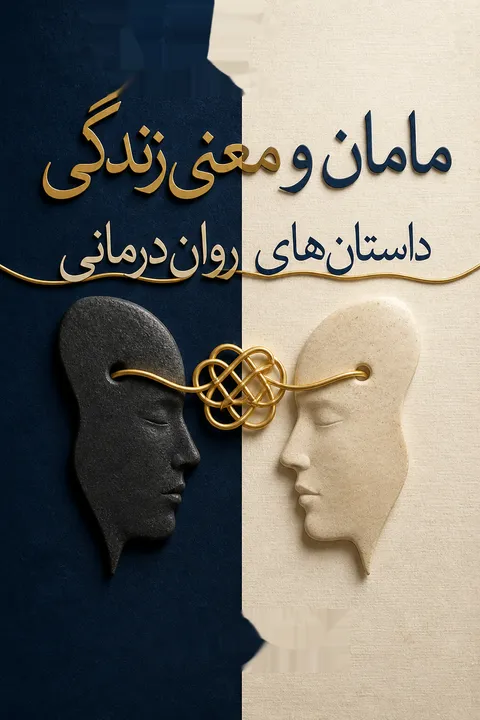
کتاب «ماما و معنای زندگی» با نظرات متفاوتی روبهرو شد. بسیاری از خوانندگان روایتهای یالوم را جذاب و پرمغز یافتند و به بررسی او از موضوعات وجودی همچون مرگ، اندوه و معنا ارج نهادند. برخی ارزش درمانی کتاب و صداقت یالوم در بیان تجربیات شخصیاش را ستودند. با این حال، عدهای داستانها را سطحی یا دشوار برای همذاتپنداری دانستند. ساختار کتاب که شامل شش داستان رواندرمانی، هم واقعی و هم تخیلی است، مورد توجه قرار گرفت. برخی خوانندگان این اثر را بهویژه برای علاقهمندان به روانشناسی توصیه کردند، در حالی که دیگران آن را کمتر تأثیرگذار از آثار دیگر یالوم یافتند.
دیگران نیز خواندهاند
سؤالات متداول
What is Momma and the Meaning of Life by Irvin D. Yalom about?
- Exploration of life and death: The book is a blend of memoir, clinical case studies, and existential inquiry, focusing on the search for meaning, mortality, and the therapeutic process.
- Personal and professional reflections: Yalom draws from his own life, especially his relationship with his mother, and his work with patients to explore themes of grief, loss, and healing.
- Existential psychotherapy lens: The narrative is framed through existential psychology, examining how individuals confront death, suffering, and the need for meaning.
Why should I read Momma and the Meaning of Life by Irvin D. Yalom?
- Unique therapist perspective: Yalom offers rare insight into the vulnerabilities and humanity of the therapist, not just the patient.
- Profound lessons on grief: The book provides valuable guidance on facing death and transforming grief into meaning, relevant to anyone dealing with loss or existential anxiety.
- Inspirational patient stories: Through moving case studies, readers witness courage, spiritual growth, and the complexity of human suffering and healing.
- Philosophical and practical wisdom: The book integrates existential philosophy with practical therapeutic advice, making it useful for both lay readers and professionals.
What are the key takeaways from Momma and the Meaning of Life by Irvin D. Yalom?
- Meaning is self-created: Yalom emphasizes that individuals must invent or discover a life-meaning project to support their existence.
- Confronting death enriches life: Honest engagement with mortality can lead to a richer, more focused life.
- Therapeutic relationship is central: The therapist-patient bond serves as a mirror for attachment, loss, and the human condition.
- Grief is complex and non-linear: Healing from loss involves patience, confrontation of painful emotions, and acceptance of ongoing sorrow.
What are the best quotes from Momma and the Meaning of Life by Irvin D. Yalom and what do they mean?
- "If a way to the Better there be, it exacts a full look at the Worst." — Thomas Hardy. Yalom uses this to stress that true healing requires facing life’s harshest realities.
- "Never send to know for whom the bell tolls; it tolls for thee." — John Donne. This quote highlights the universality of mortality and the interconnectedness of human experience.
- "Some individuals refuse the loan of life in order to avoid the debt of death." — Otto Rank. Yalom uses this to illustrate the existential dilemma of fully engaging in life despite the inevitability of death.
How does Irvin D. Yalom describe his relationship with his mother in Momma and the Meaning of Life?
- Complicated and conflicted: Yalom’s relationship with his mother was marked by enmity, criticism, and a lack of warmth.
- Persistent psychological presence: Even after her death, his mother continued to occupy his thoughts and dreams, symbolizing unresolved emotional ties.
- Lifelong quest for approval: Recurring dreams reveal Yalom’s deep-seated need for validation from his critical mother, shaping his identity and search for meaning.
What is the main focus of grief therapy in Momma and the Meaning of Life by Irvin D. Yalom?
- Deep engagement with grief: The book centers on the long-term therapy of a bereaved woman, Irene, highlighting the emotional journey through loss.
- Existential confrontation: Yalom encourages patients to face the realities of death and loss, believing this confrontation is essential for healing.
- Therapeutic relationship as a tool: The therapist’s authentic engagement and presence are portrayed as the most effective means of facilitating recovery.
What is the significance of the “black ooze” metaphor in Irvin D. Yalom’s therapy work in Momma and the Meaning of Life?
- Symbol of grief rage: The “black ooze” represents Irene’s intense anger and despair, which isolates her from others.
- Therapeutic challenge: Yalom’s task is to confront and contain this rage, demonstrating that it is not dangerous or contaminating.
- Complexity of grief: The metaphor also encompasses feelings of being cursed, poisonous, and overwhelmed by existential dread.
How does Irvin D. Yalom use dreams in the therapy process in Momma and the Meaning of Life?
- Dreams as windows to the unconscious: Yalom views the first dream a patient shares as especially revealing of core conflicts and themes.
- Facilitating insight and trust: Working on dreams together helps build the therapeutic alliance and uncovers deeper layers of grief and resistance.
- Companion dreams and symbolism: Multiple dreams often convey similar messages, providing rich material for exploration and breakthroughs.
What role does the patient Paula play in Momma and the Meaning of Life by Irvin D. Yalom?
- Mentor and spiritual guide: Paula, facing terminal cancer, becomes a teacher to Yalom about death, suffering, and spiritual acceptance.
- Bridge Group creator: She helps establish a therapy group for dying patients, focusing on presence, meditation, and honest confrontation with mortality.
- Symbol of grace and struggle: Paula’s journey illustrates how embracing death can lead to liberation and meaning, while also showing the challenges of maintaining hope.
What are the key therapeutic lessons from Irvin D. Yalom’s work with Irene in Momma and the Meaning of Life?
- Engagement is crucial: The therapist’s willingness to stay close and authentic is the most effective tool in grief therapy.
- Gentle confrontation of denial: Yalom challenges denial as the enemy, encouraging honest engagement with existential realities.
- Here-and-now focus: Addressing immediate relationship dynamics in therapy helps patients explore and change broader relational patterns.
How does Irvin D. Yalom address the therapist’s countertransference and challenges in Momma and the Meaning of Life?
- Improvisation over protocol: Yalom advocates for creating a unique therapy for each patient, rather than following rigid guidelines.
- Managing personal reactions: He acknowledges the difficulty of staying engaged with a patient’s pain and the risk of overinvestment, but sees this as essential for effective therapy.
- Therapist vulnerability: Yalom shares his own uncertainties and emotional responses, emphasizing that therapy is a shared human experience.
How does Momma and the Meaning of Life by Irvin D. Yalom critique contemporary managed-care approaches to psychotherapy?
- Criticism of brief therapy mandates: Yalom argues that managed care’s focus on short-term, symptom-focused therapy undermines the depth needed for effective grief work.
- Dangers of protocol-driven therapy: He warns against rigid protocols that ignore individual patient needs, advocating for improvisation and personalization.
- Emphasis on relationship: Yalom stresses that the patient-therapist relationship is the foundation of successful therapy, not just the application of techniques or information.
درباره نویسنده
کتابهای دیگر از Irvin D. Yalom



دانلود PDF
دانلود EPUB
.epub digital book format is ideal for reading ebooks on phones, tablets, and e-readers.








































