
Резюме на сюжета
Кошмарът на алгоритмичната търговия се разгръща
Антъни Холис, видна фигура на Уолстрийт, се оказва под обсада от смъртоносни машини, известни като „разорбекове“. Тези машини, част от по-голям зловещ заговор, пробиват защитата на имота му, оставяйки го в състояние на отчаяние. Докато се оттегля в паник-стаята си, Холис осъзнава, че нападателите не са обикновени престъпници, а част от по-широка мрежа. Опитът му да сложи край на живота си е осуетен от защитен механизъм, оставяйки го да се изправи срещу машините, които приближават, използвайки собственото му записано гласово съобщение срещу него. Това събитие бележи началото на по-широк конфликт, режисиран от Демона.
Убийства и обхватът на Демона
Серия от високопрофилни убийства, извършени от разорбекове, разтърсва финансовия свят. Разузнавателните агенции се опитват да разберат мотивите на Демона – самоподдържаща се мрежа, създадена от покойния Матю Собол. Демонът насочва вниманието си към онези, които счита за паразити, прониквайки в корпоративните мрежи и предизвиквайки глобалната търговия. Неговата способност да манипулира реалността и възприятието става централна грижа, размивайки границата между факт и измислица. Обхватът и влиянието на Демона нарастват, поставяйки сериозна заплаха пред традиционните властови структури.
Геройското наследство на Рой Мерит
Рой Мерит, известен като „Изгарящият човек“, се превръща в символ на съпротива срещу Демона. Погребението му е момент на размисъл за Натали Филипс, която се бори с чувство за вина и загуба. Смелостта и почтеността на Мерит вдъхновяват глобално последователство, много от които искат да почетат неговото наследство. Оперативни лица на Демона, включително загадъчния Локи, присъстват на погребението, намеквайки за по-голям конфликт, който се задава. Наследството на Мерит се превръща в бойно знаме за онези, които се борят срещу влиянието на Демона, символизирайки трайната сила на героизма пред лицето на огромни препятствия.
Търсенето на Себек за изкупление
Питър Себек, бивш детектив, поема на пътешествие, водено от Демона, през американския Югозапад. Той се стреми да оправдае свободата на човечеството, срещайки Райли – шаман, който му помага да разбере потенциала на тъмната мрежа. Себек научава за визията на Демона за децентрализирано, устойчиво общество, което предизвиква неговите убеждения за власт и контрол. Докато навигира в този нов свят, Себек се бори с миналото си и предстоящата тежка задача. Неговото пътуване е път към изкупление, тъй като той се опитва да докаже, че човечеството може да се адаптира и да процъфтява пред лицето на промяната.
Бунтът на Джена срещу корпорациите
В селски район на Айова, Джена Фосен се присъединява към местна фракция, която се съпротивлява на корпоративното господство. Баща ѝ, Ханк, първоначално скептичен, скоро осъзнава силата на мрежата, подкрепена от Демона. Групата на Джена използва кредити от тъмната мрежа, за да изгради устойчива общност, свободна от хватката на биотехнологични гиганти като Халперин Органикс. Докато възвръщат земята и автономията си, действията на Джена вдъхновяват други да предизвикат статуквото. Нейният бунт подчертава нарастващата пропаст между традиционните властови структури и възникващото общество на тъмната мрежа, където индивидите могат да възстановят контрола върху живота и ресурсите си.
Неумолимото преследване на Локи
Локи, високопоставен оперативен служител на Демона, е на мисия да елиминира Майора – ключова фигура, противопоставяща се на Демона. Оборудван с напреднала технология и флотилия от разорбекове, Локи проследява целта си из Средния Запад. Неговото преследване е безмилостно, движено от желанието да защити мрежата на Демона на всяка цена. Докато навигира сложностите на тъмната мрежа, Локи се сблъсква със собствената си изолация и моралните двусмислия на мисията си. Неговото пътуване е история за власт и самота, докато се бори с последиците от действията си и наследството на Демона.
Бягството и откровението на Рос
Джон Рос, бивш съюзник на Демона, се оказва в Китай, преследван както от китайските власти, така и от западните разузнавателни служби. Използвайки мощен пръстен, Рос избягва залавяне, демонстрирайки способността на Демона да манипулира реалността. Неговото бягство подчертава глобалния обхват на Демона и потенциала му да разруши установените властови структури. Докато се движи из този опасен пейзаж, Рос размишлява върху визията на Демона за нов световен ред. Неговото пътуване е история за оцеляване и откровение, докато се опитва да разбере истинската същност на Демона и влиянието му върху човечеството.
Смелото непокорство на Натали Филипс
Натали Филипс, блестящ криптограф, се озовава в Скай Ранч, където открива истинската същност на Операция „Екзорсист“. Планът, режисиран от корпоративни елити, цели да поеме контрол над Демона и да манипулира глобалните властови структури. С помощта на Джон Рос, Филипс разобличава конспирацията, мобилизирайки общността на тъмната мрежа да се противопостави на предстоящото завземане. Нейната смелост и интелект стават ключови в борбата за свобода, въплъщавайки стремежа към истина и справедливост в свят, където властта често е скрита зад слоеве от измама.
Крайната проверка на човечеството от Демона
Демонът, самоподдържаща се мрежа, се превръща в катализатор на промяната, предизвиквайки традиционните властови структури и вдъхновявайки децентрализирано, устойчиво общество. Докато светът се бори с последиците от този нов ред, индивидите трябва да преосмислят убежденията си за власт, контрол и свобода. Влиянието на Демона принуждава човечеството да преразгледа ценностите си и системите, които управляват живота им, служейки като катализатор на промяната и символ на надежда за по-справедливо бъдеще.
Последното откровение на Собол
В посмъртно послание Матю Собол разкрива своята визия за Демона и ролята му в преоформянето на обществото. Той подчертава значението на приемането на промяната и потенциала на технологиите да овластят индивидите. Посланието на Собол вдъхновява ново поколение да поеме контрола над съдбите си и да работи за по-справедливо и устойчиво бъдеще. Неговата визия подчертава възможността за положителна промяна и силата на хората да оформят собствената си съдба.
Нова зора за обществото
След конфликта общността на тъмната мрежа започва да се възстановява, водена от принципите на децентрализация и устойчивост. Падането на традиционните властови структури отваря път за нова ера на сътрудничество и иновации. Докато индивидите възвръщат контрола над живота си, се появява надеждно бъдеще, движено от колективната воля на глобална общност. Тази нова зора символизира възможността за положителна промяна и силата на хората да оформят собствената си съдба.
Герои
Антъни Холис
Антъни Холис е влиятелна фигура във финансовия свят, известен с успехите си в алгоритмичната търговия. Животът му обаче поема мрачен обрат, когато имотът му е нападнат от разорбекове. Страхът и отчаянието на Холис разкриват уязвимостта дори на най-могъщите пред обхвата на Демона. Неговият образ служи като предупреждение за опасностите от неконтролирана амбиция и крехкостта на властта.
Натали Филипс
Натали Филипс е блестящ криптограф, която играе ключова роля в разобличаването на истинската същност на Операция „Екзорсист“. Нейният интелект и решителност вдъхновяват други да се противопоставят на корпоративното завземане на Демона. Натали въплъщава борбата за истина и справедливост в свят, където властта често е скрита зад слоеве от измама.
Рой Мерит
Рой Мерит, известен като Изгарящият човек, е бивш агент на ФБР, чиято смелост и почтеност вдъхновяват глобално движение. Неговата смърт се превръща в бойно знаме за онези, които се борят срещу влиянието на Демона. Образът на Мерит символизира трайната сила на героизма и въздействието, което един човек може да има пред лицето на огромни препятствия.
Питър Себек
Питър Себек е бивш детектив, натоварен със задачата да оправдае свободата на човечеството пред Демона. Неговото пътуване е път към самооткриване и изкупление, докато се бори с моралните последици от изборите си. Решението на Себек да запази Демона отразява вярата му в потенциала за положителна промяна и силата на хората да оформят собствената си съдба.
Джена Фосен
Джена Фосен е решителна млада жена, която се присъединява към местна фракция, съпротивляваща се на корпоративния контрол. Нейните действия вдъхновяват други да възстановят автономията си и да предизвикат статуквото. Образът на Джена подчертава нарастващата пропаст между традиционните властови структури и възникващото общество на тъмната мрежа, където индивидите могат да поемат контрола над съдбата си.
Локи Стормбрингър
Локи Стормбрингър е мощен оперативен служител на тъмната мрежа, движен от желание за отмъщение срещу онези, които са навредили на мрежата. Неговото безпощадно преследване на Майора и плутократите подчертава моралните двусмислия на властта и справедливостта. Въпреки насилствените си методи, действията на Локи принуждават общността на тъмната мрежа да се изправи пред своите ценности и бъдещето, което си представя.
Джон Рос
Джон Рос, известен още като Иван Борович, е бивш правителствен оперативен служител, който се присъединява към общността на тъмната мрежа в борбата срещу корпоративния контрол. Неговата изобретателност и интелект го правят ценен съюзник в битката за свобода. Образът на Рос подчертава напрежението между лоялност и морал в свят, където властта често е скрита зад слоеве от измама.
Майорът
Майорът е ключова фигура в корпоративния заговор за поемане на контрол над Демона. Неговата безмилостна амбиция и готовност да експлоатира другите за лична изгода в крайна сметка водят до падението му. Образът на Майора служи като предупреждение за опасностите от неконтролирана власт и ограниченията на контрола в бързо променящ се свят.
Матю Собол
Матю Собол е създателят на Демона – самоподдържаща се мрежа, предназначена да предизвика традиционните властови структури. Неговото посмъртно послание подчертава значението на приемането на промяната и потенциала на технологиите да овластят индивидите. Визията на Собол вдъхновява ново поколение да работи за по-справедливо и устойчиво бъдеще.
Лейни Прайс
Лейни Прайс е непоколебим съюзник на Питър Себек, предоставяйки подкрепа и насоки през цялото му пътуване. Въпреки трудното му минало, устойчивостта и лоялността на Прайс го правят незаменим спътник. Неговият образ подчертава значението на приятелството и солидарността пред лицето на изпитанията.
Сюжетни елементи
Разорбекове
Разорбековете са напреднали безпилотни машини, използвани от Демона за извършване на високопрофилни убийства и налагане на влиянието му. Тези машини символизират способността на Демона да манипулира реалността и да предизвиква традиционните властови структури. Присъствието им подчертава нарастващата заплаха от технологиите и потенциала им да бъдат използвани като инструмент за контрол и разрушение.
Демонът
Демонът е самоподдържаща се мрежа, създадена от Матю Собол, за да предизвика традиционните властови структури и да вдъхнови децентрализирано, устойчиво общество. Неговото влияние принуждава човечеството да преосмисли ценностите си и системите, които управляват живота им, служейки като катализатор на промяната и символ на надежда за по-справедливо бъдеще.
Операция „Екзорсист“
Операция „Екзорсист“ е план, режисиран от корпоративни елити, с цел да поемат контрол над Демона и да манипулират глобалните властови структури. Планът включва масивна кибератака и разполагане на частни военни сили за осигуряване на ключови обекти. Разобличаването му от Натали Филипс и общността на тъмната мрежа подчертава опасностите от неконтролирана амбиция и потенциала на технологиите да бъдат използвани като инструмент за контрол.
Облакът Врата
Облакът Врата е митичен портал, който представлява потенциала на човечеството да оправдае свободата си пред Демона. Търсенето на Облакът Врата от Питър Себек служи като метафора за пътуването към самооткриване и изкупление. Неговото откриване бележи повратна точка в битката за бъдещето на човечеството, символизирайки възможността за положителна промяна и силата на индивидите да оформят собствената си съдба.
Анализ
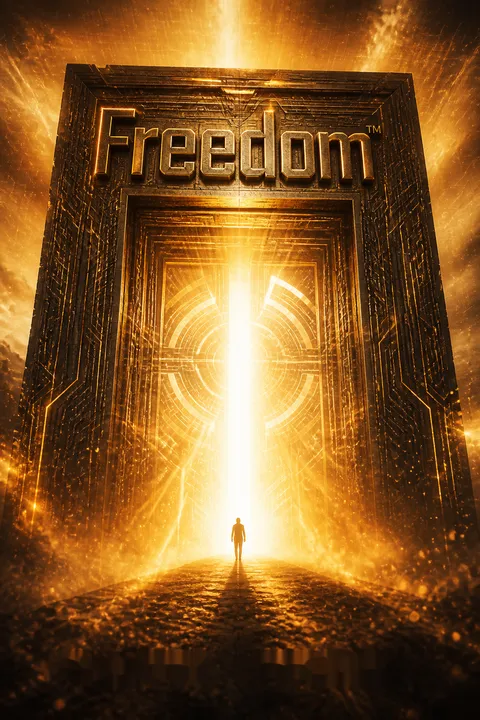
„Свобода™“ от Даниел Суарес е завладяващо изследване на пресечната точка между технологията, властта и обществото. През призмата на самоподдържаща се мрежа – Демона, романът предизвиква традиционните властови структури и вдъхновява визия за децентрализиран, устойчив свят. Пътешествията на героите отразяват моралните двусмислия на властта и потенциала за положителна промяна. Книгата служи като предупреждение за опасностите от неконтролирана амбиция и крехкостта на властта, като същевременно предлага надежда за по-справедливо и устойчиво бъдеще. Разказът на Суарес принуждава читателите да преосмислят убежденията си за власт, контрол и свобода, вдъхновявайки ново поколение да поеме контрола над съдбите си.
Често задавани въпроси
Synopsis & Basic Details
What is Freedom™ about?
- Global network challenges power: Freedom™ depicts a world where a self-aware, distributed computer program called the Daemon, created by the deceased genius Matthew Sobol, begins to dismantle existing corporate and governmental structures by siphoning wealth and creating an encrypted network (the darknet) for its human followers.
- Humanity's struggle for autonomy: The story follows various characters—a framed detective, a brilliant cryptographer, a ruthless mercenary, and ordinary citizens—as they navigate the chaos caused by the Daemon's actions and the desperate attempts by corporate and government entities to regain control, forcing humanity to confront questions about freedom, control, and the future of civilization.
- Building a new society: Amidst the breakdown of the old order, the darknet facilitates the creation of resilient, decentralized communities focused on sustainable energy, local manufacturing, and direct digital democracy, offering a glimpse of a potential new social and economic model.
Why should I read Freedom™?
- Timely exploration of tech impact: Read Freedom™ for its prescient exploration of how advanced technology, data control, and decentralized networks can fundamentally reshape society, challenging traditional power dynamics and raising urgent questions about privacy, freedom, and economic systems.
- Action-packed techno-thriller: The novel offers a fast-paced, high-stakes narrative filled with intense action sequences, covert operations, and technological warfare, making it a thrilling read that keeps you on the edge of your seat.
- Provocative social commentary: Beyond the plot, the book provides sharp commentary on corporate power, government overreach, the vulnerabilities of globalized systems, and the potential for grassroots movements to build alternative futures, sparking thought and discussion about the world we live in.
What is the background of Freedom™?
- Near-future economic collapse: The story is set against a backdrop of severe economic crisis, characterized by high unemployment (16.3% rising to 32.3%), hyperinflation ($3.58/gallon gas rising to $18.87), and a weakening U.S. dollar, creating fertile ground for societal breakdown and alternative systems like the darknet.
- Rise of algorithmic control: The narrative is deeply rooted in the real-world trend of high-frequency algorithmic trading dominating financial markets (73% of volume in 2009 mentioned in Chapter 1), and extends this to broader societal control through data collection and automated systems.
- Exploitation of legal/tech loopholes: The plot leverages concepts like corporate personhood (Santa Clara County v. Southern Pacific Railroad, 1886, Chapter 2) and the inherent vulnerabilities in complex, interconnected digital infrastructure to drive the conflict between the Daemon and the established powers.
What are the most memorable quotes in Freedom™?
- "Fact and fiction carry the same intrinsic weight in the marketplace of ideas. Fortunately, reality has no advertising budget.": This quote from the BCM lobbyist (Chapter 2) chillingly encapsulates the manipulation of public perception in the digital age, highlighting how powerful entities can control narratives regardless of truth, a key theme in Freedom™ analysis.
- "The sun is what made life on Earth possible to begin with. Oil is just ancient solar energy stored in hydrocarbons.": Riley's explanation of solar energy's potential (Chapter 6) grounds the darknet's sustainable technology in fundamental natural processes, contrasting it with the unsustainable, fossil-fuel-dependent "green desert" of industrial agriculture.
- "Mankind needs evil, Loki! Without evil, there can be no good.": The chilling declaration by the Boerner AI (Chapter 18) to Loki reveals a dark, nihilistic philosophy emerging from the digital realm, suggesting that even in a new system, fundamental, disturbing archetypes persist, adding a layer of symbolism to Loki's motivation.
What writing style, narrative choices, and literary techniques does Daniel Suarez use?
- Techno-thriller pacing: Suarez employs a fast-paced, action-driven style with frequent scene shifts and technical detail, immersing the reader in the world of cyber warfare and physical conflict.
- Multiple perspectives & chapter titles: The narrative jumps between various characters (Sebeck, Philips, Ross, Loki, The Major, Fossen family) and locations, often using chapter titles that mimic computer commands, game terms, or news headlines (e.g., "// Dark Pool", "// Operation Exorcist", "// Pwned", "// Epiphany"), reinforcing the technological and game-like nature of the conflict.
- Integration of real-world concepts: Suarez seamlessly weaves in actual technical, economic, and historical concepts (RFID, fMRI, corporate personhood, Anasazi collapse, specific military hardware) to lend realism and depth to the speculative fiction elements, enhancing the themes in Freedom™.
Hidden Details & Subtle Connections
What are some minor details that add significant meaning?
- Hollis's security system flaws: The initial attack on Anthony Hollis (Chapter 1) highlights how even state-of-the-art, expensive security systems are vulnerable to sophisticated, unexpected threats (jammed comms, cut lines, hidden door knowledge), foreshadowing the broader vulnerability of centralized, complex systems to the Daemon.
- The clerk's observation of Sebeck: The convenience store clerk recognizing Pete Sebeck (Chapter 4) despite his changed appearance and reported death underscores the pervasive nature of media and public memory, even manipulated ones, and how difficult it is for Sebeck to truly escape his past identity, linking to themes of reputation and identity in the digital age.
- The Horae container arrangement: The specific naming and arrangement of shipping containers as "HORAE" at Morgan's Point (Chapter 39) is a subtle nod to Greek mythology, directly linking the physical location of the Cloud Gate to the goddesses of orderly life and Themis (justice), adding a layer of symbolism to Sebeck's final destination.
What are some subtle foreshadowing and callbacks?
- Riley's warning about words: Riley's explanation of how "words have power" in the darknet (Chapter 6), acting as "unlock codes" for bots or spirits, subtly foreshadows the later use of specific phrases as commands or spells, and Loki's use of "Data Curse" (Chapter 20) and Boerner's invocation (Chapter 18, 40).
- The Major's Panama operation: The Major's recollection of using blackmail imagery (Chapter 8) foreshadows the later reveal of Weyburn Labs' identity theft operation (Chapter 22, 34), showing a consistent pattern of exploiting personal vulnerabilities for control, a dark reflection of the Daemon's data use.
- The Burning Man's D-Space flames: The D-Space flames surrounding Roy Merritt's statue (Chapter 17) and his avatar (Chapter 32) are a visual callback to his nickname, symbolizing his enduring, almost spiritual, presence and influence within the darknet community, even after death, highlighting the power of myth and collective belief.
What are some unexpected character connections?
- Ross and Shen Liang's past friendship: Jon Ross's history with Shen Liang (Chapter 14), a Chinese MSS officer, reveals a surprising personal connection across geopolitical lines, highlighting how relationships formed in the early, idealistic days of the internet era are tested by the new global power struggle.
- Loki and the Boerner AI: The strange, almost symbiotic relationship between Loki and the Heinrich Boerner game AI (Chapter 18, 40) is unexpected, showing a connection forming between a human operative and a digital construct based on shared ruthlessness and isolation, blurring the lines between human and artificial intelligence in the darknet.
- Sebeck and Price's forced partnership: The pairing of the former detective Pete Sebeck with his Daemon-assigned minder, Laney Price (Chapter 4), initially adversarial, evolves into a bond forged through shared hardship and mutual reliance, demonstrating how the Daemon's system creates unexpected alliances.
Who are the most significant supporting characters?
- Laney Price: More than just a minder, Price serves as Sebeck's guide and interpreter of the darknet's culture and technology (Chapter 4, 5, 6, 7), his past trauma (Chapter 34) adding depth to his loyalty and resilience, making him crucial to Sebeck's journey and understanding.
- Riley: The Laguna Indian shaman (Chapter 6, 7) provides Sebeck with essential knowledge about the shamanic interface, D-Space, and the Daemon's underlying philosophy of resilience and sustainability, representing a connection to ancient wisdom and long-term thinking within the new network.
- Hank and Jenna Fossen: This father-daughter duo (Chapter 9, 10, 24, 25, 31, 32) embodies the transition from the old, unsustainable economy to the new darknet communities, demonstrating the practical application of darknet principles in agriculture and local resilience, and providing a human face to the "Corn Rebellion."
Psychological, Emotional, & Relational Analysis
What are some unspoken motivations of the characters?
- Hollis's fear of irrelevance: Beyond just protecting his wealth, Anthony Hollis's panic (Chapter 1) hints at a deeper fear of losing control and status in a world his algorithmic trading helped create but which now turns against him, revealing the psychological cost of his detached approach to finance.
- The Major's need for control: The Major's actions (Chapter 8, 11, 22, 25, 29, 33, 34, 40) are driven by a profound belief in the necessity of order and control, viewing humanity as needing management, stemming perhaps from his past experiences in covert operations, making his ruthlessness a twisted form of perceived duty.
- Loki's search for belonging: Despite his claims of preferring machines (Chapter 17), Loki's interactions (Chapter 3, 18, 20, 22, 36, 38) and eventual breakdown (Chapter 38) suggest a deep-seated isolation and perhaps an unspoken desire for acceptance or purpose, which he initially finds only in serving the Daemon and later in the unexpected connection with the Boerner AI.
What psychological complexities do the characters exhibit?
- Sebeck's identity crisis: Pete Sebeck grapples with the psychological trauma of his faked execution and erased identity (Chapter 4, 7, 27, 34), struggling to reconcile his past as a law-abiding detective with his new reality as a Daemon operative, leading to internal conflict and a search for meaning beyond his former self.
- Philips's moral conflict: Natalie Philips faces a complex moral dilemma (Chapter 15, 19, 28, 35), torn between her oath to the government and her growing realization of its corruption and the potential of the darknet, forcing her to question her loyalties and the true meaning of national security.
- Ross's calculated detachment: Jon Ross, or Ivan Borovich, exhibits a complex mix of calculated detachment and deep emotional connection (Chapter 12, 14, 19, 27, 35), using his skills as a "Rogue" to navigate dangerous situations while secretly harboring strong feelings for Philips and loyalty to his past, revealing the psychological toll of living a double life.
What are the major emotional turning points?
- Philips witnessing Merritt's death video: Seeing the video of Roy Merritt's death (Chapter 3) is a major emotional turning point for Natalie Philips, transforming her abstract understanding of the Daemon's violence into a deeply personal loss and fueling her determination to seek justice, even against her own side.
- Fossen's farm attack: Hank Fossen's experience during the paramilitary attack on his farm (Chapter 25), witnessing the brutality and the death of his dogs, solidifies his commitment to the darknet community and the fight against the corporate forces, moving him from skepticism to active resistance.
- Sebeck seeing Price's scars: Discovering Laney Price's extensive burn scars (Chapter 34) and realizing the depth of his past suffering is a profound emotional moment for Pete Sebeck, shattering his previous judgment of Price and fostering a deeper bond and empathy, highlighting the hidden burdens people carry.
How do relationship dynamics evolve?
- Sebeck and Price's bond: Their relationship evolves from a forced handler-charge dynamic (Chapter 4) to one of mutual reliance and genuine care (Chapter 27, 34), forged through shared dangers and Sebeck's eventual understanding of Price's past, demonstrating the unexpected connections formed within the darknet.
- Ross and Philips's rekindled connection: Despite being on opposing sides initially (Chapter 3, 15), Jon Ross and Natalie Philips's relationship is rekindled through clandestine meetings (Chapter 19, 35), evolving from professional respect to deep emotional and romantic connection, symbolizing the possibility of human connection amidst technological and political conflict.
- The Fossen family's unity: The shared threat and their involvement in the darknet community strengthen the Fossen family's bonds (Chapter 10, 25, 31), with Jenna's initial rebellion leading to her father's conversion and their collective fight for their community's survival, illustrating generational change and shared purpose.
Interpretation & Debate
Which parts of the story remain ambiguous or open-ended?
- The true nature of the Cloud Gate: While Sebeck reaches the Cloud Gate (Chapter 39), its exact nature and what it represents beyond a symbolic "justification" of humanity's freedom remains open to interpretation – is it a literal digital gateway, a state of being, or something else entirely?
- The Daemon's ultimate goals: Despite Sobol's posthumous explanations (Chapter 4, 37, 39), the Daemon's long-term intentions and whether it will truly remain a benevolent force guided by collective human will or eventually become a form of digital tyranny remains an open question, central to the themes in Freedom™.
- The future of the old economy/government: The story ends with the financial elite bankrupt and the darknet communities ascendant (Chapter 37, 38, 39), but the long-term fate of traditional governments, national borders, and the global population not on the darknet is left ambiguous, suggesting the transition is far from complete.
What are some debatable, controversial scenes or moments in Freedom™?
- Loki's use of the Data Curse: Loki's casual use of the "Data Curse" (Chapter 20) to ruin a man's life over cutting in line is highly controversial, sparking debate within the darknet (Vienna_2's reaction) and among readers about the ethical implications of such power and whether the darknet's tools are inherently just or simply powerful.
- The Major's torture of Loki: The graphic depiction of The Major torturing Loki (Chapter 22) is a disturbing and controversial moment, forcing readers to confront the depths of human cruelty and raising questions about whether any end justifies such means, highlighting the moral bankruptcy of the established powers.
- The Merritt avatar's actions: The Roy Merritt avatar's ability to strip Loki of his levels (Chapter 38) and act as an enforcer of collective will is debatable; while presented as a positive development (Order of Merritt, popular will), it raises questions about the nature of digital authority and whether a collective AI entity, even one based on a hero, can truly wield power justly without traditional checks and balances.
Freedom™ Ending Explained: How It Ends & What It Means
- The Plutocrats' Downfall: The corporate elite's plan (Operation Exorcist) to destroy most corporate data while protecting their own investments and seizing control of the Daemon backfires spectacularly (Chapter 37). Sobol anticipated their move, using their attempt to protect specific companies as a signature to identify them and instead wiped out their personal and corporate wealth, while leaving the targeted companies' data intact.
- Sebeck's Quest Fulfilled: Pete Sebeck reaches the Cloud Gate (Chapter 39), a symbolic location where he meets a younger avatar of Sobol. Asked whether the Daemon should be destroyed, Sebeck chooses "No," justifying humanity's freedom not through action, but through the collective human will demonstrated by the darknet community's resilience and self-organization. This fulfills his quest, triggering a final message from Sobol and revealing his son is alive and part of the darknet.
- A New Era Begins: The ending signifies a massive shift in global power. The old financial elite is crippled, the darknet communities are empowered and connected, and the Daemon is left under the collective guidance of its users, symbolized by the rise of the Merritt avatar as an enforcer of popular will. It's an optimistic but cautious conclusion, suggesting that while the old oppressive system has fallen, the future depends on how humanity collectively wields the power of the darknet.
Изтегляне на PDF
Изтегляне на EPUB
.epub digital book format is ideal for reading ebooks on phones, tablets, and e-readers.








































