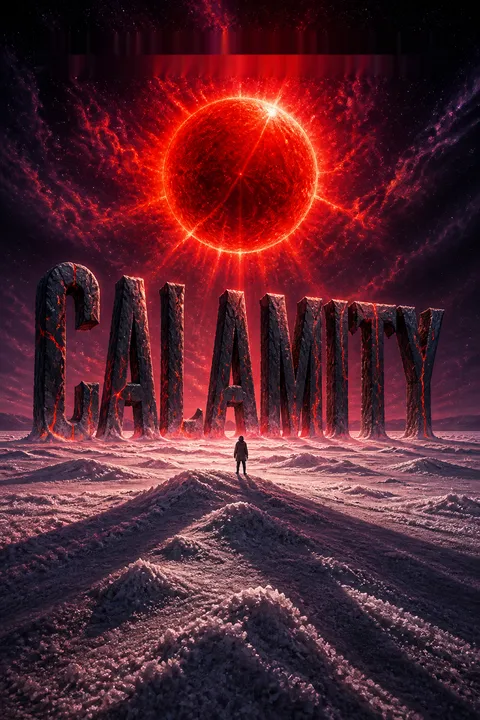

Summary Temporarily Unavailable
This summary is temporarily unavailable and is currently being updated. You can still explore the FAQs and other metadata below.
Plot Summary
Red Star, Hidden Scars
David Charleston, haunted by the red star Calamity and the trauma of his past, leads the last cell of the Reckoners. The world is ruled by Epics—superpowered tyrants corrupted by their own abilities. David's narration reveals his internal scars, the loss of his father, and the burden of leadership after Prof, their mentor, succumbs to his own Epic darkness. The Reckoners are fractured, hunted, and desperate, but David's resolve is steeled by the knowledge that something fundamental about the Epics' powers—and their weaknesses—remains undiscovered. The emotional weight of loss and the ever-present threat of Calamity's gaze set the tone for a story about fear, hope, and the search for redemption.
Reckoners on the Run
The Reckoners, low on resources and hunted by Prof, attempt a daring infiltration of Knighthawk Foundry, the world's source of Epic-derived technology. David's plan is risky, relying on stealth, distraction, and the hope of stealing motivators—devices made from Epic cells. The team's camaraderie is tested as they navigate deadly drones, booby-trapped labs, and the grotesque reality of technology built from human remains. The heist is both a literal and symbolic struggle for survival, as David faces his own limitations as a leader and the team's reliance on Epic powers. The mission's outcome is uncertain, but it sets in motion a chain of events that will force the Reckoners to confront the true nature of power and corruption.
Knighthawk's Grim Bargain
After a violent encounter, the Reckoners are forced into an uneasy alliance with Dean Knighthawk, the paralyzed genius behind Epic technology. Knighthawk's home is filled with mementos of the dead, and his motivations are as murky as his methods. He reveals secrets about motivators, the process of harvesting Epic powers, and the dangers of using living Epics as sources. The team learns that weaknesses are tied to fears, and that overcoming them can drive back the darkness. Knighthawk's own tragedy—his wife's fall to Epic madness—mirrors Prof's descent, and his warning is clear: hope is fragile, and redemption is rare. The Reckoners leave with new tools, but also with the knowledge that saving Prof will require more than technology.
Shadows and Weaknesses
Megan, the team's Epic, experiments with her reality-bending abilities, revealing the existence of parallel worlds and the possibility of alternate outcomes. David and Megan's relationship deepens as they confront the psychological toll of power and the fear of losing oneself. The team's research into Epic weaknesses—rooted in personal fears—offers a glimmer of hope for reversing Prof's corruption. Yet, the boundaries between illusion and reality blur, and the cost of using Epic powers becomes increasingly apparent. The Reckoners' quest is no longer just about defeating Prof, but about understanding the true nature of heroism and the possibility of change.
The City of Salt
The Reckoners infiltrate Ildithia, a city made of salt that constantly regenerates and moves across the landscape. The city's unique structure reflects the instability of Epic rule—families and gangs vie for power, and survival depends on alliances and adaptability. Prof, now Limelight, has taken control, but faces resistance from other Epics, notably Larcener. The team navigates the city's politics, posing as refugees and workers, while searching for Prof's weakness and a way to save him. The city's cycles of decay and renewal mirror the Reckoners' own struggle to rebuild hope in a world shaped by fear.
Limelight Ascendant
Prof's transformation into Limelight is complete—he rules Ildithia with ruthless efficiency, hunting down rival Epics and enforcing his will through displays of overwhelming force. The Reckoners witness his brutality firsthand, as he executes dissenters and manipulates the city's population. Yet, glimpses of humanity remain, suggesting that Prof's true self is not entirely lost. The team's attempts to gather intelligence and avoid detection are complicated by Prof's paranoia and the ever-present threat of exposure. The emotional stakes rise as the Reckoners realize that saving Prof may require sacrificing their own safety—and possibly their lives.
Larcener's Reluctant Alliance
Larcener, the city's former ruler and a powerful Epic who can steal abilities, seeks refuge with the Reckoners. His presence is both a liability and an opportunity—he is arrogant, self-absorbed, and unpredictable, but his knowledge and powers could be crucial in confronting Prof. The team negotiates a fragile truce, setting strict boundaries while probing for information about Epic psychology and the mechanics of power transfer. Larcener's cynicism and disdain for humanity challenge David's idealism, forcing the Reckoners to confront uncomfortable truths about the nature of evil and the possibility of redemption.
Tunnels Beneath Ildithia
The Reckoners discover a network of tunnels beneath Ildithia, remnants of an Epic's madness, and choose them as the battleground for their showdown with Prof. They train with new technology, strategize escape routes, and set traps, knowing that Prof's powers—and his cunning—make him nearly unbeatable. The team's unity is tested as they debate the ethics of using Epic abilities and the risks of confronting Prof directly. The looming deadline—Prof's threat to destroy Newcago—forces them to accelerate their plans. The tunnels become a metaphor for the hidden fears and unresolved conflicts that must be faced before true change is possible.
The Trap is Sprung
The Reckoners lure Prof into the tunnels, using motivators to draw his attention and force a confrontation. The battle is chaotic and brutal—forcefields, tensors, and illusions clash in a display of raw power. Cody, wearing the tensor suit, and Abraham with the rtich, fight valiantly but are outmatched by Prof's experience and rage. Megan's illusions and reality-warping abilities provide crucial support, but the team is pushed to the brink. The fight exposes the limits of technology and the importance of understanding one's own fears. As the battle reaches its climax, the Reckoners must decide whether to kill Prof or risk everything to save him.
Facing the Fallen
In the aftermath of the battle, Prof is finally brought low—not by force, but by confronting his deepest fear: the possibility of failure despite overwhelming power. Tia's death and the Reckoners' refusal to kill him force Prof to face the consequences of his actions. Larcener intervenes, stripping Prof of his powers and leaving him broken but alive. The victory is bittersweet—Prof is saved, but at great cost, and the darkness that haunts Epics is revealed to be more complex than anyone realized. The Reckoners are left to grapple with the moral ambiguity of their choices and the uncertain future that lies ahead.
The True Fear Revealed
David is transported to Calamity's domain—a glass space station orbiting Earth—where he discovers that Calamity is not just a force, but a being: Larcener, who has lived among them all along. Calamity's hatred of humanity and fear of the world have infected every Epic, magnifying their worst traits. The darkness is not inherent, but imposed. David's confrontation with Calamity is both physical and philosophical, challenging the very foundation of power, fear, and choice. The revelation that confronting and owning one's fears can sever Calamity's influence offers a path to redemption—not just for Epics, but for all.
Calamity Unmasked
With Obliteration's help, David is brought to Calamity's lair, armed with a bomb made from Epic power. The attempt to destroy Calamity fails—he is immune to his own abilities. Megan and Prof join the fight, and together they force Calamity to witness a world where Epics are not corrupted—a parallel reality where David's father is the hero Steelheart. The emotional impact of forgiveness and the demonstration of inherent goodness break Calamity's resolve. He fades away, his influence over the world severed. The Reckoners' victory is not just over a villain, but over the darkness within themselves.
Parallel Worlds Collide
The boundaries between worlds blur as Megan's powers reach their zenith, allowing the Reckoners to draw strength and inspiration from alternate realities. David's reunion with his father in another world offers closure and healing, while the existence of worlds without Calamity's darkness proves that change is possible. The Reckoners return to Earth, forever changed by their experiences. Prof, now free from corruption, must live with the consequences of his actions, but the possibility of redemption remains. The team's journey is a testament to the power of choice, the resilience of hope, and the enduring strength of human connection.
The End of Darkness
With Calamity gone, the darkness that plagued Epics dissipates. Megan, Prof, and others are free to use their powers without fear of corruption. The world is left to rebuild, facing new challenges but also new opportunities. The Reckoners, battered but unbroken, look to the future with cautious optimism. The lessons learned—about fear, responsibility, and the nature of evil—resonate beyond their own story, offering hope that even the most broken can be healed. The end of darkness is not the end of struggle, but the beginning of a new era.
Heroes Will Come
In the aftermath, David reflects on the journey that brought him from vengeance to understanding, from hatred to forgiveness. The reunion with his father in a parallel world affirms the possibility of change, while the survival and growth of the Reckoners symbolize the resilience of the human spirit. The story ends not with a final victory, but with the promise that heroes will come—not as saviors from above, but as ordinary people who choose to face their fears and fight for what is right. The legacy of the Reckoners is one of hope, courage, and the belief that even in the darkest times, light can be found.
Analysis
Calamity is a bold, emotionally charged conclusion to the Reckoners trilogy, transforming the superhero genre into a meditation on fear, power, and redemption. Sanderson's narrative interrogates the nature of evil—not as an inherent trait, but as a contagion born of fear and externalized through power. The revelation that Epic weaknesses are rooted in personal terror, and that overcoming them can drive back the darkness, reframes the struggle as one of self-knowledge and courage. The use of parallel worlds and the unmasking of Calamity as both god and coward challenge the inevitability of fate and the allure of absolute power. The story's emotional core lies in the relationships between the Reckoners, the cost of forgiveness, and the belief that even the most broken can be healed. In a world shaped by trauma and loss, Calamity offers a message of hope: that heroes are not born, but made—through choice, resilience, and the willingness to face one's own darkness. The novel's legacy is a call to action, urging readers to believe in the possibility of change, the necessity of compassion, and the enduring power of hope.
Last updated:
Report IssueReview Summary
Calamity received mixed reviews as the finale to The Reckoners trilogy. Many readers enjoyed the action, humor, and character development, particularly David and Megan's relationship. However, some felt the ending was rushed and left important questions unanswered. The new setting of Ildithia, a moving salt city, intrigued readers. While some praised Sanderson's storytelling and world-building, others found the villain Calamity underwhelming and the resolution unsatisfying. Despite criticisms, most fans still found the book entertaining and a worthwhile conclusion to the series.
People Also Read


Characters
David Charleston
David is the heart of the Reckoners, driven by the trauma of his father's death at the hands of Steelheart and a lifelong obsession with understanding Epics. His journey is one of transformation—from vengeance-seeker to compassionate leader, from outsider to the glue that holds the team together. David's analytical mind and relentless curiosity make him both a brilliant strategist and a sometimes awkward companion. His relationship with Megan grounds him, forcing him to confront his own fears and the moral ambiguity of power. David's greatest strength is his refusal to give up hope, even when faced with overwhelming odds. His arc is a testament to the power of choice, forgiveness, and the belief that anyone—even a broken world—can be redeemed.
Megan Tarash (Firefight)
Megan is a dimensionalist Epic whose powers allow her to manipulate reality and draw on parallel worlds. Her struggle with the darkness that corrupts Epics is deeply personal—her fear of fire is both her weakness and her crucible. Megan's journey is one of self-acceptance, as she learns to own her powers and confront her fears without losing herself. Her relationship with David is fraught with tension, vulnerability, and fierce loyalty. Megan's ability to bridge worlds—both literally and emotionally—makes her the key to the Reckoners' ultimate victory. Her arc explores the cost of power, the possibility of change, and the courage required to face one's own demons.
Jonathan Phaedrus (Prof/Limelight)
Prof is the Reckoners' founder and David's mentor, a High Epic whose powers include forcefields, healing, and disintegration. His descent into darkness is both tragic and inevitable, driven by a deep-seated fear of failure and the burden of responsibility. Prof's struggle is the story's emotional core—his refusal to fully embrace his powers mirrors his reluctance to risk everything for change. The revelation that his true weakness is the fear of failing despite overwhelming power is both poignant and universal. Prof's redemption is hard-won, requiring him to confront his deepest insecurities and accept the consequences of his actions. His arc is a meditation on leadership, guilt, and the possibility of forgiveness.
Dean Knighthawk
Knighthawk is the paralyzed genius behind Epic-derived technology, a man whose brilliance is matched only by his bitterness. His home is a mausoleum of memories, filled with the remnants of fallen Epics and the preserved body of his wife, who succumbed to Epic madness. Knighthawk's pragmatism and moral ambiguity make him both an invaluable ally and a cautionary figure. He embodies the dangers of obsession and the cost of survival in a broken world. His interactions with the Reckoners reveal the limits of technology and the necessity of human connection. Knighthawk's arc is one of reluctant hope, as he chooses to aid the Reckoners in their quest for redemption.
Larcener (Calamity)
Larcener is introduced as a lazy, self-absorbed Epic who can steal powers, but is ultimately revealed to be Calamity—the source of all Epic abilities and the true antagonist. His disdain for humanity and fear of the world are the root of the darkness that corrupts Epics. Larcener's interactions with the Reckoners are laced with cynicism, but also with a strange vulnerability. His ultimate unmasking as Calamity reframes the entire narrative, exposing the external origin of evil and the possibility of change. Larcener's arc is a study in self-loathing, curiosity, and the destructive power of fear.
Tia
Tia is the Reckoners' second-in-command, a brilliant planner and Prof's closest confidante. Her disappearance and eventual death at Prof's hands are a devastating blow to the team. Tia's arc is one of sacrifice—she is willing to risk everything to save Prof, even as she recognizes the limits of her own influence. Her relationship with David is marked by mutual respect and the shared burden of leadership. Tia's legacy is the plan that enables the Reckoners to confront Prof and the insight that his true weakness is fear itself.
Abraham
Abraham is the team's calm, disciplined point man, a former Canadian special forces operative and a member of the Faithful. His quiet strength and unwavering loyalty make him the team's moral center. Abraham's expertise with weapons and technology is matched by his compassion and wisdom. He is often the voice of reason, urging caution and reflection. Abraham's arc is one of endurance—he survives physical and emotional wounds, but remains committed to the Reckoners' cause. His faith in the possibility of good Epics is both a comfort and a challenge to the team.
Mizzy
Mizzy is the team's youngest member, a brilliant engineer with boundless energy and a thirst for adventure. Her optimism and humor provide much-needed levity, but she is also haunted by the loss of friends and the fear of becoming an Epic herself. Mizzy's arc is one of growth—she learns to channel her enthusiasm into leadership and technical innovation. Her willingness to question authority and challenge assumptions makes her a catalyst for change within the team.
Cody
Cody is the team's sniper and resident storyteller, a man whose tall tales and Scottish persona mask a deep sense of duty and competence. His expertise with weapons and tactics is invaluable in battle, but his true strength lies in his ability to keep the team grounded and connected. Cody's arc is one of quiet heroism—he faces danger with humor and resilience, and his loyalty to the Reckoners is unwavering.
Obliteration
Obliteration is a High Epic whose powers include teleportation and city-destroying explosions. His madness is rooted in a warped sense of religious destiny—he believes that only by destroying humanity can the world be saved from Epics. Obliteration's interactions with David are both chilling and strangely respectful; he recognizes a kindred spirit in the pursuit of purpose. His arc is a meditation on fanaticism, the allure of power, and the possibility of change—even for the most broken.
Plot Devices
Motivators and Epic Technology
Motivators—devices made from Epic cells—are central to the Reckoners' struggle. They represent both the hope of fighting fire with fire and the moral ambiguity of using the enemy's power. The process of creating motivators is fraught with danger, especially when using living Epics as sources. The technology is a double-edged sword, offering salvation but also perpetuating dependence on the very thing the Reckoners seek to destroy. The narrative structure uses motivators as both MacGuffins and metaphors for the cost of power.
Weaknesses and Fears
The revelation that Epic weaknesses are tied to personal fears is the story's central plot device. Overcoming these fears can drive back the darkness, but only if the Epic truly confronts and owns them. This device is used to explore themes of vulnerability, responsibility, and the possibility of change. Foreshadowing is employed through recurring nightmares, character backstories, and the gradual unraveling of Prof's psyche. The device also serves as a commentary on the nature of evil and the power of self-awareness.
Parallel Worlds and Dimensional Shadows
Megan's ability to access parallel worlds introduces a narrative structure that allows for exploration of alternate outcomes, the existence of hope, and the possibility of redemption. The device is used to provide both literal and metaphorical escape routes, as well as to challenge the inevitability of fate. The collision of worlds in the climax underscores the story's central message: that change is possible, and that even the darkest reality contains the seeds of light.
The Red Star Calamity
Calamity's presence as a literal star in the sky is both a symbol and a plot engine. Its influence is revealed to be the source of Epic powers and the darkness that corrupts them. The gradual unmasking of Calamity as Larcener, and the revelation that his own fears and hatred are the true source of evil, reframes the entire narrative. The device is used to externalize internal struggles, making the battle against evil both a personal and cosmic conflict.
Narrative Structure and Perspective
The story is told through David's first-person perspective, allowing for deep psychological insight and emotional immediacy. The structure alternates between action, introspection, and dialogue, maintaining a brisk pace while delving into complex themes. The use of recurring motifs—such as metaphors, nightmares, and the symbol of the Faithful—creates cohesion and reinforces the story's central messages.
The Reckoners Series Series

About the Author
Brandon Sanderson is a prolific fantasy and science fiction author known for his intricate magic systems and world-building. He has written numerous bestselling series, including Mistborn and The Stormlight Archive, set in his interconnected Cosmere universe. Sanderson also writes young adult fiction, including The Reckoners trilogy. He completed Robert Jordan's Wheel of Time series and has garnered critical acclaim, including a Hugo Award. Sanderson's works span various subgenres and age groups, from epic fantasy to humorous middle-grade novels. He frequently interacts with fans, providing behind-the-scenes content and updates on his website. Sanderson's ambitious writing schedule includes multiple ongoing series and standalone novels.
Other books by Brandon Sanderson

Download PDF
Download EPUB
.epub digital book format is ideal for reading ebooks on phones, tablets, and e-readers.








































