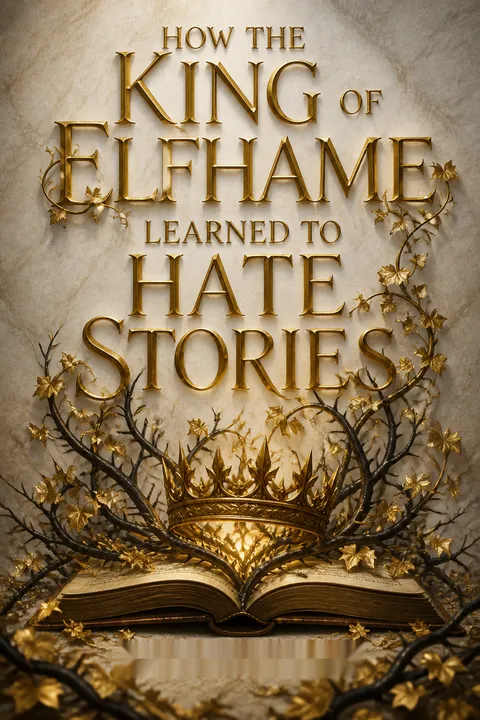
Plot Summary
Cat Milk and Contempt
Born the youngest prince of Elfhame, Cardan is raised on cat milk and contempt, shaped by a prophecy and a family that alternately adores and despises him. His relationship with Jude, the mortal High Queen, is both improbable and intoxicating, marked by mutual daring and a shared taste for danger. Cardan's self-awareness is acute: he recognizes the absurdity of Jude's love for him, just as he recognizes his own transformation from villain to king. Their partnership is a dance of risk and reward, each pushing the other to confront monsters—both literal and metaphorical. Cardan's journey begins with the question of how he became who he is, and whether he can ever escape the stories told about him.
The Troll Woman's Tale
As a child, Cardan encounters Aslog, a troll woman wronged by the High King. She tells him a story about a boy cursed with a heart of stone for his wicked tongue, who can feel nothing until love—and fear—break the curse, only to be destroyed by the monster he sought to win. The tale is ambiguous, its lesson elusive: is it better to feel nothing, or to risk pain for the chance of love? Cardan, both frightened and fascinated, internalizes the story's darkness. Aslog's parable becomes a touchstone for Cardan's understanding of himself and the world, foreshadowing the choices he will make and the dangers of both cruelty and vulnerability.
Lessons in Villainy
Sent to live with his brother Balekin, Cardan is subjected to humiliation and violence, forced to submit to a mortal servant's lash. This crucible of pain forges his heart not into stone, but into fire—burning with hatred for his family, mortals, and Elfhame itself. Under Balekin's tutelage, Cardan learns to mask his wounds with extravagance and vice, becoming a creature of sharp edges and poisonous charm. He forms alliances with other young courtiers—Valerian, Locke, and Nicasia—embracing villainy as both armor and weapon. Yet beneath the surface, Cardan's longing for acceptance and his capacity for pain remain, shaping his every action.
The Undersea's Allure
Cardan's relationship with Nicasia, the Undersea princess, offers him an escape from Elfhame's politics and his own insignificance. Enchanted by her promise of power and belonging, he dreams of ruling beneath the waves. But a journey into the Undersea reveals its alien coldness and his own powerlessness there. The experience is suffocating, stripping away his illusions. Cardan realizes that even in a new kingdom, he cannot escape himself or the burdens of his heart. The Undersea's allure fades, replaced by a deeper understanding of what he truly desires—and what he fears to lose.
A Heart of Fire
Cardan's embrace of villainy is tested when he is betrayed by those closest to him—Nicasia and Locke. Their infidelity shatters his fragile sense of belonging, turning his heart from stone to glass, easily broken and painfully sharp. In the aftermath, Cardan lashes out, seeking solace in excess and cruelty, but finding only emptiness. His pain is both a punishment and a catalyst, forcing him to confront the limits of his own defenses. The lesson of Aslog's story returns: to feel is to risk destruction, but numbness is its own kind of death.
The Mortal Girls Arrive
The arrival of the mortal twins, Jude and Taryn, at the palace school unsettles Cardan's carefully constructed world. Jude's defiance and skill challenge his sense of superiority, igniting both resentment and fascination. Unlike the ensorcelled mortals he has known, Jude is alive, alert, and unafraid to stand against him. Her presence exposes the hollowness of Cardan's cruelty and the vulnerability beneath his mask. The dynamic between them becomes a battleground of wills, each testing the other's limits, each haunted by the possibility of something more than hatred.
Friendship, Betrayal, and Glass
Cardan's circle of friends—Valerian, Locke, Nicasia—becomes a crucible for betrayal and heartbreak. Locke's seduction of Nicasia, and later of one of the mortal girls, fractures the group, exposing the fragility of their alliances. Cardan's response is violent and desperate, a struggle to reclaim dignity and control. The pain of betrayal is acute, shattering his self-image and leaving him adrift. Yet even as he spirals into excess, Cardan cannot escape the pull of Jude's contempt and the challenge she represents. The glass of his heart is both weapon and wound.
The Monster Bride's Curse
The tale of the monster bride and the boy with the heart of stone recurs throughout Cardan's life, each retelling shifting its meaning. Aslog's story becomes a mirror for Cardan's own journey, reflecting his fears of love, power, and vulnerability. The curse is not merely a fairy tale, but a metaphor for the bargains Cardan makes with himself and others—the price of safety, the risk of feeling. Each version of the story offers a different lesson: that love can redeem, that fear can save, that stories themselves are tools for survival and change.
Stories That Change
Cardan comes to understand that stories are not fixed—they evolve with their tellers and listeners. The Folk, unable to lie, use stories to express truths that cannot be spoken directly. Cardan learns to wield narrative as both shield and sword, shaping his own legend and the perceptions of others. Yet he also recognizes the danger: stories can trap as easily as they can free, justifying cruelty or excusing cowardice. The lesson is that to change one's story is to change oneself, but not without cost.
The Mortal World Beckons
Cardan and Jude are drawn into a conflict in the mortal world, summoned by Jude's old employer to confront a monster threatening the solitary Folk. The journey is both literal and symbolic—a test of their partnership and their willingness to confront the past. Cardan, out of his element, must navigate a world of iron and uncertainty, relying on wit and borrowed strength. The quest forces him to confront his own limitations and the consequences of his choices, as well as the enduring power of old stories and old wounds.
The Trap in the Woods
In the mortal woods, Cardan faces Aslog once more, now a hunted monster herself. She traps him with iron, stripping away his magic and forcing him to rely on cunning and narrative. The encounter is a reckoning with the past—the wrongs done to Aslog, the lessons she tried to teach, and the ways both have changed. Cardan's vulnerability is exposed, but so is his growth: he chooses to negotiate, to tell a story, to seek a resolution that is neither victory nor defeat, but transformation.
A Story for Survival
Trapped and wounded, Cardan spins a new version of Aslog's story, blending truth and invention to buy time and shift the balance. The act of storytelling becomes an act of survival, a way to assert agency even in weakness. Cardan's narrative is both confession and argument, an attempt to persuade Aslog—and himself—that change is possible, that hearts can be remade, that endings are not inevitable. The story is a bridge between enemies, a plea for mercy, and a declaration of identity.
Sunrise and Stone
As dawn approaches, Cardan's gambit succeeds: Aslog is turned to stone by the rising sun, spared death but imprisoned by her own choices. Cardan, wounded but alive, is rescued by Jude, who recognizes both his recklessness and his courage. The encounter is bittersweet—a victory won through empathy and risk, not violence. Cardan's willingness to play the hero, however reluctantly, marks a turning point in his journey. The past is not erased, but its power is diminished; the future, uncertain but open.
The Hero's Reluctance
Cardan reflects on his actions, rejecting the mantle of heroism even as he acknowledges its necessity. He and Jude agree that their roles as monarchs are as much performance as duty, and that true power lies in the ability to choose one's story. Cardan's reluctance is not cowardice, but a recognition of complexity—the impossibility of simple solutions, the inevitability of pain, the value of partnership. The lesson is humility, and the courage to keep trying, even when the outcome is uncertain.
Begging and Becoming
In the aftermath, Cardan and Jude share a moment of intimacy and understanding. Their relationship, forged in conflict and tempered by mutual respect, becomes a source of strength. Cardan's willingness to beg—not for mercy, but for connection—signals his acceptance of vulnerability as a necessary part of love. The journey from contempt to trust is incomplete, but ongoing. The story ends not with triumph, but with the promise of growth and the recognition that to have a heart, however terrible, is to be alive.
The King Who Hated Stories
Cardan's journey comes full circle: from a boy who hated stories for their power to wound, to a king who understands their power to heal and transform. He recognizes that stories are not prisons, but possibilities—tools for change, for connection, for redemption. The final lesson is that to hate stories is to hate oneself, for we are all made of stories, and only by embracing them can we become more than the sum of our wounds.
Analysis
A meditation on power, vulnerability, and the stories we tell ourselves"How the King of Elfhame Learned to Hate Stories" is both a character study and a meta-narrative about the dangers and possibilities of storytelling. Holly Black uses Cardan's journey—from neglected prince to reluctant king—to explore how trauma shapes identity, how cruelty can be both shield and prison, and how love requires the courage to risk pain. The recurring parables serve as both warnings and invitations: to feel is to suffer, but numbness is a living death. The book interrogates the roles we play—villain, hero, victim, lover—and the ways we can rewrite our own narratives, even when trapped by the expectations of others. Ultimately, the lesson is that stories are not merely entertainment or escape; they are the means by which we understand ourselves and each other. To hate stories is to deny the possibility of change, connection, and redemption. Cardan's acceptance of his own story—flawed, painful, unfinished—is an act of bravery, and an invitation to readers to do the same.
Review Summary
How the King of Elfhame Learned to Hate Stories received overwhelmingly positive reviews, with readers praising Cardan's character development, the beautiful illustrations, and the fairy tale-like atmosphere. Many appreciated gaining insight into Cardan's perspective and backstory. Some fans wished for more Jude and Cardan interactions, while others found the novella too short. Overall, readers were thrilled to return to the world of Elfhame and experience Cardan's journey through short, interconnected stories. The book was widely considered a must-read for fans of the series.
People Also Read




Characters
Cardan Greenbriar
Cardan is the youngest prince of Elfhame, shaped by neglect, cruelty, and a prophecy that marks him as a potential destroyer. His early life is defined by emotional deprivation and humiliation, leading him to adopt villainy as both shield and weapon. Cardan's relationships—with his family, his friends, and especially Jude—are fraught with power struggles, longing, and betrayal. Psychologically, he is a study in contradictions: proud yet insecure, cruel yet capable of deep feeling, desperate for love yet terrified of vulnerability. Over the course of the story, Cardan's journey is one of painful growth: he learns to risk his heart, to rewrite his own narrative, and to accept that true strength lies in embracing both his flaws and his capacity for change.
Jude Duarte
Jude is a mortal girl raised in Elfhame, determined to carve out a place for herself in a world that despises her. Her relationship with Cardan is adversarial, passionate, and ultimately transformative for them both. Jude's defining traits are her courage, stubbornness, and relentless drive to prove herself. She is haunted by a sense of inadequacy and a need to earn her crown over and over. Psychologically, Jude is both vulnerable and unyielding, shaped by trauma but refusing to be defined by it. Her dynamic with Cardan is a dance of mutual challenge and support, each pushing the other to confront their deepest fears. Jude's development is marked by her willingness to risk everything for love, justice, and her own sense of self-worth.
Aslog of the West
Aslog is a troll woman whose life is defined by betrayal and a quest for justice. Her stories serve as parables for Cardan, challenging him to question the meaning of cruelty, love, and power. Aslog's relationship with Cardan is complex: she is both adversary and mentor, her tales shaping his understanding of himself and the world. Psychologically, Aslog embodies the consequences of injustice and the dangers of bitterness. Her ultimate fate—turned to stone, yet spared death—mirrors the ambiguous lessons of her stories: that survival often requires transformation, and that mercy is a form of power.
Nicasia
Nicasia is both Cardan's lover and a symbol of the temptations of escape and power. Her relationship with Cardan is passionate but ultimately unsatisfying, marked by mutual use and betrayal. Nicasia's contempt for the land and her own vulnerability drive her actions, leading to a cycle of hurt and regret. Psychologically, she represents the allure of otherness and the dangers of seeking validation through conquest or possession. Her betrayal forces Cardan to confront his own capacity for pain and his need for something more genuine.
Locke
Locke is a courtier who delights in mischief, manipulation, and the blurring of truth and fiction. His friendship with Cardan is based on shared cruelty and a love of spectacle, but his betrayals—seducing Nicasia and later a mortal girl—expose the emptiness at the heart of their games. Psychologically, Locke is a narcissist, using stories to justify his actions and avoid accountability. His role in Cardan's life is both formative and destructive, teaching Cardan the dangers of trusting those who value amusement over loyalty.
Balekin
Balekin is Cardan's eldest brother and primary tormentor, shaping Cardan's early years through violence and humiliation. His philosophy is one of power through dominance, and he uses Cardan as a pawn in his own ambitions. Psychologically, Balekin is a sadist, projecting his own insecurities onto those weaker than himself. His influence on Cardan is profound, instilling both a hatred of weakness and a longing for approval. Balekin's role is a cautionary example of the corrosive effects of unchecked power and the cycle of abuse.
Valerian
Valerian is one of Cardan's closest friends and partners in villainy. He delights in cruelty for its own sake, pushing boundaries and reveling in the suffering of others. Psychologically, Valerian is a nihilist, seeking meaning only in sensation and dominance. His presence in Cardan's life reinforces the dangers of unchecked appetites and the ease with which cruelty can become habit. Valerian's actions serve as both temptation and warning, highlighting the thin line between power and self-destruction.
Taryn Duarte
Taryn is Jude's twin sister, her choices often contrasting with Jude's defiance. While Jude seeks power through confrontation, Taryn seeks safety through conformity and alliance. Her relationship with Cardan is peripheral but significant, as her actions—especially regarding Locke—impact the dynamics of the group. Psychologically, Taryn represents the allure of compromise and the costs of self-preservation. Her development is a counterpoint to Jude's, illustrating the different ways mortals navigate the dangers of Elfhame.
Vivi
Vivi is Jude and Taryn's older sister, a half-fae who rejects the constraints of Elfhame and seeks a life in the mortal world. Her relationship with Cardan is distant but respectful, and she serves as a model of autonomy and resistance. Psychologically, Vivi embodies the possibility of escape and the value of self-determination. Her presence in the story highlights the tensions between tradition and change, loyalty and independence.
Heather
Heather is Vivi's mortal partner, drawn into the world of Faerie against her will. Her perspective offers a grounding contrast to the machinations of Elfhame, reminding the other characters of the costs of their actions. Psychologically, Heather represents the limits of adaptation and the importance of consent. Her role is minor but meaningful, emphasizing the impact of faerie politics on those who never chose to be involved.
Plot Devices
Framing Stories and Parables
The narrative is structured around recurring tales—especially the story of the boy with the heart of stone and the monster bride. These parables serve as mirrors for Cardan's journey, offering ambiguous lessons about love, fear, and transformation. The retelling and revision of these stories reflect the characters' growth and the shifting meanings of their experiences. The device blurs the line between fiction and reality, emphasizing the power of narrative to shape identity and destiny.
Duality and Mirrors
The story is rich in dualities: Cardan and Jude, villain and hero, mortal and fae, stone and fire, love and hate. These oppositions are not static but dynamic, each character containing elements of their opposite. The use of twins (Jude and Taryn), mirrored betrayals, and shifting alliances reinforces the theme that identity is fluid and shaped by choice as much as by circumstance.
Iron and Vulnerability
Iron, which weakens fae, is used both literally (in Aslog's trap) and metaphorically (as a symbol of vulnerability and the limits of power). Cardan's encounters with iron force him to rely on wit and empathy rather than magic or violence, highlighting the importance of adaptability and humility.
Foreshadowing and Circularity
The narrative is tightly woven, with early stories and lessons returning in new forms. Aslog's tale, Cardan's childhood wounds, and the dynamics of betrayal and forgiveness all come full circle, creating a sense of inevitability and growth. The structure reinforces the idea that stories—and lives—are not linear, but cyclical and ever-changing.
FAQ
Synopsis & Basic Details
What is How the King of Elfhame Learned to Hate Stories about?
- Cardan's Origin Story: This novella delves into the formative years of Cardan, the King of Elfhame, exploring his neglected childhood, his embrace of villainy, and the complex journey that led him to the throne and his eventual marriage to Jude Duarte. It's a deep dive into his past, revealing the psychological underpinnings of his infamous cruelty and his evolving relationship with power and stories.
- A Collection of Vignettes: The narrative unfolds through a series of interconnected flashbacks and present-day moments, showcasing pivotal events from Cardan's life, including his interactions with his abusive brother Balekin, his tumultuous relationship with Nicasia and Locke, and his recurring encounters with the troll Aslog. Each chapter illuminates a different facet of his character and the influences that shaped him.
- The Power of Narrative: At its core, the book explores the profound impact of stories—both those told to Cardan and those he tells himself—on identity and destiny. It culminates in a present-day challenge where Cardan must confront a past injustice, forcing him to re-evaluate his role as king and the kind of story he wants his life to be.
Why should I read How the King of Elfhame Learned to Hate Stories?
- Deepens Cardan's Character: For fans of The Folk of the Air series, this book offers an unparalleled look into Cardan's psyche, explaining why he became the cruel prince and then the complex king. It provides crucial context for his actions and motivations in the main series, enriching the reader's understanding of his journey.
- Explores Core Themes: Beyond character development, the novella masterfully explores themes of neglect, abuse, the nature of power, the malleability of truth through storytelling, and the difficult path to redemption. It challenges readers to consider how past traumas shape identity and the possibility of choosing a different future.
- Exquisite Prose and Art: Holly Black's signature lyrical writing is complemented by Rovina Cai's stunning illustrations, which add a layer of dark beauty and emotional depth to Cardan's story. The visual elements enhance the magical atmosphere and the psychological intensity of the narrative, making it a truly immersive experience.
What is the background of How the King of Elfhame Learned to Hate Stories?
- Elfhame's Royal Dynamics: The story is set within the treacherous world of Elfhame, a realm of fae where power is constantly contested and royal lineage is fraught with intrigue. Cardan's background as the youngest, often overlooked, son of the former Great King Eldred, and the subject of a dark prophecy, is central to his development.
- Mortal and Fae Intersections: The narrative frequently shifts between the fae world and the mortal realm, highlighting the cultural clashes and personal connections that bridge these two worlds. Jude's mortal heritage and Vivi's choice to live among humans provide a contrasting perspective to Cardan's purely fae upbringing, influencing his understanding of both realms.
- Pre-existing Lore Expansion: This novella expands upon the established lore of The Folk of the Air series, offering insights into the history of certain fae figures like Queen Gliten and the troll Aslog, and detailing the political machinations that shaped Cardan's early life before the events of The Cruel Prince.
What are the most memorable quotes in How the King of Elfhame Learned to Hate Stories?
- "Os vilões eram maravilhosos. Podiam ser cruéis e egoístas, se admirar na frente de espelhos e envenenar maçãs e prender garotas em montanhas de vidro.": This quote encapsulates Cardan's early embrace of villainy, revealing his cynical yet almost romanticized view of evil as a path to power and self-expression, a key aspect of his character development in How the King of Elfhame Learned to Hate Stories.
- "Você me disse uma vez, histórias mudam. Agora, está na hora de mudar a sua.": Spoken by Cardan to Aslog, this line is a pivotal moment of self-awareness and agency, demonstrating his evolution from a passive recipient of stories to an active shaper of his own narrative and the narratives of others, a central theme in How the King of Elfhame Learned to Hate Stories explained.
- "Tem uma coisa de que eu gostei ao bancar o herói. A única parte boa. E foi não ter que morrer de medo por você.": This vulnerable admission to Jude at the story's climax reveals the depth of Cardan's love and his true motivation for his "heroic" act, highlighting the emotional core of their relationship and his journey towards redemption.
What writing style, narrative choices, and literary techniques does Holly Black use?
- Non-Linear Narrative Structure: Holly Black employs a fragmented, non-chronological storytelling approach, weaving together flashbacks from Cardan's childhood and adolescence with present-day events. This technique allows for a gradual unveiling of Cardan's past, creating suspense and deepening the psychological impact of his character arc in How the King of Elfhame Learned to Hate Stories analysis.
- First-Person Limited (Cardan's Perspective): The entire novella is told from Cardan's point of view, offering intimate access to his thoughts, insecurities, and evolving perceptions. This narrative choice is crucial for understanding Cardan's motivations and his internal struggles, providing a unique lens into the world of Elfhame and his complex relationship with Jude.
- Symbolism and Metaphor: Black extensively uses symbolism, particularly the recurring motif of Cardan's "heart" transforming from stone to fire to glass, to represent his emotional states and psychological development. The contrast between the mortal and fae worlds, and the power of stories themselves, are also rich with metaphorical meaning, enhancing the thematic depth of themes in How the King of Elfhame Learned to Hate Stories.
Hidden Details & Subtle Connections
What are some minor details that add significant meaning?
- Cardan's Hidden Tail: The detail that Cardan "escondia, pois deixava muito às claras o que ele treinou para não deixar transparecer" (III) reveals his early attempts to suppress his vulnerability and true fae nature. His tail, a symbol of his wildness and otherness, becomes something to conceal as he crafts his villainous persona, highlighting his internal conflict and desire for control over his image.
- Jude's "Strange Curve of her Ear": Cardan's initial, almost obsessive, observation of Jude's ear and her "solid" presence (V) is a subtle indicator of his fascination with her unique mortal qualities. This detail foreshadows his eventual deep connection to her grounded reality, contrasting with the ethereal and often deceptive nature of the fae world he inhabits, a key element in Cardan's motivations explained.
- The Gas Station Books: The brief description of the romance and mystery novels at the mortal world gas station (X) offers a humorous, meta-commentary on human storytelling. The titles like "O duque do duque" and "O detetive sonolento" subtly mock mortal narratives while also hinting at Cardan's growing, albeit reluctant, appreciation for the simplicity and directness of human stories compared to the fae's intricate deceptions.
What are some subtle foreshadowing and callbacks?
- Aslog's First Story's Shifting Morality: Aslog's initial tale of the "rude boy" (II) and its later, altered retelling (VII) subtly foreshadows the novella's central theme: stories are not fixed truths but malleable narratives. This narrative device highlights how perspective and context can change meaning, directly influencing Cardan's eventual decision to manipulate a story for a desired outcome, a crucial aspect of How the King of Elfhame Learned to Hate Stories symbolism.
- Cardan's Desire to Escape Elfhame: His immediate agreement to Nicasia's proposal to live in the Undersea (VI) is a callback to his childhood neglect and his deep-seated desire to flee his father's court. This early longing for escape foreshadows his later, more mature attempts to define his own path, even if it means embracing a role he initially despises, revealing Cardan's motivations.
- The Coin Trick and Destiny: Barata's lesson on spinning a coin and Cardan's thought, "Quem não quer controlar o destino?" (VIII), subtly foreshadows his ultimate act of narrative manipulation with Aslog. It highlights his long-standing desire for agency and control over his fate, a theme that culminates in his decision to rewrite Aslog's story and his own, impacting the How the King of Elfhame Learned to Hate Stories ending explained.
What are some unexpected character connections?
- Rhyia's Gift of Alice in Wonderland: Cardan's sister Rhyia, who "raramente frequentava a Corte" (VII), unexpectedly gives him Alice no País das Maravilhas. This seemingly minor interaction establishes a rare moment of genuine connection and kindness in Cardan's early life, subtly influencing his later appreciation for human stories and their capacity for "absurdity" and hidden morals, a unique insight into Cardan's character analysis.
- Cardan's Identification with Aslog: Despite their adversarial relationship, Cardan finds a strange kinship with Aslog, recognizing her as someone who also "não teve o que mereceu" (XI) from the royal court. This shared experience of injustice and neglect forms an unexpected bond, allowing Cardan to empathize with her plight and ultimately choose to help her, showcasing a deeper layer of Cardan's motivations.
- Jude's Unspoken Influence on Cardan's Heroism: Cardan's decision to confront Aslog alone, despite his initial reluctance for heroism, is deeply influenced by his desire to protect Jude and prove himself worthy. His final admission, "A única parte boa. E foi não ter que morrer de medo por você" (XI), reveals that his heroic act was not for glory, but a profound expression of his love and fear for her safety, highlighting the evolving relationship dynamics between Cardan and Jude.
Who are the most significant supporting characters?
- Aslog, the Narrative Mirror: Beyond her role as a storyteller, Aslog serves as a crucial narrative mirror for Cardan, reflecting his own journey of injustice, anger, and the desire for retribution. Her evolving stories about the "rude boy" directly parallel Cardan's own transformation, making her instrumental in his self-discovery and his eventual mastery of narrative, central to How the King of Elfhame Learned to Hate Stories themes.
- Balekin, the Abusive Architect: Balekin is more than just a cruel brother; he is the primary architect of Cardan's villainous persona, teaching him to weaponize his status and embrace cruelty as a shield. His abuse and "tutelage" (III) are foundational to Cardan's psychological makeup, making him a pivotal figure in understanding Cardan's motivations and his initial hatred for vulnerability.
- Rhyia, the Gentle Catalyst: Rhyia's brief but impactful appearance, offering Cardan Alice in Wonderland (VII), positions her as a subtle catalyst for his intellectual and emotional growth. Her act of kindness introduces him to a different kind of story, one that values absurdity and hidden morals, gently nudging him towards a broader understanding of the world beyond Elfhame's rigid court.
Psychological, Emotional, & Relational Analysis
What are some unspoken motivations of the characters?
- Cardan's Deep Need for Validation: Beneath his veneer of cruelty and indifference, Cardan harbors a profound, unspoken need for validation and belonging, stemming from his neglectful childhood. His initial embrace of villainy and his desire for Jude to "admirá-lo. Ajoelhar-se na frente dele e implorar pela misericórdia real" (VIII) are desperate attempts to command respect and attention he never received from his father, a core aspect of Cardan's motivations.
- Jude's Burden of Responsibility: Jude's relentless drive to solve every problem and fight every monster (I) is an unspoken motivation rooted in her mortal vulnerability and her need to prove her worth in Elfhame. Her self-reliance is a defense mechanism, a way to assert control in a world that constantly threatens her, highlighting her psychological complexities and the *themes in
Elfhame Series
About the Author

Download PDF
Download EPUB
.epub digital book format is ideal for reading ebooks on phones, tablets, and e-readers.








































