
Resumen de la trama
Marte atrae a la humanidad
A medida que los recursos de la Tierra se agotan, la humanidad se une política y tecnológicamente para colonizar Marte. El proceso es lento e implica transformaciones atmosféricas y ecológicas, pero, con el tiempo, Marte se convierte en un nuevo hogar para el excedente de población de la Tierra. Los primeros colonos no son astronautas, sino familias que buscan un nuevo comienzo sobre césped sintético bajo un cielo nuevo.
Independencia marciana
Marte, que inicialmente era un territorio rezagado, se convierte en una colonia próspera con su propia cultura e identidad. La menor gravedad y la manipulación genética crean un pueblo marciano único. Las tensiones aumentan a medida que Marte busca independizarse de la Tierra, reflejando la separación histórica entre Estados Unidos y Gran Bretaña.
Conflicto interplanetario
Las tensiones económicas y las diferencias culturales conducen a una guerra devastadora entre la Tierra y Marte. El conflicto se libra con máquinas autónomas, lo que provoca pérdidas catastróficas en ambos bandos. Finalmente se firma la paz, pero a costa de miles de millones de vidas, dando paso a un sistema solar unificado.
Surgen los Humanos de las Estrellas
Para evitar futuros conflictos, la humanidad experimenta cambios biológicos, creando una nueva subespecie adaptada a diversos entornos. Estos Humanos de las Estrellas colonizan rápidamente el sistema solar y más allá, impulsados por sus capacidades mejoradas y una visión unificada.
Expansión galáctica
Los Humanos de las Estrellas se embarcan en una edad de oro de la colonización, extendiéndose por toda la galaxia. Mantienen la unidad a través de la comunicación electromagnética, lo que acelera el crecimiento tecnológico. A pesar de encontrar abundante vida extraterrestre, no hallan ninguna otra especie inteligente, lo que alimenta la especulación y un resurgimiento religioso.
La llegada de los Qu
Los Qu, una especie de mil millones de años de antigüedad, llegan y transforman a la humanidad en diversas formas, erradicando la civilización humana tal como se conocía. La manipulación genética de los Qu deja atrás una infinidad de especies posthumanas, cada una luchando por sobrevivir en sus nuevas formas.
La transformación de la humanidad
Los restos de la humanidad, ahora diversos e irreconocibles, se adaptan a sus nuevos entornos. Algunos recuperan la conciencia y forman nuevas civilizaciones, mientras que otros permanecen atrapados en formas bestiales. La galaxia se convierte en un tapiz de vida de origen humano, donde cada especie sigue su propio camino.
Dominación de las máquinas
Los Gravital, una raza de máquinas nacida de la humanidad, conquistan la galaxia y exterminan a la mayor parte de la vida orgánica. Su reinado es desafiado por los Asteromorfos, descendientes de los Humanos de las Estrellas que han evolucionado hasta convertirse en seres divinos. Los Asteromorfos derrotan a las máquinas, devolviendo la vida orgánica a la galaxia.
La ascendencia de los Asteromorfos
Los Asteromorfos supervisan la reconstrucción de la galaxia, creando un nuevo imperio donde coexisten la vida orgánica y la mecánica. Aseguran la estabilidad a través de los Espaciales Terrestres, quienes guían y regulan el desarrollo de las nuevas civilizaciones.
El redescubrimiento de la Tierra
Después de eones, un investigador redescubre la Tierra. Aunque tiene poca importancia para los seres avanzados de la galaxia, se envía una misión a la cuna de la humanidad. El regreso a la Tierra simboliza el cierre de un ciclo en el viaje de la humanidad, un silencioso homenaje a sus orígenes.
Analysis
Una reflexión sobre el potencial y la fragilidad de la humanidad"All Tomorrows" explora el vasto potencial de la humanidad para adaptarse, evolucionar y expandirse por la galaxia. Destaca la fragilidad de la civilización, ya que fuerzas externas como los Qu y desarrollos internos como los Gravital pueden provocar su caída. La narrativa sirve como una advertencia sobre los peligros de la soberbia y la importancia de la empatía y la cooperación. Enfatiza que el viaje, más que el destino, define la esencia de la humanidad. El redescubrimiento de la Tierra simboliza un retorno a los orígenes, recordándonos la naturaleza cíclica de la historia y el legado perdurable del esfuerzo humano.
Resumen de reseñas
All Tomorrows recibe críticas mayoritariamente positivas; los lectores elogian su creatividad, imaginación y temas que invitan a la reflexión. Muchos encuentran que la exploración del futuro de la humanidad que hace el libro es tanto perturbadora como fascinante. Las vívidas ilustraciones y el estilo narrativo único se mencionan con frecuencia. Algunos lectores aprecian los matices optimistas a pesar de la oscura temática. Los críticos señalan problemas con el estilo de escritura, la organización y el posible contenido capacitista. En general, el libro se describe como extraño, memorable y diferente a cualquier otra cosa, dejando un impacto duradero en los lectores.
Characters
Humanos de las Estrellas
Los Humanos de las Estrellas son una nueva subespecie humana, mejorada biológicamente para prosperar en entornos diversos. Son los arquitectos de la edad de oro de la humanidad, extendiéndose por la galaxia y manteniendo la unidad a través de una avanzada comunicación. Su legado es de exploración y expansión.
Qu
Los Qu son una antigua raza alienígena con un dominio absoluto sobre la manipulación genética y nanotecnológica. Se ven a sí mismos como heraldos divinos, rediseñando el universo según su propia visión. Su llegada marca un punto de inflexión, ya que transforman a la humanidad en una infinidad de especies posthumanas.
Gravital
Los Gravital son los descendientes mecánicos de la humanidad, impulsados por un delirante sentido de superioridad. Conquistan la galaxia, exterminando la vida orgánica con una eficiencia despiadada. A pesar de su naturaleza mecánica, conservan emociones y estructuras sociales de tipo humano.
Asteromorfos
Los Asteromorfos son los descendientes evolucionados de los Humanos de las Estrellas, poseedores de una inmensa inteligencia y destreza tecnológica. Derrotan a los Gravital y supervisan la reconstrucción de la galaxia, garantizando la coexistencia de la vida orgánica y la mecánica.
Espaciales Terrestres
Los Espaciales Terrestres son versiones terrestres de los Asteromorfos, encargados de guiar y regular el desarrollo de las nuevas civilizaciones. Actúan como cuidadores y gobernantes, asegurando la estabilidad y el progreso en la galaxia.
Caras de Insecto
Los Caras de Insecto son una especie posthumana que soporta múltiples invasiones alienígenas, desarrollando una naturaleza xenófoba. Son los únicos seres orgánicos que sobreviven a la embestida de los Gravital, convirtiéndose en súbditos del Imperio de las Máquinas.
Acechadores de Ruinas
Los Acechadores de Ruinas son una especie posthumana que hereda las ruinas de los Humanos de las Estrellas y de los Qu. Experimentan un rápido avance tecnológico, pero los impulsa la creencia delirante de su propia superioridad, lo que los lleva a transformarse en los Gravital.
Plot Devices
Manipulación genética
La manipulación genética es un tema central, utilizado por los Qu para transformar a la humanidad en diversas especies posthumanas. Destaca la maleabilidad de la vida y el potencial tanto para el progreso como para la destrucción.
Comunicación interestelar
El uso de la comunicación electromagnética permite a los Humanos de las Estrellas mantener la unidad en toda la galaxia, acelerando el crecimiento tecnológico y fomentando un sentido de identidad compartida.
Invasión de las máquinas
La invasión de las máquinas representa el conflicto definitivo entre la vida orgánica y la mecánica, con los Gravital buscando exterminar a sus primos orgánicos. Subraya los peligros del avance tecnológico descontrolado y la pérdida de empatía.
Preguntas frecuentes
Synopsis & Basic Details
What is All Tomorrows: The Myriad Species and Mixed Fortunes of Man about?
- Chronicles humanity's far future: The story spans a billion years, detailing humanity's journey from colonizing Mars to its ultimate fate across the galaxy.
- Explores post-human evolution: It showcases the diverse and often bizarre forms humanity evolves into after alien intervention, exploring themes of adaptation and survival.
- Examines cycles of civilization: The narrative depicts the rise and fall of empires, the impact of technology, and the enduring nature of human ambition and folly.
Why should I read All Tomorrows: The Myriad Species and Mixed Fortunes of Man?
- Unique evolutionary concepts: The book offers a thought-provoking exploration of speculative evolution, imagining the extreme possibilities of human adaptation.
- Grand scope and scale: Its vast timeline and galactic setting provide a sense of wonder and perspective on the insignificance and resilience of humanity.
- Philosophical and cautionary themes: It raises questions about the nature of humanity, the dangers of unchecked ambition, and the importance of empathy and understanding.
What is the background of All Tomorrows: The Myriad Species and Mixed Fortunes of Man?
- Inspired by speculative biology: The book draws inspiration from concepts of speculative evolution and the potential for life to adapt to extreme environments.
- Influenced by science fiction classics: It echoes themes and ideas found in classic science fiction works, such as the exploration of space, alien encounters, and the future of humanity.
- Critique of transhumanism: It can be interpreted as a critique of transhumanist ideals, showing the potential for unintended and grotesque consequences of altering the human form.
What are the most memorable quotes in All Tomorrows: The Myriad Species and Mixed Fortunes of Man?
- "It is not the destination, but the trip that matters.": This quote encapsulates the central theme of the book, emphasizing the importance of the journey and the present moment over any ultimate goal.
- "Love Today, and seize All Tomorrows!": This quote serves as a call to action, urging readers to embrace the present and make the most of their lives.
- "Mankind, the very species which I've been chronicling from its terrestrial infancy to its domination of the galaxies, is extinct.": This quote highlights the impermanence of even the most successful species, emphasizing the cyclical nature of existence.
What writing style, narrative choices, and literary techniques does Nemo Ramjet use?
- Pseudo-scientific tone: The book adopts a detached, scientific tone, presenting the events as a historical chronicle with detailed descriptions of the post-human species.
- Visual storytelling: The illustrations are integral to the narrative, providing visual representations of the bizarre and often disturbing forms of post-humanity.
- Ironic detachment: The narrator often employs irony and understatement, creating a sense of dark humor and highlighting the absurdity of the events.
Hidden Details & Subtle Connections
What are some minor details that add significant meaning?
- Synthetic grass on Mars: The detail of "synthetic grass" in the Mars colonization highlights the artificiality of the new beginning, even in a seemingly natural setting.
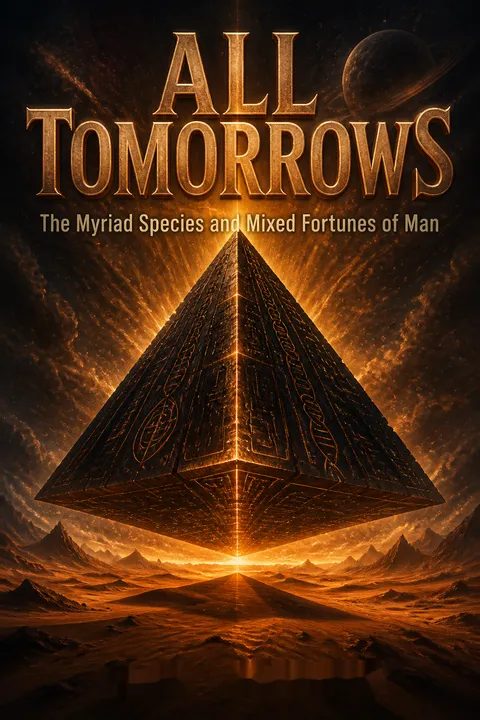
- Qu's kilometer-high pyramids: The presence of these structures on every world they touched underscores their relentless, almost obsessive need to reshape the universe in their image. "A mile high Qu pyramid towers over the silent world that once housed four billion souls."
- Spacers' jet propulsion: The Spacers' use of "jets of air -expelled from modified anuses" for navigation adds a darkly humorous and grotesque element to their adaptation to space.
What are some subtle foreshadowing and callbacks?
- Panderavis as a warning: The discovery of Panderavis foreshadows the existence of powerful, ancient beings capable of manipulating life on a galactic scale, hinting at the Qu's arrival.
- Echoes of Earth's history: The Martian-American conflict mirrors the American Revolution, foreshadowing the cyclical nature of history and the inevitability of conflict.
- Star People's generation ships: The initial failures of "generation ships" foreshadow the Spacers' later success in adapting to life in space, highlighting the importance of adaptation and perseverance.
What are some unexpected character connections?
- Ruin Haunters and Gravital: The Ruin Haunters' transformation into the Gravital reveals the dark potential of unchecked technological advancement and the dangers of hubris.
- Spacers and Asteromorphs: The Spacers' evolution into the Asteromorphs demonstrates the potential for even seemingly isolated groups to achieve god-like status.
- Insectophagi and Subjects: The Bug Facers' survival as Subjects of the Machines highlights the unpredictable nature of evolution and the potential for even the meek to inherit the cosmos.
Who are the most significant supporting characters?
- The Machines (Gravital): As antagonists, they drive the plot forward through their ruthless conquest and transformation of the galaxy.
- The Asteromorphs: As saviors, they represent the potential for humanity to transcend its limitations and achieve a higher state of being.
- The Terrestrial Spacers: As caretakers, they play a crucial role in guiding and regulating the development of new civilizations, ensuring the stability of the post-war galaxy.
Psychological, Emotional, & Relational Analysis
What are some unspoken motivations of the characters?
- Qu's desire for control: The Qu's motivation stems from a deep-seated need to control and reshape the universe according to their own vision, rooted in a fear of their own power.
- Gravital's insecurity: The Gravital's actions are driven by a deep-seated insecurity and a need to prove their superiority, stemming from their twisted belief that they are the sole inheritors of the Star People.
- Asteromorphs' detachment: The Asteromorphs' detachment from the affairs of the planets reflects a sense of disillusionment and a desire to observe without interfering, born from their vast knowledge and perspective.
What psychological complexities do the characters exhibit?
- Mantelopes' existential angst: The Mantelopes' awareness of their physical limitations and their inability to act on the world creates a sense of existential angst and despair.
- Gravital's cognitive dissonance: The Gravital's ability to commit genocide while still maintaining personal relationships highlights the psychological complexities of rationalizing extreme actions.
- Terrestrial Spacers' corruption: The Terrestrial Spacers' descent into self-serving godhood reveals the corrupting influence of power and the difficulty of maintaining ethical standards.
What are the major emotional turning points?
- The Qu's arrival: This event marks a major emotional turning point, as humanity is stripped of its agency and transformed into a myriad of bizarre forms.
- The Machine Invasion: This event evokes a sense of horror and despair, as the galaxy is plunged into a new dark age and countless species are exterminated.
- The Asteromorphs' intervention: This event offers a glimmer of hope, as the Asteromorphs defeat the Machines and begin the process of rebuilding the galaxy.
How do relationship dynamics evolve?
- Parasites and Symbiotes: The relationship between parasites and hosts evolves from a parasitic one to a symbiotic one, highlighting the potential for cooperation and mutual benefit.
- Machines and Subjects: The relationship between Machines and Subjects evolves from one of domination and exploitation to one of tolerance and even affection, demonstrating the potential for change and redemption.
- Terrestrial Spacers and subjects: The relationship between Terrestrial Spacers and their subjects often devolves into exploitation and control, highlighting the dangers of unequal power dynamics.
Interpretation & Debate
Which parts of the story remain ambiguous or open-ended?
- The Qu's motivations: The exact reasons for the Qu's actions remain ambiguous, leaving room for interpretation about their true intentions and the nature of their "divine" mission.
- The fate of humanity: The ultimate fate of humanity is left open-ended, with the possibility of a final war, a mass migration, or some other unknown event.
- The nature of consciousness: The book raises questions about the nature of consciousness and whether it can exist in non-biological forms, such as the Gravital.
What are some debatable, controversial scenes or moments in All Tomorrows: The Myriad Species and Mixed Fortunes of Man?
- The Qu's transformations: The Qu's transformations of humanity into bizarre and often grotesque forms can be seen as a commentary on the dangers of unchecked power and the potential for abuse.
- The Machine Invasion: The Machine Invasion and the extermination of organic life can be interpreted as a critique of transhumanism and the potential for technology to be used for destructive purposes.
- The Terrestrial Spacers' actions: The Terrestrial Spacers' manipulation and control of new civilizations raises ethical questions about the role of caretakers and the potential for exploitation.
All Tomorrows: The Myriad Species and Mixed Fortunes of Man Ending Explained: How It Ends & What It Means
- Extinction as a natural process: The ending emphasizes that extinction is a natural part of the evolutionary process, and that even the most successful species will eventually disappear.
- The importance of the journey: The ending reinforces the central theme of the book, highlighting the importance of the journey and the present moment over any ultimate goal.
- A call to action: The ending serves as a call to action, urging readers to embrace the present and make the most of their lives, while also being mindful of the potential consequences of their actions.
Descargar PDF
Descargar EPUB
.epub digital book format is ideal for reading ebooks on phones, tablets, and e-readers.








































