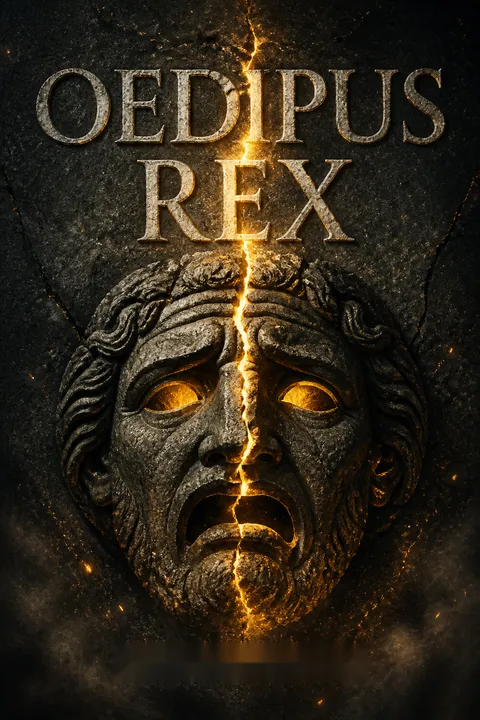

Resumen de la trama
Tebas en crisis
La ciudad de Tebas sufre las consecuencias de una peste devastadora. Un sacerdote y un grupo de ciudadanos se acercan al rey Edipo, célebre por sus hazañas del pasado, para suplicarle una solución. Le recuerdan cómo salvó a la ciudad de la Esfinge en una ocasión anterior y le piden que vuelva a auxiliarlos. Edipo, profundamente conmovido por el sufrimiento de su pueblo, ya ha enviado a su cuñado Creonte al Oráculo de Delfos en busca de la guía de los dioses. A su regreso, Creonte trae un mensaje del oráculo: la peste solo cesará cuando el asesino de Layo, el antiguo rey, sea descubierto y castigado.
Profecía y peste
Edipo declara su firme compromiso de esclarecer el asesinato de Layo, jurando llevar al culpable ante la justicia para salvar a Tebas. Lanza una maldición pública sobre el asesino, sin saber que se está maldiciendo a sí mismo. El coro, que representa a los ancianos tebanos, implora la intervención divina. Edipo recurre a Tiresias, el profeta ciego, para que revele lo que sabe. Tiresias se muestra reacio y sugiere la existencia de una verdad terrible, pero Edipo insiste. Bajo presión, Tiresias acusa al propio Edipo de ser el asesino, algo que este niega con vehemencia, sospechando una conspiración entre Tiresias y Creonte.
La revelación del vidente ciego
A pesar de la ira de Edipo, Tiresias se mantiene firme en su acusación y sugiere que el rey está ciego ante la realidad de su propia vida. Enfurecido, Edipo acusa a Tiresias y a Creonte de conspirar en su contra. Creonte se defiende argumentando que no tiene ningún deseo de reinar. El coro intenta mediar y exhorta a Edipo a confiar en los dioses. Yocasta, la esposa de Edipo, interviene para calmar los ánimos y resta importancia a las profecías tachándolas de poco fiables; para probarlo, menciona un antiguo oráculo que aseguraba que Layo moriría a manos de su hijo, una profecía que ella cree que jamás se cumplió.
El pasado de Edipo al descubierto
El escepticismo de Yocasta ante las profecías despierta un recuerdo en Edipo. Rememora haber matado a un hombre en una encrucijada de caminos, un detalle que coincide con las circunstancias de la muerte de Layo. Inquieto, busca la confirmación del único superviviente del ataque. Mientras tanto, llega un mensajero de Corinto con la noticia de la muerte del rey Pólibo, lo que parece desmentir la profecía de que Edipo mataría a su padre. Sin embargo, el mensajero revela que Edipo fue adoptado, lo que plantea serias dudas sobre su verdadero origen.
La desesperación de Yocasta
A medida que las piezas del rompecabezas encajan, Yocasta se da cuenta de la horrorosa realidad: Edipo es su hijo y la profecía se ha cumplido. Le suplica a Edipo que detenga sus indagaciones, pero él está decidido a descubrir la verdad hasta las últimas consecuencias. Yocasta, abrumada por la revelación, se retira al palacio. Edipo, implacable en su búsqueda de respuestas, interroga al pastor que lo había entregado de bebé en Corinto. El pastor confirma que Edipo es, en efecto, el hijo de Layo y Yocasta.
Verdad y tragedia
La verdad sale a la luz en toda su crudeza: Edipo, sin saberlo, ha matado a su padre y se ha casado con su madre, cumpliendo así la terrible profecía. Yocasta, incapaz de soportar la vergüenza y el horror, se ahorca. Edipo, en un arrebato de desesperación y autodesprecio, se arranca los ojos con los broches del vestido de Yocasta. El coro lamenta la trágica caída de Edipo, quien alguna vez fue un gran rey y el salvador de Tebas. Edipo, ahora un hombre quebrado, suplica ser desterrado de Tebas para poner fin a la maldición que pesa sobre la ciudad.
La caída de Edipo
Creonte, ahora gobernante de Tebas, muestra compasión hacia Edipo a pesar de sus antiguos conflictos. Edipo solicita el exilio y Creonte accede a consultar a los dioses para tomar la decisión final. Edipo se despide con dolor de sus hijas, Antígona e Ismene, expresando su profundo pesar por el legado de sufrimiento que les hereda. La obra concluye con la reflexión del coro sobre la fragilidad de la felicidad humana y la inevitabilidad del destino, dejando al público meditando sobre el trágico sino de Edipo.
Analysis
Exploración del destino y las limitaciones humanas"Edipo Rey" es un análisis profundo sobre el destino, el libre albedrío y las limitaciones del entendimiento humano. Sófocles nos presenta un mundo donde el destino es ineludible y cualquier intento de desafiarlo conduce a desenlaces trágicos. La obra plantea interrogantes sobre la naturaleza de la culpa y la responsabilidad, mostrando a un Edipo que es, al mismo tiempo, víctima del destino y artífice de su propia desgracia. Los temas de la visión y la ceguera, tanto en sentido literal como metafórico, ponen de relieve la tensión entre el conocimiento y la ignorancia. En un contexto moderno, la obra nos invita a reflexionar sobre la condición humana, la búsqueda de la verdad y la aceptación de las incertidumbres de la vida.
Resumen de reseñas
Edipo Rey es ampliamente elogiada como una obra maestra de la tragedia griega. Los lectores aprecian la hábil construcción de la trama de Sófocles, sus personajes cautivadores y la exploración del destino frente al libre albedrío. Los temas de la obra, como la hibris, el autodescubrimiento y las consecuencias de las propias acciones, resuenan con fuerza. Muchos consideran que la ironía dramática y la trágica caída de Edipo son especialmente poderosas. Algunos destacan la influencia de la obra en la psicología y la literatura. Aunque unos pocos lectores encuentran ciertos aspectos anticuados o exagerados, la mayoría la considera una obra atemporal y estimulante que plantea preguntas profundas sobre la naturaleza humana y el destino.
También leyeron

Characters
Oedipus
Edipo es el rey de Tebas, célebre por su inteligencia y heroísmo. Es un hombre decidido y compasivo, pero su incansable búsqueda de la verdad lo conduce a la ruina. Al ignorar su verdadero origen, cumple la profecía de matar a su padre y casarse con su madre. Su tránsito de la ignorancia al conocimiento está marcado por el orgullo y la ira, y culmina en la ceguera autoinducida y el exilio.
Jocasta
Yocasta es la esposa y madre de Edipo, una mujer pragmática que al principio desestima las profecías. Sus acciones pasadas para eludir el destino propiciaron, sin querer, que este se cumpliera. Cuando la verdad sale a la luz, la desesperación la arrastra al suicidio, evidenciando las trágicas consecuencias de los actos humanos frente a la voluntad divina.
Creon
Creonte es el hermano de Yocasta y cuñado de Edipo. Representa la voz de la razón y la lealtad, y es acusado injustamente de traición por Edipo. Tras la caída del rey, Creonte asume el gobierno de Tebas, mostrando compasión y un alto sentido del deber hacia la ciudad y sus habitantes.
Tiresias
Tiresias es un vidente ciego al servicio de Apolo. A pesar de su ceguera física, posee una profunda comprensión de la verdad. Su resistencia a revelar el destino de Edipo nace del dolor que sabe que causará. Su papel resulta fundamental para desarrollar el tema de la visión y la ceguera.
The Chorus
El coro representa a los ancianos de Tebas y se encarga de comentar y reflexionar sobre los acontecimientos que se van sucediendo. Encarna la conciencia colectiva de la ciudad, expresando temor, esperanza y, finalmente, resignación ante el poder del destino.
Laius' Man
El servidor de Layo es el pastor que le perdonó la vida al niño Edipo, desencadenando así la profecía. Su testimonio resulta crucial para revelar la verdadera identidad de Edipo, lo que demuestra cómo las acciones humanas pueden tener consecuencias imprevistas.
The Messenger
El mensajero de Corinto trae la noticia de la muerte de Pólibo, lo que en un principio parece desmentir la profecía. Sin embargo, su revelación sobre la adopción de Edipo marca un punto de inflexión que desentraña el pasado del rey.
Antigone and Ismene
Antígona e Ismene son las hijas de Edipo, quienes sufren las consecuencias de las acciones de su padre. Simbolizan la inocencia y el impacto duradero de las maldiciones familiares, anticipando sus propios destinos trágicos en relatos posteriores.
Plot Devices
Prophecy and Fate
El recurso central de "Edipo Rey" es la profecía de que Edipo matará a su padre y se casará con su madre. Esta revelación pone en marcha toda la narrativa, ya que los personajes intentan evitar su destino solo para terminar cumpliéndolo con sus propias acciones. La tensión entre el destino y el libre albedrío es un tema clave, pues los esfuerzos de Edipo por escapar de su sino lo conducen directamente a él.
Dramatic Irony
La ironía dramática es un recurso sumamente eficaz en la obra, ya que el público conoce la verdadera identidad de Edipo mucho antes que él mismo. Este conocimiento genera una constante sensación de catástrofe inminente y potencia el impacto emocional de los descubrimientos del protagonista. La ironía de que la búsqueda de la verdad por parte de Edipo sea lo que finalmente lo destruya subraya la naturaleza trágica de la historia.
Sight and Blindness
El motivo de la visión y la ceguera se utiliza para explorar los conceptos del saber y la ignorancia. Tiresias, a pesar de su ceguera física, es capaz de ver la verdad, mientras que Edipo, que goza de la vista, está completamente ciego ante su propia realidad. Este contraste resalta las limitaciones del entendimiento humano y el doloroso camino que va desde la ignorancia hasta la lucidez.
Preguntas frecuentes
Synopsis & Basic Details
What is Oedipus Rex about?
- Plague-ridden Thebes seeks savior: The play opens with Thebes suffering from a devastating plague, prompting its citizens to seek help from their king, Oedipus, who famously solved the riddle of the Sphinx.
- Murder mystery with divine decree: Oedipus learns from the Oracle at Delphi that the plague will only cease when the murderer of the previous king, Laius, is found and punished, setting off a quest for justice.
- Unraveling a horrifying truth: As Oedipus investigates, he uncovers a series of shocking revelations about his own identity and past, leading to the realization that he is the very person he seeks to punish.
Why should I read Oedipus Rex?
- Timeless exploration of fate: The play delves into the complex relationship between fate and free will, questioning whether individuals can truly escape their predetermined destinies.
- Psychological depth and human flaws: Sophocles masterfully portrays the psychological complexities of his characters, exploring themes of guilt, shame, and the destructive nature of unchecked ambition.
- Enduring influence on literature: Oedipus Rex is a cornerstone of Western literature, influencing countless works of art, literature, and psychological theory, making it essential for understanding the foundations of storytelling.
What is the background of Oedipus Rex?
- Rooted in Mycenaean legends: The story of Oedipus originates from ancient Greek myths and legends passed down orally, set in the Mycenaean period (1600-1200 BCE), a time of powerful city-states like Thebes and Mycenae.
- Performed at City Dionysia festival: The play was performed as part of the City Dionysia, an Athenian festival honoring Dionysus, the god of wine and revelry, showcasing the intersection of religious ritual and dramatic performance.
- Athens during Peloponnesian War: Sophocles wrote Oedipus Rex during the Peloponnesian War (431-404 BCE), a period of great turmoil and uncertainty for Athens, which may have influenced the play's themes of plague, social disruption, and the search for a scapegoat.
What are the most memorable quotes in Oedipus Rex?
- "How dreadful wisdom is when wisdom brings no gain!": This quote from Tiresias encapsulates the tragic irony of knowledge, highlighting the pain and suffering that can accompany the revelation of truth.
- "Hubris breeds a tyrant.": This line from the chorus speaks to the dangers of excessive pride and arrogance, suggesting that such traits can lead to the downfall of even the most powerful individuals.
- "O light—the last I'll ever see, I stand exposed, all wrong in parents, those with whom I lived and him I murdered, wrong, all wrong!": Oedipus's anguished cry after blinding himself captures the devastating consequences of his actions and the complete destruction of his world.
What writing style, narrative choices, and literary techniques does Sophocles use?
- Iambic trimeter for spoken dialogue: Sophocles employs iambic trimeter in the spoken parts of the play, creating a rhythmic and concise delivery that enhances the dramatic tension and forward momentum.
- Rhymed stanzas for choral odes: The choral odes are translated into short, rhymed stanzas, aiming to capture the musicality and accessibility of the original Greek songs, which were integral to the theatrical experience.
- Dramatic irony and foreshadowing: Sophocles masterfully uses dramatic irony, where the audience knows more than the characters, and foreshadowing, hinting at future events, to build suspense and create a sense of impending doom.
Hidden Details & Subtle Connections
What are some minor details that add significant meaning?
- Oedipus's swollen feet: Oedipus's name, meaning "swollen foot," is a constant reminder of his abandonment as an infant and the attempts to thwart the prophecy, highlighting the futility of trying to escape fate.
- The crossroads as a symbol: The crossroads where Oedipus kills Laius represents a point of decision and destiny, where Oedipus unknowingly sets in motion the events that will lead to his tragic downfall.
- The shepherd's pity: The shepherd's decision to spare the infant Oedipus out of pity, rather than leaving him to die, is a seemingly minor act of compassion that ultimately seals Oedipus's fate.
What are some subtle foreshadowing and callbacks?
- Jocasta's dismissal of oracles: Jocasta's initial skepticism towards oracles foreshadows the devastating realization that the prophecies have indeed come true, highlighting the dangers of dismissing divine warnings.
- Oedipus's curse on Laius's murderer: Oedipus's impassioned curse on the unknown murderer of Laius is a chilling example of dramatic irony, as he unknowingly curses himself, setting the stage for his own tragic fate.
- References to sight and blindness: The recurring motif of sight and blindness, both literal and metaphorical, foreshadows Oedipus's eventual self-blinding and the realization that he has been blind to the truth all along.
What are some unexpected character connections?
- The messenger and the shepherd: The messenger from Corinth, who brings news of Polybus's death, is revealed to be the same shepherd who received the infant Oedipus from Laius's servant, creating a surprising link between seemingly disparate characters.
- Jocasta and Creon's sibling bond: The close relationship between Jocasta and Creon adds another layer of complexity to the play, as Creon's loyalty to his sister and his role as a mediator between her and Oedipus are tested by the unfolding events.
- Laius' man and Oedipus's fate: Laius' man, who was meant to leave Oedipus to die, becomes the key to unlocking Oedipus's past, highlighting how even minor characters can play a crucial role in shaping the protagonist's destiny.
Who are the most significant supporting characters?
- Tiresias as truth-teller: Though blind, Tiresias sees the truth that Oedipus cannot, serving as a moral compass and a symbol of the limitations of human perception.
- Creon as pragmatic ruler: Creon's pragmatism and concern for the stability of Thebes make him a foil to Oedipus's passionate but ultimately destructive pursuit of truth.
- The chorus as collective conscience: The chorus embodies the voice of the Theban people, reacting to events with fear, hope, and ultimately, a sense of resignation to the power of fate, providing commentary and moral reflection.
Psychological, Emotional, & Relational Analysis
What are some unspoken motivations of the characters?
- Jocasta's fear of the truth: Beyond dismissing prophecies, Jocasta may be subconsciously trying to protect herself and her position by discouraging Oedipus from investigating the past, hinting at a deeper fear of the truth.
- Oedipus's need for control: Oedipus's relentless pursuit of the truth may stem from a deep-seated need for control and a desire to maintain his image as a wise and just ruler, even at the cost of his own well-being.
- Creon's ambition (or lack thereof): While Oedipus accuses Creon of plotting against him, Creon's true motivations remain ambiguous, leaving open the possibility that he genuinely seeks only the best for Thebes, even if it means taking power himself.
What psychological complexities do the characters exhibit?
- Oedipus's denial and rage: Oedipus's initial denial of Tiresias's accusations and his subsequent rage reveal a deep-seated fear of confronting the truth about himself, highlighting the psychological defenses he employs to protect his ego.
- Jocasta's internal conflict: Jocasta's attempts to comfort Oedipus while simultaneously urging him to abandon his quest suggest a profound internal conflict between her love for her husband and her growing dread of the truth.
- Tiresias's burden of knowledge: Tiresias's reluctance to speak stems from the psychological burden of knowing the truth and the pain it will inflict, highlighting the ethical dilemmas faced by those with prophetic abilities.
What are the major emotional turning points?
- Jocasta's realization: Jocasta's sudden realization of the truth, triggered by Oedipus's account of killing a man at a crossroads, marks a pivotal emotional turning point, leading to her despair and eventual suicide.
- Oedipus's confrontation with the shepherd: The confrontation between Oedipus and the shepherd, where the final pieces of the puzzle are revealed, is a moment of intense emotional climax, shattering Oedipus's world and forcing him to confront his true identity.
- Oedipus's self-blinding: Oedipus's act of self-blinding is a powerful expression of his emotional devastation and self-loathing, symbolizing his rejection of the world and his desire to escape the horrors he has witnessed.
How do relationship dynamics evolve?
- Oedipus and Jocasta's marriage: Initially portrayed as a loving and stable partnership, Oedipus and Jocasta's marriage unravels as the truth emerges, transforming their relationship into one of horror and despair.
- Oedipus and Creon's conflict: The relationship between Oedipus and Creon shifts from one of trust and cooperation to suspicion and animosity, highlighting the destructive power of paranoia and the fragility of political alliances.
- Oedipus and his daughters: Oedipus's final interactions with his daughters reveal his deep love and concern for their future, highlighting the enduring impact of his actions on their lives and foreshadowing their own tragic fates.
Interpretation & Debate
Which parts of the story remain ambiguous or open-ended?
- Creon's true motives: Whether Creon genuinely seeks the best for Thebes or harbors ambitions for power remains open to interpretation, adding complexity to his character and raising questions about the nature of political leadership.
- Oedipus's degree of guilt: The extent to which Oedipus is responsible for his actions, given the influence of fate and the circumstances surrounding his birth and upbringing, is a subject of ongoing debate, challenging viewers to consider the nature of free will and moral responsibility.
- The gods' role in human suffering: The play raises questions about the role of the gods in human suffering, leaving it ambiguous whether they are instruments of justice, indifferent observers, or active manipulators of human destiny.
What are some debatable, controversial scenes or moments in Oedipus Rex?
- Oedipus's behavior at the crossroads: Whether Oedipus acted in self-defense or with excessive anger when he killed Laius at the crossroads is a point of contention, influencing interpretations of his character and the extent of his culpability.
- The chorus's "Hubris breeds a tyrant": The chorus's song about hubris and tyranny is subject to varying interpretations, with some arguing that it applies to Oedipus's pride and others suggesting it is a commentary on Athenian politics.
- Oedipus's decision to blind himself: While some view Oedipus's self-blinding as an act of heroic self-punishment, others see it as a sign of madness and despair, prompting debate about the appropriate response to overwhelming guilt and shame.
Oedipus Rex Ending Explained: How It Ends & What It Means
- Oedipus accepts exile: Oedipus, now blind and broken, accepts his fate of exile, recognizing that his presence is a source of pollution for Thebes, demonstrating a willingness to atone for his sins.
- Creon assumes power with compassion: Creon, despite past conflicts with Oedipus, assumes power with a sense of duty and compassion, promising to consult the gods regarding Oedipus's fate and ensuring the well-being of his daughters.
- The chorus reflects on human fragility: The play concludes with the chorus reflecting on the fragility of human happiness and the importance of judging a life only after its end, emphasizing the limitations of human understanding and the power of fate.
Descargar PDF
Descargar EPUB
.epub digital book format is ideal for reading ebooks on phones, tablets, and e-readers.








































