
Resumen de la trama
La Casa Infinita
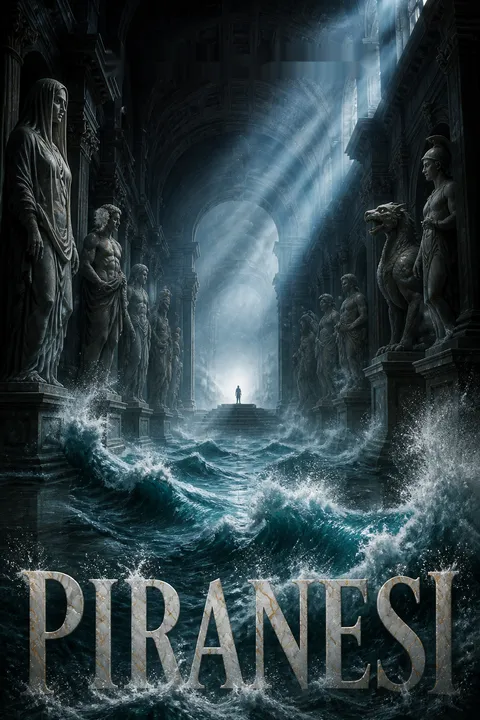
Piranesi vive en una vasta y laberíntica Casa llena de estatuas y del mar. Registra meticulosamente sus exploraciones y las mareas que inundan los vestíbulos inferiores. Piranesi cree que es una de las dos únicas personas vivas en la Casa; la otra es un hombre al que llama el Otro. El Otro es un científico que busca un Gran Conocimiento Secreto, y Piranesi lo ayuda, aunque él se siente pleno con la belleza y el misterio de la Casa en sí misma.
Los secretos del Otro
El Otro, que visita a Piranesi dos veces por semana, es reservado y desprecia la reverencia que este siente por la Casa. Advierte a Piranesi sobre una persona peligrosa, 16, que podría llegar a la Casa. Piranesi recibe instrucciones de evitar a 16 a toda costa. A pesar de las advertencias de el Otro, Piranesi comienza a cuestionar sus intenciones y la verdadera naturaleza de la Casa.
La revelación del Profeta
Piranesi se encuentra con un anciano, el Profeta, quien afirma haber creado la Casa. El Profeta revela que la Casa es un mundo formado a partir de ideas y conocimientos olvidados. Advierte a Piranesi que el Otro, a quien llama Ketterley, es peligroso y que alguien está buscando a Piranesi. Este encuentro siembra dudas en la mente de Piranesi sobre su propia identidad y la confiabilidad de el Otro.
El nombre olvidado
Piranesi descubre un mensaje que le pregunta si es Matthew Rose Sorensen, lo que desencadena recuerdos fragmentados de otra vida. Se da cuenta de que pudo haber sido otra persona antes de llegar a la Casa. A medida que reconstruye su pasado, descubre que el Otro, Ketterley, lo trajo a la Casa mediante engaños. El sentido de identidad de Piranesi comienza a desmoronarse mientras lidia con estas revelaciones.
La advertencia del diluvio
Piranesi calcula que un diluvio masivo es inminente y advierte a el Otro, quien parece no darle importancia. Piranesi también intenta advertir a 16, a quien ahora no considera un enemigo, sino un aliado potencial. A medida que el diluvio se acerca, Piranesi debe decidir si confiar en el Otro o actuar según sus propios instintos para protegerse a sí mismo y a 16.
La verdad al descubierto
Durante el diluvio, Piranesi se enfrenta a el Otro, quien revela su verdadera naturaleza e intenciones. El plan de el Otro de utilizar a Piranesi como una herramienta para su propio beneficio queda expuesto. En el caos del diluvio, Piranesi y 16, que resulta ser una oficial de policía llamada Sarah Raphael, colaboran para sobrevivir. Los recuerdos de Piranesi sobre su vida pasada como Matthew Rose Sorensen comienzan a resurgir.
El regreso a la realidad
Con la desaparición de el Otro, Piranesi se enfrenta a una elección: permanecer en la Casa o regresar al mundo exterior. Alentado por Raphael, decide abandonar la Casa y reconectarse con su vida pasada. Al dar un paso de vuelta al mundo, Piranesi lleva consigo las lecciones y la belleza de la Casa, listo para reconciliar sus dos identidades y comenzar de nuevo.
Analysis
Exploración de la identidad y la memoriaPiranesi es una profunda exploración de la identidad, la memoria y la naturaleza de la realidad. A través del viaje de Piranesi, la novela examina cómo nuestra comprensión de nosotros mismos está moldeada por nuestro entorno y por las narrativas que construimos. La Casa, con sus interminables vestíbulos y estatuas, funciona como una metáfora de la naturaleza laberíntica de la mente y de la complejidad del autodescubrimiento. La novela también critica la búsqueda del conocimiento desprovista de consideraciones éticas, encarnada en la manipuladora búsqueda de el Otro. En última instancia, Piranesi es una historia de reconciliación, en la que el protagonista aprende a integrar su yo del pasado y del presente, encontrando belleza y significado tanto en la Casa como en el mundo exterior.
Resumen de reseñas
Piranesi recibió críticas mayoritariamente positivas, elogiado por su ambientación única y atmosférica y su intrigante misterio. Los lectores apreciaron la experiencia inmersiva, los personajes entrañables y los temas que invitan a la reflexión. Algunos encontraron el comienzo confuso, pero al final quedaron cautivados por el desarrollo de la historia. La crítica alabó la capacidad narrativa de Clarke y su habilidad para la construcción de mundos. Sin embargo, una minoría de lectores consideró el libro aburrido, repetitivo o difícil de entender. Muchos recomendaron adentrarse en la lectura con el menor conocimiento previo posible para disfrutar plenamente del descubrimiento de sus misterios.
También leyeron







Characters
Piranesi
Piranesi es el protagonista, que vive en una misteriosa Casa llena de estatuas y mareas. Se dedica a explorar y documentar la Casa, encontrando belleza y consuelo en sus vestíbulos. A medida que descubre la verdad sobre su identidad y las intenciones de el Otro, la comprensión que Piranesi tiene de sí mismo y del mundo se ve profundamente desafiada.
El Otro (Valentine Ketterley)
El Otro es el único compañero vivo de Piranesi en la Casa, un científico que busca un Gran Conocimiento Secreto. Es manipulador y utiliza a Piranesi para sus propios fines, ocultando la verdad sobre la Casa y el pasado de Piranesi. Su verdadera naturaleza se revela durante el diluvio, lo que conduce a su caída.
El Profeta (Laurence Arne-Sayles)
El Profeta es una figura enigmática que afirma haber creado la Casa. Revela los orígenes de la Casa y advierte a Piranesi sobre el peligro que representa el Otro. Sus revelaciones sobre la naturaleza de la Casa y el conocimiento olvidado desafían la comprensión de la realidad de Piranesi.
Sarah Raphael (16)
Raphael es una oficial de policía que busca a Piranesi, a quien conoce como Matthew Rose Sorensen. Está decidida a rescatarlo de la Casa y de la influencia de el Otro. Su compasión y valentía ayudan a Piranesi a descubrir la verdad sobre su identidad y a encontrar un camino de regreso al mundo exterior.
Matthew Rose Sorensen
Matthew Rose Sorensen es el antiguo yo de Piranesi, un hombre que fue engañado por el Otro para entrar en la Casa. A medida que Piranesi recupera sus recuerdos, debe reconciliar su vida pasada con su existencia actual en la Casa.
Plot Devices
La Casa Laberíntica
La Casa es una estructura vasta y laberíntica llena de estatuas y mareas. Funciona tanto de escenario como de símbolo del conocimiento olvidado y de la complejidad de la identidad. Los misterios de la Casa impulsan la exploración y el autodescubrimiento de Piranesi.
El Gran Conocimiento Secreto
La búsqueda de el Otro del Gran Conocimiento Secreto representa los peligros de la ambición desmedida y la manipulación. Sirve como catalizador para el viaje de Piranesi y el desmoronamiento del engaño de el Otro.
El Diluvio
El diluvio es un acontecimiento crucial que obliga a Piranesi a enfrentarse a el Otro y a descubrir la verdad sobre su pasado. Simboliza la fuerza abrumadora de los recuerdos olvidados y la necesidad de cambio y renovación.
Preguntas frecuentes
Synopsis & Basic Details
What is Piranesi about?
- A man in a labyrinth: Piranesi lives in a vast, mysterious House with endless halls, tides, and statues, meticulously documenting his explorations and encounters.
- Search for knowledge and self: He assists the Other in a quest for secret knowledge, while also grappling with his own identity and the nature of his world.
- Unraveling a hidden reality: The story follows Piranesi as he uncovers secrets about the House, his past, and the true intentions of those around him.
Why should I read Piranesi?
- Unique and immersive world: The novel creates a captivating and dreamlike atmosphere with its detailed descriptions of the House and its mysteries.
- Intriguing philosophical questions: It explores themes of identity, memory, reality, and the nature of knowledge, prompting deep reflection.
- Emotional and thought-provoking journey: Readers will be drawn into Piranesi's personal journey of self-discovery and his struggle to understand his place in the world.
What is the background of Piranesi?
- No specific historical setting: The House exists outside of conventional time and space, creating a sense of timelessness and isolation.
- Focus on internal exploration: The background is more psychological and philosophical, exploring the nature of memory, identity, and perception.
- Subversion of fantasy tropes: While elements of fantasy are present, the novel subverts traditional tropes, focusing on the internal world of the protagonist.
What are the most memorable quotes in Piranesi?
- "The Beauty of the House is immeasurable; its Kindness infinite.": This quote encapsulates Piranesi's deep reverence for his world and its inherent goodness.
- "Many things are unknown.": This recurring phrase highlights the novel's themes of mystery, uncertainty, and the limits of human knowledge.
- "Do you trust the House?": This question, posed by Piranesi to himself, reflects his internal struggle with the nature of his reality and his place within it.
What writing style, narrative choices, and literary techniques does Susanna Clarke use?
- First-person, journal-style narrative: The story is told through Piranesi's journal entries, creating an intimate and subjective perspective.
- Detailed and evocative descriptions: Clarke uses rich, sensory language to bring the House and its inhabitants to life, immersing the reader in its atmosphere.
- Subtle foreshadowing and thematic echoes: The narrative is carefully constructed with recurring motifs, phrases, and details that gain significance as the story progresses.
Hidden Details & Subtle Connections
What are some minor details that add significant meaning?
- The color of the biscuit box: The red Huntley Palmers biscuit box containing the Biscuit-Box Man's small bones foreshadows the later revelation of the Other's manipulation and the artificiality of his world.
- The names of the constellations: Piranesi's unique names for the constellations, like "The Good Mother" and "The Iron Snake," reflect his personal connection to the House and his unique way of understanding the world.
- The description of the statues: The specific details of the statues, such as the Faun's finger to his lips or the Horned Giants' struggle, foreshadow the themes of hidden knowledge and the struggle against fate.
What are some subtle foreshadowing and callbacks?
- The "Batter-Sea" question: The Other's seemingly nonsensical question about "Batter-Sea" foreshadows the revelation that Piranesi's memories are fragmented and that the Other is testing him.
- The birds' messages: The birds' behavior and the patterns they create foreshadow the coming of 16 and the need for Piranesi to pay attention to the world around him.
- The description of the One-Hundred-and-Ninety-Second Western Hall: The Hall's unique characteristics and the sense of "Presence" foreshadow its significance as a place of revelation and the turning point in Piranesi's journey.
What are some unexpected character connections?
- The Prophet and the Other: The revelation that the Prophet was the Other's former teacher adds a layer of complexity to their relationship and highlights the Other's reliance on borrowed ideas.
- Piranesi and the Dead: Piranesi's deep connection to the Dead, his care for their remains, and his attempts to communicate with them reveal his compassion and his desire for connection.
- Piranesi and 16: The unexpected alliance between Piranesi and 16, who initially appears as a threat, highlights the importance of questioning assumptions and finding allies in unexpected places.
Who are the most significant supporting characters?
- The Prophet (Laurence Arne-Sayles): His revelations about the nature of the House and the Other's true intentions are crucial to Piranesi's journey of self-discovery.
- Sarah Raphael (16): Her role as a rescuer and a guide helps Piranesi to understand his past and to find a path back to the world outside the House.
- The Dead: Though silent, the Dead serve as a constant reminder of the passage of time, the fragility of life, and the importance of compassion and remembrance.
Psychological, Emotional, & Relational Analysis
What are some unspoken motivations of the characters?
- The Other's fear of the House: Despite his claims of seeking knowledge, the Other's fear of the Tides and his desire to control the House reveal a deep-seated anxiety and lack of connection to it.
- Piranesi's need for connection: His devotion to the Dead and his eagerness to befriend the Other and 16 reveal a deep-seated need for connection and belonging.
- 16's desire for justice: Her pursuit of Matthew Rose Sorensen and her determination to expose the Other's crimes reveal a strong sense of justice and a desire to protect the vulnerable.
What psychological complexities do the characters exhibit?
- Piranesi's fragmented identity: His struggle to reconcile his life as Piranesi with his past as Matthew Rose Sorensen highlights the fragility of identity and the power of memory.
- The Other's manipulative nature: His ability to deceive and control others, while also exhibiting fear and insecurity, reveals a complex and troubled psyche.
- 16's internal conflict: Her role as a police officer and her compassion for Piranesi reveal a tension between her duty and her empathy.
What are the major emotional turning points?
- Piranesi's encounter with the Prophet: This meeting shatters his understanding of the House and sets him on a path of questioning and self-discovery.
- The discovery of his past: The realization that he is Matthew Rose Sorensen and that the Other has deceived him triggers a profound emotional crisis.
- The flood and confrontation: The chaotic events of the flood force Piranesi to confront the Other and to make a choice about his future.
How do relationship dynamics evolve?
- Piranesi and the Other: Their relationship shifts from one of friendship and collaboration to one of suspicion and betrayal, highlighting the dangers of unchecked power and manipulation.
- Piranesi and 16: Their relationship evolves from one of potential conflict to one of trust and alliance, demonstrating the importance of questioning assumptions and finding common ground.
- Piranesi and the House: His relationship with the House evolves from one of simple reverence to a more complex understanding of its beauty, its dangers, and its role in his life.
Interpretation & Debate
Which parts of the story remain ambiguous or open-ended?
- The true nature of the House: The novel leaves the origins and purpose of the House open to interpretation, inviting readers to consider its symbolic meaning.
- The extent of the Other's knowledge: The Other's true understanding of the House and his motivations remain somewhat ambiguous, leaving room for speculation.
- The future of Piranesi: While he leaves the House, the novel does not fully resolve his identity crisis or his relationship with his past, leaving his future open to interpretation.
What are some debatable, controversial scenes or moments in Piranesi?
- The Other's death: The Other's death during the flood is both a consequence of his actions and a moment of potential tragedy, prompting debate about justice and redemption.
- Piranesi's decision to leave the House: His choice to leave the House, while understandable, raises questions about the nature of home and the possibility of finding peace in the outside world.
- The nature of reality: The novel's blurring of the lines between reality and illusion invites debate about the nature of truth and the power of perception.
Piranesi Ending Explained: How It Ends & What It Means
- Piranesi chooses to leave: He decides to leave the House with Raphael, embracing his past as Matthew Rose Sorensen while carrying the lessons and beauty of the House with him.
- Reconciliation of identities: The ending suggests a reconciliation of Piranesi's two identities, as he integrates his experiences in the House with his memories of the outside world.
- Hope for a new beginning: The ending offers a sense of hope and possibility, suggesting that even after profound loss and trauma, it is possible to find a new path forward.
Sobre el autor
Otros libros de Susanna Clarke


Descargar PDF
Descargar EPUB
.epub digital book format is ideal for reading ebooks on phones, tablets, and e-readers.








































