Resumen de la trama
Secuelas del Fuego
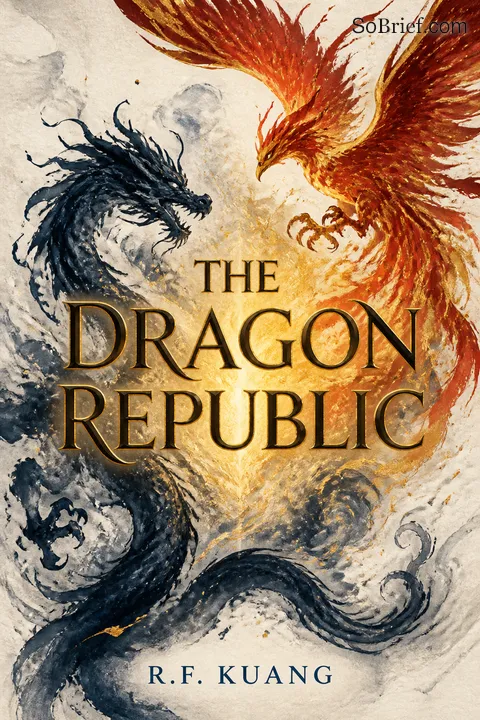
Tras la Tercera Guerra del Amapola, Rin, marcada por el trauma de haber destruido Mugen y perseguida por el dios Fénix, lidera a los restos de los Cike en el exilio. Acusados de crímenes de guerra y perseguidos por el Imperio, se convierten en asesinos al servicio de la Reina Pirata Moag, intercambiando muertes por recursos y una oportunidad de vengarse de la Emperatriz Su Daji, quien los traicionó entregándolos a la Federación. La adicción de Rin al opio crece mientras lucha por controlar la furia del Fénix y su propia culpa, mientras la unidad de los Cike se resquebraja bajo el peso del trauma y las disputas de liderazgo.
Exilio y Asesinos
Los Cike, ahora mercenarios, reciben la tarea de eliminar a un magistrado de ciudad, pero la retirada y la inestabilidad de Rin amenazan la misión. La cohesión del grupo se pone a prueba cuando algunos desertan, y la incapacidad de Rin para controlar a su dios pone en peligro tanto a ella como a sus compañeros. La aparición inesperada de la Emperatriz durante una misión desata un enfrentamiento desastroso, exponiendo la volatilidad de Rin y la precaria situación de los Cike. Los miembros del grupo disminuyen, y el mando de Rin es cuestionado, pero un núcleo de lealtad persiste, unido por la traición compartida y la necesidad de venganza.
El Pacto de la Reina Pirata
La alianza de los Cike con Moag es transaccional y está llena de desconfianza. Moag retiene el apoyo prometido, exigiendo un último trabajo: destruir el barco de un rival traficante de opio. Rin, desesperada por recursos y aliados, se ve obligada a aceptar, pero también busca a su viejo amigo Kitay, ahora prisionero y contador de Moag. Su reencuentro está cargado de dolor y trauma no resuelto de Golyn Niis, y la negativa de Kitay a unirse a la vendetta de Rin la deja aislada. La misión de los Cike es emboscada, revelando la duplicidad de Moag y la peligrosa red de alianzas en el sur sin ley.
Adictos y Alianzas
La adicción de Rin se intensifica mientras usa opio para silenciar al Fénix y su propia culpa. La supervivencia de los Cike depende de los caprichos de Moag, y sus misiones se vuelven cada vez más sangrientas. El liderazgo de Rin se ve socavado por su inestabilidad, y sus relaciones con sus camaradas se tensan por el miedo: a ella, a sí mismos y a los dioses que canalizan. El único consuelo del grupo es el dolor compartido y la certeza de que solo ellos pueden acabar con el sufrimiento mutuo si la locura se apodera de alguno. El ciclo de violencia y adicción se convierte en su prisión y su vínculo.
La Emperatriz en la Mira
El intento de los Cike de matar a la Emperatriz Daji en una ciudad abarrotada termina en desastre cuando Rin pierde el control, casi mata a un camarada y expone su presencia. La Emperatriz escapa, y los Cike se ven obligados a huir, perseguidos ahora tanto por el Imperio como por Moag. El fracaso de la misión profundiza el auto-desprecio de Rin y la desconfianza del grupo. Este episodio consolida a Daji como la némesis personal de Rin y la encarnación de toda su ira, pero también revela los límites de la venganza y el costo destructivo del poder descontrolado.
Traición en Boyang
Los Cike son capturados por un misterioso barco de guerra y entregados a Yin Vaisra, el Señor de la Guerra Dragón, quien revela su plan para derrocar al Imperio y fundar una república. Vaisra ofrece a Rin y a los Cike un lugar en su rebelión, prometiendo recursos y una oportunidad contra Daji. Sin opciones, Rin se une a regañadientes, pero la alianza es tensa. La campaña hacia el norte comienza con victorias, pero en el lago Boyang, la flota republicana es emboscada por Feylen, el dios del viento, ahora arma de Daji. La batalla es una catástrofe que dispersa a los Cike y rompe el impulso de la República.
La Oferta del Dragón
El carisma y genio estratégico de Vaisra atraen a Rin a su órbita, pero sus métodos son despiadados. Le corta el acceso al opio, obligándola a enfrentar la voz del Fénix y su propio trauma. Bajo su disciplina, Rin recupera cierto control, pero a costa de su autonomía. La visión republicana de Vaisra es seductora, pero su disposición a usar y desechar personas —incluida Rin— presagia futuras traiciones. Los Cike son absorbidos por el Ejército del Dragón, sus identidades como marginados y monstruos tanto explotadas como reprimidas.
El Ascenso de la República
La campaña republicana inicia con éxito, pues los Señores de la Guerra del sur se suman a la causa de Vaisra y la flota avanza hacia el norte. Rin es símbolo y arma, su poder usado para aterrorizar y someter ciudades. Pero la alianza es frágil, y la promesa de democracia se ve socavada por prejuicios antiguos y nuevas luchas de poder. Los Hesperianos, extranjeros occidentales con tecnología avanzada y fervor misionero, llegan como posibles aliados, pero su ayuda viene con condiciones y una profunda desconfianza hacia el poder chamánico.
Sombras Hesperianas
Los Hesperianos, liderados por el General Tarcquet y la Hermana Petra, ofrecen apoyo militar a cambio del derecho a estudiar a Rin y erradicar el "Caos" —la magia chamánica. Rin es sometida a humillantes experimentos y adoctrinamiento religioso, su poder tanto codiciado como temido. El racismo y las ambiciones imperiales de los Hesperianos se hacen evidentes, y su alianza con Vaisra convierte a la República en un estado títere. La amenaza de la tecnología hesperiana —dirigibles, arcabuces— se cierne sobre la guerra, y Rin comprende que el verdadero enemigo quizá no sea Daji, sino los extranjeros que buscan borrar a su pueblo.
Ríos Envenenados, Confianza Envenenada
Las fuerzas de Daji envenenan los ríos, provocando hambruna y sufrimiento masivo en el sur. La campaña republicana se estanca mientras la alianza se fractura y los Señores de la Guerra del sur contemplan la deserción. Rin se ve obligada a enfrentar el sufrimiento de su propio pueblo y los límites de su lealtad a Vaisra. La brutalidad de la campaña —ejecuciones masivas, reclutamiento forzado y uso del terror— refleja las mismas atrocidades que la República dice combatir. La línea entre liberador y opresor se difumina, y la fe de Rin en la causa se tambalea.
El Dios del Viento Desatado
En el lago Boyang, la flota republicana es destruida por Feylen, el dios del viento, ahora completamente loco y bajo el control de Daji. Los Cike quedan dispersos, muchos mueren, y Rin se ve forzada a huir con Kitay, su único ancla restante. La derrota expone la vulnerabilidad del poder chamánico y la futilidad de la guerra convencional contra los dioses. El trauma de la pérdida y la traición profundizan el aislamiento de Rin, pero también preparan el terreno para un nuevo tipo de poder —uno basado en la alianza en lugar de la adicción o la ira.
El Sello y el Ancla
Rin, aislada del Fénix por el Sello psíquico de Daji, busca ayuda en los Ketreyids, los chamanes del Hinterland que una vez enseñaron a la Trifecta. A través de un ritual desgarrador, Rin enfrenta su trauma y corta su dependencia de la memoria de Altan. Con Kitay como su ancla, forja un vínculo de alma que le permite canalizar el poder del Fénix sin perderse a sí misma. Esta alianza es a la vez una nueva fuente de fuerza y una profunda vulnerabilidad —si uno muere, muere el otro. El vínculo del ancla es una reimaginación radical del poder chamánico, basada en la confianza y el dolor compartido.
El Juicio del Hinterland
Los Ketreyids, liderados por el Sorqan Sira, juzgan a Rin y Kitay, sopesando si dejarlos vivir o eliminarlos como amenazas. Los gemelos Chaghan y Qara, revelados como espías del Hinterland, se debaten entre la lealtad y el deber. Un golpe de estado entre los Ketreyids conduce a la muerte del Sorqan Sira y a la ruptura del vínculo de los gemelos. El episodio es una reflexión sobre los peligros del poder sin control, el trauma de la pérdida y la imposibilidad de la neutralidad en un mundo en guerra.
El Precio del Sorqan Sira
Para romper el Sello de Daji, Rin se somete a un ritual de sudor con el Sorqan Sira, enfrentando sus miedos más profundos y recuerdos de Altan. A través del dolor y la visión, purga el veneno y recupera el acceso al Fénix, pero a costa de una cicatriz permanente: la huella de la mano de Altan quemada en su pecho. El ritual es tanto una sanación como un ajuste de cuentas, obligando a Rin a aceptar su pasado y los límites de la venganza. El vínculo del ancla con Kitay se solidifica, y juntos regresan a la guerra, transformados y más peligrosos que nunca.
Colapso en los Acantilados Rojos
La Flota Imperial, ahora reforzada por la traición de Tsolin, desciende sobre Arlong. La batalla en los Acantilados Rojos es un cataclismo de fuego, viento y sangre. Rin, con Kitay como su ancla, surca los cielos con alas de fuego, duelando contra Feylen y enterrándolo bajo una montaña. La ciudad arde, los refugiados son masacrados, y la victoria de la República es pírrica. Daji confronta a Rin, ofreciendo una visión del verdadero enemigo —los Hesperianos— y la futilidad de su lucha. El costo de la victoria es la pérdida de todo por lo que Rin alguna vez luchó.
El Último Vuelo de Speerly
En el desenlace, Rin es traicionada por Nezha y Vaisra, entregada a los Hesperianos como una reliquia peligrosa del Caos. Los Cike son ejecutados, y Rin encarcelada, con la mano destrozada para escapar de sus cadenas. Junto a Kitay, Venka y el Señor de la Guerra Mono, huye de Arlong en el barco de Moag, dejando atrás las ruinas de la República y los cadáveres de sus amigos. La fuga es a la vez liberación y sentencia de muerte, pues el sur queda a merced de los Hesperianos y el nuevo régimen.
Cenizas de la Victoria
Vaisra, ahora Emperador de facto, entrega la soberanía del país a los Hesperianos a cambio de poder y seguridad. Los Señores de la Guerra del sur son purgados, los refugiados masacrados, y la promesa de democracia se revela como mentira. Rin, ahora fugitiva y símbolo de resistencia, recibe la oferta de liderar la rebelión sureña. La guerra no ha terminado —solo ha cambiado de forma, y el verdadero enemigo ya es claro.
Las Cadenas de la República
Mientras el sur se prepara para la guerra contra la República respaldada por los Hesperianos, Rin abraza su papel como la Última Speerly y líder de una nueva revolución. El vínculo del ancla con Kitay es su mayor fortaleza y su vulnerabilidad más profunda. El ciclo de violencia continúa, pero ahora las apuestas son claras: la lucha no es solo por venganza o supervivencia, sino por el alma del país. El libro concluye con el juramento de Rin de incendiar el mundo que ha esclavizado a su pueblo, preparando el escenario para un conflicto aún más devastador.
Personajes
Fang Runin (Rin)
Rin es la protagonista, huérfana de guerra de la provincia de Rooster que ascendió desde la pobreza para convertirse en chamán y la última Speerly. Traumatizada por la destrucción de Mugen y adicta al opio, es víctima y perpetradora de violencia. Sus relaciones —con Altan, Kitay, Nezha y los Cike— están marcadas por la lealtad, la traición y la búsqueda de pertenencia. Su viaje psicológico es de ira, culpa y lucha por la autonomía. Es usada por otros —Moag, Vaisra, los Hesperianos— pero finalmente recupera su agencia, forjando un nuevo tipo de poder a través de su vínculo de ancla con Kitay. Su desarrollo es un descenso y resurgimiento del trauma, culminando en la aceptación del liderazgo y la abrazada de su potencial monstruoso.
Chen Kitay
Kitay es amigo de la infancia de Rin, un brillante estratega y último heredero de una casa noble. Traumatizado por la masacre en Golyn Niis, está atormentado por la culpa del sobreviviente y un profundo sentido de justicia. Su relación con Rin es el núcleo emocional de la novela; su vínculo de ancla es fuente de poder y vulnerabilidad profunda. Kitay es la voz de la razón y la conciencia, desafiando a menudo la ira e impulsividad de Rin. Su desarrollo está marcado por la pérdida de la inocencia, la aceptación del dolor y la disposición a sacrificarse por una causa en la que cree.
Yin Nezha
Nezha es el segundo hijo del Señor de la Guerra Dragón, distinguido por su belleza, privilegio y una maldición oculta —el dios dragón que lo reclamó de niño. Su relación con Rin está cargada de rivalidad, atracción y malentendidos mutuos. Su lucha psicológica gira en torno al dolor, el deber y el miedo a su propio poder. Es víctima y agente de traición, eligiendo finalmente la lealtad a su familia y país sobre la amistad. Nezha encarna la tragedia de quienes quedan atrapados entre mundos —aristócrata y marginado, humano y dios.
Yin Vaisra
Vaisra es el arquitecto de la República, un estratega maestro que usa a las personas como herramientas para lograr su visión de un Nikan unido y moderno. Es liberador y tirano, dispuesto a sacrificarlo todo y a todos por el poder. Su relación con Rin es paternal, seductora y finalmente explotadora. Su perfil psicológico es el de un líder que cree que el fin justifica los medios, pero cuya incapacidad para confiar o amar lo condena a repetir el ciclo de violencia que dice querer terminar.
Su Daji
Daji es la última de la Trifecta, una chamán que canaliza a la Diosa Caracol de la Creación. Es víctima y perpetradora de atrocidades, moldeada por un trauma infantil y la necesidad de proteger a su pueblo a cualquier costo. Su relación con Rin es de némesis y espejo; ambas son mujeres forjadas por la violencia, capaces de actos monstruosos en nombre de la supervivencia. Su complejidad psicológica radica en su capacidad para justificar cualquier acción, su poder seductor y su soledad última.
Los Cike (Baji, Suni, Ramsa, Chaghan, Qara, Aratsha, Unegen)
Los Cike son un grupo de chamanes, cada uno marcado por el trauma, la adicción y la certeza de que su poder eventualmente los destruirá. Sus relaciones se definen por la camaradería, el miedo y el pacto tácito de acabar con el sufrimiento mutuo si la locura se apodera de alguno. La disolución del grupo a lo largo de la novela es tragedia y comentario sobre el costo de convertir en armas a los marginados. La muerte o partida de cada miembro es un paso en el camino de Rin hacia el aislamiento y el liderazgo.
Hermana Petra y General Tarcquet
Petra...
También leyeron





Preguntas frecuentes
Synopsis & Basic Details
What is The Dragon Republic about?
- A War-Torn Empire's Fate: The Dragon Republic plunges readers back into a war-ravaged Nikan, following Fang Runin (Rin) and the remnants of the Cike as they navigate a treacherous landscape of shifting alliances and brutal betrayals. Branded as war criminals after the cataclysmic Third Poppy War, Rin and her shamanic comrades become assassins for the Pirate Queen Moag, seeking vengeance against Empress Su Daji while battling their own inner demons and dwindling numbers.
- Quest for Vengeance and Identity: The narrative centers on Rin's desperate pursuit of Daji, whom she blames for Altan's death and the betrayal of the Cike. This personal vendetta intertwines with a burgeoning civil war, as the ambitious Dragon Warlord, Yin Vaisra, seeks to overthrow the Empress and establish a new republic. Rin is forced to choose sides, grappling with her identity as the last Speerly and the monstrous power of the Phoenix god within her.
- Moral Ambiguity and Shifting Loyalties: The story explores the blurred lines between good and evil, liberator and oppressor. Rin's journey is marked by intense psychological struggle, addiction, and the re-evaluation of her beliefs as she confronts the true costs of power and the complex motivations of her allies and enemies. The book sets the stage for a larger, more morally ambiguous conflict, questioning the very nature of justice and freedom.
Why should I read The Dragon Republic?
- Unflinching Exploration of Trauma: The novel delves deeply into the psychological aftermath of war, addiction, and personal betrayal, offering a raw and honest portrayal of characters grappling with immense suffering. Rin's internal battles with the Phoenix and her opium addiction provide a visceral experience of trauma's grip, making her a complex and deeply human protagonist.
- Masterful World-Building & Strategy: Kuang expands the rich, historically inspired world of Nikan, introducing new factions like the technologically advanced Hesperians and the enigmatic Ketreyid shamans. The intricate military strategies, naval battles, and political machinations are meticulously detailed, offering a compelling blend of fantasy and historical realism that will captate fans of epic fantasy and military fiction.
- Complex Moral Dilemmas: The Dragon Republic challenges readers to confront difficult questions about power, sacrifice, and the nature of leadership. No character is purely good or evil, and their choices are often driven by desperate circumstances, forcing readers to grapple with the moral compromises inherent in war and revolution. The shifting allegiances and ambiguous motivations create a truly thought-provoking narrative.
What is the background of The Dragon Republic?
- Post-War Nikara Landscape: The story unfolds in Nikan, a fictionalized version of China, immediately following the devastating Third Poppy War. The Empire is fractured, its provinces ravaged by the Federation invasion and subsequent famine. This backdrop of widespread suffering and instability creates fertile ground for civil unrest and the rise of new powers.
- Shamanism and Divine Intervention: Central to the world is shamanism, the ability to channel powerful, often chaotic, gods. The Red Emperor's historical suppression of shamans and the subsequent rise of the Trifecta (Daji, Riga, and Jiang) who wielded divine power, form the mythological and political underpinnings of the current conflict. The Hesperians, with their monotheistic "Maker" religion, introduce a new, technologically superior, and colonizing force that views shamanism as "Chaos."
- Political and Cultural Divides: The narrative highlights the deep-seated regional and cultural divides within Nikan, particularly between the privileged, northern Sinegardians (like the House of Yin and Chen) and the marginalized, "mud-skinned" southerners (like Rin and the Rooster Province refugees). This internal prejudice and power imbalance fuel the civil war, revealing that the conflict is not just about who rules, but who is deemed worthy of ruling.
What are the most memorable quotes in The Dragon Republic?
- "You will not kneel.": This powerful internal command, echoing from the Phoenix within Rin as Daji attempts to hypnotize her, symbolizes Rin's ultimate refusal to be subjugated. It marks a pivotal moment where Rin begins to reclaim her autonomy and resist external control, even from a god.
- "When you have the power that you do, your life is not your own.": Yin Vaisra's chilling declaration to Rin encapsulates a central theme of the novel: the burden and dehumanizing nature of immense power. It highlights how individuals with extraordinary abilities are often reduced to tools, their personal desires secondary to geopolitical machinations.
- "The world is our chessboard. It's not our fault if the pieces get broken.": Spoken by Daji, this quote chillingly articulates the ruthless, detached perspective of powerful leaders who view human lives as expendable pawns in their grand strategic games. It underscores the moral vacuum at the heart of the conflict and the dehumanization inherent in warfare.
What writing style, narrative choices, and literary techniques does R.F. Kuang use?
- Visceral and Unflinching Prose: Kuang employs a stark, often brutal prose style that doesn't shy away from the horrors of war, violence, and addiction. Her descriptions are vivid and sensory, immersing the reader in Rin's physical and psychological torment, making the emotional impact immediate and profound.
- Limited Third-Person Perspective: The narrative primarily follows Rin's limited third-person perspective, allowing for deep immersion into her internal struggles, biases, and evolving understanding of the world. This choice emphasizes Rin's isolation and her often-skewed perception of events, forcing the reader to question her judgments alongside her.
- Symbolism and Allusion: Kuang masterfully weaves in symbolism (e.g., fire and water, the Red Cliffs, the chessboard motif) and allusions to Chinese history and mythology (e.g., the Monkey King, Nüwa, historical figures and events). These layers enrich the narrative, providing deeper thematic resonance and inviting readers to draw parallels between the fictional world and real-world conflicts.
Hidden Details & Subtle Connections
What are some minor details that add significant meaning?
- Nezha's Childhood Trauma: The prologue, detailing young Nezha's encounter with the river dragon and Mingzha's death, is a subtle but crucial detail. It reveals the origin of Nezha's shamanic connection and his deep-seated trauma, explaining his fear of his own power and his later actions, including his ultimate betrayal of Rin, driven by a desperate desire for a "cure" for his perceived curse.
- The Red Cliffs Inscription's Ambiguity: The ancient inscription on the Red Cliffs, translated differently by Nezha ("Nothing lasts") and Kitay ("The world doesn't exist"), subtly foreshadows the novel's thematic core about the impermanence of power and the subjective nature of reality. Rin's later interpretation, that "reality was not fixed" and could be "rewritten," highlights her evolving understanding of her own agency and the fluid nature of the world of gods.
- Hesperian Clock Analogy: Sister Petra's use of a clock to explain the Divine Architect's creation of the universe is a subtle but potent symbol of the Hesperians' mechanistic, ordered worldview. This contrasts sharply with Nikara shamanism's chaotic, unpredictable Pantheon, underscoring the fundamental ideological clash that underpins the Hesperian colonization and their desire to "fix" shamanism.
What are some subtle foreshadowing and callbacks?
- Moag's Calculated Betrayal: Moag's initial reluctance to provide full support and her amusement at Rin's naivete ("People say things they don't mean all the time, little Speerly") subtly foreshadow her eventual betrayal. Her explanation that she benefits from Daji's isolationist policies ("Moag only flourishes while Daji is on the throne") explicitly lays out her self-serving motivations, making her later double-cross unsurprising to a careful reader.
- Jiang's Past as the Gatekeeper: Rin's initial encounters with Jiang in The Poppy War hinted at his past, but The Dragon Republic subtly reveals the full horror of his former identity as the Gatekeeper. The Ketreyid's memory vision of a younger, cruel Jiang, who "ripped out her still-beating heart," is a shocking callback that recontextualizes his later amnesia as a self-imposed prison, a consequence of his monstrous past.
- The Trifecta's Anchor Bond: Tseveri's prophecy to the young Trifecta ("Your bond will shatter. You will destroy one another. One will die, one will rule, and one will sleep for eternity") subtly foreshadows their eventual fates and the nature of their shamanic connection. This callback reveals that Daji, Riga, and Jiang were likely soul-bonded, explaining why Jiang is "sleeping" in the Chuluu Korikh and why Daji cannot truly die while the others live, adding a layer of tragic inevitability to their story.
What are some unexpected character connections?
- Nezha's Hidden Shamanism: The most unexpected connection is Nezha's secret shamanic ability, revealed through his childhood trauma with the river dragon and his later breakdown at Boyang. This links him directly to Rin and the Cike, creating a parallel arc of individuals burdened by divine power, and complicates his aristocratic identity. His family's desperate attempts to "cure" him, even at the expense of other shamans, highlight the hypocrisy of the Yins.
- Venka's Shared Trauma and Resilience: Venka, initially presented as a spoiled aristocrat, develops an unexpected bond with Rin rooted in shared trauma. Her casual remark about her rape ("It's happened before") and her fierce determination to fight despite her injuries reveal a hidden depth and resilience, connecting her to Rin's own experiences of violation and survival. This shared understanding transcends their social differences.
- Kitay's Hidden Rage and Vengeance: While Kitay is often portrayed as Rin's moral compass, his hidden rage and desire for vengeance are subtly revealed, particularly after his father's death and his cold-blooded killing of Niang. His intellectualization of violence and his willingness to push Rin to her limits ("show me what maximum power looks like") expose a darker, more ruthless side, connecting him to Rin's own destructive impulses and making their anchor bond more complex than simple moral guidance.
Who are the most significant supporting characters?
- Captain Eriden: The Unwavering Loyalist: Eriden, Vaisra's stoic and seemingly emotionless captain, serves as a stark example of absolute military loyalty and discipline. His unwavering adherence to orders, even when they involve morally questionable acts like executing General Hu, highlights the ruthless pragmatism required in Vaisra's Republic. He embodies the cold, efficient military machine Vaisra aims to build.
- Sister Petra Ignatius: The Colonizing Zealot: Petra, the Hesperian scholar, is more than just a foreign observer; she represents the insidious nature of religious and scientific colonialism. Her detached, "scientific" approach to studying Rin and her belief in Nikara inferiority ("lesser peoples") underscore the Hesperians' imperial ambitions to "civilize" and control Nikan, making her a chilling antagonist who embodies a different kind of destructive power.
- Ang Tsolin: The Weary Pragmatist: Tsolin, Vaisra's former mentor and the Snake Warlord, serves as a foil to Vaisra's idealism and Jinzha's recklessness. His ultimate defection, driven by a desire to protect his people from further bloodshed ("I value the lives of my people far more than I have ever valued you"), highlights the tragic choices leaders face in war and the devastating impact of civil conflict on the common populace.
Psychological, Emotional, & Relational Analysis
What are some unspoken motivations of the characters?
- Vaisra's True Ambition: While Vaisra publicly champions a "Republic" founded on freedom, his unspoken motivation is absolute power and control. His willingness to sacrifice allies, manipulate his sons, and sign away Nikan's sovereignty to the Hesperians reveals a ruthless pragmatism aimed at consolidating his own rule, rather than genuinely establishing a democratic system. He seeks to be the new Emperor, not a president.
- Nezha's Self-Loathing and Fear: Nezha's constant arrogance and disdain for shamans mask a deep-seated self-loathing and terror of his own shamanic power. His fear of the dragon god that claimed him as a child, and his desperate desire for a "cure," drive his actions, including his betrayal of Rin, as he prioritizes his own perceived normalcy and his family's approval over loyalty to his friends.
- Daji's Protective Tyranny: Daji's seemingly cruel and manipulative actions are implicitly motivated by a profound, albeit twisted, sense of protection for her people. Her childhood trauma at the hands of Hesperian soldiers and her belief that she made "calculated sacrifices" to save the Empire ("I culled. You know what rulers must sometimes do") reveal a complex figure driven by a desperate, fear-fueled desire to prevent Nikan from ever being vulnerable again.
What psychological complexities do the characters exhibit?
- Rin's Addiction as Control and Escape: Rin's opium addiction is a complex coping mechanism. Beyond numbing grief, it serves as a way to suppress the Phoenix's destructive urges and her own guilt, offering a temporary "peaceful oblivion." Her forced withdrawal under Vaisra's discipline is a brutal psychological battle, forcing her to confront her inner demons and ultimately leading to a more controlled, but still terrifying, relationship with her power.
- Kitay's Intellectualization of Trauma: Kitay copes with the horrors of war and personal loss by intellectualizing them. He seeks to understand and quantify suffering ("I was trying to see what it was like... how they felt when it ended"), using logic and strategy as a shield against overwhelming emotion. His hidden rage and willingness to inflict pain for strategic gain reveal the psychological toll of his experiences, blurring the line between his moral compass and his capacity for ruthlessness.
- Chaghan's Grief and Obsession: Chaghan's seemingly cold and detached demeanor hides a profound grief and obsession with Altan. His attempts to "catch" Altan's lingering spirit and his desperate desire to "fix" Rin's Seal are driven by an inability to let go of his lost friend. His constant needling of Rin about Altan's legacy stems from his own unresolved pain and a desperate attempt to keep Altan's memory alive, even if it means inflicting emotional wounds.
What are the major emotional turning points?
- Rin's Forced Opium Withdrawal: Vaisra's brutal decision to cut Rin off from opium is a major turning point. This agonizing process forces Rin to confront the Phoenix's rage and her own guilt head-on, leading to a period of intense suffering but ultimately enabling her to regain a semblance of control over her powers, albeit with a new, terrifying clarity.
- Kitay's Father's Death: Kitay's discovery of his father's death at the hands of the Federation is a pivotal moment that shatters his remaining innocence and fuels his personal vendetta. This loss transforms him from a reluctant participant into a fiercely committed strategist, willing to make ruthless decisions for the Republic, mirroring Rin's own journey of vengeance.
- The Anchor Bond Ritual: The ritual to forge the anchor bond between Rin and Kitay is a profound emotional turning point. It forces Rin to confront and "kill" the idealized, tormenting vision of Altan in her mind, allowing her to process her grief and move forward. The bond itself creates a new, intimate vulnerability and strength, fundamentally reshaping her relationship with Kitay and her power.
How do relationship dynamics evolve?
- Rin and Nezha: From Rivalry to Betrayal: Their relationship evolves from academic rivalry and mutual disdain at Sinegard to a complex dynamic of reluctant alliance, attraction, and ultimately, profound betrayal. Nezha's initial concern for Rin gives way to a desperate act of self-preservation, driven by his fear of his own shamanism and his family's desire for a "cure." This final betrayal shatters Rin's trust and fuels her ultimate hatred for him.
- Rin and Kitay: From Friendship to Soul-Bonded Partnership: Their relationship deepens from a childhood friendship into an unbreakable, soul-bonded partnership. Kitay becomes Rin's moral anchor and strategic mind, while Rin provides the raw power. Their shared trauma and mutual vulnerability forge an intimate connection that transcends conventional friendship, making them two halves of a single, formidable entity, capable of both immense destruction and profound empathy.
- The Cike: From Family to Fragmentation: The Cike's dynamic shifts from a tight-knit, albeit dysfunctional, family of outcasts to a fragmented, disbanded unit. The pressures of war, Rin's instability, and the individual traumas of its members lead to desertions (Unegen, Enki) and tragic deaths (Aratsha, Baji, Suni, Ramsa, Qara). Their dissolution highlights the unsustainable nature of their existence and the devastating cost of weaponizing marginalized individuals, leaving Rin increasingly isolated.
Interpretation & Debate
Which parts of the story remain ambiguous or open-ended?
- Daji's Ultimate Fate: While Rin leaves Daji severely injured and seemingly defeated, her final words ("Figure out who you're fighting for. And when you know, come find me.") and the lack of a confirmed death leave her fate ambiguous. This suggests Daji may return, potentially as an unexpected ally against the Hesperians, or as a lingering threat, keeping her role in the larger conflict open-ended.
- The Nature of the Gods and Chaos: The novel leaves the true nature of the Pantheon and the Hesperian "Chaos" open to interpretation. Are the Nikara gods truly chaotic entities, or are they manifestations of human emotions and desires? Is "Chaos" an external force, or an inherent part of human nature, as Petra suggests? This ambiguity invites readers to ponder the philosophical underpinnings of power and morality.
- The Future of Nikan and the Republic: The ending leaves the political future of Nikan highly uncertain. Vaisra's Republic, now a puppet state under Hesperian influence, faces a new civil war against the southern rebellion led by Rin. It's ambiguous whether a true "republic" can ever be achieved, or if Nikan is doomed to a perpetual cycle of foreign domination and internal conflict, with no clear path to genuine freedom.
What are some debatable, controversial scenes or moments in The Dragon Republic?
- The "Vote" in Conquered Cities: Jinzha's forced "plebiscites" in conquered cities, where civilians are compelled to "vote" for the Republic under threat of execution, are highly controversial. This scene sparks debate about the true nature of Vaisra's "democracy" and whether forced consent can ever be considered legitimate, highlighting the hypocrisy of the Republic's ideals.
- Rin's Killing of the Hesperian Soldier: Rin's brutal killing of the Hesperian soldier who was raping a refugee girl is a morally complex moment. While an act of immediate justice, it has severe geopolitical consequences, jeopardizing the Republic's alliance with the Hesperians. This scene forces readers to weigh personal morality against strategic necessity and the devastating ripple effects of individual actions in wartime.
- Nezha's Final Betrayal of Rin: Nezha's decision to stab Rin and hand her over to the Hesperians is a deeply controversial act. While motivated by his desperate desire for a cure for his shamanic curse and loyalty to his family, it is a profound betrayal of trust. This moment sparks debate about the limits of loyalty, the nature of self-preservation, and whether Nezha's actions are justifiable given
La guerra de la amapola Serie


Descargar PDF
Descargar EPUB
.epub digital book format is ideal for reading ebooks on phones, tablets, and e-readers.








































