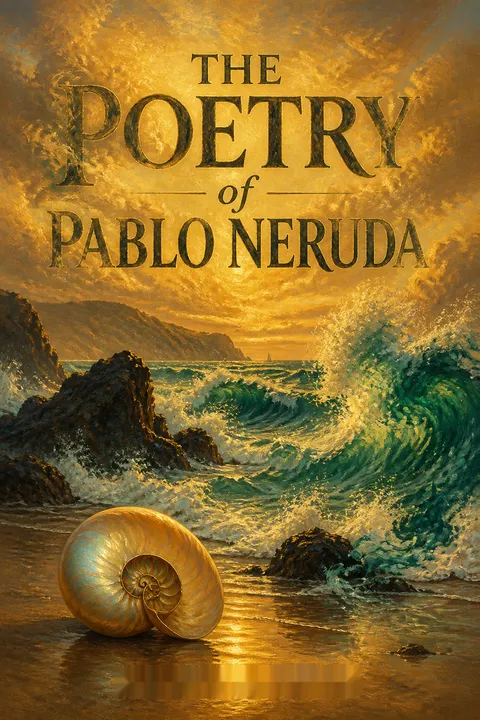

Summary Unavailable
This book is not suitable for a summary (it may be a textbook, workbook, cookbook, reference book, or collection). However, you can still explore the FAQs, about author, and other metadata below!
Resumen de la trama
Revelando la doble naturaleza del poeta
Se presenta a Pablo Neruda como un poeta de una profunda dualidad, cuya obra tiende un puente entre la esfera pública y la privada. Su poesía funciona tanto como una herramienta para el cambio social como una exploración personal de la condición humana. Federico García Lorca destaca la capacidad única de Neruda para percibir un mundo más allá de lo ordinario, más cercano a la muerte y al dolor que a la filosofía o la inteligencia. Esta dualidad es un tema recurrente que equilibra su papel de figura pública con el carácter introspectivo de un poeta. Su poesía refleja su vida, marcada por una profunda conexión con las masas y una comprensión de la experiencia humana.
El viaje de Neruda a través del tiempo
La narrativa recorre la vida de Neruda desde sus humildes comienzos en Parral, Chile, hasta su consagración como premio Nobel. Su trayectoria se sitúa en el marco de importantes acontecimientos históricos, como la guerra civil española, la Segunda Guerra Mundial y el auge del socialismo en América Latina. Estos sucesos moldearon su poesía, que funcionó a la vez como diario personal y crónica de tiempos turbulentos. La obra de Neruda es un testimonio de su fe en el poder del arte para transformar la realidad y de su compromiso con la justicia social, capturando la esencia misma del siglo XX.
La conexión del poeta con la humanidad
La poesía de Neruda se caracteriza por una profunda empatía y por abordar temas universales. Escribe sobre el amor, la pérdida y la condición humana con sencillez y honestidad, logrando conectar con lectores de diversas culturas y generaciones. Su obra celebra lo cotidiano, encontrando belleza en los objetos y las experiencias del día a día. La capacidad de Neruda para conectar con las personas a un nivel fundamental es una prueba de su comprensión del espíritu humano, recordándonos las vivencias compartidas que nos unen.
El poder de las palabras y la traducción
Este capítulo profundiza en las complejidades de traducir la obra de Neruda, destacando los desafíos y triunfos que implica llevar su poesía a un público global. La narrativa explora los matices del lenguaje y el equilibrio entre la fidelidad y la creatividad en la traducción. A pesar de las dificultades, la poesía de Neruda ha sido traducida a numerosos idiomas, permitiendo que su voz llegue a lectores de todo el mundo. El capítulo subraya la importancia de la traducción para preservar la esencia de la obra de Neruda y asegurar su vigencia continua.
El legado e influencia de Neruda
El capítulo final reflexiona sobre el legado duradero de Neruda y su influencia en la literatura y la cultura. Su poesía sigue inspirando a nuevas generaciones de escritores y lectores, ofreciendo una exploración atemporal del amor, la política y la experiencia humana. Celebrada por su belleza lírica y su profunda lucidez, la obra de Neruda consolida su lugar como uno de los más grandes poetas del siglo XX. El capítulo concluye con una invitación a valorar a Neruda en su totalidad, reconociendo la complejidad y riqueza de sus aportaciones al mundo literario.
El abrazo eterno del mar
El mar es una constante, una fuerza eterna que moldea vidas y paisajes. Es a la vez fuente de vida y presagio de destrucción; sus olas son un testimonio del paso del tiempo. El abrazo del mar es protector e implacable, un recordatorio de la dualidad de la naturaleza. Es un espacio de reflexión y soledad donde el poeta encuentra inspiración y consuelo. La presencia del mar simboliza la interconexión de todas las cosas, un ciclo eterno de vida y muerte.
El espíritu inquebrantable de la humanidad
El espíritu de la humanidad es inquebrantable, incluso en medio de desafíos abrumadores. El poeta reflexiona sobre la fuerza y la resiliencia de las personas que soportan dificultades y sufrimientos, pero que aun así luchan por un futuro mejor. Este espíritu se encarna en las historias de individuos que enfrentan la opresión y la injusticia, manteniéndose firmes en su búsqueda de libertad y dignidad. El poeta celebra el valor y la determinación de quienes luchan por sus derechos y los de los demás, destacando el poder de la acción colectiva y la solidaridad.
La búsqueda de justicia del poeta
Impulsado por un profundo sentido de la justicia, el poeta busca dar voz a quienes no la tienen. A través de su obra, expone las injusticias y desigualdades de la sociedad, utilizando las palabras como un arma contra la opresión. La búsqueda de justicia del poeta es un viaje de toda la vida que exige valentía y convicción. Sin temor a desafiar el orden establecido, utiliza la poesía para inspirar el cambio y abogar por un mundo más equitativo.
La danza del amor y la pérdida
El amor es un tema central, una fuerza que trasciende el tiempo y el espacio. Es tanto una fuente de alegría como de profunda tristeza, una danza entre la presencia y la ausencia. El poeta explora las complejidades del amor, capturando su belleza y su dolor. A través de sus palabras, transmite el profundo impacto del amor en la experiencia humana, destacando su capacidad para sanar y transformar. Incluso en la pérdida, el amor perdura, dejando una huella imborrable en el alma.
Las fuerzas invisibles de la naturaleza
La naturaleza es una fuerza poderosa y misteriosa que moldea el mundo de formas invisibles. El poeta reflexiona sobre las fuerzas ocultas de la naturaleza, desde el silencioso crecimiento de una semilla hasta la violenta erupción de un volcán. Estas fuerzas nos recuerdan la vitalidad de la tierra y el delicado equilibrio que sostiene la vida. La obra del poeta está impregnada de una profunda reverencia por la naturaleza, capturando su belleza y su furia, buscando despertar el asombro y el respeto por el mundo natural.
El legado de los insepultos
El pasado deja una huella imborrable en el presente; su legado se siente en las historias y memorias que perduran. El poeta reflexiona sobre las vidas de quienes nos precedieron, cuyas luchas y triunfos dan forma al mundo de hoy. Los insepultos son aquellos cuyas historias han sido olvidadas o borradas, pero cuyo impacto permanece. El poeta honra su memoria, dando voz a los silenciados, asegurando que su legado no se pierda en el tiempo y recordándonos la importancia de recordar y aprender del pasado.
El viaje introspectivo del poeta
Neruda profundiza en su identidad, explorando su existencia doble como figura pública e individuo privado. Reflexiona sobre sus experiencias pasadas, los paisajes que lo moldearon y los conflictos internos que impulsan su creatividad. A través de la introspección, Neruda busca comprender su esencia, utilizando la poesía para navegar por las complejidades de su mundo interior. Esta exploración está marcada por la vulnerabilidad y el deseo de conectar con la experiencia humana universal.
El peso del exilio
El exilio adquiere un papel central a medida que Neruda se enfrenta al desarraigo y a la añoranza de su patria. Reflexiona sobre el costo físico y emocional del exilio, la pérdida de los paisajes familiares y la lucha por mantener la identidad propia en tierras extranjeras. A pesar de los desafíos, el exilio le ofrece una perspectiva única, permitiéndole observar a su país y sus luchas desde la distancia. Esto alimenta su compromiso con la justicia social y su deseo de utilizar la poesía como motor de cambio, destacando el poder transformador del exilio en la construcción de su identidad y su visión artística.
El poder de la memoria y el lugar
La poesía de Neruda está profundamente arraigada en los paisajes y recuerdos del pasado. Se apoya en las imágenes de su patria, el mar y la naturaleza para evocar la nostalgia y el anhelo. Estos recuerdos inspiran y sostienen su identidad en medio del caos del exilio. A través de descripciones vívidas, Neruda captura la belleza y la complejidad de los lugares que lo formaron, enfatizando la conexión indestructible entre la memoria y el lugar en su obra. Este vínculo nos recuerda las raíces del poeta y la influencia duradera de su tierra natal en su espíritu creativo.
El despertar político del poeta
A medida que la poesía de Neruda evoluciona, también lo hace su conciencia política. Se vuelve cada vez más consciente de las injusticias y desigualdades sociales, utilizando su obra para dar voz a los marginados y oprimidos. Su poesía se convierte en una poderosa herramienta para el cambio social, desafiando el orden establecido y abogando por un mundo más justo. A través de su despertar político, Neruda demuestra el potencial de la poesía para inspirar la acción y generar cambios, destacando la intersección entre el arte y el activismo en su obra.
Analysis
La poesía de Neruda como una exploración atemporalLa poesía de Pablo Neruda es una profunda exploración de la condición humana, marcada por temas como el amor, la pérdida, la justicia y el paso del tiempo. Su obra refleja una profunda empatía y conexión con la humanidad, capturando la esencia de la experiencia humana con sencillez y honestidad. A través de su viaje introspectivo, Neruda navega por las complejidades de la identidad, el exilio y la justicia social, utilizando la poesía como un medio para conectar con la experiencia humana universal. Su compromiso con la justicia social y su exploración del amor y la memoria destacan el poder transformador de la poesía en la configuración de su identidad y su visión artística. El legado de Neruda perdura, inspirando a nuevas generaciones con su belleza lírica y su profunda lucidez, consolidando su lugar como uno de los más grandes poetas del siglo XX. Su obra sirve como un recordatorio del poder de las palabras para inspirar y transformar, ofreciendo una exploración atemporal del espíritu humano.
Última actualización:
Report IssueResumen de reseñas
La poesía de Pablo Neruda es ampliamente elogiada por sus apasionados y sensuales poemas de amor y sus poderosos versos políticos. Los lectores aprecian las vívidas imágenes de Neruda, su profundidad emocional y su capacidad para capturar tanto las experiencias personales íntimas como los temas sociales más amplios. Muchos encuentran su obra accesible y profundamente conmovedora, con algunos poemas que resuenan con gran fuerza. El carácter exhaustivo de la colección permite a los lectores explorar la evolución de Neruda como poeta. Aunque algunos consideran que ciertas secciones son difíciles o menos atractivas, en general el libro es muy valorado por su belleza, intensidad e impacto.
También leyeron


Characters
Pablo Neruda
Pablo Neruda se presenta como un poeta polifacético cuya obra tiende un puente entre lo personal y lo político. Su poesía refleja su profunda empatía y conexión con la humanidad, capturando la esencia de la experiencia humana. La trayectoria vital de Neruda, marcada por trascendentales acontecimientos históricos, moldea su obra, convirtiéndola a la vez en un diario personal y en una crónica del siglo XX. Su legado perdura, inspirando a nuevas generaciones con su belleza lírica y su profunda lucidez.
Federico García Lorca
Federico García Lorca ofrece una semblanza conmovedora de Neruda, destacando su capacidad única para percibir un mundo más allá de lo ordinario. Las palabras de Lorca subrayan la naturaleza dual de Neruda, enfatizando su cercanía con la muerte y el dolor. Esta perspectiva prepara el terreno para comprender la poesía de Neruda como un reflejo de su vida y de su profunda conexión con la condición humana.
Gabriel García Márquez
Gabriel García Márquez es un ferviente admirador de Neruda, a quien describe como «el más grande poeta del siglo XX en cualquier idioma». La admiración de Márquez por Neruda subraya el impacto del poeta en la literatura y la cultura, destacando su capacidad para conectar con lectores de todo el mundo.
Juan Ramón Jiménez
Juan Ramón Jiménez ofrece una visión contrastante de Neruda, describiéndolo como «un gran mal poeta». La crítica de Jiménez refleja la naturaleza polémica de la obra de Neruda, que ha despertado debates y opiniones divididas. Esta perspectiva aporta profundidad a la comprensión del complejo legado de Neruda.
Alastair Reid
Alastair Reid es reconocido como uno de los mejores traductores de la obra de Neruda, logrando capturar la esencia de la voz del poeta en inglés. El trabajo de Reid pone de relieve los desafíos y triunfos de la traducción, asegurando que la poesía de Neruda llegue a un público global preservando su belleza lírica y su profunda lucidez.
Manuela Sáenz
Manuela Sáenz es un símbolo de resiliencia y amor incondicional. Su historia es de pasión y rebeldía, mientras navega por los desafíos de su época. A pesar de los obstáculos que enfrenta, Manuela se mantiene firme en sus convicciones, con el espíritu intacto. Su legado es de fuerza y valentía, un recordatorio del poder del amor para trascender el tiempo y el espacio. A través de su historia, el poeta explora temas como la memoria, la pérdida y el impacto perdurable del pasado.
The Sea
El mar es una fuerza poderosa y eterna que moldea el mundo de manera profunda. Es a la vez fuente de vida y presagio de destrucción; sus olas son un testimonio del paso del tiempo. La presencia del mar es un recordatorio de la interconexión de todas las cosas, un símbolo del ciclo eterno de la vida y la muerte. A través de su inmensidad y misterio, el mar invita a la reflexión y a la introspección, sirviendo de musa para la obra del poeta.
The Unburied
Los insepultos son aquellos cuyas historias han sido olvidadas o borradas, pero cuyo impacto permanece. Son un recordatorio del legado perdurable del pasado, que da forma al mundo que habitamos hoy. El poeta busca honrar su memoria, dando voz a los silenciados y asegurando que su legado no se pierda en el tiempo. A través de su obra, nos recuerda la importancia de recordar y aprender del pasado, destacando el poder de las historias para conectarnos a lo largo de las generaciones.
Matilde Urrutia
Matilde Urrutia es una figura central en la vida y obra de Neruda, funcionando tanto de musa como de compañera. Su presencia se siente en toda su poesía, inspirando algunas de sus piezas más apasionadas e introspectivas. La influencia de Urrutia en la obra de Neruda es profunda, aportándole una sensación de estabilidad y arraigo en medio del caos del exilio. Su papel como fuente de inspiración y apoyo destaca el poder duradero del amor en la vida y obra de Neruda, enfatizando la importancia de la conexión humana en la formación de su espíritu creativo.
Plot Devices
Duality
El tema de la dualidad es fundamental para comprender la obra de Neruda, reflejando su capacidad para equilibrar lo personal y lo político. Este recurso narrativo subraya la complejidad de la poesía de Neruda, que captura tanto los aspectos íntimos como los universales de la experiencia humana.
Historical Context
El contexto histórico de la vida de Neruda juega un papel fundamental en la configuración de su poesía. Acontecimientos como la guerra civil española y la Segunda Guerra Mundial influyen en su obra, convirtiéndola tanto en un diario personal como en una crónica de tiempos convulsos. Este recurso destaca la estrecha relación entre el arte y la historia.
Translation
La traducción es un recurso narrativo crucial en este relato, ya que permite que la poesía de Neruda llegue a lectores de todo el mundo. Se exploran los desafíos y triunfos de la traducción, enfatizando la importancia de preservar la esencia de la obra de Neruda y asegurar su relevancia continua a través de diferentes culturas e idiomas.
Nature's Duality
La naturaleza es un tema central en la obra del poeta, capturando tanto su belleza como su furia. El poeta reflexiona sobre las fuerzas ocultas de la naturaleza, desde el silencioso crecimiento de una semilla hasta la violenta erupción de un volcán. Estas fuerzas son un recordatorio de la vitalidad de la tierra y del delicado equilibrio que sostiene la vida. A través de sus palabras, el poeta busca despertar un sentido de asombro y respeto por el mundo natural, destacando su poder e influencia.
The Passage of Time
El tiempo es una presencia constante en la obra del poeta; su transcurrir moldea el mundo y las vidas que en él habitan. El poeta reflexiona sobre el impacto del tiempo, capturando tanto su belleza como su melancolía. A través de sus palabras, explora las complejidades de la memoria y el legado perdurable del pasado. El tiempo es a la vez una fuente de inspiración y un recordatorio de la impermanencia de la vida; su marcha implacable es un testimonio de la naturaleza siempre cambiante de la existencia.
Exile
El exilio juega un papel fundamental en la configuración de la identidad y la visión artística de Neruda. La experiencia del desarraigo y el desplazamiento alimenta su viaje introspectivo, permitiéndole observar su patria y sus luchas desde la distancia. Esta distancia le ofrece una perspectiva única, potenciando su compromiso con la justicia social y su deseo de utilizar la poesía como herramienta de cambio. El exilio se convierte en una fuerza transformadora en la obra de Neruda, destacando el potencial de la poesía para inspirar la acción y generar cambios.
Memory and Place
La memoria y el lugar son temas centrales en la obra de Neruda, sirviendo como fuente de inspiración y refugio en medio del caos del exilio. A través de sus vívidas descripciones de paisajes y recuerdos, Neruda captura la belleza y la complejidad de los espacios que lo moldearon. Esta conexión entre la memoria y el lugar funciona como un recordatorio de las raíces del poeta y de la influencia duradera de su tierra natal en su espíritu creativo, enfatizando la importancia de la memoria en la construcción de la identidad y la visión artística.
Preguntas frecuentes
0. Synopsis & Basic Details
What is The Poetry of Pablo Neruda about?
- A Lyrical Chronicle of Existence: The Poetry of Pablo Neruda is a comprehensive collection spanning the Chilean Nobel laureate's career, showcasing his evolution from an intensely personal love poet to a fervent political voice, and ultimately, a universal chronicler of human experience. It delves into themes of love, nature, social justice, and the very act of poetic creation, often intertwining these elements with the historical and geographical tapestry of Latin America.
- An Odyssey of Self and Society: The book traces Neruda's extraordinary life journey, from his humble beginnings in rural Chile to his international renown and political activism, including his experiences with exile and his unwavering commitment to the common people. It presents his poetry as both an intimate diary of a nomad and a powerful chronicle of the tumultuous 20th century, reflecting his belief in art's capacity for radical transformation.
- The Poet's Dialogue with the World: More than just an anthology, this collection highlights Neruda's continuous dialogue with the world around him—its objects, its landscapes, its political upheavals, and its human inhabitants. Through diverse poetic forms, from erotic love poems to epic historical narratives and elemental odes to everyday things, Neruda seeks to find and express the "epiphany that will satisfy his curiosity," always striving for simplicity, honesty, and conviction.
Why should I read The Poetry of Pablo Neruda?
- Experience Poetic Grandeur and Accessibility: Readers should delve into this collection to encounter one of the 20th century's most celebrated and accessible poets, whose work, as Gabriel García Márquez noted, is "the greatest... in any language." Neruda masterfully combines profound philosophical insights with vivid, tangible imagery, making complex emotions and political statements resonate deeply and personally.
- Witness a Poet's Transformative Journey: The collection offers a unique opportunity to witness the full arc of a poet's development, from the youthful eroticism of Twenty Love Poems to the epic scope of Canto General and the introspective wisdom of his later works. It reveals how personal experiences, historical events, and a deep connection to humanity shaped a singular artistic voice, providing a rich tapestry of human emotion and societal engagement.
- Discover the Power of "Impure Poetry": Neruda's manifesto "Towards an Impure Poetry" champions a verse that embraces the mundane, the worn, and the real—a "poetry of loam, where water can sing. A poetry of bread, where everyone may eat." Reading this collection allows one to appreciate how he elevates everyday objects and struggles into profound art, offering a fresh perspective on the beauty and tragedy inherent in ordinary existence.
What is the background of The Poetry of Pablo Neruda?
- Chilean Roots and Global Consciousness: Pablo Neruda (born Neftalí Ricardo Reyes Basoalto in 1904 in Parral, Chile) emerged from a provincial Chilean background, deeply influenced by the natural landscapes of the South, particularly the rain-soaked forests and rugged coastlines. This early connection to nature and the lives of common people—like his railway worker father—formed the bedrock of his poetic sensibility, even as his diplomatic career and political activism propelled him onto the global stage.
- A Witness to 20th-Century Turmoil: Neruda's life and work are inextricably linked to the major historical and political upheavals of the 20th century. His experiences as a consul in various Asian countries, his fervent support for the Republican cause during the Spanish Civil War (reflected in España en el corazón), his alignment with the Soviet Union, and his later political persecution in Chile (leading to his famous Andean escape) all profoundly shaped his poetry, transforming him into a "voice of the voiceless" and a chronicler of his era.
- Literary Rebellion and Innovation: Neruda's early work rebelled against the prevailing Modernista literary movement in Latin America, which he found too abstract and detached. He experimented with Surrealism but ultimately embraced a more grounded, "impure" poetry, using classic forms like the ode to sing of common things (e.g., an artichoke, a pair of socks). His commitment to simplicity, honesty, and conviction, combined with his innovative use of language, solidified his place as a canonical figure in world literature.
What are the most memorable quotes in The Poetry of Pablo Neruda?
- "I no longer love her, that's certain, but maybe I love her. Love is so short, forgetting is so long." (from "XX" in Twenty Love Poems and a Song of Despair) This poignant line encapsulates the bittersweet agony of lost love, highlighting the enduring emotional residue even after a relationship ends. It speaks to the universal human experience of memory's persistence against the will to forget, a central theme in Neruda's early, intensely personal poetry.
- "Come and see the blood in the streets, come and see the blood in the streets, come and see the blood in the streets!" (from "I Explain a Few Things" in Residence on Earth) This powerful, repetitive cry marks Neruda's definitive shift to political engagement, directly confronting the horrors of the Spanish Civil War. It serves as an urgent, visceral demand for witness, rejecting abstract aesthetics in favor of a raw, undeniable depiction of human suffering and injustice.
- "I come to speak for your dead mouths." (from "XII" in The Heights of Macchu Picchu) This declaration from the epic Canto General embodies Neruda's role as a prophetic voice for the oppressed and forgotten peoples of Latin America. It signifies his commitment to giving voice to the silenced, to resurrecting the history and dignity of indigenous cultures and laborers, and to channeling their suffering and aspirations through his poetry.
What writing style, narrative choices, and literary techniques does Pablo Neruda use?
- Sensory-Rich Imagery and Metaphor: Neruda's style is characterized by an abundance of vivid, often synesthetic imagery that appeals to all senses. He frequently employs striking metaphors and similes, transforming ordinary objects and abstract concepts into tangible, often organic, forms. For example, in "Ode to the Artichoke," the vegetable becomes a "tender-hearted warrior," while in "Your Laughter," it's a "sudden wave of silver."
- Evolution of Poetic Voice and Form: His narrative choices evolve significantly throughout his career. Early works like Twenty Love Poems feature a deeply personal, melancholic, and erotic lyricism, often addressing an absent beloved. Later, in Canto General, he adopts an epic, panoramic scope, chronicling history and geography with a collective, prophetic voice. His Elemental Odes showcase a democratic approach to form, elevating mundane subjects with accessible language and celebratory tones.
- Repetition, Anaphora, and Cataloging: Neruda frequently uses repetition and anaphora (e.g., "I love you, I love you" in "Love Song," or "I see, I see, and seeing, I came to life" in "Horses") to build emotional intensity and rhythmic momentum. He also employs extensive cataloging, particularly in his epic and political poems, to create a sense of vastness, inclusivity, and the overwhelming scale of human experience or natural phenomena, as seen in the detailed lists of Spanish towns in "What Spain Was Like" or the diverse birds in "The Birds Arrive."
1. Hidden Details & Subtle Connections
What are some minor details that add significant meaning?
- The "Red Line" as a Symbol of Exploitation: In "The Red Line" (Canto General), the seemingly simple act of drawing a red line on a wall to mark the required gold and silver for Atahualpa's ransom becomes a chilling symbol of colonial greed and the arbitrary nature of indigenous suffering. It's a minor detail that encapsulates the entire brutal history of the Conquistadors' insatiable hunger for wealth, directly linking a physical boundary to the "blood" of the king and the "yellow innards of the muted moribund kingdom."
- The "Invisible Man" as the Collective Poet: In "The Invisible Man" (Elemental Odes), Neruda describes himself as "the only one who does not exist," yet through whom "life flows around me like rivers." This subtle self-effacement is a profound statement on his poetic philosophy: by becoming "invisible," he allows the voices and experiences of all people—the bakers, the miners, the lovers, the suffering—to flow through him, making his poetry a collective rather than purely individual expression. It redefines the poet's role from solitary genius to communal conduit.
- The "Rusty Old Engine" in "A Dog Has Died": The detail of burying his dog "beside a rusty old engine" in "A Dog Has Died" (Winter Garden) is more than just a setting; it subtly connects the personal grief of losing a beloved companion to the industrial, working-class landscape of his father's railway life. The juxtaposition of the organic (dog, garden) with the metallic, decaying symbol of labor suggests that even in death and personal sorrow, Neruda's roots in the earth and the struggles of his people remain present, a quiet testament to his enduring connection to his origins.
What are some subtle foreshadowing and callbacks?
- Early "Solitude" Echoes Later Exile: Neruda's early poems, such as "My Soul is an empty carousel at sunset" (Book of Twilight) and the pervasive "loneliness" in Twenty Love Poems, subtly foreshadow his later experiences with political exile. This initial, almost romanticized, sense of isolation evolves into the profound, forced displacement described in "Exile" (Isla Negra), where he feels like an "embarrassed ghost" missing the "hostile prickles of [his] own country." The personal solitude of youth becomes a national, political reality.
- "Ars Poetica" Prefigures Political Engagement: The early "Ars Poetica" (Residence on Earth) with its lines "the truth is that suddenly the wind that lashes my chest... ask me mournfully what prophecy there is in me" subtly foreshadows Neruda's later, explicit political awakening. The "ceaseless movement" and "bewildered man" hint at an impending shift from introspective angst to outward engagement, preparing the reader for the passionate calls to action and chronicles of war found in España en el corazón and Canto General.
- "The First Sea" as a Genesis of Identity: In "The First Sea" (Isla Negra), the young Neruda's solitary experience in the prow of a paddleboat, "transfixed by the movement of the water," acts as a foundational callback to his elemental connection with nature and his nascent poetic identity. This primal encounter with the sea, where "my country grew in size. My world of wood split open," is a symbolic birth, echoing the "seminal odor of origin" and the "earth-womb" described in later poems, establishing the sea as a lifelong muse and a source of self-discovery.
What are some unexpected character connections?
- Neruda's Poetic Kinship with Walt Whitman: The collection reveals an unexpected, yet profound, connection between Neruda and Walt Whitman, whom he invokes as an "essential brother" and "patriarchal pine" in "Ode to Walt Whitman" (Elemental Odes). This isn't just literary admiration; Neruda sees Whitman as a spiritual ancestor who taught him "to be americano" and "disinterred humanity," particularly the "humiliated slave." This connection highlights a shared democratic vision and a commitment to giving voice to the common person, transcending geographical and linguistic boundaries.
- The "Dodobird" as a Tyrannical Bureaucrat: In "Dodobird" (Art of Birds), Neruda creates an unexpected character connection by personifying authoritarian figures as a "sad featherless bird" that "dictated the air, hope" from its seated position. This satirical portrayal links the seemingly innocuous dodobird to the "ferocious dodobird" of dictatorship, subtly connecting the natural world to the political realm and exposing the absurdity and immobility of oppressive power structures. It's a surprising use of animal imagery to critique human governance.
- Manuela Sáenz as a "Siren of Rifles": In "The Sea and Manuelita" (Ceremonial Songs), Manuela Sáenz, Bolívar's lover, is unexpectedly described as a "siren of rifles" and a "little Creole merchant of honey, doves, pineapples, and pistols." This fusion of classical mythology (siren) with revolutionary action and everyday commerce creates a complex, almost contradictory, character. It connects her romantic, feminine allure with her fierce, militant spirit, highlighting her multifaceted role as both a passionate lover and a formidable figure in the fight for liberation, challenging conventional portrayals of historical women.
Who are the most significant supporting characters?
- Matilde Urrutia: The Enduring Muse and Anchor: Matilde Urrutia emerges as a profoundly significant supporting character, not just as Neruda's beloved but as a grounding force and enduring muse throughout his later life and work. Poems like "In You the Earth" and "Your Laughter" (The Captain's Verses) reveal her as the source of his "endless love" and a symbol of stability amidst his political turmoil. She is depicted as embodying the earth, nature, and a quiet strength that sustains him, making her integral to his personal and poetic survival.
- Federico García Lorca: The Poetic Catalyst and Tragic Symbol: Federico García Lorca is a crucial figure, not only for his insightful introduction to Neruda's duality but also as a tragic symbol whose murder profoundly impacted Neruda's political awakening. The "Ode to Federico García Lorca" (Residence on Earth) transforms Lorca from a friend into a martyr, whose "black-draped orange-tree voice" and "poetry that comes forth shouting" become a call to arms. His death galvanizes Neruda's commitment to social justice, making Lorca a posthumous catalyst for the poet's public voice.
- The "People": The Collective Protagonist and Moral Compass: Beyond individual figures, "The People" function as a collective supporting character, arguably the most significant in Neruda's later work. In poems like "The People" (Fully Empowered) and "The Earth's Name Is Juan" (Canto General), they are depicted as the "country's foundation," the "innumerable people" who suffer, labor, and ultimately embody truth and hope. They serve as Neruda's moral compass and the ultimate beneficiaries of his poetic and political struggles, transforming his personal voice into a universal one.
2. Psychological, Emotional, & Relational Analysis
What are some unspoken motivations of the characters?
- Neruda's Quest for Belonging Amidst Solitude: A deep, unspoken motivation for Neruda throughout his early work is a profound yearning for belonging, often masked by his declared "solitude." In poems like "My Soul is an empty carousel at sunset" (Book of Twilight) or "Thinking, Tangling Shadows in the deep solitude" (Twenty Love Poems), his introspection isn't just self-absorption but a search for connection, a desire to fill the "empty carousel" of his soul. This underlying need for human and earthly integration drives his later political engagement, where he finds belonging in the collective "people."
- The Beloved's Elusiveness as a Catalyst for Poetic Creation: In Twenty Love Poems, the unnamed beloved's frequent "absence" and "distance" ("You are far away too, oh farther than anyone," "Always, always you recede through the evenings") serve as an unspoken motivation for the poet's relentless outpouring of verse. Her elusiveness isn't just a source of pain but a creative catalyst, forcing him to "forge" her "like a weapon" in his poetry, to capture and possess her through words when physical presence is denied. The act of writing becomes a way to bridge the emotional and physical distance.
- The Oppressor's Need for Self-Justification: In his political poems, particularly those addressing tyrants and colonizers (e.g., "General Franco in Hell," "Standard Oil Co."), an unspoken motivation for these "characters" is a desperate need for self-justification and the maintenance of their perceived moral superiority. Their "suave smiling" and "benevolent" pronouncements, even amidst atrocities, suggest a psychological mechanism to rationalize their actions and maintain a facade of order, as seen in the "diplomats" who "act dumb" about injustices. This reveals a deep-seated hypocrisy driven by self-preservation and greed.
What psychological complexities do the characters exhibit?
- The Poet's Oscillating Identity and Self-Doubt: Neruda, particularly in Extravagaria and Isla Negra, exhibits profound psychological complexity through his oscillating identity and self-doubt. In "We Are Many," he confesses, "Of the many men who I am, who we are, I can't find a single one," revealing a fragmented self that struggles with internal contradictions (coward/brave, intelligent/fool). This isn't mere whimsy but a deep exploration of the fluid, often contradictory nature of the human psyche, especially for a public figure grappling with his private self and the expectations placed upon him.
- The "Unhappy One" and Enduring Trauma: The character in "The Unhappy One" (Extravagaria) who "didn't die" despite war, destruction, and the loss of everything, yet remains "waiting" amidst "cinders" and "a black stain of blood," embodies a complex psychological state of enduring trauma. Her survival is not a triumph but a prolonged agony, a testament to the way profound suffering can freeze a person in a state of perpetual waiting, unable to move past the devastation, highlighting the psychological scars of historical violence.
- The "Old Poet's" Acceptance of Decay and Wisdom: In "Ode to an Aged Poet" (Elemental Odes), the titular character displays a complex acceptance of physical decay ("his suit was much too large," "bones of his body were visible") intertwined with a profound, almost mineral, wisdom. His face is "intricately scored by days, months, and years," a "writing of time." This character embodies the psychological journey of aging, where the external self diminishes, but an internal, accumulated knowledge deepens, suggesting a serene, almost geological, understanding of life's impermanence and the enduring power of experience.
What are the major emotional turning points?
- The Shift from Personal Anguish to Collective Outcry in Spain: A major emotional turning point occurs with Neruda's experience of the Spanish Civil War, transforming his personal anguish into a collective, impassioned outcry. The transition from the melancholic love poems of Twenty Love Poems to the visceral "Come and see the blood in the streets" in "I Explain a Few Things" (Residence on Earth) marks a profound emotional pivot. His initial "bewildered" state gives way to a fierce, empathetic rage, as he witnesses the suffering of a nation and dedicates his voice to its defense, moving from individual sorrow to universal solidarity.
- The Discovery of Macchu Picchu as a Source of Ancestral Connection: The visit to Macchu Picchu, detailed in The Heights of Macchu Picchu (Canto General), represents a significant emotional turning point, shifting Neruda's focus from European influences to a deep, ancestral connection with Latin American indigenous history. His initial search for "man" among the ruins culminates in the powerful invocation, "Arise to birth with me, my brother. Give me your hand out of the depths sown by your sorrows." This moment signifies an emotional embrace of a forgotten heritage, transforming his poetic identity into a voice for the continent's silenced past and future.
- The Experience of Exile as a Catalyst for Renewed Purpose: Neruda's forced exile, particularly his escape across the Andes, serves as a crucial emotional turning point, deepening his commitment to his people and solidifying his poetic purpose. In "Exile" (Isla Negra), he describes missing "the hostile prickles of your own country," revealing a complex emotional attachment to even the hardships of his homeland. This period of displacement, rather than breaking him, refines his resolve, leading to a more focused and resilient dedication to social justice, as articulated in "The Poet's Obligation" (Fully Empowered), where he vows to "ceaselessly must listen to and keep the sea's lamenting in my consciousness."
How do relationship dynamics evolve?
- From Obsessive Romanticism to Grounded Partnership: Neruda's relationship dynamics evolve from the intense, often obsessive and melancholic romanticism of Twenty Love Poems to a more grounded, mature partnership, particularly with Matilde Urrutia. In early poems, the beloved is an elusive, almost ethereal figure, a "butterfly of dream" or "eyes of absence." With Matilde, as seen in "In You the Earth" and "Letter on the Road" (The Captain's Verses), the relationship becomes a tangible, earthy collaboration, a shared "struggle" and a source of "firm stone" and "tenderness," moving beyond idealized longing to a practical, resilient bond.
- From Individual Isolation to Collective Brotherhood: The poet's relationship with humanity undergoes a significant transformation, moving from a sense of individual isolation to a profound embrace of collective brotherhood. Early poems often depict him as "alone as a tunnel" or "isolated in the expanse of the seasons." However, through his political awakening, particularly in Canto General and Fully Empowered, his identity merges with "The People." In "The Earth's Name Is Juan," he declares, "I'm related to all those who die, I'm people," signifying a shift from personal detachment to an active, empathetic identification with the struggles and aspirations of the masses.
- From Literary Rivalry to Acknowledged Influence: Neruda's relationships with other literary figures evolve from initial rivalry and critique (e.g., his nuanced views on Huidobro and Borges) to a more generous acknowledgment of influence and shared purpose. His "Ode to Walt Whitman" (Elemental Odes) exemplifies this, where he embraces Whitman as a "prime old brother of my roots" who taught him "to be americano." This demonstrates a maturation in his literary relationships, moving beyond competitive posturing to recognize the interconnectedness of poetic traditions and the shared mission of art.
4. Interpretation & Debate
Which parts of the story remain ambiguous or open-ended?
- The Identity of the Beloved in Twenty Love Poems: The precise identity of the "woman" or "women" addressed in Twenty Love Poems and a Song of Despair remains intentionally ambiguous. Neruda himself referred to them as "Marisol and Marisombra," suggesting a composite or archetypal figure rather than a single individual. This ambiguity allows readers to project their own experiences of love and loss onto the poems, making the emotions universal rather than strictly biographical, fostering a deeper, more personal connection to the verse.
- The Nature of "Death" in Neruda's Philosophy: While death is a recurring motif, its ultimate nature in Neruda's philosophy remains open-ended. In "Only Death" (Residence on Earth), death is personified as a silent, pervasive force, "like a shoe without a foot, like a suit without a man." Yet, in later poems like "The Earth's Name Is Juan" (Canto General) and "A Dog Has Died" (Winter Garden), there's a sense of continuity, of returning to the earth or waiting in a "heaven" that the poet himself won't enter. This leaves the reader to ponder whether death is an absolute end, a transformation, or a return to an elemental state, reflecting a complex, evolving spiritual perspective.
- The Efficacy of Poetry in Political Change: Despite
Sobre el autor
Pablo Neruda fue el seudónimo del poeta y político chileno Neftalí Ricardo Reyes Basoalto. Se le considera uno de los poetas más grandes del siglo XX, conocido por la diversidad de sus estilos, que abarcan desde poemas de amor hasta manifiestos políticos. Neruda ganó el Premio Nobel de Literatura en 1971. También fue diplomático y senador por el Partido Comunista de Chile, enfrentando la persecución política y el exilio. La obra de Neruda tuvo una enorme influencia y llegó a ofrecer lecturas ante multitudes multitudinarias. Murió poco después del golpe de Estado chileno de 1973, y su funeral se convirtió en la primera protesta pública contra la dictadura militar. El legado de Neruda, tanto como poeta como figura política, sigue resonando en todo el mundo.
Otros libros de Pablo Neruda
Descargar PDF
Descargar EPUB
.epub digital book format is ideal for reading ebooks on phones, tablets, and e-readers.








































