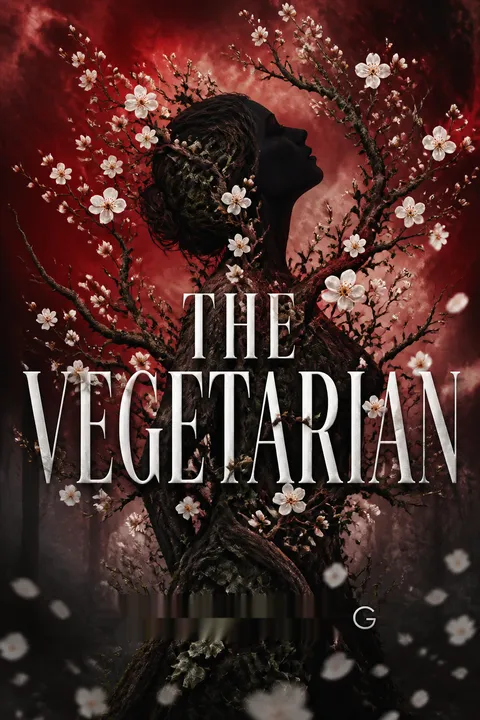

Resumen de la trama
La esposa insignificante
Yeong-hye, una mujer aparentemente común y corriente, lleva una vida tranquila junto a su esposo, el señor Cheong, quien valora precisamente su falta de atributos llamativos. Su matrimonio carece de pasión, pero se adapta a la perfección al deseo del señor Cheong de llevar una vida predecible. Sin embargo, todo cambia cuando Yeong-hye decide hacerse vegetariana, una elección que desconcierta y frustra a su marido. Su negativa a comer carne no es una simple preferencia dietética, sino una profunda transformación que desafía los cimientos mismos de su relación. Esta decisión desencadena una serie de acontecimientos que desmoronarán la vida de todos a su alrededor.
Sueños y transformación
La decisión de Yeong-hye de dejar de comer carne nace de un sueño vívido y perturbador. En este sueño, la persiguen imágenes de sangre y violencia, lo que la lleva a rechazar la carne por completo. Su transformación no es solo física sino también psicológica, a medida que se distancia cada vez más de la realidad. Su familia se muestra desconcertada y preocupada, incapaz de comprender la profundidad de su cambio. Los sueños de Yeong-hye se convierten en el catalizador de su metamorfosis, alejándola cada vez más de la vida que solía conocer.
El descontento familiar
La familia de Yeong-hye se sume en el caos ante su negativa a comer carne. Su padre, una figura tradicional y autoritaria, se siente particularmente indignado por su rebeldía. Durante una reunión familiar, las tensiones llegan a un punto crítico que culmina en un violento enfrentamiento. El acto de rebelión de Yeong-hye es respondido con fuerza, pero esto solo reafirma su determinación. Su familia se ve obligada a lidiar con las consecuencias de su transformación, mientras lucha por comprender y controlar su recién descubierta independencia.
La obsesión del artista
El cuñado de Yeong-hye, el artista, se obsesiona con la transformación de ella. Queda cautivado por la idea de pintar flores sobre su cuerpo, viéndola como un lienzo vivo. Su fascinación por la metamorfosis física y psicológica de Yeong-hye lo lleva a crear una obra de arte íntima y controvertida. Esta obsesión desibuja las fronteras entre el arte y la realidad a medida que él se enreda en el mundo de Yeong-hye, arriesgando su propio matrimonio y su reputación en el proceso.
La creación prohibida
El proyecto de el artista con Yeong-hye culmina en una creación provocadora y prohibida. Graba su cuerpo desnudo, cubierto de flores pintadas, capturando la esencia misma de su transformación. Este acto de creación es tanto una expresión de deseo como una violación de los límites, ya que expone los aspectos más puros y vulnerables de la identidad de Yeong-hye. La obra de arte se convierte en un símbolo del caos y la belleza que su transformación ha desatado, desafiando las normas sociales y las relaciones personales.
El colapso del orden
Las consecuencias del proyecto de el artista son catastróficas. El esposo de Yeong-hye, el señor Cheong, es incapaz de lidiar con el escándalo y solicita el divorcio. La familia se desgarra por la vergüenza y la confusión, mientras lucha por reconciliar el amor que sienten por Yeong-hye con la realidad de sus acciones. El núcleo familiar, antes estable, se derrumba bajo el peso de la transformación de Yeong-hye, dejando que cada miembro se enfrente a sus propios miedos y deseos.
El llamado del bosque
El viaje de Yeong-hye la lleva a profundizar en su propia psique, sintiéndose cada vez más atraída por el mundo natural. Se escapa al bosque en busca de consuelo y de una conexión con la tierra. En la naturaleza encuentra una sensación de paz y pertenencia que le resulta esquiva en el mundo humano. Su deseo de fundirse con la naturaleza es a la vez un rechazo a las imposiciones sociales y una aceptación de su verdadero ser. El bosque se convierte en su santuario, un lugar donde puede existir sin juicios ni expectativas.
La lucha por la supervivencia
A medida que el estado físico de Yeong-hye se deteriora, su familia se ve obligada a afrontar la realidad de la situación. Su negativa a comer le provoca graves complicaciones de salud y es hospitalizada. A pesar de los esfuerzos de los médicos y de su hermana, In-hye, por salvarla, Yeong-hye se mantiene firme en su creencia de que ya no necesita alimento. Su lucha se convierte en una batalla entre la mente y el cuerpo, en su intento de trascender las limitaciones de su forma física.
La mente que se desmorona
El estado mental de Yeong-hye continúa deteriorándose a medida que se distancia más y más de la realidad. Sus sueños y alucinaciones desdibujan la línea entre lo consciente y lo inconsciente, llevándola a cuestionar la naturaleza misma de la existencia. Su hermana, In-hye, se queda sola lidiando con las implicaciones de la transformación de Yeong-hye, esforzándose por comprender las motivaciones y deseos de su hermana. Las fronteras entre la cordura y la locura se vuelven cada vez más difusas a medida que el viaje de Yeong-hye llega a su clímax.
El descenso final
La transformación de Yeong-hye llega a su trágico final cuando su cuerpo sucumbe al desgaste provocado por su negativa a comer. Su familia se queda sola para recoger los pedazos, lidiando con la pérdida de una hermana, una hija y una esposa. In-hye reflexiona sobre los acontecimientos que condujeron a este momento, cuestionando su propio papel en la transformación de Yeong-hye. La historia termina con una sensación de ambigüedad, dejando a los personajes meditando sobre el significado del viaje de Yeong-hye y el impacto que ha tenido en sus vidas.
Analysis
Una profunda exploración de la identidad y la rebeliónLa vegetariana, de Han Kang, es una poderosa exploración de la identidad, la transformación y la rebelión contra las normas sociales. A través del viaje de Yeong-hye, la novela profundiza en las complejidades de las elecciones personales y el impacto de las acciones individuales en las dinámicas familiares. La historia desafía al lector a reflexionar sobre los límites entre la cordura y la locura, el arte y la realidad, y lo consciente y lo inconsciente. La transformación de Yeong-hye funciona como una metáfora de la lucha por afirmar la propia identidad en un mundo que exige conformidad. La exploración que hace la novela de los sueños, el arte y la naturaleza resalta la tensión entre los deseos personales y las expectativas sociales, cuestionando en última instancia la naturaleza de la libertad y el costo del autodescubrimiento.
Resumen de reseñas
La vegetariana es una novela profundamente inquietante y sugerente que explora temas como las enfermedades mentales, la presión social y la autonomía. Muchos lectores la encontraron perturbadora a la vez que fascinante, elogiando la prosa poética de Han Kang y su capacidad para abordar cuestiones complejas. La estructura del libro, narrada desde tres perspectivas diferentes, recibió reacciones encontradas. Algunos apreciaron este enfoque tan singular, mientras que otros se sintieron desconectados del personaje principal. La crítica destacó el poderoso análisis que hace la novela sobre los roles de género y las expectativas culturales en Corea del Sur, aunque algunos consideraron problemática la forma de retratar el vegetarianismo.
También leyeron






Characters
Yeong-hye
Yeong-hye es el personaje central cuya decisión de convertirse en vegetariana desencadena una serie de acontecimientos que trastornan a su familia. Su transformación es impulsada por sueños perturbadores que la llevan a rechazar las normas sociales y a adoptar una nueva identidad. A medida que se distancia de la realidad, su viaje se convierte en uno de autodescubrimiento y rebelión contra las limitaciones de su vida.
Mr. Cheong
El esposo de Yeong-hye, el señor Cheong, es un hombre que valora la estabilidad y la previsibilidad. Se siente desconcertado y frustrado por la transformación de Yeong-hye, incapaz de comprender sus motivos. Su incapacidad para lidiar con los cambios de su esposa provoca la ruptura de su matrimonio y su eventual abandono.
In-hye
In-hye es la hermana mayor de Yeong-hye, quien asume el papel de cuidadora a medida que el estado de Yeong-hye empeora. Lucha por comprender la transformación de su hermana y se debate entre su sentido del deber y sus propios deseos. El viaje de In-hye es de autorreflexión, mientras asimila el impacto de las acciones de Yeong-hye en su propia vida.
The Artist (Yeong-hye's Brother-in-law)
El cuñado de Yeong-hye se obsesiona con la transformación de ella, viéndola como un lienzo vivo para su arte. Su fijación con Yeong-hye lo lleva a crear una obra polémica que desdibuja los límites entre el arte y la realidad. Sus acciones tienen consecuencias de gran alcance que afectan a su matrimonio y a su reputación.
The Father
El padre de Yeong-hye es una figura dominante incapaz de aceptar la transformación de su hija. Su violenta reacción ante la negativa de ella a comer carne pone de manifiesto las tensiones generacionales y culturales dentro de la familia. Sus acciones contribuyen a la desintegración del núcleo familiar.
The Mother
La madre de Yeong-hye es una figura más pasiva, atrapada entre el autoritarismo de su esposo y la rebelión de su hija. Lucha por comprender la transformación de Yeong-hye y, en última instancia, es incapaz de evitar la desintegración de la familia.
Ji-woo
Ji-woo es el pequeño hijo de In-hye, quien se ve afectado indirectamente por los acontecimientos que rodean la transformación de Yeong-hye. Su inocencia y vulnerabilidad resaltan el impacto del caos familiar en las nuevas generaciones.
The Doctor
El médico que supervisa el tratamiento de Yeong-hye es una figura de autoridad que lucha por comprender su estado. Sus intentos por salvarla chocan con la resistencia de ella, lo que evidencia las limitaciones de la intervención médica frente a una transformación psicológica profunda.
Hee-joo
Hee-joo es una paciente del hospital psiquiátrico que se convierte en la cuidadora de Yeong-hye. Su empatía e inestabilidad emocional contrastan con el entorno clínico del hospital, destacando el elemento humano en la lucha de Yeong-hye.
Plot Devices
Dreams as Catalysts
Los sueños desempeñan un papel crucial en la transformación de Yeong-hye, funcionando como el detonante de su decisión de hacerse vegetariana. Estos sueños desdibujan la frontera entre la realidad y el subconsciente, empujándola a rechazar las normas sociales y a adoptar una nueva identidad. El motivo recurrente de los sueños resalta el poder del subconsciente para moldear nuestras acciones y creencias.
Art as Obsession
La obsesión de el artista con la transformación de Yeong-hye funciona como un recurso narrativo que borra las fronteras entre el arte y la realidad. Su fijación con ella como un lienzo vivo conduce a la creación de una obra polémica que desafía las normas sociales y los límites personales. Este recurso explora la intersección entre el arte, el deseo y la identidad.
Family Dynamics
Las dinámicas familiares en la historia funcionan como un recurso narrativo que pone de relieve las tensiones generacionales y culturales dentro del hogar. La transformación de Yeong-hye altera la estabilidad de la familia, provocando conflictos y desintegración. Este recurso explora el impacto de las decisiones individuales en las relaciones familiares y la dificultad de conciliar los deseos personales con las expectativas de la sociedad.
Nature as Sanctuary
La conexión de Yeong-hye con la naturaleza funciona como un recurso narrativo que simboliza su deseo de escapar de las imposiciones sociales y abrazar su verdadero ser. El bosque se convierte en un santuario donde puede existir sin juicios, destacando el tema de la naturaleza como fuente de consuelo e identidad. Este recurso subraya la tensión entre el mundo natural y la sociedad humana.
Preguntas frecuentes
Synopsis & Basic Details
What is The Vegetarian about?
- A woman's radical choice: The Vegetarian centers on Yeong-hye, a seemingly ordinary woman who abruptly decides to become a vegetarian, a decision that spirals into a profound and disturbing transformation.
- Disruption of normalcy: Her choice disrupts her marriage, family, and social life, forcing those around her to confront their own desires, fears, and limitations.
- Exploration of inner turmoil: The novel delves into themes of identity, rebellion, and the struggle for self-expression, exploring the psychological depths of Yeong-hye's transformation and its impact on others.
Why should I read The Vegetarian?
- Unique narrative perspective: Han Kang's novel offers a compelling and unsettling narrative, told through multiple perspectives, providing a fragmented yet comprehensive view of Yeong-hye's transformation.
- Exploration of complex themes: The Vegetarian tackles profound themes such as the body, desire, violence, and the search for meaning, prompting readers to question societal norms and personal boundaries.
- Emotionally resonant experience: The novel evokes a range of intense emotions, from discomfort and confusion to empathy and horror, creating a deeply immersive and thought-provoking reading experience.
What is the background of The Vegetarian?
- South Korean societal norms: The novel is set against the backdrop of South Korean society, where traditional values and expectations regarding family, marriage, and diet are deeply ingrained.
- Cultural expectations of women: The story explores the limited roles and expectations placed on women in Korean society, highlighting the pressures to conform and the consequences of rebellion.
- Exploration of mental health: The novel touches upon the stigma surrounding mental illness and the challenges faced by individuals who deviate from societal norms, reflecting broader cultural attitudes towards psychological well-being.
What are the most memorable quotes in The Vegetarian?
- "I had a dream.": This recurring phrase, uttered by Yeong-hye, signifies the powerful influence of her subconscious and the catalyst for her transformation, highlighting the disconnect between her inner world and external reality.
- "The meat smell. Your body smells of meat.": This quote reveals Yeong-hye's growing aversion to the physical world and her husband's embodiment of it, symbolizing her rejection of societal norms and her desire for purity.
- "I do not eat meat.": This simple yet defiant statement encapsulates Yeong-hye's unwavering commitment to her vegetarianism, showcasing her rebellion against familial and societal expectations, and her assertion of self-determination.
What writing style, narrative choices, and literary techniques does Han Kang use?
- Fragmented perspectives: Han Kang employs multiple narrators, including Yeong-hye's husband, her brother-in-law, and her sister, providing a multifaceted and often contradictory view of her transformation.
- Symbolic imagery: The novel is rich in symbolic imagery, such as blood, flowers, and trees, which represent themes of violence, desire, and the connection to nature, enhancing the story's emotional depth.
- Subtle foreshadowing: Han Kang uses subtle foreshadowing and callbacks to create a sense of unease and inevitability, hinting at the tragic trajectory of Yeong-hye's journey and the consequences of her choices.
Hidden Details & Subtle Connections
What are some minor details that add significant meaning?
- Yeong-hye's dislike of bras: Her aversion to wearing a bra, initially dismissed as a quirk, foreshadows her later rejection of societal constraints and her desire for physical and emotional freedom.
- The Mongolian mark: The blue birthmark on Yeong-hye's buttocks becomes a symbol of her unique identity and the artist's obsession, linking her physical body to his artistic vision and highlighting the theme of the body as a site of both beauty and vulnerability.
- The recurring mention of blood: The repeated imagery of blood, from Yeong-hye's dreams to her self-harm, underscores the novel's themes of violence, trauma, and the fragility of the human body, connecting her inner turmoil to her physical experiences.
What are some subtle foreshadowing and callbacks?
- The knife incident: The early scene where Yeong-hye cuts her finger while preparing meat foreshadows her later act of self-harm, highlighting the connection between her aversion to meat and her violent tendencies.
- The description of the family's meat-heavy meals: The detailed descriptions of the family's traditional meat-based meals foreshadow Yeong-hye's rejection of these customs and her subsequent alienation from her family.
- The artist's previous work: The artist's past video work, which features images of social decay and violence, foreshadows his later obsession with Yeong-hye and his descent into a world of forbidden desires and artistic extremes.
What are some unexpected character connections?
- The artist and Yeong-hye: The unexpected connection between the artist and Yeong-hye, driven by his artistic obsession, reveals a shared desire to transcend societal norms and explore the boundaries of the human experience.
- In-hye and her husband: The strained relationship between In-hye and her husband, marked by his emotional distance and her quiet resentment, mirrors the lack of connection in Yeong-hye's marriage, highlighting the theme of marital dissatisfaction.
- Hee-joo and Yeong-hye: The bond between Hee-joo, a fellow patient, and Yeong-hye, reveals a shared understanding of the struggles with mental health and the desire for connection, despite their different circumstances.
Who are the most significant supporting characters?
- In-hye: As Yeong-hye's sister, In-hye serves as a crucial narrator, providing insight into Yeong-hye's transformation and the impact it has on her family, while also grappling with her own desires and limitations.
- The artist: Yeong-hye's brother-in-law, the artist, plays a significant role in exploring themes of desire, obsession, and the power of art, driving the narrative forward with his controversial project.
- Mr. Cheong: Yeong-hye's husband, Mr. Cheong, represents the societal norms and expectations that Yeong-hye rebels against, highlighting the conflict between individual desires and societal pressures.
Psychological, Emotional, & Relational Analysis
What are some unspoken motivations of the characters?
- Mr. Cheong's desire for control: Beneath his appreciation for Yeong-hye's ordinariness lies a deep-seated desire for control and predictability, which is threatened by her transformation, revealing his fear of the unknown.
- The artist's search for meaning: The artist's obsession with Yeong-hye is driven by a deeper search for meaning and artistic inspiration, reflecting his own dissatisfaction with his life and his desire to transcend the mundane.
- In-hye's need for stability: In-hye's unwavering sense of responsibility and her attempts to maintain order stem from a deep-seated need for stability and control, which is challenged by her sister's unpredictable behavior.
What psychological complexities do the characters exhibit?
- Yeong-hye's detachment from reality: Yeong-hye's psychological state is marked by a growing detachment from reality, as she becomes increasingly consumed by her dreams and her desire to transcend her physical body, blurring the lines between sanity and madness.
- The artist's obsessive tendencies: The artist's obsessive tendencies reveal a complex psychological state, as he becomes consumed by his desire to capture Yeong-hye's transformation through his art, highlighting the destructive nature of unchecked desire.
- In-hye's internal conflict: In-hye's internal conflict between her sense of duty and her own desires reveals a complex psychological state, as she struggles to reconcile her love for her sister with her own need for self-preservation.
What are the major emotional turning points?
- Yeong-hye's first dream: The vivid and disturbing dream that triggers Yeong-hye's vegetarianism marks a major emotional turning point, setting her on a path of transformation and rebellion.
- The family gathering: The violent confrontation at the family gathering, where Yeong-hye is force-fed meat, marks a major emotional turning point, solidifying her resolve and further alienating her from her family.
- The artist's final encounter with Yeong-hye: The artist's final encounter with Yeong-hye, where he films her having sex with another man, marks a major emotional turning point, revealing the destructive nature of his obsession and the tragic consequences of his actions.
How do relationship dynamics evolve?
- Yeong-hye and Mr. Cheong: The relationship between Yeong-hye and Mr. Cheong deteriorates from a state of detached indifference to one of open conflict and eventual separation, highlighting the destructive impact of their inability to understand each other.
- Yeong-hye and In-hye: The relationship between Yeong-hye and In-hye evolves from a bond of sisterly affection to one of strained responsibility and unspoken resentment, reflecting the challenges of caring for a loved one struggling with mental illness.
- The artist and his wife: The artist's relationship with his wife is strained by his obsession with Yeong-hye, highlighting the destructive impact of his desires on his marriage and his inability to connect with his wife on an emotional level.
Interpretation & Debate
Which parts of the story remain ambiguous or open-ended?
- The true nature of Yeong-hye's transformation: The novel leaves the true nature of Yeong-hye's transformation ambiguous, leaving readers to question whether she is experiencing a genuine spiritual awakening, a mental breakdown, or a form of radical self-expression.
- The meaning of the dreams: The meaning of Yeong-hye's dreams remains open to interpretation, with readers left to ponder whether they are a manifestation of her subconscious, a form of spiritual insight, or a symptom of her mental illness.
- The artist's motivations: The artist's motivations for his obsession with Yeong-hye remain ambiguous, leaving readers to question whether he is driven by genuine artistic inspiration, sexual desire, or a combination of both.
What are some debatable, controversial scenes or moments in The Vegetarian?
- The forced feeding scene: The scene where Yeong-hye's father force-feeds her meat is highly controversial, raising questions about the limits of parental authority, cultural expectations, and the use of violence to control individual behavior.
- The artist's filming of Yeong-hye: The artist's filming of Yeong-hye's naked body, particularly the scene where she has sex with another man, is highly controversial, raising questions about the ethics of art, the exploitation of vulnerable individuals, and the boundaries of consent.
- Yeong-hye's self-harm: Yeong-hye's acts of self-harm, including her attempt to slit her wrist, are highly disturbing, raising questions about the nature of mental illness, the limits of self-expression, and the responsibility of others to intervene.
The Vegetarian Ending Explained: How It Ends & What It Means
- Yeong-hye's physical decline: The novel ends with Yeong-hye's physical decline and her transfer to a general hospital, highlighting the tragic consequences of her refusal to eat and her inability to reconcile her inner world with external reality.
- In-hye's reflections: In-hye's reflections on her sister's journey and her own role in it underscore the novel's themes of responsibility, guilt, and the limitations of human understanding, leaving readers to ponder the meaning of Yeong-hye's transformation.
- Ambiguous conclusion: The ending is deliberately ambiguous, leaving readers to question whether Yeong-hye's transformation is a form of self-destruction or a radical act of self-discovery, and whether her journey ultimately leads to liberation or despair.
Descargar PDF
Descargar EPUB
.epub digital book format is ideal for reading ebooks on phones, tablets, and e-readers.








































