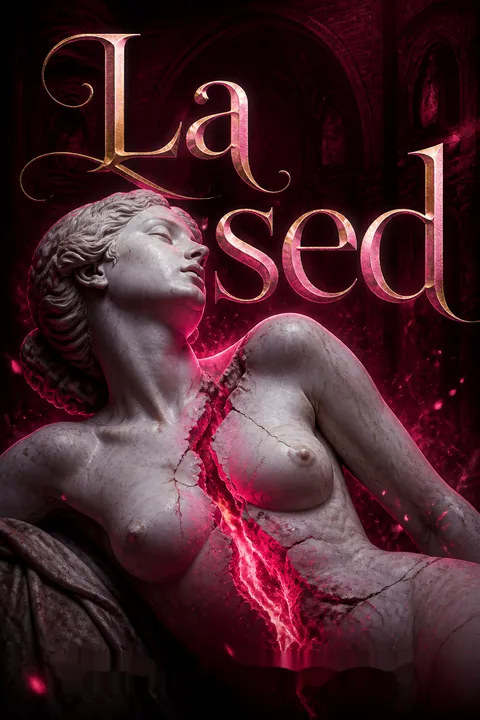

Resumen de la trama
Cemetery of Stone and Silence
The novel opens with a woman and her young son, Santiago, exploring Buenos Aires' oldest cemetery. The city of the dead is a labyrinth of marble, angels, and cracked mausoleums, a place where the living brush against the memory of the dead. The narrator is haunted by her mother's illness and the inevitability of death, and she finds herself drawn to the cemetery's silence and its statues—frozen in grief, eroticism, and decay. The visit is both a lesson for her son and a confrontation with her own fears. The cemetery, with its absence of smell and its cracked facades, becomes a metaphor for the boundaries between life and death, memory and forgetting, and the secrets that lie beneath the surface.
The Immigrant Vampire's Arrival
In a parallel narrative, a centuries-old vampire recounts her escape from Europe to Argentina. Once a victim, then a predator, she survived the destruction of her vampire family and the relentless pursuit of hunters. She arrives in Buenos Aires hidden in a trunk, determined to survive by blending in among the city's immigrants and outcasts. The city is raw, muddy, and unfinished—a perfect place for a monster to disappear. The vampire's memories are filled with violence, hunger, and the trauma of her transformation, but also with the longing for connection and the pain of endless survival. Her arrival marks the beginning of a new chapter, one where she must learn to hunt discreetly and navigate a world that is both foreign and familiar.
Blood, Seduction, and Survival
The vampire adapts to Buenos Aires, feeding on the city's marginalized and forgotten. She moves through the night, seducing and killing, always careful to avoid detection. Her existence is both predatory and lonely, marked by fleeting encounters and the constant threat of exposure. She forms a brief, passionate bond with Justina, a washerwoman with a tragic past, but their love ends in death and decay. The vampire is haunted by the ghosts of her victims and the memory of her lost sisters. She learns that survival means hiding her true nature, but also that the city's darkness offers a strange kind of freedom—a place where monsters can exist in the shadows.
Love and Death in the Plague
As Buenos Aires is ravaged by a yellow fever epidemic, the boundaries between life and death blur. The vampire finds herself in a city overwhelmed by corpses, where death is everywhere and the living are desperate. She takes advantage of the chaos to feed more openly, but the abundance of death brings her no satisfaction—she becomes a scavenger, feeding on the dying and the dead. Amid the horror, she meets Francisco, a doctor exhausted by the endless suffering. Their relationship is charged with desire, pain, and the shared knowledge of mortality. The vampire is drawn to Francisco's vulnerability, and he, in turn, is both repulsed and fascinated by her.
The Doctor and the Priest
Francisco's brother, Joaquín, is a young priest whose innocence and faith attract the vampire's attention. She seduces and destroys him in a blasphemous ritual, drinking his blood in the church and leaving his body as a sacrilegious offering. The act is both revenge against the church that once hunted her and an expression of her own monstrous longing. Francisco discovers the truth about his brother's death and the vampire's nature, leading to a confrontation that is both intimate and violent. The boundaries between victim and predator, love and hate, are blurred as the vampire's past and present collide.
The Plague's Carnival of Corpses
The epidemic reaches its peak, and Buenos Aires becomes a city of the dead. The vampire reflects on the history of death in the city, the rituals and failures of burial, and the ways in which the living try to contain and deny the reality of decay. The cemetery becomes a symbol of both memory and oblivion, a place where the dead are hidden but never truly gone. The vampire's own existence is mirrored in the city's struggle to control death—a struggle that is ultimately futile. The chapter is a meditation on mortality, loss, and the persistence of desire even in the face of annihilation.
Betrayal, Capture, and Escape
Francisco, desperate to save himself from the fever and the vampire's curse, betrays her to the authorities. She is captured, photographed, and nearly exposed to the world as a monster. The experience is humiliating and terrifying, a violation of her carefully maintained secrecy. With the help of a sympathetic young man, she escapes and flees the city, pursued by Francisco. Their final confrontation is brutal and tragic—Francisco tries to become a vampire himself, but she kills him instead, leaving his body in the wilderness. The vampire is left alone once more, forced to hide in the cemetery's crypts, her existence reduced to secrecy and survival.
Sanctuary in the Tomb
The vampire finds refuge in a mausoleum, transforming it into her sanctuary. She befriends Mario, a cemetery worker who becomes her confidant and protector. Together, they create a hidden world beneath the city, filled with stolen objects and memories. The vampire's thirst becomes a metaphor for longing and loss, and her relationship with Mario is marked by both tenderness and restraint. She feeds only rarely, haunted by the knowledge that her existence is both a curse and a secret that must be protected at all costs. The cemetery becomes her true home—a place of darkness, solitude, and melancholy beauty.
The Century of Thirst
Decades pass. The vampire witnesses the transformation of Buenos Aires, the rise of modernity, and the changing rituals of death. She becomes a legend, a ghost story whispered among the living. Her only companions are Mario and, briefly, Leonora—a young woman she transforms in a moment of desperation. Leonora's story is one of pain, alienation, and revenge; unable to accept her new existence, she ultimately destroys herself. The vampire is left to mourn her lost companion and to reflect on the endless cycle of desire, violence, and solitude that defines her existence. Time becomes both her enemy and her only constant.
Inheritance of Keys and Secrets
In the present, the narrator's mother is dying, and the family is consumed by grief and silence. The narrator inherits a set of keys and an old document—a deed to a mausoleum in the cemetery. As she cares for her mother and navigates the rituals of illness and impending death, she becomes obsessed with the tomb and the secrets it holds. The inheritance is both a burden and a mystery, connecting her to a past she does not understand. The keys become a symbol of forbidden knowledge, and the narrator is drawn inexorably toward the cemetery and its hidden histories.
The Daughter's Descent
Driven by curiosity and a sense of inevitability, the narrator visits the mausoleum and unlocks the crypt. The act is both transgressive and liberating—a crossing of boundaries between the living and the dead, the present and the past. In the darkness of the crypt, she senses a presence, and soon after, strange events begin to unfold. The boundaries between dream and reality blur as the narrator is haunted by visions, nightmares, and the feeling that something has been unleashed. The act of unlocking the tomb becomes a metaphor for confronting the secrets and traumas that have shaped her family and herself.
The Mother's Dying
The narrator's mother's illness progresses, and the family is consumed by the rituals of care, suffering, and anticipation of death. The narrator reflects on the physical and emotional toll of watching a loved one die, the inadequacy of language and ritual, and the ways in which grief isolates and transforms. The mother's eventual death is both a release and a rupture—a moment that divides the narrator's life into before and after. The funeral and burial are marked by both ceremony and emptiness, and the narrator is left to navigate a world that feels both familiar and irrevocably changed.
The Tomb Unlocked
The act of unlocking the mausoleum has consequences: the vampire is awakened from her long sleep. She emerges into a city that is both new and old, hungry and disoriented. Her encounters with the narrator are charged with danger, desire, and recognition. The vampire's presence disrupts the narrator's life, bringing violence and chaos but also a strange sense of connection. The boundaries between hunter and prey, past and present, are blurred as the two women are drawn together by forces they cannot fully understand.
The Vampire's Awakening
The vampire's hunger leads to a series of murders, and the city is gripped by fear. The narrator is both terrified and fascinated, drawn to the vampire by a mixture of fear, desire, and recognition. Their encounters are marked by violence and intimacy, as the vampire feeds on the narrator and reveals her story. The narrator becomes complicit in the vampire's existence, helping her to hide and survive. The relationship is both destructive and transformative, forcing the narrator to confront her own desires, fears, and the legacy of death that haunts her family.
Blood, Desire, and Violence
The narrator and the vampire become entwined in a relationship that is both erotic and perilous. The vampire's violence is both a threat and a source of liberation, and the narrator is forced to confront the darkness within herself. Together, they navigate the dangers of the modern city, evading the authorities and the consequences of their actions. The vampire's story becomes a mirror for the narrator's own struggles with grief, loss, and the search for meaning. Their bond is forged in blood and secrecy, and the narrator is changed by the encounter in ways she cannot fully articulate.
The Final Farewell
The narrator's mother dies, and the rituals of mourning and burial are enacted with both solemnity and emptiness. The narrator is left to grapple with the finality of loss and the persistence of memory. The vampire, too, is transformed by the experience of witnessing a human death that is both ordinary and profound. The boundaries between life and death, human and monster, are blurred as the two women find solace and meaning in each other's presence. The act of saying goodbye becomes an act of transformation—a crossing into a new existence.
Becoming the Night
In the aftermath of her mother's death and her encounters with the vampire, the narrator chooses to join her in the darkness. She enters the mausoleum, closing the door behind her, and descends into the crypt. The act is both an ending and a beginning—a surrender to the unknown, to desire, to the legacy of death and survival that has shaped her life. The novel ends with the promise of transformation, the embrace of the night, and the acceptance of a new, monstrous existence.
Analysis
A meditation on grief, survival, and the monstrous feminineThirst is a novel that uses the conventions of vampire fiction to explore the psychological realities of loss, trauma, and the inheritance of secrets across generations. At its core, the book is about the ways in which the past persists in the present—through memory, ritual, and the body itself. The vampire is both a literal monster and a metaphor for the inescapable legacy of violence, desire, and survival that shapes women's lives. The novel interrogates the boundaries between victim and predator, love and destruction, and the possibility of transformation through the embrace of the forbidden. It is also a meditation on the rituals of death and mourning, the inadequacy of language and ceremony, and the search for meaning in the face of annihilation. Ultimately, Thirst suggests that to live is to be haunted—by the dead, by desire, by the secrets we inherit and the ones we create. The act of unlocking the tomb is both a transgression and a liberation, a confrontation with the darkness that lies at the heart of existence. In the end, the novel offers no easy answers—only the possibility of finding connection, meaning, and even beauty in the night.
Resumen de reseñas
Reviews for Thirst are mixed, averaging 3.44/5. Readers widely praise the atmospheric first half, set in 19th-century Buenos Aires, following an unnamed vampire through a gothic, bloodthirsty journey. The second half, a contemporary story about a woman grieving her dying mother, is frequently described as jarring in its tonal shift. Many feel the two narratives connect awkwardly and abruptly. Standout praise goes to the prose's lush, sensual quality and the exploration of death and grief. Some readers felt misled by "sapphic" marketing, as the romantic elements are minimal.
Characters
The Narrator (Alma)
Alma is a woman caught between the demands of motherhood, the impending death of her own mother, and the weight of family secrets. Her relationship with her mother is marked by love, silence, and the unspoken transmission of trauma. As she inherits the keys to a mysterious mausoleum, Alma becomes obsessed with the cemetery and the secrets it holds. Her psychological journey is one of descent—into grief, memory, and the supernatural. She is both rational and haunted, skeptical and susceptible to the uncanny. Her encounters with the vampire force her to confront her own desires, fears, and the legacy of death that shapes her identity. Alma's development is a movement from denial and resistance to acceptance and transformation, culminating in her decision to embrace the darkness and the unknown.
The Vampire (Unnamed/"She")
The vampire is a centuries-old woman who has endured unimaginable suffering—first as a victim, then as a predator. Her existence is marked by hunger, loneliness, and the trauma of loss. She is both monstrous and deeply human, capable of love, grief, and longing. Her relationships—with her sisters, with Justina, with Francisco and Joaquín, and finally with Alma—are charged with desire, violence, and the search for connection. Psychoanalytically, she embodies the return of the repressed, the persistence of trauma, and the allure of the forbidden. Her development is cyclical: she is repeatedly forced into hiding, into solitude, and into the role of the outsider. Yet she also seeks intimacy and meaning, even as she is doomed to destroy what she loves. Her awakening in the modern world is both a liberation and a curse, and her bond with Alma offers the possibility of redemption through shared monstrosity.
The Mother
Alma's mother is a powerful presence despite her physical decline. Her illness is a slow, relentless paralysis that mirrors the emotional silences and secrets within the family. She communicates through gestures, writing, and the transmission of objects—keys, documents, prohibitions. Her relationship with Alma is marked by both intimacy and distance, love and the inability to speak openly about death. Psychoanalytically, she represents the maternal legacy, the transmission of trauma, and the impossibility of fully knowing or saving the other. Her death is both a rupture and a release, forcing Alma to confront her own mortality and the mysteries of her inheritance.
Francisco
Francisco is a physician who remains in Buenos Aires during the yellow fever epidemic, tending to the dying and confronting the limits of science and compassion. His relationship with the vampire is marked by fascination, fear, and erotic longing. He is both a victim and a betrayer, seeking salvation through the vampire's curse but ultimately destroyed by his own desperation. Francisco's development is a descent into obsession and self-destruction, mirroring the city's collapse under the weight of death.
Joaquín
Joaquín is Francisco's younger brother, a priest whose innocence and faith make him both a target and a symbol. The vampire's seduction and murder of Joaquín is a blasphemous inversion of religious ritual, exposing the violence and desire at the heart of faith. Joaquín's death is both a personal tragedy and a commentary on the limits of purity and the inevitability of corruption.
Justina
Justina is a washerwoman with a noble past who becomes the vampire's lover and victim. Her story is one of displacement, longing, and the brief possibility of happiness. Her death is both erotic and horrifying, and her transformation into a corpse is a meditation on the fragility of beauty and the inevitability of decay. Justina's ghost haunts the vampire, a reminder of love's destructive power.
Mario
Mario is a cemetery worker who befriends the vampire and helps her survive in the modern world. His relationship with her is marked by fascination, loyalty, and unrequited desire. He becomes the guardian of her secrets, helping her hide and protecting her from discovery. Mario's development is one of devotion and sacrifice, and his aging is a poignant reminder of the passage of time and the limits of human life.
Leonora
Leonora is a young woman transformed into a vampire against her will. Her story is one of alienation, rage, and self-destruction. Unable to accept her new existence, she ultimately chooses death over immortality. Leonora's tragedy is a reflection of the vampire's own loneliness and the impossibility of true companionship.
Julia
Julia is Alma's best friend, a source of support and frustration. Her inability to fully understand or share in Alma's grief and obsession highlights the isolation that comes with loss and trauma. Julia's eventual withdrawal is both a betrayal and an inevitable consequence of Alma's descent into the world of the dead.
Santiago
Santiago is Alma's young son, a symbol of innocence and the future. His presence grounds Alma in the world of the living, even as she is drawn toward death and the supernatural. Santiago's questions, fears, and games reflect the novel's themes of curiosity, danger, and the transmission of secrets across generations.
Plot Devices
Dual Narrative Structure
The novel alternates between the first-person accounts of Alma and the vampire, creating a dialogue across time and experience. This structure allows for the exploration of parallel themes—grief, survival, desire, and the legacy of trauma—while building suspense and deepening the emotional resonance. The convergence of the two narratives in the present is both inevitable and shocking, as the unlocking of the tomb unleashes the past into the present.
The Cemetery as Liminal Space
The cemetery is both a physical setting and a symbolic space—a place where the boundaries between life and death, past and present, are porous. It is a site of memory, mourning, and the persistence of the dead in the lives of the living. The repeated returns to the cemetery mirror the characters' psychological journeys and the novel's meditation on mortality.
The Key and the Locked Tomb
The inheritance of the key and the act of unlocking the mausoleum serve as central plot devices, symbolizing the transmission of secrets, the breaking of taboos, and the confrontation with repressed trauma. The key is both a literal object and a metaphor for the power—and danger—of uncovering what has been hidden.
Blood as Desire and Survival
Blood is both sustenance and symbol—of life, death, eroticism, and the inescapable ties between predator and prey, mother and child, past and present. The act of feeding is charged with both violence and intimacy, and the sharing of blood becomes a metaphor for the transmission of trauma, desire, and identity.
Foreshadowing and Recurrence
The novel is filled with dreams, nightmares, and uncanny repetitions—paralysis, hauntings, and the recurrence of images and motifs (the photograph, the crypt, the wound). These devices create a sense of inevitability and fate, as well as the psychological reality of trauma and grief.
The Photograph
The photograph of the vampire, taken against her will, becomes a symbol of violation, memory, and the impossibility of erasing the past. Its destruction is both an act of liberation and a recognition of the enduring power of what has been seen and recorded.
Descargar PDF
Descargar EPUB
.epub digital book format is ideal for reading ebooks on phones, tablets, and e-readers.








































