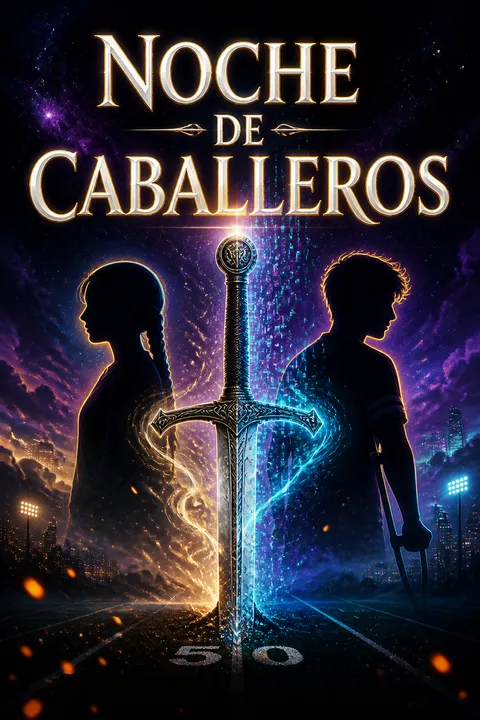

Resumen de la trama
Friday Night Lights Pressure
Jack Orsino, star running back and son of a local football legend, feels the weight of expectation as he enters his senior year. The town's hopes for a state championship rest on his shoulders, and every game is a test of his legacy. Jack's prowess on the field is undeniable, but the pressure to live up to his family's name and the community's dreams is relentless. The Friday night lights are both a stage and a crucible, where Jack's identity is forged and challenged. Meanwhile, Viola "Vi" Reyes, fiercely intelligent and unapologetically herself, navigates the sidelines of popularity, her own ambitions clashing with the school's obsession with sports. The opening sets the tone: destiny, competition, and the search for meaning in a world that values winning above all.
Game Worlds and Gender
Vi finds solace and power in the world of online gaming, where she adopts the male persona "Cesario" in the MMORPG Twelfth Knight. Here, she is respected for her skill, not judged for her gender. The game becomes a refuge from the microaggressions and dismissals she faces in her real-life ConQuest group, where her ideas are often ignored or belittled by her male peers. The contrast between her digital confidence and real-world frustration highlights the gendered barriers in both spaces. Vi's alter ego allows her to experience a freedom and authority denied to her offline, but it also sets the stage for complications as her two worlds begin to collide. The chapter explores how identity, power, and acceptance shift depending on the mask one wears.
Injuries and Invisibility
Jack's football season—and possibly his future—comes to a screeching halt when he suffers a devastating knee injury during a crucial game. The physical pain is matched only by the existential crisis that follows: without football, who is he? As Jack grapples with rehab and the loss of his central identity, he becomes increasingly invisible to the world that once celebrated him. His girlfriend Olivia grows distant, and the adulation of the crowd fades. Meanwhile, Vi's own struggles with invisibility intensify as her creative contributions are dismissed by her friends. Both characters are forced to confront the fragility of the roles they've been assigned and the emptiness that comes when those roles are stripped away.
Fandoms and Fractures
The worlds of fandom and friendship prove just as treacherous as the football field. Vi's attempt to introduce her own quest to her ConQuest group is met with resistance and ridicule, exposing the boys' unwillingness to accept her leadership or creativity. A falling out with her best friend Antonia leaves Vi feeling isolated, her anger simmering beneath the surface. At the same time, Jack's relationships are unraveling—Olivia's emotional distance and the team's shifting dynamics leave him adrift. Both protagonists seek connection and validation in their respective communities, only to find that belonging is conditional and precarious. The fractures in their social circles mirror their internal struggles, setting the stage for transformation.
Unmasking the Real Enemy
At the Renaissance Faire and in online spaces, Vi faces the insidious reality of gendered harassment and exclusion. A male guild member's "jokes" and Antonia's failure to defend her reveal the subtle ways women are expected to endure discomfort for the sake of harmony. Online, Vi's choice to play as a male character is both a shield and a commentary on the limitations placed on girls. Jack, meanwhile, begins to see the cracks in his own world—the expectations of masculinity, the pressure to never show weakness, and the way his injury is treated as both a personal failing and a family crisis. The real enemy is not a rival team or a game boss, but the systems that dictate who gets to be powerful, visible, and safe.
Digital Double Lives
As Jack, bored and searching for purpose during his recovery, is introduced to Twelfth Knight by his friend Nick, he finds unexpected joy and challenge in the game. Unbeknownst to him, his fiercest in-game rival and eventual ally, Cesario, is actually Vi. Their digital camaraderie and competition become a lifeline for both, offering connection and validation that elude them offline. The anonymity of the game allows for honesty and vulnerability, but also sets up a web of secrets. Both Jack and Vi are living double lives—one in the spotlight, one in the shadows—and the boundaries between them grow increasingly porous as their online and offline relationships deepen.
Secrets Behind the Screen
The friendship and rivalry between Jack and Cesario/Vi intensify, with each confiding in the other about their struggles, dreams, and disappointments—never realizing how close they truly are. Jack's growing admiration for Cesario's skill and insight is matched by Vi's reluctant respect for Jack's resilience and humor. Meanwhile, in real life, their interactions are prickly and competitive, each unaware of the other's secret identity. The tension builds as the stakes in both worlds rise: Jack's hopes for a football comeback, Vi's longing for recognition, and the looming possibility that their secrets will be exposed. The chapter pulses with anticipation, as the truth behind the screen threatens to upend everything.
Allies, Betrayals, and Breaks
As the school year progresses, alliances are tested and betrayals cut deep. Vi's relationship with Antonia reaches a breaking point, and Bash, her twin, becomes both accomplice and conscience. Jack's attempts to reconnect with Olivia falter, and his sense of self-worth is battered by the uncertainty of his future. The online partnership between Jack and Cesario becomes a source of genuine support, but also a ticking time bomb. When Jack asks Vi (offline) for help with Olivia, and Vi (as Cesario) helps Jack (online) with his quest, the lines between ally and adversary blur. The emotional stakes are heightened by the knowledge that trust, once broken, is hard to repair.
Renaissance Revelations
The Renaissance Faire and MagiCon become crucibles for self-discovery and revelation. Vi's cosplay and creative talents are finally recognized by strangers, giving her a taste of the validation she craves. Jack, forced out of his comfort zone, begins to appreciate the worlds Vi inhabits and the courage it takes to be different. Their shared experiences at these events—awkward, exhilarating, and transformative—bring them closer, even as the truth about their online identities remains hidden. The chapter is a turning point, where the masks they wear—literal and figurative—begin to slip, and the possibility of real connection emerges.
Tournament of Truths
The school's Twelfth Knight tournament, organized by Jack and reluctantly supported by Vi, becomes the stage for a dramatic unmasking. Bash, recruited to play as Cesario, falters under pressure, and Vi is forced to step in, revealing her true identity to Jack in front of their peers. The shock and sense of betrayal are palpable—Jack feels exposed and angry, Vi is wracked with guilt and fear. The tournament, meant to be a celebration of skill and community, becomes a crucible for truth and consequence. The fallout is immediate and painful, but also necessary for growth.
Confessions and Consequences
In the aftermath of the tournament, Jack and Vi are forced to confront the consequences of their secrets and lies. Their confrontation is raw and honest—anger, hurt, and longing collide as they finally speak the truths they've been hiding. Vi admits her fear of vulnerability and her tendency to push people away; Jack confesses his own loneliness and the pain of being misunderstood. Both must decide whether forgiveness is possible, and whether the connection they've built—online and off—is worth fighting for. The chapter is a reckoning, where the cost of honesty is weighed against the possibility of real intimacy.
Forgiveness and Final Quests
Despite the pain, Jack and Vi choose to finish the Twelfth Knight quest together, side by side. The final battle in the game becomes a metaphor for their relationship: victory is only possible through cooperation, trust, and mutual respect. The game's ending—a twist that centers love, loyalty, and the power of partnership—mirrors their own journey. Forgiveness is not easy or immediate, but it is chosen, and in that choice, both find a measure of healing. The chapter is a celebration of growth, resilience, and the courage to begin again.
Endings, Beginnings, and Belonging
As the school year ends, Jack and Vi step into new roles and new possibilities. Jack's future is no longer defined solely by football—he embraces other interests, friendships, and the uncertainty of what comes next. Vi, too, finds her place as a creator, leader, and friend, no longer hiding behind masks or anger. Their relationship, forged in conflict and honesty, becomes a source of strength and joy. The final scenes—filled with laughter, shared adventures, and the promise of more to come—affirm that belonging is not about fitting in, but about being seen, accepted, and loved for who you truly are.
Analysis
"Noche de caballeros" (Twelfth Knight) is a vibrant, incisive exploration of identity, belonging, and the courage it takes to be seen. Through the intertwined journeys of Vi and Jack, the novel interrogates the pressures of gender, legacy, and social expectation, using the parallel worlds of high school and online gaming to reveal the masks we wear and the truths we hide. The story is a love letter to fandom, friendship, and the transformative power of community—both chosen and accidental. It challenges the reader to question who gets to be the hero, what it means to win, and why vulnerability is often the bravest act of all. The lessons are clear: authenticity is hard but necessary; forgiveness is a choice, not a given; and real connection is built not on perfection, but on the willingness to show up, mess up, and try again. In a world that often rewards conformity and punishes difference, "Noche de caballeros" insists that the greatest adventure is learning to belong—to yourself, and to others—without apology.
Resumen de reseñas
Twelfth Knight received generally positive reviews, with readers praising its diverse characters, feminist themes, and engaging storyline. Many appreciated the blend of gaming culture and Shakespeare retelling. The main character, Viola, was divisive – some found her relatable and strong, while others thought she was overly aggressive. Readers enjoyed the slow-burn romance and character development. Some criticisms included a desire for more romance and occasional predictability. Overall, the book was lauded for its exploration of identity, friendship, and coming-of-age themes.
También leyeron








Characters
Viola "Vi" Reyes
Vi is a seventeen-year-old girl who refuses to shrink herself to fit others' expectations. Sharp-tongued, passionate, and often angry, she is both a victim of and a rebel against the subtle and overt misogyny of her world. Her alter ego, Cesario, in the online game Twelfth Knight, allows her to experience respect and power denied to her offline. Vi's relationships are complex—she is loyal to her twin Bash, but struggles with vulnerability and trust, especially after betrayals by friends like Antonia. Her journey is one of learning to let others in, to forgive, and to accept that strength can coexist with softness. Vi's arc is a study in the costs and rewards of authenticity.
Jack Orsino
Jack is the charismatic, talented running back destined for greatness—or so everyone believes. The pressure of legacy, family, and community weighs heavily on him, and his identity is inextricably tied to football. When injury shatters his dreams, Jack is forced to confront who he is without the game. His journey through pain, invisibility, and reinvention is marked by moments of vulnerability, humor, and surprising insight. Online, as DukeOrsino12, he finds connection and validation in unexpected places, especially with Cesario/Vi. Jack's development is a gradual shedding of the need for external approval, replaced by a deeper sense of self and the courage to embrace new possibilities.
Bash (Sebastian) Reyes
Bash is Vi's twin brother, a drama and band kid with a gift for making people laugh and feel at ease. He is the emotional heart of the Reyes family, often serving as Vi's confidant and conscience. Bash's willingness to help Vi—even when it means impersonating her online—reveals his deep loyalty, but also his own need for recognition and connection. His frustration with Vi's self-isolation and his desire for her to let him in add layers to their sibling dynamic. Bash represents the possibility of forgiveness, the importance of family, and the value of being seen for who you are.
Olivia Hadid
Olivia is Jack's girlfriend at the start, a cheerleader who seems to have it all but is wrestling with her own secrets and identity. Her relationship with Jack is strained by distance, expectations, and her own journey of self-discovery, including her attraction to women. Olivia's friendship with Vi becomes a safe space for honesty and vulnerability, and her eventual decision to be true to herself is a quiet act of courage. Olivia's arc explores the complexities of love, loyalty, and the search for authenticity in a world that prizes appearances.
Antonia Valentine
Antonia is Vi's closest friend and confidante, a girl who navigates the masculine worlds of fandom and gaming with empathy and diplomacy. Her tendency to smooth over conflicts sometimes puts her at odds with Vi's confrontational style, leading to a painful rift. Antonia's journey is one of learning to assert her own needs and boundaries, while also recognizing the value of standing up for others. Her reconciliation with Vi is a testament to the power of forgiveness and the enduring bonds of friendship.
Nick Valentine
Nick is Jack's best friend and Antonia's older brother, a former football star sidelined by injury. He introduces Jack to Twelfth Knight, providing a lifeline during Jack's darkest moments. Nick's own journey through disappointment and reinvention mirrors Jack's, and his presence is a steadying force. He represents the possibility of new beginnings and the importance of finding meaning beyond external achievements.
Bash's and Vi's Mother
Vi and Bash's mother is a single parent who writes a feminist advice column and models resilience, independence, and critical thinking. Her approach to love and relationships is pragmatic and nontraditional, and her guidance shapes Vi's worldview. She encourages her children to be true to themselves, even as she struggles with her own vulnerabilities and desires for connection. Her relationship with Pastor Ike introduces new dynamics and challenges, prompting growth for the whole family.
Pastor Ike
Pastor Ike is Vi's mother's new partner, a youth pastor whose presence initially unsettles Vi but ultimately brings warmth and stability to the family. He is patient, open-minded, and willing to engage in difficult conversations. His role is less about religious authority and more about modeling kindness, acceptance, and the value of chosen family.
Curio
Curio is Jack's teammate and eventual quarterback, a character who steps up when circumstances demand it. He is not a natural star, but his willingness to learn, adapt, and support others makes him indispensable. Curio's arc is about finding confidence, embracing change, and understanding that leadership comes in many forms.
Matt Das
Matt is a member of Vi's ConQuest group whose initial kindness masks deeper insecurities and entitlement. His reaction to rejection—anger, manipulation, and misogyny—serves as a stark contrast to the healthier relationships in the story. Matt's arc is a critique of "nice guy" syndrome and the dangers of conditional friendship.
Plot Devices
Dual Narratives and Online/Offline Mirrors
The novel employs a dual narrative structure, alternating between Jack and Vi's perspectives. This allows readers to see the same events through different lenses, highlighting misunderstandings, assumptions, and the slow unraveling of secrets. The online world of Twelfth Knight serves as a mirror and counterpoint to the offline world—what is hidden in one is revealed in the other. The use of alter egos, anonymous chat, and digital quests creates a space for honesty and vulnerability, while also setting up dramatic irony and tension as the characters' real identities inch closer to exposure.
Foreshadowing and Symbolism
The recurring motifs of games, quests, and masks are used to foreshadow character growth and thematic revelations. The structure of Twelfth Knight—with its hidden relics, shifting alliances, and final boss battles—parallels the characters' journeys toward self-acceptance and connection. The symbolism of armor, swords, and avatars underscores the ways people protect themselves and the courage required to lay down defenses. The final quest, requiring cooperation and trust, is a metaphor for the risks and rewards of real intimacy.
Subversion of Tropes
The novel deliberately subverts familiar tropes: the jock is sensitive and lost, the "bitchy" girl is vulnerable and principled, the love story is not the sole focus but a byproduct of personal growth. The story critiques the "chosen one" and "redemption by death" arcs common in fantasy, advocating instead for happy endings, collaboration, and the value of being ordinary but authentic. The exposure of microaggressions, "nice guy" entitlement, and the limitations of traditional masculinity and femininity are woven throughout, inviting readers to question who gets to be the hero and why.
Emotional Honesty and Direct Address
The narrative is driven by moments of emotional honesty—confessions, confrontations, apologies, and forgiveness. Dialogue is sharp, witty, and often meta, with characters directly addressing their own flaws and the expectations placed upon them. The story resists easy resolutions, instead showing that healing and connection require ongoing effort, vulnerability, and the willingness to be seen, flaws and all.
Descargar PDF
Descargar EPUB
.epub digital book format is ideal for reading ebooks on phones, tablets, and e-readers.








































