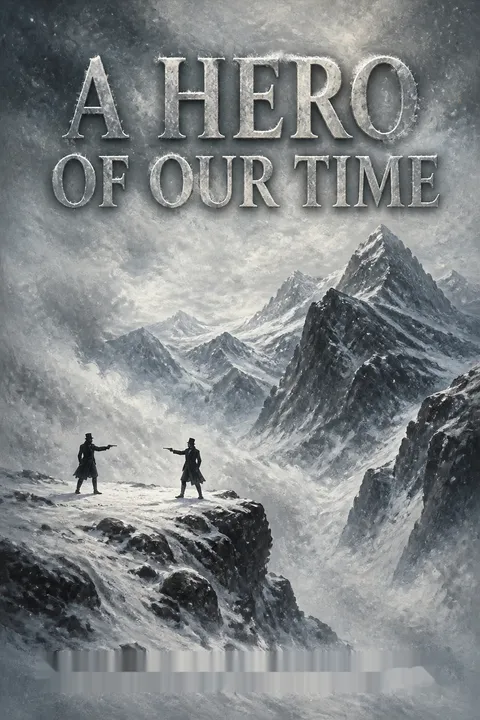
خلاصه داستان
ورود به قفقاز
یک افسر روس که در حال عبور از قفقاز وحشی و کوهستانی است، با ماکسیم ماکسیمیچ، مردی باتجربه و خوشبرخورد، ملاقات میکند. این دو مرد که در ابتدا غریبهاند، به واسطه سختیها و ناپایداریهای منطقه به هم پیوند میخورند. ماکسیم ماکسیمیچ، مردی که سالها خدمت و آشنایی با فرهنگهای محلی او را شکل داده است، راوی داستان میشود و به مسافر نگاهی میدهد به زندگی و سرنوشت کسانی که در مرزهای امپراتوری مستقرند. چشمانداز هم زیبا و هم خطرناک است و زمینهساز روایتهایی از شور، خشونت و جستجوی وجودی میشود. این سفر تنها جسمانی نیست، بلکه روانی نیز هست، چرا که شخصیتها مجبورند محدودیتهای درک خود و ناپایداری طبیعت انسانی را به چالش بکشند.
معامله راوی
در کنار آتشی پر دود، ماکسیم ماکسیمیچ شروع به روایت داستان گریگوری پچورین، افسر جوانی که ورودش به قلعه همه چیز را دگرگون کرد، میکند. پچورین مردی مرموز، جذاب و بیقرار است؛ کسی که به نظر میرسد رویدادهای خارقالعاده را به خود جذب میکند. روایت ماکسیم ماکسیمیچ آمیخته با محبت، سردرگمی و اندکی تحسین است، هنگامی که عادات عجیب پچورین، خلقوخوی غیرقابل پیشبینیاش و تواناییاش در همزمان خوشحال و ناراحت کردن اطرافیان را توصیف میکند. این داستان تنها درباره پچورین نیست، بلکه درباره اشتیاق راوی برای ارتباط و یافتن معنا در جهانی است که اغلب نسبت به این دو بیتفاوت به نظر میرسد.
فریفتن بلا توسط پچورین
پچورین که از ترکیبی از بیحوصلگی و تمایل برانگیخته شده، پسر شاهزاده محلی، آزامات، را به معامله خواهرش بلا در ازای اسبی گرانبها وادار میکند. این معامله سرد و حسابشده است و توانایی پچورین را در جذابیت و بیرحمی نشان میدهد. بلا، دختری زیبای چرکسی و پرشور، از خانهاش ربوده شده و به مالکیت پچورین درمیآید. در ابتدا مقاومت میکند، اما پافشاری و هدایای پچورین به تدریج دفاعهایش را میشکند. این فریفتن نه تنها درباره عشق، بلکه درباره قدرت است و پیامدهای این عمل در زندگی همه افراد دخیل تأثیرگذار خواهد بود.
بهای وسواس
با عادت کردن بلا به زندگی جدیدش، علاقه پچورین به او کاهش مییابد. هیجان اولیه مالکیت جای خود را به احساس پوچی و نارضایتی میدهد. بلا که زمانی سرزنده بود، رنگ میبازد و گوشهگیر میشود، روحش در اسارت و عشق بیپاسخ شکسته است. ورود کازبیچ، مرد محلی انتقامجو که زمانی عاشق بلا بود، تنشهای نهفته را به اوج میرساند. در اقدامی ناامیدانه، کازبیچ بلا را میرباید و به شدت زخمی میکند و پچورین را مجبور میسازد با پیامدهای اعمالش روبرو شود. این تراژدی قدرت مخرب وسواس و بیفایده بودن تلاش برای مالکیت دیگران را آشکار میسازد.
فقدان و سرخوردگی
مرگ بلا پچورین را تهی و سرگردان میگذارد. ماکسیم ماکسیمیچ که به بلا علاقهمند شده بود، دچار اندوه عمیقی میشود، در حالی که واکنش پچورین پیچیدهتر است؛ او نمیتواند بهطور آشکار سوگواری کند و احساساتش به دلیل سالها ناامیدی و خودکاوی کدر شدهاند. این واقعه نقطه عطفی برای پچورین است که احساس بیگانگیاش را عمیقتر میکند و باورش به بیفایده بودن عشق و خوشبختی را تقویت مینماید. جهانی که زمانی پر از وعده بود، اکنون خالی و بیتفاوت به نظر میرسد و جستجوی بیقرار پچورین برای معنا ناامیدانهتر میشود.
دیدار دوباره و بیگانگی
سالها بعد، ماکسیم ماکسیمیچ و راوی به طور اتفاقی در یک مهمانخانه با پچورین روبرو میشوند. این دیدار ناخوشایند و تلخ است؛ ماکسیم مشتاق ارتباط مجدد است، اما پچورین دور و مشغول به نظر میرسد و در نهایت بیتفاوت است. پیوندهای قدیمی دوستی از هم گسسته و جای خود را به بیگانگی و ناامیدی دادهاند. فاصلهگیری پچورین هم دفاعی است و هم نشانهای از بیماری عمیقتر او. این بخش بر موضوع انزوا و دشواری ارتباط واقعی انسانی در دنیایی که توسط تصادف و خودخواهی اداره میشود، تأکید میکند.
ظهور قهرمان مرموز
پس از مرگ پچورین، دفترچه یادداشتش به دست راوی میرسد و پنجرهای مستقیم به افکار و انگیزههای قهرمان باز میکند. این دفترچه اعتراف، خودکاوی و چالشی برای خواننده است. پچورین به عنوان شخصیتی پیچیده ظاهر میشود؛ هوشمند، حساس و خودآگاه، اما در عین حال دستکاریکننده، بدبین و بیاحساس. او هم محصول زمان خود و هم منتقد آن است، تجسم تناقضات و اضطرابهای نسلی که میان یقینهای قدیم و شکهای نو گرفتار شده است. ساختار دفترچه امکان کاوشی تکهتکه و غیرخطی در شخصیت و سرنوشت را فراهم میآورد.
توطئه مرموز در تامان
در شهر ساحلی تامان، پچورین در شبکهای از قاچاق، فریب و روابط مبهم گرفتار میشود. او با پسری نابینا، دختری مرموز و گروهی از قاچاقچیان روبرو میشود که همه به نظر میرسد بر اساس منطق غیرقابل فهم خود عمل میکنند. این بخش رویایی و نگرانکننده است و مرزهای واقعیت و توهم، معصومیت و گناه را محو میکند. تلاشهای پچورین برای کنترل اوضاع ناکام میماند و او احساس تهدید و بیاهمیتی میکند. ماجرای تامان استعارهای است برای محدودیتهای دانش و خطرات دخالت در زندگی دیگران.
جذابیت پرنسس مری
در یک مرکز آبدرمانی مد روز، پچورین شیفته پرنسس مری میشود؛ دختری جوان که زیبایی و هوشش او را از دیگران متمایز میکند. این تعقیب بازیای است، آزمونی از ارادهها و راهی برای رفع بیحوصلگی. رقیب پچورین، گروشنیتسکی، نیز عاشق مری است و زمینه رقابتی پر از دستکاری، حسادت و غرور زخمی را فراهم میآورد. تعاملات پچورین با مری آکنده از طنز و ابهام است؛ او هم خواهان و هم متنفر از اوست، در پی فتح قلبش در حالی که از نظر عاطفی فاصله میگیرد.
رقابت و دستکاری
رقابت برای جلب توجه مری بیرحمانهتر میشود و پچورین با بهرهگیری از هوش برتر و درک روانی خود، گروشنیتسکی را در هر گام پشت سر میگذارد. این رقابت تنها درباره عشق نیست، بلکه درباره قدرت، ارزش خود و نیاز به اثبات برتری در دنیایی است که چالشهای واقعی کمی ارائه میدهد. اقدامات پچورین هم بیرحمانه و هم حسابشده است و پوچی آداب اجتماعی و شکنندگی خودبینی انسانی را برملا میکند. این بخش با سلسلهای از تحقیرها و خیانتها به اوج میرسد که همه طرفها را تضعیف میکند.
عشق، حسادت و خیانت
ورا، زنی از گذشته پچورین، بازمیگردد و شور و کینههای قدیمی را شعلهور میسازد. حضور او تعقیب پچورین برای مری را پیچیده میکند و او را مجبور میسازد با پیامدهای فاصله عاطفیاش روبرو شود. عشق ورا واقعی اما محکوم به شکست است و ناتوانی پچورین در پاسخگویی کامل به آن، به حسادت، سوءتفاهم و دلشکستگی میانجامد. مثلث پچورین، مری و ورا میکروکازمی از تمهای بزرگتر رمان است؛ تمایلات، سرخوردگی و ناممکن بودن خوشبختی پایدار.
دوئل مرگبار
رقابت میان پچورین و گروشنیتسکی به دوئلی میرسد که توسط گروهی از توطئهگران ترتیب داده شده تا پچورین را تحقیر کنند. این دوئل هم مضحکهای است و هم تراژدی، که پوچی کدهای شرافت و خطرات غرور را نشان میدهد. پچورین که از نقشه علیه خود آگاه است، اوضاع را برمیگرداند و گروشنیتسکی را میکشد، اما پیروزی تهی است. این بخش تأملی است بر سرنوشت، اراده آزاد و قدرت مخرب خودخواهی. دوئل نقطه اوج سفر پچورین است و او را بیش از پیش منزوی و ناامید میکند.
پیامدها و پشیمانی
پس از دوئل، پچورین درگیر احساس گناه، پشیمانی و بیفایده بودن میشود. روابطش با ورا و مری به طور جبرانناپذیری آسیب میبیند و مجبور است با خلأ درون خود روبرو شود. جهانی که زمانی پر از امکانات بود، اکنون بسته و بیتفاوت به نظر میرسد. خودکاوی پچورین عمیقتر و ناامیدانهتر میشود؛ او نقصهای خود را میشناسد اما ناتوان از تغییر است. پیامدهای دوئل، حسابرسیای است هم شخصی و هم فلسفی.
پرسش سرنوشت
در آخرین بخش داستان، پچورین و همکارانش درباره وجود سرنوشت و محدودیتهای اراده انسانی بحث میکنند. مجموعهای از رویدادهای تصادفی—بازی رولت روسی، قتلی بیمعنی—ناپایداری زندگی و شکنندگی برنامههای انسانی را برجسته میسازد. تجربیات پچورین او را به شک در قدرت عقل و آرامش خرافات واداشته است. پرسش سرنوشت بیپاسخ میماند، اما جستجوی معنا حتی در برابر عدم قطعیت و فقدان ادامه دارد.
پایان توهمات
رمان با مرگ پچورین که به صورت غیرمستقیم گزارش میشود و تأملات راوی درباره معنای زندگی او پایان مییابد. داستان پچورین هم هشدار است و هم آیینهای برای نسلی که میان ارزشهای قدیم و شکهای نو گرفتار شده است. قهرمان زمانهاش الگویی برای تقلید نیست، بلکه هشداری است؛ مردی که هوش و حساسیتش در دنیایی که جایگاه شایستهای برای استعدادهایش ندارد، هدر رفته است. پایان نه رستگاری، بلکه تسلیم است؛ اعتراف به اینکه جستجوی معنا ممکن است بیپایان باشد و بزرگترین تراژدی نه شکست، بلکه ناتوانی در اهمیت دادن است.
شخصیتها
گریگوری پچورین
پچورین شخصیت مرکزی رمان است؛ افسر جوانی که هوش، جذابیت و حساسیتش تنها با بدبینی، فاصله عاطفی و توانایی در دستکاری دیگران برابر است. او مردی است که با زمان خود هماهنگ نیست و نمیتواند در عشق، دوستی یا وظیفه معنا یا رضایت بیابد. روابط پچورین ترکیبی از جذب و تحقیر است و اعمالش اغلب به رنج خود و دیگران میانجامد. او هم قربانی است و هم عامل، مردی که نقصهای خود را میشناسد اما ناتوان از تغییر است. پیچیدگی روانی پچورین او را هم جذاب و هم منزجرکننده میسازد؛ قهرمانی برای عصری پر از سرخوردگی.
ماکسیم ماکسیمیچ
ماکسیم ماکسیمیچ هم راوی است و هم نقطه مقابل پچورین. او افسر حرفهای، عملی و مهربانی است که ارزشهای سادهاش توسط پیچیدگیهای جهان پیرامون به چالش کشیده میشود. علاقه ماکسیم به پچورین واقعی است اما بیپاسخ میماند و ناامیدیاش در دیدار نهایی یکی از لحظات تأثیرگذار رمان است. او نماینده نظم قدیم است؛ وفادار، وظیفهشناس و عاطفی، اما در نهایت توسط شک و خودمحوری نسل جدید کنار گذاشته میشود.
بلا
بلا دختری زیبای چرکسی است که ربوده و فریفته پچورین میشود و تراژدی مرکزی رمان را رقم میزند. او پرشور و مغرور است اما در برابر دستکاریهای پچورین ناتوان است. عشق بلا به پچورین واقعی است اما نمیتواند در برابر واقعیتهای اسارت و بیتوجهی عاطفی دوام بیاورد. مرگ او هم تراژدی شخصی است و هم نمادی از پیامدهای مخرب نگاه کردن به انسانها به عنوان اشیایی برای مالکیت.
آزامات
آزامات، پسر شاهزاده محلی، به خاطر وسواسش نسبت به اسب کازبیچ، خواهرش را در ازای آن معامله میکند. این کار نشاندهنده ناپختگی و تأثیر مخرب حسادت و تمایل است. آزامات مهرهای در نقشههای پچورین است و اقداماتش زمینهساز تراژدی مرکزی رمان میشود.
کازبیچ
کازبیچ سوارکار و راهزن محلی است که عشقش به بلا و از دست دادن اسب گرانبهایش او را به خشونت میکشاند. او هم شرور است و هم قربانی، مردی با شور و اشتیاقی به شدت پچورین اما سرنوشتی که تحت تأثیر نیروهایی فراتر از کنترلش شکل گرفته است. انگیزههای کازبیچ بر پایه شرافت و انتقام است اما در نهایت به ویرانی و فقدان میانجامد.
پرنسس مری
پرنسس مری معشوقه پچورین و گروشنیتسکی است. او زیبا، بافرهنگ و در ابتدا دور از دسترس است، اما تدریجاً در برابر توجهات پچورین نرم میشود. سفر مری از غرور به آسیبپذیری بازتابی است از مسیر عاطفی پچورین و دلشکستگی نهایی او گواهی است بر خطرات عشق در دنیایی که با دستکاری و خودخواهی اداره میشود.
گروشنیتسکی
گروشنیتسکی رقیب اصلی پچورین برای جلب توجه مری است؛ افسر جوانی که ژستهای عاشقانهاش پوششی برای ناامنیهای عمیق و نیاز به تأیید است. رقابت او با پچورین از حسادتهای کوچک به دشمنی مرگبار میرسد که در دوئل مرگبار به اوج میرسد. سرنوشت گروشنیتسکی هشداری است درباره خطرات غرور، خودبینی و تمایل به دیده شدن به عنوان قهرمان.
ورا
ورا زنی از گذشته پچورین است که عشقش به او با وجود خیانت و ناامیدی پابرجاست. او تنها کسی است که واقعاً پچورین را میفهمد و حضورش پچورین را مجبور میکند با خلأ درونش روبرو شود. عشق ورا هم منبع آرامش است و هم یادآور آنچه پچورین به دلیل ناتوانی در تعهد از دست داده است.
ورنر
ورنر پزشک و محرم اسرار پچورین است؛ مردی که شکاکی و شوخطبعیاش او را هم مفسر و هم شرکتکننده در رویدادهای رمان میسازد. او تکیهگاهی برای تأملات فلسفی پچورین است و نقطه مقابل شخصیتهای عاطفیتر به شمار میرود. حضور ورنر بر تمهای شک، طنز و جستجوی معنا در رمان تأکید میکند.
وولیش
وولیش افسر معتقد به سرنوشت است که جان خود را در بازی رولت روسی به خطر میاندازد. مرگ او به دست یک کازاک مست، تأملی است بر ناپایداری زندگی و محدودیتهای اراده انسانی. داستان وولیش هم تمثیلی است و هم چالشی برای دیگر شخصیتهای رمان، که آنها را وادار میکند باورهای خود درباره تقدیر و اراده آزاد را بازنگری کنند.
ابزارهای داستانی
روایت در روایت و دیدگاههای متعدد
رمان ساختاری پیچیده دارد که داستانها در دل داستانها جای گرفتهاند و راویان متعدد دیدگاههای متفاوتی درباره یک رویداد ارائه میدهند. این تکنیک حس ابهام و فاصله را ایجاد میکند و خواننده را وادار میسازد به اعتبار هر روایت شک کند. آشکار شدن تدریجی شخصیت پچورین—از بیرون به درون و نهایتاً از طریق دفترچه یادداشتش—فرآیند خودشناسی و دشواری شناخت واقعی دیگری را بازتاب میدهد. این ساختار امکان کاوش غیرخطی در زمان و حافظه را فراهم میآورد و نقش تصادف و همزمانی را در شکلگیری زندگی انسانها برجسته میکند.
شنود و تصادف
شنیدن ناخواسته، ملاقاتهای تصادفی و دیگر اشکال تصادف در پیشبرد داستان نقش مرکزی دارند. شخصیتها اغلب مکالمات را میشنوند، اسراری را کشف میکنند یا در زمان و مکان مناسب (یا نامناسب) قرار میگیرند. این ابزارها ناپایداری زندگی و محدودیت کنترل انسان را نشان میدهند و همچنین استعارهای برای تأثیر نیروهایی فراتر از درک انسانها هستند.
واقعگرایی روانشناختی و خودکاوی
یادداشتهای پچورین سرشار از خودکاوی عمیق و واقعگرایی روانشناختی است. او به خوبی از انگیزهها، خواستهها و نقصهای خود آگاه است و تمایلش به افشای تناقضاتش هم دلنشین و هم نگرانکننده است. تمرکز رمان بر زندگی درونی، پیشدرآمدی بر تحولات بعدی در ادبیات روسیه است و تغییر از کنش بیرونی به تعارض درونی را نشان میدهد. خودآگاهی پچورین هم قوت است و هم ضعف؛ او را قادر میسازد دیگران را دستکاری کند اما در چرخهای از شک و نارضایتی گرفتار میسازد.
طنز و هجو قراردادهای رمانتیک
رمان بارها قراردادهای ادبیات رمانتیک—دوئلها، عشقهای پرشور، دلاوریها—را هجو میکند و پوچی و مضحک بودن آنها را نشان میدهد. پچورین هم قهرمان بایرونیک است و هم نقد آن نوع قهرمانی، تجسم تناقضات و شکستهای نسلی که به ارزشهای سنتی بیاعتماد شده است. استفاده از طنز و خودهجوگری به رمان اجازه میدهد موضوعات جدی را بدون غرق شدن در احساسات یا ملودرام بررسی کند.
سرنوشت و اراده آزاد
مسئله سرنوشت در برابر اراده آزاد تمی تکرارشونده است که از طریق داستان و گفتگو بررسی میشود. شخصیتها درباره وجود تقدیر، قدرت انتخاب و معنای رویدادهای تصادفی بحث میکنند. رمان پاسخهای آسان ارائه نمیدهد و دنیایی را نشان میدهد که معنا گریزان است و نتایج اغلب دلخواه نیستند. تنش میان اختیار و اجبار در اعمال پچورین تجلی مییابد که هم عمدی و هم خودویرانگر است.
تحلیل
قهرمان زمانه ما اثری پیشگام در زمینه واقعگرایی روانشناختی و جستجوی وجودی است که تصویری از نسلی ارائه میدهد که میان فروپاشی یقینهای قدیم و فقدان ایدهآلهای نو گرفتار شده است. از طریق شخصیت پچورین، لرمونتوف خطرات هوش بیهدف، شور بیتعهدی و آزادی بیجهت را بررسی میکند. ساختار تکهتکه، دیدگاههای متغیر و لحن طنزآمیز رمان بازتابی است از نااطمینانیهای زندگی مدرن، در حالی که تمرکز بر خودکاوی و تعارض درونی نگرانیهای نویسندگان بعدی چون داستایوفسکی و کامو را پیشبینی میکند. در اصل، کتاب تأملی است بر جستجوی معنا در دنیایی که اغلب نسبت به امیدهای انسانی بیتفاوت یا خصمانه است. درسها هم شخصیاند و هم جهانی: پیگیری قدرت، عشق یا ماجراجویی بدون خودشناسی تنها به پوچی و پشیمانی میانجامد؛ بزرگترین چالش نه تسخیر دیگران، بلکه فهمیدن و پذیرفتن خود است. در زمان ما، همچون زمان لرمونتوف، پرسش باقی است: قهرمان بودن به چه معناست و عصر ما چه نوع قهرمانی میطلبد؟
دیگران نیز خواندهاند

سؤالات متداول
Synopsis & Basic Details
What is A Hero of Our Time about?
- A Byronic antihero's journey: A Hero of Our Time follows Grigoriy Pechorin, a young, intelligent, yet deeply cynical and restless Russian officer, through a series of adventures in the Caucasus mountains. The novel explores his psychological landscape as he manipulates, seduces, and ultimately alienates those around him, driven by an insatiable boredom and a profound sense of disillusionment.
- Framed Narrative and Multiple Perspectives: The story is presented through a unique, non-chronological framed narrative, beginning with an anonymous traveler's encounter with Maksim Maksimich, who recounts Pechorin's early exploits, and culminating in Pechorin's own journal entries. This structure gradually reveals the protagonist's complex inner world, offering multiple perspectives on his enigmatic character.
- Exploration of a "hero" for a generation: Lermontov's work is a critical portrait of the "vices of our generation," as stated in the author's introduction, depicting a man who embodies the spiritual malaise and moral ambiguity of 19th-century Russian society, particularly the educated elite. Pechorin's actions, though often destructive, are presented as a search for meaning in a world he finds inherently unsatisfying.
Why should I read A Hero of Our Time?
- Masterpiece of Psychological Realism and Self-Analysis: Readers should delve into A Hero of Our Time for its groundbreaking psychological realism, offering an unparalleled look into the mind of a complex antihero. Pechorin's relentless self-analysis and his candid confessions of his flaws and motivations provide a fascinating, if unsettling, portrait of human nature.
- Pioneering narrative structure: The novel's innovative use of a framed narrative and shifting perspectives (from the traveler, to Maksim Maksimich, to Pechorin himself) creates a multi-layered reading experience that challenges perceptions and deepens the mystery surrounding its protagonist. This structural complexity makes it a rewarding read for those interested in literary experimentation.
- Timeless exploration of existential themes: Lermontov's work grapples with universal questions of fate, free will, love, boredom, and the search for meaning, making it profoundly relevant even today. Pechorin's struggle against an indifferent world and his own inner demons resonates with contemporary anxieties about purpose and connection.
What is the background of A Hero of Our Time?
- Caucasus as a romantic and military frontier: The novel is set against the backdrop of the Caucasus, a region of stunning natural beauty and ongoing military conflict between the Russian Empire and local mountain tribes in the 1830s. This setting provides a dramatic stage for Pechorin's adventures, reflecting the wildness and unpredictability that both attracts and repels him.
- Author's personal experience and literary context: Mikhail Lermontov himself served in the Caucasus as punishment for a poem, and his own tragic death in a duel mirrors the fate of his protagonist. The novel draws heavily on the Byronic hero archetype, popular in European Romanticism, but subverts it through Pechorin's cynical self-awareness, offering a distinctly Russian critique of the type.
- Social commentary on 19th-century Russia: A Hero of Our Time serves as a sharp social commentary on the Russian gentry, particularly the "superfluous man" archetype—educated, privileged individuals who feel alienated and purposeless in a society that offers no meaningful outlet for their talents. The author's introduction explicitly states it's a "portrait composed of all the vices of our generation."
What are the most memorable quotes in A Hero of Our Time?
- "My soul has been impaired by the fashionable world, I have a restless fancy, an insatiable heart; whatever I get is not enough...": This quote from "Bela" (p. 49) encapsulates Pechorin's core psychological conflict and his profound ennui, revealing his self-awareness of his own destructive nature and the emptiness that drives his actions. It's central to understanding Pechorin's motivations and his inability to find lasting happiness.
- "Within me there are two persons: one of them lives in the full sense of the word, the other cogitates and judges him.": From "Princess Mary" (p. 165), this line offers a direct insight into Pechorin's fragmented psyche, highlighting his detached self-observation and the internal division that prevents him from fully experiencing life or genuine emotion. This duality is key to Pechorin's psychological analysis.
- "I love my enemies, although not in a Christian sense: they amuse me, they quicken my pulses.": Spoken in "Princess Mary" (p. 149), this quote reveals Pechorin's cynical and manipulative approach to human relationships, viewing conflict as a source of stimulation rather than a moral challenge. It underscores his thirst for power and control, a significant theme in A Hero of Our Time.
What writing style, narrative choices, and literary techniques does Mikhail Lermontov use?
- "Dry and drab" prose with emotional signals: As noted by Nabokov in the Translator's Foreword, Lermontov's prose is often "inelegant; it is dry and drab," yet he effectively conveys emotion through "code sentences" like "her lips grew pale," "he flushed," or "her hand trembled slightly" (p. 6). This starkness, combined with abrupt, violent gestures (e.g., striking the table with a fist, p. 6), creates a powerful, unadorned realism that contrasts with the romantic themes.
- Strategic use of "peg words" and repetition: Lermontov frequently employs a specific set of Russian "peg words" (e.g., zadúmat'sya - to become pensive, vdrug - suddenly) that, while seemingly commonplace, create a rhythmic and almost hypnotic effect through their repetition (p. 7). This stylistic choice, faithfully rendered by Nabokov, contributes to the novel's unique atmosphere and the sense of an underlying, almost fated, progression of events.
- Framed Narrative and Multiple Perspectives: The novel masterfully uses its framed narrative to introduce Pechorin gradually and from different viewpoints, often contradicting or recontextualizing earlier impressions. The narrator's initial idealization of Maksim Maksimich, and Maksim Maksimich's own biased account of Pechorin, serve as narrative misdirection, forcing the reader to actively interpret and question the "truth" of events, a core aspect of A Hero of Our Time analysis.
Hidden Details & Subtle Connections
What are some minor details that add significant meaning in A Hero of Our Time?
- The recurring "dull pallor" motif: Nabokov highlights the repeated description of "dull pallor" (p. 8) on characters' faces (the Taman girl, Mary, Pechorin, Grushnitski) as a code for inner agitation or suffering. This subtle detail links disparate characters through a shared experience of emotional turmoil, suggesting a pervasive undercurrent of anxiety and hidden struggle beneath their outward composure, a key element of A Hero of Our Time symbolism.
- The "springless carriage" vs. "traveling calash": The narrator's humble "small springless carriage" (p. 9) contrasts sharply with Pechorin's "marvelous carriage" and "empty traveling calash" (p. 54). This seemingly minor detail symbolizes the vast social and material gulf between the anonymous, practical narrator and the wealthy, detached Pechorin, highlighting the latter's privileged yet ultimately unfulfilling existence.
- Bela's grave and the "white acacia": The description of Bela's grave being surrounded by "bushes of white acacia and elder" (p. 52) is a poignant detail. As Nabokov notes, "white acacia" is the American Black locust, a non-native species. This subtle botanical detail could symbolize Bela's displacement and the foreignness of her fate, a Circassian girl buried in a Russian fort, reflecting the broader themes in A Hero of Our Time concerning cultural clash and tragic assimilation.
What are some subtle foreshadowing and callbacks in A Hero of Our Time?
- Lermontov's "Triple Dream" as a structural blueprint: Nabokov's foreword details Lermontov's prophetic poem, "The Triple Dream," which structurally mirrors the novel's nested narratives and non-chronological events (p. 3). This literary device subtly foreshadows the complex, layered revelation of Pechorin's character and fate, suggesting that his story, like the dream, is a predetermined, inescapable spiral.
- Pechorin's "death from a wicked wife" prophecy: Pechorin recounts an old woman's fortune-telling from his childhood, predicting "death from a wicked wife" (p. 139), which instilled in him an "insuperable aversion to marriage." This detail subtly foreshadows his destructive relationships and his ultimate, unconfirmed death, hinting at a fated end that he actively, yet perhaps unconsciously, brings about through his avoidance of commitment. This is a crucial aspect of Pechorin's motivations.
- The pistol misfire in "The Fatalist" echoing the duel: The dramatic scene where Vulich's pistol misfires before successfully shooting a cap (p. 187) serves as a powerful callback to the duel with Grushnitski, where Pechorin's pistol was intentionally loaded with a blank. This parallel underscores the novel's central debate on Fate and Free Will, suggesting that even seemingly random events or manipulations can align with a larger, predetermined destiny.
What are some unexpected character connections in A Hero of Our Time?
- Yanko and the blind lad mirroring Pechorin and Maksim Maksimich: Nabokov points out that the relationship between Yanko, the elusive smuggler, and the blind lad in "Taman" is a "pleasing echo of the scene between hero and hero-worshipper in 'Maksim Maksimich'" (p. 8). This subtle parallel connects the two pairs through a dynamic of dependence and unrequited loyalty, highlighting the universal patterns of human attachment and eventual abandonment that transcend social status or moral standing.
- Grushnitski as Pechorin's "grotesque shadow": As noted by Russian critics and Nabokov (p. 8), Grushnitski is not merely a rival but a "grotesque shadow of Pechorin." This connection reveals Grushnitski as a parodic, less refined version of the Byronic hero, embodying the superficial romanticism and vanity that Pechorin himself possesses but masks with greater cynicism and self-awareness. Their rivalry becomes a dark mirror, reflecting Pechorin's own destructive tendencies.
- Vera's husband as an unwitting accomplice: Vera's "little old gentleman" husband, Semyon Vasilievich G—v, is a distant relation of Princess Ligovskoy (p. 105) and becomes an unwitting tool in Pechorin's schemes. His naive trust and "enthusiasm" (p. 155) after the duel, believing Pechorin to be a "noble young man," ironically facilitate Pechorin's continued manipulation, showcasing the ease with which Pechorin exploits others' good intentions.
Who are the most significant supporting characters in A Hero of Our Time?
- Werner, the cynical intellectual mirror: Dr. Werner, Pechorin's confidant, is a "sceptic and a materialist" yet also a "poet in all his actions" (p. 95). He serves as Pechorin's intellectual equal and a cynical mirror, understanding Pechorin's complexities without judgment, but ultimately remaining detached. His presence highlights Pechorin's isolation, as even his closest intellectual companion cannot offer true connection, only shared observation of human folly.
- Vera, the enduring, self-sacrificing love: Vera is the only woman Pechorin admits he "could not bear to deceive" (p. 106), and the only one who truly understands his "petty weaknesses and wicked passions" (p. 130). Her unwavering, self-sacrificing love, despite his cruelty and emotional detachment, represents a profound, almost spiritual connection that Pechorin is incapable of fully reciprocating. Her character underscores the tragic limitations of Pechorin's heart.
- Maksim Maksimich, the embodiment of traditional values: The junior captain, Maksim Maksimich, is more than just a narrator; he represents the simple, loyal, and sentimental values of an older generation and the "Russian" character (p. 50). His deep affection for Pechorin and his profound disappointment at their final, cold reunion (p. 57) serve as a poignant critique of Pechorin's modern cynicism and emotional barrenness, highlighting the human cost of his detachment.
Psychological, Emotional, & Relational Analysis
What are some unspoken motivations of the characters in A Hero of Our Time?
- Pechorin's quest for control as a shield against emptiness: Pechorin's relentless pursuit of power and manipulation over others, as seen in his seduction of Bela and Mary, is an unspoken motivation to fill the "insatiable avidity" (p. 119) and "cold, helpless despair" (p. 118) within him. He seeks to "subjugate to my will all that surrounds me" (p. 119) not for genuine connection, but as a substitute for the "ardor of noble yearnings" he has lost, a core aspect of Pechorin's motivations.
- Princess Mary's desire for genuine depth: Mary's initial pride and disdain for superficial admirers, and her eventual vulnerability to Pechorin, reveal an unspoken motivation for a deeper, more authentic connection than her social circle offers. Her attraction to Pechorin's perceived "extraordinary person" (p. 130) stems from a longing to escape the "dull" (p. 135) and conventional, even if it leads to heartbreak.
- Vera's acceptance of suffering as a form of love: Vera's enduring love for Pechorin, despite his repeated betrayals and emotional distance, is driven by an unspoken motivation to find meaning in her own suffering. She confesses, "you gave me nothing but sufferings" (p. 104), yet she remains devoted, suggesting that for her, the intensity of their connection, even if painful, is preferable to emotional void, a complex aspect of Vera's character analysis.
What psychological complexities do the characters exhibit in A Hero of Our Time?
- Pechorin's fragmented self and detached self-analysis: Pechorin explicitly states, "Within me there are two persons: one of them lives in the full sense of the word, the other cogitates and judges him" (p. 165). This profound psychological complexity reveals a man who is both actor and observer of his own life, capable of merciless self-critique but unable to bridge the gap between his intellectual understanding and his emotional capacity, leading to his pervasive boredom and destructive behavior.
- Grushnitski's vanity as a tragic flaw: Grushnitski's entire persona is built on a fragile vanity, a desperate need to be seen as a "hero of a novel" (p. 86) and a "martyr" (p. 99). His psychological complexity lies in his inability to distinguish genuine emotion from theatrical posturing, making him easily manipulated by Pechorin and ultimately leading to his tragic downfall in the duel, a key element in Grushnitski's character analysis.
- Maksim Maksimich's naive emotional depth: Despite his "simple-hearted" (p. 8) nature, Maksim Maksimich exhibits a deep psychological complexity in his capacity for profound, unrequited affection and his inability to comprehend Pechorin's modern cynicism. His "hysterical behavior" (p. 8) at their reunion and his subsequent "resentment" (p. 58) reveal the pain of a loyal heart confronted with indifference, highlighting the clash between traditional values and modern alienation.
What are the major emotional turning points in A Hero of Our Time?
- Bela's death and Pechorin's feigned indifference: Bela's death is a major emotional turning point, particularly for Maksim Maksimich, who is "devastated" (Existing Summary). Pechorin, however, displays a chilling lack of outward grief, laughing and tracing in the sand (p. 52). This moment underscores his emotional barrenness and his inability to connect authentically, solidifying his self-perception as a "moral cripple" (p. 118) and deepening his sense of isolation.
- Maksim Maksimich's heartbreak at Pechorin's coldness: The reunion between Maksim Maksimich and Pechorin (p. 56) is a pivotal emotional turning point, especially for the older captain. Pechorin's "rather coolly" extended hand and his dismissive attitude shatter Maksim Maksimich's "fondest hopes and dreams" (p. 59), revealing the profound pain of unreciprocated friendship and the tragic consequences of Pechorin's emotional detachment.
- Pechorin's tears after losing Vera: After Vera's departure and his horse's death, Pechorin "fell on the wet grass and began crying like a child" (p. 175). This rare display of raw emotion is a significant turning point, revealing a crack in his cynical facade. It suggests that despite his claims of indifference, Vera's loss touches a deep, vulnerable part of his soul, hinting at the true cost of his self-imposed emotional isolation.
How do relationship dynamics evolve in A Hero of Our Time?
- **From
دانلود PDF
دانلود EPUB
.epub digital book format is ideal for reading ebooks on phones, tablets, and e-readers.








































