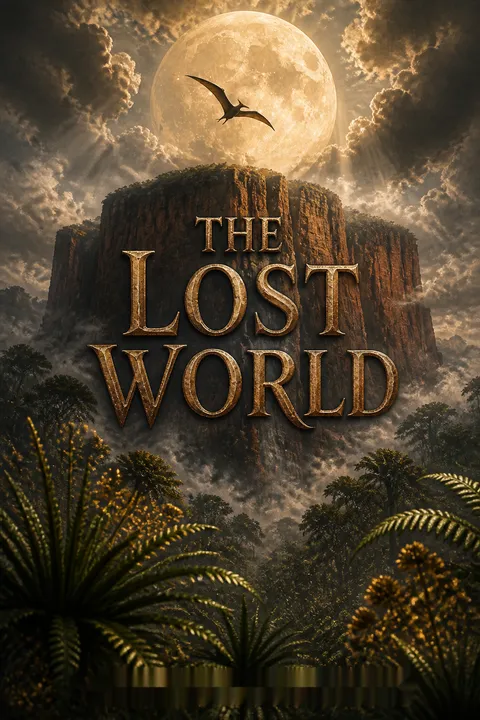
خلاصه داستان
چالش قهرمانپروری
ادوارد مالون، روزنامهنگار جوان، تحت تأثیر عشق خود به گلادیس هانگرتون قرار دارد؛ زنی که خواهان مردی اهل عمل و شهرت است. مالون برای به دست آوردن تحسین او، از سردبیر خود درخواست یک مأموریت خطرناک میکند. سردبیر به او پیشنهاد میدهد با پروفسور چلنجر معروف مصاحبه کند؛ مردی که به بدخلقی شدید و ادعاهای عجیبش درباره حیات پیش از تاریخ در آمریکای جنوبی شهرت دارد. تلاش مالون برای قهرمان شدن، زمینه را برای ماجراجویی بزرگی فراهم میکند که شجاعت او را محکوم به آزمایش کرده و سرنوشتش را از نو رقم میزند.
پروفسور باورنکردنی
ملاقات مالون با پروفسور چلنجر انفجاری است؛ به معنای واقعی کلمه، چرا که پروفسور او را با توسل به زور از خانهاش بیرون میاندازد. با این حال، چلنجر با تشخیص صداقت مالون، راز فلات مرموزی در آمازون را با او در میان میگذارد که در آن موجودات پیش از تاریخ هنوز زنده هستند. مدارک چلنجر — یک دفترچه طراحی، عکسها و یک استخوان عجیب — از سوی جامعه علمی رد میشود، اما مالون متقاعد میگردد. چالش چلنجر برای جهان این است: اعزام کمیتهای برای اثبات یا رد ادعاهای او.
تشکیل گروه اکتشافی
در یک جلسه علمی پرهیاهو، ادعاهای چلنجر با تمسخر مواجه میشود، اما او پیشنهادی را مطرح میکند: اجازه دهید یک کمیته موضوع را بررسی کند. پروفسور سامرلی که فردی شکاک است، داوطلب میشود و لرد جان راکستون، ورزشکار و کاوشگر مشهور نیز به او میپیوندد. مالون نیز به عنوان نماینده مطبوعات همراه آنها میشود. این تیم غیرمنتظره — چلنجر، سامرلی، راکستون و مالون — خود را برای سفری به ناشناختهها آماده میکنند؛ سفری که انگیزه هر یک از اعضای آن متفاوت است: علم، شکگرایی، ماجراجویی و عشق.
به سوی حیات وحش آمازون
گروه اکتشافی با قایق بخار و کانو به اعماق آمازون سفر میکند و راهنمایان بومی و خدمتکاران دورگه آنها را همراهی میکنند. جنگل در عین زیبایی، تهدیدآمیز است؛ پر از حیوانات عجیب، قبایل متخاصم و تهدید همیشگی ناشناختهها. تنشها میان اعضای تیم بالا میگیرد، بهویژه میان چلنجر پرهیاهو و سامرلی تند و تیز. پیشروی گروه با سختیهای فراوان همراه است، اما در این میان، جلوههایی از شگفتیها نیز نمایان میشود — ردپاهای غولپیکر، صدای طبلهای مرموز و سایههای گذرا.
فلات اسرارآمیز
پس از پیادهروی طاقتفرسا، تیم به پای فلات میرسد — دژی با دیوارهای سرخ و عمودی که از دل جنگل سر برآورده است. آنها نشانههایی از کاوشگران قبلی و یک مسیر احتمالی برای صعود پیدا میکنند، اما راه مسدود است. نقشهای جسورانه طراحی میشود: صعود به یک صخره مجزا، قطع کردن یک درخت برای ایجاد پل روی شکاف و عبور به دنیای گمشده. نقشه با موفقیت اجرا میشود، اما خیانت رخ میدهد — پل توسط یک خدمتکار انتقامجو نابود میشود و کاوشگران را بر فراز فلات، دور از دنیای پایین، سرگردان رها میکند.
گرفتار در فراز جهان
اعضای تیم که راه برگشتی ندارند، باید در سرزمینی که زمان در آن متوقف شده است، زنده بمانند. آنها یک اردوگاه مستحکم میسازند و شروع به کاوش میکنند؛ در این مسیر با موجودات غولپیکر مواجه میشوند — ایگوانودونها، پتروداکتیلها و دایناسورهای گوشتخوار. فلات مانند یک موزه زنده از حیات پیش از تاریخ است، هم حیرتانگیز و هم مرگبار. کنجکاوی علمی کاوشگران با تلاش آنها برای بقا در هم میآمیزد، چرا که آنها با حشرات سمی، شکارچیان شبگرد و تهدید مداوم حمله روبرو هستند.
رها شدن وحشت پیش از تاریخ
کاوشگران شاهد درام روزمره بقا در میان ساکنان فلات هستند: گیاهخوارانی که توسط شکارچیان صید میشوند، پتروداکتیلهایی که در باتلاقها لانه میسازند و خطر همیشگی شکار شدن خودشان. یک گشت شبانه نزدیک است به فاجعه ختم شود، زمانی که مالون توسط یک دایناسور تعقیب شده و در تله بومیان سقوط میکند. مشاهدات علمی تیم به بهای خون و وحشت به دست میآید، چرا که آنها درمییابند این فلات همانقدر که یک بهشت است، یک زندان نیز هست.
گمشدگان و زندگان
کاوشگران متوجه میشوند که تنها نیستند: قبیلهای از انسانهای اولیه با پوست سرخ در غارها زندگی میکنند که درگیر جنگی بیرحمانه با نژادی از انساننماها هستند؛ موجوداتی میان انسان و حیوان. کاوشگران توسط انساننماها اسیر میشوند که بر قلمرویی وحشی حکومت میکنند و مراسم اعدام آیینی دارند. شباهت چلنجر به پادشاه انساننماها او را موقتاً نجات میدهد، اما تیم با مرگ روبرو است تا اینکه لرد راکستون یک فرار جسورانه را طراحی میکند.
قلمرو انساننماها
کاوشگران در بند، شاهد بیرحمی انساننماها هستند که بر انسانها تسلط دارند و با کاوشگران مانند موجوداتی عجیب رفتار میکنند. مالون و راکستون فرار میکنند، همراهان خود را نجات میدهند و با کمک قبیله انسانها، شورشی را رهبری میکنند. نبردی سهمگین درمیگیرد که به شکست انساننماها و آزادی انسانها ختم میشود. کاوشگران به قهرمان تبدیل میشوند، اما ذهن آنها معطوف به فرار از فلات است.
جنگ برای بقا
با نابودی انساننماها، قبیله انسانها دوباره تسلط خود را به دست میآورند و از کاوشگران تجلیل میشود. با این حال، خطرات فلات همچنان پابرجا است — شکارچیان غولپیکر، زمینهای خائنانه و چالش همیشگی یافتن راهی به خانه. اتحاد کاوشگران با انسانها هم کاربردی و هم تاثیرگذار است، چرا که آنها دانش و منابع خود را به اشتراک میگذارند، اما اشتیاق برای بازگشت به تمدن هر روز قویتر میشود.
راز فرار
با کمک رئیس قبیله انسانها که قدردان آنهاست، کاوشگران غاری مخفی را کشف میکنند که ممکن است به خارج از فلات راه داشته باشد. پس از یک کاوش پر از تنش، آنها گذرگاهی را مییابند که به دیواره صخره منتهی میشود و به زمین زیر فلات دسترسی دارد. آنها با استفاده از آخرین طناب خود به پایین فرود میآیند و به خدمتکار وفادار خود زامبو و گروه نجات میپیوندند. این آزمون سخت به پایان میرسد، اما دنیای گمشده در پشت سر باقی میماند — مکانی سرشار از شگفتی، وحشت و دگرگونی.
شگفتیها و خداحافظیها
کاوشگران پیش از رفتن، به شگفتیهایی که دیدهاند میاندیشند: دایناسورهای زنده، پرندگان باستانی، پستانداران غولپیکر و درام تکامل که در انزوا جریان دارد. آنها نمونههایی جمعآوری میکنند، نقشهها را میکشند و با قبیله انسانها خداحافظی میکنند. چلنجر نقشهای میکشد تا مدرکی غیرقابل انکار با خود به همراه ببرد — یک جوجه پتروداکتیل زنده — تا مطمئن شود داستان آنها باور خواهد شد. با آغاز سفر به خانه، دنیای گمشده به افسانهها میپیوندد.
بازگشت به تمدن
در بازگشت به لندن، کاوشگران با ناباوری و تمسخر مواجه میشوند. گزارشهای آنها به عنوان داستانپردازی رد میشود و مدارکشان — عکسها و نمونهها — مورد تردید قرار میگیرد. تنها یک نمایش عمومی و هیجانانگیز، با حضور پتروداکتیل زنده، جهان را از کشف آنها مطمئن میسازد. از کاوشگران به عنوان قهرمان تجلیل میشود، اما هر یک از آنها تحت تأثیر این تجربه تغییر کردهاند و زخمها، خاطرات و جاهطلبیهای جدیدی را با خود به همراه دارند.
واکنش جهان
بازگشت کاوشگران جنجال رسانهای، بحثهای علمی و جذابیت عمومی زیادی ایجاد میکند. چلنجر از اثبات ادعایش لذت میبرد، سامرلی متواضع شده است، راکستون بیقرار ماجراجوییهای جدید است و مالون هم مورد ستایش قرار گرفته و هم دلشکسته است. دنیای گمشده به نمادی از ناشناختهها تبدیل میشود؛ چالشی برای علم و تخیل. مدارک کاوشگران دهان بیشتر منتقدان را میبندد، اما موقعیت فلات همچنان یک راز باقی میماند تا اسرار آن حفظ شود.
بهای ماجراجویی
پیروزی مالون طعمی تلخ و شیرین دارد: گلادیس محبوب او با مرد دیگری ازدواج کرده و تحت تأثیر قهرمانیهای او قرار نگرفته است. کاوشگران غنایم سفر خود را تقسیم میکنند — الماسهایی که توسط راکستون کشف شده است — اما پاداشهای واقعی کمتر ملموس هستند: دانش، رشد و پیوندهایی که در سختیها شکل گرفتهاند. هر یک از آنها باید هدف جدیدی پیدا کنند که تحت تأثیر این آزمون سخت و شگفتیهایی که شاهدش بودهاند، شکل گرفته است.
مرزهای جدید در انتظارند
داستان با تفکر کاوشگران درباره ماجراجوییهای جدید به پایان میرسد. دنیای گمشده آنها را تغییر داده و محدودیتهای دانش و امکانات بیپایان کشف را آشکار کرده است. چلنجر در رویای پیروزیهای علمی بیشتر است، راکستون به فکر سفرهای جدید، سامرلی به دنبال مطالعه در آرامش و مالون در اندیشه جستجوهای آینده. دنیای گمشده همچنان باقی است؛ گواهی بر شجاعت، کنجکاوی و انعطافپذیری کسانی که جرأت جستجوی ناشناختهها را دارند.
Analysis
تمثیلی از کشف، تردید و دگرگونیکتاب دنیای گمشده فراتر از داستانی درباره دایناسورها و ماجراجویی است؛ این اثر تاملی است در ماهیت کاوشگری، محدودیتهای دانش و پیچیدگیهای جاهطلبی انسان. دویل از فلات گمشده به عنوان نمادی کوچک از تحولات علمی و اجتماعی زمان خود استفاده میکند — تکامل، امپریالیسم و برخورد میان سنت و پیشرفت. شخصیتها تجسم واکنشهای متفاوت به ناشناختهها هستند: غرور چلنجر، شکگرایی سامرلی، عملگرایی راکستون و آرمانگرایی مالون. سفر آنها هم فیزیکی و هم روانی است و آنها را مجبور میکند با ترس، شگفتی و پیامدهای اقدامات خود روبرو شوند. داستان به نقد قهرمانپروری رمانتیک، خطرات غرور بیجا و شکنندگی تمدن میپردازد. با این حال، کنجکاوی، انعطافپذیری و انگیزه پایدار انسان برای جستجوی مرزهای جدید را نیز ستایش میکند. در نهایت، دنیای گمشده تنها یک مکان نیست، بلکه یک وضعیت ذهنی است — یادآوری این نکته که بزرگترین کشفیات اغلب فراتر از مرزهای یقین قرار دارند و معیار واقعی ماجراجویی نه در فتح، بلکه در دگرگونی است.
خلاصه نقدها
دنیای گمشده بازخوردهای عمدتاً مثبتی دریافت کرده و بهخاطر پیرنگ ماجراجویانه، شخصیتهای زنده و پویا، و ایدهی خلاقانهی بقای دایناسورها در عصر مدرن مورد تحسین قرار گرفته است. خوانندگان سبک نگارش جذاب دویل و تأثیر این کتاب بر ژانر علمیتخیلی را ارج مینهند. برخی از منتقدان به دیدگاههای قدیمی و کهنهی کتاب دربارهی نژاد و جنسیت خرده میگیرند، در حالی که گروهی دیگر این رویکردها را بازتابی از ویژگیهای آن دوران میدانند. این رمان بهعنوان یک اثر ماجراجویانهی کلاسیک شناخته میشود که با وجود گذشت زمان، همچنان جذاب و سرگرمکننده باقی مانده است و شخصیت پروفسور چلنجر نیز در کنار شرلوک هولمزِ معروفِ دویل، به شخصیتی ماندگار تبدیل میشود.
دیگران نیز خواندهاند


Characters
Edward Malone
مالون داستان را به عنوان یک روزنامهنگار جوان و آرمانگرا آغاز میکند که انگیزه او عشق و اشتیاق برای رسیدن به عظمت است. سفر او هم بیرونی و هم درونی است: او با خطرات فیزیکی، دوراهیهای اخلاقی و ناامیدی ناشی از عشق بیفرجام روبرو میشود. شجاعت مالون با رویارویی با هیولاهای پیش از تاریخ و خیانتهای انسانی رشد میکند و روایت او هم حس حضور در صحنه و هم تامل را به خواننده منتقل میکند. در پایان، او متحول میشود — عاقلتر، متکی به خود و آماده برای ماجراجوییهای جدید، چرا که معنایی فراتر از تایید دیگران یافته است.
Professor George Edward Challenger
چلنجر نیرویی از طبیعت است — از نظر فیزیکی باابهت، از نظر فکری قدرتمند و از نظر احساسی بیثبات. نبوغ علمی او با غرور و بیصبریاش در برابر ذهنهای ضعیفتر همخوانی دارد. باور چلنجر به بینقص بودن خود، محرک اصلی گروه اکتشافی است، اما همکارانش را نیز از او دور میکند. با این حال، در پس این هیاهو، اشتیاقی واقعی برای کشف و ظرفیتی برای وفاداری نهفته است. دنیای گمشده حقانیت او را ثابت میکند، اما انسانیت او را نیز آشکار میسازد، چرا که او با خطر روبرو میشود، پیوند دوستی برقرار میکند و در نهایت نه فقط برای خود، بلکه برای علم به دنبال کسب اعتبار است.
Professor Summerlee
سامرلی رقیب فکری چلنجر است — فردی شکاک که خواستار مدرک است و از مخالفت لذت میبرد. بدبینی اولیه او به تدریج با واقعیت انکارناپذیر دنیای گمشده از بین میرود. سفر سامرلی سفری همراه با تواضع و رشد است: او یاد میگیرد به اشتباهات خود اعتراف کند، شگفتیها را تحسین کند و برای رفاقت ارزشی بیشتر از غرور قائل شود. دگرگونی او گواهی بر قدرت تجربه در تغییر دادن حتی سختترین ذهنهاست.
Lord John Roxton
راکستون نمونه بارز یک کاوشگر است — شجاع، ماهر و خونسرد. گذشته او به عنوان شکارچی و جنگجو در آمریکای جنوبی به او دانش عملی و اصول اخلاقی شکلگرفته در میدان عمل بخشیده است. شوخطبعی، شجاعت و وفاداری راکستون او را به ستون فقرات تیم تبدیل میکند و تفکر سریع او بارها گروه را نجات میدهد. او مردی است که در عین خشونت، دلسوز است و توانایی رهبری یک حمله یا آرام کردن یک دوست را دارد. بیقراری راکستون در پایان داستان نشان میدهد که روح ماجراجویی هرگز به طور کامل سیراب نمیشود.
Gladys Hungerton
گلادیس محرک اصلی مالون برای آغاز سفر است و تجسمی از ایده رمانتیک یک معشوقه دستنیافتنی به شمار میرود. تمایل او برای داشتن شریکی قهرمان، مالون را به سوی ماجراجویی سوق میدهد، اما انگیزههای خود او سطحی و خودخواهانه از آب درمیآیند. ازدواج نهایی گلادیس با مردی دیگر، بدون توجه به دستاوردهای مالون، فاصله میان فانتزی و واقعیت را آشکار میسازد و مالون را مجبور میکند معنایی فراتر از تایید او پیدا کند.
Zambo
زامبو، خدمتکار سیاهپوست گروه اکتشافی، مظهر وفاداری و شجاعت تزلزلناپذیر است. او در پای فلات باقی میماند و به عنوان تنها پل ارتباطی کاوشگران با دنیای خارج عمل میکند. فداکاری، تدبیر و تمایل زامبو برای به خطر انداختن جان خود در راه تیم، نقش حیاتی و اغلب نادیدهگرفتهشده افرادی را که در نقشهای پشتیبان خدمت میکنند، برجسته میسازد. حضور او یادآور پیچیدگیهای روابط استعماری و ارزش اعتماد فراتر از مرزهای فرهنگی است.
Gomez
گومز، خدمتکار دورگه، کینهای قدیمی از راکستون به دل دارد؛ چرا که اقدامات گذشته راکستون منجر به مرگ برادر گومز شده بود. خیانت او — نابود کردن پل و به دام انداختن کاوشگران — از انتقام شخصی سرچشمه میگیرد، اما در نهایت به مرگ خودش منجر میشود. اقدامات گومز تم خیانت انسانی در میان خطرات طبیعی را وارد داستان میکند و سرنوشت او قدرت ویرانگر نفرت حلنشده را نشان میدهد.
The Ape-Men
انساننماها هم نقش دشمن را دارند و هم نماد هستند — آنها نشاندهنده مرحلهای میان حیوان و انسان و خشونت ذاتی در تکامل هستند. جامعه آنها بازتابی از ساختارهای انسانی است که رهبران، آیینها و جنگهای خاص خود را دارد. درگیری میان انساننماها و انسانها، تلاش برای تسلط، مرز باریک میان تمدن و وحشیگری و ظرفیت انسان برای بیرحمی و همکاری را به تصویر میکشد.
The Accala Indians
قبیله انسانها در فلات، یعنی آکالاها، بازماندگانی هستند که در غارها زندگی میکنند، با انساننماها میجنگند و خود را با دنیای هیولاها وفق دادهاند. اتحاد آنها با کاوشگران از روی نیاز شکل میگیرد، اما به احترام متقابل تبدیل میشود. قدردانی و کمک آکالاها برای بقا و فرار کاوشگران حیاتی است و اهمیت درک متقابل فرهنگی و همبستگی را برجسته میسازد.
Maple White
میپل وایت، کاوشگر آمریکایی که دفترچه طراحی او الهامبخش سفر چلنجر میشود، حضوری شبحوار در داستان دارد — او پیش از شروع داستان مرده است، اما مسیر آن را شکل میدهد. نقاشیها، آثار به جا مانده و سرنوشت او هم به عنوان مدرک و هم به عنوان هشدار عمل میکنند و خطرات و پاداشهای قدم گذاشتن در مسیر ناشناختهها را به کاوشگران یادآور میشوند.
Plot Devices
Framing Narrative and First-Person Account
داستان از زبان مالون و به صورت اول شخص روایت میشود که در قالب مجموعهای از گزارشها و نامهها ساختار یافته است. این ابزار روایی صمیمیت، تعلیق و حس اصالت ایجاد میکند، چرا که خوانندگان رویدادها را در کنار شخصیت اصلی تجربه میکنند. این چارچوب همچنین امکان تامل، تردید به خود و آشکار شدن تدریجی رشد شخصیت را فراهم میسازد.
The "Lost World" Trope
ایده اصلی داستان — فلات پنهانی که تکامل در آن مسیر متفاوتی را طی کرده است — همزیستی دایناسورها، انساننماها و انسانها را ممکن میسازد. انزوای فیزیکی فلات که با صخرههای عمودی احاطه شده است، به عنوان یک مانع واقعی و استعاری عمل میکند که حیات باستانی را حفظ کرده و خلاقیت کاوشگران را به چالش میکشد.
Rivalry and Reversal
رقابت میان چلنجر و سامرلی و تنش میان شکگرایی و باور، روایت را به جلو میبرد و فرصتهایی برای چرخشهای داستانی ایجاد میکند — شکاکان به باورمندان تبدیل میشوند، دشمنان متحد میگردند و امر غیرممکن به واقعیت میپیوندد. درگیریهای شخصی و حرفهای بازتابی از تلاش بزرگتر برای بقا و درک متقابل است.
Betrayal and Redemption
خیانت گومز یک دشمن انسانی را وارد داستان میکند، مخاطرات را افزایش میدهد و کاوشگران را مجبور میسازد نه تنها با تهدیدهای بیرونی، بلکه با اختلافات داخلی روبرو شوند. رستگاری از طریق اقدامات شجاعانه، وفاداری و بخشش حاصل میشود، چرا که تیم بر هیولاها و بیاعتمادی غلبه میکند.
Scientific Evidence and Public Proof
تلاش کاوشگران برای متقاعد کردن جهان درباره کشفیات خود، نشاندهنده تنش میان تجربه و شکگرایی، مدرک و باور است. رونمایی عمومی و هیجانانگیز از پتروداکتیل به عنوان مدرک نهایی عمل میکند، تمسخرها را به تحسین تبدیل میسازد و ارزش جستجوی دانش را به اثبات میرساند.
سؤالات متداول
Synopsis & Basic Details
What is The Lost World about?
- Expedition to the Unknown: The Lost World follows young journalist Edward Malone as he joins a perilous expedition to a remote, uncharted plateau in the Amazon basin, led by the eccentric and brilliant Professor Challenger. The mission is to verify Challenger's incredible claims that prehistoric life, including dinosaurs, still exists there.
- Survival and Discovery: Marooned atop the plateau, Malone and his companions—the skeptical Professor Summerlee and the adventurous Lord John Roxton—must navigate a primeval landscape teeming with living fossils, from iguanodons and pterodactyls to ferocious carnivorous dinosaurs. Their journey becomes a desperate struggle for survival against both natural dangers and the conflict between indigenous human tribes and a race of ape-men.
- Vindication and Transformation: The narrative culminates in the team's dramatic escape and their return to London, where they present irrefutable proof of their discoveries to a disbelieving scientific community. The adventure transforms each character, challenging their beliefs, testing their courage, and ultimately reshaping their understanding of the world and themselves.
Why should I read The Lost World?
- Pioneering Sci-Fi Adventure: Readers should delve into The Lost World for its groundbreaking blend of scientific speculation and thrilling adventure, establishing the "lost world" trope that influenced countless stories. Arthur Conan Doyle's vivid descriptions transport you to a primeval jungle, making the impossible feel real and immediate.
- Rich Character Dynamics: The novel offers a fascinating study of contrasting personalities, particularly the bombastic Professor Challenger and the acerbic Professor Summerlee, whose intellectual sparring provides both humor and depth. Their evolving relationship, alongside the pragmatic Lord John Roxton and the idealistic Edward Malone, forms the emotional core of the expedition.
- Themes of Exploration & Belief: Beyond the dinosaurs, the book explores profound themes of scientific discovery, the clash between skepticism and belief, and the human drive to explore the unknown. It challenges readers to consider the limits of conventional knowledge and the transformative power of extraordinary experiences, making it a compelling read for those interested in the themes in The Lost World.
What is the background of The Lost World?
- Early 20th-Century Scientific Context: Published in 1912, The Lost World emerged during a period of intense scientific debate surrounding evolution (Darwinism vs. Weissmannism, as mentioned in Chapter 2) and the ongoing discovery of dinosaur fossils, fueling public fascination with prehistoric life. Doyle taps into this zeitgeist, presenting a scenario where such ancient creatures could still exist, challenging the scientific consensus of the time.
- Age of Exploration & Imperialism: The story is set against the backdrop of the late Victorian and Edwardian eras, a time when vast regions of the globe, particularly the Amazon, remained largely unexplored, fostering a sense of mystery and the possibility of incredible discoveries. Lord John Roxton's past exploits against Peruvian slave-drivers (Chapter 6) also subtly reflect the colonial attitudes and interventions of the period, where European adventurers often took justice into their own hands in remote territories.
- Author's Personal Interests: Arthur Conan Doyle, known for Sherlock Holmes, also had a keen interest in spiritualism, the unknown, and scientific anomalies. The Lost World allows him to indulge these interests, creating a narrative that pushes the boundaries of accepted reality and explores the allure of the undiscovered, reflecting a broader cultural fascination with the mystical and the scientific frontier.
What are the most memorable quotes in The Lost World?
- "There are heroisms all round us waiting to be done.": Gladys Hungerton's challenge to Malone in Chapter 1 encapsulates the initial romantic idealism that drives his quest for adventure and fame. This quote defines Malone's pivotal decision to seek a dangerous assignment, setting the entire narrative in motion and highlighting the Edward Malone motivations.
- "Truth is truth, and the noise of a number of foolish young men... cannot affect the matter.": Professor Challenger's defiant declaration in Chapter 5, amidst the uproar at the Zoological Institute, perfectly embodies his unshakeable conviction and contempt for his detractors. This quote defines his character as a visionary who stands firm against skepticism, a central Professor Challenger character trait.
- "Man was always the master.": Malone's reflection in Chapter 12, after discovering the ape-men's traps, reveals a core theme of human ingenuity and dominance over nature, even in a world of monsters. This powerful statement underscores the resilience and adaptability of humanity, a key theme in The Lost World.
What writing style, narrative choices, and literary techniques does Arthur Conan Doyle use?
- Framing Narrative and First-Person Account: Doyle employs a first-person perspective through Edward Malone's "reports" and "letters" to his editor, McArdle, creating an immediate and immersive experience. This choice lends a sense of authenticity and urgency, making the extraordinary events feel like genuine dispatches from an unknown land, enhancing the The Lost World analysis.
- Vivid Descriptive Language & Sensory Detail: The author uses rich, evocative descriptions to bring the Amazonian jungle and the plateau to life, appealing to all senses—from the "monotonous chirrup" of Mr. Hungerton to the "mephitic, horrible, musty odor" of the pterodactyl swamp. This detailed imagery immerses the reader in the exotic and dangerous environment, a hallmark of Doyle's adventure writing style.
- Character-Driven Dialogue & Humor: Doyle masterfully uses dialogue to reveal character, particularly through the witty, often sarcastic exchanges between Challenger and Summerlee, and Lord John's distinctive "young fellah my lad" idiom. This interplay provides comic relief and highlights the intellectual and personal rivalries, adding depth to the character development in The Lost World.
Hidden Details & Subtle Connections
What are some minor details that add significant meaning?
- Gladys's "Oriental" Features: Malone's initial description of Gladys in Chapter 1, noting her "delicately bronzed skin, almost oriental in its coloring," subtly foreshadows her exotic and ultimately unattainable nature. This detail hints at her being an object of fascination rather than a grounded partner, reflecting Malone's romanticized, rather than realistic, view of love, which contributes to the Gladys Hungerton meaning.
- Lord John's "Blue Clay" Observation: In Chapter 10, Lord John's seemingly casual remark about the "blue clay" in the pterodactyl swamp, and his later muttering about "clay in a volcanic tube," is a crucial, almost throwaway detail that foreshadows the discovery of diamonds. This highlights his keen, practical observation skills, which differ from the professors' purely scientific focus, and reveals a hidden, pragmatic motivation for his adventurous spirit.
- Challenger's "Assyrian Bull" Appearance: The repeated comparison of Professor Challenger's physical appearance to an "Assyrian bull" (Chapter 3) is more than just a vivid description; it imbues him with an ancient, almost mythical quality. This detail subtly links his formidable, primal presence to the prehistoric world he champions, suggesting he is a force of nature himself, a key aspect of Professor Challenger character analysis.
What are some subtle foreshadowing and callbacks?
- Gomez's Early "Curiosity" and "Furtive Looks": In Chapter 8, Malone notes Gomez's "vice of curiosity" and later, in Chapter 9, recalls his "furtive looks of hatred." These seemingly minor observations subtly foreshadow Gomez's eventual betrayal, indicating his hidden agenda and the simmering resentment that will lead to the destruction of the bridge, a crucial piece of foreshadowing in The Lost World.
- Challenger's "Back to the Wall" Philosophy: Professor Challenger's assertion in Chapter 4, "G. E. C. is happiest then," when his back is to the wall, foreshadows his remarkable ingenuity when the expedition is trapped. This callback highlights his ability to thrive under extreme pressure, leading to the brilliant idea of the tree-bridge and later the balloon, showcasing his resourcefulness in The Lost World analysis.
- Malone's Rugby Prowess: Lord John Roxton's recognition of Malone as a potential "Rugby cap for Ireland" (Chapter 6) is a subtle callback to Malone's physical capabilities. This detail foreshadows Malone's later physical feats, such as climbing the gingko tree and outrunning a dinosaur, establishing his role as the expedition's active, athletic member, and contributing to Edward Malone character development.
What are some unexpected character connections?
- Challenger and the Ape-King's Mirror Image: Lord John's observation in Chapter 13 that the Ape-King is "the very image of our Professor, save that his coloring was red instead of black," creates a grotesque, unexpected connection. This mirroring suggests a primal, untamed aspect within Challenger himself, highlighting the thin line between man and beast and adding a layer of symbolic depth to Professor Challenger character.
- Professors United by Mutual Disdain: The discovery that both Challenger and Summerlee share a "very poorest opinion of Dr. Illingworth of Edinburgh" (Chapter 8) creates an unexpected, humorous bond between the rivals. This shared detestation becomes a "safety" valve, allowing them to temporarily set aside their differences, revealing a subtle camaraderie beneath their constant bickering.
- Malone's "Celtic Temperament" and Telepathy: Challenger attributes Malone's feeling of being watched by the ape-men to his "Celtic temperament" and sensitivity to "such impressions" (Chapter 11). This unexpected connection links Malone's Irish heritage to a quasi-mystical intuition, suggesting a deeper, non-scientific understanding of the world that complements the rationalism of the professors.
Who are the most significant supporting characters?
- Zambo, the Steadfast Link: Zambo, the expedition's loyal negro servant, is crucial as the sole reliable link to the outside world after the team is stranded. His unwavering faithfulness, resourcefulness in delivering supplies, and commitment to staying at the base of the cliff (Chapter 9) underscore themes of loyalty and the often-overlooked contributions of indigenous or marginalized figures in exploration, making him vital to The Lost World analysis.
- Maple White, the Ghostly Pioneer: Though deceased before the main narrative, Maple White's sketchbook, bone, and scattered camp remains (Chapter 4, 9) are the initial, tangible proofs that validate Challenger's claims. He serves as a spectral guide and a cautionary tale, his fate highlighting the dangers of the lost world and inspiring the explorers to continue his legacy of discovery.
- The Accala Indian Chief (Maretas): The young chief, Maretas, whom the explorers rescue, becomes a pivotal ally. His gratitude and willingness to share the secret of the escape tunnel (Chapter 15) are instrumental in the team's return. He represents the indigenous knowledge and resilience, and his wistful desire for the explorers to stay (Chapter 15) adds a poignant dimension to the cultural exchange.
Psychological, Emotional, & Relational Analysis
What are some unspoken motivations of the characters?
- Challenger's Quest for Absolute Vindication: Beyond proving his scientific claims, Professor Challenger is driven by a deep-seated need to silence his detractors and assert his intellectual supremacy. His bitterness about past incredulity (Chapter 4) and his elaborate sarcasm suggest an underlying insecurity, making his quest for proof a personal crusade for recognition and intellectual dominance, central to Professor Challenger motivations.
- Lord John Roxton's Existential Thrill-Seeking: Lord John's constant pursuit of "sporting risk" and his declaration that "Life can whack me about now, and it can't leave a mark" (Chapter 6) reveal an unspoken motivation: a profound boredom with conventional life and a craving for intense, life-affirming experiences. His adventures are not just for sport, but a way to feel truly alive, a key aspect of Lord John Roxton character.
- Malone's Search for Self-Worth: While initially driven by Gladys's demand for a "famous man," Malone's journey subtly shifts to a search for intrinsic self-worth. His internal struggle with fear and pride (Chapter 12) and his eventual disillusionment with Gladys (Chapter 16) reveal that the adventure becomes less about external validation and more about proving his own courage and capabilities to himself, defining Edward Malone motivations.
What psychological complexities do the characters exhibit?
- Challenger's Mask of Arrogance: Professor Challenger's overwhelming arrogance and bluster (e.g., "sub-human intelligence" in Chapter 3) serve as a psychological defense mechanism, masking a deep sensitivity to intellectual challenge and a fear of being dismissed. His moments of "pitying tone" (Chapter 8) or "seraphic smile" (Chapter 10) reveal glimpses of a more complex, almost childlike, vulnerability beneath the formidable exterior.
- Summerlee's Intellectual Rigidity and Emotional Honesty: Professor Summerlee initially embodies rigid scientific skepticism, often to the point of obstinacy (Chapter 5). However, his genuine apology to Challenger after witnessing the pterodactyl (Chapter 9) demonstrates a profound intellectual honesty and capacity for humility, revealing a psychological complexity where his commitment to truth ultimately overrides personal pride.
- Malone's Fear-Driven Courage: Malone's internal monologue frequently reveals his "Irish imagination which makes the unknown and the untried more terrible than they are," coupled with an "overpowering fear of seeming afraid" (Chapter 12). This psychological tension between innate fear and a powerful sense of pride drives his heroic actions, making his courage a conscious, hard-won battle against his own anxieties, a central aspect of Edward Malone psychological analysis.
What are the major emotional turning points?
- Summerlee's Apology to Challenger: The most significant emotional turning point occurs in Chapter 9 when Summerlee, after witnessing the pterodactyl, solemnly apologizes to Challenger, stating, "I owe you an apology. Sir, I am very much in the wrong." This moment marks the profound shift from bitter scientific rivalry to mutual respect and shared wonder, validating Challenger's claims and forging a new bond between the two professors.
- Malone's Near-Death Experience and Discovery of Human Inhabitants: Malone's terrifying solo night journey in Chapter 12, culminating in his pursuit by a carnivorous dinosaur and fall into a native trap, is a major emotional turning point. This ordeal strips away his romanticized view of adventure, forcing him to confront raw terror, but also leads to the crucial discovery of human inhabitants, shifting the expedition's focus and deepening his understanding of the plateau's complexities.
- The Ape-Men's Attack and the Rescue of the Indians: The brutal attack by the ape-men and the subsequent rescue of Summerlee and the Accala Indians in Chapter 13 is a powerful emotional climax. It transforms the explorers from observers to active participants in a primal struggle, solidifying their bond, igniting Lord John's "blood lust," and forcing them to confront the savagery of the lost world head-on, leading to a profound sense of shared purpose and danger.
How do relationship dynamics evolve?
- Rivals to Respected Colleagues (Challenger & Summerlee): The relationship between Challenger and Summerlee evolves from intense, often childish, academic rivalry (e.g., their "incessant bickerings" in Chapter 8) to one of grudging respect and eventually, shared scientific awe. Summerlee's formal apology (Chapter 9) is a pivotal moment, transforming their dynamic into a more collaborative, albeit still argumentative, partnership, united by their extraordinary discoveries.
- Apprentice to Trusted Comrade (Malone & Lord John): Malone initially views Lord John as a seasoned adventurer, but their shared dangers, particularly Lord John's test of Malone's courage (Chapter 6) and their joint rescue mission (Chapter 13), forge a deep bond of trust and camaraderie. Lord John becomes a mentor figure, and Malone earns his respect, evolving from a naive reporter to a capable and valued member of the team, showcasing character development in The Lost World.
- Wary Strangers to Grateful Allies (Explorers & Accala Indians): The initial interactions between the explorers and the Accala Indians are marked by caution and misunderstanding. However, the explorers' intervention in the war against the ape-men (Chapter 14) transforms this into a relationship of deep gratitude and alliance. The Indians view the explorers as "supermen," offering them refuge and assistance, highlighting a complex, mutually beneficial, yet ultimately temporary, cross-cultural bond.
Interpretation & Debate
Which parts of the story remain ambiguous or open-ended?
- The Ultimate Fate of the London Pterodactyl: While the pterodactyl's escape from Queen's Hall is a dramatic climax, its ultimate fate is left ambiguous. Malone recounts conflicting reports—perching on the roof, being seen by a Coldstream Guard, and a Dutch-American liner sighting it heading "south and west" (Chapter 16). This ambiguity adds to the creature's mythical status and leaves the reader to ponder whether it truly found its end or simply vanished into the unknown, contributing to The Lost World ending explained.
- The Precise Evolutionary History of the Plateau's Inhabitants: Professor Challenger offers theories on the evolution and migration of the ape-men and Accala Indians (Chapter 14), but these remain speculative. The exact "how" and "when" of their arrival and development on the isolated plateau are not definitively resolved, leaving open questions about the unique evolutionary paths taken in this "lost world" and inviting further The Lost World analysis.
- The Long-Term Impact of the Discovery on the World: While the expedition's findings are publicly validated, the narrative concludes without fully exploring the long-term societal or scientific implications. The location of Maple White Land remains a secret, and the world's reaction is primarily one of initial shock and awe. This open-endedness allows for continued speculation about how such a discovery would truly reshape human understanding and future exploration.
What are some debatable, controversial scenes or moments in The Lost World?
- Lord John Roxton's Vigilante Justice: Lord John's past as "the flail of the Lord" (Chapter 6), where he waged a personal war against Peruvian slave-drivers and killed Pedro Lopez, is presented as heroic but is morally debatable. This scene raises questions about the ethics of individual justice outside the law and the colonial adventurer's right to impose his will, a controversial aspect of Lord John Roxton character.
- The Extermination of the Ape-Men: The systematic slaughter of the ape-men by the combined forces of the explorers and the Accala Indians (Chapter 14) is a brutal and controversial act. Challenger justifies it as "man's triumph" and the "decisive battles of history," but it raises ethical questions about genocide, the destruction of a species, and the inherent violence in the struggle for dominance, prompting interpretive debates The Lost World.
- Gladys Hungerton's Fickleness and Malone's Disillusionment: Gladys's swift marriage to a "solicitor's clerk" (Chapter 16) after Malone's heroic return is a controversial character twist. It challenges the romantic ideal that drove Malone, forcing him to confront the superficiality of his initial motivations. This scene sparks debate about whether Gladys is a truly shallow character or if Malone's perception of her was always flawed by his own romantic projections, impacting the Gladys Hungerton meaning.
The Lost World Ending Explained: How It Ends & What It Means
- Public Vindication and Scientific Triumph: The expedition culminates in a dramatic public meeting in London where Professor Challenger, after facing renewed skepticism, unveils a live pterodactyl from the plateau. This irrefutable proof silences his critics, leading to widespread acclaim and validating the extraordinary claims of prehistoric life, marking a triumph for Challenger and a monumental moment for science, central to *The Lost World ending explained
درباره نویسنده


دانلود PDF
دانلود EPUB
.epub digital book format is ideal for reading ebooks on phones, tablets, and e-readers.








































