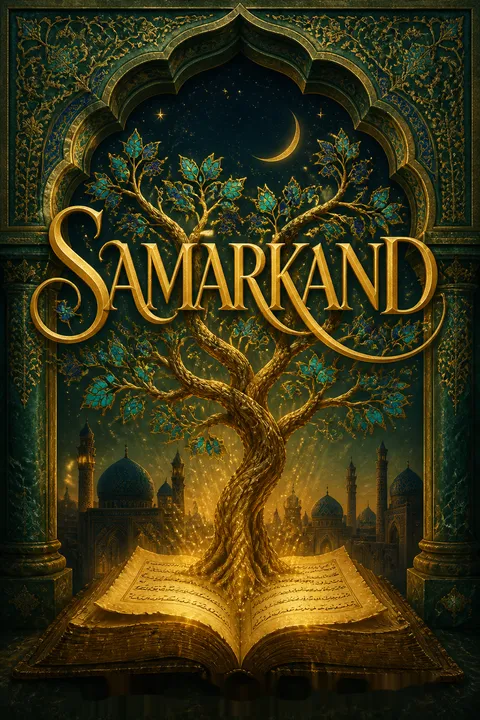
Résumé de l'intrigue
Le voyage du manuscrit perdu commence
Le récit s’ouvre sur la réflexion de Benjamin O. Lesage à propos de la perte tragique du manuscrit des Rubaiyat d’Omar Khayyam, qui sombra avec le Titanic en 1912. Ce manuscrit, symbole de sagesse et de beauté, fut victime de l’arrogance et de l’ambition humaines. Lesage raconte son rôle dans le périple de ce manuscrit, de l’Asie au Nouveau Monde, nourrissant l’espoir qu’un jour il puisse être retrouvé au fond de l’océan. L’histoire du manuscrit est intimement liée à la vie d’Omar Khayyam, poète et philosophe persan, dont les vers et les aventures sont consignés dans ses pages.
L’arrivée d’Omar Khayyam à Samarcande
En 1072, Omar Khayyam, âgé de 24 ans, arrive dans la vibrante cité de Samarcande, en quête d’inspiration pour sa poésie et ses réflexions philosophiques. Les rues animées de la ville et la diversité de ses habitants offrent un décor riche pour son parcours intellectuel. L’arrivée d’Omar marque le début d’une période de transformation, où il rencontrera à la fois beauté et danger, préparant ainsi le terrain pour ses futures contributions à la littérature et à la philosophie.
La rencontre dangereuse d’un philosophe
Omar intervient lors d’une bastonnade publique infligée à Jaber le Grand, ancien disciple d’Avicenne accusé d’hérésie. Cet acte de courage attire la colère d’un fanatique surnommé Scar-Face, qui prend Omar pour cible en raison de ses convictions philosophiques. Cette rencontre met en lumière la tension entre raison et fanatisme, thème récurrent dans la vie d’Omar, qui doit naviguer parmi les dangers liés à l’expression de ses idées dans un monde souvent hostile à la liberté intellectuelle.
L’hospitalité inattendue du qadi
Après la confrontation, Omar est conduit devant le qadi Abu Taher, qui, contre toute attente, lui offre sa protection malgré les accusations d’hérésie. Abu Taher lui remet un manuscrit vierge, l’encourageant à y consigner secrètement ses pensées et ses vers. Ce geste sauve Omar d’un danger immédiat et prépare la création des Rubaiyat, œuvre qui traversera les siècles, symbolisant la puissance du savoir et de l’écrit.
Amour et intrigues à Samarcande
La relation d’Omar avec Jahan, poétesse captivante originaire de Boukhara, se renforce au fil de rencontres clandestines, à l’abri des regards indiscrets de la cour du Sultan. Leur amour, passionné mais chargé d’intrigues politiques et de périls, se déploie dans un contexte où les caprices du Sultan et la menace constante de trahison ajoutent une tension palpable. Chaque instant partagé devient précieux et périlleux, alors qu’ils affrontent ensemble les complexités du pouvoir et du sentiment.
La menace grandissante des Seldjoukides
Le paysage politique se transforme alors que les Turcs seldjoukides, sous la conduite d’Alp Arslan, préparent l’invasion de Samarcande. Les habitants de la ville, dont Omar et Jahan, se retrouvent pris dans le feu croisé de ce conflit imminent. La réputation de brutalité des Seldjoukides jette une ombre sur la cité, contraignant ses résidents à affronter les dures réalités de la guerre. Omar doit choisir ses loyautés et trouver comment protéger ceux qu’il aime face à un avenir incertain.
La force destructrice de l’invasion mongole
L’invasion mongole, menée par le prince Hulagu, balaie le Moyen-Orient en laissant derrière elle ruines et désolation. La légendaire forteresse d’Alamut, refuge des Assassins, capitule après plus d’un siècle de résistance. Hulagu ordonne sa destruction totale, ne laissant rien intact, pas même la bibliothèque. Cet événement marque la fin d’une époque, alors que l’avancée implacable des Mongols redessine le paysage politique et culturel de la région, soulignant la fragilité du savoir et la résilience de l’art.
La quête de Benjamin Lesage commence
Benjamin O. Lesage, Américain aux racines françaises, se lance dans une quête pour retrouver le manuscrit de Samarcande. Son voyage est animé par un lien profond avec l’œuvre d’Omar Khayyam, qui a marqué sa famille depuis des générations. La poursuite de Lesage le conduit à travers les continents, alors qu’il affronte les complexités du patrimoine culturel, de l’identité personnelle et du pouvoir durable de l’art, reflétant sa lutte pour concilier ambition individuelle et forces historiques plus vastes.
L’influence dangereuse d’un révolutionnaire
Jamaladin, révolutionnaire charismatique, défie l’ordre établi en Perse et au-delà. Ses idées inspirent des mouvements à travers le monde musulman, mais attirent aussi la colère des puissants. Son influence est à la fois moteur de changement et source de conflits, sa vision d’un monde islamique moderne et unifié s’opposant aux intérêts enracinés. Ses échanges avec Lesage révèlent la complexité des idéaux révolutionnaires et les sacrifices personnels qu’ils exigent.
Le voyage funeste du Titanic
Lesage et son épouse Shireen embarquent sur le Titanic, emportant avec eux le manuscrit de Samarcande. Le naufrage du paquebot devient une métaphore de l’orgueil humain et de la fragilité de la vie. Alors que le manuscrit disparaît dans les profondeurs de l’océan, Lesage doit faire face à la perte de l’objet précieux et de sa femme. Cette tragédie souligne les thèmes de l’impermanence et de la quête incessante de sens dans un monde incertain, confrontant les personnages à la tension entre ambition et vulnérabilité.
Personnages
Omar Khayyam
Omar Khayyam est un poète, philosophe et mathématicien persan brillant. Son arrivée à Samarcande marque un tournant dans sa vie, où il affronte les complexités de l’amour, de la politique et de la recherche intellectuelle. Son caractère se définit par sa soif de connaissance et son attachement à la raison, même face au danger. Ses interactions avec les autres personnages révèlent son empathie profonde et sa lutte pour concilier ses idéaux avec les dures réalités du monde.
Jahan
Jahan est une poétesse captivante originaire de Boukhara, reconnue pour sa beauté et son éloquence. Sa présence à la cour du Sultan remet en question les rôles traditionnels de genre, utilisant son esprit et son charme pour naviguer dans le paysage politique. Sa relation avec Omar est au cœur du récit, leur histoire d’amour se déployant sur fond d’intrigues et de dangers. Son personnage incarne la tension entre désir personnel et attentes sociales.
Abu Taher
Abu Taher est le qadi de Samarcande, figure d’autorité et de sagesse. Malgré les accusations d’hérésie portées contre Omar, il reconnaît son potentiel et lui offre sa protection. Son cadeau d’un manuscrit vierge à Omar est un moment clé, symbolisant sa foi dans le pouvoir du savoir et de l’écrit. Abu Taher représente la possibilité de compréhension et de tolérance dans un monde souvent divisé par la peur et les préjugés.
Scar-Face
Scar-Face est un fervent fanatique religieux qui mène la foule contre Jaber puis cible Omar. Son personnage incarne les dangers du fanatisme et la menace qu’il fait peser sur la liberté intellectuelle. Ses actions déclenchent la confrontation d’Omar avec les aspects les plus sombres de la nature humaine, le forçant à défendre ses convictions face à la violence et à l’intolérance.
Hassan Sabbah
Hassan Sabbah est une figure charismatique et énigmatique, célèbre pour son pouvoir de persuasion et ses idées radicales. Sa présence annonce l’essor des Assassins, secte secrète et puissante. Ses échanges avec Omar révèlent une relation complexe, mêlant admiration et conflit idéologique. Son personnage symbolise l’attrait et le danger du changement révolutionnaire.
Benjamin O. Lesage
Benjamin Lesage est un Américain profondément lié à l’œuvre d’Omar Khayyam. Sa quête du manuscrit de Samarcande est motivée par le désir de préserver un patrimoine culturel et de comprendre son identité. Son parcours est jalonné de rencontres avec des figures historiques et des idées révolutionnaires, reflétant sa lutte pour concilier ambition personnelle et forces historiques plus vastes.
Jamaladin
Jamaladin est une figure charismatique dont les idées radicales inspirent des mouvements à travers le monde musulman. Son influence est à la fois transformatrice et source de divisions, alors qu’il défie l’ordre établi et prône un monde islamique moderne et unifié. Ses interactions avec Lesage mettent en lumière la complexité des idéaux révolutionnaires et les sacrifices personnels qu’ils impliquent.
Shireen
Shireen est l’épouse de Lesage et gardienne du manuscrit de Samarcande. Sa présence dans le récit incarne la tension entre désir personnel et préservation du patrimoine culturel. Son voyage avec Lesage à bord du Titanic souligne les thèmes de l’impermanence et de la quête durable de sens dans un monde incertain.
Morgan Shuster
Morgan Shuster est un expert financier américain chargé de moderniser les finances persanes. Ses efforts pour mettre en œuvre des réformes rencontrent la résistance d’intérêts enracinés, illustrant les défis du changement dans un paysage politique complexe. Son personnage incarne le potentiel de la collaboration interculturelle et les difficultés de la diplomatie internationale.
Prince Hulagu
Le prince Hulagu, petit-fils de Gengis Khan, mène l’invasion mongole qui dévaste Alamut. Ses actions symbolisent la force destructrice de la conquête et la transformation du paysage politique et culturel régional. Son personnage met en lumière la tension entre pouvoir et préservation, alors que ses ordres entraînent la perte d’innombrables textes irremplaçables.
Les ressorts du récit
Le manuscrit
Le manuscrit des Rubaiyat d’Omar Khayyam constitue un élément central du récit, symbolisant la puissance durable du savoir et de l’écrit. Son parcours, de sa création à sa perte sur le Titanic, illustre les thèmes de l’ambition humaine, de la fragilité de la vie et de la quête d’immortalité par l’art. L’histoire du manuscrit est étroitement liée à la vie d’Omar, reflétant ses recherches intellectuelles et l’impact de son œuvre sur les générations futures.
La ville de Samarcande
Samarcande offre un cadre riche et dynamique au récit, représentant un carrefour de cultures, d’idées et de pouvoirs. Ses rues animées, ses habitants divers et ses intrigues politiques constituent un décor vivant pour le parcours d’Omar. L’importance historique de la ville et son rôle de centre d’apprentissage et de commerce soulignent les thèmes de l’échange culturel et de la tension entre tradition et progrès.
Le conflit avec le fanatisme
Le conflit entre raison et fanatisme est un thème récurrent, incarné par des personnages comme Scar-Face et les pressions sociales auxquelles Omar est confronté. Cette tension anime le récit, alors qu’Omar doit affronter les dangers liés à l’expression de ses convictions philosophiques dans un monde souvent hostile à la liberté intellectuelle. La lutte contre le fanatisme souligne les thèmes plus larges de tolérance, de compréhension et de quête de vérité.
Le Titanic
Le voyage funeste du Titanic sert de métaphore à l’orgueil humain et à la fragilité de la vie. Le naufrage devient un moment clé du récit, mettant en lumière les thèmes de l’impermanence et de la quête durable de sens dans un monde incertain. La tragédie souligne la tension entre ambition et vulnérabilité, alors que les personnages affrontent la perte et la recherche de leur raison d’être.
Analyse
Samarcande, d’Amin Maalouf, tisse une fresque riche de fiction historique explorant la quête durable du savoir et la fragilité de l’ambition humaine. À travers les histoires entremêlées d’Omar Khayyam et de Benjamin Lesage, le roman aborde les thèmes du patrimoine culturel, de la liberté intellectuelle et de la tension entre raison et fanatisme. Le manuscrit des Rubaiyat incarne puissamment l’héritage de l’écrit, tandis que la tragédie du Titanic souligne l’impermanence de la vie. La narration de Maalouf invite à réfléchir sur la complexité de l’histoire, la résilience de l’art et la quête intemporelle de vérité dans un monde en perpétuel changement.
Les lecteurs ont aussi lu
FAQ
Synopsis & Basic Details
What is Samarkand about?
- Historical fiction spanning centuries: The novel tells the story of Omar Khayyam, the Persian poet and mathematician, and his Rubaiyaat, intertwining his life with historical events and figures. It then follows the manuscript's journey through time, culminating in its tragic loss on the Titanic.
- Exploration of cultural and intellectual history: The book delves into the rich cultural and intellectual landscape of 11th-century Persia, exploring themes of love, loss, faith, and the pursuit of knowledge. It also examines the political intrigues and power struggles of the time.
- A quest for a lost treasure: In the early 20th century, Benjamin Lesage embarks on a quest to find the original manuscript of the Rubaiyaat, a journey that takes him from Persia to the ill-fated Titanic, highlighting the enduring allure of art and history.
Why should I read Samarkand?
- Immersive historical experience: Maalouf masterfully recreates the atmosphere of 11th-century Persia and early 20th-century Europe, transporting readers to different times and places with vivid descriptions and compelling characters.
- Thought-provoking exploration of universal themes: The novel grapples with timeless questions about the meaning of life, the nature of faith, the pursuit of knowledge, and the impact of historical events on individual lives.
- A captivating blend of adventure, romance, and intellectual inquiry: The story combines elements of historical fiction, adventure, romance, and philosophical inquiry, offering a multifaceted and engaging reading experience.
What is the background of Samarkand?
- 11th-century Persia: The story is set against the backdrop of the Seljuk Empire, a period of political instability, religious conflict, and intellectual flourishing in Persia and Central Asia. The rise of the Seljuks, the influence of Islam, and the tensions between different religious and philosophical schools of thought are all important elements of the historical context.
- The Ismaili sect: The novel explores the rise of the Nizari Ismailis, a secretive and influential religious sect known for their political assassinations and their pursuit of esoteric knowledge. Their beliefs and practices, as well as their conflict with the Sunni establishment, play a significant role in the story.
- Early 20th-century Persia and the West: The narrative also touches upon the political and cultural dynamics of the early 20th century, including the decline of the Ottoman Empire, the rise of European colonialism, and the growing interest in Eastern cultures in the West.
What are the most memorable quotes in Samarkand?
- "Samarkand, the most beautiful face the Earth has ever turned towards the sun.": This quote encapsulates the allure and mystique of the city, highlighting its beauty and its significance as a center of culture and learning. It also foreshadows the manuscript's journey and its connection to the city's legacy.
- "They know nothing, neither do they desire to know. Men with no knowledge who rule the world! If you are not of them, they call you infidel Ignore them, Khayyam, go your own way.": This quote reflects Omar Khayyam's defiance of ignorance and intolerance, highlighting his commitment to intellectual freedom and his willingness to challenge societal norms. It also speaks to the timeless struggle between knowledge and power.
- "Both Paradise and Hell are in you": This quote encapsulates the internal struggles and complexities of human nature, suggesting that both good and evil reside within each individual. It also speaks to the themes of faith, morality, and the search for meaning in a world filled with both beauty and suffering.
What writing style, narrative choices, and literary techniques does Amin Maalouf use?
- Multiple perspectives and timelines: Maalouf employs a narrative structure that shifts between different time periods and perspectives, creating a rich and complex tapestry of events and characters. This allows him to explore the themes of the novel from multiple angles and to connect seemingly disparate events across centuries.
- Vivid and evocative descriptions: Maalouf's writing is characterized by its vivid and evocative descriptions of people, places, and events. He uses sensory details to bring the world of the novel to life, immersing readers in the sights, sounds, smells, and tastes of 11th-century Persia and early 20th-century Europe.
- Interweaving historical fact and fictional narrative: Maalouf seamlessly blends historical fact with fictional narrative, creating a believable and engaging story that is both informative and entertaining. He draws on historical sources to create a realistic portrayal of the past, while also using his imagination to fill in the gaps and create compelling characters and storylines.
Hidden Details & Subtle Connections
What are some minor details that add significant meaning?
- The almond-seller's presence: The pregnant almond-seller who appears briefly in the early chapters subtly reinforces the theme of legacy and the future. Her act of taking almonds from Omar, based on an ancient belief, suggests a desire for the child to inherit Omar's qualities, linking personal interactions to broader cultural beliefs.
- The description of Chinese kaghez: The detailed description of the Chinese kaghez paper used for the Rubaiyaat manuscript highlights the value placed on knowledge and artistry. The fact that it's made from mulberry and feels like silk connects the physical object to the natural world and the beauty that Omar seeks to capture in his poetry.
- The names of the Seljuk brothers: The names of the Seljuk brothers, Tughrul Beg the Falcon and Tchagri Beg the Hawk, son of Mikhael, son of Seljuk, foreshadow their contrasting personalities and approaches to conquest. Tughrul's falcon-like vision for empire contrasts with Tchagri's hawk-like focus on immediate gains, encapsulating the tension between long-term strategy and short-term desires.
What are some subtle foreshadowing and callbacks?
- Jaber the Lanky's fate foreshadows Omar's potential downfall: The public humiliation and madness of Jaber the Lanky, Avicenna's former disciple, foreshadows the potential consequences of challenging societal norms and the dangers faced by intellectuals in a turbulent world. This early scene serves as a cautionary tale for Omar, highlighting the precariousness of his position.
- The qadi's brother's banished poem echoes Omar's future: Abu Taher's story about his brother banished for writing a poem foreshadows the potential dangers of expressing controversial ideas. This story serves as a warning to Omar, highlighting the need for caution and discretion in a world where words can have deadly consequences.
- The recurring image of the swimming girl: The vision of the naked swimmer spreading her hair to the wind, which Omar sees upon arriving in Samarkand, recurs throughout the novel, symbolizing beauty, freedom, and the fleeting nature of earthly pleasures. This image serves as a constant reminder of the ideals that Omar seeks to capture in his poetry.
What are some unexpected character connections?
- Omar and Hassan Sabbah's intertwined destinies: The unexpected friendship between Omar Khayyam and Hassan Sabbah, despite their differing ideologies, highlights the complex relationships that can exist between individuals with opposing worldviews. Their connection underscores the idea that even those who are destined to become enemies can share moments of understanding and camaraderie.
- Jahan's connection to Terken Khatun: Jahan's role as a poetess and confidante to Terken Khatun, the wife of the Sultan, reveals the hidden power dynamics within the court and the influence that women could wield in a patriarchal society. This connection highlights the importance of female relationships and the ways in which women supported and influenced each other in a world dominated by men.
- Lesage's family history and Khayyam's influence: The fact that Lesage's family was deeply influenced by Khayyam's work, with his parents naming him Omar, creates a personal connection between the modern-day narrator and the historical figure. This connection underscores the enduring legacy of Khayyam's poetry and its ability to resonate with readers across centuries and cultures.
Who are the most significant supporting characters?
- Abu Taher: As the qadi who protects Omar and gifts him the manuscript, Abu Taher represents the importance of tolerance and intellectual curiosity. His actions enable Omar to pursue his creative and intellectual endeavors, shaping the course of literary history.
- Jahan: As Omar's lover and a talented poetess, Jahan embodies the complexities of female ambition and the challenges faced by women in a patriarchal society. Her relationship with Omar provides insight into his personal life and his views on love, beauty, and the role of women in society.
- Vartan: As Omar's loyal disciple and protector, Vartan represents the importance of friendship and loyalty in a turbulent world. His dedication to Omar and his willingness to sacrifice his own life for his friend highlight the power of human connection and the enduring bonds that can be forged in the face of adversity.
Psychological, Emotional, & Relational Analysis
What are some unspoken motivations of the characters?
- Abu Taher's desire for immortality: Abu Taher's gift of the blank manuscript to Omar and his request to be remembered through Omar's work suggests a desire for immortality and a recognition of the power of art to transcend time. He seeks to leave a lasting legacy through Omar's genius, highlighting the human desire to be remembered and to make a meaningful contribution to the world.
- Jahan's ambition for power and recognition: Jahan's pursuit of a position at court and her willingness to engage in political intrigue suggest a deep-seated ambition for power and recognition. Her actions are driven by a desire to escape the limitations placed on women in her society and to make her mark on the world.
- Hassan Sabbah's need for control and validation: Hassan Sabbah's relentless pursuit of power and his creation of the Assassins suggest a deep-seated need for control and validation. His actions are driven by a desire to impose his vision on the world and to create a lasting legacy through fear and intimidation.
What psychological complexities do the characters exhibit?
- Omar's struggle with faith and doubt: Omar Khayyam's poetry reflects a constant struggle with faith and doubt, as he grapples with questions about the existence of God, the meaning of life, and the nature of good and evil. His internal conflict highlights the complexities of religious belief and the challenges of reconciling faith with reason.
- Jahan's internal conflict between love and ambition: Jahan's relationship with Omar is complicated by her ambition for power and recognition. She is torn between her love for Omar and her desire to make her mark on the world, highlighting the challenges of balancing personal desires with societal expectations.
- Hassan Sabbah's descent into fanaticism: Hassan Sabbah's transformation from a brilliant scholar to a ruthless leader reveals the psychological dangers of fanaticism and the corrupting influence of power. His descent into extremism highlights the importance of critical thinking and the need to question authority.
What are the major emotional turning points?
- Omar's intervention in Jaber's beating: Omar's decision to intervene in the public beating of Jaber the Lanky marks a turning point in his life, as it exposes him to the dangers of challenging societal norms and sets him on a path of conflict with fanaticism.
- Omar and Jahan's night of tears and passion: The night when Omar and Jahan express their deepest fears and desires, culminating in a passionate encounter, marks a turning point in their relationship, solidifying their bond but also highlighting the challenges they face as individuals with differing ambitions.
- Lesage's realization of the manuscript's loss: Lesage's realization that the manuscript has been lost on the Titanic marks a turning point in his life, as it forces him to confront the fragility of human endeavor and the impermanence of earthly possessions.
How do relationship dynamics evolve?
- Omar and Abu Taher's friendship: The relationship between Omar and Abu Taher evolves from a cautious alliance to a deep friendship based on mutual respect and intellectual understanding. Their bond highlights the importance of mentorship and the power of human connection to transcend societal barriers.
- Omar and Jahan's love story: The love story between Omar and Jahan is marked by both passion and conflict, as they struggle to reconcile their individual ambitions with their desire for a shared life. Their relationship highlights the challenges of balancing personal desires with societal expectations and the complexities of love in a turbulent world.
- Lesage and Shireen's marriage: The relationship between Lesage and Shireen is characterized by a shared passion for knowledge and a deep appreciation for cultural heritage. Their marriage is tested by tragedy and loss, highlighting the enduring power of love and the importance of finding meaning in the face of adversity.
Interpretation & Debate
Which parts of the story remain ambiguous or open-ended?
- The true nature of Hassan Sabbah's beliefs: The extent to which Hassan Sabbah genuinely believed in his religious and political ideology, or whether he was simply a power-hungry manipulator, remains ambiguous. This ambiguity invites readers to consider the complexities of human motivation and the difficulty of discerning truth from falsehood.
- The ultimate fate of Shireen: Shireen's disappearance after the sinking of the Titanic leaves her fate open to interpretation. Whether she survived and chose to start a new life, or perished with the ship, remains a mystery, highlighting the uncertainty of life and the enduring power of loss.
- The meaning of Omar's poetry: The interpretation of Omar Khayyam's poetry is open to debate, with some scholars viewing it as a celebration of hedonism and others as a profound exploration of spiritual and philosophical themes. This ambiguity invites readers to engage with the text on a personal level and to draw their own conclusions about its meaning.
What are some debatable, controversial scenes or moments in Samarkand?
- Omar's relationship with Jahan: Omar's relationship with Jahan, a woman who is both beautiful and ambitious, raises questions about the role of women in society and the challenges of balancing personal desires with societal expectations. Some readers may view their relationship as a celebration of female empowerment, while others may see it as a reflection of the limitations placed on women in a patriarchal world.
- The portrayal of religious figures: The novel's portrayal of religious figures, both positive and negative, is likely to spark debate. Some readers may find the novel's critique of religious fanaticism to be insightful and thought-provoking, while others may find it to be disrespectful or dismissive of religious belief.
- The justification of violence: The novel's exploration of violence, particularly in the context of political and religious conflict, is likely to be controversial. Some readers may find the novel's portrayal of violence to be realistic and necessary for understanding the historical context, while others may find it to be gratuitous or morally objectionable.
Samarkand Ending Explained: How It Ends & What It Means
- The manuscript's loss symbolizes the fragility of knowledge: The sinking of the Titanic and the loss of the Samarkand Manuscript represent the impermanence of human creations and the ever-present threat of destruction. This tragic event underscores the importance of preserving cultural heritage and the need to appreciate the beauty and wisdom of the past.
- Lesage's unfulfilled quest highlights the elusiveness of truth: Lesage's failure to find Shireen or recover the manuscript suggests that the quest for knowledge and understanding is often incomplete and that some mysteries may never be solved. This open-ended conclusion invites readers to reflect on the limitations of human knowledge and the importance of embracing uncertainty.
- The enduring power of art and memory: Despite the loss of the manuscript, the story of Omar Khayyam and his Rubaiyaat continues to resonate with readers across centuries. This enduring legacy highlights the power of art to transcend time and to connect people across cultures and generations. The novel suggests that even though physical objects may be lost, the ideas and emotions they represent can live on in the collective memory of humanity.
Synopsis & Basic Details
What is Samarkand about?
- Historical fiction spanning centuries: The novel tells the story of Omar Khayyam, the Persian poet and mathematician, and his Rubaiyaat, intertwining his life with historical events and figures. It then follows the manuscript's journey through time, culminating in its tragic loss on the Titanic.
- Exploration of cultural and intellectual history: The book delves into the rich cultural and intellectual landscape of 11th-century Persia, exploring themes of love, loss, faith, and the pursuit of knowledge. It also examines the political intrigues and power struggles of the time.
- A quest for a lost treasure: In the early 20th century, Benjamin Lesage embarks on a quest to find the original manuscript of the Rubaiyaat, a journey that takes him from Persia to the ill-fated Titanic, highlighting the enduring allure of art and history.
Why should I read Samarkand?
- Immersive historical experience: Maalouf masterfully recreates the atmosphere of 11th-century Persia and early 20th-century Europe, transporting readers to different times and places with vivid descriptions and compelling characters.
- Thought-provoking exploration of universal themes: The novel grapples with timeless questions about the meaning of life, the nature of faith, the pursuit of knowledge, and the impact of historical events on individual lives.
- A captivating blend of adventure, romance, and intellectual inquiry: The story combines elements of historical fiction, adventure, romance, and philosophical inquiry, offering a multifaceted and engaging reading experience.
What is the background of Samarkand?
- 11th-century Persia: The story is set against the backdrop of the Seljuk Empire, a period of political instability, religious conflict, and intellectual flourishing in Persia and Central Asia. The rise of the Seljuks, the influence of Islam, and the tensions between different religious and philosophical schools of thought are all important elements of the historical context.
- The Ismaili sect: The novel explores the rise of the Nizari Ismailis, a secretive and influential religious sect known for their political assassinations and their pursuit of esoteric knowledge. Their beliefs and practices, as well as their conflict with the Sunni establishment, play a significant role in the story.
- Early 20th-century Persia and the West: The narrative also touches upon the political and cultural dynamics of the early 20th century, including the decline of the Ottoman Empire, the rise of European colonialism, and the growing interest in Eastern cultures in the West.
What are the most memorable quotes in Samarkand?
- "Samarkand, the most beautiful face the Earth has ever turned towards the sun.": This quote encapsulates the allure and mystique of the city, highlighting its beauty and its significance as a center of culture and learning. It also foreshadows the manuscript's journey and its connection to the city's legacy.
- "They know nothing, neither do they desire to know. Men with no knowledge who rule the world! If you are not of them, they call you infidel Ignore them, Khayyam, go your own way.": This quote reflects Omar Khayyam's defiance of ignorance and intolerance, highlighting his commitment to intellectual freedom and his willingness to challenge societal norms. It also speaks to the timeless struggle between knowledge and power.
- "Both Paradise and Hell are in you": This quote encapsulates the internal struggles and complexities of human nature, suggesting that both good and evil reside within each individual. It also speaks to the themes of faith, morality, and the search for meaning in a world filled with both beauty and suffering.
What writing style, narrative choices, and literary techniques does Amin Maalouf use?
- Multiple perspectives and timelines: Maalouf employs a narrative structure that shifts between different time periods and perspectives, creating a rich and complex tapestry of events and characters. This allows him to explore the themes of the novel from multiple angles and to connect seemingly disparate events across centuries.
- Vivid and evocative descriptions: Maalouf's writing is characterized by its vivid and evocative descriptions of people, places, and events. He uses sensory details to bring the world of the novel to life, immersing readers in the sights, sounds, smells, and tastes of 11th-century Persia and early 20th-century Europe.
- Interweaving historical fact and fictional narrative: Maalouf seamlessly blends historical fact with fictional narrative, creating a believable and engaging story that is both informative and entertaining. He draws on historical sources to create a realistic portrayal of the past, while also using his imagination to fill in the gaps and create compelling characters and storylines.
Hidden Details & Subtle Connections
What are some minor details that add significant meaning?
- The almond-seller's presence: The pregnant almond-seller who appears briefly in the early chapters subtly reinforces the theme of legacy and the future. Her act of taking almonds from Omar, based on an ancient belief, suggests a desire for the child to inherit Omar's qualities, linking personal interactions to broader cultural beliefs.
- The description of Chinese kaghez: The detailed description of the Chinese kaghez paper used for the Rubaiyaat manuscript highlights the value placed on knowledge and artistry. The fact that it's made from mulberry and feels like silk connects the physical object to the natural world and the beauty that Omar seeks to capture in his poetry.
- The names of the Seljuk brothers: The names of the Seljuk brothers, Tughrul Beg the Falcon and Tchagri Beg the Hawk, son of Mikhael, son of Seljuk, foreshadow their contrasting personalities and approaches to conquest. Tughrul's falcon-like vision for empire contrasts with Tchagri's hawk-like focus on immediate gains, encapsulating the tension between long-term strategy and short-term desires.
What are some subtle foreshadowing and callbacks?
- Jaber the Lanky's fate foreshadows Omar's potential downfall: The public humiliation and madness of Jaber the Lanky, Avicenna's former disciple, foreshadows the potential consequences of challenging societal norms and the dangers faced by intellectuals in a turbulent world. This early scene serves as a cautionary tale for [Omar](#omar-khayyam
Télécharger le PDF
Télécharger l'EPUB
.epub digital book format is ideal for reading ebooks on phones, tablets, and e-readers.








































