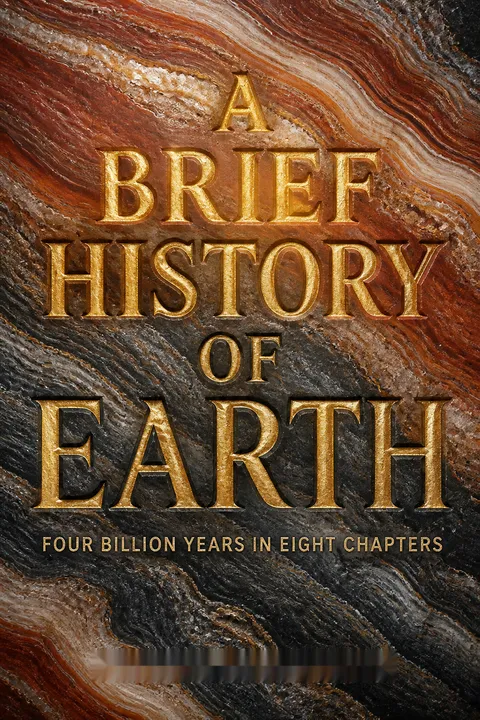

मुख्य बातें
1. पृथ्वी का निर्माण ब्रह्मांडीय धूल से हुआ और यह विभिन्न परतों में विभाजित हुई
लगभग चार अरब साल पहले, एक छोटा ग्रह चट्टानी मलबे से बना जो एक युवा तारे के चारों ओर घूम रहा था।
ब्रह्मांडीय उत्पत्ति। पृथ्वी की शुरुआत गैस और धूल के बादल के रूप में हुई, जो पहले के तारों से निकली थी और गुरुत्वाकर्षण के कारण संकुचित होकर हमारे सौरमंडल का निर्माण किया। खनिजों और बर्फ के टुकड़े लाखों वर्षों तक टकराते और जुड़ते रहे, जिससे ग्रहों के छोटे-छोटे कण बने और अंततः लगभग 4.54 अरब साल पहले पृथ्वी सहित चट्टानी आंतरिक ग्रह बने। इस प्रारंभिक सामग्री, जो कोंड्रिटिक उल्कापिंडों में पाई जाती है, ने हमारे ग्रह के निर्माण के लिए आवश्यक तत्व जैसे जल और कार्बनिक अणु प्रदान किए।
परतों की संरचना। युवा पृथ्वी टकरावों और रेडियोधर्मी क्षय से गर्म हुई, जिससे पूरी पृथ्वी पिघल गई। भारी तत्व जैसे लोहा नीचे जाकर कोर बनाए, जबकि हल्के सिलिकेट खनिज मेंटल और क्रस्ट बनाए। इस विभाजन ने पृथ्वी की परतों को निम्न रूप में बनाया:
- ठोस आंतरिक कोर (लोहा, निकल)
- पिघला हुआ बाहरी कोर (चुंबकीय क्षेत्र उत्पन्न करता है)
- ठोस मेंटल (सिलिकेट, धीरे-धीरे संवहन करता है)
- पतली क्रस्ट (महाद्वीपीय ग्रेनाइट, महासागरीय बेसाल्ट)
प्रारंभिक वातावरण। प्रारंभिक पृथ्वी का वातावरण गर्म और घना था, जो ग्रह के अंदर से निकलने वाली गैसों से बना था, संभवतः नाइट्रोजन और कार्बन डाइऑक्साइड से भरपूर लेकिन ऑक्सीजन से रहित। जैसे-जैसे यह ठंडा हुआ, जलवाष्प संघनित होकर महासागर बने, और CO2 चट्टानों के साथ प्रतिक्रिया करके चूना पत्थर बनाया। यह जलयुक्त, ज्वालामुखीय दुनिया, जो लगातार टकरावों से प्रभावित हो रही थी, जीवन के लिए आधार तैयार कर रही थी।
2. प्लेट टेक्टोनिक्स लगातार पृथ्वी की सतह को नया आकार देता रहता है
पृथ्वी की सतह कठोर प्लेटों का एक जटिल जाल है, जिसे "लिथोस्फीयर" कहा जाता है, जो क्रस्ट और उसके नीचे ठोस मेंटल से मिलकर बना है।
गतिशील सतह। पहले यह माना जाता था कि पृथ्वी स्थिर है, लेकिन अब पता चला है कि इसकी सतह लगातार गतिशील है। जीवाश्म शार्क के दांत पहाड़ों में और स्कॉटलैंड के तटों के कटाव ने इस गतिशीलता का संकेत दिया, लेकिन आधुनिक समझ प्लेट टेक्टोनिक्स के सिद्धांत के साथ आई। यह सिद्धांत बताता है कि महाद्वीप कैसे बहते हैं और पर्वत, ज्वालामुखी, भूकंप कैसे बनते हैं।
प्लेटों की गति। लिथोस्फीयर बड़ी प्लेटों में टूट चुकी है जो एक-दूसरे के सापेक्ष चलती हैं, यह गति नीचे के मेंटल में संवहन द्वारा संचालित होती है।
- समुद्री तल का फैलाव: मध्य महासागरीय रीढ़ों पर नया महासागरीय क्रस्ट बनता है, जिससे प्लेटें दूर होती हैं (जैसे अटलांटिक महासागर का फैलाव)।
- सबडक्शन: पुराना महासागरीय क्रस्ट मेंटल में डूब जाता है (जैसे प्रशांत महासागर की आग की अंगूठी), जिससे भूकंप और ज्वालामुखी सक्रिय होते हैं।
- महाद्वीपीय टकराव: टकराती प्लेटों पर महाद्वीप मुड़कर पर्वत श्रृंखलाएं बनाते हैं (जैसे हिमालय, आल्प्स)।
- ट्रांसफॉर्म दोष: प्लेटें एक-दूसरे के पास से फिसलती हैं (जैसे सैन एंड्रियास दोष)।
दीर्घकालिक इतिहास। प्लेट टेक्टोनिक्स ने कम से कम पिछले 2.5 अरब वर्षों से पृथ्वी को आकार दिया है, जिससे सुपरकॉन्टिनेंट के निर्माण और टूटने के चक्र (विल्सन चक्र) होते रहे। प्रारंभिक पृथ्वी में इसकी शैली पर बहस है, लेकिन प्रमाण बताते हैं कि किसी न किसी रूप में पार्श्व गति प्रारंभिक काल से ही थी, जिसने ग्रह के भौतिक और रासायनिक विकास को गहराई से प्रभावित किया।
3. जीवन ने ऑक्सीजन रहित ग्रह पर जल्दी ही जन्म लिया
जीव रासायनिक मशीनें हैं जो समय के साथ विकसित होती हैं—रसायन विज्ञान का इतिहास, यदि कहें।
जीवन क्या है? जीवन की विशेषताएं हैं वृद्धि, प्रजनन, चयापचय (ऊर्जा और सामग्री का संचयन), और विकास। आज के सबसे सरल जीवाणु और आर्किया एकल-कोशिकीय होते हैं जो इन कार्यों को एक कोशिका के भीतर करते हैं। जीवन की उत्पत्ति को समझने के लिए यह जानना आवश्यक है कि जीवन के जटिल अणु कैसे निर्जीव पृथ्वी पर बन सकते थे और स्वयं को व्यवस्थित कर सकते थे।
निर्माण खंड। मिलर-यूरे प्रयोग ने दिखाया कि प्रारंभिक पृथ्वी पर मौजूद सरल अणु (CO2, H2O, CH4, NH3) बिजली जैसी ऊर्जा के संपर्क में आने पर अमीनो एसिड जैसे कार्बनिक यौगिक बना सकते हैं। उल्कापिंड, विशेषकर कार्बोनेशियस कोंड्राइट्स, में अमीनो एसिड, शर्करा, और वसा अम्ल पाए जाते हैं, जो जीवन के रासायनिक घटक व्यापक रूप से उपलब्ध थे।
उत्पत्ति के सिद्धांत। सरल अणुओं से स्वयं-प्रतिकृति और विकासशील कोशिकाओं तक संक्रमण अभी भी विवादित है।
- RNA विश्व: यह प्रस्ताव करता है कि प्रारंभिक जीवन ने RNA का उपयोग सूचना संग्रहण और एंजाइमेटिक कार्य दोनों के लिए किया, इससे पहले कि DNA और प्रोटीन विकसित हुए।
- चयापचय-प्रथम: यह सुझाव देता है कि जीवन ऊर्जा-समृद्ध हाइड्रोथर्मल वेंट्स के आसपास शुरू हुआ, जहां चयापचय चक्र जटिल सूचना अणुओं से पहले थे।
प्राचीन चट्टानों (स्ट्रोमेटोलाइट्स, कार्बन आइसोटोप) से मिले भूवैज्ञानिक प्रमाण बताते हैं कि कम से कम 3.5 अरब साल पहले माइक्रोबियल जीवन मौजूद था, संभवतः ऑक्सीजन रहित ग्रह पर।
4. सूक्ष्मजीवों द्वारा प्रकाश संश्लेषण ने पृथ्वी के वातावरण में ऑक्सीजन क्रांति लाई
वह ऑक्सीजन जो हमें जीवन देती है, वह शारीरिक प्रक्रियाओं के बजाय जैविक प्रक्रियाओं से आई।
ऑक्सीजन रहित प्रारंभिक पृथ्वी। दो अरब वर्षों से अधिक समय तक पृथ्वी का वातावरण और महासागर लगभग ऑक्सीजन मुक्त थे। इसके प्रमाण प्राचीन चट्टानों से मिलते हैं:
- लौह संरचनाएं: बैंडेड आयरन डिपॉजिट्स तब बने जब घुले हुए लोहा, जो केवल ऑक्सीजन रहित पानी में घुलनशील था, जम गया।
- पाइराइट कण: प्राचीन रेत पत्थरों में पाए जाने वाले फोल्स गोल्ड के कण जो ऑक्सीजन में जल्दी ऑक्सीकृत हो जाते।
- मौसमीय पैटर्न: प्राचीन मिट्टियों में लोहा कम होना, जो ऑक्सीजन कम वातावरण में क्षरण का संकेत है।
- सल्फर आइसोटोप: वायुमंडलीय रसायन विज्ञान के निशान जो केवल अत्यंत कम ऑक्सीजन स्तर पर संभव हैं।
महान ऑक्सीनीकरण घटना (GOE)। लगभग 2.4 अरब साल पहले, ऑक्सीजन स्थायी रूप से वायुमंडल और सतही महासागरों में जमा होने लगी। यह क्रांतिकारी बदलाव सायनोबैक्टीरिया द्वारा किए गए ऑक्सीजनिक प्रकाश संश्लेषण से हुआ, जो जल का उपयोग इलेक्ट्रॉन स्रोत के रूप में करता है और O2 को उपोत्पाद के रूप में छोड़ता है। हालांकि सायनोबैक्टीरिया संभवतः पहले विकसित हुए थे, उनकी पारिस्थितिक प्रभुत्व और ऑक्सीजन संचय के लिए पृथ्वी के पोषक तत्व चक्रों में बदलाव आवश्यक था, संभवतः बड़े महाद्वीपों के उदय से जो महासागरों में फॉस्फोरस प्रवाह बढ़ाते थे।
कम-ऑक्सीजन प्रोटेरोजोइक। GOE के बाद, लगभग दो अरब वर्षों तक ऑक्सीजन का स्तर अपेक्षाकृत कम रहा, संभवतः आधुनिक स्तर का लगभग 1%। इस "बोरिंग बिलियन" में यूकेरियोट्स का उदय हुआ, जिनमें नाभिक और अन्य जटिल संरचनाएं होती हैं। यूकेरियोट्स, जिनमें पशु और पौधे भी शामिल हैं, उच्च ऊर्जा चयापचय के लिए ऑक्सीजन पर निर्भर हैं, इसलिए वे GOE के "संतान" हैं और भविष्य की जैविक जटिलता के लिए मंच तैयार करते हैं।
5. जटिल पशु जीवन ने चरणबद्ध रूप से विविधता हासिल की
जीवन के उद्भव के तीन अरब वर्षों से अधिक बाद, पशुओं का युग प्रारंभ हुआ।
एडियाकारन अग्रदूत। सबसे पुराने व्यापक रूप से स्वीकार किए गए पशु जीवाश्म एडियाकारन काल (635-541 मिलियन वर्ष पहले) के हैं, जो वैश्विक "स्नोबॉल अर्थ" हिम युगों के बाद प्रकट हुए। न्यूफ़ाउंडलैंड के मिसटेकन पॉइंट जैसे स्थलों से मिले जीवाश्म अजीब, पतले, क़िल्ट जैसे जीव दिखाते हैं जो संभवतः कार्बनिक अणुओं को अवशोषित करके और ऑक्सीजन को प्रसार द्वारा ग्रहण करते थे। ये सरल पशु, संभवतः आधुनिक प्लास्कोजोआन्स से संबंधित, बहुकोशिकीय जटिलता की प्रारंभिक विकिरण का प्रतिनिधित्व करते हैं।
कैंब्रियन विस्फोट। कैंब्रियन काल (541-485 मिलियन वर्ष पहले) में पशु शरीर योजनाओं का नाटकीय विस्तार हुआ, जिसे कैंब्रियन विस्फोट कहा जाता है। कनाडा के बर्गेस शेल जैसे स्थल प्रारंभिक आर्थ्रोपोड्स, मोलस्क, कीड़े और यहां तक कि प्रारंभिक कशेरुकीय जीवों के सूक्ष्म विवरण संरक्षित करते हैं। इस काल में कठोर खनिजित कंकाल, जटिल संवेदी अंग और सक्रिय शिकारी विकसित हुए, जिससे समुद्री पारिस्थितिकी तंत्रों का मूलभूत पुनर्गठन हुआ।
ऑर्डोविसियन विकिरण। कैंब्रियन के बाद, ऑर्डोविसियन काल (485-444 मिलियन वर्ष पहले) में स्थापित शरीर योजनाओं के भीतर प्रजातियों की संख्या में भारी वृद्धि हुई। नए पारिस्थितिक भूमिकाएं उभरीं, जिनमें रीफ-निर्माण करने वाले जीव और विविध शिकारी शामिल थे। इस "महान ऑर्डोविसियन जैवविविधता घटना" ने समुद्री पारिस्थितिकी तंत्र बनाए जो बाद के विलुप्तियों के बावजूद आज भी जीवन के लिए आधार हैं।
6. पौधों और पशुओं ने भूमि पर विजय प्राप्त की, महाद्वीपों को रूपांतरित किया
साइबेरियाई परिदृश्यों की हरियाली एक और जैविक क्रांति को दर्शाती है, जटिल बहुकोशिकीय जीवों द्वारा भूमि का उपनिवेशीकरण।
भूमि की चुनौतियां। जल से भूमि पर जाने के लिए सूखापन, संरचनात्मक समर्थन की कमी, और संसाधन प्राप्ति के नए तरीके जैसी बड़ी विकासात्मक चुनौतियों को पार करना पड़ा। भूमि के पौधे मीठे पानी की हरी शैवाल से विकसित हुए, जिन्होंने महत्वपूर्ण अनुकूलन विकसित किए:
- क्यूटिकल और स्टोमाटा: जल हानि रोकने के लिए मोमयुक्त परत, और CO2 के आदान-प्रदान के लिए छिद्र।
- वाहिकीय प्रणाली: जल और पोषक तत्वों के परिवहन के लिए ऊतक, जो संरचनात्मक समर्थन (लकड़ी) प्रदान करते हैं।
- जड़ें/राइजोइड्स: मिट्टी से जल और पोषक तत्व अवशोषित करने और स्थिरता के लिए संरचनाएं, अक्सर कवकों के साथ सहजीवी।
- स्पोर्स/बीज: हवा में प्रसार के लिए संरक्षित प्रजनन संरचनाएं।
प्रारंभिक स्थलीय पारिस्थितिकी तंत्र। राइनी चर्ट (407 मिलियन वर्ष पहले) प्रारंभिक भूमि जीवन का चित्र प्रस्तुत करता है, जिसमें सरल वाहिकीय पौधे, आर्थ्रोपोड्स, कवक और सूक्ष्मजीव स्थलीय वातावरण में परस्पर क्रिया करते दिखते हैं। पशुओं ने भी अनुकूलन किया, मोमयुक्त बाह्य कंकाल और नई श्वसन प्रणालियां जैसे बुक लंग विकसित किए। कशेरुकियों ने लाखों वर्षों में लोब-फिन्ड मछलियों (जैसे टिकटालिक) से टेट्रापोड्स में संक्रमण किया, जो भूमि पर जीवन के लिए अंग, फेफड़े और संशोधित खोपड़ी विकसित करते हैं।
ग्रह पर प्रभाव। पौधों द्वारा भूमि का उपनिवेशीकरण ने पृथ्वी को गहराई से बदल दिया। जड़ों ने चट्टानों के क्षरण को बढ़ावा दिया, जिससे मिट्टी का निर्माण हुआ। पौधों के कार्बनिक पदार्थ के दफन से कार्बन संचयन बढ़ा (कोयला बना), जिससे वायुमंडलीय ऑक्सीजन बढ़ा और वैश्विक शीतलन हुआ, जो कार्बनिफेरस हिम युग में परिणत हुआ।
7. बड़े पैमाने पर विलुप्तियां जीवन को बार-बार नया आकार देती हैं
जबकि बड़े पैमाने पर विलुप्ति का समय छोटा होता है, विविधता का पुनर्निर्माण अधिक समय लेता है—जीवाश्म बताते हैं कि प्रमुख विलुप्तियों से उबरने में लाखों वर्ष लगते हैं।
विराम चिह्न। पृथ्वी के जैविक इतिहास में तीव्र विविधीकरण और विनाशकारी बड़े पैमाने पर विलुप्ति के दौर आते रहे हैं, जहां प्रजातियों का बड़ा हिस्सा भूवैज्ञानिक दृष्टि से कम समय में समाप्त हो जाता है। जीवाश्म रिकॉर्ड से पहचानी गई "बिग फाइव" विलुप्तियां विकास के मार्ग को गहराई से बदलती हैं, प्रमुख समूहों को समाप्त कर अन्य के लिए पारिस्थितिक स्थान खोलती हैं।
कारण और परिणाम। विभिन्न बड़े विलुप्तियों के अलग-अलग कारण हैं:
- एंड-क्रेटेशियस (66 मिलियन वर्ष पहले): एक बड़े उल्कापिंड के टकराव (चिक्सुलुब क्रेटर) से, जिससे डायनासोर और कई समुद्री समूह विलुप्त हुए।
- एंड-पर्मियन (252 मिलियन वर्ष पहले): सबसे बड़ी विलुप्ति, विशाल ज्वालामुखी गतिविधि (साइबेरियन ट्रैप्स) से जुड़ी, जिसने CO2 और अन्य गैसें छोड़ीं, जिससे वैश्विक तापमान बढ़ा, महासागर अम्लीय हुआ और ऑक्सीजन कम हुई ("घातक त्रयी")।
- एंड-ऑर्डोविसियन (445 मिलियन वर्ष पहले): एक संक्षिप्त लेकिन तीव्र हिम युग और समुद्र स्तर में गिरावट से जुड़ा।
- लेट डेवोनियन (393-359 मिलियन वर्ष पहले): विविधता में दीर्घकालिक कमी, संभवतः पर्यावरणीय बदलावों से।
जीवन का पुनर्गठन। बड़े पैमाने पर विलुप्तियां चयनात्मक होती हैं, कुछ गुणों या समूहों को प्राथमिकता देती हैं, और जीवित बचे हुए नए पारिस्थितिक स्थानों में तेजी से फैलते हैं। उदाहरण के लिए, एंड-क्रेटेशियस विलुप्ति के बाद स्तनधारियों ने तेजी से विविधता हासिल की। प्रमुख विलुप्तियों से उबरना धीमा होता है, जिसमें जैव विविधता को पुनः प्राप्त करने में लाखों वर्ष लगते हैं।
8. मनुष्य एक नई शक्ति है जो ग्रह को तेजी से बदल रही है
निस्संदेह, बदलते पर्यावरण ने मानव विकास को आकार दिया, क्योंकि हमारे पूर्वज अफ्रीकी परिदृश्य के साथ अनुकूलित हुए।
होमिनिन विकास। हमारी वंशावली, होमिनिन, अन्य महान वानरों से 6-7 मिलियन वर्ष पहले अलग हुई, अफ्रीकी परिदृश्यों के बदलाव के अनुसार अनुकूलित हुई। प्रारंभिक होमिनिन जैसे अर्दिपिथेकस और ऑस्ट्रालोपिथेकस ने द्विपाद चाल, बड़े मस्तिष्क और औजारों का उपयोग विकसित किया, जिससे होमो वंश की नींव पड़ी। होमो इरेक्टस पहली बार अफ्रीका से बाहर निकला और यूरेशिया में फैला।
होमो सेपियंस का उदय। हमारी प्रजाति, होमो सेपियंस, लगभग 300,000 वर्ष पहले अफ्रीका में प्रकट हुई, जिसमें परिष्कृत औजार और नियंत्रित आग जैसी नई तकनीकें थीं। लगभग 50,000-70,000 वर्ष पहले, आधुनिक मानव तेजी से
समीक्षा सारांश
पृथ्वी का संक्षिप्त इतिहास को मिली-जुली प्रतिक्रियाएँ मिली हैं, जिसमें इसकी पृथ्वी के विकास पर व्यापक दृष्टिकोण और सरल लेखन शैली की प्रशंसा की गई है। पाठक लेखक की विशेषज्ञता और नवीनतम वैज्ञानिक जानकारी की सराहना करते हैं। हालांकि, कुछ पाठकों को कुछ अध्याय कठिन या गहराई में कमतर लगे। यह पुस्तक अपनी शैक्षिक महत्ता के लिए विशेष रूप से सराही गई है, खासकर उन लोगों के लिए जो पृथ्वी विज्ञान में नए हैं। समीक्षक बताते हैं कि यह विशेषज्ञों के लिए थोड़ी सरल हो सकती है, लेकिन सामान्य पाठकों के लिए एक उत्कृष्ट परिचय के रूप में कार्य करती है। मानव प्रभाव और जलवायु परिवर्तन पर अंतिम अध्याय कई पाठकों के लिए विशेष रूप से प्रभावशाली साबित हुआ है।
लोग यह भी पढ़ते हैं

अक्सर पूछे जाने वाले प्रश्न
1. What is "A Brief History of Earth" by Andrew H. Knoll about?
- Four Billion Years in Eight Chapters: The book provides a sweeping narrative of Earth's 4.5-billion-year history, divided into eight thematic chapters that cover the planet's chemical, physical, and biological evolution.
- Interplay of Earth and Life: Knoll explores how geological and biological processes have shaped each other, from the formation of the planet to the rise of humans.
- Accessible Science Storytelling: The author distills complex scientific concepts into engaging, readable prose, making the story of Earth accessible to non-specialists.
- Context for Modern Challenges: The book connects Earth's deep past to present-day environmental issues, emphasizing how understanding Earth's history is crucial for addressing current planetary changes.
2. Why should I read "A Brief History of Earth" by Andrew H. Knoll?
- Comprehensive Overview: The book offers a concise yet thorough account of Earth's history, making it ideal for readers seeking a foundational understanding of geology, biology, and planetary science.
- Relevance to Today: Knoll links ancient events to contemporary issues like climate change, biodiversity loss, and human impact, providing context for urgent global challenges.
- Expert Perspective: As a Harvard professor and renowned geologist, Knoll brings decades of research and teaching experience, offering authoritative insights.
- Engaging Narrative: The book is praised for its clear explanations, vivid analogies, and storytelling that brings Earth's history to life.
3. What are the key takeaways from "A Brief History of Earth" by Andrew H. Knoll?
- Earth is Dynamic and Evolving: The planet has undergone constant change, from its violent beginnings to the present, with no true state of permanence.
- Life and Earth Co-evolve: Biological and geological processes are deeply intertwined, with life shaping the planet and vice versa.
- Catastrophe and Innovation: Mass extinctions and environmental upheavals have repeatedly reset the stage for evolutionary innovation.
- Human Impact is Unprecedented: The scale and speed of human-driven change are unique in Earth's history, demanding urgent attention and action.
4. How does Andrew H. Knoll explain the origin and early formation of Earth in "A Brief History of Earth"?
- Cosmic Beginnings: Knoll starts with the Big Bang, the formation of elements in stars, and the accretion of the solar system from interstellar dust and gas.
- Planetary Assembly: Earth formed from collisions and accretion of planetesimals, with a major impact event creating the Moon.
- Differentiation and Layering: Early Earth underwent global melting, leading to the separation of core, mantle, and crust.
- Delivery of Water and Organics: Water and organic molecules arrived via meteorites (especially carbonaceous chondrites), setting the stage for life.
5. What is plate tectonics, and how does "A Brief History of Earth" describe its role in shaping the planet?
- Plate Tectonics Defined: The book explains plate tectonics as the movement of rigid plates on Earth's surface, driven by mantle convection.
- Creation and Destruction: New crust forms at mid-ocean ridges, while old crust is recycled at subduction zones, leading to the formation of continents, mountains, and ocean basins.
- Supercontinent Cycles: Knoll discusses the assembly and breakup of supercontinents like Pangaea, emphasizing the cyclical nature of Earth's surface.
- Foundation for Life: Plate tectonics is presented as essential for maintaining a habitable planet, influencing climate, nutrient cycles, and the evolution of life.
6. How does "A Brief History of Earth" by Andrew H. Knoll address the origin and evolution of life?
- Chemical Building Blocks: The book details how life's molecular precursors—amino acids, nucleotides, and lipids—can form naturally under early Earth conditions.
- Early Life Evidence: Knoll reviews the fossil and isotopic evidence for microbial life dating back at least 3.5 billion years.
- Evolution of Complexity: The narrative traces the rise from simple bacteria and archaea to eukaryotes, multicellular organisms, and eventually animals and plants.
- Interplay with Environment: The evolution of life is shown to be both a driver and a responder to planetary changes, such as the rise of oxygen.
7. What is the "Great Oxygenation Event," and why is it significant in "A Brief History of Earth"?
- Definition and Timing: The Great Oxygenation Event (GOE) refers to the dramatic increase in atmospheric oxygen about 2.4 billion years ago, as described in the book.
- Biological Innovation: The GOE was driven by cyanobacteria evolving oxygenic photosynthesis, fundamentally altering Earth's atmosphere and oceans.
- Environmental Consequences: Oxygenation enabled the evolution of complex life, including eukaryotes and, eventually, animals.
- Geological Evidence: Knoll explains how iron formations, sulfur isotopes, and weathering patterns in ancient rocks reveal the timing and impact of the GOE.
8. How does "A Brief History of Earth" explain mass extinctions and their impact on evolution?
- The "Big Five" Extinctions: The book covers the five major mass extinctions in the past 500 million years, including the end-Permian and end-Cretaceous events.
- Causes and Consequences: Knoll discusses causes such as meteorite impacts, massive volcanism, and climate shifts, and how these events reshaped ecosystems.
- Selectivity and Recovery: Extinctions are shown to be selective, with some groups devastated and others surviving, leading to new evolutionary opportunities.
- Lessons for Today: The book draws parallels between past extinctions and current biodiversity crises, highlighting the importance of rate and magnitude of change.
9. How does "A Brief History of Earth" describe the colonization of land by plants and animals?
- Plant Pioneers: The book details how early land plants evolved adaptations like cuticle, stomata, and vascular tissue to survive on land.
- Fungi and Symbiosis: Fungi played a crucial role in helping plants acquire nutrients, facilitating terrestrial ecosystems.
- Animal Adaptations: Arthropods and later vertebrates developed features for water retention, support, and breathing air, enabling them to thrive on land.
- Ecological Transformation: The greening of continents led to soil formation, altered the carbon cycle, and set the stage for new evolutionary radiations.
10. What does "A Brief History of Earth" say about the rise and fall of dinosaurs and the evolution of birds?
- Dinosaur Dominance: Dinosaurs became the dominant terrestrial vertebrates during the Mesozoic, with unique adaptations for size and metabolism.
- Gigantism Explained: Features like long necks, efficient respiration, and rapid growth enabled sauropods and other dinosaurs to reach enormous sizes.
- Extinction and Survival: The end-Cretaceous mass extinction, likely caused by a meteorite impact, wiped out non-avian dinosaurs.
- Birds as Living Dinosaurs: Knoll explains how birds evolved from small theropod dinosaurs, with fossils like Archaeopteryx illustrating the transition.
11. How does "A Brief History of Earth" by Andrew H. Knoll address human evolution and our impact on the planet?
- Human Origins: The book traces the evolution of hominins from upright-walking apes in Africa to the emergence of Homo sapiens.
- Cultural and Technological Advances: Tool use, art, language, and agriculture are highlighted as key developments in human history.
- Environmental Footprint: Knoll details how humans have transformed landscapes, driven extinctions, and altered global cycles, especially since the Industrial Revolution.
- The Anthropocene: The current epoch is characterized by rapid, human-driven changes to climate, biodiversity, and Earth's systems, with profound implications for the future.
12. What are the best quotes from "A Brief History of Earth" by Andrew H. Knoll, and what do they mean?
- "Everything about the Earth is dynamic, ever changing despite common but false impressions of permanence."
- This quote encapsulates the book's central theme: Earth's constant transformation over billions of years.
- "In the end, we will conserve only what we love, we will love only what we understand, and we will understand only what we are taught." (Baba Dioum, quoted by Knoll)
- Knoll uses this to stress the importance of education and understanding in fostering environmental stewardship.
- "The world you inherited is not just yours, it is your responsibility. What happens next is up to you."
- This closing message urges readers to recognize their role in shaping Earth's future, emphasizing agency and accountability.
- "Mass extinctions reflect transient but profound environmental disruption, driven by mechanisms within the Earth or elsewhere in our cosmic neighborhood."
- Knoll highlights the unpredictable and sometimes external forces that have repeatedly reset the course of life on Earth.
PDF डाउनलोड करें
EPUB डाउनलोड करें
.epub digital book format is ideal for reading ebooks on phones, tablets, and e-readers.








































