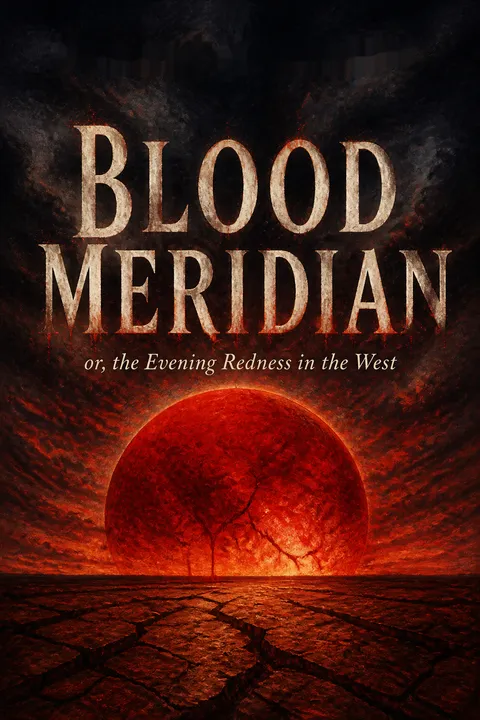
Cselekményösszefoglaló
A fiú erőszakos kezdetei
Tennessee-ben született, a fiú sápadt, vékony alak, akit az erőszak vonz. Anyja korán meghalt, apja, egy részeg iskolamester, soha nem beszél róla. Tizennégy évesen a fiú megszökik, nyugat felé vándorol, New Orleans utcáin harcolva és túlélve. Meglőik, halottnak hiszik, de felépül, és folytatja útját, végül Texasba ér, ahol egy kegyetlenséggel és törvénytelenséggel teli világba keveredik.
Egy prédikátor bukása
Nacogdoches-ben a fiú találkozik Reverend Green-nel, egy csaló prédikátorral. Egy igehirdetés közben egy titokzatos, kopasz férfi, Judge Holden leleplezi Green bűnös múltját, ami káoszt szít. A fiú elmenekül a kitörő erőszak elől, és összefog egy Toadvine nevű férfival. Együtt felgyújtanak egy szállodát, majd menekülnek, ami a fiú bűnözői életbe való mélyebb süllyedését jelzi.
A bíró érkezése
A fiú találkozik Judge Holden-nel, egy hatalmas, szőrtelen alakú, gyermeki arcú férfival, aki tiszteletet és félelmet parancsol. A bíró sokoldalú ember, több nyelven beszél, és mély világismerettel bír. Jelenléte egyszerre vonzó és rémisztő, és központi figurává válik a fiú életében, vezeti őt az erőszak és filozófiai elmélkedések világába.
Egy új út nyugat felé
A fiú csatlakozik egy White kapitány vezette csoporthoz, amely Mexikót akarja megtámadni azzal az ürüggyel, hogy az Egyesült Államoknak vissza kell szereznie a földet. Az expedíció kegyetlen, tele erőszakkal és árulással. A fiú, immár ennek a vegyes zsoldos csapatnak tagjaként, egyre mélyebbre süllyed az erőszak ördögi körébe, miközben ellenséges tájakon és halálos ellenfeleken halad át.
Vér és árulás
A csoport, amelyet most Glanton és a bíró vezet, lemészárol egy indián falut, férfiakat, nőket és gyerekeket egyaránt. A fiú tanúja lesz a háború borzalmainak és az emberi romlottság mélységeinek. A bíró háborúról alkotott filozófiája, miszerint a háború az ember természetes állapota, egyre nyilvánvalóbbá válik, miközben a csoport véres útját folytatja a sivatagon át, üldözve a bosszúszomjas túlélők által.
Káosz az átkelőnél
A Yuma indiánok megtámadják a kompátkelőt, ami egy brutális mészárláshoz vezet, melyet Glanton és emberei szerveznek. A Yumák, akik eleinte Glanton whiskey ígéretétől megtévesztve voltak, erőszakkal viszonozzák a támadást. A káosz sok halált okoz, köztük Glantonét is, miközben a Yumák visszaszerzik földjüket. A fiú és Toadvine épphogy megmenekülnek a mészárlásból, és a sivatagba menekülnek, miközben a Yumák üldözik őket. Az átkelő az árulás és az erőszak ördögi körének szimbólumává válik, amely a fiú világát jellemzi.
A bíró sötét befolyása
A bíró, ez a titokzatos hatalmas alak, továbbra is befolyását gyakorolja a fiúra és másokra. Megtestesíti azt a filozófiát, amely a háborút és a káoszt az emberi lét természetes állapotának tekinti. Jelenléte egyszerre vonzó és félelmetes, sötét világnézetével manipulálja környezetét. A bíró filozófiája kihívást jelent a fiú erkölcsi és túlélési felfogására, állandó küzdelemben tartva őt saját hitei és a bíró túlhatalmas ideológiája között.
Egy kétségbeesett menekülés
A fiú és Toadvine, akiket a Yumák üldöznek, a zord sivatagi tájon keresztül próbálnak túlélni. Találkoznak az egykori pap, Tobin-nal, aki csatlakozik menekülésükhöz. A hármas szembesül a bíró könyörtelen üldözésével, aki mintha a sors elkerülhetetlenségét testesítené meg. Ahogy átvágnak a kopár tájon, a fiú küzd saját bűntudatával és a bíró kísértő jelenlétével, aki az erőszak és a halál elkerülhetetlenségét jelképezi.
A fiú vándorló útja
Miután elmenekült a sivatagból, a fiú vándorló útra indul az amerikai nyugaton. Különféle alakokkal találkozik, és megtapasztalja a határvidék kemény valóságát. Erőszakos múltja ellenére a fiú megváltást és célt keres. Utazásai olyan helyekre vezetik, amelyeket törvénytelenség és kegyetlenség jellemez, tükrözve a kaotikus világot, amelyben él. Útja során a fiú továbbra is kísértve van a bíró befolyásától és saját cselekedeteinek erkölcsi kétértelműségétől.
Tánc a sorssal
A fiú útja egy végzetes találkozáshoz vezet a bíróval egy táncteremben. A bíró, aki a káoszt és az örök életet testesíti meg, kihívást intéz a fiú sorsról és szabad akaratról alkotott felfogása ellen. A tánc metaforává válik a fiú küzdelmében a bíró túlhatalmas filozófiája ellen. A bíró jelenléte hatalmas árnyékként lebeg, az erőszak elkerülhetetlenségét és az emberi lét ciklikusságát jelképezve. A fiú szembesülése a bíróval arra kényszeríti, hogy megvizsgálja saját hiteit és azokat a döntéseket, amelyek életét meghatározták.
A bíró örök tánca
A bíró, az örök káosz és erőszak szimbóluma, továbbra is táncol a világban, érintetlenül az idő és a halandóság által. Jelenléte emlékeztet a sötét erőkre, amelyek az emberi létet formálják. A bíró filozófiája a háborúról és a legerősebb túléléséről állandó kihívást jelent a fiú és mások számára, akik találkoznak vele. Amint a bíró táncol, megtestesíti az erőszak ördögi körét és az örök hatalomért és uralomért folytatott küzdelmet. Befolyása tartós nyomot hagy mindazokon, akik az útjába kerülnek.
Szereplők
A fiú
A fiú, egy erőszakos múlttal rendelkező fiatalember, az amerikai nyugaton keres megváltást és célt. Brutális múltja ellenére megőrzi ártatlanságát és kíváncsiságát. Találkozásai a bíróval és másokkal kihívást jelentenek erkölcsi és túlélési felfogására. Útja állandó küzdelem saját hitei és a bíró sötét befolyása között, ami folyamatos konfliktusban tartja.
Judge Holden
Judge Holden egy hatalmas, titokzatos alak, aki a káoszt és a háború filozófiáját testesíti meg, mint az emberi lét természetes állapotát. Jelenléte egyszerre vonzó és félelmetes, sötét világnézetével manipulálja környezetét. A bíró befolyása meghatározó a történetben, kihívást jelentve a szereplők erkölcsi és túlélési felfogására. Az erőszak elkerülhetetlenségét és az emberi lét ciklikusságát képviseli, tartós hatást gyakorolva mindazokra, akik találkoznak vele.
Toadvine
Toadvine egy durva, fül nélküli férfi, aki a fiú szövetségese lesz. Együtt járják a nyugat zord tájait, erőszakos és törvénytelen cselekedetekbe bonyolódva. Toadvine jelenléte a fiú életében mélyebb bűnözői és kegyetlen világba vezeti őt. Hűsége ellenére küzd cselekedeteik erkölcsi kétértelműségével és a bíró befolyásával, állandó harcban állva a túlélés és a megváltás között.
Tobin
Tobin, egykori pap, csatlakozik a fiú és Toadvine meneküléséhez a sivatagon át. Múltja és a bíró befolyása kísérti, megváltást és üdvösséget keres. Jelenléte erkölcsi iránytűként szolgál a fiú számára, kihívást intézve hozzá, hogy szembenézzen saját hiteivel és életét meghatározó döntéseivel. Tobin hite és erkölcse körüli küzdelme tükrözi a történet szélesebb témáit, miközben az emberi létet formáló sötét erőkkel birkózik.
Glanton
Glanton egy erőszakos és ravasz vezető, aki egy zsoldos csoportot irányít. A kapzsiság és a hatalomvágy hajtja, vezetése kegyetlenséggel és az emberi élet semmibevételével jellemezhető. Tettei vezettek a kompátkelőnél történt mészárláshoz, amely láncreakciót indított el a történetben. Glanton bukása rámutat küldetésének hiábavalóságára és az ellenőrizetlen ambíció és erőszak romboló természetére.
Történeti eszközök
A bíró filozófiája
A bíró filozófiája a háborút az emberi lét velejáró és elkerülhetetlen részének tekinti. Világnézete kihívást jelent a szereplők erkölcsi és túlélési felfogására, sötét és nihilista perspektívát kínálva az életre. A bíró befolyása meghatározó a történetben, alakítva a szereplők cselekedeteit és hiteit. Filozófiája központi témaként szolgál, feltárva az erőszak ciklikusságát és a hatalomért folytatott küzdelmet.
Az erőszak ördögi köre
A történet az erőszak és árulás körforgását követi, miközben a szereplők kegyetlen és véres cselekményeket hajtanak végre a sivatagon át. Ez a könyörtelen út rámutat tetteik hiábavalóságára és erőszakos létük elkerülhetetlenségére. Az erőszak ördögi köre metaforaként szolgál a történet szélesebb témáihoz, feltárva az emberi létet formáló sötét erőket és a megváltás, valamint a cél keresésének küzdelmét.
A tánc, mint metafora
A tánc központi metaforává válik a fiú küzdelmében a bíró túlhatalmas filozófiája ellen. A tánc az emberi lét ciklikusságát és az örök hatalomért folytatott küzdelmet jelképezi. A fiú szembesülése a bíróval a táncteremben arra készteti, hogy megvizsgálja saját hiteit és életét meghatározó döntéseit. A tánc erőteljes szimbóluma a történet témáinak, feltárva a sors és a szabad akarat közötti feszültséget.
Elemzés
A "Blood Meridian" mélyreható vizsgálata az emberi létnek, belemerülve az erőszak, az erkölcs és a létezés ciklikusságának témáiba. Cormac McCarthy olyan világot mutat be, ahol a kegyetlenség veleszületett, és a hatalomért, valamint a túlélésért folytatott küzdelem könyörtelen. Judge Holden titokzatos alakján keresztül a történet arra készteti az olvasót, hogy szembenézzen az emberiség sötétebb oldalával, valamint a sors és a szabad akarat filozófiai kérdéseivel. A regény nyers ábrázolása az amerikai nyugatnak hátteret ad ennek a feltárásnak, kiemelve az erkölcsi kétértelműséget és a káoszt, amely a szereplők életét jellemzi. Végső soron a "Blood Meridian" kísérteties visszatükrözése az erőszak természetének és a káosz és rend örök táncának.
Vélemények összefoglalója
A Véres délkörit széles körben az amerikai irodalom egyik remekműveként tartják számon, amelyet költői prózája és a vadnyugati erőszak kendőzetlen ábrázolása miatt egyaránt méltatnak. Sok olvasó mélységesen felkavarónak, ugyanakkor mélyen gondolatébresztőnek találja, olyan magával ragadó szereplőkkel, mint Holden bíró. A regény az emberi természetről, az erkölcsről és a nyugati terjeszkedés brutalitásáról szóló témái rendkívül erős hatást gyakorolnak az olvasóra. Bár egyesek nehezen birkóznak meg a naturalisztikus jelenetekkel és a szokatlan stílussal, a legtöbben elismerik, hogy egy olyan erőteljes és elgondolkodtató műről van szó, amely próbára teszi az olvasót, és kitörölhetetlen nyomot hagy benne.
Mások ezt is olvasták



GYIK
Synopsis & Basic Details
What is Blood Meridian, or, the Evening Redness in the West about?
- Violent coming-of-age: The novel follows a young man, known only as "the kid," as he journeys through the brutal landscape of the American West in the mid-19th century, encountering violence and moral ambiguity at every turn.
- Mercenary scalp-hunting: The kid joins a gang of scalp hunters led by the ruthless Glanton and the enigmatic Judge Holden, who are contracted to kill Native Americans by the Mexican government.
- Philosophical exploration of violence: The story explores the nature of violence, morality, and the human condition through vivid descriptions of brutality and philosophical dialogues, particularly those involving Judge Holden.
Why should I read Blood Meridian, or, the Evening Redness in the West?
- Literary masterpiece: It is considered a landmark of American literature, showcasing Cormac McCarthy's unique prose style and profound exploration of dark themes.
- Challenging philosophical questions: The novel grapples with complex questions about human nature, morality, and the role of violence in history, prompting deep reflection.
- Unflinching portrayal of the West: It offers a stark and realistic depiction of the American West, devoid of romanticism, revealing the brutality and lawlessness of the frontier.
What is the background of Blood Meridian, or, the Evening Redness in the West?
- Based on historical events: The novel is loosely based on the real-life exploits of the Glanton gang, a group of scalp hunters who operated in the borderlands between the United States and Mexico in the 1850s.
- Geographical setting: The story takes place in the harsh and unforgiving landscapes of the American Southwest, including Texas, New Mexico, and Mexico, during a period of intense conflict and expansion.
- Cultural context: The novel reflects the historical tensions between Anglo-Americans, Mexicans, and Native Americans in the 19th century, highlighting the violence and exploitation that characterized the era.
What are the most memorable quotes in Blood Meridian, or, the Evening Redness in the West?
- "It makes no difference what men think of war. War endures.": This quote, spoken by Judge Holden, encapsulates the novel's central theme of the inevitability and timelessness of violence.
- "The world is before you and you need not take it or leave it as it was when you came in.": This quote, also from Judge Holden, suggests the potential for human agency and the ability to shape one's own destiny, while simultaneously hinting at the destructive consequences of such power.
- "He never sleeps, the judge. He is dancing, dancing.": This recurring phrase emphasizes Judge Holden's relentless and unstoppable nature, symbolizing the enduring presence of violence and chaos.
What writing style, narrative choices, and literary techniques does Cormac McCarthy use?
- Biblical and epic tone: McCarthy employs a distinctive prose style characterized by its poetic language, biblical allusions, and epic scope, lending the story a sense of mythic grandeur and moral weight.
- Violence and graphic imagery: The novel is known for its unflinching depiction of violence, using vivid and often brutal imagery to convey the horrors of the frontier and the depths of human depravity.
- Ambiguity and philosophical dialogue: McCarthy leaves many aspects of the story open to interpretation, relying on philosophical dialogues and symbolic imagery to explore complex themes and challenge the reader's understanding of morality.
Hidden Details & Subtle Connections
What are some minor details that add significant meaning?
- The judge's lack of hair: The judge's hairlessness is mentioned repeatedly and contributes to his inhuman and unsettling presence, suggesting a being outside the natural order.
- The kid's changing name: The protagonist is almost always referred to as "the kid," emphasizing his youth and lack of identity, but he is occasionally called "the boy," further highlighting his vulnerability.
- The recurring mention of teeth: The frequent references to teeth, both human and animal, symbolize violence, mortality, and the primal nature of existence, underscoring the novel's themes of savagery and decay.
What are some subtle foreshadowing and callbacks?
- The heart of a black man: The hermit's possession of a dried heart foreshadows the racial violence and dehumanization that the kid will witness and participate in throughout the novel.
- The judge's knowledge of the future: The judge's seemingly prescient knowledge of events and people, such as the Reverend Green, hints at his supernatural nature and control over the narrative.
- The recurring image of the dance: The dance is mentioned throughout the novel, culminating in the final scene, serving as a metaphor for the cyclical nature of violence and the characters' inescapable destinies.
What are some unexpected character connections?
- The judge and the expriest: The judge and the expriest, despite their opposing ideologies, share a certain intellectual curiosity and a fascination with the darker aspects of human nature, suggesting a hidden connection or shared understanding.
- The kid and Toadvine: The kid and Toadvine, despite their different backgrounds and personalities, form a bond based on shared experiences of violence and survival, highlighting the dehumanizing effects of the frontier.
- The judge and the idiot: The judge's relationship with the idiot, whom he often keeps close by, suggests a connection between intellect and primal instinct, or perhaps a reflection of the judge's own chaotic nature.
Who are the most significant supporting characters?
- Tobin: As an expriest, Tobin provides a moral counterpoint to the judge's nihilism, grappling with questions of faith and redemption in a world devoid of mercy.
- Toadvine: Toadvine's earless visage and violent tendencies represent the brutal realities of the frontier, serving as a constant reminder of the savagery that surrounds the kid.
- The Delawares: The Delaware Indians, serving as scouts for the Glanton gang, embody a complex mix of indigenous knowledge, cultural displacement, and participation in the violence of the West.
Psychological, Emotional, & Relational Analysis
What are some unspoken motivations of the characters?
- The kid's search for meaning: The kid's constant wandering and participation in violence may stem from an unspoken desire to find meaning or purpose in a world that seems inherently chaotic and meaningless.
- Judge Holden's desire for control: Judge Holden's philosophical pronouncements and acts of violence may be driven by an unspoken need to assert control over the world and impose his own order upon it.
- Glanton's pursuit of wealth and power: Glanton's ruthless pursuit of wealth and power may be rooted in an unspoken desire to escape his own past or to prove his worth in a society that values strength and dominance.
What psychological complexities do the characters exhibit?
- The kid's moral ambiguity: The kid's participation in violence, despite his moments of empathy and remorse, reveals a complex and conflicted psyche, struggling to reconcile his actions with his conscience.
- Judge Holden's lack of empathy: Judge Holden's apparent lack of empathy and his detached observation of human suffering suggest a profound psychological detachment from conventional morality.
- Toadvine's brutal pragmatism: Toadvine's brutal pragmatism and his willingness to commit acts of violence for survival reveal a psychological adaptation to the harsh realities of the frontier.
What are the major emotional turning points?
- The massacre of the Native American village: The massacre serves as a major emotional turning point for the kid, exposing him to the full horror of human depravity and challenging his understanding of morality.
- The death of Sproule: Sproule's gruesome death, marked by the vampire bat attack, underscores the fragility of life and the ever-present threat of violence, leaving the kid emotionally scarred.
- The kid's final encounter with the judge: The kid's final encounter with the judge in the jakes represents a culmination of his emotional and psychological journey, forcing him to confront the judge's influence and his own complicity in violence.
How do relationship dynamics evolve?
- The kid and the judge: The relationship between the kid and the judge evolves from one of fascination and fear to one of reluctant understanding and ultimately, violent confrontation, reflecting the kid's growing awareness of the judge's true nature.
- Glanton and the judge: The dynamic between Glanton and the judge shifts from one of mutual respect and collaboration to one of increasing tension and distrust, as Glanton begins to question the judge's motives and influence.
- The kid and Tobin: The relationship between the kid and Tobin provides a moral anchor amidst the violence, with Tobin serving as a mentor and confidant, offering guidance and challenging the kid's moral compass.
Interpretation & Debate
Which parts of the story remain ambiguous or open-ended?
- The judge's origins and nature: The judge's true origins and nature remain shrouded in mystery, leaving his identity and motivations open to interpretation and fueling debate about his symbolic significance.
- The kid's final fate: The kid's fate after his encounter with the judge in the jakes is left ambiguous, prompting speculation about his ultimate destiny and the possibility of redemption.
- The meaning of the epilogue: The epilogue, with its cryptic description of a man making holes in the ground, invites multiple interpretations, ranging from a cyclical view of history to a commentary on human agency and the search for meaning.
What are some debatable, controversial scenes or moments in Blood Meridian, or, the Evening Redness in the West?
- The massacre of the Native American village: The graphic depiction of the massacre is highly controversial, raising questions about the novel's portrayal of violence and its potential for glorification or condemnation.
- The judge's philosophical pronouncements: The judge's philosophical pronouncements, particularly his justification of war and violence, are often debated, with some interpreting them as a critique of human nature and others as an endorsement of nihilism.
- The kid's final act of violence: The kid's final act of violence against the judge is open to interpretation, with some viewing it as a moment of moral agency and others as a confirmation of the cyclical nature of violence.
Blood Meridian, or, the Evening Redness in the West Ending Explained: How It Ends & What It Means
- The judge's dominance: The ending suggests the judge's enduring presence as a force of chaos and violence, implying that such forces are inherent in human nature and cannot be eradicated.
- The kid's ambiguous fate: The kid's death at the hands of the judge can be interpreted as a final submission to the judge's philosophy or as a tragic consequence of his own violent past.
- The dance as a symbol: The judge's eternal dance symbolizes the cyclical nature of violence and the ongoing struggle between order and chaos, suggesting that this struggle will continue indefinitely.
PDF letöltése
EPUB letöltése
.epub digital book format is ideal for reading ebooks on phones, tablets, and e-readers.








































