Siužeto santrauka
Born on a Man's Day
Alan Marshall is born into a rural Australian family, his father dreaming of raising a bushman and a runner. The landscape outside the window—tall gums, green hills—sets the tone for a life shaped by nature and resilience. Alan's early years are filled with the warmth of family, the promise of adventure, and the unspoken expectations of masculinity and physical prowess. His father's pride and his mother's gentle strength create a foundation of love and hope, even as the world outside is unpredictable. The sense of destiny and the weight of parental dreams hover over Alan's infancy, foreshadowing both the joys and the trials that will define his journey.
The Blow from God
Alan contracts infantile paralysis (polio) soon after starting school, becoming the only victim in his rural district. The community's fear and superstition swirl around his illness, with neighbors whispering about God's will and the burden of suffering. His father rejects the idea of fate, determined that Alan's life will not be defined by disability. The family's world narrows to the sickroom, where hope and dread coexist. Alan's legs become lifeless, and his parents' efforts to revive them—massages, prayers, and desperate remedies—highlight both their love and their helplessness. The blow is not just physical but existential, challenging the very identity his father had imagined for him.
Legs Locked in Pain
As Alan's legs contract and his back curves, daily life becomes a battle against pain and deformity. His mother, following the doctor's orders, must force his legs straight each morning, a ritual of agony that binds them together in suffering. The kitchen table becomes an altar of endurance, the frightened horses in the mantelpiece engraving his silent companions. Alan's world shrinks to the immediacy of pain and the hope that it might end. Yet, even in these moments, the family's humor and stubbornness persist. The struggle to straighten his legs is both literal and symbolic—a fight against the limitations imposed by fate and body.
Hospital's Strange New World
Alan is taken to a distant hospital, leaving behind the familiar comforts of home. The ward is a world of adult suffering, camaraderie, and hierarchy, where Alan is both an outsider and a curiosity. He forms bonds with patients like Angus McDonald and Mick, learning the codes of masculinity and resilience from their banter and stories. The nurses, especially Nurse Conrad, become surrogate mothers, offering both discipline and affection. Alan's bravery is celebrated, though he feels like an imposter, aware of his own fears. The hospital is a crucible, forging new aspects of his identity and teaching him the value of humor, friendship, and small victories.
Prayers, Fears, and Mates
Alone in the hospital, Alan turns to prayer, negotiating with God for healing, the safety of his family, and the well-being of his pets. His prayers are long and earnest, reflecting both innocence and anxiety. Conversations with Angus reveal the complexities of faith, the difference between adult and childlike belief, and the comfort found in ritual. Alan's fears—of death, abandonment, and the unknown—are ever-present, but so is his determination to belong and to matter. The camaraderie of the ward, the rituals of sharing eggs, and the kindness of strangers become lifelines, teaching him about generosity and the quiet heroism of endurance.
The Brave Boy's Operation
Alan undergoes a painful operation to straighten his leg, surrounded by the rituals and routines of hospital life. The matron and doctors praise his bravery, but inside he is terrified and uncertain. The operation brings new pain and new challenges, including the struggle to recover and the frustration of being immobilized. Yet, through the support of friends and the small acts of kindness from nurses and fellow patients, Alan learns that courage is not the absence of fear but the willingness to persist despite it. The experience deepens his empathy and his understanding of suffering, both his own and others'.
Eggs, Nurses, and Small Triumphs
Life in the hospital is punctuated by rituals—sharing eggs at breakfast, listening to Nurse Conrad's stories, and participating in the ward's social life. These moments of normalcy and pleasure become acts of resistance against despair. Alan's relationships with the nurses, especially the affectionate and practical Nurse Conrad, provide comfort and a sense of belonging. The arrival of a puppy from home, smuggled in by his father, is a moment of pure happiness, a reminder of love and continuity. Through these small triumphs, Alan reclaims agency and joy, even in the midst of hardship.
Returning Home, Returning Self
After months in the hospital, Alan returns home, navigating the changed dynamics of family life and the physical limitations of his body. The house feels smaller, the routines both comforting and strange. His sisters, Mary and Jane, and his parents adapt to his needs, but Alan resists being treated as fragile or special. He learns to use crutches, to fall and get up, to assert his place among siblings and friends. The return is bittersweet—he is both the same and irrevocably changed. The struggle to be seen as normal, to participate fully in life, becomes his new challenge.
Schoolyard Battles and Belonging
Back at school, Alan confronts the social realities of disability. He refuses to be pitied or excluded, insisting on participating in games, fights, and adventures. His friendship with Joe Carmichael and others is forged through shared experiences—rabbit hunting, climbing trees, and schoolyard battles. Alan's determination to be treated as an equal leads to both triumphs and bruises, literal and metaphorical. He learns to navigate the complexities of childhood loyalty, rivalry, and the unspoken rules of belonging. The schoolyard becomes a microcosm of the larger world, where courage, humor, and resilience are the keys to acceptance.
Friendship, Loss, and the Drought
The rural community is tested by drought, and Alan and Joe witness the suffering of animals and neighbors. Their friendship deepens through shared adventures and losses, including the death of beloved dogs and the struggle to help dying horses. The landscape itself becomes a character—beautiful, harsh, and indifferent. Through these experiences, Alan learns about mortality, compassion, and the limits of human power. The bonds of friendship and family are both a solace and a source of pain, teaching him that love is inseparable from loss.
Climbing, Falling, and the Other Boy
Alan's desire to prove himself leads him to ever greater physical challenges—climbing Mt Turalla, crawling through the bush, and pushing his body to exhaustion. He is haunted by the figure of the "Other Boy," his shadow-self who embodies weakness and fear. The struggle between these two selves is both psychological and physical, a battle for autonomy and self-respect. Through perseverance and the support of friends like Joe, Alan learns to accept his limitations without surrendering to them. The journey is as much inward as outward, a quest for identity and self-mastery.
The Bushman's Journey
Alan's relationship with bushmen like Peter McLeod offers a model of rugged masculinity and self-reliance. He joins Peter on a journey into the bush, learning the skills and stories of the old Australia—teamsters, bullockies, and post-splitters. The camaraderie of men, the rituals of campfire and song, and the challenges of the land become rites of passage. Alan is both an observer and a participant, absorbing the values of honesty, endurance, and humor. The journey is transformative, connecting him to a tradition that is fading but still vital.
Riding Starlight, Defying Fate
Determined to ride despite his disability, Alan teaches himself to mount, ride, and even gallop on Starlight, a white pony. The process is slow, painful, and filled with setbacks, but his persistence pays off. Riding becomes a symbol of freedom and equality, a way to transcend the limitations of his body and the expectations of others. His father, initially skeptical, is moved by Alan's achievement, recognizing in his son the same spirit he values in horses and men. The triumph is not just personal but communal—a victory for all who have doubted or despaired.
The End of Horse Days
The arrival of cars signals the end of the horse era, bringing both practical challenges and a sense of cultural loss. Alan's father struggles to adapt, and the family faces new uncertainties. Treatments and cures for Alan's legs prove ineffective, and the reality of permanent disability settles in. Yet, Alan continues to seek meaning and purpose, turning his attention to education and the possibility of a different future. The end of one era is the beginning of another, marked by both nostalgia and hope.
Scholarship and New Horizons
Alan wins a scholarship to study accountancy in Melbourne, a triumph that opens new possibilities but also brings the pain of leaving home and the bush. The family prepares to move, and Alan contemplates the challenges and opportunities ahead. The support of his parents, the lessons of the bush, and the friendships he has forged become the foundation for his next chapter. The future is uncertain, but Alan faces it with the same determination and optimism that have carried him through every trial.
The Book of My Childhood
Alan looks back on his childhood, recognizing the ways in which suffering, love, and community have shaped him. He acknowledges the changes in society, the passing of the horse days, and the enduring value of the qualities he has inherited—resilience, compassion, and a sense of wonder. The act of writing becomes both a tribute to the people and places that made him and a gift to future generations. His story is not just personal but universal, a testament to the human capacity to endure, adapt, and find meaning in adversity.
Analysis
Alan Marshall's I Can Jump Puddles is a luminous testament to the resilience of the human spirit and the transformative power of community, love, and self-belief. Through the lens of his own childhood, Marshall crafts a narrative that is both deeply personal and universally resonant, exploring the ways in which adversity can forge character and deepen empathy. The book challenges conventional notions of disability, refusing to sentimentalize suffering or reduce its protagonist to an object of pity. Instead, it celebrates the agency, humor, and ingenuity that enable Alan to claim his place in the world—not despite his limitations, but through the process of confronting and transcending them. The richly drawn characters, evocative landscape, and authentic dialogue immerse readers in a vanished era, while the themes of belonging, identity, and the quest for meaning remain timeless. Marshall's story is ultimately one of hope—a reminder that the boundaries imposed by fate, body, or society can be negotiated, if not erased, through courage, creativity, and the sustaining bonds of friendship and family. The book's enduring appeal lies in its honesty, its warmth, and its affirmation of the ordinary miracles that make life worth living.
Atsiliepimų santrauka
Galiu šokinėti per balas sulaukia itin palankių atsiliepimų (3,91 iš 5) už autobiografinį Alano Maršalo vaikystės pasakojimą apie gyvenimą XX a. pradžios Australijos kaime, kai šešerių metų sulaukęs susirgo poliomielitu. Skaitytojai vertina Maršalo aiškų, vaizdingą rašymo stilių ir įkvepiantį pasakojimą apie sunkumų įveikimą be savęs gailėjimosi. Daugelis ypač vertina gyvą to laikmečio atspindį bei pagrindinio veikėjo ryžtą siekti fizinių pergalių nepaisant paralyžiaus. Knyga ypač rezonuoja su mokyklos suole ją skaičiusiais skaitytojais, nors kai kuriems kai kurios vietos atrodo lėtos ar nuobodžios.
Characters
Alan Marshall
Alan is the heart of the story—a boy whose life is transformed by polio but who refuses to be defined by disability. His journey is one of adaptation, courage, and relentless pursuit of normalcy. Alan's relationships—with his family, friends, and the land—shape his identity and values. He is introspective, imaginative, and fiercely independent, yet deeply sensitive to the feelings of others. The "Other Boy" within him represents his fears and doubts, but Alan's will to overcome, to belong, and to achieve is stronger. His development from a vulnerable child to a self-assured young man is marked by empathy, humor, and a profound appreciation for life's small joys.
Alan's Father (Bill Marshall)
Alan's father embodies the rugged masculinity of rural Australia—resourceful, strong, and deeply connected to horses and the land. He is both a source of inspiration and a complex figure, struggling with his own limitations and the pain of seeing his son suffer. His love is expressed through action, humor, and the transmission of bush wisdom. He resists fatalism, insisting that Alan's life will not be a burden. As the world changes, he faces the decline of the horse era with both nostalgia and pragmatism. His relationship with Alan is central—a blend of expectation, pride, and deep, unspoken affection.
Alan's Mother
Alan's mother is the emotional anchor of the family—practical, compassionate, and quietly heroic. She endures the daily pain of forcing Alan's legs straight, manages the household, and provides unwavering support. Her faith, humor, and resilience are a model for Alan, teaching him the value of kindness and perseverance. She navigates the challenges of rural life and her son's illness with grace, balancing hope and realism. Her love is both a comfort and a source of strength, shaping Alan's understanding of what it means to care for others.
Joe Carmichael
Joe is Alan's closest friend, a boy whose quiet strength and loyalty provide a counterpoint to Alan's restless energy. Their friendship is built on shared adventures, mutual respect, and a deep understanding of each other's struggles. Joe adapts to Alan's pace, never patronizing or pitying him, and their bond is tested by hardship, loss, and the demands of growing up. Joe's family, especially his mother, also play a role in Alan's life, offering acceptance and warmth. Joe represents the best of childhood friendship—unconditional, supportive, and enduring.
Angus McDonald
Angus is a patient in the hospital ward who becomes a mentor and confidant to Alan. His humor, wisdom, and resilience help Alan navigate the complexities of illness and recovery. Angus's own suffering is leavened by his ability to find joy in small things and to offer comfort to others. His relationship with Alan is marked by mutual respect and affection, and his departure from the ward is a moment of genuine loss. Angus embodies the spirit of camaraderie and the importance of human connection in the face of adversity.
Nurse Conrad
Nurse Conrad is a central figure in Alan's hospital experience—a nurse whose warmth, humor, and practical care make her beloved by patients. She provides both physical and emotional support, offering comfort during painful procedures and celebrating small victories. Her relationship with Alan is affectionate and playful, and she becomes a symbol of the nurturing power of women in a world often dominated by male stoicism. Nurse Conrad's presence is a reminder that healing is as much about kindness as it is about medicine.
Peter McLeod
Peter is a teamster and bushman who introduces Alan to the world of the bush—the skills, stories, and values of a fading era. He is tough, honest, and deeply knowledgeable, serving as both a role model and a friend. Peter's respect for Alan, despite his disability, is transformative, offering validation and a sense of belonging. His stories and guidance help Alan understand the complexities of masculinity, resilience, and the importance of community. Peter represents the continuity of tradition and the dignity of manual labor.
Mick
Mick is another patient in the hospital, known for his quick wit, love of storytelling, and irreverent attitude. He provides comic relief and a sense of normalcy in the ward, engaging in banter with nurses and fellow patients. Mick's reflections on life, pain, and the absurdities of the human condition offer both humor and insight. His friendship with Alan is marked by teasing affection and a shared appreciation for the ridiculous. Mick's presence underscores the importance of laughter and perspective in coping with suffering.
Starlight (the pony)
Starlight is more than just a pony—he is the embodiment of Alan's dreams of independence and equality. Through patience, ingenuity, and determination, Alan learns to ride Starlight, overcoming both physical and psychological barriers. The pony's gentle nature and responsiveness make him an ideal companion, and their partnership becomes a metaphor for the possibility of transcending limitations. Starlight's role in Alan's life is both practical and symbolic, representing the triumph of will over circumstance.
The Other Boy
The "Other Boy" is Alan's internalized sense of weakness, fear, and limitation—a psychological presence that both haunts and motivates him. This figure embodies the doubts and insecurities that come with disability, the temptation to give in to self-pity or despair. Alan's ongoing struggle with the Other Boy is a central theme, reflecting the universal human battle between hope and resignation. Through perseverance and self-acceptance, Alan learns to integrate this shadow self, drawing strength from vulnerability and transforming fear into determination.
Plot Devices
Autobiographical Narrative Structure
The story is told in the first person, blending memory, reflection, and vivid storytelling to create an intimate portrait of childhood. The narrative moves fluidly between past and present, using anecdotes, dialogue, and sensory detail to evoke the world of rural Australia. The structure allows for both chronological progression and thematic exploration, with each chapter focusing on a pivotal experience or relationship. The use of composite characters and altered timelines serves the deeper truth of the story, emphasizing emotional authenticity over strict factual accuracy.
Symbolism and Motif
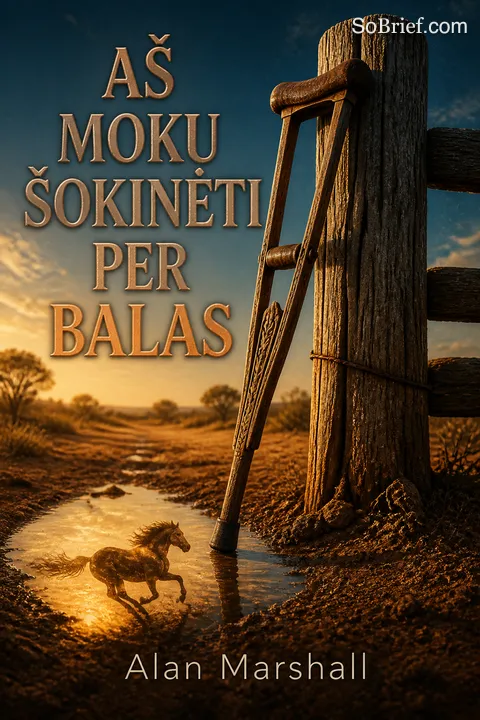
The recurring motifs of running, riding, and jumping puddles symbolize the broader struggle to overcome obstacles and assert agency. Horses, crutches, and the landscape itself become symbols of freedom, limitation, and the quest for belonging. The "Other Boy" functions as a psychological motif, representing the internalization of societal attitudes toward disability. The rituals of hospital life, schoolyard games, and bush adventures are imbued with symbolic meaning, reflecting the universal themes of resilience, adaptation, and the search for identity.
Dialogue and Vernacular
The use of dialogue—rich in Australian vernacular, humor, and idiom—grounds the story in its specific time and place. Conversations between characters reveal social hierarchies, values, and the complexities of relationships. The interplay of voices—parents, friends, nurses, bushmen—creates a tapestry of perspectives, highlighting both the diversity and the commonality of human experience. Dialogue is also used to convey psychological depth, as characters negotiate fear, hope, and the meaning of courage.
Foreshadowing and Reflection
The narrative is suffused with a sense of impermanence—the passing of the horse era, the inevitability of loss, and the promise of new beginnings. Early chapters foreshadow later developments, such as Alan's eventual mastery of riding or the family's move to the city. Reflection is used to draw connections between past and present, individual and community, personal struggle and universal themes. The story's conclusion, with its focus on legacy and the act of writing, brings the narrative full circle, affirming the enduring value of memory and imagination.
Atsisiųsti PDF
Atsisiųsti EPUB
.epub digital book format is ideal for reading ebooks on phones, tablets, and e-readers.








































