
Belangrijkste inzichten
1. Weerstand is de vijand van creativiteit en persoonlijke groei
Weerstand is de meest giftige kracht op aarde. Het is de oorzaak van meer ongelukkigheid dan armoede, ziekte en erectiestoornissen.
Wat is weerstand? Weerstand is een onzichtbare, innerlijke kracht die zich verzet tegen creatieve en persoonlijke groei. Het uit zich in:
- Uitstelgedrag
- Twijfel aan jezelf
- Angst
- Rechtvaardigingen
- Verslaving
- Zelf-sabotage
Weerstand overwinnen: Om weerstand te bestrijden:
- Erken het als een universele kracht, niet als een persoonlijke tekortkoming
- Begrijp dat hoe belangrijker een project is, hoe sterker de weerstand zal zijn
- Zet je elke dag in en doe het werk, ongeacht je gevoel
- Richt je op het proces, niet op het resultaat
2. Professional worden is de sleutel tot het overwinnen van weerstand
Het moment dat een kunstenaar professional wordt, is net zo ingrijpend als de geboorte van zijn eerste kind. Met één klap verandert alles.
Kenmerken van een professional:
- Komt elke dag opdagen, wat er ook gebeurt
- Zet zich voor de lange termijn in
- Accepteert betaling voor zijn werk
- Identificeert zich niet te veel met het werk
- Beheerst de technieken van het vak
- Heeft humor over het werk
Amateur versus professional: Amateurs laten zich door weerstand verslaan, professionals zetten door. Professionals begrijpen dat angst en twijfel bij het proces horen, geen reden zijn om op te geven. Ze richten zich op consistente actie in plaats van te wachten op inspiratie of perfecte omstandigheden.
3. Angst is een teken van wat belangrijk is en moet worden aangegaan
Ben je verlamd door angst? Dat is een goed teken. Angst is goed. Net als twijfel is angst een aanwijzing. Angst vertelt ons wat we moeten doen.
Angst begrijpen: Angst duidt vaak op:
- Het belang van een project of doel
- Een kans om te groeien en te leren
- De mogelijkheid tot ingrijpende verandering of impact
Angst onder ogen zien: Om angst te overwinnen:
- Erken het als een natuurlijk onderdeel van het creatieve proces
- Gebruik het als kompas dat je naar belangrijk werk leidt
- Onderneem actie ondanks de angst
- Begrijp dat moed niet de afwezigheid van angst is, maar handelen ondanks angst
4. Professionaliteit vraagt om discipline, toewijding en geduld
De professional heeft het beter geleerd. Hij respecteert weerstand. Hij weet dat als hij vandaag toegeeft, hoe aannemelijk het excuus ook is, hij morgen twee keer zo snel zal toegeven.
Professionaliteit ontwikkelen:
- Creëer een vaste werkroutine
- Stel duidelijke grenzen tussen werk en privé
- Richt je op lange termijn doelen in plaats van korte termijn bevrediging
- Kweek geduld en volharding
- Blijf vaardigheden en kennis verbeteren
Voordelen van professionaliteit:
- Meer productiviteit
- Grotere veerkracht bij tegenslagen
- Betere kwaliteit van werk
- Verhoogde reputatie en geloofwaardigheid
5. Het authentieke zelf is onze ware roeping en bestemming
Onze taak in dit leven is niet om onszelf te vormen naar een ideaal dat we denken te moeten zijn, maar om te ontdekken wie we al zijn en dat te worden.
Het authentieke zelf ontdekken:
- Denk terug aan interesses en natuurlijke neigingen uit je jeugd
- Let op activiteiten die vreugde en flow brengen
- Overweeg wat je zou doen als geld geen rol speelde
- Identificeer kernwaarden en overtuigingen
Authentiek leven:
- Stem carrière en levenskeuzes af op je ware zelf
- Weersta maatschappelijke druk om aan verwachtingen van anderen te voldoen
- Omarm je unieke talenten en perspectief
- Blijf je authentieke stem verfijnen en uitdrukken
6. Inspiratie komt uit een hogere sfeer of het onbewuste
Wanneer we elke dag gaan zitten en ons werk doen, concentreert de kracht zich om ons heen. De Muze merkt onze toewijding op. Ze keurt het goed. We hebben haar gunst verdiend.
Bronnen van inspiratie:
- Het onbewuste
- Een hogere spirituele sfeer
- Collectief menselijk bewustzijn
- Persoonlijke ervaringen en herinneringen
Inspiratie cultiveren:
- Bouw een vaste creatieve routine op
- Creëer ruimte voor stilte en reflectie
- Laat je blootstellen aan diverse ideeën en ervaringen
- Vertrouw op het creatieve proces, ook als inspiratie ver te zoeken lijkt
7. Het Zelf, niet het Ego, is de bron van creativiteit en groei
Het Zelf wil creëren, wil evolueren. Het Ego houdt van de dingen zoals ze zijn.
Het Zelf versus het Ego:
- Het Zelf: verbonden met het goddelijke, zoekt groei en evolutie
- Het Ego: gericht op materieel bestaan, verzet zich tegen verandering
Toegang tot het Zelf:
- Oefen meditatie of mindfulness
- Doe creatieve activiteiten
- Zoek ervaringen die het bewustzijn verruimen
- Kweek zelfbewustzijn en introspectie
8. Succes betekent vaak het verlaten van comfortzones en groepsverbanden
We zijn bang om te ontdekken dat we meer zijn dan we denken. Meer dan onze ouders, kinderen of leraren denken. We vrezen dat we daadwerkelijk het talent bezitten dat onze stille, kleine stem ons influistert.
Groei omarmen:
- Besef dat persoonlijke evolutie sommigen kan vervreemden
- Wees bereid oude identiteiten en relaties los te laten
- Zoek nieuwe gemeenschappen die je groei ondersteunen
- Vertrouw erop dat authentieke verbindingen de verloren relaties vervangen
Angst voor succes overwinnen:
- Erken de angst om vertrouwde gebieden te verlaten
- Begrijp dat groei vaak ongemakkelijk is
- Richt je op de mogelijke voordelen van succes
- Bouw een ondersteunend netwerk dat je evolutie aanmoedigt
9. Kunstenaars moeten zich richten op hun vak en het creatieve proces ontdoen van mystiek
De professional ziet haar werk als ambacht, niet als kunst. Niet omdat ze gelooft dat kunst geen mystieke dimensie heeft. Integendeel. Ze begrijpt dat elke creatieve inspanning heilig is, maar ze blijft er niet in hangen.
Creativiteit ontdoen van mystiek:
- Richt je op het ontwikkelen van technische vaardigheden
- Creëer een vaste werkroutine
- Verdeel projecten in behapbare taken
- Bestudeer de technieken van succesvolle kunstenaars in je vakgebied
Balans tussen ambacht en inspiratie:
- Respecteer de mysterieuze kanten van creativiteit
- Laat ruimte voor zowel gedisciplineerd werk als spontane inspiratie
- Begrijp dat meesterschap over het ambacht creatieve vrijheid vergroot
- Vertrouw erop dat consistentie tot doorbraken leidt
10. Het aanroepen van de Muze kan creatieve inspanningen ondersteunen
Ben je ooit in Santa Fe geweest? Daar is een subcultuur van ‘heling’. Het idee is dat er iets therapeutisch is in de sfeer. Een veilige plek om jezelf weer op de rit te krijgen.
Het concept van de Muze:
- Een personificatie van inspiratie en creativiteit
- Een verbinding met een hogere sfeer of collectief onbewuste
- Een manier om het creatieve proces te externaliseren en te respecteren
De Muze aanroepen:
- Ontwikkel een persoonlijk ritueel om creatief werk te beginnen
- Creëer een speciale plek voor je kunst
- Gebruik meditatie of visualisatie om contact te maken met inspiratie
- Kweek een open en ontvankelijke houding voor ideeën
Samenvatting van recensies
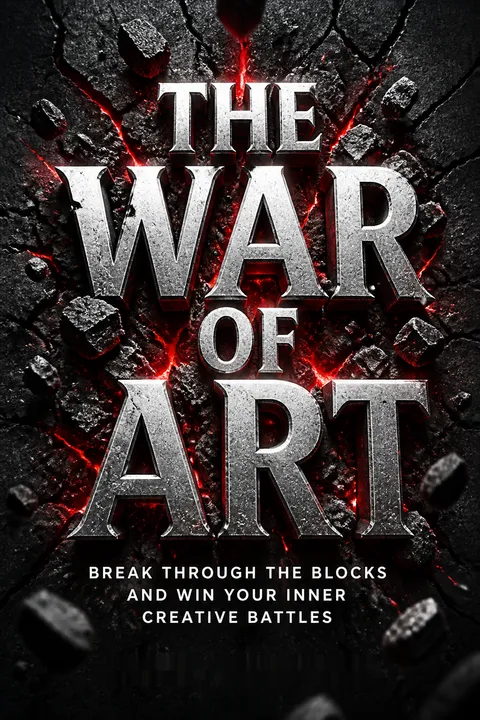
The War of Art krijgt wisselende recensies. Sommigen prijzen het als een motiverende impuls om creatieve blokkades te overwinnen, met praktische adviezen over discipline en professionaliteit. Anderen bekritiseren het vanwege herhalende inhoud, onbewezen beweringen en mogelijk schadelijke adviezen. Veel lezers vinden de eerste twee delen inzichtelijk, maar hebben moeite met het spirituele derde deel. Men waardeert Pressfields openhartigheid en beknopte schrijfstijl, al ervaren sommigen zijn toon als oordelend. De kernboodschap van het boek, het overwinnen van "Weerstand", spreekt veel creatievelingen aan, ondanks de controversiële kanten ervan.
Anderen lazen ook
Veelgestelde vragen
What's "The War of Art" about?
- Author's Focus: "The War of Art" by Steven Pressfield is about overcoming the internal barriers that prevent creative individuals from achieving their goals.
- Central Theme: The book identifies "Resistance" as the primary enemy of creativity, which manifests as procrastination, self-doubt, and fear.
- Structure: It is divided into three parts: "Defining the Enemy," "Combating Resistance," and "Beyond Resistance," each offering insights and strategies to conquer creative blocks.
- Purpose: The book aims to inspire and guide artists, writers, and entrepreneurs to push through their internal struggles and realize their creative potential.
Why should I read "The War of Art"?
- Practical Advice: It provides actionable strategies for overcoming procrastination and self-doubt, common issues faced by creatives.
- Inspiration: The book is motivational, encouraging readers to pursue their true calling and not succumb to fear or societal pressures.
- Insightful Concepts: It introduces the concept of "Resistance" as a universal force that hinders creativity, offering a new perspective on personal struggles.
- Empowerment: Reading it can empower you to take control of your creative process and commit to your work with a professional mindset.
What are the key takeaways of "The War of Art"?
- Resistance as the Enemy: Recognize that Resistance is a natural force that opposes creative endeavors and must be confronted daily.
- Turning Pro: Adopt a professional attitude towards your creative work, showing up consistently and treating it with seriousness and dedication.
- Inspiration and the Muse: Understand that inspiration often comes after you start working, not before, and that invoking the Muse can help in the creative process.
- Territorial vs. Hierarchical Thinking: Focus on your work for its own sake (territorial) rather than for external validation (hierarchical).
How does Steven Pressfield define "Resistance"?
- Universal Force: Resistance is described as a destructive force within human nature that opposes any act that might lead to personal growth or creativity.
- Manifestations: It can appear as procrastination, self-doubt, fear, rationalization, and other forms of self-sabotage.
- Internal Origin: Resistance is self-generated and arises from within, often disguised as legitimate reasons not to pursue creative work.
- Impersonal Nature: It is not out to get you personally; it is a natural force that acts objectively, like gravity.
What is the "Turning Pro" concept in "The War of Art"?
- Professional Mindset: Turning Pro means adopting a professional attitude towards your creative work, treating it as a vocation rather than a hobby.
- Commitment: It involves showing up every day, regardless of circumstances, and dedicating yourself fully to your craft.
- Discipline and Routine: Professionals work through fear and Resistance by establishing routines and maintaining discipline.
- Focus on Mastery: The professional focuses on mastering the craft, understanding that success is a by-product of consistent effort.
What role does "Inspiration" play in "The War of Art"?
- Result of Work: Inspiration is seen as a result of consistent work rather than a prerequisite for starting.
- Invocation of the Muse: Pressfield suggests invoking the Muse, a metaphor for divine inspiration, to aid in the creative process.
- Concentration of Power: When you sit down to work, power concentrates around you, attracting ideas and insights.
- Higher Realm: Inspiration is linked to a higher realm, suggesting that creativity is a divine or spiritual process.
How does "The War of Art" address procrastination?
- Common Manifestation: Procrastination is identified as the most common form of Resistance, often rationalized as harmless.
- Habitual Nature: It can become a habit, leading to a lifetime of unfulfilled potential and regret.
- Immediate Action: The book emphasizes the power of starting immediately, as every moment holds the potential to change your life.
- Overcoming Procrastination: The key is to recognize it as Resistance and to act in spite of it, committing to your work daily.
What are the best quotes from "The War of Art" and what do they mean?
- "Resistance is the most toxic force on the planet." This highlights the destructive power of Resistance in preventing individuals from achieving their potential.
- "The more important a call or action is to our soul’s evolution, the more Resistance we will feel toward pursuing it." This suggests that the level of Resistance is directly proportional to the importance of the task.
- "The professional loves it so much he dedicates his life to it." This emphasizes the commitment and dedication required to overcome Resistance and succeed in creative endeavors.
- "When we sit down each day and do our work, power concentrates around us." This illustrates the idea that consistent effort attracts inspiration and creative energy.
How does "The War of Art" differentiate between "Territory" and "Hierarchy"?
- Territorial Orientation: Working territorially means focusing on your work for its own sake, deriving satisfaction from the act itself.
- Hierarchical Orientation: Working hierarchically involves seeking external validation and defining success by others' opinions.
- Sustenance from Territory: A territory provides sustenance and fulfillment without external input, while hierarchy can lead to insecurity and dependence on others.
- Creative Focus: The book advocates for a territorial approach, encouraging artists to concentrate on their craft rather than external recognition.
What is the significance of "The Higher Realm" in "The War of Art"?
- Source of Inspiration: The Higher Realm is where inspiration and creativity originate, a place beyond the material world.
- Divine Assistance: Pressfield suggests that unseen forces, like muses or angels, support and sustain creative efforts.
- Connection to the Self: The Higher Realm is linked to the Self, the part of us that is connected to the divine and seeks to create.
- Spiritual Dimension: Creativity is portrayed as a spiritual journey, with the Higher Realm providing guidance and insight.
How does "The War of Art" suggest dealing with fear?
- Fear as an Indicator: Fear is seen as a sign of what we must do, indicating the importance of the task to our soul's growth.
- Direct Proportion: The more fear we feel, the more significant the task is to our personal evolution.
- Acting Despite Fear: The book encourages acting in the face of fear, understanding that it is a natural part of the creative process.
- Fear of Success: It also addresses the fear of success, which can be as paralyzing as the fear of failure, urging readers to embrace their potential.
What is the role of "Self" and "Ego" in "The War of Art"?
- Ego's Beliefs: The Ego is concerned with material existence, self-preservation, and external validation, often hindering creative efforts.
- Self's Connection: The Self is connected to the divine, seeking growth, creativity, and unity with others.
- Conflict: The Ego and the Self are in constant conflict, with the Ego producing Resistance to maintain the status quo.
- Creative Alignment: Aligning with the Self allows for true creative expression, as it is the source of inspiration and authenticity.
Over de auteur
Andere boeken van Steven Pressfield

PDF downloaden
EPUB downloaden
.epub digital book format is ideal for reading ebooks on phones, tablets, and e-readers.








































