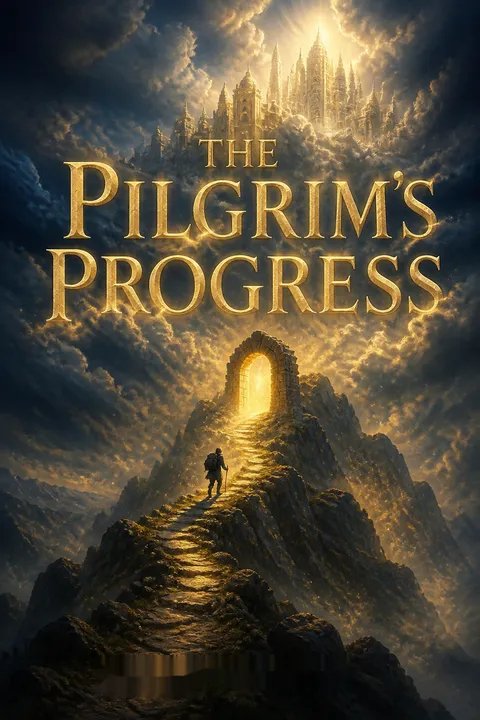

Streszczenie fabuły
Obciążone przebudzenie Chrześcijanina
W śnie mężczyzna o imieniu Chrześcijanin, przytłoczony ciężarem swoich grzechów, opuszcza swój dom w Mieście Zniszczenia. Kieruje nim wizja nadchodzącej zagłady oraz pragnienie zbawienia. Pomimo niedowierzania i drwin ze strony rodziny, Chrześcijanin wyrusza na pielgrzymkę, szukając uwolnienia od swojego brzemięcia.
Przewodnie światło Ewangelisty
Chrześcijanin spotyka Ewangelistę, który kieruje go ku Bramie Wąskiej, symbolowi drogi do zbawienia. Wskazówki Ewangelisty nadają Chrześcijaninowi poczucie celu i kierunku, nawołując go do ucieczki przed nadchodzącym gniewem i dążenia do życia wiecznego.
Rozstanie z Upartym i Uległym
Gdy Chrześcijanin rozpoczyna swoją wędrówkę, ścigają go dwaj sąsiedzi: Uparty i Uległy. Uparty szybko porzuca wyprawę, nie chcąc porzucić ziemskich wygód. Uległy, początkowo zaciekawiony, dołącza do Chrześcijanina, lecz wkrótce się wycofuje, gdy napotyka trudności podróży.
Bagno Rozpaczy
Chrześcijanin i Uległy natrafiają na Bagno Rozpaczy, symbolizujące zwątpienie i lęk. Uległy rezygnuje z dalszej drogi, lecz Chrześcijanin wytrwa, wspierany przez Pomoc, która wyprowadza go z bagna, ukazując walkę z rozpaczą i kontynuowanie drogi ku zbawieniu.
Zwodniczy Mędrzec Świecki
Chrześcijanin zostaje zwiedziony przez Mędrca Świeckiego, który radzi mu szukać ulgi w ciężarze poprzez legalizm i moralność, a nie wiarę. Ta droga prowadzi Chrześcijanina na skraj zguby, lecz Ewangelista interweniuje, kierując go z powrotem na prawdziwą ścieżkę wiary i łaski.
Zew Niebiańskiego Miasta
Chrześcijanin kontynuuje pielgrzymkę, napotykając różne próby i pokusy. Dołącza do niego Nadzieja, współpielgrzym zainspirowany wiarą Chrześcijanina. Razem zmierzają ku Niebiańskiemu Miastu, symbolowi życia wiecznego i zbawienia, pokonując przeszkody dzięki wierze i wytrwałości.
Próby Jarmarku Marności
Chrześcijanin i Wierny docierają do Jarmarku Marności, miejsca pełnego świeckich pokus i rozproszeń. Odmawiają udziału w marnościach jarmarku, co prowadzi do ich aresztowania i procesu. Wierny zostaje męczennikiem, stając się symbolem niezachwianej wiary, podczas gdy Chrześcijanin trafia do więzienia, lecz ostatecznie ucieka wraz z Nadzieją.
Męczeństwo Wiernego
Proces i egzekucja Wiernego na Jarmarku Marności stanowią potężne świadectwo jego niezachwianej wiary. Jego męczeństwo inspiruje innych, w tym Nadzieję, do dołączenia do Chrześcijanina w jego podróży, podkreślając temat poświęcenia i wiecznej nagrody dla tych, którzy pozostają wierni swoim przekonaniom.
Wsparcie Nadziei
Nadzieja staje się źródłem otuchy i wsparcia dla Chrześcijanina, pomagając mu pokonać zwątpienia i lęki. Ich towarzystwo ukazuje znaczenie wspólnoty i wzajemnej pomocy na drodze wiary, gdy razem stawiają czoła wyzwaniom i czerpią siłę z wzajemnej determinacji.
Rozpacz Zamku Zwątpienia
Chrześcijanin i Nadzieja zostają pojmani przez Olbrzyma Rozpaczy i uwięzieni w Zamku Zwątpienia. Stają przed pokusą poddania się, lecz dzięki modlitwie i odnalezieniu klucza Obietnicy udaje im się uciec, co symbolizuje moc wiary i nadziei w przezwyciężaniu rozpaczy i przeciwności.
Rzeka Śmierci
Zbliżając się do Niebiańskiego Miasta, Chrześcijanin i Nadzieja muszą przekroczyć Rzekę Śmierci. Chrześcijanin zmaga się z lękiem i zwątpieniem, lecz wsparcie Nadziei pomaga mu odnaleźć spokój. Wychodzą zwycięsko, witani w Niebiańskim Mieście, co symbolizuje ostateczne zwycięstwo wiary i obietnicę życia wiecznego.
Postacie
Chrześcijanin
Chrześcijanin jest głównym bohaterem, kierowanym głębokim poczuciem grzechu i pragnieniem odkupienia. Jego podróż z Miasta Zniszczenia do Niebiańskiego Miasta symbolizuje duchową wędrówkę chrześcijanina, naznaczoną próbami, pokusami i ostatecznym triumfem wiary.
Ewangelista
Ewangelista pełni rolę duchowego przewodnika dla Chrześcijanina, oferując wskazówki i wsparcie. Reprezentuje rolę duchowych mentorów, którzy prowadzą wiernych ku prawdzie i zbawieniu, podkreślając znaczenie wiary i łaski.
Uparty
Uparty reprezentuje tych, którzy odmawiają porzucenia ziemskich wygód i odrzucają wezwanie do wiary. Jego szybkie porzucenie podróży ukazuje trudności w przezwyciężaniu oporu wobec duchowego wzrostu.
Uległy
Uległy początkowo dołącza do Chrześcijanina, lecz szybko się wycofuje, gdy napotyka trudności. Symbolizuje osoby podatne na wpływy i pozbawione wytrwałości niezbędnej do duchowego rozwoju.
Mędrzec Świecki
Mędrzec Świecki reprezentuje pokusę szukania zbawienia przez legalizm i moralność zamiast przez wiarę. Jego rady wprowadzają Chrześcijanina w błąd, ukazując niebezpieczeństwa fałszywego przewodnictwa i znaczenie rozeznania.
Wierny
Wierny to współpielgrzym, który pozostaje wierny swoim przekonaniom mimo prześladowań. Jego męczeństwo na Jarmarku Marności stanowi potężne świadectwo niezachwianej wiary i inspiruje innych do kontynuowania duchowej drogi.
Nadzieja
Nadzieja dołącza do Chrześcijanina po świadectwie męczeństwa Wiernego. Dostarcza otuchy i wsparcia, pomagając Chrześcijaninowi pokonać zwątpienia i lęki. Reprezentuje znaczenie wspólnoty i wzajemnej pomocy na drodze wiary.
Olbrzym Rozpacz
Olbrzym Rozpacz pojmuje Chrześcijanina i Nadzieję, więżąc ich w Zamku Zwątpienia. Symbolizuje rozpacz i beznadzieję, które mogą zagrozić duchowej wędrówce, przezwyciężane dzięki wierze i nadziei.
Ignorancja
Ignorancja reprezentuje tych, którzy polegają na własnym rozumieniu i uczynkach dla zbawienia, zamiast na wierze w Chrystusa. Jego podróż kończy się porażką, ukazując niebezpieczeństwa samozadowolenia i konieczność prawdziwej wiary.
Korzystny
Korzystny symbolizuje tych, którzy praktykują religię tylko wtedy, gdy jest to wygodne i opłacalne. Jego postać ukazuje zagrożenia hipokryzji oraz znaczenie szczerej wiary i zaangażowania.
Środki literackie
Alegoria
Cała opowieść jest alegorią duchowej wędrówki chrześcijanina, wykorzystując postacie i wydarzenia do symbolizowania różnych aspektów wiary, pokusy i zbawienia. Ten zabieg pozwala czytelnikom zgłębiać złożone tematy duchowe w przystępny i angażujący sposób.
Symbolizm
Historia pełna jest symbolicznych elementów, takich jak Bagno Rozpaczy, Jarmark Marności czy Niebiańskie Miasto, z których każdy reprezentuje różne wyzwania i nagrody na duchowej drodze. Te symbole pogłębiają zrozumienie doświadczenia chrześcijańskiego.
Ramy snu
Opowieść przedstawiona jest jako sen, co umożliwia płynne i twórcze zgłębianie tematów duchowych. Ten zabieg nadaje dystans i refleksję, zachęcając czytelników do rozważenia głębszych znaczeń alegorii.
Zapowiedź
Narracja wykorzystuje zapowiedzi, by sugerować nadchodzące wyzwania i triumfy, takie jak ostrzeżenia Ewangelisty czy wizje Niebiańskiego Miasta. Ten środek buduje napięcie i wzmacnia temat wytrwałości w obliczu przeciwności.
Analiza
„Pielgrzym wędrówka” to głęboka alegoria duchowej podróży chrześcijanina, eksplorująca tematy wiary, pokusy i zbawienia. Poprzez próby i zwycięstwa Chrześcijanina, Bunyan podkreśla znaczenie wytrwałości, niebezpieczeństwa fałszywego przewodnictwa oraz ostatecznej nagrody życia wiecznego. Bogaty symbolizm i alegoryczna struktura narracji zapraszają czytelników do refleksji nad własną duchową drogą, oferując ponadczasowe wglądy w wyzwania i nagrody wiary. Trwała atrakcyjność tej opowieści tkwi w jej zdolności do rezonowania z wiernymi na przestrzeni pokoleń, dostarczając zarówno zachęty, jak i przestrogi w dążeniu do duchowego wzrostu.
Inni czytali również




FAQ
Synopsis & Basic Details
What is The Pilgrim's Progress about?
- Spiritual Journey Allegory: The Pilgrim's Progress is an allegory depicting a man named Christian's journey from the City of Destruction to the Celestial City, representing a Christian's path to salvation.
- Trials and Tribulations: Christian faces numerous trials, temptations, and obstacles along his path, each symbolizing the challenges a believer encounters in their spiritual life.
- Triumph of Faith: The story emphasizes the importance of faith, perseverance, and reliance on God's grace to overcome these challenges and ultimately reach eternal life.
Why should I read The Pilgrim's Progress?
- Timeless Spiritual Insights: The book offers timeless insights into the Christian faith, exploring themes of sin, redemption, temptation, and the pursuit of holiness, making it relevant across generations.
- Allegorical Depth: Its allegorical nature allows readers to engage with complex spiritual concepts through relatable characters and situations, fostering deeper understanding and reflection.
- Inspirational Journey: The narrative provides an inspirational journey of perseverance and hope, encouraging readers to remain steadfast in their faith despite the challenges they may face.
What is the background of The Pilgrim's Progress?
- Religious and Political Context: Written by John Bunyan, a Puritan preacher, the book reflects the religious and political climate of 17th-century England, where nonconformists faced persecution.
- Personal Experience: Bunyan's own experiences with imprisonment for his religious beliefs heavily influenced the themes of struggle, perseverance, and the importance of staying true to one's faith.
- Biblical Foundation: The allegory is deeply rooted in biblical teachings and imagery, drawing from various scriptures to illustrate the Christian journey and the path to salvation.
What are the most memorable quotes in The Pilgrim's Progress?
- "Flee from the wrath to come.": This quote, given by Evangelist, encapsulates the urgency and motivation behind Christian's journey, highlighting the need to escape eternal damnation.
- "My heart is fixed, O God, my heart is fixed.": This quote, though not directly from the text, reflects the unwavering resolve and commitment to faith that Christian demonstrates throughout his pilgrimage.
- "So he passed over, and all the trumpets sounded for him on the other side.": This quote, describing Faithful's entrance into the Celestial City, symbolizes the triumphant reward for those who remain faithful to the end.
What writing style, narrative choices, and literary techniques does John Bunyan use?
- Allegorical Narrative: Bunyan employs allegory as his primary narrative technique, using symbolic characters, places, and events to represent spiritual truths and the Christian journey.
- Simple and Direct Language: The writing style is characterized by its simplicity and directness, making the complex spiritual themes accessible to a wide audience, including those with limited education.
- Biblical Allusions and Imagery: Bunyan heavily incorporates biblical allusions and imagery, drawing from scripture to reinforce his message and create a rich, symbolic landscape for his story.
Hidden Details & Subtle Connections
What are some minor details that add significant meaning?
- The Burden on Christian's Back: The physical burden Christian carries symbolizes the weight of sin and guilt, a constant reminder of his need for redemption, which is only lifted at the cross.
- The Sealed Roll: The roll given to Christian by the Shining Ones represents the assurance of salvation and the promises of God, providing comfort and guidance throughout his journey.
- The Interpreter's House: The various scenes shown by the Interpreter, such as the dusty room and the fire, offer symbolic representations of the human heart, sin, and the work of grace, providing deeper insight into the spiritual life.
What are some subtle foreshadowing and callbacks?
- Evangelist's Warnings: Evangelist's warnings about the dangers of the path foreshadow the various trials and temptations Christian will face, preparing the reader for the challenges ahead.
- The Lions at the Palace Beautiful: The lions, initially frightening, are revealed to be chained, foreshadowing the limited power of evil and the protection God provides to believers.
- The Loss and Recovery of the Roll: Christian's loss of his roll and his subsequent search for it foreshadows the importance of maintaining faith and the consequences of spiritual carelessness.
What are some unexpected character connections?
- The Relationship Between Legality and Sinai: The connection between Mr. Legality and Mount Sinai reveals the law's inability to provide salvation, highlighting the need for grace through Christ.
- The Lineage of Demas: Demas's connection to Gehazi and Judas reveals his true nature as a hypocrite and a betrayer, emphasizing the dangers of worldly gain over spiritual commitment.
- The Shared Origin of By-ends and His Companions: The fact that By-ends and his companions were all taught by Mr. Gripe-man highlights the corrupting influence of worldly values and the dangers of prioritizing material gain over spiritual growth.
Who are the most significant supporting characters?
- Help: Help's timely intervention in the Slough of Despond symbolizes God's grace and assistance in times of despair, highlighting the importance of divine aid in overcoming spiritual obstacles.
- The Shepherds on the Delectable Mountains: The Shepherds represent spiritual guides and mentors who provide wisdom, encouragement, and a glimpse of the Celestial City, emphasizing the importance of spiritual community.
- The Shining Ones: The Shining Ones, who appear at various points in the story, symbolize angelic beings who offer guidance, comfort, and protection to pilgrims, highlighting the divine support available to believers.
Psychological, Emotional, & Relational Analysis
What are some unspoken motivations of the characters?
- Worldly Wiseman's Fear of Suffering: Worldly Wiseman's motivation is not genuine concern for Christian, but rather a fear of the suffering and sacrifice required on the true path, leading him to seek an easier, worldly solution.
- Pliable's Desire for Immediate Gratification: Pliable's quick abandonment of the journey reveals his underlying desire for immediate gratification and his inability to endure hardship for long-term spiritual rewards.
- Giant Despair's Need for Control: Giant Despair's actions are driven by a need to control and dominate others, reflecting the destructive nature of despair and its desire to keep others in bondage.
What psychological complexities do the characters exhibit?
- Christian's Internal Struggle: Christian's internal struggle with doubt, fear, and despair highlights the psychological challenges of the spiritual journey, demonstrating the constant battle between faith and doubt.
- Hopeful's Resilience: Hopeful's resilience and ability to encourage Christian in times of despair showcase the psychological strength that can be found in faith and fellowship.
- Ignorance's Self-Deception: Ignorance's self-deception and inability to recognize his spiritual blindness reveal the psychological barriers that can prevent individuals from seeking true salvation.
What are the major emotional turning points?
- The Lifting of Christian's Burden: The moment Christian's burden falls off his back at the cross is a major emotional turning point, symbolizing the relief and joy of forgiveness and redemption.
- Faithful's Martyrdom: Faithful's martyrdom is a deeply emotional moment, highlighting the cost of discipleship and the ultimate triumph of faith over death.
- Christian's Despair in the River of Death: Christian's despair in the River of Death is a powerful emotional low point, showcasing the fear and doubt that can accompany the final test of faith.
How do relationship dynamics evolve?
- Christian and Hopeful's Bond: The relationship between Christian and Hopeful evolves from a chance encounter to a deep bond of mutual support and encouragement, highlighting the importance of spiritual companionship.
- Christian's Interactions with Evangelist: Christian's interactions with Evangelist demonstrate the importance of spiritual guidance and mentorship, as Evangelist consistently redirects Christian back to the true path.
- The Rejection of By-ends: The rejection of By-ends and his companions by Christian and Hopeful highlights the incompatibility of true faith with hypocrisy and worldly values.
Interpretation & Debate
Which parts of the story remain ambiguous or open-ended?
- The Nature of the Enchanted Ground: The exact nature of the Enchanted Ground and its effects on pilgrims is left somewhat ambiguous, allowing for various interpretations about the dangers of spiritual complacency.
- The Fate of Ignorance: The final fate of Ignorance, while seemingly clear, leaves room for debate about the nature of salvation and the importance of genuine faith over mere outward actions.
- The Extent of Grace: The extent to which grace is available to those who have strayed from the path is left open to interpretation, prompting reflection on the nature of God's mercy and forgiveness.
What are some debatable, controversial scenes or moments in The Pilgrim's Progress?
- The Severity of Christian's Chastisement: The severity of Christian's chastisement by the Shining One after falling into the net can be debated, raising questions about the nature of divine discipline and its purpose.
- The Depiction of Legalism: The portrayal of Legality and the law as a hindrance to salvation can be controversial, prompting discussions about the role of law and grace in the Christian faith.
- The Treatment of Ignorance: The harsh treatment of Ignorance at the end of the story can be debated, raising questions about the nature of judgment and the importance of understanding over mere belief.
The Pilgrim's Progress Ending Explained: How It Ends & What It Means
- Triumphant Entry into the Celestial City: The ending depicts Christian and Hopeful's triumphant entry into the Celestial City, symbolizing the ultimate reward of eternal life and the fulfillment of their spiritual journey.
- The Transfiguration of the Pilgrims: The transfiguration of the pilgrims and their reception by the heavenly host represent the transformation and glorification of believers in the presence of God.
- The Exclusion of Ignorance: The exclusion of Ignorance from the Celestial City highlights the importance of genuine faith and the dangers of self-righteousness, emphasizing that salvation is not based on outward actions alone.
Pobierz PDF
Pobierz EPUB
.epub digital book format is ideal for reading ebooks on phones, tablets, and e-readers.








































