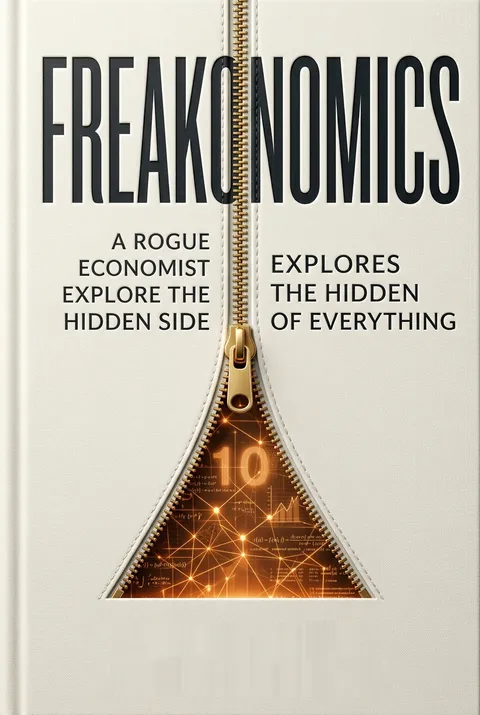

重點摘要
1. 傳統觀念常常錯誤,且可以用數據來挑戰
「傳統觀念常常是錯的。」
挑戰假設。 《怪誕經濟學》展示了許多普遍認為正確的觀念其實缺乏數據支持。例如,書中推翻了「警察越多,犯罪越少」以及「房地產經紀人總是為客戶利益著想」的說法。透過檢視數據與激勵機制,作者揭露了與大眾看法相悖的驚人真相。
數據分析的力量。 本書強調不應只停留在表面解釋,而要深入挖掘數據以發現隱藏的真相。這種方法能帶來反直覺的發現,例如合法墮胎與犯罪率下降之間的關聯。透過以數據為基礎的分析挑戰傳統智慧,我們能更準確地理解複雜的社會與經濟現象。
2. 激勵是現代生活的基石
「激勵是一顆子彈、一個槓桿、一把鑰匙:一個看似微小卻擁有驚人力量改變局勢的物件。」
理解動機。 《怪誕經濟學》主張激勵驅動著人類在生活各方面的行為。作者探討人們如何對不同類型的激勵作出反應:
- 經濟激勵:金錢獎勵或懲罰
- 社會激勵:同儕壓力與社會期望
- 道德激勵:個人信念與價值觀
意外後果。 書中說明激勵不當可能導致意想不到的結果。例如,某托兒所對遲接孩子的家長罰款,結果反而增加了遲到的家長數量。這種反直覺的結果是因為罰款取代了道德激勵(罪惡感),變成經濟激勵,有些家長願意付錢換取方便。
3. 專家利用資訊不對稱為己所用
「資訊是燈塔、棍棒、橄欖枝、威懾力,視掌握者及其使用方式而定。」
知識的力量。 《怪誕經濟學》探討各領域專家如何利用其專業知識的不對稱優勢,操控局勢以謀取私利。
真實案例。 書中舉出多個例子:
- 房地產經紀人:賣自家房子價格高於客戶房價
- 相撲選手:在激勵一致時合謀操縱比賽結果
- 老師:作弊提升學校標準化考試成績
了解這些資訊不對稱,有助讀者警覺潛在利益衝突,做出更明智的決策。
4. 相關性不代表因果關係
「兩件事物相關不代表其中一方造成另一方。」
批判性思考。 《怪誕經濟學》強調區分相關性與因果關係的重要性。許多流行解釋混淆兩者,導致錯誤結論與政策。
誤判案例。 書中列舉多起將相關誤認為因果的例子:
- 裂解可卡因與犯罪:雖相關,但書中指出其他因素對1990年代犯罪率下降更具影響力
- 競選花費與選舉結果:高花費與勝選相關,但不一定是因果
質疑既定因果關係,有助我們更細緻理解複雜議題,避免簡化解釋。
5. 意外後果可能產生深遠影響
「合法墮胎最戲劇性的影響,是多年後才顯現的犯罪率變化。」
連鎖效應。 《怪誕經濟學》說明看似無關的事件或政策,可能帶來廣泛且意想不到的後果。作者指出,我們常忽略這些間接影響,評估行動或政策時容易失焦。
案例研究:墮胎與犯罪。 書中最具爭議的主張是1970年代墮胎合法化導致1990年代犯罪率大幅下降。這種意外連結凸顯社會變遷可能帶來深遠且不易察覺的長期影響。其他例子包括:
- 三K黨秘密儀式曝光削弱其勢力
- 父母社經地位影響子女命名與未來成功
理解這些意外後果,有助我們做出更明智決策,並更準確預測行動結果。
6. 當激勵不當時,作弊普遍存在
「作弊是否為人性尚有爭議,但它確實是幾乎所有人類活動中的顯著特徵。」
普遍的不誠實。 《怪誕經濟學》指出作弊比我們想像的更普遍,且以多種形式存在於各領域。書中探討激勵不當如何促使作弊行為。
作弊案例。 作者列舉多起廣泛作弊事件:
- 老師竄改標準化考試成績提升學校表現
- 相撲選手合謀操縱比賽
- 房地產經紀人向客戶提供誤導資訊
認識作弊普遍性及其激勵驅動,有助設計更合理的制度,調整激勵以減少不誠實行為。
7. 父母重要,但非我們常想的方式
「受過良好教育、成功且健康的父母,子女在學校測驗中表現較佳;但帶孩子去博物館、打罵、送去早期教育或常讀書給他們聽,甚至讓他們看電視,似乎影響不大。」
重新思考教養。 《怪誕經濟學》挑戰許多關於「好父母」的普遍假設。作者認為許多流行的教養策略對孩子長期結果影響有限。
天性與教養。 書中指出,父母的特質(教育程度、成功、健康)比具體教養技巧更重要。主要發現包括:
- 讀書給孩子聽對成績提升幫助不大
- 看電視不會損害學業表現
- 參加早期教育計畫無明顯長期效益
作者主張,父母的影響主要透過遺傳與社經優勢傳遞,而非特定教養方法。
8. 文化與社經因素顯著影響結果
「現今許多黑人名字是黑人獨有的。加州每年出生的黑人女孩中,有超過40%取了當年約10萬名白人女孩中沒有人取過的名字。」
命名模式。 《怪誕經濟學》探討文化因素(如孩子名字的選擇)如何反映並影響社經結果。書中呈現不同種族與經濟階層的命名趨勢差異。
文化差異的意涵。 作者認為這些文化標記會對個人生活結果產生持久影響。例如:
- 獨特黑人名字可能在求職時遭遇歧視
- 高收入父母與低收入父母選擇不同名字
- 名字選擇反映父母對子女成功的期望
理解這些文化與社經因素,有助我們認識並解決社會系統性不平等。
9. 墮胎合法化對犯罪率有意想不到的影響
「合法墮胎最戲劇性的影響,是多年後才顯現的犯罪率變化。」
具爭議的連結。 《怪誕經濟學》提出一個備受爭議的理論,將1970年代墮胎合法化與1990年代犯罪率大幅下降相連結。這種反直覺的關聯展現了本書揭露數據中隱藏關係的手法。
支持證據。 作者提出多項論據支持此理論:
- 時間點:犯罪率下降約在墮胎合法化後20年左右
- 州別分析:較早合法化的州較早出現犯罪率下降
- 人口因素:非預期出生的孩子犯罪風險較高
雖具爭議,此理論展示數據分析如何揭露看似無關社會現象間的意外連結。
10. 數據分析能揭示隱藏的模式與真相
「道德可以說是人們希望世界運作的方式,而經濟學則是世界實際運作的方式。」
經濟學的力量。 《怪誕經濟學》展示經濟分析與數據驅動方法如何揭露人類行為與社會的隱藏真相。書中證明透過檢視激勵與分析大量數據,我們能獲得挑戰傳統智慧的洞見。
應用經濟思維。 作者鼓勵讀者將此分析方法應用於生活各方面:
- 質疑假設,尋找背後激勵
- 尋求可靠數據驗證假說
- 考慮意外後果與間接影響
- 接受反直覺的解釋
採用此思維模式,讀者能更細膩理解世界,並在個人與職業生活中做出更明智的決策。
評論摘要
蘋果橘子經濟學獲得了褒貶不一的評價。讀者讚賞書中提出的有趣問題和數據分析方法,但也批評其過度簡化以及自我吹捧的傾向。部分讀者認為本書發人深省且饒富趣味,另一些人則覺得內容缺乏深度,且建立在令人質疑的假設之上。書中對非傳統議題的探索以及對既有觀念的挑戰吸引了許多讀者,但其統計方法和具爭議性的結論也引發了分歧。整體而言,讀者欣賞本書對經濟學與社會議題所提供的獨特視角,即便他們未必認同書中的所有論點。
其他人也在讀





常見問題
What's Freakonomics about?
- Exploring hidden economics: Freakonomics by Steven D. Levitt and Stephen J. Dubner examines the unexpected connections between life and economics, showing how incentives shape behavior.
- Challenging conventional wisdom: It questions widely accepted beliefs, revealing how "experts" can manipulate facts and emphasizes the importance of asking the right questions.
- Diverse topics covered: The book uses data analysis to explore subjects like crime rates, parenting, and real estate, offering surprising insights into human behavior.
Why should I read Freakonomics?
- Unique perspective on economics: The book applies economic principles to everyday life, making complex concepts accessible and engaging.
- Real-world applications: It illustrates how economic principles explain social phenomena, relevant for understanding human behavior and decision-making.
- Engaging storytelling: Levitt and Dubner use storytelling to present findings, making the book both informative and entertaining.
What are the key takeaways of Freakonomics?
- Incentives matter: Understanding incentives is crucial for solving problems and understanding behavior, as people respond predictably to them.
- Data-driven insights: The book highlights the importance of data in uncovering societal truths, challenging conventional wisdom with surprising correlations.
- Questioning authority: It encourages skepticism towards expert information, advocating for critical thinking to uncover underlying truths.
What are the best quotes from Freakonomics and what do they mean?
- "Morality vs. economics": This quote highlights the difference between idealistic views and the realities of human behavior.
- "Incentives are crucial": It emphasizes understanding incentives in shaping decisions and actions for better outcomes.
- "Conventional wisdom is often wrong": A reminder to question widely accepted beliefs and seek evidence-based conclusions.
How do schoolteachers and sumo wrestlers relate in Freakonomics?
- Cheating and incentives: Both are influenced by incentives that can lead to cheating, such as inflated test scores or thrown matches.
- Human behavior patterns: These examples show how strong incentives drive individuals to achieve goals, highlighting predictable behavior patterns.
- Data analysis reveals truths: By analyzing data, the authors uncover cheating prevalence, stressing transparency and accountability in high-stakes systems.
What does Freakonomics say about the Ku Klux Klan and real estate agents?
- Information asymmetry: Both groups exploit information to their advantage, creating power dynamics that can be manipulated.
- Fear and control: The Klan used fear for control, while agents use expertise to pressure clients, illustrating information weaponization.
- Role of transparency: Exposing hidden information diminishes power, as seen with Klan secrets and real estate information access leveling the playing field.
Why do drug dealers still live with their moms according to Freakonomics?
- Low earnings for foot soldiers: Most street-level dealers earn very little, often less than minimum wage, forcing them to live at home.
- High risks involved: Drug dealing is dangerous, with high arrest or violence risks, not translating into substantial financial rewards for most.
- Tournament structure: The drug trade operates like a tournament, with few reaching the top and many struggling at the bottom.
How does Freakonomics explain the drop in crime rates in the 1990s?
- Unexpected decline: Crime rates fell dramatically, surprising experts and leading to various theories explaining the phenomenon.
- Roe v. Wade's impact: The book controversially claims that legalized abortion reduced at-risk children, contributing to lower crime rates.
- Critique of conventional explanations: It challenges popular explanations like improved policing, emphasizing data-driven analysis for understanding social issues.
What role does data play in Freakonomics?
- Data as a tool: Data analysis uncovers hidden truths about behavior and societal trends, challenging conventional wisdom.
- Importance of measurement: Knowing what and how to measure is crucial for understanding complex issues, providing clarity in assumption-clouded situations.
- Real-world applications: Insights from data analysis can be applied to fields like education and crime prevention, leading to better decision-making.
How does Freakonomics address parenting and its impact on children?
- Parenting's role questioned: The book suggests many beliefs about parenting may be misguided, analyzing factors contributing to a child's success.
- Key factors identified: Socioeconomic status, education level, and family structure often outweigh parenting styles in influencing children's success.
- Challenging conventional wisdom: It encourages rethinking assumptions about parenting, emphasizing understanding the broader context of child-rearing.
How does Freakonomics address the concept of discrimination?
- Types of discrimination: The book distinguishes between taste-based and information-based discrimination, affecting economic outcomes.
- Audit studies: It references studies showing how names influence hiring decisions, revealing systemic labor market biases.
- Impact on society: Discrimination affects individuals and broader dynamics, informing policies aimed at reducing inequality.
How does Freakonomics challenge conventional wisdom?
- Questioning accepted beliefs: The book dismantles widely held beliefs about social issues, encouraging readers to reconsider assumptions.
- Surprising connections: It draws unexpected connections between topics, challenging readers to think outside the box.
- Promoting skepticism: Freakonomics advocates for skepticism towards conventional wisdom, urging evidence-seeking and questioning the status quo.
Freakonomics 系列作品
關於作者
其他著作: Steven D. Levitt

下載 PDF
下載 EPUB
.epub digital book format is ideal for reading ebooks on phones, tablets, and e-readers.








































