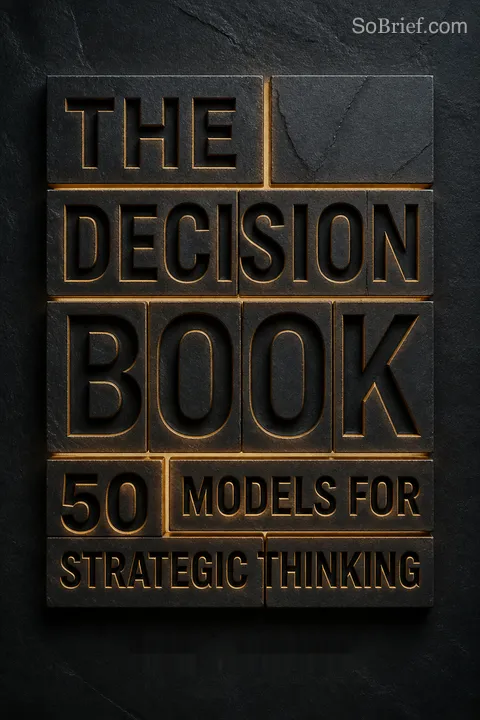
Summary Unavailable
This book is not suitable for a summary (it may be a textbook, workbook, cookbook, reference book, or collection). However, you can still explore the FAQs, about author, and other metadata below!
核心要点
1. 模型简化复杂现实,指导决策制定
模型并不规定我们该如何思考,它们是主动思考过程的产物。
模型作为工具。 决策模型是帮助我们应对复杂情境的认知框架。它们通过聚焦关键变量和关系,简化现实,使我们能够:
- 有效组织信息
- 识别模式与趋势
- 产生洞见与预测
实际应用。 模型可广泛应用于多个领域:
- 商业:用于战略规划的SWOT分析
- 个人发展:优化表现的心流模型
- 社会动态:理解网络结构的小世界模型
尽管模型功能强大,但必须牢记其局限性。模型是简化的表达,可能无法涵盖现实的所有细节。使用者应批判性地看待模型,并根据具体情境灵活调整。
2. 有效时间管理重视重要任务胜于紧急任务
最紧急的决策往往不是最重要的。
艾森豪威尔矩阵。 该时间管理工具帮助区分紧急与重要任务,将其分为四个象限:
- 紧急且重要:危机、紧迫问题
- 重要但不紧急:规划、关系建设
- 紧急但不重要:打断、部分会议
- 非紧急非重要:浪费时间、琐碎事务
战略聚焦。 优先处理重要任务而非仅仅紧急任务,能让个人:
- 减轻压力,避免持续应急
- 投入时间于长期成长与发展
- 提升整体效率与效能
实施此方法需自律,并学会对次要事务说“不”。定期审视和调整优先级,确保与长期目标和价值观保持一致。
3. 自我觉察与理解他人是个人成长的关键
有些关于我们自己的事情,我们自己不了解,但他人却看得清楚。
乔哈里窗。 该模型揭示自我觉察的四个层面:
- 公开区:自己和他人都知道
- 隐藏区:自己知道,别人不知道
- 盲点区:自己不知道,别人知道
- 未知区:自己和别人都不知道
扩展自我认知。 增强自我觉察包括:
- 寻求他人反馈,发现盲点
- 进行自我反思,理解隐藏动机
- 拥抱新体验,探索未知潜能
理解他人同样重要。诸如政治罗盘或Sinus Milieu模型等工具,有助于分类不同世界观和价值体系,促进共情与人际关系改善。
4. 创造力常源于结构化思维与多元视角
创造力为何需要结构化。
结构化创造力技巧:
- 形态学盒:结合现有属性创造新事物
- SCAMPER法:替代、组合、调整、修改、另用、删除、反转
- 跳出框架思考:挑战传统假设
多元视角。 创造力在不同观点交汇时蓬勃发展:
- 德博诺六顶思考帽:为团队成员分配不同角色
- Belbin团队角色:识别团队互补优势
将结构化方法与多样输入结合,个人与团队能产生更具创新性和稳健性的解决方案。这种方法平衡了聚焦思考与横向发散的优势。
5. 团队动态与领导风格显著影响项目成果
领导员工,使自己最终变得多余。
团队发展阶段。 Drexler-Sibbet模型划分七个阶段:
- 定向
- 建立信任
- 明确目标
- 承诺
- 执行
- 高绩效
- 更新
情境领导。 Hersey-Blanchard模型主张根据团队成熟度调整领导风格:
- 指导型:高指导,低支持
- 教练型:高指导,高支持
- 支持型:低指导,高支持
- 授权型:低指导,低支持
有效领导者识别团队当前阶段,灵活调整方式,促进团队成长、自主,最终实现更佳项目成果。
6. 经济原则如帕累托法则塑造商业策略
20%的员工完成80%的工作。
帕累托原则。 这一80/20法则适用于多个领域:
- 商业:20%的产品创造80%的收入
- 时间管理:20%的努力产生80%的成果
- 质量控制:20%的缺陷导致80%的问题
战略启示:
- 将资源聚焦于高影响领域
- 识别并培养关键客户或产品
- 通过解决主要瓶颈优化流程
然而,长尾理论挑战此原则,指出数字市场中小众产品合计可超越畅销品,强调策略需适应市场环境与技术变革。
7. 拥抱不确定性与从失败中学习推动创新
做出任何决定后都会感到平静,即使是错误的决定。
黑天鹅模型。 该概念强调罕见且不可预测事件的影响:
- 挑战对过去经验的过度依赖
- 鼓励为不大可能的情境做好准备
- 促进决策中的适应性
将失败视为学习工具:
- 双环学习:质疑根本假设
- 认知失调:识别并解决矛盾
- 蒙特卡洛模拟:接受概率思维
通过承认不确定性,将失败视为成长契机,个人与组织能培育创新与韧性文化。
8. 视觉思维提升沟通与问题解决能力
一图胜千言。
视觉模型的优势:
- 简化复杂概念
- 增强记忆力
- 促进模式识别
- 激发创造性思维
实际应用:
- 思维导图用于头脑风暴
- 流程图分析过程
- 信息图表展示数据
- 讨论中速写澄清概念
将视觉元素融入沟通与问题解决,显著提升理解与参与度。即使简单的图示也能带来宝贵洞见,促进更高效的讨论。
9. 适应变化需平衡过去经验与未来可能
想确定未来,先了解过去。
成因模型。 该方法强调理解历史背景对未来规划的重要性:
- 识别关键事件、人物与经验
- 发现模式与反复出现的主题
- 利用过去洞见指导未来策略
平衡延续与变革:
- 保留宝贵传统与核心能力
- 识别需创新或转型的领域
- 制定情景预测未来挑战与机遇
有效适应需细致理解历史趋势与新兴可能,平衡视角助力更具韧性和前瞻性的战略。
10. 批判性思维包含质疑假设与寻求多元观点
你相信什么,却无法证明?
挑战假设:
- 识别隐含信念与偏见
- 寻找反驳现有观点的证据
- 考虑现象的替代解释
多元视角:
- 与不同背景的人交流
- 探索反对意见
- 在决策中运用“魔鬼代言人”技巧
批判性思维要求勇于质疑自身信念,积极寻求多样观点,从而做出更稳健的决策,促进持续学习与成长。
最后更新:
Report Issue读者评价
《决策之书》评价不一。许多人认为它是决策模型和战略思维的实用参考,称赞其简洁的格式和图示辅助。然而,也有部分读者批评其内容深度不足,且部分观点存疑。读者普遍认可书中涵盖的多样模型,有助于个人与职业发展,但也指出并非所有模型同等有价值。有些人将其视为进一步探索的起点,而另一些人则觉得内容过于浅显。总体来看,本书更适合作为快速查阅的便捷指南,而非深入研究的权威资料。
其他人还在读



常见问题
What's "The Decision Book: 50 Models for Strategic Thinking" about?
- Overview: "The Decision Book" by Mikael Krogerus and Roman Tschäppeler is a guide to understanding and applying decision-making models. It presents 50 models that help in strategic thinking and decision-making.
- Purpose: The book aims to simplify complex decision-making processes by providing visual and pragmatic models that can be used in various personal and professional scenarios.
- Structure: It is divided into sections that focus on improving oneself, understanding oneself and others better, and improving others, each with relevant models.
- Practical Use: The book is designed as a workbook, encouraging readers to actively engage with the models by filling them out and adapting them to their needs.
Why should I read "The Decision Book"?
- Daily Relevance: The book is useful for anyone who deals with people regularly, such as teachers, managers, or team leaders, by providing tools to make better decisions.
- Self-Improvement: It offers insights into personal development, helping readers understand their goals, motivations, and decision-making processes.
- Efficiency and Clarity: The models help in organizing thoughts, improving efficiency, and gaining clarity in both personal and professional contexts.
- Knowledge and Application: Readers will gain knowledge that can impress peers and be applied to real-life situations, enhancing both personal and professional growth.
What are the key takeaways of "The Decision Book"?
- Simplification of Complexity: The book emphasizes simplifying complex situations through models that focus on relevant aspects, making decision-making more manageable.
- Visual and Pragmatic Models: It highlights the importance of visual aids and pragmatic approaches in understanding and solving problems.
- Active Engagement: The book encourages readers to actively engage with the models, suggesting that answers emerge through their application and adaptation.
- Decision-Making Insights: It provides insights into various decision-making scenarios, from personal dilemmas to strategic business decisions, offering a comprehensive toolkit for different situations.
How can the Eisenhower Matrix improve efficiency according to "The Decision Book"?
- Distinguishing Tasks: The Eisenhower Matrix helps distinguish between urgent and important tasks, allowing for better prioritization and time management.
- Strategic Focus: It encourages focusing on important but not urgent tasks, which are crucial for long-term strategic planning and decision-making.
- Immediate Action: The model suggests dealing with urgent and important tasks immediately, ensuring that critical issues are addressed promptly.
- Time Management: By categorizing tasks, the matrix aids in organizing time effectively, reducing stress and increasing productivity.
What is the SWOT Analysis and how is it used in "The Decision Book"?
- Evaluation Tool: SWOT Analysis is used to evaluate the Strengths, Weaknesses, Opportunities, and Threats of a project or decision.
- Clarity and Understanding: It helps in gaining a clearer understanding of a project by emphasizing strengths and compensating for weaknesses.
- Versatility: The model is versatile and can be applied to both business and personal decisions, making it a valuable tool for various scenarios.
- Strategic Planning: By identifying opportunities and threats, SWOT Analysis aids in strategic planning and decision-making, ensuring informed choices.
How does "The Decision Book" define a decision-making model?
- Simplification: Decision-making models simplify complex situations by focusing on relevant aspects, making them easier to understand and manage.
- Pragmatism: They are pragmatic, emphasizing usefulness and practical application in real-life scenarios.
- Visual Representation: Models are often visual, using diagrams and images to convey complex concepts in an accessible way.
- Organizational Tool: They provide structure and organization, helping to create a systematic approach to decision-making.
What is the significance of the "Flow Model" in "The Decision Book"?
- Happiness and Satisfaction: The Flow Model explores what makes people happy, focusing on activities that provide deep satisfaction and engagement.
- Five Key Elements: It identifies five elements of flow: intense focus, self-chosen activity, balanced challenge, clear objectives, and immediate feedback.
- Immersion and Time: People in flow lose track of time and become fully immersed in their activities, leading to a profound sense of satisfaction.
- Contradictory to Relaxation: The model suggests that happiness is not about relaxation but about being absorbed in challenging and meaningful activities.
How does "The Decision Book" explain the "Black Swan Model"?
- Unexpected Events: The Black Swan Model addresses the occurrence of unexpected events that cannot be predicted from past experiences.
- Challenge to Assumptions: It challenges the assumption that past experiences can reliably predict future outcomes, emphasizing the need for flexibility.
- Historical Examples: The model uses historical examples, like the discovery of black swans, to illustrate how unforeseen events can change perceptions.
- Preparedness: It encourages questioning assumptions and being prepared for unexpected events, fostering resilience and adaptability.
What are the best quotes from "The Decision Book" and what do they mean?
- Eisenhower's Insight: "The most urgent decisions are rarely the most important ones." This quote emphasizes the need to prioritize important tasks over merely urgent ones.
- Margaret J. Wheatley on Creativity: "The things we fear most in organizations... are the primary sources of creativity." It suggests that embracing uncertainty can lead to innovation.
- Lucille Ball on Decision-Making: "I’d rather regret the things I have done than the things that I haven’t." This highlights the importance of taking action and making decisions.
- Albert Einstein on Simplicity: "Everything should be made as simple as possible. But no simpler." This underscores the value of simplicity in understanding and solving problems.
How does "The Decision Book" suggest using the "Project Portfolio Matrix"?
- Project Classification: The Project Portfolio Matrix helps classify projects based on cost and time, providing an overview of multiple projects.
- Resource Evaluation: It considers costs not only in terms of money but also resources like energy and psychological stress.
- Strategic Decisions: The matrix aids in making strategic decisions about which projects to pursue, modify, or reject based on their alignment with goals.
- Learning and Vision: It encourages focusing on projects that offer learning opportunities and align with overarching visions, ensuring meaningful engagement.
What is the "Prisoner's Dilemma" and its application in "The Decision Book"?
- Trust and Strategy: The Prisoner's Dilemma explores the complexities of trust and strategy in decision-making, particularly in competitive scenarios.
- Game Theory: It is a classic example in game theory, illustrating how individuals might not cooperate even when it is in their best interest.
- Optimal Strategy: The book suggests that the best strategy is to cooperate initially and then mimic the other party's previous actions, fostering trust.
- Real-World Application: The model is applicable in various real-world situations, from business negotiations to personal relationships, highlighting the importance of trust.
How does "The Decision Book" address the "Hype Cycle"?
- Technology Adoption: The Hype Cycle describes the typical progression of new technologies from initial hype to eventual productivity.
- Five Phases: It includes five phases: technology trigger, peak of inflated expectations, trough of disillusionment, slope of enlightenment, and plateau of productivity.
- Understanding Trends: The model helps in understanding and predicting the adoption and success of new technologies, aiding strategic planning.
- Real-World Examples: It uses examples like the iPod to illustrate how products move through the cycle, providing insights into market dynamics.
关于作者
米卡埃尔·克罗格鲁斯是一位多才多艺的作家,拥有新闻和广告领域的丰富经验。他曾在瑞士顶级报纸《新苏黎世报》的附刊杂志NZZ FOLIO担任专职撰稿人,任职五年。在此之前,他曾为多家广告公司担任文案撰写工作。克罗格鲁斯毕业于Kaospilot学院,目前作为自由撰稿人为德国和瑞士的报纸及杂志供稿。尽管他拥有芬兰国籍,但在瑞典和德国长大,这种多元文化背景赋予了他独特的写作视角。
下载 PDF
下载 EPUB
.epub digital book format is ideal for reading ebooks on phones, tablets, and e-readers.








































