
Plot Summary
Nightmares Return in Manhattan
In the sweltering heat of a New York summer, Qianze is haunted by a recurring childhood nightmare: chasing a supernatural hare through a foreign forest, only to be wounded by its antlers. The dream's visceral pain lingers after she wakes, mirroring the discomfort of her real life. Her estranged father, Ba, has suddenly reappeared after eleven years, disrupting the fragile order she's built. Their uneasy cohabitation in her cramped apartment is fraught with awkwardness, silence, and the ghosts of unresolved trauma. The return of her nightmares signals that the past is not as buried as she hoped, and that something uncanny is stirring beneath the surface of her everyday life.
The Father on the Porch
Qianze is summoned back to her childhood home in Virginia by a call from her tenants: a strange, elderly Asian man is loitering on the porch. She recognizes him as her father, Ba, who vanished from her life over a decade ago. The reunion is emotionally charged—Qianze is torn between longing, anger, and disbelief. She brings Ba back to New York, where he becomes a disruptive presence, his habits and addictions clashing with her carefully curated solitude. The boundaries of their relationship blur as Qianze is forced to confront the wounds left by his abandonment, and the mystery of why he has returned now.
Living with a Stranger
As Ba settles into Qianze's apartment, his erratic behavior and declining mental state become apparent. He drinks, smokes, and drifts in and out of lucidity, sometimes speaking in riddles about fate and prophecy. Qianze, resentful yet dutiful, monitors him with a nanny cam and tracks his movements. Their conversations are stilted, oscillating between mundane exchanges and cryptic references to the past. Qianze's frustration mounts as she struggles to balance her demanding job with the responsibilities of caring for a father who is both familiar and utterly alien—a living reminder of unresolved pain.
Prophecy and Memory
Ba's mental decline manifests as time-shifting: he relives memories from his childhood in China, blending fact and fiction. He tells Qianze stories of famine, family, and supernatural omens, but the details are inconsistent and sometimes impossible. Qianze tries to piece together the truth, researching historical events and family history, only to find contradictions and gaps. Ba insists he has returned because of a prophecy—a warning he must deliver before it's too late. The elusive nature of his memories, and the possibility of inherited madness, unsettle Qianze, who fears what she might discover about her own origins.
Stories from the Past
Ba's stories transport the narrative to mid-century Manchuria, where his childhood is marked by poverty, violence, and the upheavals of war and revolution. The family's secrets are layered: tales of famine, lost siblings, and a grandmother who arrives with her own burdens. The boundaries between reality and folklore blur as Ba recounts encounters with omens—albino hares, foxes, and the Woman in the Alley, a seer who predicts pain and transformation. These stories are not just recollections but living forces, shaping the destinies of Ba and his descendants, and hinting at a legacy of suffering that transcends generations.
The Woman in the Alley
In his youth, Ba (then Weihong) seeks out the legendary Woman in the Alley, rumored to predict the most painful moment of one's life. Accompanied by his sister Kangmei, he is drawn into a mystical bog where visions of possible futures and inherited curses are revealed. The experience is traumatic and fragmented—memories slip away, but a sense of doom lingers. The Woman's prophecy, and the monstrous thing gestating within Weihong, become central to his understanding of himself and his fate. This encounter sets in motion a cycle of violence, guilt, and supernatural inheritance that will haunt the family for decades.
The Red Thread Unravels
As a teenager during the Cultural Revolution, Weihong is swept up in the fervor of the Red Guards. The narrative shifts to collective violence: children become perpetrators, enacting brutality on teachers and neighbors in the name of ideology. Weihong's participation is both a means of survival and a source of lasting guilt. The red thread—a symbol of fate and blood—binds him to acts he cannot undo. The trauma of these years, and the choices made to protect family at the expense of others, become the foundation of Weihong's adult life, shaping his relationships and sense of self.
Childhoods in Manchuria
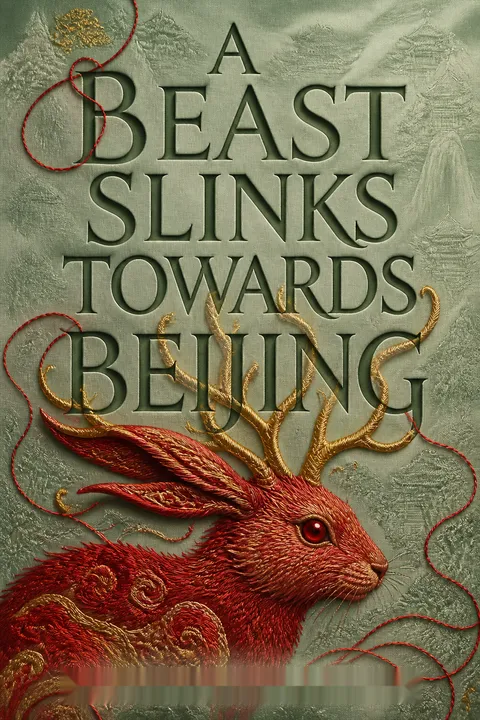
The story moves further back to Ming, Weihong's mother, whose childhood in rural Manchuria is defined by poverty, familial neglect, and a longing for belonging. Betrothed as a child to Fei, she finds solace in the company of her future in-laws and her younger brother Qian. The natural world—rivers, forests, and fields—offers moments of freedom, but the threat of war and the expectations of womanhood loom. Ming's encounter with the supernatural hare, which wounds her hand, foreshadows the intrusion of myth into her reality and the beginning of a cycle of pain and transformation.
The Hare with Horns
Ming's adolescence is punctuated by the appearance of the jackalope—a hare with antlers—whose attack leaves a lasting scar. This event, dismissed by adults as fantasy, becomes a symbol of the violence and unpredictability of life. As war encroaches, Ming's world is upended: Japanese soldiers invade, and she is captured and taken to a comfort station. The supernatural and the historical merge, as omens and prophecies become indistinguishable from the horrors of war. Ming's survival depends on her ability to adapt, endure, and, ultimately, to become something other than human.
War and Becoming a Monster
Ming's years in the comfort station are a descent into hell: rape, addiction, and the constant threat of death. She forms bonds with other women, especially Mouse, but loss is relentless. The commander who claims her is more than human—a demon, an oni—who recognizes a kindred darkness in Ming. To survive, Ming embraces her own monstrosity, shedding her former self and becoming something new. Her eventual escape, aided by her brother Qian, comes at a terrible cost: Qian is killed, and Ming returns home changed, marked by trauma and shame, and forever estranged from her former life.
The Comfort Station
The narrative lingers on the daily realities of the comfort station: the camaraderie and despair among the women, the small rituals of care, and the ever-present threat of violence. Ming's relationship with the oni commander is complex—he is both tormentor and the source of the opium that numbs her pain. The boundaries between victim and survivor blur, as Ming navigates the impossible choices forced upon her. The deaths of friends, the loss of children, and the erosion of her identity accumulate, leaving her a ghost in her own life, haunted by what she has endured and what she has become.
The Price of Survival
Ming's homecoming is not a restoration but a new exile. The village, her family, and even her own body are irrevocably altered. She is met with suspicion, rejection, and the impossibility of resuming her former role. Addiction, infertility, and the stigma of her experiences isolate her further. Attempts to reconnect—with her husband, her mother-in-law, and her community—are fraught with misunderstanding and pain. The supernatural inheritance of shame and monstrosity is passed down, as Ming's trauma becomes the soil in which future suffering will take root.
Inheritance of Shame
Weihong's adulthood is shaped by the legacy of violence, secrecy, and shame. His relationship with his mother is strained by half-truths and unspoken trauma. The revelation that his biological father was the oni commander—a literal and figurative monster—shatters his sense of identity. Weihong's own actions, including the betrayal of his grandmother during the Cultural Revolution, compound his guilt. The burden of inherited monstrosity, both supernatural and psychological, becomes a curse he fears passing on to his own children. The cycle of pain seems inescapable, binding past and present in a web of regret.
The Daughter's Rage
In the present, Qianze's life is defined by the aftermath of her father's abandonment and the weight of family secrets. Her attempts to build a new identity—through college, work, and relationships—are undermined by unresolved grief and rage. Encounters with supernatural omens—the fox, the jackalope, the Aunties—intensify her sense of alienation and fear of inherited madness. The return of Ba forces her to confront the possibility that her life is not her own, but shaped by forces beyond her control. Her anger, both a shield and a prison, threatens to consume her unless she can find a way to break the cycle.
The Fox and the Jackalope
Throughout her adolescence and adulthood, Qianze is pursued by visions of the fox and the jackalope—creatures that symbolize both her family's supernatural inheritance and her own psychological scars. These apparitions intensify during periods of stress and transition, blurring the line between reality and nightmare. Attempts to rationalize or escape these hauntings only deepen her sense of isolation. The creatures are both warnings and invitations: to confront the past, to acknowledge the pain that has been passed down, and to choose whether to be defined by it or to forge a new path.
College and Reinvention
At university, Qianze adopts the name Kenzie and tries to reinvent herself, distancing from her family's history and the pain of her father's absence. She navigates the complexities of race, belonging, and friendship in a predominantly white environment, finding solace in new relationships but also encountering fresh wounds. The fox and jackalope follow her, manifesting in dreams and hallucinations, reminders that the past cannot be outrun. Her relationship with Theo offers hope, but her inability to share her true self threatens intimacy and trust.
The Weight of Secrets
As Ba's health declines, the secrets he has carried for decades begin to spill out. He confesses to Qianze the full extent of his past: the violence of his youth, the betrayal of his grandmother, the truth about his parentage, and the supernatural curse that haunts their bloodline. The revelation is both a burden and a release—Qianze is forced to reckon with the reality of her inheritance, the monstrosity and pain that have shaped her family. The possibility of forgiveness, for both Ba and herself, hangs in the balance, contingent on their willingness to confront the truth together.
Confessions and Consequences
In the aftermath of confession, Ba and Qianze are left to pick up the pieces. Ba's remorse is genuine, but the damage done cannot be undone. Qianze must decide whether to continue the cycle of anger and abandonment or to seek a different future. The supernatural elements—omens, prophecies, and hauntings—are revealed to be both literal and metaphorical, manifestations of generational trauma and the struggle to break free from inherited fate. The possibility of healing emerges, fragile and uncertain, as father and daughter tentatively reach for reconciliation.
Atonement and Return
As summer turns to autumn, Ba proposes a journey: to return to his ancestral home, to visit his mother's grave, and to plant flowers together—a gesture of remembrance and renewal. Qianze, after much deliberation, agrees. The act of returning, of facing the past with open eyes, becomes an act of atonement and hope. The cycle of pain is not erased, but transformed: through honesty, care, and the willingness to begin again. The story ends with the promise of new roots, new stories, and the possibility that the beast within can be tamed, if not vanquished.
Analysis
A Beast Slinks Towards Beijing is a sweeping, intergenerational novel that fuses historical trauma with supernatural myth, exploring how the wounds of the past echo through families and shape the present. Alice Evelyn Yang crafts a narrative that is both intimate and epic, tracing the Zhou family's journey from war-torn Manchuria to contemporary New York. The novel interrogates the nature of inheritance—of pain, shame, and monstrosity—and asks whether it is possible to break free from cycles of violence and abandonment. Through its layered storytelling, the book examines the complexities of forgiveness, the limits of empathy, and the courage required to confront uncomfortable truths. The supernatural elements serve not as escapism but as a means of articulating the unspeakable: the ways in which trauma is both lived and inherited, both personal and collective. Ultimately, the novel offers a hard-won hope: that through honesty, care, and the willingness to return to the roots of pain, it is possible to plant new seeds and choose a different future.
Review Summary
A Beast Slinks Towards Beijing is widely praised as an ambitious, devastating debut exploring intergenerational trauma across three generations of a Chinese family. Readers commend Yang's gorgeous prose, skillful blending of magical realism with Chinese folklore, and unflinching portrayal of historical atrocities including the Cultural Revolution and Japanese occupation of Manchuria. Common criticisms include slow pacing in early chapters, repetitive emotional beats, and occasional tonal inconsistency. The audiobook narration receives particular praise. Most reviewers found the emotional payoff worthwhile despite the novel's relentless darkness and heavy subject matter.
People Also Read
Characters
Qianze (Kenzie) Zhou
Qianze is the novel's central figure, a Chinese American woman in her mid-twenties living in New York. Her life is shaped by the trauma of her father's abandonment and the weight of family secrets. Intelligent, driven, and fiercely independent, she struggles with anger, resentment, and a deep longing for connection. Her relationship with Ba is fraught—she is both caretaker and wounded child, oscillating between compassion and rage. Qianze's psychological journey is marked by supernatural hauntings (the fox, the jackalope) that mirror her internal struggles. Her arc is one of reckoning: with her inheritance, her capacity for forgiveness, and her desire to break the cycle of pain. Through her, the novel explores themes of identity, generational trauma, and the possibility of healing.
Weihong (Ba/Wayne) Zhou
Ba is a man fractured by history: a survivor of famine, revolution, and war, whose life is marked by violence, betrayal, and supernatural inheritance. His abandonment of Qianze and her mother is both an act of cowardice and a misguided attempt to protect them from the curse he believes he carries. Suffering from dementia and addiction, Ba is trapped in cycles of memory and regret, reliving the traumas of his youth and the monstrous acts he committed. His relationship with Qianze is central—he is both the source of her pain and, ultimately, a partner in her search for truth and reconciliation. Ba's arc is one of confession, atonement, and the hope of redemption, even as he fears the beast within.
Ming (Ba's Mother)
Ming's life is a testament to endurance in the face of relentless suffering. Born into poverty in Manchuria, she survives famine, neglect, and the horrors of being a comfort woman during the Japanese occupation. Her trauma is compounded by addiction, infertility, and social ostracism upon her return home. Ming's relationship with her children is complex—she is both loving and haunted, her pain shaping the destinies of those who come after her. Her encounters with the supernatural (the hare, the oni) symbolize the inescapability of inherited trauma. Ming's legacy is one of both resilience and sorrow, her story a crucial link in the chain of generational pain.
Kangmei (Ba's Sister)
Kangmei is Weihong's younger sister, a figure of empathy and quiet strength. As children, she and Weihong share a deep bond, but the traumas of the Cultural Revolution and family betrayals drive a wedge between them. Kangmei is both victim and participant in the family's cycle of survival and guilt—her own actions, and her complicity in the denouncement of their grandmother, haunt her. In later life, she becomes a caretaker for their mother, embodying the endurance and sorrow of women in the family. Kangmei's presence in Weihong's memories serves as a reminder of both what was lost and what might still be redeemed.
Fei (Ming's Husband)
Fei is Ming's childhood friend and eventual husband, a figure marked by the expectations of masculinity and the traumas of war. His relationship with Ming is initially tender but becomes strained by her experiences in the comfort station, infertility, and the pressures of family and community. Fei's own injuries and limitations mirror the wounds of the era. His inability to fully understand or heal Ming's pain is both a personal failing and a reflection of the broader societal inability to reckon with trauma. Fei's legacy is one of both care and distance, his love for Ming complicated by the forces that shape their lives.
Red (Weihong's Wife)
Red is Weihong's wife, a woman of intelligence, warmth, and resilience. Fluent in Russian and deeply connected to her twin brother, she represents a new beginning for Weihong—a chance at happiness and family after years of turmoil. Red's struggles with infertility and her eventual pregnancy are central to the family's story. Her presence is a source of light and possibility, even as she must navigate the shadows of Weihong's past. Red's acceptance and love offer a model of healing, though she is not immune to the pain that haunts the family.
Qian (Ming's Brother)
Qian is Ming's younger brother, a figure of innocence, idealism, and sacrifice. His bond with Ming is profound, offering her comfort and companionship in a harsh world. As a young man, Qian becomes involved in guerrilla resistance against the Japanese, ultimately sacrificing his life to rescue Ming from the comfort station. His death is a pivotal trauma for Ming, shaping her sense of guilt and loss. Qian's memory endures as a symbol of love, bravery, and the costs of survival.
The Oni Commander
The oni commander is both a literal and figurative monster: a Japanese officer who claims Ming in the comfort station, rapes her, and becomes the father of Weihong. He is a supernatural being, a yāoguài, whose presence blurs the line between myth and reality. The oni's recognition of Ming's own capacity for monstrosity is both a curse and a dark mirror. His legacy is the source of the family's supernatural inheritance, the beast that haunts Weihong and, by extension, Qianze.
The Woman in the Alley
The Woman in the Alley is a supernatural figure who appears at pivotal moments in the family's history. She offers prophecies, visions, and warnings, guiding characters through liminal spaces and revealing the inevitability of pain and transformation. Her presence is both comforting and terrifying—a reminder that fate is both knowable and inescapable. She embodies the novel's themes of cyclical trauma, the permeability of reality, and the possibility of change.
Theo
Theo is Qianze's boyfriend, a steady and empathetic presence who offers her the chance at love, trust, and a future beyond the confines of her family's pain. His own experiences as a child of immigrants and his deep connection to family provide a counterpoint to Qianze's isolation. Theo's relationship with Qianze is tested by her secrecy and the weight of her inheritance, but his willingness to forgive and support her becomes a catalyst for her journey toward healing and self-acceptance.
Plot Devices
Generational Trauma and Supernatural Inheritance
The novel's central device is the intertwining of generational trauma with supernatural inheritance. Family pain is not only psychological but embodied in omens, prophecies, and monstrous transformations. The fox, the jackalope, and the Woman in the Alley serve as both literal and metaphorical manifestations of inherited suffering. The narrative structure moves fluidly between timelines and perspectives, mirroring the way trauma disrupts chronology and identity. Foreshadowing is achieved through recurring dreams, supernatural encounters, and the repetition of motifs (red thread, eggs, hand-pulled noodles), creating a sense of inevitability and cyclical fate. The use of myth and folklore blurs the boundaries between reality and fantasy, inviting readers to question the nature of memory, identity, and destiny.
Download PDF
Download EPUB
.epub digital book format is ideal for reading ebooks on phones, tablets, and e-readers.








































