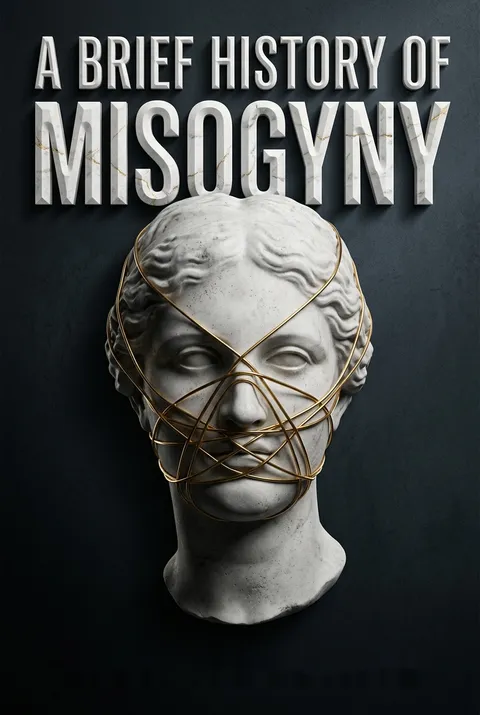
Key Takeaways
1. Misogyny's Ancient Genesis: Blaming Woman for Humanity's Fall
From her comes all the race of womankind The deadly female race and tribe of wives Who live with mortal men and bring them harm.
Mythological origins. Misogyny, the hatred of women, finds its earliest documented roots in the eighth century BC, emerging simultaneously in ancient Greece and Judaea. Both cultures developed powerful creation myths that placed the blame for human suffering, misery, and death squarely on the shoulders of women. These narratives, featuring figures like Pandora and Eve, established a foundational belief that woman was a malicious afterthought, a punishment for man's hubris or disobedience.
Punishment for hubris. In Hesiod's Greek myth, Pandora, the "all giver" and "beautiful evil," is Zeus's vengeful gift to men after Prometheus steals fire. Her curiosity leads her to open a sealed jar, unleashing all pains and evils upon humanity, dooming mankind to labor, sickness, and death. Similarly, the Jewish Genesis narrative portrays Eve as the first to disobey God by eating from the Tree of Knowledge, leading to humanity's expulsion from Eden and the curse of sorrow in conception and male dominion.
Dehumanization's start. These myths served to justify the existing patriarchal order, portraying women as inherently flawed and responsible for man's fallen state. They established a dualistic view where woman, embodying nature and its limitations, became "the Other," a constant reminder of man's mortality and a target for dehumanization, even as she was essential for the continuation of the human race.
2. Philosophical and Scientific Pillars of Female Inferiority
For the female is, as it were, a mutilated male.
Plato's dualism. Ancient Greek philosophy, particularly Plato's Theory of Forms, provided a powerful intellectual framework for misogyny. Plato, who never married and exalted male-male love, viewed the mutable world of the senses, including marriage and procreation, as an illusion and distraction from true Reality (Absolute Beauty and Goodness). He identified women with this lower, carnal realm, laying the philosophical groundwork for later Christian doctrines that scorned the physical world.
Aristotle's "science." Plato's student, Aristotle, further solidified misogynistic views with his "scientific" theories. He posited that the male was inherently superior, carrying the soul and full human potential in his semen, while the female merely provided passive matter. If a child was born female, it was due to the "cold constitution" of the mother, making women "mutilated males" who failed to reach their full human potential.
Justifying inequality. These philosophical and scientific arguments, despite their absurdity, dominated Western thought for nearly two millennia. They provided a seemingly rational justification for the subjugation of women, codifying their "inherent inferiority" and reinforcing the dualism that positioned men as thesis and women as antithesis, forever locked in a struggle where women embodied the contemptible.
3. Roman Women's Public Defiance and the Patriarchal Backlash
Woman is a violent and uncontrolled animal, and it is no good giving her the reins and expecting her not to kick over the traces.
Challenging norms. Unlike their secluded Greek counterparts, Roman women, particularly those of the upper classes, actively challenged prevailing misogyny and entered the public sphere. They protested government policies, intervened in wars, and even engaged in political intrigue, making their names known in history. This public visibility and assertiveness were a stark contrast to the ideal of the silent, anonymous Athenian woman.
Cato's warning. This increased female agency provoked a strong patriarchal backlash. Figures like Cato the Elder vehemently opposed women's public presence, warning that granting them any freedom would lead to moral decay and their eventual dominance over men. His rhetoric, equating women with "violent and uncontrolled animals," became a template for future misogynistic arguments against female emancipation.
Imperial control. The rise of the Roman Empire under Augustus saw a concerted effort to restore "traditional family values" through laws like the Lex Julia, which severely punished female adultery and reinforced male authority. Women like Julia, Augustus's daughter, and Messalina, Emperor Claudius's wife, became notorious symbols of female "licentiousness" and "unnatural ambition," their stories amplified by male historians and satirists to warn against women's influence.
4. Christianity's Contradictory Deification and Demonization of Women
You are the devil’s gateway: you are the unsealer of that forbidden tree: you are the first deserter of divine law: you are she who persuaded him whom the devil was not valiant enough to attack.
Inherited shame. Christianity absorbed Jewish concepts of sin and shame, particularly the Fall of Man myth, which profoundly shaped its view of women. While Jesus's own teachings showed remarkable sympathy for women, the early Church, influenced by figures like St. Paul and Tertullian, developed a profound hostility towards the human body and sexuality, viewing it as inherently evil and a source of temptation.
Tertullian's condemnation. Tertullian, a foundational Church Father, famously declared women the "devil's gateway," blaming them not only for the Fall but also for necessitating Christ's death. This extreme rhetoric linked female sexuality directly to sin and damnation, asserting that women's adornment and very existence were a distraction from spiritual purity, thus demanding their modesty and subservience.
Mary's paradox. Simultaneously, the Catholic Church elevated Mary, the mother of Jesus, to an unprecedented status as the Mother of God and Queen of Heaven. However, this deification came at the cost of her sexuality, as she was declared a perpetual virgin and later conceived without Original Sin. Mary became an unattainable ideal, her sexlessness a rebuke to other women's human nature, perpetuating a dualistic vision where women were either impossibly pure or inherently sinful.
5. The Witch Hunts: Misogyny's Most Lethal Manifestation
All witchcraft comes from carnal lust, which is in women insatiable.
A deadly shift. The late Middle Ages witnessed misogyny's most horrific manifestation: the witch craze, which resulted in the torture and execution of hundreds of thousands of women across Europe. This period marked a dramatic shift from earlier Church views that dismissed witchcraft as superstition, fueled by a pervasive sense of fear, doubt, and a renewed obsession with the Devil's influence.
The "Hammer of Witches." The publication of Malleus Maleficarum (Hammer of the Witches) in 1487, aided by the printing press, explicitly linked women's supposed inherent weaknesses—such as vanity, feeble-mindedness, and talkativeness—to their susceptibility to the Devil's temptations. It argued that women's "insatiable carnal lust" was the primary reason they became witches, engaging in demonic sex and vast conspiracies against Christian society.
Institutionalized terror. The Inquisition, with papal sanction, became an apparatus of terror, employing torture, deceit, and public humiliation to extract confessions. Accused women were stripped, shaved, and subjected to brutal devices like the strappado, often dying before trial. This period stands as a chilling example of how abstract arguments about female nature, combined with societal anxieties, could lead to mass persecution and murder, with women disproportionately targeted.
6. Modernity's Dawn: Enlightenment Ideals vs. Enduring Oppression
If all men are born free, how is it that all women are born slaves?
Challenging authority. The intellectual, social, and political revolutions of the 16th-18th centuries, including the Reformation and the Enlightenment, began to challenge traditional authorities that underpinned misogyny. The Protestant emphasis on individual Bible reading, for instance, inadvertently spurred women's literacy, while philosophers like John Locke introduced revolutionary ideas of individual autonomy, equality, and the pursuit of happiness, questioning the "natural" subordination of women.
Mary Wollstonecraft's plea. Mary Astell's poignant question, "If all men are born free, how is it that all women are born slaves?", encapsulated the growing tension between Enlightenment ideals and women's continued legal and social subjugation. Mary Wollstonecraft's A Vindication of the Rights of Woman (1792) further argued that women's perceived follies stemmed from a lack of education, not inherent nature, advocating for reason as the path to female emancipation.
Persistent contradictions. Despite these intellectual shifts, misogyny proved resilient. Legal reforms for women's rights were slow, and traditional prejudices persisted. The rise of the novel, however, offered new avenues for exploring women's inner lives and challenging stereotypes, as seen in Daniel Defoe's Roxana, which depicted an autonomous woman defying conventional roles, even as other popular works like Richardson's Pamela reinforced the ideal of the chaste, virtuous woman.
7. Victorian Paradoxes: Asexual Angels and Degraded Prostitutes
The majority of women (happily for society) are not very much troubled with sexual feelings of any kind.
Industrial impact. The Industrial Revolution profoundly reshaped women's lives, drawing millions into factories and urban slums, where they faced extreme poverty, exploitation, and violence. Despite their crucial labor, women were paid significantly less than men and bore the double burden of work and domestic responsibilities, often resorting to prostitution to survive.
Sexual dichotomy. Victorian society, particularly the middle class, developed a stark sexual dichotomy: the "Angel in the House," a pure, asexual wife and mother, contrasted sharply with the "fallen woman" or prostitute, seen as driven by uncontrollable sexual desire. Medical "experts" like Dr. William Acton propagated the myth of female asexuality, warning that sexual pleasure in women led to disease or insanity, and even advocating clitoridectomy to "cure" masturbation or nymphomania.
Literary and social reflections. This denial of female sexuality permeated literature, with major authors like Charles Dickens avoiding erotic depictions and celebrating childlike innocence. The prevalence of child prostitution, alongside the sentimental cult of the "little girl," revealed a disturbing inability of Victorian men to relate to mature female sexuality, leading to the degradation and humiliation of women who did not conform to the asexual ideal.
8. 20th Century Totalitarianism: "Scientific" Misogyny and State Control
The happiness of man is: "I will." The happiness of woman is: "He will."
Freud's influence. The early 20th century saw misogyny re-emerge with "scientific" justifications. Sigmund Freud, despite his influence, perpetuated misogynistic views, claiming female sexuality was a "dark continent" and that femininity required the "elimination of clitoridal sexuality," rooted in "penis envy." His theories, though based on limited evidence, reinforced the idea of women as "mutilated males" and enemies of civilization.
Nietzsche's "Superman." Philosophers like Otto Weininger, influenced by Nietzsche, took misogyny to extreme, mystical levels, denying women's very existence and reducing them to "nothing," mere matter for man's will. This worldview, combining anti-Semitism and misogyny, found fertile ground in turn-of-the-century Vienna, influencing figures like Adolf Hitler.
Totalitarian control. Both Nazi Germany and Communist regimes (Soviet Union, Maoist China, North Korea) systematically imposed misogynistic policies, viewing women's bodies as instruments of state control. They banned contraception, forced abortions, dictated dress codes, and confined women to domestic or reproductive roles, often under the guise of "liberation" or racial purity. This demonstrated how totalitarianism, regardless of ideology, often reveals its most frightening aspects through the systematic mistreatment of women.
9. War and Misogyny: Rape as a Weapon of Humiliation
The sexual exploitation of Black women during slavery was as devastating as the emasculation of the Black male slaves.
Historical precedent. Throughout history, war has provided a brutal context for misogyny, with rape serving not only as sexual relief for soldiers but also as a deliberate weapon of humiliation against enemy populations. From the sexual exploitation of enslaved African American women to the mass rapes during the Rape of Nanking in 1937, women have consistently been singled out for particular cruelties during conflict.
Ethnic cleansing. The civil wars in the former Yugoslavia in the 1990s saw rape camps established where Moslem and Croatian women were systematically raped and impregnated. This was a deliberate strategy of "ethnic cleansing," aimed at destroying the enemy's identity by forcing women to bear children of the aggressor's ethnicity, based on the misogynistic belief that the male determines a child's identity.
Double burden. Women who survived these atrocities often faced communal rejection, bearing a double burden of personal trauma and societal stigma. This highlights how the identification of a woman's virtue with the honor of her family or nation means she is punished twice over for acts beyond her control, revealing the deep-seated misogyny that accompanies racial and religious hatreds in conflict.
10. The Enduring Riddle: Misogyny's Pervasive and Protean Nature
Misogyny, like anti-Semitism, is 'out of proportion to any objective or social conflict.'
Pervasive and persistent. Misogyny remains a pervasive and persistent prejudice, often unnoticed because it has long been part of society's "common sense." From ancient myths to modern rap lyrics, it adapts and replicates across cultures, manifesting as social discrimination, legal subjugation, or the murderous rage of psychopaths like Jack the Ripper. Its enduring nature, unlike other prejudices, stems from the complex, unavoidable intimacy between men and women.
The "Other" that cannot be excluded. At its core, misogyny arises from men's fear of women's difference and the perceived threat to male autonomy. Women are the original "Other," yet they cannot be excluded, as human existence depends on their interaction. This fear of engulfment or loss of distinctness fuels the desire to denigrate women, reducing them to "nature" or "body" from which men seek to assert their independence and superiority.
Challenging the dualism. While biological and psychological theories attempt to explain this fear, they often fall short by implying all men are misogynists. The true path to overcoming misogyny lies in challenging the dualistic thinking that separates mind from body, and man from nature. Recognizing our shared human nature, transcending artificial distinctions, and upholding principles of justice, equality, and individual integrity are essential to finally treating this oldest prejudice with the contempt it deserves.
Review Summary
A Brief History of Misogyny receives positive reviews for its well-researched, chronological exploration of misogyny throughout history. Readers appreciate the author's unbiased approach and extensive research, though some found the content uncomfortable at times. The book is praised for its educational value and ability to provoke thought about current societal issues. Reviewers note that it covers various influential figures and critiques religious and political aspects. While not an easy read, it is highly recommended for its insightful examination of the world's oldest prejudice.
People Also Read



FAQ
1. What is A Brief History of Misogyny by Jack Holland about?
- Comprehensive historical overview: The book traces the origins, evolution, and manifestations of misogyny from ancient civilizations to the modern era, examining how contempt for women has been embedded in cultures, religions, and philosophies.
- Interdisciplinary analysis: Holland explores misogyny through historical, cultural, religious, philosophical, psychological, and social lenses, highlighting its complexity and persistence.
- Focus on influential periods and figures: Key eras such as Ancient Greece and Rome, the Middle Ages, the Victorian era, and the twentieth century are covered, with attention to thinkers like Plato, Aristotle, Freud, and Hitler.
- Contemporary relevance: The book connects historical misogyny to modern issues like sexual violence, reproductive rights, and ongoing gender struggles worldwide.
2. Why should I read A Brief History of Misogyny by Jack Holland?
- Understanding misogyny’s deep roots: The book provides essential historical context for why misogyny is so pervasive and persistent, showing it as a longstanding social and psychological phenomenon.
- Insight into cultural contradictions: Holland reveals the paradoxes in societies that both exalt and denigrate women, challenging simplistic narratives about gender relations.
- Connection to current issues: By linking past misogyny to present-day problems such as gender-based violence and political disenfranchisement, the book equips readers to better understand and engage with ongoing gender struggles.
- Critical examination of influential ideas: The book analyzes the impact of key historical figures and ideologies, helping readers recognize how misogynistic thought shapes society.
3. What are the key historical phases of misogyny described in A Brief History of Misogyny by Jack Holland?
- Ancient civilizations: The book begins with Mesopotamian, Greek, and Roman societies, highlighting foundational myths and legal practices that established women’s inferiority.
- Religious and medieval periods: It explores the rise of Christianity, the witch hunts, and the Church’s role in enforcing misogynistic norms, especially regarding sexuality and social roles.
- Early modern to Victorian era: The Enlightenment’s contradictory legacy is examined, with both calls for women’s rights and reinforcement of restrictive gender roles, culminating in Victorian ideals of female purity and domesticity.
- Twentieth century and beyond: The book discusses the impact of totalitarian regimes, psychoanalysis, feminism, and modern political movements, showing misogyny’s adaptation to new paradigms.
4. How does Jack Holland define misogyny in A Brief History of Misogyny?
- Hatred and contempt for women: Misogyny is defined as the hatred, fear, or contempt of women, often manifesting in social, legal, and cultural discrimination.
- Ancient and persistent prejudice: Holland describes misogyny as “the world’s oldest prejudice,” deeply rooted in myths, philosophy, religion, and social structures.
- Complex and adaptable: The book emphasizes that misogyny is not a single, static phenomenon but a protean prejudice that evolves and adapts to different historical and cultural contexts.
- Interplay of desire and fear: Misogyny often involves a paradoxical mix of male desire for women and simultaneous fear or hatred, leading to control and dehumanization.
5. What are the origins of misogyny according to A Brief History of Misogyny by Jack Holland?
- Mythological foundations: Myths like Pandora’s box and Eve’s temptation are identified as foundational stories that blame women for humanity’s suffering and misfortune.
- Philosophical dualism: Greek philosophers such as Plato and Aristotle framed women as “the Other,” inferior and closer to nature, giving misogyny intellectual respectability.
- Legal and social restrictions: Early societies codified women’s inferior status through laws limiting education, property rights, and public presence, reinforcing misogynistic attitudes.
- Religious synthesis: Christianity later combined Jewish, Greek, and its own doctrines to create a powerful ideological basis for misogyny.
6. How does A Brief History of Misogyny by Jack Holland explain the relationship between misogyny and religion?
- Religious sanction of misogyny: Major religions like Christianity, Islam, and Judaism have historically embedded misogynistic ideas, often blaming women for humanity’s fall and justifying their subordination.
- Dualistic worldview: Religions often associate women with the body, nature, and sin, while men are linked to spirit and reason, reinforcing gender hierarchies.
- Institutional enforcement: Religious institutions enforced misogynistic laws and customs, such as restrictions on education, dress, and public roles, and played central roles in events like the witch hunts.
- Contradictory attitudes: While some religious texts and figures show respect for women, dominant interpretations have often been hostile, creating complex and ambivalent attitudes toward women’s sexuality and status.
7. What role do mythology and philosophy play in the history of misogyny in A Brief History of Misogyny?
- Mythological origins: Myths like Pandora and Eve establish women as the source of evil and disorder, shaping cultural attitudes for millennia.
- Philosophical justification: Philosophers such as Plato and Aristotle provided intellectual frameworks that depicted women as inferior, irrational, and closer to nature, justifying their exclusion from power.
- Influence on social norms: These ideas permeated Western thought, influencing religious doctrines, legal codes, and everyday practices that restricted women’s rights.
- Enduring impact: The book shows how these ancient myths and philosophies continue to influence modern attitudes toward female sexuality, education, and political participation.
8. How does A Brief History of Misogyny by Jack Holland address the connection between misogyny and sexuality?
- Control of female sexuality: Misogyny often manifests in attempts to regulate women’s sexual behavior, associating female desire with danger, sin, or disorder.
- Sexual violence and exploitation: The book documents historical and contemporary instances of rape, prostitution, and sexual mutilation as expressions of misogynistic power and control.
- Contrasting cultural attitudes: Some cultures celebrate female sexuality, but misogyny often coexists with repression and contempt, highlighting the complex relationship between sexuality and social status.
- Modern battlegrounds: The struggle for reproductive rights, contraception, and sexual autonomy is presented as central to the fight against misogyny.
9. How does A Brief History of Misogyny by Jack Holland analyze the role of Christianity, especially the cult of the Virgin Mary, in shaping misogyny?
- Synthesis of traditions: Christianity combined Jewish, Greek, and its own doctrines to create a powerful ideological basis for misogyny, especially through the myth of Original Sin.
- Elevation and paradox: The Virgin Mary was exalted as Mother of God and Queen of Heaven, but her veneration was based on perpetual virginity and passivity, setting unattainable standards for ordinary women.
- Ideological control: The cult of Mary reinforced ideals of female chastity and obedience, justifying women’s subordination and repression within Christian societies.
- Ambivalence toward women: Christianity both elevated and dehumanized women, blaming them for sin while venerating them in limited, idealized forms.
10. What insights does A Brief History of Misogyny by Jack Holland provide about misogyny in the Victorian era and modern times?
- Victorian idealization and repression: Women were idealized as pure, asexual “Angels in the House,” while their sexuality was repressed and their roles confined to the domestic sphere.
- Working-class women’s struggles: Industrialization forced many women into harsh labor and poverty, exposing them to exploitation and limited legal protections.
- Scientific and medical misogyny: Victorian medicine pathologized female sexuality, sometimes prescribing brutal treatments, reinforcing social control over women’s bodies.
- Modern adaptations: The book discusses how misogyny persisted and transformed in the twentieth century, including under totalitarian regimes and in the context of psychoanalysis and feminism.
11. How does A Brief History of Misogyny by Jack Holland discuss misogyny in literature and the arts?
- Ambiguous portrayals: Literature, especially Shakespeare’s works, presents a complex range of female characters, reflecting societal anxieties and contradictions about women.
- Expression of misogyny: Tragedies like Hamlet and King Lear depict male characters’ anger and disgust at women’s sexuality, while also evoking pity and shared humanity.
- Literary reflection of norms: The book situates literary works within their historical context, showing how they both perpetuated and questioned prevailing gender norms.
- Victorian literature and pornography: Victorian literature often avoided mature female sexuality, while pornography and popular culture became outlets for suppressed desires and misogynistic fantasies.
12. What are the key takeaways and conclusions from A Brief History of Misogyny by Jack Holland?
- Misogyny is ancient and complex: It is deeply rooted in myths, philosophy, religion, and social structures, evolving but persisting across millennia.
- Interplay of fear and dependency: Misogyny is linked to fears of female sexuality and power, as well as myths about male autonomy and the dualism between men and women.
- Adaptability and persistence: Misogyny is described as one of the oldest, most persistent, and adaptable prejudices, manifesting in forms ranging from social discrimination to extreme violence.
- Hope for change: The author emphasizes the importance of women’s autonomy, especially reproductive choice, and suggests that recognizing both differences and equality between sexes, grounded in justice and human rights, offers a path beyond misogyny’s legacy.
About the Author
Other books by Jack Holland
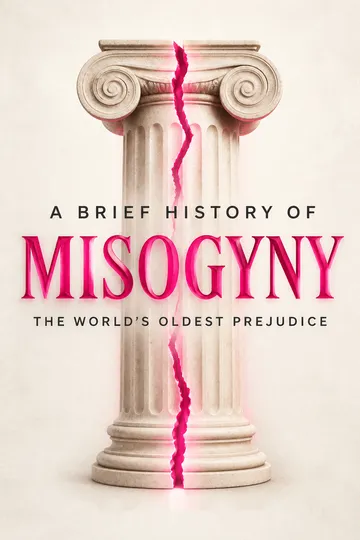
Download PDF
Download EPUB
.epub digital book format is ideal for reading ebooks on phones, tablets, and e-readers.








































