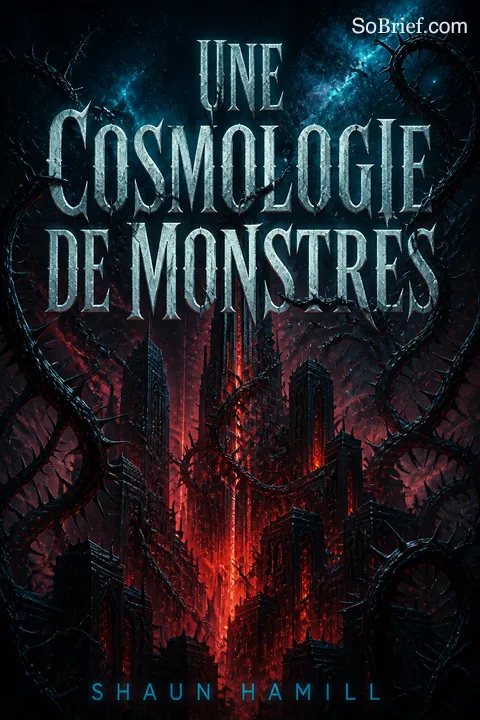
Plot Summary
Shadows Over the Turner Family
The Turner family's story is told by Noah, the youngest, who collects his sister Eunice's suicide notes and tries to piece together the family's troubled history. The Turners are plagued by mental illness, grief, and a sense of being stalked by something monstrous. Noah's narration is colored by loss and longing, as he tries to understand the darkness that has always hovered over his family, beginning with his mother Margaret's youth and the choices that set their fate in motion.
Margaret's Choice and the Monster
Margaret, once privileged, faces financial ruin and pressure to marry well. She meets Harry, a misfit with a love for horror and monsters, and is drawn to his authenticity. Their romance is shadowed by Margaret's sense of unease and a literal monster that seems to haunt her periphery—first glimpsed outside a car window, then in dreams and waking nightmares. The monster is both a symbol of her fears and a real, lurking presence, foreshadowing the family's future entanglement with the supernatural.
Haunted Houses and Haunted Hearts
Margaret and Harry's relationship deepens through shared love of horror stories and haunted houses. Their first date at a haunted attraction, Spooky House, is both thrilling and unsettling, culminating in a vision of a wolf-like creature that marks Margaret. The haunted house becomes a metaphor for the family's legacy: a place where fear and love are intertwined, and where the boundaries between reality and nightmare blur.
The Tomb: Family Foundations
Years later, Margaret and Harry are married with two daughters, Sydney and Eunice. Harry, restless and dissatisfied, channels his energy into building a haunted house attraction, the Tomb, in their backyard. The project becomes a family affair, but also exposes cracks in their relationships. Harry's mental health deteriorates, and the monster's presence grows stronger, manifesting in sleepwalking, violence, and a sense of doom that infects the whole family.
Harry's Descent and the Tomb
Harry's behavior becomes erratic as he is consumed by the haunted house project and by something unseen. He suffers seizures and personality changes, eventually diagnosed with a brain tumor. The Tomb opens to the public, a triumph tinged with tragedy. Margaret discovers Harry's illness and her own pregnancy, and the family's fragile unity collapses under the weight of secrets, financial strain, and the monster's growing influence.
The Monster at the Window
The monster, once a shadow, becomes a nightly visitor at the children's windows. Eunice sees it and is dismissed as having nightmares, but evidence mounts: claw marks, bent screens, and a sense of being watched. The monster's attention shifts to Noah, who, unlike his sisters, is not afraid. Instead, he befriends the creature, who brings him gifts and becomes his secret companion, blurring the line between friend and predator.
The Haunted House Rises
The haunted house becomes both a literal and figurative structure for the family's fears and desires. Margaret tries to hold the family together, but Harry's decline and the monster's presence strain every relationship. The haunted house is a place of both creativity and destruction, where the family's love and pain are put on display for the world—and for the monsters lurking just out of sight.
Loss, Secrets, and Survival
Harry dies, leaving the family adrift. Sydney, the eldest, disappears under mysterious circumstances, her fate tied to the monster and the City. The family fractures: Margaret withdraws, Eunice spirals into depression, and Noah is left with unanswered questions. The monster's influence is both supernatural and psychological, feeding on the family's grief and secrets.
The Monster's Friendship
Noah's relationship with the monster deepens as he grows up. The creature, whom he calls My Friend, teaches him to fly, draws with him, and becomes his confidant and, eventually, his lover. Their bond is both comforting and dangerous, as Noah is drawn further into the monster's world and away from his family and reality. The monster's true nature remains ambiguous: is it a guardian, a predator, or something else entirely?
The City's Invitation
Noah discovers the existence of the City, a shifting, dreamlike metropolis inhabited by monsters and the lost. The City is both a place of horror and fascination, built from the fears, grief, and creativity of those it ensnares. Noah learns that the City is hungry, demanding sacrifices and servants, and that his family's history is deeply entwined with its power. The City becomes the ultimate haunted house, a cosmology of monsters.
The Fellowship of the Missing
As disappearances continue, Noah connects with the Fellowship of the Missing, a support group for those who have lost loved ones to inexplicable vanishings. The group's stories echo the Turner family's experiences, and Noah is forced to confront the possibility that the monster and the City are responsible for countless tragedies. The Fellowship's search for closure leads them into dangerous territory, as the boundaries between victim and accomplice blur.
Love, Betrayal, and the City
Noah's relationships with both the monster (Leannon) and Megan, his wife, come to a head. Torn between love, loyalty, and the need for answers, Noah betrays Megan and the Fellowship to save his family. The City demands a price for every bargain, and Noah must choose who to save and who to sacrifice. Love becomes both a weapon and a curse, binding Noah to the City and its monstrous logic.
The Family's Fracture
Noah strikes a deal with the City: his family's return in exchange for the Fellowship's souls and his own service. He uses the ebon kindness, a magical flower, to erase his family's memories of the City and himself, ensuring their safety but condemning himself to servitude. The family is reunited, but changed—haunted by gaps in memory and a sense of loss they cannot name. Noah becomes a monster, both literally and figuratively, as the cycle of fear and forgetting continues.
The Monster's Bargain
Noah's transformation into a servant of the City is both punishment and fulfillment. He becomes a creator and harvester of fear, joining Leannon and the other monsters in maintaining the City's power. The bargain he struck saves his family but damns himself and the Fellowship. The City's hunger is never sated, and the cycle of loss and monstrosity continues, fueled by love, pain, and the stories people tell to survive.
The Return and the Price
The Turner family is brought back together: Sydney returns after decades, Eunice finds love, and Margaret is reunited with her children. Yet the price is steep: memories are lost, innocence is gone, and Noah is absent from their lives. The family's happiness is fragile, built on the foundation of Noah's sacrifice and the City's mercy. The monster's presence lingers, a reminder that every happy ending is only a stopping place.
The City's Servants
The City's true nature is revealed: it is built from the dreams, fears, and suffering of those it consumes. Its servants are former humans, transformed by trauma and longing. Noah joins their ranks, hoping to retain his humanity and love for Leannon, but knowing that the City's power is inexorable. The cycle of creation and destruction, love and loss, continues, as new stories are written and new monsters are born.
The Cycle Continues
The story ends where it began: with a family haunted by monsters, both real and imagined. Noah's sacrifice gives his family a second chance, but the City endures, hungry for new stories and new souls. The cosmology of monsters is not just about fear, but about the ways people survive, love, and create meaning in the face of darkness. There are no happy endings—only good stopping places, and the hope that love can outlast the monsters.
Analysis
A Cosmology of Monsters is a modern horror novel that uses the supernatural to explore the intergenerational transmission of trauma, the seductive power of escapism, and the ambiguous nature of love and monstrosity. At its core, the book is about a family haunted by both literal monsters and the psychological wounds they inflict on one another. The City, with its shifting streets and insatiable hunger, is a metaphor for the inescapable nature of grief, mental illness, and the stories we tell to survive. The novel interrogates the boundaries between victim and accomplice, love and predation, and the ways in which horror both reveals and conceals truth. Its lesson is that there are no happy endings—only good stopping places, moments of connection and meaning carved out of the darkness. The monsters are not just external threats, but parts of ourselves: our fears, our desires, our need to be seen and loved. In the end, the cosmology of monsters is the cosmology of being human—fragile, haunted, and always searching for light in the dark.
Review Summary
A Cosmology of Monsters is a debut horror novel that blends family drama with supernatural elements. Reviews praise Hamill's writing style, character development, and unique take on the monster genre. Many found it emotionally moving and appreciated its literary qualities. Some readers were disturbed by certain plot elements involving sexual content. The book's Lovecraftian influences and exploration of family trauma resonated with many. While some felt the ending was unsatisfying, overall reception was positive, with readers commending Hamill's creativity and storytelling prowess.
People Also Read

Characters
Noah Turner
Noah is the youngest Turner, growing up in the shadow of family trauma, mental illness, and supernatural horror. Sensitive and imaginative, he is both victim and participant in the family's legacy. His secret friendship and eventual romance with the monster, Leannon, is both a source of comfort and the catalyst for his transformation. Noah's journey is one of longing for connection, grappling with guilt, and ultimately sacrificing his own humanity to save his family. His psychological arc is marked by a search for meaning in suffering, a struggle with identity, and a deep ambivalence about love and monstrosity.
Margaret Turner (née Byrne)
Margaret is a woman shaped by loss, disappointment, and the weight of expectations. Her early choices—marrying Harry, embracing horror, and building a family—set the stage for the Turner saga. She is both fiercely protective and emotionally distant, struggling to love her children as deeply as she loves her husband. Margaret's encounters with the monster and the City are both literal and symbolic, representing her fears of failure and abandonment. Her development is a journey from denial and repression to acceptance and bittersweet reunion, marked by resilience and regret.
Harry Turner
Harry is a gentle, creative soul whose love of monsters and haunted houses is both his gift and his curse. His descent into illness and obsession mirrors the family's unraveling, as he becomes both victim and unwitting conduit for the City's influence. Harry's inability to confront the darkness in himself and his family leads to tragedy, but his legacy endures in the haunted house, the City, and the stories his children inherit. Psychologically, Harry embodies the tension between escapism and responsibility, love and fear.
Eunice Turner
Eunice is the family's emotional core, struggling with depression, self-doubt, and a desperate need for connection. Her intelligence and empathy make her both vulnerable and insightful. Eunice's relationship with her siblings, especially Noah, is marked by tenderness and sacrifice. Her love for Brin and her eventual reunion with her family are hard-won victories, but her journey is also one of loss, attempted suicide, and the struggle to find meaning in suffering. Eunice's psychoanalysis reveals a person caught between hope and despair, always searching for a good stopping place.
Sydney Turner
Sydney is the eldest Turner child, a talented dancer and actress whose disappearance marks the family's greatest trauma. Her relationship with her mother is fraught, and her longing for her father's approval shapes her choices. Sydney's time in the City is a metaphor for being trapped by grief and expectation, and her eventual return is bittersweet—a reunion shadowed by lost years and lingering pain. Sydney's arc is one of resilience, anger, and the search for self in the face of monstrous forces.
Leannon (The Monster/My Friend)
Leannon is both literal monster and metaphor: a creature who feeds on pain, grief, and fear, but who also longs for love and color in a world of orange-tinted hunger. Her relationship with Noah is complex—part guardian, part predator, part soulmate. Leannon's own history is one of transformation, loss, and the hope that love can redeem even the most monstrous. Her psychoanalysis reveals a being caught between instinct and desire, condemned to serve the City but yearning for connection and meaning.
Megan O'Neil
Megan is drawn to Noah by shared trauma and the search for answers about her father, a convicted child murderer. Her involvement with the Fellowship of the Missing and her marriage to Noah are attempts to find closure and build a new life. Megan's arc is one of hope, heartbreak, and betrayal, as she is ultimately sacrificed to the City's hunger. Her psychological portrait is one of strength, vulnerability, and the cost of loving someone haunted by monsters.
The City
The City is both setting and character: a shifting, sentient metropolis built from the fears, grief, and creativity of those it consumes. It is the source of the monsters, the destination of the lost, and the ultimate haunted house. The City's hunger is insatiable, demanding sacrifices and servants, and its power is both supernatural and psychological. The City represents the inescapable nature of trauma, the allure of escapism, and the dark side of creativity.
The Fellowship of the Missing
The Fellowship is a group of people united by loss and the search for answers. Their stories echo the Turner family's, and their quest for closure leads them into the City's grasp. As characters, they represent the collective longing for meaning in suffering, the dangers of obsession, and the thin line between victim and accomplice. Their fate is a cautionary tale about the cost of seeking truth in a world ruled by monsters.
Brin
Brin is Eunice's first and only girlfriend, whose rejection (under religious pressure) triggers Eunice's deepest depression. Brin's later apology and reunion with Eunice offer a glimmer of redemption and happiness. Brin's character arc is one of self-acceptance, courage, and the possibility of healing old wounds. Her relationship with Eunice is a counterpoint to the family's legacy of loss, suggesting that love, though fragile, can survive even the darkest cosmology.
Plot Devices
Nonlinear, Multi-Generational Narrative
The novel unfolds across decades, moving between Margaret's youth, Harry's decline, the children's coming of age, and Noah's adulthood. The story is told through multiple voices, suicide notes, dreams, and metafictional "Turner Sequences," creating a tapestry of memory, trauma, and myth. This structure mirrors the haunted house and the City: labyrinthine, recursive, and full of hidden rooms.
The Monster as Both Literal and Metaphorical
The monster is at once a real, shape-shifting creature and a symbol of the family's psychological wounds. It feeds on pain but also longs for connection, blurring the line between predator and companion. The monster's relationship with Noah is both a love story and a cautionary tale about the dangers of escapism and the seductive power of trauma.
The City as Cosmic Horror
The City is a Lovecraftian construct: unknowable, hungry, and ever-changing. It is both the source of the monsters and the ultimate haunted house, a place where the lost are transformed into servants and the cycle of fear and forgetting is perpetuated. The City's rules are dreamlike and mutable, reflecting the instability of memory and the inescapability of trauma.
Metafiction and Storytelling
The novel is self-aware, with characters writing their own narratives (the Turner Sequences), haunted houses as literal and figurative structures, and the act of storytelling as both salvation and damnation. The book interrogates the power of horror fiction to both reveal and conceal truth, and the ways in which stories shape identity, memory, and fate.
Bargain and Sacrifice
The central plot device is the bargain: Noah trades the Fellowship's souls and his own freedom for his family's return. The City's economy is built on sacrifice, and every act of love or creation demands payment. This device underscores the novel's themes of guilt, responsibility, and the impossibility of true closure.
Foreshadowing and Recursion
The novel is full of foreshadowing: dreams, visions, and repeated motifs (scratching at the window, haunted houses, the City's invitation) that signal the recurrence of trauma and the cyclical nature of the family's fate. The story resists closure, insisting that every ending is only a stopping place, and that the cosmology of monsters is endless.
Download PDF
Download EPUB
.epub digital book format is ideal for reading ebooks on phones, tablets, and e-readers.








































