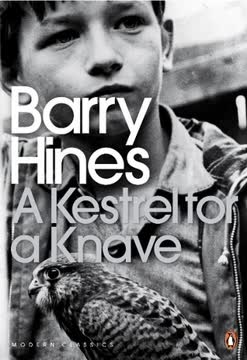
Plot Summary
Bleak Morning Rituals
Billy Casper's day breaks in cold, dark poverty. Sharing a cramped bed with his abusive older brother, Jud, Billy is roused by the blare of an alarm and casual violence. The lack of warmth, food, and tenderness is ever-present, the household ruled by neglect and sharp edges. Billy is the first up, mechanically starting the fire, scavenging for breakfast, and bracing himself against the chill and indifference. Even as the house momentarily stirs to life, Billy's family looks through him, not to him—their voices brisk, their affections as rare as daylight in their grey working-class North England town. His yearning for care is met with brusque commands and with Jud's fists, setting the tone for his lonely, defensive existence.
Running Errands, Empty Stomachs
Billy scrambles through the estate, collecting empty milk bottles before delivering newspapers for a pittance. Shortcuts and minor theft—an orange juice here, stolen eggs there—lighten his path, but so does hunger. His errand is a lifeline, and he leans on it to procure food at the expense of trust. The shopkeeper's suspicion, other adults' snide asides, and the humourless routine of labor swirl around Billy as he dodges accusations and weather, always with the hope of something more filling—both for stomach and soul—than what home offers. Each interaction is colored by class, expectation, or resignation, Billy always the outsider, always striving to get by.
Fights, Scraps, and Survival
At home and on the estate, confrontation shapes Billy's experience. Whether staving off his mother's irritable demands or navigating Jud's relentless bullying, Billy learns that violence and ridicule circle all children from his world. Fights over chores, over food, or simply over air escalate fast, while Billy's nimble dodges and darting escapes are his only reliable defense. At school, in the yard, and even at the kitchen table, power is often asserted through blows or threats. Yet Billy's resilience—his stubborn resistance to being subdued—emerges as his greatest asset, fueling his small rebellions and brief moments of self-assertion.
A Hawk's Discovery
In the edges of neglected fields and ancient ruins, Billy crosses from human despair to the promise of something untamed. Exploring a ruined monastery, he spots a kestrel, a wild hawk nesting in crumbling stones—her grace and ferocity a direct contradiction to everything stunted in his own life. Enchanted, Billy is drawn to the bird's independence, longing to share in its freedom. He dreams of finding, perhaps even raising, a creature attuned to no one's call but its own, a being as dignified and alive as he feels invisible and oppressed. The kestrel beckons, igniting Billy's first spark of true hope.
Stolen Knowledge
To bridge the chasm between longing and reality, Billy seeks a book on falconry but bureaucracy and poverty bar the way. The library demands paperwork and adult signatures—commodities Billy cannot supply—so he turns to theft, lifting a falconry manual from a shop. Scolded by Jud, mocked for his literacy, Billy clings to the stolen book like a talisman. Each evening, he pores over the complex, beautiful instructions, sounding out words and piecing together the secrets of flight, learning and believing for the first time that patience and skill might deliver him into a life different from what he knows. This secret study becomes his first education worth fighting for.
A Wild Companion
After a daring climb and careful waiting, Billy takes a kestrel chick from the monastery wall, choosing the strongest and most promising. Building a makeshift aviary in a battered shed, he devotes himself wholly to the hawk, whom he names Kes. Meticulously applying the manual's lessons on jesses, weights, and diet, Billy transcends the limits of his neglected education. Patient nights, gentle voices, and quiet coaxing mark the growth of mutual trust. Kes thrives, and Billy's skill grows, transforming both boy and bird. The kestrel becomes more than a pet—she is a mirror, a challenge, and the one creature in his world to return his affection, if only on wild terms.
Between Bullies and Birds
At school and in the yard, Billy is the perennial target, scorned by teachers and classmates for his apparent ignorance and poverty, yet carrying inside himself a pride secreted in the shed. Words like "dunce," and blows from the cane, do not break him—he remains stoic, taking solace in each hour spent with Kes. While others find status in gangs or violence, Billy's isolation shields something sacred: his hawk symbolizes both the fragility and power of his hopes. The contrast is painful, but clear—where human interaction wounds, the hawk inspires.
Shelter From the World
Billy's battered shed, hastily retrofitted for Kes, becomes a vivid symbol of refuge. Inside its patched walls, with whitewashed shelves and carefully arranged sand, Billy reigns as caretaker and companion. Here, the noise and threat of daily life recede. By candle or drafty daylight, Billy reads, plans, and speaks to Kes about everything adults ignore—his dreams, his frustrations, the small victories of learning to work with something so wild. The shed's smallness is a comfort, a rare space where Billy exerts meaningful control, sheltered, if temporarily, from a world too quick to crush sensitive things.
The Trials of School
At school, discipline is blunt, learning perfunctory, and life administered by unyielding rules and sticks. Billy is often late, inattentive, or physically exhausted; teachers like Gryce take out institutional frustrations on him and others, issuing canings and barrages of insults with mechanical regularity. Yet English teacher Mr Farthing, unexpectedly, listens and gives Billy the rare opportunity to speak about his hawk. For a brief moment, Billy's knowledge and passion command the classroom. But most school days are a gauntlet of humiliation, beating, and boredom, each day chipping at but never extinguishing Billy's resistant spirit.
Games Without Winners
Physical education is another arena of humiliation; Billy, lacking kit and inclination, is forced into ill-fitting shorts and made goalkeeper for teams who do not want him. The teacher, Sugden, uses football as both entertainment and means of enforcement, orchestrating matches where Billy is last picked, publicly mocked, and scapegoated for every loss. The chaotic games, with their sprawling slippery fields and relentless cold, epitomize the structural cruelty Billy endures. Yet in the cracks, a clownish resilience appears: Billy's quiet wit, his refusal to surrender pride entirely, and moments of empathy from a few classmates.
Pride and Performance
Mr Farthing visits Billy during one of his hawk-training sessions, and for the first time an adult witnesses his true capability. Billy's hands, usually clumsy from anxiety, become sure and skilled as he swings the lure and coaxes Kes to impressive flights. Mr Farthing is awed, not just by the bird but by the boy's subtle mastery—a revelation of intelligence and patience absent in the rest of his life. Billy's pride, stoked by genuine admiration, hints at what could be possible if his capabilities were recognized. For a brief time, compassion, respect, and achievement align in the open field, granting Billy a taste of validation and joy.
Dreams and Tall Stories
When asked to craft a "tall story" in English, Billy's writing reveals a deep longing for normalcy and unconditional love—a family with warmth, a mother who cares, a father who returns. His peers swap jokes, but Billy's story quietly exposes just how far his desires are from reality. At night, he dreams of triumph, casting Kes in dreams where she wins for him the admiration and worth the real world never grants. The line between fiction and aspiration blurs; Billy can imagine being valued, but cannot will it into being.
The Bet and the Blaze
Jud, ever the petty tyrant, entrusts Billy with a risky horse-racing bet. Billy, ambivalent and embittered by Jud's treatment, keeps the money instead and neglects to place the bet—a small, quiet rebellion. Ironically, the horses win, and Jud's rage at losing out on a magical windfall boils into violent, misplaced vengeance. Billy's fate is sealed not by deliberate malice but error—and the everyday currency of hope so often denied his family is cruelly snatched again, this time by Billy's own action. The storm to come is inevitable, and Billy is set up as both target and victim.
Hope in Flight
When everything else is bleak, Billy, Kes, and the open field combine to offer one more escape. Alone but exhilarated, Billy launches Kes into the air, handling her with surety and love. Their partnership stands as the singular evidence of Billy's capacity, understanding, and grace. In her flight, for a shining moment, Billy's own troubles leave the earth; he is no longer clumsy "Casper" but an artist, even a magician. This fleeting, private ecstasy underscores his growing self-worth, if only in secret and without witnesses.
Joy in the Lure
As Billy demonstrates his training to Mr Farthing, the kind teacher gives Billy the recognition he craves. Mr Farthing's interest grants a rare adult affirmation, and Billy is motivated to articulate the technical, emotional, and almost spiritual depth of working with Kes. For once, his skills are valued on their own terms; the hawk's wildness and Billy's guidance become symbols of agency and possibility. Yet the happiness is fragile, too dependent on luck and kindness to be safe—Billy senses even then that the world outside remains hostile.
Crushed Aspirations
The visit from the Youth Employment Officer becomes an epitome of society's disregard. Openly coded as a failure, Billy is offered no real paths forward. Apprenticeships are discussed, but everyone knows manual labor or the pit is his likely future—an echo of the generations before him. Billy, unable to name a single hope or hobby, caught between his secret achievements and the world's unseen barriers, feels his future narrowing to closure. Even the hawk, his one bright companion, remains unmentioned. Any chance for sustained escape begins to turn to dust.
The Hurt of Home
Jud's disappointment at the lost bet escalates into cruelty. In drunken, self-justifying rage, he attacks the only thing Billy cares for: Kes. The hawk, a stand-in for everything Billy loves and every hope he has dared nurture, is left dead in a dustbin. The small, tender trust built in the shed, and the promise it represented, is wrecked by Jud's hands. Billy, inconsolable and desperate, cradles the dead bird, torn between pleading and accusation. His mother shrugs with indifference—nobody will be punished, nothing will change. The weight of grief is immense, the house colder than ever.
Loss in the Rain
Billy, robbed of everything hopeful, flees into the rain-soaked estate, cradling Kes's body in numb hands. He buries the hawk alone in the field where their partnership had once soared. His journey through the town—past shuttered shops, through derelict cinemas, old routes of happier childhood memories—becomes a roam through defeat and silence. No one looks for him. The brief, fierce joy of the hawk's wild flight is utterly at odds with the grinding world of adults and institutions; optimism flickers out. By the end, even in sleep, Billy finds only the absence of what made him feel alive, a world that remains oblivious to his worth or his loss.
Analysis
A Kestrel for a Knave stands as a sharp, emotionally resonant exploration of working-class youth in northern England, exposing the machinery of social, familial, and institutional oppression. Billy Casper's life is circumscribed by neglect, poverty, and routine violence from cradle to schoolroom, rendering moments of joy or achievement both miraculous and fleeting. The book's major lesson is how systems—family, education, class, employment—conspire, often unwittingly, to extinguish individual hope and difference. Billy's capacity for care and learning, revealed in secret through his devotion to the kestrel, is invisible to those in power, a scathing critique of a society designed to sort, punish, and forget its most vulnerable. Yet the novel resists sentimentality by showing Billy's defiance, resourcefulness, and the brief transcendence available in loving and training a creature as wild and proud as the dreams Billy dares to hold. In modern contexts, the story retains urgent relevance—a mirror for every place where potential is circumscribed by background and fate, and a call to compassion for overlooked, misunderstood children whose talents flower far from society's gaze.
Review Summary
People Also Read
Characters
Billy Casper
Billy Casper is the novel's heart—a thin, undernourished boy battered by poverty, neglect, and derision. Existing at the margins of both family and school, Billy is isolated not just physically but emotionally, his vulnerabilities met with violence or mockery from brother Jud and indifference from his mother. Despite these hardships, Billy's core is fiercely resilient and sensitive. His encounter with the kestrel, and his subsequent devotion to its training, reveal a deep well of intelligence, patience, and longing for communion. The bird becomes both a surrogate for everything Billy lacks—a sense of purpose, pride, and mutual respect—and a testament to untapped talents the world refuses to see. Billy's journey is one of striving for dignity against crushing social determinism, where moments of joy are fleeting and always threatened by the return of brutality.
Jud Casper
Jud, Billy's older half-brother, is the classic working-class antagonist—the product and perpetuator of violence. Early forced into labor down the coal mines, terrorized by his own routine and lacking power elsewhere, Jud asserts himself at home through bullying and humiliation. His relationship with Billy is defined by aggression, envy, and casual sadism; yet there are hints of begrudging kinship, moments when he refers to shared hardship and family bonds. Jud's rage over the lost betting windfall—taken out on Kes—reveals his own desperation, a scrambled attempt to seize pleasure or status amid his own suffocating reality. Psychological analysis suggests Jud lashes out because he cannot envision compassion or hope for himself, locked in a cycle of deprivation and retribution.
Mrs Casper (Billy's mother)
Mrs Casper is a figure of exhaustion and self-concern, her own aspirations long since defeated by poverty and social limits. She offers little emotional support to Billy, seeing his problems as nuisances and his needs as added burdens. Her forays into affection are transactional or half-hearted; she is often absent, distracted by transient relationships and struggles to keep the home afloat. Her responses to conflict—usually shouts, threats, or indifference—betray a woman numbed by disappointment. Yet her inability to engage is less an expression of cruelty than of learned helplessness; her love, such as it is, is obscured by her survival tactics.
Kes (the kestrel)
Kes, the kestrel, is both literal and symbolic—a physically wild, sharp-eyed raptor and a living emblem of freedom. For Billy, Kes represents everything absent in his own life: dignity, self-reliance, and untamable spirit. The bird's presence changes Billy, evoking previously unseen discipline, tenderness, and ambition. Psychologically, Kes is a projection of Billy's longing to soar above the limitations imposed on him by society and family. When Kes is killed, it is not simply the loss of a bird, but the destruction of the only part of Billy that was unbroken, unowned.
Mr Farthing
Mr Farthing, Billy's English teacher, is a rare adult who listens and responds to Billy as an individual, recognizing intelligence and passion where others see a troublesome boy. His classroom allows Billy to voice his knowledge and pride—especially about Kes—transforming a typically hostile environment into a fleeting sanctuary. Farthing's presence hints at what education could achieve in nurturing potential; he stands as a model of the positive power of authority when mixed with curiosity and care. For Billy, Mr Farthing is both mentor and witness, validating abilities that otherwise would go unrecognized.
Mr Gryce
Mr Gryce is the iron-fisted head of the school, embodying all the bureaucratic indifference and violence of the institution. For him, discipline is paramount—students like Billy are condemned as hopeless troublemakers, fit only for humiliation and corporal punishment. Gryce's worldview is hierarchical and fatalistic; he blames "boys these days" for all disorder, never pausing to question the systemic forces at play. His impersonal cruelty is less about specific malice than the workings of the institution he maintains, emphasizing how systems can grind down individuality through ritualized violence.
Mr Sugden
Mr Sugden presides over physical education, using sport as both entertainment and social control. Quick with sarcasm and derision, he publicly singles out Billy for ridicule, cementing the boy's outsider status. Sugden's cruelty is theatrical but also deeply internalized—he thrives on the visible pecking order sport and punishment create. In the novel's schema, Sugden stands for the pettiness and power-worship that infect all levels of the system; his glee in wielding authority mirrors Gryce's but with more personal spite.
MacDowall
MacDowall is a fellow student and frequent tormentor of Billy, channeling the school's coded hostilities into physical bullying and psychological needling. Like Jud, MacDowall is shaped by scarcity and the relentless competition for status; picking on Billy shores up his own fragile position. Their clashes are emblematic of how children internalize adult power relations and mirror society's divisions. Yet MacDowall is himself vulnerable, reduced to tears when authority targets him in turn—a reminder that bullying is cyclical, driven by the anxiety of not being at the bottom.
Porter
Porter owns the corner shop where Billy works his paper route. Watchful and condescending, Porter embodies the prejudice directed at working-class youth, especially those from "poor estates." His constant suspicion and warnings signal to Billy his outsider status in all adult spheres. Symptomatic of wider societal distrust, Porter's small acts of exclusion and accusation are obstacles Billy learns to navigate with caution but also with resentment.
The Youth Employment Officer
The Youth Employment Officer who interviews Billy is simultaneously well-meaning and callous—his advice generic, his attention elsewhere, his assumptions poisoned by class and institutional expectation. The interaction is emblematic of systemic indifference—boys like Billy are slotted into roles determined for them by birth and postcode, with choice an illusion. The officer's inability to see Billy's strengths and interests beyond "manual work" cements the inevitability of the cycle Billy is trapped within.
Plot Devices
Parallel between Hawk and Boy
The central plot device is the mirroring of Billy's efforts to train and nurture Kes with his own struggle to claim a sense of worth and autonomy. Billy's growth as a falconer parallels the bird's progress from frightened chick to powerful hunter: both exist uneasily between captivity and freedom. The bird's wildness, respected rather than tamed, represents the resilient, untamable part of Billy, even as his family and the system seek to domesticate or destroy it. The story's emotional arc is thus structured by the progress of training—the rise and abrupt fall echoing Billy's fleeting hope and inevitable disenchantment.
Social Realism and Dialect
The novel employs Yorkshire dialect and vivid social realism to immerse readers in Billy's world. The everyday details—grim routines, institutional routines, harsher school and home life—are captured in spare, unromantic prose, deeply colored by local speech patterns. This anchors the story's authenticity while also limiting Billy's opportunities; the language of place encodes class, aspiration, and exclusion. The realism makes the rare moments of transcendence more poignant, the pain more immediate.
Human and Animal Symbolism
Kes functions as both an independent character and a powerful symbol. Her flight, spirit, and dignity represent everything systematically denied to Billy—respect, beauty, agency. The community's inability to value the hawk (and, by extension, Billy's mastery with her) becomes an indictment of the system itself. When Kes is killed, the symbolism is undeniable: it is not just a pet lost, but all that was possible for Billy, extinguished by forces arrayed against hope and difference.
Institutional Violence
The novel's structure employs foreshadowing and repetition to drive home the inevitability of defeat. Billy's treatment by Jud and school authorities is a microcosm of the broader institutional violence that stalks him—the same patterns repeat in classrooms, playing fields, workplaces, and homes. The adult world's failures are mirrored in children's interactions, establishing a cyclical, self-perpetuating pattern of abuse and resignation. Moments of joy are always shadowed by the coming storm; loss is continually foreshadowed by the warning signs of the system's indifference.
Irony and Reversal
Events often play out with cruel irony—Billy's one act of rebellion against Jud (not placing the bet) coincides with Jud's horses winning, leading to Kes's death. Each hope is quickly reversed: skill met with neglect, pride with humiliation, and burgeoning possibility with abrupt loss. The structure repeatedly lures both Billy and the reader into thinking escape or recognition is possible, only to wrench it away, highlighting the harsh realities of class and fate.
Symbolic Objects and Settings
The battered shed, the lure, the lure's destruction, and the derelict cinema are all used symbolically to represent refuge, ambition, and lost dreams. The shed is the site of creation and hope; the lure a tool for shaping possibility; the cinema, when broken open, becomes the graveyard of fantasy—a former palace of dreams now empty, echoing Billy's own dashed hopes.








































