
Plot Summary
Midsummer Schemes and Scandals
In the waning days of the London season, Verbena Montrose navigates the treacherous waters of Regency society, her family's fortunes in tatters and her prospects for marriage dwindling. At a lavish picnic, she fends off the predatory advances of Lord Newham and outmaneuvers rivals with her sharp wit. Amidst the games and gossip, she meets Miles McDonald, a charming but impoverished Scottish gentleman, and Étienne Charbonneau, a French tailor with a secret. Verbena's keen eye for intrigue and her hunger for security set the stage for a season where every conversation is a battlefield, and every alliance could mean survival or ruin.
A Proposal of Convenience
After a chance meeting in Bloomsbury, Verbena discovers Étienne's heartbreak and the precariousness of his position as a queer man in a judgmental society. Recognizing their mutual need for protection—her from poverty, him from scandal—they hatch a plan: a marriage of convenience. Their union will be one of friendship, not passion, allowing each to pursue their own desires discreetly. The arrangement is both a lifeline and a gamble, as they must convince the world of their romance while hiding the truth that could destroy them both.
The Art of Arrangement
Verbena and Étienne begin their public courtship, orchestrating outings and planting whispers to shape society's perception. Their partnership is a performance, each move calculated to secure their future. Verbena's strategic mind is in full force as she navigates tea parties, archery outings, and the ever-present threat of gossip. Yet, beneath the surface, the emotional toll of living a lie—and the longing for genuine connection—grows. The stage is set for new players to enter, and for the boundaries between truth and performance to blur.
Gossip, Poetry, and Peril
The appearance of a biting poem by the mysterious Flora Witcombe throws Verbena's plans into jeopardy. The verses, thinly veiled references to Verbena and Étienne's arrangement, threaten to expose their secret. Verbena confronts Flora at the Calliope Club, a haven for artists and outsiders, and finds herself both infuriated and intrigued by the poetess. Their verbal sparring reveals a mutual fascination, and a dangerous new possibility: that the greatest threat to Verbena's future may also be her greatest temptation.
The Poetess Unmasked
Flora Witcombe, celebrated poetess, is revealed to be William Forsyth—a trans, genderfluid writer living a dual life. Flora's poetry is both a shield and a confession, her public persona a mask for private longing. When Verbena and Flora meet, sparks fly—intellectually, emotionally, and physically. Their connection is immediate and electric, but fraught with risk. As Flora navigates her own desires and the dangers of exposure, she and Verbena begin a dance of attraction and denial that will shape both their fates.
New Friendships, Old Wounds
Verbena's world is rocked by the loss of her loyal maid, Betsy, and the relentless pressure from her family to secure a match. Flora, too, is haunted by the pain of living in hiding and the fear of losing herself. Their growing friendship offers solace, but also stirs old wounds—memories of betrayal, the ache of unfulfilled longing, and the ever-present threat of being found out. In the quiet moments between schemes, they find comfort in each other, even as the world conspires to keep them apart.
Secrets in the City
As rumors swirl and alliances shift, Verbena and Flora's relationship deepens. Miles confides his own secret—his love for men—and becomes an unexpected ally. Étienne's past threatens to catch up with him, and the fragile web of lies grows ever more tangled. The city is both a stage and a trap, offering moments of freedom and constant peril. Each character must decide how much of themselves they are willing to risk for love, security, and the hope of something more.
Courtship and Contradictions
The public courtship between Verbena and Étienne continues, but the emotional stakes rise as real feelings—jealousy, longing, fear—intrude on the performance. Flora and Verbena's connection intensifies, but both are held back by secrets and the impossibility of their situation. William, as Flora, struggles with the pain of loving someone who cannot see the whole truth. The boundaries between roles—lover, friend, spouse, self—become increasingly porous, and the cost of maintaining the façade grows heavier.
Confessions and Complications
A disastrous bonfire party at Plas Tân brings simmering tensions to a head. Miles is injured, Étienne's reputation is threatened by rumors of a tryst, and Flora and Verbena's relationship reaches a breaking point. Confessions are made—some true, some half-spoken—and the consequences are immediate. The safety of the arrangement is shattered, and each character must confront what they truly want, and what they are willing to lose to get it.
The Call to Wales
With London growing too dangerous, the group flees to Plas Tân, an artists' retreat in Wales. There, among kindred spirits and away from the prying eyes of society, they find a brief respite. The retreat is a place of possibility, where new identities can be tried on and old wounds can begin to heal. But even in this sanctuary, the past is never far behind, and the future remains uncertain.
Retreat of Hearts
At Plas Tân, the boundaries between friendship and love blur further. Verbena and Flora's attraction becomes undeniable, but the realities of their lives—family, reputation, the need for security—loom large. Étienne and Miles find their own connection deepening, while William struggles with the pain of loving in secret. The retreat offers a glimpse of what could be, but also a reminder of what must be left behind.
Revelations at Plas Tân
A masquerade ball becomes the crucible for revelation. Flora's true identity is discovered by Verbena, and the two confess their love in a moment of stolen intimacy. But the realities of their world—Verbena's impending marriage to Étienne, the impossibility of living openly—force them to part. The pain of separation is acute, but the knowledge that they have been truly seen, and truly loved, lingers.
The Dance of Desire
On the eve of her wedding, Verbena and Willa (Flora/William) share a night of passion and vulnerability. Their union is both a consummation and a farewell, a moment of wholeness in a world that demands division. They promise to remember, to carry each other in their hearts, even as duty and circumstance pull them apart. The morning brings tears, but also a sense of peace—a knowledge that, for one night, they were truly themselves.
Masks and Mirrors
At the church in Eden, the carefully constructed arrangement unravels. Étienne, unable to deny his love for Miles, calls off the wedding. Verbena, emboldened by love and loss, refuses to go through with the charade. In a flurry of confusion and chaos, the couples elope—not with their intended partners, but with the ones they truly love. The escape is both comic and triumphant, a rejection of society's rules in favor of their own happiness.
The Bonfire's Blaze
The group flees north to Scotland, where the laws are kinder and the possibilities for reinvention are greater. In the wild beauty of the Highlands, they find a new home—a place where they can live openly, love freely, and build the lives they have always dreamed of. The journey is both an ending and a beginning, a leap into the unknown fueled by hope and courage.
Aftermath and Realizations
In their new home, Verbena and Willa (now embracing her truest self) create a life together, surrounded by friends who have also found love and acceptance. The cottage by the burn becomes a haven, a place where secrets are no longer necessary and happiness is possible. The past is not forgotten, but it is no longer a prison. Together, they write new stories—of love, of survival, of joy.
The Wedding That Wasn't
The failed wedding becomes legend, a symbol of defiance and self-determination. Verbena and Willa's union, though unconventional, is celebrated by those who matter. The world may never fully understand, but within their chosen family, they are seen and cherished. The lessons of the past—about honesty, courage, and the power of love—become the foundation of their future.
Flight to Freedom
In Scotland, the group finds not just safety, but a community of like-minded souls. The estate becomes a sanctuary for those who have been cast out or forced to hide. Verbena and Willa, Étienne and Miles, and their friends build a life that is both ordinary and extraordinary—a testament to the power of chosen family and the possibility of happiness, even in a world that would deny it.
A New Home, A New World
Settled in their cottage, Verbena and Willa embrace the quiet joys of daily life—writing, loving, and building a future together. Their home is filled with laughter, creativity, and the warmth of acceptance. The past is a story they tell each other, a reminder of how far they have come. The future is theirs to shape, together.
Epilogue: The Cottage by the Burn
Years later, Verbena and Willa reflect on the journey that brought them to their cottage by the burn. Surrounded by friends, cats, and the beauty of the Scottish countryside, they find peace in the ordinary and the extraordinary. Their love, once forbidden, is now the foundation of a life filled with meaning and joy. The stories they write—of themselves, of each other, of the world they have built—are their legacy, a testament to the power of truth, courage, and love.
Analysis
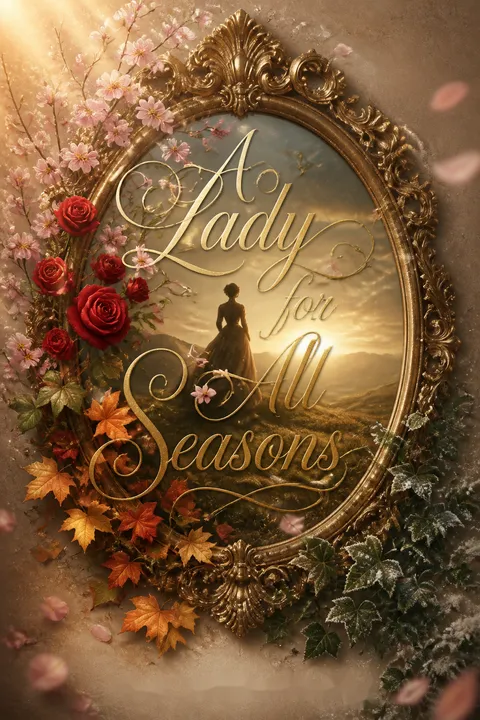
A Lady for All Seasons is a dazzling, subversive reimagining of the Regency romance, queering the genre with wit, heart, and radical empathy. At its core, the novel is about the courage to live authentically in a world that punishes difference—whether that difference is gender, sexuality, class, or simply the refusal to conform. Through its intricate web of marriages of convenience, secret identities, and chosen families, the book interrogates the costs of survival and the possibilities of joy. The characters' journeys—from self-preservation to self-acceptance, from loneliness to love—offer a blueprint for resistance and hope. The narrative insists that happiness is not found in the approval of society, but in the creation of spaces where one can be fully seen and cherished. In a modern context, the novel resonates as a celebration of queer and trans joy, the power of community, and the necessity of rewriting the stories we inherit. Its lesson is clear: the world may be hostile, but love—messy, brave, and true—can carve out a home even in the most unlikely places.
Review Summary
Reviewers overwhelmingly praise A Lady for All Seasons as a delightful, emotionally rich queer Regency romance. Standout elements include the genderfluid protagonist Flora/William, witty banter, slow-burn tension, and the comedic presence of Lord Byron. Many appreciate TJ Alexander's sensitive handling of gender identity within historical constraints. Some criticism notes farcical middle sections, pacing issues, and an overly convenient ending. Comparisons to Bridgerton, Emma, and Shakespeare's comedies are frequent. The found family elements and satisfying HEA resonate strongly, earning an overall rating of 4.19/5.
People Also Read
Characters
Verbena Montrose
Verbena is a fiercely intelligent, ambitious woman whose wit and social acumen are her greatest assets in a world that offers her few choices. Raised to believe marriage is her only path to security, she is both a product and a critic of her society's expectations. Verbena's relationships are shaped by necessity as much as desire—her friendship with Étienne is born of mutual need, while her connection with Flora/Willa is a revelation of genuine passion and vulnerability. Verbena's psychological journey is one from self-preservation to self-acceptance, learning to risk her heart and redefine what happiness means. Her development is marked by increasing courage: first in manipulating society's rules, then in breaking them entirely to claim her own joy.
Flora Witcombe / William Forsyth / Willa
Flora is the celebrated poetess whose sharp verses both shield and expose her. In private, she is William Forsyth, a gothic novelist, and ultimately Willa—a person who exists beyond the binary, embodying both masculine and feminine. Flora/Willa's journey is one of self-discovery and self-acceptance, navigating the dangers of living authentically in a hostile world. Her relationship with Verbena is transformative, offering both the terror and ecstasy of being truly seen. Willa's psychological complexity is rooted in the tension between visibility and safety, longing and fear. Her development is a movement from hiding to embracing her full self, and from loving in secret to building a life where she can be loved as she is.
Étienne Charbonneau
Étienne is a French tailor whose artistry and kindness set him apart in English society. As a queer man, he lives with the constant threat of exposure and ruin. His friendship with Verbena is a lifeline, offering both protection and companionship. Étienne's emotional arc is one of heartbreak, hope, and ultimately liberation—finding love with Miles and the courage to claim it. His development is marked by a growing sense of self-worth and the realization that he deserves happiness, even if it means defying the world's expectations.
Miles McDonald
Miles is a Scottish gentleman whose apparent poverty masks a deeper complexity—and, ultimately, hidden wealth. Open about his love for men, he becomes a confidant and ally to both Verbena and Étienne. Miles's journey is one of self-acceptance and quiet courage, choosing love over duty and building a home where others can find refuge. His relationship with Étienne is tender and transformative, offering both men the chance to be fully themselves.
Mrs. Montrose
Mrs. Montrose is Verbena's mother, a woman hardened by disappointment and fear. Her relentless pressure on Verbena to marry well is both a survival strategy and a source of deep pain. She represents the internalized misogyny and class anxiety of her era, unable to see her daughter's worth beyond her marriage prospects. Her relationship with Verbena is fraught, marked by misunderstanding and emotional distance.
Lord Byron
Byron is both a figure of ridicule and admiration, embodying the excesses and freedoms denied to others. His presence at key moments—especially the masquerade and the wedding—serves as a catalyst for truth and rebellion. Byron's flamboyance and disregard for convention offer both comic relief and a model of unapologetic selfhood.
Betsy
Betsy is Verbena's childhood companion and maid, dismissed when the family's fortunes fall. Her loss is a turning point for Verbena, highlighting the precariousness of women's lives and the cost of survival in a rigid society.
Miss Hollyhock
Miss Hollyhock is both a confidante and a competitor, embodying the double-edged nature of female friendship in a world where women are pitted against each other. Her role is to reflect the pressures and hypocrisies of the ton, and to serve as a foil to Verbena's ambitions.
Anne and Bette (of Plas Tân)
Anne and Bette are the unconventional women who run Plas Tân, offering sanctuary to artists and outsiders. Their partnership is a vision of what is possible outside the bounds of traditional marriage—a chosen family built on love, creativity, and mutual support. They serve as mentors and inspirations to the younger characters, showing that happiness can be found on one's own terms.
Mr. Montrose
Mr. Montrose is a ghostly presence, his financial ruin and emotional absence shaping Verbena's desperation. He represents the failures of the patriarchal system, leaving his daughter to bear the consequences of his mistakes.
Plot Devices
Marriage of Convenience
The central plot device is the marriage of convenience between Verbena and Étienne—a union designed to protect them both from societal ruin. This arrangement allows for the exploration of themes of performance, authenticity, and the limits of societal roles. It also serves as a crucible for the development of genuine relationships—both romantic and platonic—that defy the expectations of their world.
Dual Identities and Masks
Flora/William/Willa's dual (and ultimately trinary) identity is both a literal and metaphorical mask, allowing for a nuanced exploration of gender, desire, and the longing for authenticity. The masquerade ball, the use of pseudonyms, and the constant negotiation of identity are woven throughout the narrative, culminating in moments of revelation and acceptance.
Gossip and Reputation
Gossip is both a tool and a threat—used by Verbena to shape her fate, and by others to endanger her. The ever-present risk of scandal drives the plot, forcing characters to make impossible choices and highlighting the precariousness of life on the margins.
Chosen Family and Sanctuary
Plas Tân and, later, the Scottish estate become sanctuaries for the characters—a place where they can build chosen families and live authentically. These spaces are both literal and symbolic, representing the possibility of happiness beyond the boundaries of convention.
Letters and Written Word
Letters, poems, and novels are central to the narrative, serving as vehicles for confession, connection, and self-expression. The act of writing becomes a means of survival and resistance, allowing characters to claim their own stories and shape their destinies.
Foreshadowing and Narrative Structure
The novel employs foreshadowing through gossip, poetry, and the characters' own anxieties, building tension toward key revelations. The structure moves from the constriction of London society to the freedom of the countryside, mirroring the characters' journeys from repression to self-acceptance.
Download PDF
Download EPUB
.epub digital book format is ideal for reading ebooks on phones, tablets, and e-readers.








































