
Plot Summary
Roots in the Wilderness
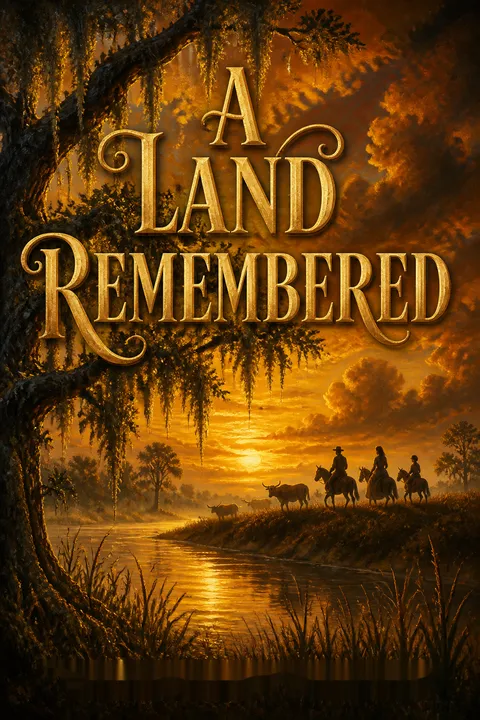
In the midst of the untamed Florida wilderness, Tobias MacIvey, his wife Emma, and their young son Zech carve out a life from the land. Fleeing poverty in Georgia, they settle in the scrub, facing hunger, wild animals, and the relentless elements. Their days are marked by backbreaking labor—building a home, planting meager crops, and learning to survive off the land. The family's resilience is tested by near-starvation, the loss of livestock to predators, and the constant threat of violence from both nature and men. Yet, through hardship, they forge a bond with the land and each other, laying the foundation for a legacy that will span generations. The wildness of Florida shapes them, instilling a fierce independence and a deep connection to the place they now call home.
Bonds of Blood and Land
As the MacIveys struggle to endure, they encounter Seminole Indians fleeing persecution, forging a fragile alliance that brings mutual aid and understanding. Tobias's act of kindness—feeding starving Seminoles—sows seeds of friendship that will echo through generations. The family's isolation is broken by violence when cow hunters and soldiers threaten both settlers and natives, revealing the brutality of frontier life. Through shared hardship, Tobias learns the value of trust and the necessity of defending his family and land. The MacIveys' world expands as they dream of catching wild cattle, yearning for prosperity. The land itself becomes both adversary and ally, demanding sacrifice but offering hope. Blood ties and the bonds of shared struggle become the glue that holds the family together in a world where survival is never guaranteed.
Survival and Sacrifice
The Civil War brings new dangers, as Tobias is conscripted to drive cattle for the Confederate army, leaving Emma and Zech to fend for themselves. Alone, they face bears, hunger, and the constant threat of violence. Zech, still a boy, is forced to grow up quickly, defending the homestead and proving his mettle. Tobias returns, changed by hardship and violence, but the family's reunion is bittersweet—losses have mounted, and the land has taken its toll. The MacIveys' resilience is tested again and again, as they are driven from their home by marauders and forced to seek refuge deeper in the wilderness. Each sacrifice—of comfort, safety, and even innocence—cements their determination to endure. The family's story becomes one of adaptation, as they learn to bend without breaking, always seeking a way forward.
The Gathering Storm
With the war's end, the MacIveys begin to prosper, catching wild cattle and building a modest herd. Their fortunes rise as they drive cattle across the state to Punta Rassa, selling to Cuban traders. The family grows, and new alliances are formed with freed slaves and other settlers. Yet, prosperity brings new challenges—jealousy, rustlers, and the encroachment of civilization. The land, once a sanctuary, becomes a battleground as fences go up and open range disappears. The MacIveys must navigate shifting loyalties and the ever-present threat of violence. Ambition drives them to expand—planting orange groves and acquiring more land—but each step forward is shadowed by the storms of change. The family's unity is tested as old ways clash with new realities, and the dream of a land remembered begins to slip away.
Cattle, Conflict, and Change
As the MacIvey herd grows, so does the conflict with other cattlemen, rustlers, and the forces of modernization. Zech comes of age, learning the ways of the land and the complexities of leadership. The family's alliances with Seminoles and freedmen deepen, but so do the divisions within their own ranks. The open range is threatened by barbed wire and land speculators, and the MacIveys must fight to protect what they have built. Violence erupts as they confront rustlers and defend their herds, and the cost is measured in blood and loss. The family's identity is forged in these battles, but the price is high—innocence is lost, and the land itself begins to change. The MacIveys are forced to reckon with the consequences of their ambition and the relentless march of progress.
The Price of Progress
With success comes transformation. The MacIveys' orange groves flourish, and their cattle empire expands, but the land that once sustained them is altered forever. Draining swamps, clearing forests, and fencing pastures bring wealth but also destruction. The family's connection to the wild Florida they once knew is severed, replaced by a landscape of profit and loss. Zech, now the patriarch, struggles with the moral cost of progress, haunted by the knowledge that their prosperity comes at the expense of nature and the people who once called the land home. The Seminoles are pushed further into the swamps, and the delicate balance between man and nature is shattered. The MacIveys' legacy is secured, but at what cost? The land remembers, even as those who shape it begin to forget.
Love Across Divides
Zech's life is marked by love that transcends boundaries—his marriage to Glenda, a strong and capable partner, and his forbidden relationship with Tawanda, a Seminole woman. These loves produce two sons, Sol and Toby, each a reflection of their parents' worlds. The family is torn between cultures, and Zech is forced to navigate the complexities of loyalty, secrecy, and belonging. The pain of divided love is mirrored in the land itself, as old ways are lost and new ones take root. The MacIveys' story becomes one of reconciliation and regret, as they struggle to honor both their heritage and their hopes for the future. The bonds of blood are tested, and the choices made in love echo through generations, shaping the destiny of the family and the land they call home.
Loss and Legacy
Tragedy strikes the MacIveys again and again—Emma's sudden death, Glenda's violent end, the loss of children and friends. Each loss leaves a scar, but also a lesson. The family gathers to mourn, to remember, and to find meaning in the face of sorrow. The graves beneath the oaks become a testament to endurance and love, a reminder of what has been sacrificed for the sake of survival and progress. Zech, burdened by grief, turns his energy to building a legacy for Sol, determined that the pain of the past will not be in vain. The family's story becomes one of memory and hope, as they seek to honor those who came before and to build a future worthy of their sacrifices.
The Land Transformed
Sol inherits a world transformed by his forebears—a land of orange groves, fenced pastures, and burgeoning cities. He expands the family's holdings, draining swamps and turning wilderness into farmland. The MacIvey name becomes synonymous with progress and prosperity, but the cost is the loss of the wild Florida that once was. Sol's relationships—with his half-brother Toby, with the land, and with the memory of his family—are shaped by the tension between preservation and development. The land, once a source of life and meaning, becomes a commodity, and the consequences of this transformation are felt in the disappearance of animals, the displacement of people, and the fading of memory. The MacIveys' triumph is bittersweet, as the land they remember is lost to the future they have built.
The End of the Open Range
The era of open range and cattle drives ends as railroads, barbed wire, and land speculation reshape Florida. The MacIveys adapt, turning to new methods and new markets, but the spirit of the frontier is gone. The family's story becomes one of adaptation and survival in a world that no longer values the skills and knowledge that once defined them. The old ways are remembered with nostalgia, but the demands of the present require change. The MacIveys face new challenges—economic downturns, hurricanes, and the relentless pressure of urbanization. The land that once offered freedom and opportunity is now parceled and sold, and the family must find new ways to define themselves and their legacy.
The Rise and Fall
Sol rides the wave of Florida's land boom, amassing wealth and influence as Miami and the surrounding areas explode with growth. The MacIvey fortune grows, but so does the sense of disconnection from the land and the values that once guided the family. The boom ends in disaster—hurricanes, economic collapse, and personal loss. Sol's world is shattered by the death of Bonnie in the Okeechobee hurricane, and the emptiness of success becomes clear. The family's rise is matched by a fall, as the consequences of unchecked ambition and the destruction of nature come home to roost. The MacIveys are left to reckon with what has been gained and what has been lost, both for themselves and for the land they once loved.
Memory and Reckoning
In his later years, Sol is haunted by memories of his family, the land, and the choices that have shaped his life. He sees the consequences of progress—the destruction of the wilderness, the displacement of people, and the loss of meaning. Sol seeks to make amends, setting aside land for preservation and reflecting on the lessons of his ancestors. The story becomes one of reckoning, as Sol confronts the truth of his family's legacy and the cost of forgetting the land. The graves beneath the orange trees, the vanished forests, and the fading memories become symbols of both loss and hope. Sol's final acts are those of remembrance and redemption, as he seeks to honor the land and the people who made his life possible.
The Last MacIvey
As the last of his line, Sol returns to the places of his youth, seeking peace and closure. He reflects on the journey of his family—from wilderness to empire, from survival to prosperity, from memory to forgetting. The land, once wild and free, is now tamed and transformed, but the spirit of the MacIveys endures in the stories, the graves, and the preserved wild places. Sol's final days are spent in contemplation, honoring the past and accepting the end of an era. The story closes with a sense of both loss and fulfillment, as the land remembers what the people have forgotten, and the legacy of the MacIveys becomes part of the enduring memory of Florida itself.
Analysis
A Land Remembered is a sweeping meditation on the transformation of Florida and the American South, told through the lens of one family's journey from poverty to prominence. At its heart, the novel is a lament for a lost world—a wilderness teeming with life, possibility, and danger, gradually tamed and ultimately destroyed by the very people who depend on it. The MacIveys' story is both uniquely Floridian and universally American, capturing the tensions between survival and ambition, tradition and change, memory and forgetting. The novel interrogates the costs of progress, asking what is lost when land becomes commodity and when the bonds of community and nature are severed. Through its vivid characters and evocative storytelling, A Land Remembered invites readers to reckon with the legacies of violence, resilience, and hope that shape both people and places. Its enduring lesson is that the land remembers—even when those who shape it do not—and that true legacy lies not in wealth or power, but in the stories, relationships, and wild places we choose to honor and preserve.
Review Summary
A Land Remembered receives an overall rating of 4.48/5, with readers praising its vivid portrayal of Florida's transformation from wilderness to modern development. Many appreciate the multigenerational MacIvey family saga and its rich historical detail about 19th-century Florida. Common criticisms include flat character development, unnatural dialogue, and rushed pacing in the final sections. Native Floridians particularly connect with the book, often calling it essential reading for anyone in the state. Some readers find the characters overly idealized in their treatment of Black and Indigenous people.
People Also Read

Characters
Tobias MacIvey
Tobias is the indomitable founder of the MacIvey dynasty, a man forged by hardship and driven by a fierce will to survive. His journey from impoverished Georgia farmer to Florida cattleman is marked by sacrifice, ingenuity, and a deep connection to the land. Tobias's relationships—with his steadfast wife Emma, his son Zech, and the Seminole and freedmen he befriends—reveal a man capable of both tenderness and violence. He is haunted by the costs of progress and the violence inherent in taming the wilderness, yet he remains committed to providing for his family and building a legacy. Tobias's psychological complexity lies in his struggle to balance ambition with conscience, tradition with change, and love with loss. His death marks the end of an era, but his spirit endures in the land and the family he shaped.
Emma MacIvey
Emma is the heart of the MacIvey family, embodying resilience, compassion, and quiet wisdom. Her unwavering support sustains Tobias and Zech through years of hardship, and her practical skills—cooking, healing, and managing the household—are essential to the family's survival. Emma's strength is both physical and emotional; she endures loss, danger, and deprivation without complaint, always placing her family's needs above her own. Her relationships—with her husband, son, and the extended family of freedmen and Seminoles—are marked by empathy and generosity. Emma's death is a profound loss, leaving a void that shapes the family's future. Her legacy is one of love, endurance, and the quiet heroism of everyday life.
Zech MacIvey
Zech is the bridge between the old and new, the wild and the civilized, the white and the Seminole. Raised in the wilderness, he inherits his father's toughness and his mother's compassion. Zech's life is defined by dualities—his marriage to Glenda and his love for Tawanda, his role as cattleman and steward of the land, his loyalty to family and his empathy for the Seminoles. He is introspective, haunted by the costs of progress and the pain of divided loyalties. Zech's psychological journey is one of reconciliation—seeking to honor both his heritage and his hopes for the future, even as he is forced to make impossible choices. His death marks the passing of the frontier spirit and the beginning of a new, more complicated era.
Glenda MacIvey
Glenda is Zech's beloved wife, a woman of intelligence, humor, and adaptability. She brings new perspectives to the MacIvey family, encouraging education, innovation, and a broader view of the world. Glenda's relationship with Zech is passionate and supportive, but also marked by tragedy—the loss of children, the challenges of frontier life, and her own violent death. She is a nurturing mother to Sol and a bridge between the old ways and the new. Glenda's psychological depth lies in her ability to balance love and independence, tradition and progress, and her influence shapes the family's evolution.
Tawanda Cypress
Tawanda is Zech's Seminole lover and the mother of his son Toby. She embodies the resilience and wisdom of her people, offering Zech a connection to the land and a perspective outside the white settler experience. Tawanda's relationship with Zech is passionate but fraught with secrecy and the pain of divided worlds. She is fiercely independent, choosing to raise Toby within her culture and on her terms. Tawanda's psychological complexity is rooted in her ability to love across boundaries while remaining true to herself and her people. Her death is a profound loss, symbolizing the erasure of a way of life and the costs of cultural collision.
Sol MacIvey
Sol is the product of both Zech's worlds—raised in privilege but haunted by the legacy of hardship and loss. He is ambitious, intelligent, and driven to expand the family's holdings, transforming wilderness into farmland and cities. Sol's relationships—with his father, his half-brother Toby, and the women in his life—are marked by both love and conflict. He is torn between honoring the past and embracing the future, and his psychological journey is one of reckoning with the costs of progress. Sol's later years are marked by regret and a search for redemption, as he seeks to preserve what remains of the land and the family's legacy.
Toby Cypress
Toby is the son of Zech and Tawanda, raised among the Seminoles and embodying the fusion of two worlds. He is proud, skilled, and deeply connected to the land, but also marked by the pain of being an outsider in both cultures. Toby's relationship with Sol is fraught with misunderstanding and conflict, reflecting the broader tensions between progress and preservation, white and native, past and future. Toby's psychological depth lies in his struggle for identity and belonging, and his anger at the destruction of the land he loves. He is both a reminder of what has been lost and a symbol of resilience.
Skillit
Skillit is a former slave who becomes an indispensable member of the MacIvey family. His strength, humor, and loyalty make him both a friend and a surrogate brother to Tobias and Zech. Skillit's journey from fugitive to landowner mirrors the broader story of emancipation and self-determination. He is a bridge between races and a symbol of the possibility of community across difference. Skillit's psychological complexity is rooted in his resilience, his longing for family, and his ability to find dignity and purpose in a world that often denies both.
Frog
Frog is the quintessential Florida cracker—tough, resourceful, and irreverent. He provides comic relief and practical wisdom, but his life is also marked by hardship and loss. Frog's loyalty to the MacIveys is unwavering, and he becomes both friend and family. His psychological depth lies in his ability to endure, to find humor in adversity, and to accept his place in a changing world. Frog's death is a poignant reminder of the passing of an era and the costs of survival.
Bonnie O'Neil
Bonnie is Sol's partner in his later years, a woman of strength, wit, and resilience. She brings warmth and companionship to Sol's life, helping him navigate the complexities of business and personal loss. Bonnie's relationship with Sol is marked by both love and independence, and her tragic death in the Okeechobee hurricane is a devastating blow. Bonnie's psychological complexity is revealed in her ability to adapt, to love without illusions, and to find meaning in a world marked by both beauty and destruction.
Plot Devices
Generational Saga and Cyclical Structure
The novel employs a multi-generational saga structure, following the MacIvey family from the mid-19th to the mid-20th century. Each generation faces similar challenges—survival, adaptation, loss, and the tension between progress and preservation. The cyclical nature of the story—hardship followed by prosperity, love followed by loss, wilderness followed by civilization—mirrors the rhythms of the land itself. The use of flashbacks, parallel storylines, and recurring motifs (such as the graves beneath the oaks, the orange grove, and the whip) reinforces the sense of continuity and the inescapable pull of memory. The narrative structure allows for both sweeping historical scope and intimate psychological insight, connecting personal stories to broader themes of change and loss.
Foreshadowing and Symbolism
The novel is rich in foreshadowing, using natural phenomena (storms, droughts, animal migrations) to signal coming change or disaster. The land itself is a living symbol—of hope, struggle, and the costs of ambition. The recurring image of the graves, the transformation of the wilderness, and the loss of animals and people serve as constant reminders of what is at stake. Symbolic objects—the whip, the branding iron, the shotgun, the orange blossom—carry emotional weight and connect characters across generations. The use of dreams, visions, and storytelling deepens the sense of a land that remembers, even as people forget.
Interwoven Cultures and Moral Complexity
The plot is driven by the MacIveys' relationships with Seminoles, freedmen, and other settlers, highlighting the complexities of race, identity, and belonging. Love across cultural divides, alliances forged in hardship, and the pain of divided loyalties create a tapestry of moral ambiguity. The novel resists simple judgments, portraying both the necessity and the cost of survival, the allure and the danger of progress, and the enduring power of memory and regret. The interweaving of personal and historical narratives creates a rich, layered story that challenges readers to consider the meaning of legacy and the price of forgetting.
Download PDF
Download EPUB
.epub digital book format is ideal for reading ebooks on phones, tablets, and e-readers.








































