Key Takeaways
1. Narváez's Ambition and the Seeds of Disaster
"The Florida expedition was a direct consequence of this failure. It was a second and even more desperate bid for a continental possession and a last-ditch effort to remake a life."
A Rivalry Ignites. The ill-fated Florida expedition of 1528 stemmed from the intense rivalry between Diego Velázquez, the wealthy governor of Cuba, and Hernán Cortés, the audacious conqueror of Mexico. Velázquez, having been betrayed by Cortés who seized the riches of Yucatán, sought redemption and a new continental prize. He entrusted this mission to his old partner, Pánfilo de Narváez, a seasoned but overconfident conquistador, who aimed to outshine Cortés and restore his own tarnished reputation.
A Grand Charter. Narváez, after years of lobbying the Spanish court, secured a vast charter to colonize Florida and the lands stretching to the Rio de las Palmas (present-day Rio Soto la Marina). This immense territory, four times the size of Spain, promised untold wealth and power, fueling Narváez's ambition. However, the venture was fraught with challenges from the start:
- Acute shortage of flour in Seville, delaying provisions.
- Lack of experienced pilots familiar with the Florida coast.
- Desertion of 140 men in Española, lured by economic opportunities.
Ominous Beginnings. The expedition, comprising 600 passengers, five ships, and eighty horses, departed Spain in June 1527. After a month-long stop in Española, they sailed to Cuba, where a devastating hurricane struck, sinking two ships, killing sixty men, and drowning twenty horses. This catastrophic event, interpreted by many as a divine warning, foreshadowed the immense hardships that lay ahead for Narváez and his desperate quest for redemption.
2. The Perils of Early Transatlantic Voyages
"Crossing the Atlantic Ocean in the sixteenth century was not an inconsequential undertaking. It required a good deal of preparation and endurance."
A Grueling Passage. Early transatlantic travel was a test of human endurance, far removed from modern comforts. Passengers faced severe overcrowding on small ships, with limited personal space shared with livestock and vermin. Food and water were often scarce and of poor quality, leading to widespread complaints about rancid hardtack and murky water.
Navigational Challenges. The journey was further complicated by the rudimentary navigational techniques of the era. Pilots relied on "dead reckoning," estimating direction and distance without precise latitude or longitude. This method, while effective for well-known routes, proved disastrous in the uncharted waters of the Gulf of Mexico. The expedition's pilot, Diego Miruelo, made a colossal error:
- Misjudged location by over 900 miles, landing in Tampa Bay instead of the Rio de las Palmas.
- Underestimated the powerful Gulf Stream, which pushed ships eastward and distorted perceived distances.
A Fateful Error. Miruelo's miscalculation, combined with the inherent limitations of sixteenth-century navigation, sealed the expedition's fate. Believing they were near the Rio de las Palmas, the pilots turned the ships, unknowingly leading the fleet to the wrong end of Florida. This dramatic error would strand the expedition in an alien land, far from their intended destination and any hope of easy return.
3. Stranded in Florida: Ingenuity Born of Desperation
"And so greatly can necessity prevail, that it made us risk going in this manner and placing ourselves in a sea so treacherous, and without any one of us who went having any knowledge of the art of navigation."
A Desperate Decision. Upon landing in Tampa Bay, Narváez, convinced by tales of gold in the province of Apalachee, made the fateful decision to split his expedition. Three hundred men and forty weakened horses would march inland, while the ships were ordered to sail to the elusive Rio de las Palmas. This move, opposed by Cabeza de Vaca, severed the land party's only means of escape and plunged them into the unknown.
The Illusion of Apalachee. The march to Apalachee proved arduous, marked by hunger and skirmishes with skilled Indian archers. Upon reaching a village, the Spaniards were dismayed to find no gold, only modest huts and cornfields. The indigenous inhabitants, far from being a rich empire, were a complex chiefdom that cleverly misled the Europeans about their wealth and the surrounding terrain, encouraging them to move south towards the coast.
Rafts of Last Resort. Faced with dwindling supplies, debilitating illness, and a hostile environment, the survivors reached a shallow bay, which they named the "Bay of Horses." In an extraordinary act of ingenuity and desperation, they decided to build five makeshift rafts. This involved:
- Slaughtering their remaining horses for meat and hide (for water bags and rope).
- Melting down weapons (stirrups, spurs, crossbows) to forge crude tools like axes and saws.
- Cutting down 150 pine trees to construct 33-foot-long rafts.
- Sewing shirts together for sails and using palmetto leaves for caulking.
4. From Conquistadors to Captives: A Profound Reversal
"It was November, and the cold was very great; and we were so thin that with little difficulty our bones could be counted, and we appeared like the very image of death."
A Harrowing Sea Escape. In September 1528, 250 emaciated men set sail on their precarious rafts, barely floating above the waterline. The month-long journey across the Gulf of Mexico was plagued by severe dehydration, storms, and the eventual separation of the rafts. Narváez, in a moment of ultimate despair, abandoned his command, telling each man to save himself.
Malhado: The Isle of Ill Fate. Cabeza de Vaca's raft, battered and broken, washed ashore on an island off the Texas coast, likely Follets Island. The survivors, naked and hypothermic, were met by the Capoques and Hans Indians, who, surprisingly, offered food and shelter. However, the brutal winter of 1528-1529, exacerbated by European-introduced diseases, decimated both Spaniards and natives. Of the eighty castaways who landed on the island, only fifteen survived.
Enslavement and Humiliation. The initial guest-host relationship quickly devolved into one of master and slave. The useless and sickly Spaniards were forced into women's work, digging roots and hauling firewood. Their humiliation was profound, enduring beatings and mockery from native children. This reversal of fortune, from proud conquistadors to abused captives, was a bitter pill for men like Cabeza de Vaca, who had once dreamed of conquest and glory.
5. Cultural Immersion Forged Unlikely Healers
"On that island about which I have spoken [Malhado], they tried to make us physicians without examining us or asking us for our titles."
Forced Healing. The castaways' transformation began on Malhado, where the Indians, accustomed to shamans, compelled them to cure the sick by blowing and making the sign of the cross. Initially skeptical, the Spaniards soon found that their prayers and rituals sometimes coincided with recovery, leading to a growing belief in their own divine power. This unexpected role offered a path to survival and respect.
The Itinerant Merchant. Cabeza de Vaca, separated from his companions, became an itinerant merchant among the Charrucos for two years. He traded coastal goods like shells and sea beads for inland items such as hides and flints, gaining freedom of movement and a deep understanding of indigenous trade networks. This experience was crucial for his later role as a healer, allowing him to travel widely and build a reputation.
The Susola Miracle. Reunited with Dorantes, Castillo, and Estebanico, their fame as healers grew as they moved south. Castillo, the physician's son, was initially the most sought-after. However, Cabeza de Vaca performed their most dramatic cure among the Susolas, reviving a man believed to be dead. This event cemented their reputation as "children of the sun," capable of both healing and harming, and gave them unprecedented influence over the native populations.
6. A Continental Journey Guided by Indigenous Networks
"And among all these peoples, it was taken for certain that we came from the sky, because all the things that they do not have or do not know the origin of, they say come from the sky."
Following the Corn Trail. After years of enslavement, the four survivors escaped and, instead of heading directly to Pánuco, made the extraordinary decision to venture west into the heart of the continent. Their journey was guided by an ancient indigenous trade route, marked by the presence of maize flour and copper bells, signaling advanced cultural centers. They were no longer leading an expedition but were led by throngs of Indians.
A Peculiar Procession. Their progress became a unique blend of religious procession and organized plunder. As they approached each new village, their Indian followers would loot the inhabitants, who, surprisingly, accepted this as custom, believing the healers would compensate them later. This system, though unsettling, ensured the castaways' safe passage and sustenance:
- Thousands of followers: Crowds of 1,500 to 4,000 Indians accompanied them.
- Constant food supply: Hunters brought deer, quail, and other game, which the healers blessed before distribution.
- Unquestioning obedience: No one dared to eat or drink without their permission.
The Land of Maize. Their journey led them through the Sierra de la Gloria, across the Rio Grande, and eventually to La Junta de los Rios, an agricultural oasis in Chihuahua. Here, they found permanent houses and abundant corn, a welcome sight after years of foraging. Continuing west, they traversed deserts and mountains, finally reaching the "land of maize" in northern Sonora, where they received lavish gifts like cotton mantles, turquoise, and deer hearts.
7. Clash of Visions: Humane Alliance vs. Brutal Conquest
"And we suffered greatly and had great disputes with them, because they wanted to enslave the Indians we had brought with us."
Re-encounter with Cruelty. Around Christmas 1535, the castaways found a Spanish buckle and horseshoe nail, signaling the proximity of other Europeans. Their joy was short-lived as they learned these were slavers led by Captain Diego de Alcaraz, notorious for their brutality. The slavers had depopulated the land, burning villages and capturing natives, a stark contrast to the peaceful influence the healers had cultivated.
A Vision of Humane Conquest. Cabeza de Vaca, drawing on his unique experience, attempted to persuade Alcaraz to adopt a humane approach. He described the region as fertile and abundant, with "well-disposed" Indians who could be brought into the Christian fold through cooperation, not violence. He offered to resettle the abandoned lands, promising peace if the slavers ceased their depredations.
Ideological Divide. The slavers, however, were unmoved by Cabeza de Vaca's utopian vision. They saw only human cargo and potential wealth, dismissing the castaways' pleas. The ensuing argument highlighted the fundamental ideological clash:
- Castaways' perspective: Emphasized healing, nakedness, generosity, and coming from the rising sun.
- Slavers' perspective: Focused on killing, dressed in armor, taking everything, and coming from the setting sun.
The Indians, witnessing this dispute, eloquently articulated the difference, refusing to believe the slavers were "Christians like us."
8. The Unseen Devastation of the New World
"The population of the Americas was already declining with startling speed due to epidemic diseases introduced by Europeans."
A World in Flux. Cabeza de Vaca's journey offered a rare glimpse into pre-contact North America, a continent teeming with diverse native cultures, intricate trading networks, and active warfare. However, this world was not static; it was already undergoing profound and irreversible changes even before widespread European settlement. The most devastating factor was the silent killer: disease.
Invisible Scourge. European pathogens, to which Native Americans had no immunity, swept across the continent, often preceding direct contact with explorers. The Narváez expedition itself witnessed this devastation:
- Malhado Island: Half of the Capoques and Hans died from an "illness of the bowels," possibly dysentery spread by the decomposing bodies of the Europeans.
- Coahuila: Eight Indians died suddenly after the castaways expressed displeasure, terrifying the natives and highlighting the perceived power of the "children of the sun."
The Pristine Myth Debunked. By the time later European colonists arrived in the seventeenth and eighteenth centuries, indigenous populations were greatly diminished, and abandoned lands had been reclaimed by flora and fauna. This led to the "pristine myth" – the misconception of a wild, sparsely populated North America. Cabeza de Vaca's account, however, provides a crucial corrective, revealing a vibrant, densely inhabited continent already in the throes of a demographic catastrophe.
9. An Enduring Legacy of Transformation and Disappointment
"All along he had been a more tragic figure: an orphan, a self-man man, a visionary, a fervent Catholic, and a consummate survivor who had overcome the most adverse circumstances while holding fast to his ideals."
Return to Civilization. Upon reaching Mexico City in July 1536, the four survivors were a sensation, paraded as heroes. Cabeza de Vaca, deeply affected by his experiences, envisioned a new model of humane colonization, advocating for partnership with natives rather than violent subjugation. He sought to return to Spain to petition for the governorship of Florida, hoping to implement his vision.
Utopian Dreams Shattered. Cabeza de Vaca's ideals clashed with the realities of imperial ambition. The Florida commission had already been granted to Hernando de Soto, and his subsequent attempt to implement humane policies as governor of Rio de la Plata (South America) ended in rebellion by his own men, who resented his strictures against exploiting Indians. He was arrested, sent back to Spain, and stripped of his titles.
Divergent Fates. While Cabeza de Vaca faced legal battles and a tragic end to his colonial career, Dorantes and Castillo adapted seamlessly to New Spain's colonial society. They married wealthy widows, became encomenderos (holders of Indian labor grants), and integrated into the elite, leaving behind their shamanic identities. Estebanico, the African slave, was the only one to return north, leading another expedition, but was tragically killed by Indians, his unique journey ending in violence. The odyssey of these four men remains a powerful testament to human resilience, cultural adaptation, and the complex, often brutal, dawn of the American continent.
Review Summary
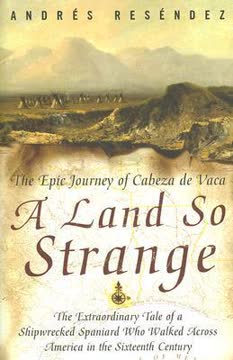
A Land So Strange recounts Cabeza de Vaca's epic journey across North America in the 1500s. Readers praise Reséndez's engaging writing style, thorough research, and ability to bring this incredible survival story to life. The book offers fascinating insights into early Spanish exploration and indigenous cultures. Many found it a gripping page-turner that reads like an adventure novel. Some critics felt the opening was slow or questioned the author's interpretations, but overall, reviewers highly recommend this compelling historical account for its vivid portrayal of a remarkable expedition.
People Also Read