
Plot Summary
Literary Lure to Alderney
Anthony Horowitz, acclaimed author, is persuaded by his publisher to attend an inaugural literary festival on the remote island of Alderney, alongside his enigmatic subject, former detective Daniel Hawthorne. Initially reluctant, Horowitz's curiosity is piqued when Hawthorne, typically evasive about public events, insists on joining. The invitation promises a mix of literary celebration and the unusual company of real detectives, with the festival itself sponsored by an online gambling company, Spin-the-wheel.com. As Horowitz learns more about the fractured island community and the looming controversy about a proposed NAB power line, tensions simmer. This rare convergence of writers, islanders, and corporate interests sets the scene, while Hawthorne's hidden motives for wanting to visit Alderney begin to cast long, intriguing shadows.
Eccentric Authors Assemble
In Southampton, a mismatched group of authors and their handlers—ranging from a brash TV chef to a haunted poet and a once-famous children's author—meet en route to Alderney. Each personality brings their own baggage, both literal and emotional. Anthony Horowitz feels increasingly like an outsider, the odd man out in a festival populated by oddballs, rivals, and minor celebrities. The narrative is peppered with subtle hostilities, awkward alliances, and hints of backstories: a nervous children's author hiding tragedy, assistants shielding their bosses, and the immediately evident uneasiness between guests about the festival's local sponsor. As they travel, glimpses of rivalries and personal secrets—fuelled by pressures of fame, ambition, and faded glory—lay a foundation for friction that will soon unravel into something far more sinister.
Festival Tensions & Island Secrets
Upon arrival, the guests are greeted by Judith Matheson, the festival's driven organizer, and introduced to Alderney's unique atmosphere—a place at odds with itself over a planned electricity cable, known as NAB. The slogan 'BAN NAB' appears scrawled around the picturesque, isolated landscape, reflecting the split between those for and against modernization. Beneath the surface hospitality, political and historical wounds blend with suspicion of outsiders. The writers are whisked to the Braye Beach Hotel, presented with the festival's jam-packed schedule, and warned indirectly about the island's recent unrest. Yet, as local histories and personal grievances bubble up, including complications surrounding the festival's sponsor and its charismatic, abrasive owner Charles le Mesurier, a palpable sense of isolation and unease creeps in, foreshadowing the darkness to come.
The Death Card Delivered
At the festival's welcoming party, the authors mingle while hostilities and old rivalries ignite. Charles le Mesurier, both sponsor and provocateur, reestablishes dominance by publicly needling chef Marc Bellamy about his checkered past. The atmosphere sours further when a playing card—an ace of spades, adorned with a skull—appears on le Mesurier's ostentatious Mercedes, an ominous omen known as the "death card." Later, his predatory behavior toward the young assistant Kathryn adds to the sense of threatened boundaries and casual abuse of power. Underneath the forced joviality, darkness edges forward; real resentments, personal humiliations, and latent violence swirl among the assembled guests. The lines between literary conflict, island tension, and more literal danger blur, with participants unknowingly stepping into the roles of both storyteller and suspect.
Shadows Behind Blind Sight
During the festival sessions, psychic author Elizabeth Lovell conducts an emotional reading, exposing the private grief of Anne Cleary, whose son died by overdose, and attracting both fervent belief and skepticism. Horowitz observes the manipulative potential behind apparent miracles, suspecting that Lovell's act is rooted more in research than real insight. The session's emotional fallout ripples through the group, intensifying private tensions. Meanwhile, the festival's guest list grows more entangled: backgrounds checked, relationships inferred, and motives quietly tallied by both Hawthorne and the reader. The fine line between comfort and coercion, truth and spectacle, is crossed repeatedly, setting the stage for tragedy—and the audience for the island's first murder.
Danger at The Lookout
As tensions mount, host Charles le Mesurier throws a lavish party at his showpiece mansion, The Lookout. Luxurious surroundings mask the inflamed resentments beneath: le Mesurier publicly humiliates Marc Bellamy, sexually harasses Kathryn, and uses his power to exploit and threaten. Allies and enemies are made quickly as le Mesurier's hubris, entitlement, and careless cruelty become obvious to all. In the shadows, alliances are struck: festival guests—some traumatized, some seeking justice—find a mutual thread in their disdain for the host. As drinks flow and music plays, it becomes clear the island's tranquility is a façade; the party's end will be marked not by applause, but by a scream.
Snuggery: The Murder Scene
The next morning brings news of brutal violence: Charles le Mesurier has been murdered, found tied to a chair in his private "Snuggery," throat slashed with a letter opener, right hand left free. Local authorities are overwhelmed—the island has never dealt with such a crime—forcing Colin Matheson to rely heavily on Hawthorne's expertise. Clues abound: a missing Rolex, a bloodied footprint, a two-euro coin, and hints the crime was meticulously staged. The murder sets off tremors, reawakening old grievances (such as disputes about NAB), but also laying bare the deeper wounds of betrayal, blackmail, and island grudges. Bound by obligation, Horowitz is pulled from observer to chronicler of a crime that feels both farcical and terrifyingly real.
Truth and Tricks Unveiled
The murder investigation plunges Hawthorne into the festival's tangled web of motives: Bellamy's schoolboy vendetta, Kathryn's humiliation, Anne's concealed pain, and the power line protesters' rage. Each guest becomes a suspect and each secret a possible motive. Evidence suggests premeditation, with the murder's theatrical staging—a coin flip, the deliberate leaving of one hand free—hinting at a killer enacting poetic justice. Meanwhile, the disappearance of Helen le Mesurier, the sponsor's wife, deepens the mystery, and the competing authorities (Guernsey police, OLAF undercover investigators from France) intensify the confusion. Increasingly, performance and reality blur: seances, false identities, thefts, and orchestrated deceptions expose the dark art of misdirection—on stage and off.
Double Cross: Motives Multiply
As police and Hawthorne interrogate festival guests and locals, new truths surface. The NAB controversy is exposed as a front for greed, blackmail, and betrayal—le Mesurier and Abbott orchestrated the committee's decisions to line their own pockets, using sex, hidden cameras, and threats. The French OLAF agents, masquerading as poets, further muddy the waters, having stumbled into the murder scene while conducting their own subterfuge. Abbott, now a primary suspect, is implicated in everything from blackmail to murder, but also painted as both villain and victim—an outcast whose depravity is rivaled only by his sense of entitlement. Each character's facade begins to crumble under the relentless twin pressure of guilt and accusation.
The Vanishing Hostess
The investigation is thrown into chaos as Helen le Mesurier disappears. Desperate texts indicate she knew too much and feared for her life. Despite a police search, her battered body is discovered in a derelict cave, bludgeoned to death. The island's paranoia deepens—no one feels safe, and panic overtakes gossip. Helen's murder appears linked to the first, but the precise connection remains elusive. Meanwhile, Anne Cleary's alibi and behavior arouse increased scrutiny, and the web of suspects narrows as Hawthorne perceives patterns in overlapping relationships, private histories, and shared trauma. The festival's purpose warps: from literary celebration to collective reckoning.
The Power Line Divide
Local politics and the power line issue are revealed as more than a backdrop—they lie at the core of both killings. Interviews with NAB's critics and supporters (Dr. Queripel, George Elkin, Colin Matheson) reveal old betrayals, desperate financial ploys, and forms of civil "resistance" disguised as vandalism. Hawthorne uncovers how blackmail, manufactured photographs, and sexual entrapment were used to control decision-makers, notably Matheson, who in turn implicates le Mesurier, Helen, and Abbott in a brutal triangle of coercion. The divide between public benefit and private gain is painted not merely with protest signs, but in blood. The island's lingering wounds—wartime, personal loss, and the tyranny of outsiders—are laid bare.
Festival of Suspects
Hawthorne methodically tests alibis, explores relationships, and exposes each suspect's weaknesses. The smallest slips—snippets of overheard conversation, discrepancies in stories, odd dietary preferences, even the timing of taxi rides—become critical. Horowitz, at first a sidekick, increasingly attempts to deduce and theorize, but is consistently two steps behind. As Hawthorne zeroes in on motive and opportunity, each suspect's performance—whether as psychic, cook, poet, or grieving mother—becomes a mask for pain or malice. The role of chance in their fates—echoed by the gambling company's endless games—is underlined: everyone is spinning the wheel, but the house never truly loses. Yet the killer, determined by more than luck, remains maddeningly elusive.
Hawthorne's Hidden Past
Hawthorne's own secrets, and his connection to accused child-pornographer Abbott, come to the fore. Once a respected detective, Hawthorne's reputation was marred when Abbott, whom he had brutally interrogated years before, was left crippled in a suspicious "accident." Their antagonism, simmering since then, now colors the murder investigation. The presence of Abbott on Alderney is revealed as Hawthorne's real reason for attending the festival. As old wounds reopen, Horowitz, now unsure whether to trust or fear his friend, must confront the limits of justice and whether a man's greatest adversaries are always found in others—or sometimes in himself.
The French Connection
The French guests, previously posing as avant-garde poet and aloof boyfriend, are unmasked as OLAF investigators probing corruption linked to the NAB deal. Their clandestine break-in to the Lookout after the murder—intended to secure digital evidence—disrupts the crime scene, sets them as unwitting suspects, and ultimately provides key revelations: the hidden camera, encrypted files, and missing phone. Their covert operation, ostensibly about bureaucracy and fraud, becomes entangled with the raw violence and private grudges animating the murders. This convergence of international intrigue and local vendetta—though at times almost comic—heightens the festival's surreal, dangerous quality.
Seance of Deceptions
In a desperate attempt to force a breakthrough, Hawthorne agrees to a séance with Elizabeth Lovell. Horowitz watches in mounting disbelief as Lovell appears to channel the murdered le Mesurier's final moments—only for Hawthorne to expose her as a fraud, not truly blind. Lovell's deception had allowed her to act as a "witness" without personal risk, but once unmasked, she becomes both a source of crucial testimony and a symbol of the festival's central motif: nothing is as it seems, and every performance has two faces. The exposure of Lovell both clarifies the timeline and further implicates Abbott, but questions of sincerity, justice, and the morality of truth-telling echo for all involved.
The Truth About Abbott
The investigation, pressured by police, seems to reach its climax: all circumstantial evidence points to Derek Abbott. Variety of incriminating factors—arguments with the victim, his predatory record, financial motive, and being seen with le Mesurier—make him the perfect suspect. Under scrutiny, Abbott is both belligerent and defensive. Before he can be arrested, he flees and jumps to his death from the cliffs, leaving behind ambiguous notes and a sense of unresolved malice directed at Hawthorne. For the police, the case is closed. But for Horowitz—and for the reader—satisfaction fades quickly. The easy answer is rarely the correct one, and ghosts remain.
Heads or Tails of Fate
With Abbott dead and attention drifting to the next news cycle, Hawthorne and Horowitz persist. Reconstructing movements, timings, and small forensic details, Hawthorne notices the murder's chilling theater: le Mesurier tied with one hand free, the bloodless coin on the floor, and the connection to le Mesurier's online gambling empire. The truth emerges—the killer forced le Mesurier to gamble for his life, coin toss and all. The murders are revealed not as crimes of impulse or profit, but as vengeance staged as poetic justice, twisted by grief and despair into something cruel and calculated. The question remains: who, beyond Abbott, knew how to make every detail count?
The Mother-Daughter Pact
The final, devastating solution emerges: the grieving author Anne Cleary and her daughter Kathryn orchestrated both murders, seeking vengeance for William, Anne's son, who was driven to suicide by gambling addiction, a fate entwined with le Mesurier's company. Disguised, vengeful, and driven by love and rage, Anne manipulated alibis, staged her exit from the party to perfection, and lured her targets to their deaths, abetted by Kathryn. Their plot, built on righteous fury and channeled into theatrical but merciless punishment, mirrored both the islanders' own resentments and the festival's passion for justice in art. Anne confesses to Hawthorne, asking him to protect her daughter. The saga finishes on a knife's edge of pity, horror, and moral ambiguity, reinforcing that stories—no matter how artful—rarely offer clear winners or simple endings.
Analysis
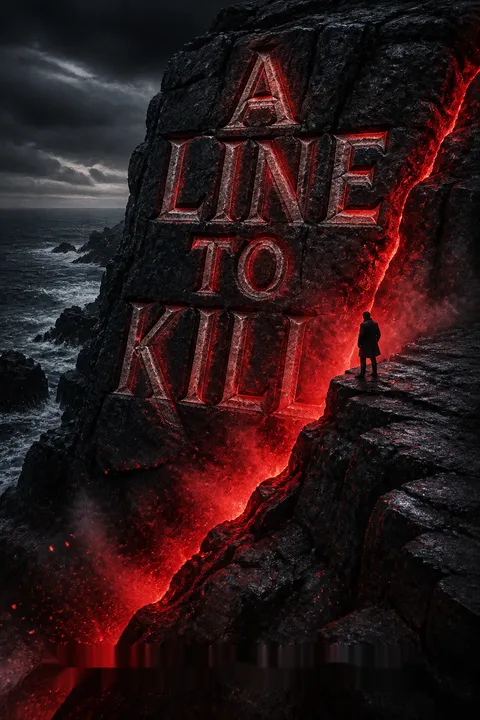
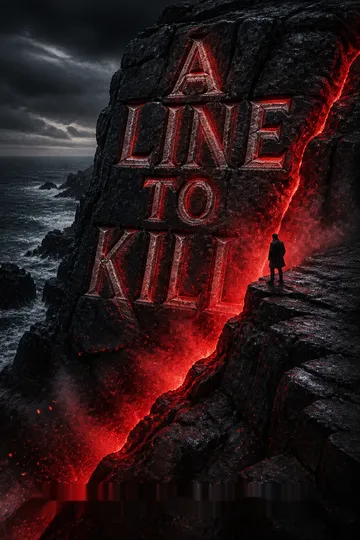
A Line to Kill is as much about the shadows cast by personal grief and collective guilt as it is a conventionally satisfying detective story. Horowitz deploys the classic closed circle of suspects, the quirky English setting, and a familiar formula of murders disrupting a genteel gathering. But the novel transcends easy genre pleasure by immersing readers in moral ambiguity: everyone on Alderney has a motive, and the line between victim and villain is ambiguous and shifting. Through Anne Cleary's quest for justice, Hawthorne's refusal to conspire in cover-ups, and the exposure of festering wounds—whether caused by bullying, addiction, or corporate malfeasance—the novel challenges the supposed clarity of detective fiction. It interrogates the ethical costs of storytelling: the dangers of comfort, the allure of vengeance, and the self-deceptions that protect both public pillars and private sufferers. Ultimately, it argues that justice is never as tidy as in fiction—and that sometimes, the only way to reckon with tragedy is to keep reading, persist, and refuse sentimentality. Horowitz's witty, self-aware voice offers the audience complicity and comfort, but insists on retaining the final, unsettling question: Who among us, when wounded, would not cross the line to kill?
Review Summary
A Line to Kill is the third installment in Horowitz's Hawthorne and Horowitz series, earning an overall rating of 3.94/5. Set on the Channel Island of Alderney during a literary festival, the novel features a classic locked-room mystery with multiple suspects, red herrings, and Agatha Christie-style plotting. Readers consistently praise the dynamic between the bumbling, self-deprecating Horowitz and the shrewd, reticent Hawthorne. Most reviewers were unable to identify the killer, applauding the clever misdirection, though some felt the humor and formula were beginning to wear thin.
People Also Read
Characters
Daniel Hawthorne
Hawthorne is a complex, secretive figure whose acute observational powers and resistance to emotional intimacy define him. Once a celebrated detective, his career ended in scandal after his adversarial, perhaps abusive, handling of Derek Abbott. Hawthorne masks deep hurts—possibly from childhood, divorce, and professional disgrace—with brusque humor and by keeping even his collaborator, Horowitz, at arm's length. He is methodical, clever, and fearless, often both charming and abrasive, and in the course of the case on Alderney is forced to confront both external enemies and profound questions about his own motivations. Hawthorne's quest for truth is both personal and universal, and his moral clarity—even when delivered coldly—cuts through the self-deceptions and facades of those around him.
Anthony Horowitz
As both a character and an avatar of the reader, Horowitz is intelligent, self-deprecating, and alternately frustrated and fascinated by Hawthorne and the world of real crime. He is more comfortable in fiction than reality, and the tension between the two forms the book's meta-layer. Horowitz's earnestness and ethical discomfort serve as a ballast to Hawthorne's single-mindedness. He is consistently "behind" in the investigation, prone to misjudgments, yet ultimately driven by a need for justice, clarity, and personal integrity. His evolving relationship with Hawthorne deepens his sense of inadequacy but also his resolve to understand true complexity, both in crime and in the hearts of others.
Anne Cleary
Anne is introduced as a gentle, nurturing children's author, marked with a persistent sadness from the suicide of her son William. Her apparent warmth masks a steeliness and deep rage over his unacknowledged suffering, driven by gambling addiction connected to Spin-the-wheel.com. Anne's arc is one of radical transformation: grief and unresolved pain metamorphose into meticulous murder. Cunning, patient, and ultimately remorseless, she orchestrates the twins murders and misdirects suspicion. Her psychological complexity—part Martha Stewart, part Medea—defines the story's moral gravity, raising questions about justice, compassion, and the cost of vengeance.
Kathryn Harris
Kathryn is Anne's daughter, initially appearing as a harried, awkward assistant to chef Marc Bellamy. The reader gradually learns she is more than her professional façade: she is Anne's coconspirator and fellow mourner of William. Kathryn's blending into the festival's background masks her essential role in the murders, as she exploits her proximity to victims and access to the scene. Her motivations are preservative and familial: loyalty, grief, and a desire to save her mother from loneliness and self-destruction. Ultimately, her complicity is marked by ambiguity—was she truly a killer, or swept along by her mother's grief-carved current?
Charles le Mesurier
As owner of Spin-the-wheel.com and sponsor of the festival, Charles personifies privilege and cruelty. Arrogant, predatory, and expert at humiliating others, he is resented by nearly all. His willingness to use his wife, friends, and employees for personal gain extends to blackmail, sexual exploitation, and coercion in local politics. Charles's murder becomes a focal point for just retribution, but also a demonstration of how power protects and destroys in equal measure. His death, staged as a grim parody of his own gambling empire, is the narrative's bloody centerpiece.
Derek Abbott
Abbott is haunted by a past as a convicted sex criminal and by his destructive dance with Hawthorne. Ostracized, defensive, and venomous, he nonetheless serves as invaluable witness, villain, and ultimately tragic figure. Abbott's involvement in NAB and subsequent victimization make him both a foil for Hawthorne's capacity for vengeance and a scapegoat for Alderney's collective anger. His suicide is brutal, ambiguous, and fraught with unresolved guilt—baggage inherited not only by Hawthorne but by every authority, parent, and child on the island.
Helen le Mesurier
Helen is at once trophy, accomplice, and victim, used and discarded by her powerful husband. Her collaborations—sexual, financial, and manipulative—make her both a silent player in the NAB scandal and an unwitting target for Anne's revenge. Her beauty, cynicism, and complicity cannot shield her from trauma; ultimately, she is undone by her own alignment with predation and by underestimating the pain of others.
Marc Bellamy
Bellamy, a bombastic television celebrity, hides profound pain—childhood bullying, public disgrace, kleptomania. His unhappy youth, particularly at the hands of Charles le Mesurier, leaves him always defensive and unequal in adult relationships. Though at first a red herring in the murder plot, Marc's confessions expose cycles of abuse, the ways in which humiliation can deform, and the grim persistence of childhood wounds in adult life.
Elizabeth Lovell
Ostensibly an inspirational medium, Lovell is revealed as both faker and cunning observer. Her precise trickster's manipulation of others' pain for profit—and her role as an accidental witness to murder—complicates the theme of truth vs. performance. Lovell's exposure as a fraud is both cathartic and deeply unsettling; she stands as living proof that even deepest grief can be commoditized, and that sometimes the most comforting narratives are the most dangerous.
Colin Matheson
Judith's husband, NAB committee head, and island barrister, Colin tries—and fails—to balance conscience with coercion. Blackmailed, seduced, and manipulated into supporting unpopular legislation, he is a symbol of institutional weakness and personal cowardice. His confession of infidelity and victimhood humanizes him, yet ultimately, like so many, he becomes collateral damage—used by those he loves and despises alike.
Plot Devices
Crime Within a Crime, Layered Mystery
The book employs a classic whodunity wrapped in multiple layers of misdirection, including red herring suspects (Marc, Kathryn, Abbott) and initially misleading clues (the ace of spades, the visible footprint, the coin). The murder's choreography and its symbolic staging—as a forced game of chance—mirror the theme of justice corrupted by personal loss and the predations of corporate greed. Interludes of literary performance, séances, and duplicity underscore how surface appearances are never to be trusted. The meta-layer—Horowitz both as character and narrator—dramatizes the challenge of separating authorial invention from hard-won fact.
Foreshadowing, Symbolism, and Meta-narrative
The introduction of the ace of spades, the coin, and repeated references to chance and performance establish a motif of fate, control, and poetic justice. Literary devices—authors forced to live out the plots they write, a festival that becomes a crime scene—bring fiction and reality into collision. The false seance, the psychics' fraud, and the layered reveals echo the way authority and comfort can be constructed and undone—both in books and in life. These self-conscious literary gestures are both homage and critique, challenging reader expectations and implicating the audience in the mechanics of deception.
Grief and Justice as Narrative Engine
Rather than profit or passion, the central motive for murder is unsolvable grief: Anne's pain for her son is unresolvable, surfacing as justified rage against the system and its architects. Her elaborate planning and the poetic justice enacted on le Mesurier elevate the narrative, inviting empathy while twisting reader loyalties. The ultimate revelation—that Anne may have been justified, but not exonerated—forces an interrogation not just of motive, but also of the possibility of reparation.
Moral Ambiguity and Ethical Dilemmas
Hawthorne's own ambiguous ethics—pushing Abbott, refusing to cover up for Anne, and choosing procedural truth over emotional closure—structure the book's tension between right and wrong, action and passivity. The final, uneasy settlement—Kathryn acquitted, Anne dead, Abbott scapegoated—imbues the ending with the same sense of uncertainty that pervades the story throughout.
Real-Time Investigation, Author as Character
Horowitz's position as both narrator and participant—always a step behind, forever doubting—parallels the reader's journey. Clues unfold in real time, analysis and deduction are often mistaken, and only through humility and perseverance do answers emerge. The narrative is as much about the impossibility of omniscience as it is about the solving of a crime.
Hawthorne & Horowitz Series
About the Author


Download PDF
Download EPUB
.epub digital book format is ideal for reading ebooks on phones, tablets, and e-readers.








































