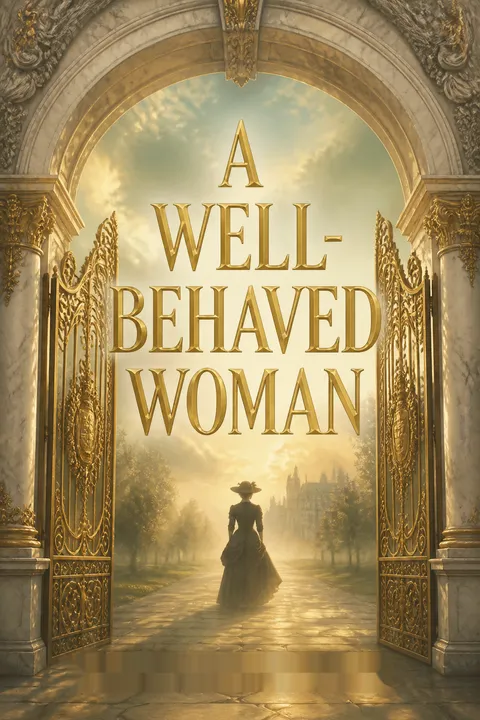

Plot Summary
Desperate Beginnings, Calculated Choices
In the aftermath of the Civil War, Alva Smith's genteel Southern family teeters on the edge of poverty. With her mother dead and her father's health and fortune failing, Alva recognizes that marriage is her only escape from destitution. She is neither the prettiest nor the wealthiest among her peers, but she is clever, determined, and acutely aware of the social hierarchies that govern her world. With the help of her friend Consuelo Yznaga, Alva sets her sights on William K. Vanderbilt, a scion of new money desperate for social legitimacy. Their courtship is less a romance than a negotiation, with Alva's ancestry and William's wealth forming the basis of a mutually beneficial alliance. The emotional cost of this transaction is clear to Alva, but necessity outweighs sentiment. Her journey begins not with love, but with a calculated leap toward survival.
Marriage as Salvation
Alva's marriage to William K. Vanderbilt is both a rescue and a surrender. The wedding is a spectacle, a union of old Southern lineage and brash Northern fortune. Alva quickly learns that her new life is not the fairy tale she once imagined. She is thrust into a world of opulence, but also of relentless scrutiny and subtle exclusion by New York's entrenched elite. Her role is to be the well-behaved woman—gracious, beautiful, and above reproach—yet she is haunted by the knowledge that her value is transactional. The comforts of her new home are shadowed by the realization that she has traded one form of dependence for another. Still, Alva is determined to make the most of her circumstances, wielding her intelligence and ambition as quietly as she can.
The Price of Admission
Despite her marriage, Alva finds herself and the Vanderbilts shut out from "best society." The old Knickerbocker families, led by Mrs. Astor, view the Vanderbilts as upstarts. Alva's efforts to gain acceptance are met with snubs and gossip. She learns that money alone cannot buy entry; reputation, ancestry, and the approval of gatekeepers matter more. Alva's frustration grows as she realizes that her family's security is still precarious, and her own worth is measured by her ability to navigate these treacherous waters. The emotional toll is heavy, but Alva's resolve hardens. She begins to plot not just for survival, but for influence and respect.
Becoming a Vanderbilt
Alva's intelligence and drive set her apart from other society wives. She becomes a force within the Vanderbilt family, advocating for grand gestures—lavish homes, public philanthropy, and cultural patronage—to elevate their status. Her vision leads to the construction of architectural marvels and the hosting of legendary events. Yet, her assertiveness is both admired and resented, especially by her in-laws and other women. Alva's marriage grows strained as William's interests diverge from hers, and she finds herself increasingly isolated. Still, she refuses to be sidelined, channeling her energy into projects that will secure her family's place in history.
Hunger, Loss, and Survival
Alva's relentless pursuit of security and status comes at a personal cost. She endures hunger, the loss of family heirlooms, and the humiliation of being judged by those she seeks to impress. The death of loved ones and the constant threat of financial instability remind her that her position is never truly secure. Alva's resilience is tested as she navigates the demands of motherhood, marriage, and social expectation. Her sacrifices are both material and emotional, shaping her into a woman who is both formidable and deeply vulnerable.
Social Climbing and Exclusion
Determined to break through the barriers of old money society, Alva forms strategic alliances and leverages every resource at her disposal. She enlists the help of Ward McAllister, a society insider, to orchestrate her family's ascent. Alva's efforts culminate in the legendary Patriarch Ball, where she finally gains the recognition she craves. Yet, the victory is bittersweet; acceptance comes with strings attached, and the rules of the game are ever-changing. Alva learns that true belonging requires constant vigilance and adaptation.
The Patriarch Ball and Society's Gatekeepers
The Patriarch Ball marks a turning point for Alva and the Vanderbilts. Through meticulous planning and social maneuvering, Alva secures an invitation for herself and William, forcing Mrs. Astor to acknowledge them publicly. The event is a dazzling success, but the personal cost is high. Alva's marriage grows colder, and she is forced to confront the emptiness at the heart of her achievements. The approval of society is fleeting, and Alva realizes that the rules are designed to keep women like her in their place, no matter how well they play the game.
Marriage, Power, and Disillusion
As Alva's social star rises, her marriage to William deteriorates. The couple's differences become irreconcilable—he is content with leisure and sport, while she craves purpose and recognition. Alva's sense of isolation deepens as she faces betrayal, both within her marriage and among her supposed friends. The realization that her sacrifices have not brought her happiness or fulfillment leads to a period of profound disillusionment. Alva begins to question the very foundations of the world she has worked so hard to enter.
Building Castles, Building Identity
Alva channels her frustration and ambition into the creation of grand homes—castles that symbolize both her aspirations and her need for control. Through architecture, she asserts her taste, intelligence, and vision, leaving a lasting mark on the city's landscape. These projects become a means of self-definition, a way to claim space and authority in a world that seeks to confine her. Yet, the act of building also exposes the fragility of her achievements, as personal and societal forces threaten to undermine all she has constructed.
Betrayal and Awakening
Alva's world is shattered by William's infidelity, particularly his affair with her closest friend. The betrayal is both personal and public, forcing Alva to confront the limits of her well-behaved facade. The pain of deception awakens a new sense of self-respect and agency. Alva refuses to be a victim, choosing instead to challenge the double standards that govern her world. Her awakening is both liberating and isolating, as she prepares to defy convention and claim her own narrative.
Divorce, Defiance, and Scandal
Alva's decision to divorce William is a radical act, one that shocks and scandalizes society. She faces ostracism, legal battles, and the condemnation of her peers. Yet, she stands firm, insisting on her right to dignity and autonomy. The divorce is not just a personal liberation, but a public statement—a challenge to the rules that have kept women subservient for generations. Alva's defiance inspires both admiration and fear, marking her as a woman who will not be contained.
Motherhood, Manipulation, and Legacy
With her own future uncertain, Alva turns her attention to securing her daughter Consuelo's place in the world. She orchestrates Consuelo's marriage to the Duke of Marlborough, seeing it as the ultimate vindication of her efforts. The process is fraught with manipulation, emotional blackmail, and the suppression of Consuelo's desires. Alva's determination to protect and elevate her daughter becomes a double-edged sword, raising questions about agency, love, and the true meaning of legacy.
Daughter's Fate, Mother's Will
Consuelo's marriage to the Duke is both a triumph and a tragedy. While it fulfills Alva's ambitions, it leaves Consuelo trapped in a loveless union, her own happiness sacrificed for status. The generational conflict between mother and daughter exposes the limits of Alva's vision and the unintended consequences of her choices. As Consuelo seeks her own path, Alva is forced to reckon with the cost of her relentless pursuit of respectability.
Love, Loss, and Second Chances
In the aftermath of her divorce and Consuelo's departure, Alva finds unexpected love with Oliver Belmont. Their relationship is a revelation—a partnership based on mutual respect, passion, and shared ideals. For the first time, Alva experiences the fulfillment she had long denied herself. Yet, happiness is fleeting; Oliver's untimely death plunges Alva into grief, but also affirms her belief in the possibility of joy and self-determination, even after loss.
Suffrage, Sisterhood, and Self
Widowed and unmoored, Alva reinvents herself as a leader in the women's suffrage movement. Drawing on her wealth, connections, and hard-won wisdom, she becomes a powerful advocate for women's rights, including the inclusion of Black women in the fight for equality. Alva's activism is both a continuation and a transformation of her lifelong quest for agency. Through sisterhood and solidarity, she finds a new sense of belonging and purpose, channeling her ambition into a cause greater than herself.
The Enduring Cost of Respectability
Alva's achievements come at a steep personal cost. She is celebrated and reviled, admired and isolated. The wounds of betrayal, loss, and regret linger, even as she shapes the future for herself and others. The pursuit of respectability, she learns, is fraught with compromise and sacrifice. Yet, Alva refuses to be defined by her failures or her critics. Her legacy is one of resilience, complexity, and the relentless pursuit of selfhood.
Rewriting the Rules
Alva's later years are marked by a determination to rewrite the rules that have governed her life and the lives of women like her. She champions causes, builds institutions, and mentors the next generation of activists. Her story becomes a testament to the power of reinvention and the necessity of challenging tradition. Alva's journey is not one of simple triumph, but of ongoing struggle, adaptation, and growth.
Constellations of Change
In her final years, Alva reflects on the arc of her life—the choices made, the battles fought, the loves gained and lost. She recognizes that nothing is ever as simple as it seems, and that the pursuit of a well-behaved life is both a burden and a gift. Alva's legacy is not just in the mansions she built or the titles she secured, but in the constellations of change she helped set in motion. Her story endures as a reminder that the rules are always being rewritten, and that true respectability lies in the courage to claim one's own destiny.
Analysis
A Well-Behaved Woman is a masterful exploration of the intersection between gender, class, and power in Gilded Age America. Through the life of Alva Smith Vanderbilt Belmont, the novel interrogates the costs and contradictions of respectability, revealing how the pursuit of security and status can both empower and entrap. Alva's journey—from desperate debutante to social architect, from betrayed wife to suffrage leader—illuminates the ways in which women have historically navigated systems designed to limit their agency. The novel's emotional arc is one of resilience, awakening, and reinvention, offering a nuanced portrait of ambition, sacrifice, and the search for selfhood. Fowler's reimagining is both a critique and a celebration, challenging readers to reconsider what it means to be "well-behaved" and whose rules are worth following. The story's enduring lesson is that true respectability is not bestowed by society, but claimed through courage, integrity, and the willingness to rewrite the rules.
People Also Read






Characters
Alva Smith Vanderbilt Belmont
Alva is the novel's central figure—a woman born into Southern gentility but forced by circumstance to become a master strategist. Her marriage to William K. Vanderbilt is a calculated move for survival, but she quickly becomes the driving force behind the family's social ascent. Alva is fiercely intelligent, ambitious, and unafraid to challenge convention, though she is often constrained by the expectations of her gender and class. Her relationships—with her husband, daughter, friends, and rivals—are marked by both manipulation and genuine care. Betrayed by those closest to her, Alva ultimately reclaims her agency through divorce, activism, and a late-in-life love with Oliver Belmont. Her evolution from well-behaved woman to suffrage leader is both a personal and political journey, marked by resilience, regret, and a relentless pursuit of self-respect.
William K. Vanderbilt
William is the scion of the Vanderbilt fortune, eager for social legitimacy but content to let others do the heavy lifting. He is amiable, handsome, and generous, but lacks ambition and depth. His marriage to Alva is transactional, and he is both supportive and dismissive of her ambitions. William's infidelities and emotional distance contribute to the unraveling of their marriage. He is a product of his privilege, unable or unwilling to understand the sacrifices made on his behalf. William's greatest flaw is his complacency, which ultimately costs him both his wife and his place at the center of her world.
Consuelo Vanderbilt (later Duchess of Marlborough)
Consuelo is Alva's beloved daughter, raised to be the ultimate prize in the marriage market. She is beautiful, gentle, and eager to please, but her desires are often suppressed by her mother's ambitions. Consuelo's marriage to the Duke of Marlborough is both a triumph and a tragedy—fulfilling Alva's dreams but leaving Consuelo emotionally adrift. Over time, she grows into her own person, finding purpose in philanthropy and activism. Her relationship with Alva is fraught with love, resentment, and eventual understanding, reflecting the generational tensions at the heart of the novel.
Consuelo Yznaga (Lady Mandeville, Duchess of Manchester)
Consuelo Yznaga is Alva's childhood friend and confidante, a Cuban-American heiress who marries into British nobility. Her life parallels and contrasts with Alva's—both women navigate the treacherous waters of society, marriage, and ambition. Consuelo's wit, charm, and worldliness make her both a source of support and a cautionary tale. Her own unhappy marriage and eventual estrangement from Alva underscore the costs of playing by society's rules. Her betrayal and confession are pivotal moments in Alva's journey toward self-realization.
Oliver Belmont
Oliver is William's friend and, eventually, Alva's second husband. He is intelligent, progressive, and genuinely affectionate—a stark contrast to William's passivity. Oliver's love for Alva is patient and enduring, offering her the partnership and respect she has long craved. His political activism and support for women's rights align with Alva's evolving values. Oliver's untimely death is a profound loss, but his influence endures in Alva's later work and sense of self.
Ward McAllister
Ward is the ultimate social strategist, guiding Alva and the Vanderbilts through the labyrinth of New York society. His expertise and connections are invaluable, but his own ambitions and eventual fall from grace mirror the precariousness of social standing. Ward's relationship with Alva is one of mutual respect and occasional disappointment, highlighting the transactional nature of their world. His decline serves as a warning about the dangers of relying too heavily on reputation and the fickleness of public opinion.
Alice Vanderbilt
Alice is William's sister-in-law and Alva's chief competitor within the Vanderbilt family. She is beautiful, devout, and fiercely protective of her own status. Alice's adherence to tradition and her judgmental nature put her at odds with Alva's ambitions and choices. Their rivalry is both personal and symbolic, representing the broader conflict between old and new values. Alice's eventual isolation underscores the limitations of rigid respectability.
Mary (Mary Smith Taylor)
Mary is Alva's trusted maid, a composite character representing the Black women who served white families in this era. Her loyalty and skill are invaluable to Alva, but her presence is a source of tension within the household and society at large. Mary's eventual dismissal—engineered by William—highlights the intersection of race, class, and gender. Her story is a quiet but powerful commentary on the limits of progress and the persistence of prejudice.
Armide Smith
Armide is Alva's older sister, a steadying presence and occasional critic. She is pragmatic, self-sacrificing, and less concerned with status than with survival and integrity. Armide's choices—remaining unmarried, dedicating herself to good works—offer a counterpoint to Alva's ambitions. Her relationship with Alva is marked by both support and gentle reproach, reminding Alva of the values she risks abandoning in her quest for respectability.
The Duke of Marlborough
The Duke is Consuelo's husband, the ultimate prize in Alva's campaign for legitimacy. He is aristocratic, reserved, and emotionally distant—a man more interested in preserving his estate than in building a partnership. His marriage to Consuelo is a transaction, leaving both parties unfulfilled. The Duke's character embodies the hollowness at the heart of social aspiration and the dangers of sacrificing happiness for status.
Plot Devices
Social Climbing as Survival
The novel's central plot device is the use of marriage and social maneuvering as means of survival and empowerment. Alva's calculated choices—whom to marry, how to behave, which alliances to form—are driven by necessity as much as ambition. The narrative structure mirrors the relentless, often ruthless logic of social mobility in Gilded Age America. Foreshadowing is used to hint at the costs of these choices, as early sacrifices and betrayals set the stage for later crises. The interplay between public triumphs and private losses underscores the precariousness of respectability and the constant threat of exclusion.
The Double Standard
Throughout the novel, the rules governing women's behavior are both explicit and implicit, enforced by society and internalized by the characters. Alva's journey is shaped by her attempts to navigate and ultimately challenge these double standards. The plot repeatedly exposes the hypocrisy of a world that demands female virtue while excusing male transgressions. The tension between conformity and rebellion is a driving force, with Alva's eventual defiance serving as both climax and resolution.
Architecture and Material Culture
The construction of grand homes—castles, mansions, and cottages—serves as both literal and metaphorical plot devices. These projects are expressions of Alva's taste, ambition, and desire for control. The act of building becomes a way to claim space and authority, but also exposes the fragility of achievement in a world governed by shifting rules. The homes are stages for both triumph and tragedy, their fates intertwined with the characters' fortunes.
Mother-Daughter Dynamics
The relationship between Alva and Consuelo is a central plot device, reflecting the complexities of maternal love, ambition, and control. Alva's efforts to secure her daughter's future mirror her own struggles, but also perpetuate cycles of sacrifice and regret. The generational conflict is both personal and symbolic, raising questions about agency, happiness, and the true meaning of legacy.
Public Scandal and Private Pain
The ever-present threat of scandal shapes the characters' choices and the novel's structure. Public events—balls, lawsuits, divorces—are juxtaposed with private moments of heartbreak and revelation. The narrative uses foreshadowing and dramatic irony to highlight the gap between appearance and reality, and to underscore the enduring cost of respectability.
Download PDF
Download EPUB
.epub digital book format is ideal for reading ebooks on phones, tablets, and e-readers.








































