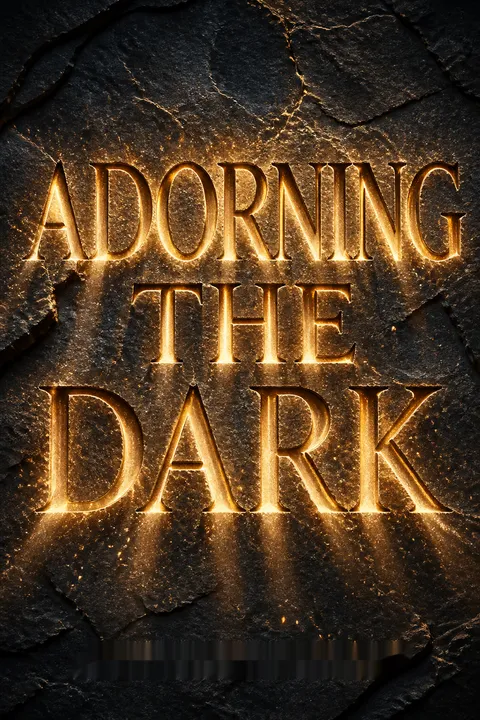

Key Takeaways
1. Prioritize God's Kingdom: The True North for Creative Work
“Seek first the kingdom of God and his righteousness, and all these things will be added to you” (Matt. 6:33).
Kingdom first. The author emphasizes that true satisfaction and direction in creative pursuits come from prioritizing God's Kingdom and righteousness above all else. Worldly aspirations like fame, financial security, or social status, while seemingly harmless, can become malignant if they displace this primary focus. By letting go of expectations and dreams, the path forward becomes clearer, guided by the Holy Spirit.
Redeeming motives. Early in his career, the author admits his motives were often self-serving—seeking validation or escape through music. However, God consistently redeemed these impulses, transforming them into something loving and lovable. This journey highlights that even imperfect beginnings, driven by personal fears or desires, can be sanctified and used for a greater purpose when aligned with God's will.
Diminished worries. When the pursuit of God's Kingdom takes precedence, the anxieties surrounding career choices, success, and recognition diminish. The focus shifts from personal gain to expressing a heart full of joy and a desire to rearrange a dark, messy world with light. This perspective allows artists to "sail by the stars, not the flotsam," finding purpose beyond fleeting achievements.
2. Embrace the Mystery and Struggle of Creation
Behold, there is something new under the sun.
Inspiration's spark. The creative process often begins with a fleeting, almost gibberish phrase or melody that feels ancient and strong. This initial spark, though often disappointing upon revisiting, provides just enough "juice to keep crawling" through the arduous work of crafting. It's a humbling reminder that the artist is not the sole conceiver but a participant in a great mystery.
Fighting inner voices. Fear, self-doubt, and the "inner critic" are constant companions in creative work. The author describes these as "taunting ghosts" or "thorny weeds" that tell him he's unqualified, unoriginal, or lacks time. Overcoming these voices requires persistent effort and a deep breath, pushing past the self-mockery to simply begin the work.
Worship in creation. When a song or story finally takes shape after hours, days, or months of struggle, there's an undeniable sense of gratitude and worship. This "runner's high" is not about the quality of the work itself, but the profound realization that something new has entered time and history. It's a moment of clarity that reveals the presence of an Author, and the artist's role as a character in His grand story.
3. Art Demands Diligent Work, Endurance, and Relentless Revision
If you wait until the conditions are perfect, you’ll never write a thing.
Work, not magic. The author stresses that creativity is less about spontaneous magic and more about consistent, often mundane, work. Whether it's hours of thinking, walking, hammering out ideas on a piano, or simply staring at a fake plant in a waiting room, progress comes from bending one's will to the task, not waiting for ideal conditions.
Patience vs. endurance. Songwriting, likened to fishing, requires patience—waiting for that "snag" of inspiration. Writing a book, however, is a marathon demanding endurance, a "miserable slog" of churning out pages without immediate gratification. Both forms require courage to face rejection and failure, but the sustained effort for a book amplifies self-doubt over a longer period.
Revision is crucial. The "fun part" of the creative process is revision, transforming raw "clay" into something useful and beautiful. This often involves collaboration, sharing work with trusted, discerning friends who offer honest feedback. The willingness to "scrap it and start over," to "kill dead" the "nest of roaches" (laziness) in a story, is essential for moving from a first draft to a polished piece.
4. Serve the Work and the Audience, Not Your Ego
Don’t sacrifice the song’s effect on the altar of your ego.
Beyond self-expression. While art is necessarily created by a "Self," its ultimate aim, especially for a Christian, should be to draw attention beyond the artist to the "Ultimate Self"—God. This means accepting the paradox that personal expression can, and should, lead the audience Home, rather than being an end in itself.
Agenda with grace. The author argues that "agenda" isn't inherently bad in art, citing cathedrals built with specific theological purposes. The problem arises when agenda "usurps the beauty." Christian art should strive for a marriage of grace and truth, like Christ himself. Truth without beauty can be a weapon; beauty without truth can be spineless.
Hospitality in performance. Treating a concert like a dinner party, where the artist is the host, fosters a spirit of service to the audience. This includes:
- Accepting applause with gratitude.
- Clearly signaling the end of a song.
- Guiding the audience gently through the experience.
- Avoiding distractions that "break the spell" of the art.
The goal is to make the audience feel at ease and allow the art to work its mysterious power without ego getting in the way.
5. Cultivate Discernment and Strive for Excellence
If you want to be an artist, you have to cultivate artistic discernment.
Healthy snobbery. Just as one cultivates a taste for nutritious food, artists and consumers of art should develop "healthy snobbery" to discern quality. In a world saturated with entertainment, discernment means asking critical questions about content, intent, and aesthetic integrity, choosing art that edifies and enlightens over the vapid and loveless.
Learning from masters. Becoming a student of the craft involves actively engaging with and learning from great artists, even those outside one's immediate preferences. The author recounts learning to appreciate Bob Dylan's poetry and Billy Collins's verse, which expanded his understanding of what good art is capable of. This apprenticeship is crucial for aspiring to excellence.
The "bad songs" quota. While striving for excellence, it's equally important to overcome the inner critic and "write the bad ones, too." The only way to improve is through practice, fulfilling a "quota of bad songs" before reaching good ones. A "bad" song lovingly written for a friend can be a greater blessing than a "great" song never attempted, emphasizing that intention and connection can sometimes trump technical perfection.
6. Community is the Lifeblood of Creative Flourishing
When I wanted to quit, it was my membership in that community of songwriters that stood me up, brushed off my knees, and helped me to believe that music was worth fighting for.
Resonators are vital. Like C.S. Lewis encouraging J.R.R. Tolkien to finish The Lord of the Rings, artists need "resonators"—people who understand and are moved by their work, providing encouragement during long struggles. The author's own journey was sustained by friendships with fellow musicians who believed in his calling and helped him persevere.
Solidarity in struggle. The "Square Peg Alliance" formed out of a shared sense of being on the fringes of the music industry, facing similar challenges of being dropped by labels or struggling for recognition. This community provided:
- Commiseration and solidarity.
- Mutual encouragement and practical support (e.g., sharing gigs, singing on albums).
- A collective identity that affirmed their artistic path.
This collective effort proved that locking arms in community was a viable alternative to conforming to mainstream pressures.
Incarnating community. The Rabbit Room ministry, born from a desire to highlight good Christian art, eventually manifested as "Hutchmoot"—a physical gathering that brought the online community to life. This conference, focused on celebrating art and faith for everyone, demonstrated that true community thrives in person, fostering friendships and encouraging shared creativity beyond professional aspirations.
7. Integrate Imagination and Faith: All Stories Point Home
Not once did I suspect in all my sketching and reading and aching to enter the stories I read that Jesus was calling to me through them.
Imaginational segregation. The author describes a period of "imaginational segregation" where his Christian faith felt separate from his deep love for fantasy novels, comic books, and vivid stories. These tales provided an escape and a longing for adventure, beauty, and purpose that his understanding of Christianity at the time didn't seem to offer.
Ambushed by beauty. A pivotal moment came when the real world, specifically the Appalachian mountains at sunrise, outshone his imagined worlds, leading to a profound spiritual awakening. This experience revealed that the Maker of the beautiful, broken world was calling to him through the very longing that fantasy had awakened.
Fairy tales and truth. Re-engaging with works like The Chronicles of Narnia and The Lord of the Rings after his spiritual awakening helped him see the interconnectedness of Scripture, the Maker, and human stories. These "exquisite sprays of refracted light" lifted him out of this world to show him a "thundering beauty," and upon returning, the real world held more possibility and brightness, not less.
8. Homesickness is a Compass Guiding You to the New Creation
Home is real, home is real, home is real.
Longing to belong. A deep, persistent "homesickness" drives the author's creative and personal journey, a yearning to belong to a place and a people. This longing led him to embrace a rural property, "The Warren," and invest labor into its land, transforming it into a place of beauty and community.
Mending the world. Dedicating one's immediate surroundings—home, yard, garden—to God's Kingdom is a tangible way to "mend the world." The author's experience building a stone wall and planting a garden, inspired by a "thirty-year garden plan," became a spiritual act, revealing the beauty of co-laboring with creation and hinting at the New Creation.
Anticipating the Kingdom. The "homesickness" is not merely for an earthly dwelling but for the New Creation, the ultimate Home. This spiritual longing fuels creative expression, turning personal stories and songs into echoes of the coming Kingdom. It's a reminder that our present efforts, however small, contribute to a larger, unfolding story of redemption and beauty.
9. Write the Bad Songs Too: Practice Fuels Progress
The only way to get better at something is to practice.
No secret formula. The author confesses to experiencing "amnesia" after each completed song, forgetting the "secret formula" for writing. This recurring experience highlights that there's no magical shortcut; each new creative endeavor feels like starting from zero, requiring renewed discipline and faith.
Discipline over gadgets. Despite acquiring better equipment and dedicated creative spaces (like "The Chapter House"), the fundamental challenge remains the same: it's "just you and the song; you and the story." External tools are blessings, but they don't replace the internal fight against writer's block, distraction, or the temptation to make excuses.
Fight for the gift. The call to create is a call to "step into the ring and fight for it." This means overcoming the dread of "busywork" and the allure of distraction, choosing discipline even when uninspired. The author's personal struggles with procrastination are contrasted with his obsessive dedication to creative projects, illustrating that passion, when coupled with discipline, can overcome inherent weaknesses.
Review Summary
Most readers find Adorning the Dark deeply moving and personally resonant, with many rating it five stars. Reviewers consistently praise Peterson's humble, honest, and lyrical writing style, noting the book's encouragement for Christian creatives across all artistic disciplines. Recurring themes include the spiritual dimensions of creativity, the importance of community, artistic discipline, and serving others through art. Several readers mention rereading it multiple times. A minority found it somewhat scattered or better suited to Peterson's existing fans.
People Also Read
About the Author

Download PDF
Download EPUB
.epub digital book format is ideal for reading ebooks on phones, tablets, and e-readers.








































