Resumen de la trama
Orphaned by Crime
The narrator's life begins in tragedy: his parents are murdered outside a hospital, leaving him an orphan raised by mischievous nuns who convince him he was born from garbage. This early trauma forges a lifelong connection to crime and investigation, as well as a persistent sense of outsiderhood. The only comfort comes from a mysterious inner voice—his intuition—that guides him through fear and uncertainty. Growing up in an orphanage, he learns to question reality and authority, developing a skeptical, darkly humorous worldview. This formative experience shapes his later relationships, his self-doubt, and his drive to seek meaning and justice in a corrupt, dangerous world. The seeds of his future as a detective are sown in these early, lonely years.
Ghostwriter's Shadow
As a young adult, the narrator aspires to be a writer, only to have his first novel stolen by the mediocre author Vélez de Pucela, who passes it off as his own. Trapped in a decade-long arrangement as a ghostwriter, the narrator's creativity is exploited, his identity erased, and his ambitions stifled. He is paid poorly and promised future recognition that never comes. This parasitic relationship breeds resentment and self-loathing, but also sharpens his skills in constructing intricate plots and understanding human psychology. The narrator's sense of self becomes increasingly fractured, fueling both his cynicism and his yearning for authenticity. The world of crime fiction he creates becomes indistinguishable from the corrupt reality he inhabits.
The Legendary Lapiedra
Everything changes when the narrator is invited to a lavish dinner at the mansion of Claudius Baraka, where he meets Marcos Lapiedra, Spain's most famous detective. Lapiedra is a larger-than-life figure—charismatic, womanizing, and feared by criminals and admired by the public. His presence is magnetic, and his reputation for solving impossible cases is legendary. The narrator is both intimidated and fascinated, sensing in Lapiedra a possible mentor and a way out of his ghostwritten obscurity. The dinner, attended by the elite and fraught with tension, sets the stage for a murder that will upend the narrator's life and draw him into the world of real crime and detection.
Murder at Baraka's Mansion
During the dinner, the lights go out and Vélez de Pucela is found murdered, his throat slit. The narrator is framed, with the murder weapon planted in his pocket. Lapiedra, displaying both cunning and theatricality, "arrests" the narrator but quickly reveals the setup was a test. Lapiedra has orchestrated the event to free the narrator from his exploitative employer and recruit him as his apprentice. The narrator is thrust into a new life, forced to choose between complicity and opportunity. The experience is both terrifying and exhilarating, marking the end of his passive existence and the beginning of his transformation into a detective.
The Nymph and the Novice
The narrator's relationship with María, a teenage nymphomaniac, is chaotic and consuming. Her unpredictable comings and goings, sexual appetite, and disregard for convention both thrill and exhaust him. María represents the uncontrollable forces of desire and youth, constantly undermining his attempts at discipline and focus. Her presence is both a source of vitality and a dangerous distraction from his new responsibilities. The narrator's jealousy and insecurity are exacerbated by her independence, foreshadowing the emotional turmoil that will later haunt him. Their relationship is a microcosm of the narrator's struggle to balance passion and purpose.
Apprenticeship of Memory
Under Lapiedra's tutelage, the narrator undergoes a grueling apprenticeship focused on memory, intuition, and psychological manipulation. Lapiedra's methods are eccentric and demanding: memorizing chess games, lists of trivia, and practicing interrogation techniques that rely on overwhelming suspects with knowledge. The narrator's progress is slow and often hampered by his personal life, especially María's disruptions. The training is as much about breaking down the narrator's ego as it is about building his skills. Lapiedra's philosophy—that memory is the best weapon of the unarmed—becomes a guiding principle, even as the narrator struggles with self-doubt and the burden of expectation.
Chess and Reptiles
Chess becomes both a metaphor and a tool for the narrator's development. Each morning, he faces Lapiedra across the board, learning to anticipate, defend, and eventually attack. The game mirrors the complexities of investigation and life itself. Meanwhile, his home life descends into chaos, with María's parties and infidelities filling his mind with "reptiles"—symbols of jealousy, distraction, and inner turmoil. The tension between the order of chess and the disorder of his emotions highlights the difficulty of mastering oneself before mastering the world. Progress is measured in small victories, both on the board and in life.
The Case of Claudia Olsen
Lapiedra assigns the narrator his first real case: protecting the television presenter Claudia Olsen from an anonymous threat. Claudia's allure is legendary—men are driven mad by her presence. The narrator, initially skeptical, falls under her spell, experiencing a near-psychotic obsession that mirrors his previous fixation on María. The case is a psychological crucible, forcing him to confront and ultimately purge his destructive jealousy. Solving the case is less about catching a criminal and more about freeing himself from emotional bondage. Lapiedra's true lesson is revealed: a detective must be free from personal demons to see clearly.
The Devil's Apprentice
As the narrator's skills grow, so does his complicity in Lapiedra's morally ambiguous world. He is drawn into increasingly complex and dangerous cases, often involving deception, disguise, and manipulation. Lapiedra's influence is both empowering and corrupting, blurring the line between justice and criminality. The narrator's body is literally transformed after a near-fatal accident—rebuilt with synthetic parts, making him part-cyborg, part-human. This physical change mirrors his psychological evolution: he is less sentimental, more ruthless, and increasingly isolated. The cost of mastery is a loss of innocence and a growing resemblance to his mentor.
The Prostitutes' War
The city's red-light district is ruled by self-governing prostitutes who have overthrown their pimps, but their newfound autonomy is threatened by a serial killer targeting them. Lapiedra is hired to catch the "strangler," but the case proves elusive and begins to consume him. The narrator, now an experienced detective, tries to help, but Lapiedra's pride and secrecy create distance between them. The escalating violence, paranoia, and the failure to protect the vulnerable expose the limits of both men's abilities. The case becomes a crucible for their relationship and a test of their respective philosophies.
The Ninja Blackout
The city is plagued by mysterious blackouts and attacks by a gang of "ninjas," later revealed to be mutants from the sewers. The narrator, acting independently, organizes a paramilitary response, hiring mercenaries to combat the threat. The operation is costly and brutal, resulting in the deaths of both the mercenaries and the mutants. The narrator's actions, though effective, leave him financially ruined and emotionally numb. The episode underscores the futility of heroism in a corrupt world and the personal cost of taking justice into one's own hands. Lapiedra's absence during this crisis deepens the narrator's sense of abandonment and disillusionment.
Mutants in the Sewers
The revelation that the city's underworld is literally inhabited by mutants—grotesque, cannibalistic, and unpredictable—serves as both a metaphor and a reality. The narrator's fear of the sewers symbolizes his fear of the unconscious, the irrational, and the uncontrollable aspects of society and himself. The alliance between the ninjas and the mutants represents the convergence of human and inhuman evil. The narrator's victory is pyrrhic, achieved at great personal cost and with little lasting effect. The city remains fundamentally corrupt and dangerous, and the narrator is left more isolated than ever.
The Fall of Lapiedra
Lapiedra's obsession with the strangler case leads to his professional and personal unraveling. He becomes paranoid, suspicious of his apprentice, and increasingly erratic. The once-great detective is now a shadow of himself, haunted by failure and the fear of obsolescence. The narrator, desperate for approval and guidance, is instead met with hostility and rejection. Their relationship deteriorates into mutual distrust and resentment. The city's faith in Lapiedra wanes, and he is honored with a hollow tribute that only deepens his sense of loss. The stage is set for a final reckoning.
The Strangler's Pattern
After María is murdered by the strangler, the narrator is consumed by grief and determination to solve the case. He discovers a hidden pattern: the victims' names correspond to the initials of U.S. presidents, suggesting a methodical, almost ritualistic selection. This breakthrough reveals the killer's intelligence and obsession with order, but also his madness. The narrator's investigation becomes a race against time, as he realizes the next victim will be someone close to Lapiedra. The case is no longer just professional—it is deeply personal, entwined with love, loss, and the search for meaning.
Death of María
María's murder is the emotional nadir of the narrator's journey. Her death shatters his remaining illusions and forces him to confront the true stakes of his vocation. The grief is overwhelming, but it also clarifies his purpose: to bring the killer to justice, no matter the cost. The narrator's transformation is complete—he is now a detective not just by training, but by necessity and conviction. The pain of loss becomes the fuel for his final pursuit, and the boundaries between victim, investigator, and avenger blur.
The Final Disguise
The narrator's investigation leads him to the realization that the strangler is a master of disguise, able to move unseen among his victims and even among those hunting him. The use of Bruto's severed hands to plant false fingerprints is a stroke of genius and horror. The narrator's own skills in disguise and deception are mirrored and surpassed by the killer's. The final confrontation is as much psychological as physical, with the narrator forced to question his own identity, motives, and capacity for violence. The line between hunter and hunted dissolves.
The Master's Confession
In a climactic revelation, Lapiedra confesses to being the strangler. His descent into madness and murder is the result of a lifetime spent immersed in crime, justice, and the seductive power of disguise. The confession is both a moment of horror and tragic inevitability—the master detective undone by his own methods and obsessions. Lapiedra's final act is to surrender to his apprentice, leaving him his estate, his secrets, and the burden of his legacy. The narrator is left to grapple with the meaning of justice, loyalty, and the corrupting influence of power.
A New Detective Rises
In the aftermath, the narrator inherits Lapiedra's house, fortune, and the symbolic "chess manual" of detective wisdom. He is left alone, haunted by the past and uncertain of the future. The city remains as corrupt and dangerous as ever, and the narrator's own transformation is both a triumph and a curse. The story ends with the emergence of a new threat—a monstrous calamari in the harbor—signaling that the cycle of crime and detection will continue. The narrator's intuition, once silent, returns to urge him onward. The mantle of detective legend has passed, but at great personal cost.
Analysis
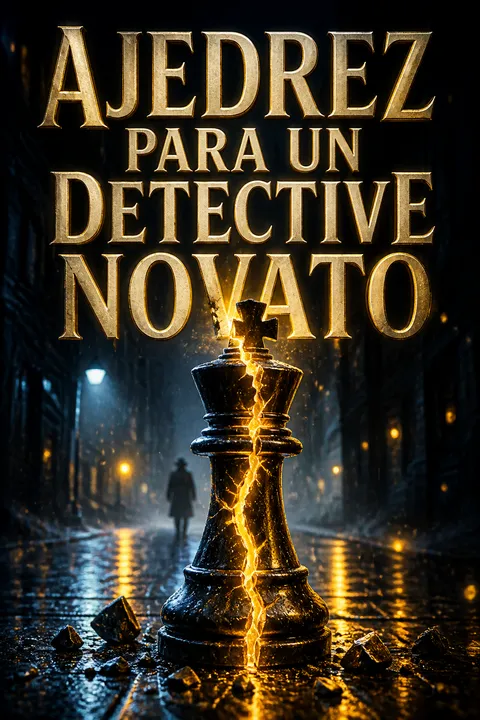
Ajedrez para un detective novatois a darkly comic, postmodern meditation on crime, identity, and the corrosive effects of proximity to evil. Juan Soto Ivars uses the conventions of detective fiction to deconstruct the genre, exposing the blurred lines between justice and criminality, mentor and monster, victim and perpetrator. The novel's structure—part apprenticeship, part psychological thriller, part social satire—invites readers to question the nature of truth, the reliability of perception, and the costs of mastery. Through the intertwined fates of Carlos and Lapiedra, the story explores how trauma, exploitation, and the relentless pursuit of order can lead to both greatness and destruction. The city itself becomes a character, reflecting the chaos and moral ambiguity of modern life. Ultimately, the novel suggests that the quest for meaning and justice is both necessary and doomed, that every detective risks becoming the very thing he hunts, and that survival requires both cunning and the willingness to embrace uncertainty. The final image—a new detective rising as a monstrous threat emerges—underscores the cyclical, Sisyphean nature of the struggle against darkness, and the enduring need for flawed heroes in a broken world.
Characters
The Narrator (Carlos Aparicio)
Carlos is shaped by early trauma, abandonment, and a lifelong sense of being an outsider. His intelligence and creativity are exploited as a ghostwriter, leaving him with a fractured identity and deep cynicism. The arrival of Lapiedra offers both salvation and new forms of exploitation, as Carlos becomes apprentice, accomplice, and eventually successor. His psychological journey is marked by self-doubt, jealousy, and a desperate search for meaning. The loss of María and the betrayal by Lapiedra force him to confront the darkness within himself and the world. Ultimately, Carlos emerges as a detective forged by suffering, capable of both empathy and ruthlessness, but forever marked by the legacy of his mentors.
Marcos Lapiedra
Lapiedra is the embodiment of the detective myth: brilliant, seductive, and fearless. His mastery of disguise, memory, and psychological manipulation make him a legend. Yet beneath the surface lies profound vanity, loneliness, and a growing sense of obsolescence. His relationship with Carlos is complex—part teacher, part rival, part father figure. Lapiedra's descent into madness and murder is both a personal tragedy and a commentary on the corrupting power of proximity to evil. His final confession and surrender are acts of both self-destruction and twisted generosity, passing on his knowledge and burdens to his apprentice.
María
María is a force of nature—young, insatiable, and indifferent to convention. Her relationship with Carlos is passionate, destabilizing, and ultimately tragic. She represents both the allure and the danger of unchecked desire, as well as the vulnerability of those who live on society's margins. María's death is the catalyst for Carlos's transformation, forcing him to confront the true cost of obsession and the limits of his power to protect those he loves.
Vélez de Pucela
Vélez de Pucela is a mediocre writer who steals Carlos's work and passes it off as his own. He embodies the corrupt, self-serving aspects of the literary and social elite. His murder at Baraka's mansion is both a liberation for Carlos and a warning about the dangers of complicity and passivity. Vélez's role as exploiter and victim highlights the blurred lines between creator and thief, justice and revenge.
Ofelia
Ofelia is the formidable madam of the Vagina Dentata brothel, a survivor and leader in a world of violence and exploitation. Her relationship with Lapiedra is both professional and personal, marked by mutual respect and unfulfilled longing. Ofelia's death at the hands of the strangler is a devastating blow to the community and a symbol of the vulnerability of even the strongest in the face of systemic evil.
The Intuition (Narrator's Inner Voice)
The narrator's intuition is a quasi-supernatural presence, offering guidance, warnings, and sometimes silence. It represents both his subconscious wisdom and his psychological fragility. The voice's capriciousness mirrors the unpredictability of fate and the limits of rationality. Its return at the story's end signals a renewed, if ambiguous, sense of purpose.
Bruto
Bruto is initially suspected as the serial killer due to his violent past and timely escape from prison. In reality, he is a pawn in Lapiedra's scheme, his severed hands used to plant false evidence. Bruto's fate underscores the dangers of prejudice, the ease of misdirection, and the cruelty of those who manipulate the system for their own ends.
Mayte Torras
Mayte is a black prostitute and friend of María, embodying both strength and vulnerability. She supports Carlos in his grief and investigation, representing the solidarity and resilience of those most at risk. Mayte's presence highlights the importance of community and the costs of isolation.
The Prostitutes' Collective
The self-governing prostitutes of Gambaperta are both empowered and endangered. Their collective action against pimps and their struggle to survive the strangler's attacks reflect broader themes of resistance, solidarity, and the precariousness of hard-won freedom.
The City
The unnamed city is a character in its own right—a place of poverty, crime, and moral ambiguity. Its streets, sewers, and institutions are both battlegrounds and mirrors for the characters' inner struggles. The city's relentless chaos and unpredictability shape the destinies of all who inhabit it.
Plot Devices
Framing and False Evidence
The use of planted evidence—most notably Bruto's severed hands to leave false fingerprints—serves as a central plot device, illustrating the ease with which truth can be manufactured and justice subverted. This device is both literal and metaphorical, reflecting the broader themes of disguise, deception, and the unreliability of appearances.
Apprenticeship and Mastery
The narrative structure follows the classic arc of apprenticeship, with the narrator learning from, emulating, and ultimately surpassing his master. The relationship is fraught with admiration, resentment, and competition, culminating in a reversal of roles. The device allows for exploration of themes such as legacy, identity, and the corrupting influence of power.
Chess as Metaphor
Chess recurs throughout the novel as both a literal pastime and a metaphor for the complexities of investigation, life, and morality. The game's emphasis on memory, anticipation, and sacrifice mirrors the characters' struggles and the unfolding of the plot. The "always alive" (siempreviva) game symbolizes resilience and the possibility of victory through unconventional means.
Disguise and Identity
Mastery of disguise is both a practical skill and a psychological motif. Characters adopt false identities to deceive others and themselves, blurring the boundaries between reality and fiction, hunter and hunted. The ultimate revelation that the strangler is a master of disguise underscores the dangers of losing oneself in performance.
Foreshadowing and Intuition
The narrator's intuition, often cryptic or silent, serves as both a source of foreshadowing and a commentary on the limits of rational investigation. The interplay between intuition and logic reflects the unpredictability of life and the necessity of embracing uncertainty.
Urban Gothic and Social Satire
The setting is both a realistic and exaggerated version of contemporary Spain, blending noir, satire, and urban gothic. The city's corruption, violence, and absurdity provide both obstacles and opportunities for the characters, serving as a backdrop for social critique and existential reflection.
Descargar PDF
Descargar EPUB
.epub digital book format is ideal for reading ebooks on phones, tablets, and e-readers.








































