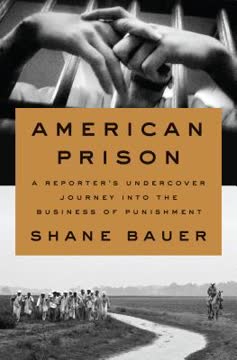
Key Takeaways
1. Undercover Journalism: A Necessary Ethical Compromise
As a journalist, it’s nearly impossible to get an unconstrained look inside our penal system.
Unveiling hidden truths. The author embarked on an undercover mission to expose the inner workings of the private prison industry, a sector notoriously secretive and resistant to journalistic scrutiny. Traditional reporting methods, such as managed tours and monitored interviews, offered only a sanitized view, making an unconstrained look at the penal system virtually impossible. This extreme measure was deemed necessary to gather authentic, uncensored information.
Ethical considerations. The decision to go undercover involved significant ethical and legal deliberations with his editors and lawyers. While some newsrooms prohibit such deception, the project met Poynter guidelines for undercover reporting, which justified the approach due to:
- Vital public interest
- Lack of alternative means to get the story
- Commitment to disclose deception in writing
- Adequate funding and time
- Potential public good outweighing potential harm
Historical precedent. Undercover journalism has a rich history in America, from reporters posing as slave buyers in 1859 to Nellie Bly feigning insanity to expose asylum conditions in 1887. These investigations often led to significant reforms, demonstrating the power of immersive reporting to reveal systemic injustices that would otherwise remain hidden. The author's project aimed to continue this tradition in the context of modern incarceration.
2. Profit Motive: The Enduring Driver of American Incarceration
Through the course of my digging, it has become clear that there has never been a time in American history in which companies or governments weren’t trying to make money from other people’s captivity.
A historical constant. The profit motive has been intertwined with American incarceration since before the nation's founding, evolving from colonial-era convict servitude to the modern private prison industry. This deep-seated connection reveals a continuous pattern of exploiting captive populations for economic gain, regardless of the prevailing penal system. The author's research uncovered that the business of punishment has always been about making money.
From servitude to penitentiaries. In colonial times, Britain transported convicts to America, selling them into involuntary servitude to private masters, often on tobacco plantations. Post-Revolution, the penitentiary system emerged, initially aiming for rehabilitation through forced labor, but quickly becoming state-run factories that leased convict labor to private interests. This model, exemplified by New York's Auburn penitentiary, proved profitable, leading to America's first prison boom.
Modern privatization. The Corrections Corporation of America (CCA) was founded in 1983, capitalizing on skyrocketing prison populations and states' need for quick, debt-free expansion. CCA, and its main competitor GEO Group, operate like hotel chains, charging governments a daily rate per inmate. Their business model relies on occupancy guarantees and cost-cutting measures, primarily through reduced staffing and lower wages, to ensure profitability.
3. Winn Correctional: A Microcosm of Systemic Failure
This job you got to come in mentally prepared.
Understaffing and low wages. Winn Correctional Center, the author's undercover workplace, epitomized the systemic failures driven by the profit motive. Guards, known as "free people," earned a meager $9 an hour, significantly less than their public prison counterparts. This low wage led to:
- High turnover rates
- Chronic understaffing, often falling below contractual requirements
- Reliance on mandatory overtime, leading to exhausted staff
Violence and lack of control. The prison was plagued by rampant violence, with stabbings occurring frequently, sometimes multiple times a week. The lack of adequate staffing meant that guards were often outnumbered and unable to maintain control, leading to a chaotic and dangerous environment. Inmates often ran the units, and guards were advised to avoid intervening in fights.
Dilapidated infrastructure. The physical infrastructure of Winn was also in disrepair, with broken doors, non-functional metal detectors, and surveillance cameras that were often out of order. These issues further compromised security and contributed to the overall sense of disorder and danger within the facility. The prison's problems were so severe that the Department of Corrections (DOC) eventually required CCA to void its contract.
4. The Dehumanizing Toll on Both Guards and Inmates
We don’t want them to feel as though they are individuals. We want them, for lack of a better term, to feel like a herd of cattle.
Erosion of individuality. Assistant Warden Parker's chilling statement about institutionalizing inmates to feel like "a herd of cattle" highlights the systemic dehumanization inherent in the private prison model. This philosophy, aimed at control and efficiency, strips prisoners of their personal agency and identity, reducing them to manageable units. The author observed this in policies like confiscating "individualized clothing" and the general disregard for inmates' personal belongings.
Psychological impact on guards. The constant exposure to violence, the pressure to maintain control with inadequate resources, and the ethical compromises required to survive the job took a severe psychological toll on the guards. The author noted:
- High rates of PTSD among correctional officers
- Increased suicide rates among COs
- Shorter life spans for those in the profession
- A pervasive sense of anger and frustration
Author's personal struggle. The author himself experienced a profound internal conflict, feeling his own humanity erode as he adopted the behaviors necessary to survive as a guard. He found himself:
- Becoming more aggressive and less empathetic
- Taking pleasure in exercising authority
- Struggling with his identity as a former prisoner and now a jailer
5. Inadequate Care: Medical, Mental Health, and Rehabilitation
Just because I have twenty years left in prison doesn’t mean that I’m nonexistent and that I don’t matter.
Cost-driven neglect. The profit motive directly compromised the provision of essential services, particularly medical and mental health care. Inmates like Damien Coestly, who died by suicide after repeated pleas for help, exemplified the tragic consequences of this neglect. Despite a high caseload, Winn had only one full-time social worker and part-time psychiatrists, leading to:
- Delayed or denied medical appointments
- Inadequate treatment for chronic diseases
- Suicide watch conditions designed as a "deterrent" rather than protection
Medical malpractice and lawsuits. Winn had a history of hiring doctors disciplined for misconduct, and CCA faced numerous lawsuits for poor medical care, wrongful deaths, and sexual assaults. The company actively sought to minimize its financial obligations, even attempting to classify settlement lists as "trade secrets." This pattern suggests a systemic prioritization of cost-cutting over inmate well-being.
Lack of rehabilitation programs. Despite contractual requirements for "productive full-time activity," most vocational and educational programs at Winn were cut or understaffed. This left inmates with little to do, fostering idleness, frustration, and a sense of hopelessness. The absence of meaningful rehabilitation opportunities undermined any pretense of preparing inmates for successful reentry into society.
6. Oversight Failures and Corporate Impunity
How can it be cruel or unusual?
Rubber-stamp accreditation. The American Correctional Association (ACA), presented as a neutral regulatory body, effectively served as a rubber stamp for private prisons. Winn consistently received near-perfect accreditation scores (99%), despite glaring deficiencies in staffing, inmate care, and security. This accreditation was then used by CCA to defend against lawsuits, creating an illusion of proper care.
DOC's limited impact. While the Louisiana Department of Corrections (DOC) did identify significant issues at Winn, including understaffing, broken equipment, and inadequate programs, its interventions often proved temporary or superficial. The DOC's presence during audits led to temporary improvements, but conditions often reverted once they left, highlighting the systemic resistance to genuine change within the for-profit model.
Corporate evasion. CCA actively resisted transparency and accountability. They threatened to sue the author, hired a PR firm to discredit his reporting, and declined in-person interviews. The company's rebranding to CoreCivic after federal scrutiny, while maintaining the same business model, further demonstrated its strategy to deflect criticism rather than address fundamental issues.
7. The Personal Transformation and Ethical Conflict of the Undercover Reporter
Inside me there is a prison guard and a former prisoner and they are fighting with each other, and I want them to stop.
Erosion of self. The author's undercover role profoundly impacted his identity, blurring the lines between observer and participant. He found himself adopting the aggressive behaviors and hardened attitudes of a prison guard, a stark contrast to his former self and his experience as a prisoner in Iran. This internal conflict manifested as:
- Increased anger and agitation
- Development of physical tics and abnormal breathing
- Strained personal relationships, particularly with his wife
Ethical dilemmas. The author grappled with the ethical implications of his actions, questioning whether his participation in the system, even for journalistic purposes, was justifiable. Moments of complicity, such as confiscating an inmate's phone or writing disciplinary reports, caused deep self-loathing and forced him to confront his own capacity for dehumanization. He struggled with the balance between gathering information and actively contributing to the oppressive environment.
Breaking point. The cumulative stress, the constant threat of violence, and the profound ethical compromises eventually led the author to his breaking point. The arrest of his colleague, who was filming near the prison, served as a catalyst for his decision to resign. This experience underscored the immense personal cost of immersing oneself in a system designed to control and dehumanize.
8. Historical Echoes: From Slavery to Modern Private Prisons
What would become of him away from the white man, I do not know.
Slavery's legacy. The history of American incarceration is deeply rooted in slavery, with the Thirteenth Amendment's loophole allowing "slavery nor involuntary servitude, except as a punishment for a crime." This legal framework enabled the post-Civil War convict lease system, which disproportionately targeted newly freed African Americans for minor offenses, forcing them into unpaid labor on plantations, railroads, and mines. This system was often more deadly than slavery itself, as lessees had no incentive to preserve the lives of their "disposable" workforce.
Chain gangs and racial justification. As convict leasing declined, chain gangs emerged, forcing thousands of mostly black convicts to build roads. This system, too, was justified by racist ideologies, claiming black men benefited from outdoor manual labor and were inherently less "embarrassed" by public chains. These practices, lasting into the 1930s, continued the tradition of exploiting black bodies for state and private profit.
Modern parallels. The author's investigation reveals disturbing parallels between these historical systems and modern private prisons. The profit motive continues to drive:
- Understaffing and poor conditions
- Dehumanization of inmates
- Resistance to reform
- The disproportionate incarceration of marginalized populations
9. The Cycle of Violence, Understaffing, and Contraband
You got to realize that a lot of these dudes is young. A lot of them is seventeen, eighteen. They in here all day cooped up, bored, nothing to do, and it just so happens you are a person that’s over them with authority so automatically you a target, you know what I’m sayin’?
Understaffing fuels chaos. The chronic understaffing at Winn created a volatile environment where violence and contraband thrived. With too few guards to maintain order or run programs, inmates were left with excessive idle time, leading to:
- Increased frustration and aggression
- More opportunities for illicit activities
- A sense of impunity among prisoners
Contraband economy. The prison's lax security, including non-functional metal detectors and easily compromised cell doors, facilitated a thriving contraband economy. Inmates acquired:
- Cell phones and drugs (like synthetic marijuana, "mojo")
- Homemade weapons ("shanks")
- Illicit cash cards ("Green Dots")
This underground economy further undermined official control and contributed to the cycle of violence.
Guards' complicity. Some guards, frustrated by low pay and dangerous conditions, became complicit in the contraband trade or turned a blind eye to rule-breaking. The author witnessed:
- Guards joking about stealing confiscated drugs
- An officer giving a Green Dot card to a cadet
- The captain distributing confiscated tobacco to other guards
This complicity, driven by self-interest or a desire for an easier shift, further eroded the prison's security and fostered a culture of corruption.
10. The Illusion of Rehabilitation and the Reality of Idleness
Prison don’t rehabilitate you. You have to rehabilitate yourself.
Empty promises. Despite claims of rehabilitation, Winn Correctional offered minimal opportunities for inmates to improve themselves. Vocational programs, educational classes, and substance abuse groups were frequently canceled or understaffed, leaving prisoners with little to do beyond "sit in their beds, eat, watch TV, and figure out how to fuck with us." This idleness bred frustration and undermined any potential for personal growth.
Inmate perspective. Inmates themselves recognized the lack of rehabilitative efforts, with one stating, "Prison don’t rehabilitate you. You have to rehabilitate yourself." This sentiment highlighted the profound disconnect between the stated goals of incarceration and the lived reality within the prison. The absence of meaningful activity contributed to a sense of hopelessness and a cycle of re-offending.
The "good time" paradox. Even the system of "good time" (sentence reduction for good behavior) was fraught with issues. Inmates could lose significant portions of their good time for minor infractions, sometimes for arbitrary reasons, as seen with the inmate who lost thirty days for taking a broom at the wrong time. This punitive approach, coupled with administrative roadblocks to release, meant that inmates like Corner Store could remain incarcerated beyond their eligible release dates, further demonstrating the system's focus on containment over rehabilitation.
People Also Read