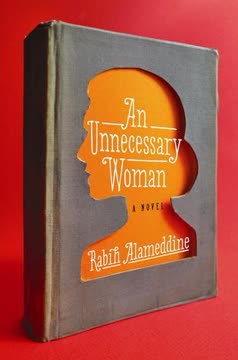
Plot Summary
Blue Hair, Red Wine
As the new year looms in Beirut, 72-year-old Aaliya mistakes her hair dye and ends up with blue hair—a nod to both the passage of time and her disregard for social norms. Alone in her cluttered apartment, she recounts this misadventure with wry humor and self-deprecation, revealing her habit of pouring herself wine during her end-of-year translation rituals. Her life is defined by literature; she has spent decades translating great works into Arabic, not for publication, but to quietly create a private legacy. This solitary act is her act of resistance and affirmation of her "unnecessary" existence. As she moves through her ritual, the blue of her hair lingers as a badge of her outsider status in both her city and her aging body.
A Life in Translation
For half a century, Aaliya's purpose has been to translate masterpieces from French and English into Arabic. No one has ever read her work; she boxes each completed manuscript away, layering her apartment with her own unsung library. Translation becomes her lifeblood, a meticulous and meditative discipline in lieu of any conventional faith or family. When life outside—Beirut's holy chaos, war, and judgments—grows too much, the act of translation shelters her, granting a sense of control and legacy where none is officially acknowledged. Her story reveals the bittersweet liberty and quiet anguish of a life lived largely in the margins, faithful to the solace literature alone provides.
Family's Unwanted Appendix
Named for loftiness, Aaliya feels like her family's appendix, an unnecessary organ. Her father dies before she can remember him; her mother's relatives push the widow into marrying her brother-in-law, birthing a crowd of half-siblings Aaliya never bonds with. Her presence, as a female and a first-born, is constantly framed as superfluous. When finally married at sixteen to an unsuitable man, she is later divorced—an act both wounding and liberating. The family's lack of affection, and their open aggression when Aaliya clings to her apartment instead of making way for her brothers' growing families, engrain a sense of otherness and disposability that she both resents and weaponizes as she ages.
Marriage and Escape
Picking up after her acrid, impotent husband leaves, Aaliya expunges every trace of him from the apartment, reclaiming her space and solitude. The end of marriage, rather than a tragedy, becomes Aaliya's entry into self-determination. She cleans obsessively, marking both her trauma and her will to shape her world. Her mother, baffled and judgmental, attempts to guilt Aaliya into returning the apartment to the family. Instead, met by her brothers' threats and aggression, Aaliya defies precedent: she remains, even sleeping with a rifle in bed during the civil war. The apartment's stubborn defense becomes a symbol of self, and her disconnection from expected feminine paths.
War, Solitude, Survival
Through the siege, shelling, and everyday terrors of Beirut's civil war, Aaliya turns inward, her apartment a fortress and her resolve, harder still. She details wild episodes, from break-ins to defending the home with a gun bartered for sexual favors with a former friend-turned-paramilitary. These vignettes show both the degradation and adaptability required for survival. In times of collective trauma, ritual and habit—her translation process, her cleaning, and her unchanging routines—become a shield, saving her from despair. Yet this survival comes at the price of increased isolation and suspicion of intimacy.
The Bookstore Sanctuary
Employment, thanks to her friend Hannah, in a failing bookstore, becomes the center of Aaliya's world for decades. Behind the huge oak desk she admired as a young woman, Aaliya not only sells books but becomes the soul of the store; as the dilettante owner absents himself, she is its only constant presence. The shop is a haven from family aggression and war, granting daily structure, meaning, and access to literature. The patrons, the stacks, the rituals of dusting and arranging—these become antidotes to the unpredictability and exclusion suffered elsewhere. When the store closes, the loss is acute, leaving Aaliya nearly unmoored.
The Art of Being Alone
Aaliya frames her solitude as both a victory and a byproduct of exclusion. Her city and culture view single, aging, childless women as anomalous, often suspect. Over the years, solitude—which began as a chosen resistance to family and social convention—becomes more absolute and at times stifling. Aaliya surveys her days, nights, and age-induced aches as a person both proud of her autonomy and wearied by its costs. Sleep eludes her, memories encroach at night, and she rejects both pity and romanticization of loneliness. Instead, she sharpens her wry sense of self, finding her only true home in literature and memory.
Ghosts and Gifts from Hannah
The story of Hannah, her singular friend and almost-sister-in-law, punctuates Aaliya's recollections. Hannah—awkward, kind, rejected by family and fate, a spinster attached to Aaliya's ex-husband's family—becomes the only real confidant Aaliya ever has. Their friendship is built on reading, small kindnesses, and mutual awkwardness. Deeply alone, Hannah eventually dies by suicide, an event that devastates Aaliya and ripples into the collapse of her own remaining faith in community. Hannah's memory persists in objects—a prayer rug, her journals, childhood artifacts—and in the rituals and self-consolations Aaliya clings to. The passage of grief remains jagged, never clean or ennobling.
The Witches' Landing
Every morning, Aaliya overhears her three neighbor women—nicknamed "the witches"—gathering on the landing, gossiping and cackling with affection and cruelty. Their ceaseless ritual is a counterpoint to Aaliya's seclusion: sometimes irksome, sometimes comforting. Occasional acts of theirs, like intervening during family confrontations, or the sharing of food and concern, highlight reluctant ties of community. Despite annoyance and difference, the women become crucial background figures—guardians of the building, witnesses to Aaliya's life, and, in crisis, unexpected sources of practical and emotional help.
Memory's Unreliable Thread
Aaliya's narrative is intensely self-aware of memory's lies: she questions the veracity of her own recollections, understanding memory as "scenes" over linear story or psychology. She draws analogies from literature to illustrate how remembering blurs reality, and ponders whether she ever wanted a husband, or how much she loves or loathes her mother. Her memory is unreliable yet insistent, selecting moments for preservation (her mother's cruelty, her childhood mortifications, moments with Hannah) and exaggerating their emotional contours. Through her reflections, Alameddine explores how memory simultaneously imprisons and comforts.
The Mother's Scream
When a brother forcibly deposits their mother—frail, senile, terrified—at Aaliya's door, trauma and guilt surface. The old woman screams on seeing her daughter, not recognizing her, and mother and daughter's roles invert: Aaliya, usually the outcast, is now the inheritor of her mother's burdens and rejection. The shock upends Aaliya's fragile defenses. In the aftermath, she questions the possible triggers—was it her blue hair? Some unspoken family history?—while meditating on causality, responsibility, and the futility of understanding others. The mother's scream becomes a defining motif of alienation and the randomness of pain.
Translation as Ritual
Aaliya's annual ritual—beginning a new translation project each New Year—provides her daily life with meaning, order, and purpose. Her meticulous routines (cleaning, arranging, pencils sharpened, candles for Walter Benjamin) substitute for religious or social rites. She examines her own translation philosophy in light of literary debates, comparing herself to famous translators, doubting the merits of her "translation of translations." Yet, she concludes, the process—more than publication, recognition, or even preservation—is its own reward, the means by which she experiences fleeting happiness, autonomy, and even grace.
Beirut's Maddening Pulse
The city becomes another character: unpredictable, cosmopolitan yet tribal, subject to war and to laughter, to floods and celebration, to the seductions of progress and the seductions of ruin. Aaliya is rooted fiercely in Beirut; though she grumbles, she never leaves. The city is a backdrop to memory, trauma, and the mundane. Lack of infrastructure (failed electricity and garbage), the raucous blend of languages and cultures, and ongoing glimmers of beauty all shape Aaliya's peculiar love affair with her home: a city that, like herself, is unnecessary, battered, and eternally evolving.
The Flooded Room
After a burst pipe in the building, the maid's rooms housing Aaliya's decades of boxed translations are soaked and imperiled. The crisis is existential: the manuscripts—her private legacy—face obliteration. Desperate and paralyzed, Aaliya is ambushed by grief, guilt, and finally the unexpected kindness of the "witches," who mobilize to help her salvage what can be saved. The rescue—hanging damp pages like laundry, blow-drying and ironing them—becomes a communal act akin to a wake, a rare moment of connection, and an implicit validation of a lifetime spent in "useless" creation.
Neighbors and Necessary Women
Throughout, the novel meditates on who is "necessary." Aaliya, self-titled "unnecessary woman," ponders the fate of "necessary men" (like artists, soldiers, historical figures), contrasting them with those whose contributions are invisible and unrecognized. The fates of her neighbors, her mother, and herself form a polyphony: women forgotten, discarded, or (sometimes) acknowledged only in catastrophe. Despite competing desires and backgrounds, the women's shared labors and wounds forge begrudging solidarity and kinship in the face of loss.
Salvage and Epiphany
In the aftermath of disaster, Aaliya reflects, with rare candor and humility, on contingency and survival. The salvaged pages, water-stained and partial, become a metaphor for all the lives and stories—her own included—that are perpetually at risk, always in danger of being erased. Rather than despair or epiphany, the book ends on the acceptance of imperfection, on the recognition that reinvention and sameness, solitude and connection, are all always in negotiation. The closing vision is one of humility, gratitude, and readiness to begin again—even after everything (almost) is lost.
Analysis
Rabih Alameddine's An Unnecessary Woman is both a love letter and an elegy—for literature, for Beirut, and for the invisible lives of women at the world's edges. Through the acerbic, fiercely intelligent voice of Aaliya, the novel interrogates what it means to be not only alone but superfluous—culturally, as an aging, childless, bookish woman, and existentially, as a human who creates for no audience. The story's meaning can be found in the way Aaliya's rituals of translation and her fierce attachment to her home act as defiance against a world eager to erase or domesticate her. Yet, the narrative also questions whether such prideful isolation is tenable or even authentic: memory, disaster, and old age breach her defenses, and the support of neighbors—at once ridiculous and essential—must be accepted. The lessons are neither cliché nor self-help epiphany: meaning is piecemeal, historiography unreliable, and any redemption is born in the slow processes of mourning, repetition, and reluctant connection. The novel thus teaches that every unnecessary woman is, in her solitude and her stubborn necessity, a secret foundation of the world—her story vital, even if only to herself.
Review Summary
Reviewers overwhelmingly praise An Unnecessary Woman as a love letter to literature, celebrating its richly drawn protagonist Aaliya, a 72-year-old reclusive Beiruti woman who secretly translates literary classics into Arabic. Many readers deeply identify with her bibliophilic nature and sharp, sardonic voice. The novel is lauded for its literary references, lyrical prose, and portrait of war-torn Beirut. Some critics note occasional preciousness or excessive name-dropping, while others were moved by its themes of loneliness, female invisibility, and resilience. Notably, many readers were surprised to discover the author is male.
Characters
Aaliya Saleh
Aaliya is the soul and voice of the novel; an aging, divorced, childless Beiruti woman, she is both witness and subject of social and familial exclusion. Deeply introverted but quick-witted, she has structured her life around the rituals of translation, channeling her emotional energies into literature and the measured care of her apartment. Her detachment is both armor and prison, as she grapples with loneliness, age, and irrelevance, using irony, self-scrutiny, and narrative control to manage the chaos inside and outside her head. As the novel progresses, her psycho-emotional arc reveals increasing vulnerability and need for others, even as she resists it.
Hannah
Hannah, cheerful but awkward, is another family outsider whose acceptance of Aaliya is unconditional. Her own life—marked by disappointment, unfulfilled love, and self-effacing service—parallels Aaliya's in its loneliness and humility. Hannah's warmth, her rituals, and her loyalty open rare spaces of trust for Aaliya. Hannah's descent into depression and suicide haunts Aaliya, embodying the book's themes of isolation, longing, and the precariousness of connection.
Mother
Aaliya's mother embodies the weight of tradition and gendered suffering: widowed young, forced into a second marriage, perpetually critical of her eldest daughter. She favors her sons and actively undermines Aaliya's independence, yet in her disintegration—senility, physical frailty, confusion—she becomes pitiable and strange. The mother-daughter bond, profoundly damaged, sets the emotional backdrop for Aaliya's lifelong search for acceptance and self-definition, and their final encounters are fraught with unresolved pain and reluctant mercy.
Fadia
Fadia is the boldest and never-silent of the "witches," long-time neighbor and sometime adversary. Her loudness and meddling mask courage, loyalty, and an unexpected generosity, particularly in defending Aaliya against family aggression or in organizing the rescue of her manuscripts. Her personal history as a lover, mother, and complex friend embodies the contradictions of Levantine women navigating convention, scandal, and fidelity to self.
Joumana
Joumana balances Fadia's wildness; she is reserved, intellectual, and forthright, a university professor and opinionated interlocutor. Her relationship with Aaliya is tinged with curiosity and a kind of maternal concern—at times awkward, at times intrusive. She stands as a bridge between Aaliya's isolated world and the practical, surviving, everyday womanhood of the building.
Marie-Thérèse
Marie-Thérèse, the quietest of the witches, is resigned and tender. She is recently widowed, less assertive than her friends, and physically fragile. Yet, in times of crisis, she provides calm, methodical help. Her stillness and steadfastness underscore the often-invisible endurance of working-class women who persist through collective and domestic hardship.
Ahmad
Ahmad enters Aaliya's life as a self-taught young man, reading and working at the bookstore, eager for knowledge. War and politics later transform him into a hard, possibly brutal man. Their relationship, layered with class, statelessness, and sexual tension, is a passage through which Aaliya gains both comfort and disenchantment with male friendship.
Ex-Husband
Aaliya's former husband is more a social role than a person: unsatisfactory, weak, emasculated, and the occasion for Aaliya's liberation into solitude. He personifies the expectations and failures of traditional marriage, lingering mostly as a negative space in her story.
Half Brother the Eldest
Her mother's favorite, this brother embodies patriarchal authority and family aggression: angry, big, dangerous, and capable of violence. His attempts to claim Aaliya's apartment and his eventual abandonment of their mother at Aaliya's door symbolize the failed promises of kinship and the asymmetries of gender and power in family life.
Beirut
Though not a person, Beirut is perhaps the most significant "character" after Aaliya herself. The city shapes, destabilizes, and challenges all the human characters with its wars, labyrinths, beauty, and unpredictability. Aaliya's fierce attachment, even as a perennial outsider, marks Beirut as both uterus and tomb of her necessary uselessness.
Plot Devices
Framing by Translation Ritual
The novel is structured around Aaliya's personal tradition: each New Year, she embarks on a secret translation of a literary classic into Arabic, her greatest joy and sustaining discipline. This recursive structure replaces milestones like marriage, motherhood, and religious feast days. The ritual of translation sequences her life, paradoxically giving meaning even in the certainty that her work is "unnecessary" and unseen.
Unreliable Memory and Nonlinear Narrative
Rather than simple chronology or psychological realism, the novel unfolds as a series of vignettes, memories, ruminations, and digressions. This mimics how the mind assembles personal history—by motifs, triggers, and revisitations, not by cause-and-effect plot. This allows for deep psychological exploration, especially regarding trauma, exclusion, and nostalgia.
The Apartment as Fortress
Aaliya's apartment—filled with boxes, books, dust, and the artifacts of her past—embodies her psyche: cluttered, well-defended, vulnerable to attack (by family, war, water, memory). The flood in the later chapters literalizes the threat of erasure and the fragility of identity built in isolation.
Neighborly Chorus
The "witches" provide a chorus of alternate womanly experience, counterpointing Aaliya's choices with different models of survival, adaptation, and community. Their help during crisis showcases the porousness—even against resistance—of human interdependence.
Foreshadowing and Recurrence
Recurring motifs—blue hair, flood, screams, water, translation, ritual—echo not only through Aaliya's life but through her city and community. Foreshadowing operates subtly, with minor events (a failed dye, a scream, a memory of boxes) prefiguring larger calamities or epiphanies. This rhythmic repetition reinforces the sense of life as cyclical, inescapable, and shot through with the possibility of both disaster and renewal.








































